Arcades Are Making a Comeback on Your Feed

Open-source AI mini-games

"The Open-Source AI Mini-Game"
A friend posted on Jike the other day, roughly: "All the products in the recently hot interactive entertainment platform赛道 combined don't match the DAU of Product A, and Product A is just an experimental project casually incubated inside Company B. Most investors in this赛道 probably don't even know what Company B does."
I told him to stop being cryptic. He said Company B is Newborn Town, and the incubated Product A is called Aippy.
You can get a feel for Aippy through a few videos first:
A brutally simple mesh-tearing stress-relief mini-game:
This matchstick-burning, coin-exploding game has potential to become a Whack Your Boss remake:
This black-hole swallowing game could make it onto WeChat mini-games with better art:
And this virtual scratch-card for when you can't afford real ones — you can scratch anything, with a warehouse system:
From my own experience, Aippy's games excel at haptic feedback and mobile-optimized interaction. It's essentially an AI mini-game feed.
I've even cooked up a tagline for them: no pay-to-win, no scams, tap-to-play, get the dopamine hit of Idle Fish King without watching a single ad. AI just open-sourced mini-games, now we can all entertain each other to death 😭
For objectivity, I also had a veteran Douyin mini-game player try it out. His assessment: some games are already approaching Douyin mini-game quality. Earning validation from native players means the mini-game feed has crossed the threshold of being barely playable 👍
But after scrolling Aippy for too long, I lost track of what I was even doing. Eventually it felt like performance art — tapping the screen guessing what stunt would come next, my brain's wrinkles getting ironed flat.
Yet this state of losing yourself while playing might be exactly what makes it appealing, especially since this product targets Western markets.
In recent years, young Westerners' content preferences have already shifted toward light interaction and low comprehension barriers. TikTok's viral content hooks you within seconds. That's Aippy's current approach too.
Going all-in on Western markets was decided on Aippy's very first day, and all their operations target it. How committed are they — I scrolled Aippy for seven or eight hours and didn't see a single Chinese character.
My favorite game is a chicken-and-egg one. I call it the simplified QQ Farm. The logic is simple: chickens lay eggs, eggs sell for money, money buys more chickens and faster egg-laying. Chicken begets egg, egg begets speed, infinite recursion. Highly addictive.
The one regret: after I finally saved enough to buy the farm, before I could experience farm-owner life, the game crashed. I'm actually devastated, folks 😭
Looking forward to save functionality launching soon.
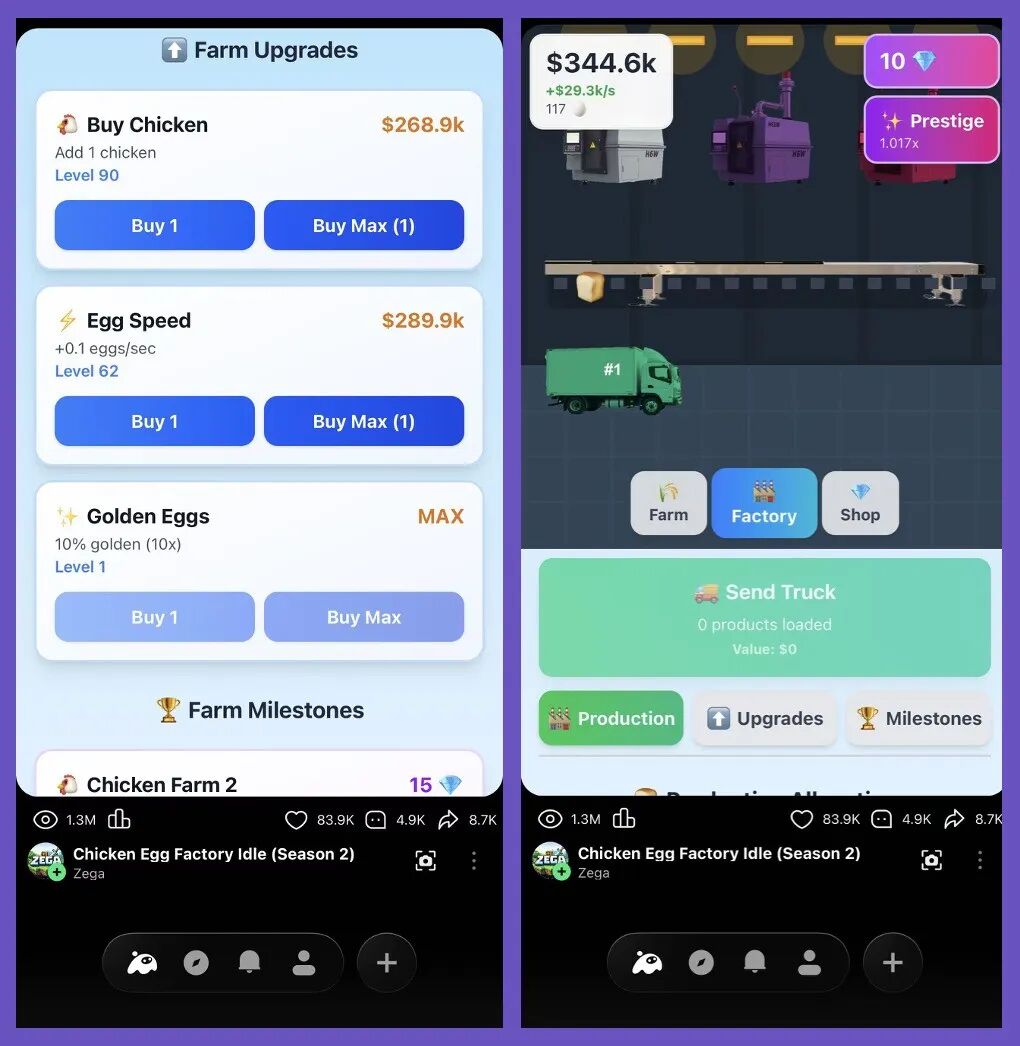
I also used Aippy to make a whack-a-mole mobile game:
Newborn Town and its incubated Aippy are an extremely low-key team, but I happen to know one of Aippy's leads and had a brief chat with them.
Aippy was greenlit in March 2025. After locking onto the AI content consumption赛道, the team's earliest concept was an AI content consumption product centered on coding.
Today, everyone's talking about AI feed, AI interactive content, AI-native entertainment — nothing novel anymore. But at the time, this call was actually quite prescient. Most teams were still cramming into productivity tools, defaulting to coding's value as helping people complete tasks more efficiently.
The Aippy team's judgment was the exact opposite. They believed tools have value, but tools are inherently one-off needs — users come with clear intent, leave when done, hard to build lasting relationships. Conversely, if AI-generated content itself could be consumed, it had better odds of generating session time, usage frequency, and even growing a community.
This was also why they ultimately didn't become a tool. For one, Newborn Town's corporate DNA leans closer to "content, social, entertainment" rather than standardized SaaS. For another, "at that point in time, many people didn't believe AI-produced content could be consumed."
Looking back today, this judgment hasn't been definitively proven. But at minimum, it came a year earlier than most followers like Rezona and Loopit.
Aippy's early scope was actually quite broad, simply put: AI generates everything. By mid-last year, Aippy evolved into its current feed format. The key inflection point was launching Remix, where users could directly remix and二次创作 others' content.
Remix carries high value for Aippy. The biggest challenge with these products is that users initially have no idea what they want to make. Ask them to write a prompt facing a blank input box — many can't. Aippy's approach: let users scroll first, wait until content hits them, then give them a frictionless entry to modify it.
For the platform, Remix is also among the most direct signals of user interest. A piece getting views only means it grabs eyeballs; a piece getting remixed means the community has actually closed the loop.
Right, here we go again with the classic tool-to-UGC-community story. Gambo's founder told me similar logic. (No idea how Gambo's doing now.)
This makes complete sense. Tools themselves are hard to defend as moats — just look at how similar Rezona, Loopit, and Aippy's product forms are, launched in quick succession this year.
But with AI tools, does building UGC communities become easier?
Because so far, no new UGC communities have broken out at all. But compared to AI video still needing distribution on traditional video platforms like Bilibili and Douyin, Aippy's interactive content becomes a fundamentally different experience once it leaves the platform. It's inherently more like platform-internal content, serving people willing to linger in this kind of play.
And purely from the "who gets to 10,000 creators first" angle, Aippy — backed by Newborn Town and a full playbook of proven overseas expansion — holds significant advantage. They wouldn't pull pure hype stunts like using an Elon Musk like to grab eyeballs, or mass buying traffic in Southeast Asia for DAU anyway.
They've already stepped on countless landmines on the creator path: "You name it, every possible creator pool on the market — TikTok, Twitter, Xiaohongshu, all domestic and international creator channels — we've basically partnered with all of them."
Aippy's lead also told me that Aippy's early feed was scrollable because the team, leveraging Newborn Town's dozens of global local operations centers, pre-stocked diverse benchmark content across puzzle, reflex, and party mini-game genres, then invited a small number of people more sensitive to memes and creative content to seed creation. Only after this cold-start phase did they launch Remix — very Newborn Town.
Aippy's community isn't just a relationship that lives inside the app and dissipates after scrolling. Beyond the public content layer in the feed, creators also exchange prompts, showcase work, and get feedback on Discord.
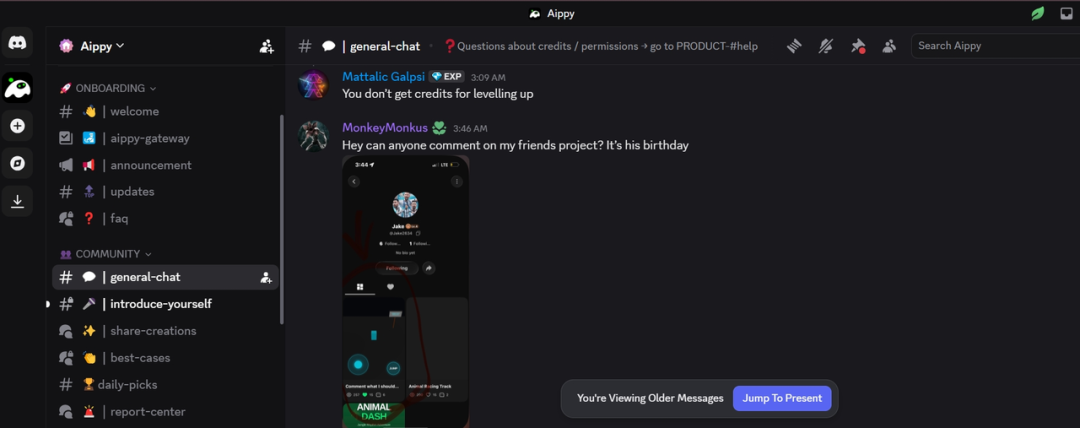
This way, Aippy actually has a two-layer structure: inside handles consumption and distribution, outside handles exchange and fermentation. The former determines what content gets seen, the latter determines who keeps creating, who gradually stays.
This matters. Lowered creation barriers don't mean communities automatically grow. Whether people keep making content, whether it gets seen after being made, whether shared tastes gradually form — none of this is solved by a generation button. Simply generating games isn't success; the loop of consumption, remixing, feedback, and re-creation has to connect.
After playing Aippy for two full days plus a slew of copycat AI game products, my objective assessment is: though most competitors love claiming they're the AI version of 4399, they can't even eat 4399's exhaust fumes.
Today's Aippy is also far from having cracked the code. Much content still has short lifespans — played and forgotten — needing more memorable content. Just as 4399 started by mass-porting Flash mini-games, but became great because of classics like Bleach vs. Naruto and Dream Westward Journey.
But Aippy's lead told me they never intended to become 4399.
Their focus is making the community more interesting. For example, Aippy has a series of remixable retro mini-games, aiming to get players talking more than playing.
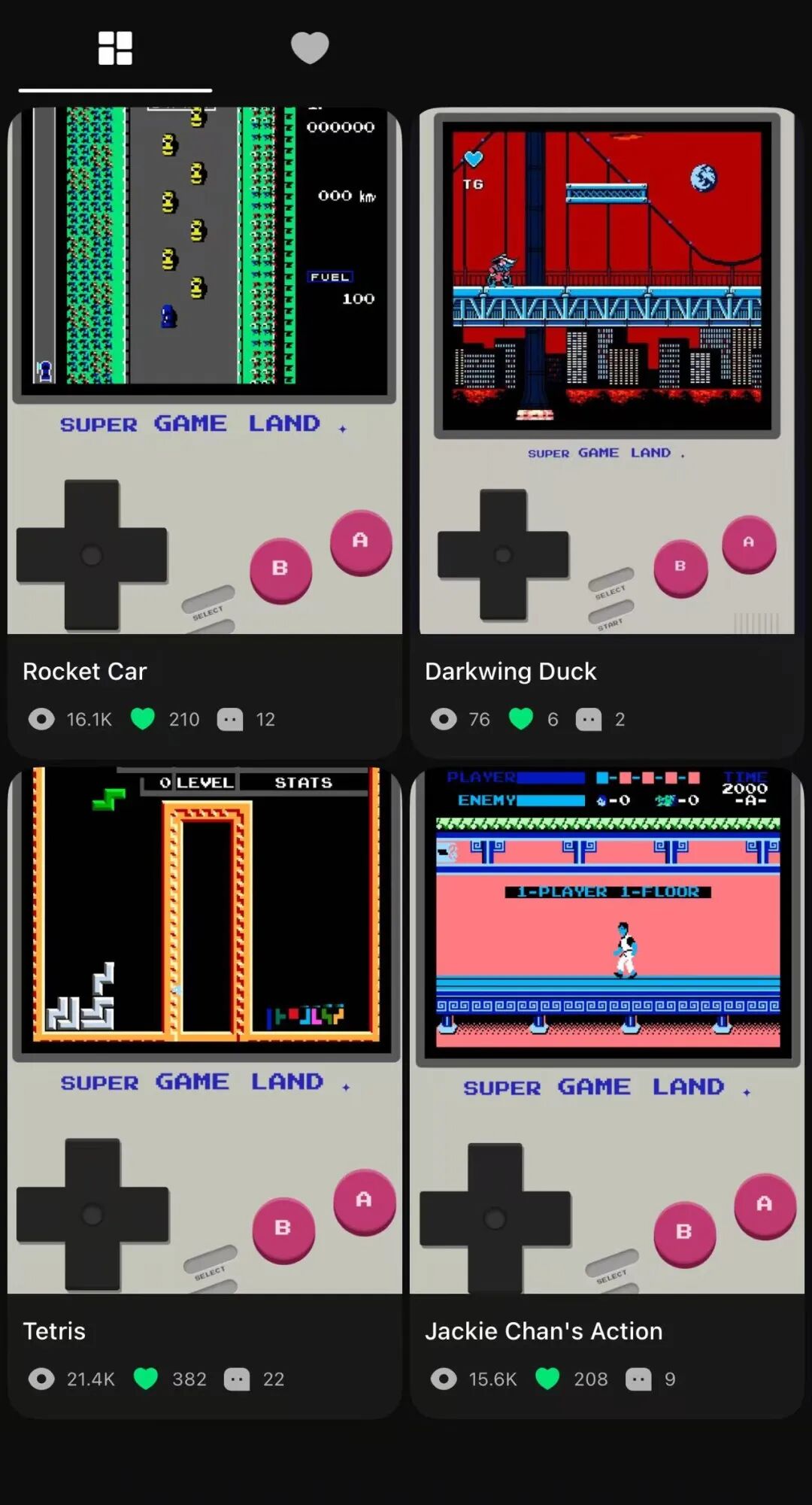
Rather than believing anyone can make a good game in five minutes, I'd rather believe good platforms ultimately grow through content curation, creation guidance, and community vibe.
(Cover image generated by ChatGPT, purely human-written)