Don't Play the "American Company" Game If You're Building AI Hardware

Please, stop pretending.

"Please, stop pretending"
"It is with humility that I announce to you all:
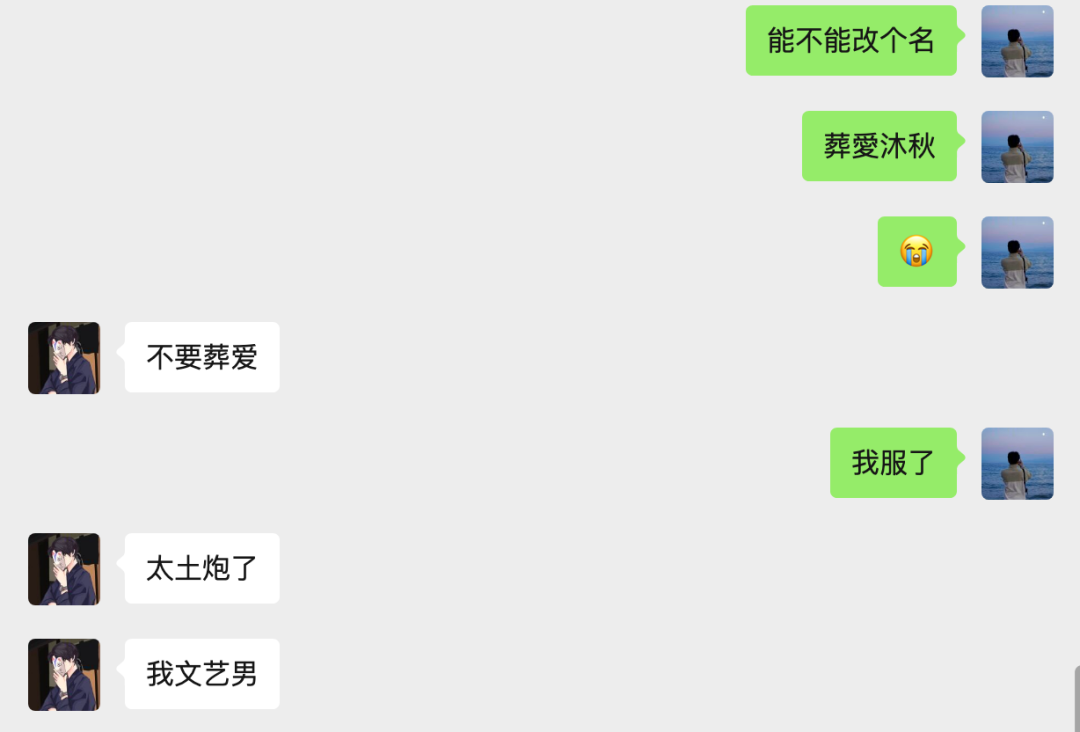
My friend, Muqiu, a Fujian legend, has left the shadows for the spotlight, becoming a proud member of the glorious Zang Ai Family 💗
This is one small step for a Fujian native's clout-chasing career, but one giant leap for the Zang Ai Family's steady, far-reaching descent.
Muqiu is my favorite gaming buddy. He's into arthouse films, hits the internet cafe every week for squad games, and his former Jike bio read 'just want to live to 30.' Unlike his fellow townsfolk, he's wasted too much energy on art films. I've tried to talk him back onto the clout-chasing straight and narrow, to fully carry forward the Fujian spirit of daring to hype and charge 👍
Some of our past articles were co-created through a two-person roast format. Now, to boost output, we're hyping independently. What hasn't changed is that we're still just doing this for fun. He specifically requested I state: 'Don't make it sound like I fucking joined you today or something.'
This is Muqiu's first article. Going forward, he'll bring more thoughts on gaming, hardware, and the Fujian spirit.
Also, a quick teaser: these past two weeks we've been prepping a pretty lit video show. Sorry our organizational efficiency is low — it's delayed the Zang AI update 😭. Video expected to drop next week."
Ten years ago, Guancha.cn held a reader meetup where Zhang Weiwei, the original patriotism godfather, gave a keynote titled "Seeing the China Model Through Global Comparison."
One line from it lives on to this day — "Chinese people, why aren't you more confident?"
That line can be applied to the current narrative around AI application companies. Singapore entities, paying salaries through labor outsourcing agreements, pretending to be in Silicon Valley when the whole team is actually in some ancient office building in Beijing's Haidian Wudaokou area.
The AI apps that are doing well have either already "run" (left China), or are on permanent standby to run. The early runners, HeyGen and OpusClip, have hit hundred-million-dollar valuations. GenSpark, which never actively does domestic PR, is already at $1 billion — making it the true #1 Chinese AI app by valuation, except they don't consider themselves a Chinese company.
But pure valuation logic doesn't apply to AI hardware. From Day One, it's a money-making business. At worst, you can run a Kickstarter campaign, and the crowdfunding numbers give you a rough read on future sales.
So why do they also pretend not to be Chinese companies?
The immediate reason is to dodge involution — to build momentum quickly without getting dragged into price wars.
But this only works early on. Whether your product gets copied depends entirely on whether people are buying it. If something's a hit overseas, word gets back to China and the cloning starts immediately.
The entire supply chain for China's AI hardware is in Shenzhen and Dongguan, home to the world's most complete, most efficient, and most transparent supply chain.
Transparent means what? It means which factory made the PCB, whose chips are inside, roughly what it costs — none of this stays secret in Shenzhen circles. One hardware guy told me, Plaud's recording card? They could knock one off in no time.
Of course, Plaud is fundamentally a software company, so there's genuinely not much value in a Huaqiangbei copy.
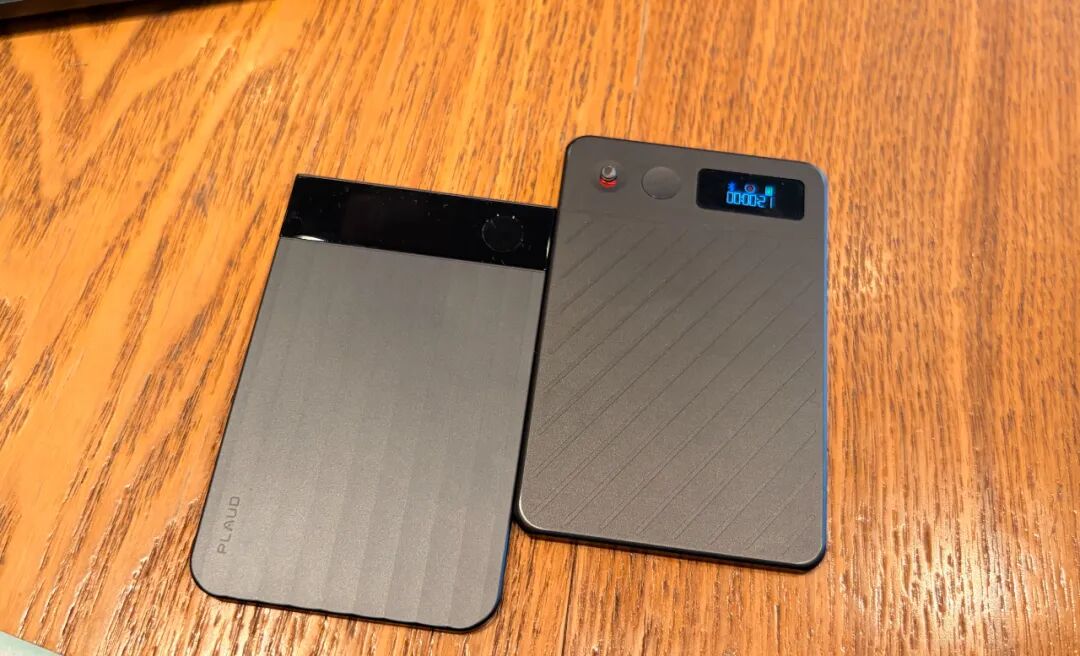
Plaud on the left, Huaqiangbei on the right. Price difference: 1,000 yuan
To prepare his Plaud roast, Xianyu bought a Huaqiangbei recording card on the Zang Ai Xianyu company account for just 232 yuan (now 163 with coupon 😭). The hardware looks nearly identical, though the Huaqiangbei version's paint chips a bit easily.
The problem is, the Huaqiangbei card's software is terrible.
The app looks normal enough. Has all the features, even transcription and Ask AI.
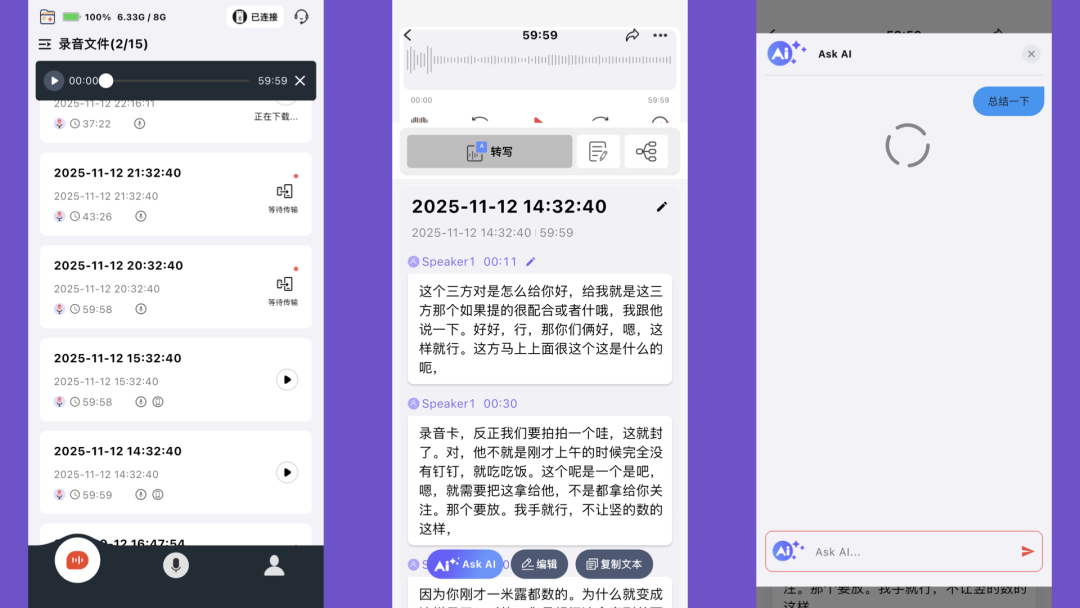
But none of it works. Too many small issues. The Huaqiangbei version maxes out at one hour of recording, and exporting takes over ten minutes with multiple interruptions. The transcripts are riddled with errors. Listen to the recordings and they're so muffled you can barely make them out. It has Ask AI, except when I actually asked, the thing never responded.
Verdict: The Huaqiangbei card only copied the form, completely unusable.
This is exactly why — as Xu Gao said in an interview — Huaqiangbei's total shipments combined are only 5% to 10% of theirs.
**Plaud decided from day one not to do the mainland China market, but last month announced its China entry. Xu Gao's reason: '**I feel like I've ascended, want to pursue some meaning. Since the team started in Shenzhen and made such a great product that's shining globally, we should come back to the China market and give our best product to Chinese users.'
He said he saw much "suffering" and hoped to liberate people. Hard to tell whether he noticed that DingTalk's recording card and Mobvoi's Ticnote were already liberating people from that suffering on his behalf.
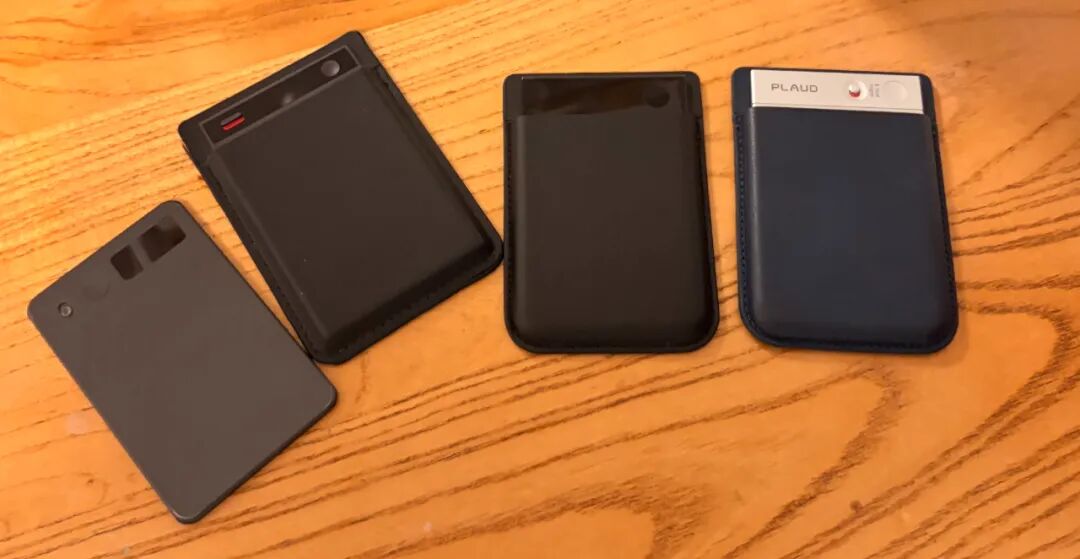
Left to right: Huaqiangbei, Ticnote, Plaud Note Pro, standard Plaud
These two are no joke. They also focus on the hardware-software combo, especially the DingTalk A1 — my hands-on experience was quite good.
One innovation is a physical voice memo button: press to record, release and the voice clip drops into your DingTalk chat. Essentially a physical version of WeChat's voice button.
The only downside is it only works within the DingTalk ecosystem.
The so-called target users — "three highs" demographics — certainly don't use only DingTalk for work. But will Lark build one? Will Lark open its ecosystem later?
Plaud figured it out: gotta come back, let patriotic users buy directly on Taobao instead of jumping through hoops to buy on Amazon in USD.
The most awkward AI hardware product I've seen is Looki, an AI camera in necklace form. It initially launched only overseas. I ordered one on the official site a week ago and found mainland China wasn't selectable as an address — closest options were Hong Kong, Macau, or Taiwan.
And its shipping rules: free delivery to North America, Europe (including Tokyo), but $15 for Singapore, China, South Korea, UAE, and Oceania.
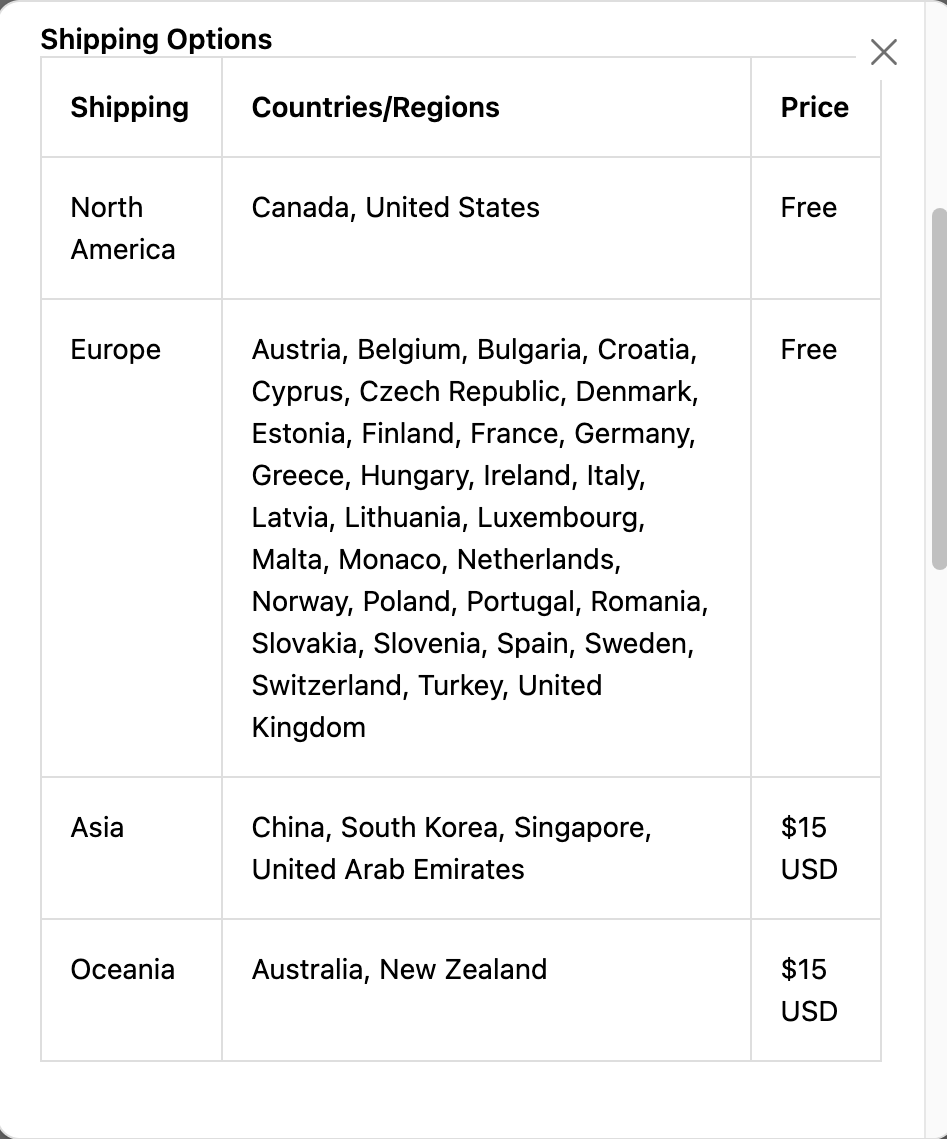
Since I couldn't select Beijing, China, I directly selected Chaoyang District, Beijing City, United States — shipping cut to $0.
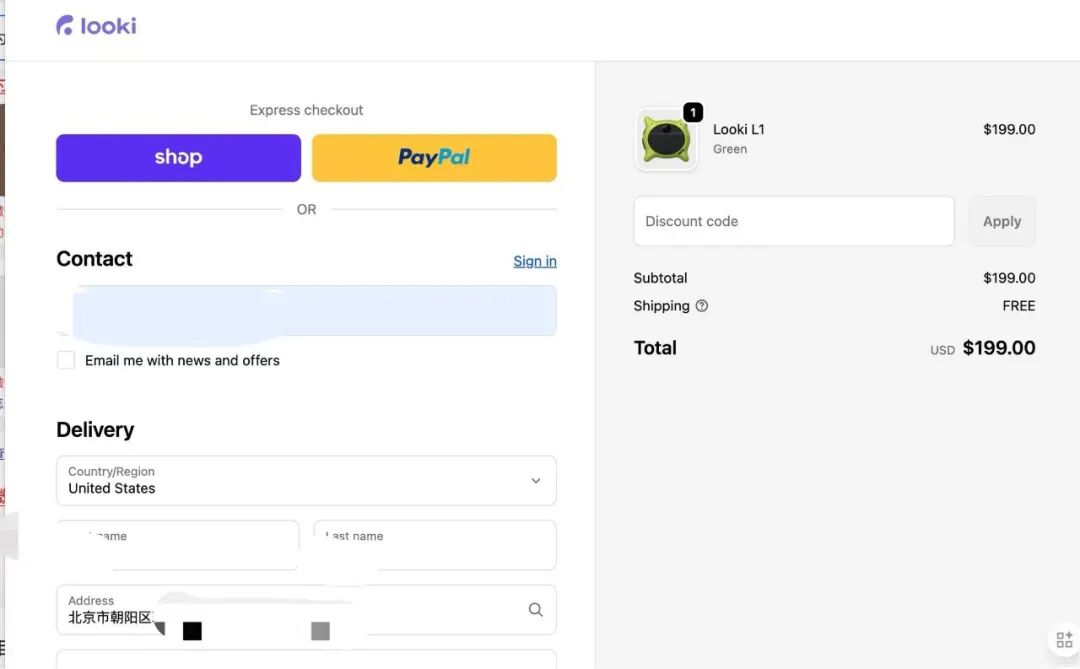
Fujian people are incredible 👍
Why do software companies pretend to be American companies? Take Lovart — when it first launched, it pretended not to be made by Liblib. Its recent funding announcement had to avoid mentioning Lovart.
Besides the valuation reasons I mentioned earlier (I've noticed this type of company tends to raise the most funding among AI apps), it's also because they have hard dependencies on foreign foundation models: Manus needs Claude, Lovart needs first-mover access to new models like Nana Banana and Sora 2 (Lovart also dropped a Sora 2-lookalike product yesterday) — for growth.
But hardware companies, especially recording products like Plaud, don't have such demanding AI model requirements. Speech recognition, transcription, meeting summaries — domestic models already handle these quite well. The China version of Plaud, for instance, uses domestic models.
The conclusion is clear: Chinese AI hardware companies have their identity locked in from day one by their supply chain. Pretending is useless — you can only pretend for so long before you end up brawling with your peers anyway.
(Article illustrations generated by ChatGPT, writing assisted by Claude Code)