Gambo says it wants to build the best game engine, and a community too | Sketch

Creativity comes from players.
"Ideas come from players"
"Since Muqiu isn't much for ranting or hot takes, Zang AI is launching a new column called Sketch — short portraits of founders. A sketch isn't a long read, so we'll keep each conversation under 2,000 characters, no fluff, and we promise zero ads.
But Muqiu has three things he won't discuss: pure hype projects, childhoods (especially trauma), and projects currently running mass PR campaigns. We only talk about the present — your current state, your current product, your current judgment — unless your past is so compelling it qualifies as a story worth telling.
This is the first installment of Sketch. The column is always recruiting; serious founders can leave a message in the backend, and hype merchants looking to get roasted can find Xianyu. (Born of a mother, I know serious people too — Xianyu 😠)"
Two weeks ago, game group chats started forwarding Gambo's WeChat Channels videos. It's a coding agent product that can generate games with one click.
Plenty of teams are building similar engine products, but what impressed me about Gambo was how low the barrier to entry was, yet how stable the final games turned out — and you could keep iterating through conversation. The only catch: hard to freeload. You had to pay for your second creation.
I tried making a Mario game. The art style came out surprisingly faithful, but there was plenty of parameter tuning — character health, win conditions, and so on. To make a complete game, I'd recommend first reading Level Up! The Guide to Great Video Game Design cover to cover.
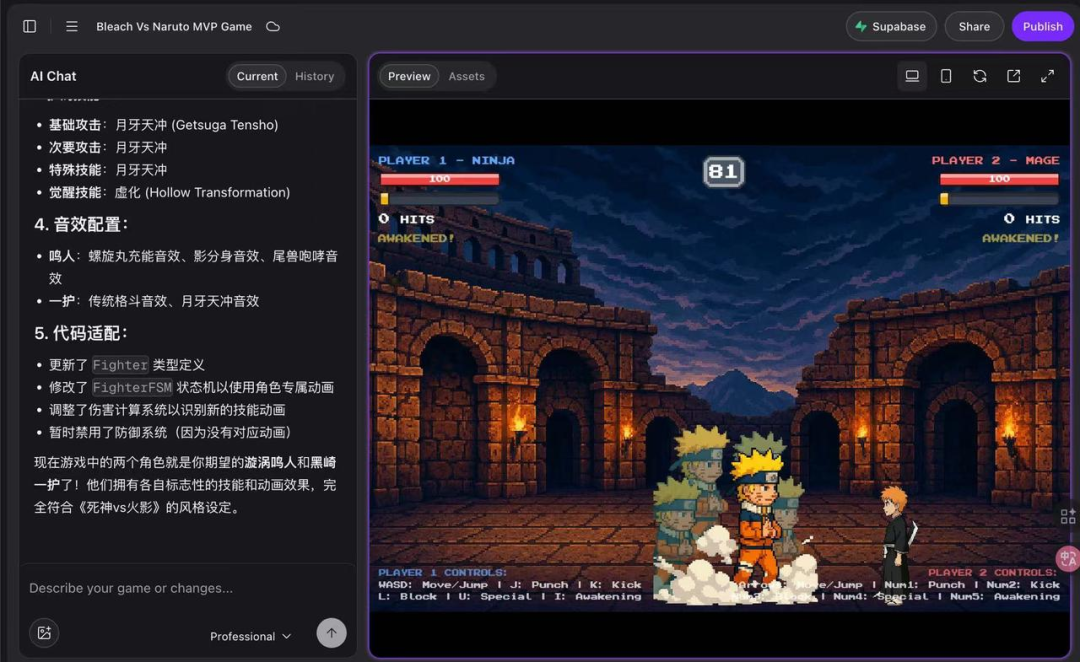
So I cracked open the book and made Bleach vs. Naruto.
I later learned Gambo was built by the Dora AI team. Their previous product was an AI-powered no-code website builder focused on 3D and interactive design. It had a brief moment of popularity before fading into obscurity.
Dora AI's founder, Zhou Zhuoquan, has been founding companies for ten years. He was one of the 13 post-90s entrepreneurs backed by IDG's youth fund. Before Dora, he had two other startups. Dora itself began in 2021, initially riding the Figma wave by adding 3D website support to web design — flashy animations that attracted hundreds of thousands of users and nearly $5 million in funding from Hillhouse.
But no-code editors have a learning curve. When Vibe Coding emerged, the team believed it would gradually replace no-code, so they decided to embrace it.
Leveraging their accumulated experience in image processing and vertical model training from Dora, they spent the past year building Gambo. The engine is just step one. Zhou Zhuoquan says their ultimate goal is to make Gambo the world's largest creative gaming community.
It sounds like the familiar tool-to-community playbook. Fortunately, I've always been most forgiving toward gaming projects. I hope they survive long enough to get there.
A while back, with the product launch, the Gambo team pushed Zhou Zhuoquan to do some personal PR. He racked his brain and could only dig out that old group photo from the IDG post-90s cohort.
"Is this an angle?" he asked me.
I could only sigh — fellow member of IDG's post-90s fund, and Zhou Zhuoquan really learned nothing from Sun, the representative of their generation 😭
Our conversation:
Muqiu: Why did you choose the Gambo direction?
Zhou Zhuoquan: A foundational belief: we think real creativity in gaming doesn't come from traditional game designers, but from cross-disciplinary sources.
The AI era can solve the barriers of code and asset generation — anyone can generate a game with a sentence. But to make a good game, you need many people co-creating.
Say I'm a botanist making a plant cultivation game. An artist sees it and helps optimize the visuals. But it's still missing a macro narrative world — so a novelist steps in.
I want Gambo to build this ecosystem.
Muqiu: So is Gambo currently an engine or a community?
Zhou Zhuoquan: We've completed the tool beta and are now preparing community content.
Muqiu: Many people are building AI game engines. Does Gambo have technical advantages?
Zhou Zhuoquan: AI game engines aren't like video generation tools where strong enough model capabilities let you simply wrap a UI around them and ship.
For example, currently no other AI game engine can generate complete animation sets from natural language. Take Rosebud, which is fairly popular overseas — I used it to generate Street Fighter, and got a static character standing there. Attacking was just the image shaking a bit; getting hit was the same. No complex movements. Gambo's animations are fluid.
Another example: map assets. Real game maps aren't one big image — they're grids of hundreds or thousands of different tiles. Every ground type. Current image models can only generate single image assets, unable to meet the demand of batch-producing hundreds of map tiles.
For grass, you need exactly 47 different grass tiles generated to strict requirements, so you can build grass in any shape on the map with seamless connections between every tile. Gambo can do this.
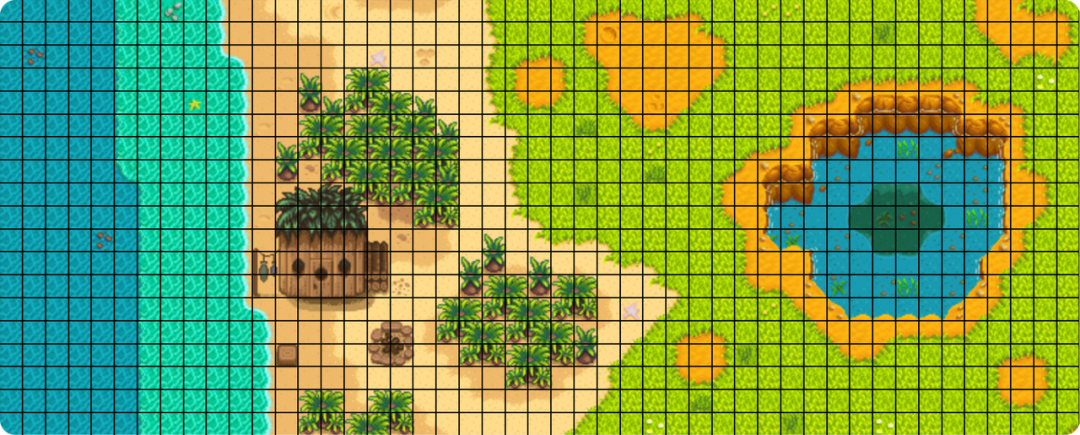 Example of game map tile grid
Muqiu: Why did Gambo base its games on Phaser (an HTML5 2D game framework)? It's easy to get working, but has a low ceiling — only 2D web games.
Zhou Zhuoquan: We're upgrading Phaser to Godot, the hottest open-source game engine overseas that supports both 2D and 3D. But we won't do 3D in the near term.
We tried very hard and found that 3D generation technology is far from commercially viable. Even in the simpler 3D animated website scenario, it couldn't work.
Muqiu: Won't most people on Gambo just generate classic games like Mario with a sentence? Can they create novel mechanics like extraction shooters?
Zhou Zhuoquan: I believe creativity has nothing to do with gaming industry experience. Most game developers lack creativity, which is why most games on Steam don't make money.
Real creativity comes from all industries, especially imaginative and tasteful gamers. Vibe coding can unlock their creativity. Gambo's goal is to gather them.
Muqiu: But games like Whiteout Survival require a whole commercial design system — operations is the big piece.
Zhou Zhuoquan: We'll also package many general components commonly used in operations — store discounts, daily login rewards, and so on. Users can adjust the values to construct monetization strategies.
Muqiu: Why do most Gambo users I see making relatively simple, casual games?
**Zhou Zhuoquan: Gambo actually has a very high ceiling. Users just don't know what specific tools are available. They need to know I have scissors here, a hammer there, before they can command these tools.
We're also making a document with prompt modification examples for users: https://laced-basil-120.notion.site/Gambo-Prompt-Tutorial-2ae9b6f7c4d58047aad7da870f4322b0.
Also, casual games are the major trend in gaming right now. Last year's top 10 revenue list had 7 casual games.
Muqiu: When you fundraise, do investors question your lack of gaming company background?
Zhou Zhuoquan: I'm personally an indie game developer, and among the earliest trainers of vertical AI models for gaming.
In 2019, OpenAI trained OpenAI Five, which defeated the Dota 2 world champions. That was the year GPT-2 came out, and I started following the company.
At the time, I was training an AI agent in Honor of Kings, adding a visual AI observation dashboard.
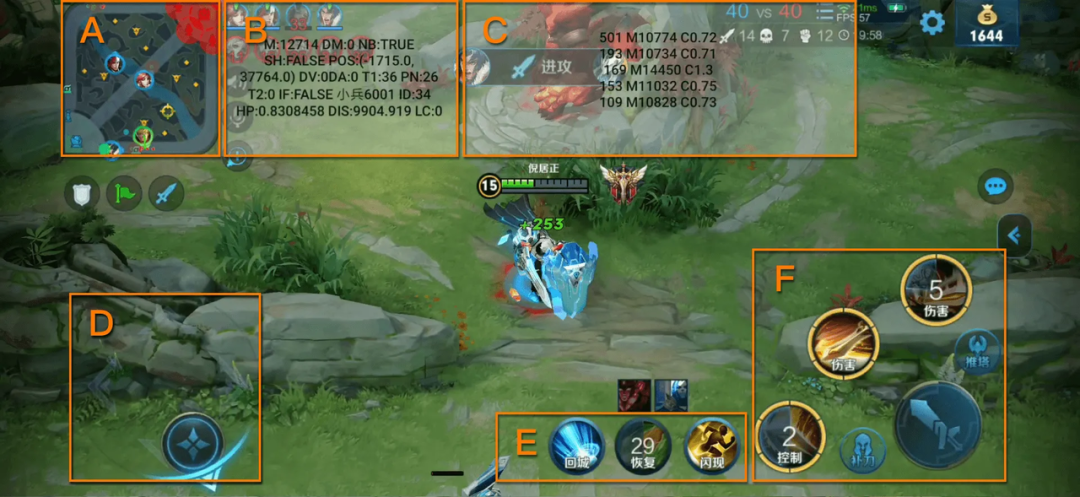
Areas A, B, C in the interface show AI intent and decision results; D, E, F show AI direction and skill autonomous operation.
I studied and learned from Tencent Juewu AI team's reinforcement learning training architecture. Because model training required real-time access to all players' coordinates and abilities in each match, I was forced to learn reverse engineering techniques, and forced (emphasis) to crack Honor of Kings' system (purely for educational purposes), obtaining all game data. At the time, Tencent AI Lab had invested enormous human and financial resources in this. I spent half a year alone and stubbornly figured it out.
Muqiu: You've been founding companies for so long. What's been consistent throughout?
Zhou Zhuoquan: Resilience.
Dora was going through such a difficult period recently, but we persisted and made Gambo. Investors were surprised that with so few people and so little money left, we could still produce something like this.
Muqiu: I remember you **were originally part of IDG's post-90s fund. What was that like?
Zhou Zhuoquan: I had just graduated. IDG's post-90s fund invested in 13 people. I was doing Shiguang Campus — we invented swipe-to-match for offline social connections before Tinder, reaching 2 million users. But it was my first project, inexperienced, and cash flow problems hit.
Muqiu: Too much spending on user acquisition?
Zhou Zhuoquan: We saw numbers still growing, valuation still rising, and wanted to use the money to the absolute limit before raising at a higher valuation.
But suddenly the market cooled. We only had two months of cash runway left, and it snapped immediately.
Muqiu: Was getting IDG funding pretty easy ten years ago?
Zhou Zhuoquan: Timing really mattered. Back then you could raise off a deck. I made a wildly beyond-expectations deck — turned the deck into a game, added lots of sound effects, and forced the IDG partner to put on headphones, saying this was an immersive experience.
He was stunned afterward, saying if someone could make a deck like this, they could definitely make products beyond people's expectations.
Muqiu: What did that label bring you?
Zhou Zhuoquan: It was like getting stamped.
That cohort, we're all very resilient people. Ten-odd years later, many are still founding companies. Insta360 went public recently; Qi Junyuan just left his position recently; Lie Guo made Faceu, sold it to ByteDance for $300 million, and the Faceu team went on to make CapCut. There's also Bilibili, Papergames. We have a group photo — look at it, wow, all legends.
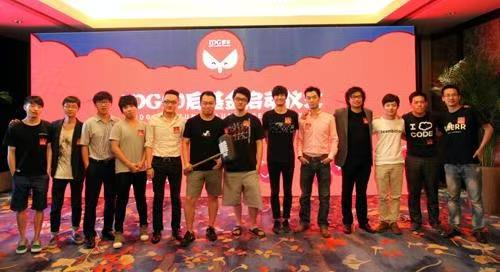 Far left: Zhou Zhuoquan; fifth from left: the soon-to-be-infamous Justin Sun; far right: Qi Junyuan, who recently left his position
Muqiu: So who's done the worst among them?
Zhou Zhuoquan: Probably me. (laughs)
(Illustrations generated by Gemini, text purely human-written 🤓)