Individualism, Not Productivity Theater, Is What AI Actually Needs

Sharp Takes on Personal Agents
"A Hot Take on Personal Agents"
A specter is haunting — the specter of the office agent, hovering over the heads of wage slaves everywhere.
I've been pissed about this for a while. I've used and written about plenty of office agents, from the overseas ones to the domestic tech giants'. I've praised them, I've cursed them.
My current stance: some of these things are stupid, and the rest might not be stupid, but they're fundamentally wrong.
First off, the marketing is downright evil — all about boosting efficiency, productivity, your "office superpowers."
Early coding agents shouted the same slogans, and that worked because it actually appealed to programmer bros:
Programmers are inherently decentralized. Some work at high-paying Haidian tech giants, some sunbathe in Indonesia while taking freelance gigs, some whip up an app and achieve financial freedom, others hide in third-world countries wearing V for Vendetta masks while hacking Sun Ge's website.
Get these people to boost productivity, and their wallets do get fatter.
But I want to know about everyone else — the majority of China's workforce — whose days consist of writing reports and documents, making PPTs and Excel sheets, communicating with colleagues and reporting to bosses. What exactly are they supposed to do with "boosted productivity"?
In other words, what's in it for them?
Finish at 10 AM what used to take until 10 PM with an office agent — will the boss let them leave early? Still stuck in that cubicle grinding away, aren't they?
And these tech giants want us to pay for this service ourselves? Damn, how self-loathing can workers get? Never heard of serfs buying their own hoes in the old society — why are we regressing?
The crab peeling its own shell, the donkey whipping itself.
The new intern at the office spent $100 on a month of ChatGPT Pro. You all have bright futures ahead.
"But blogger, clearly you've never had a good job," some say. "These beloved-big-tech-parent companies give employees AI quotas every month. The more you use, the happier the boss gets. No need to pay out of pocket!"
Setting aside how obsequious and self-abasing and ByteDance-badge-literary this sounds — isn't the time and energy spent learning to use AI itself a cost?
Model updates drop and you binge AI influencer tips videos — that doesn't eat into your rest time?
Or has everything work-related long become a secondary part of your life, where helping capitalists accumulate wealth lets you cosplay as a corporate main-character heroine/hero, telling yourself yes, this is self-actualization?
So many AI bros out there mocking Europe, mocking Japan — "oh these countries haven't kept up with the AI wave, their products never change, their companies are complacent, their employees dawdle all day with zero growth, feel so bad for them."
Bro, have you considered what a magnificent employee benefit it is to dawdle all day? Go on BOSS Zhipin and see if any company will pay you to dawdle. Unless your veins run on petroleum tar, you probably couldn't even test into one.
Anyway, I think if these domestic and foreign tech giants keep marketing this B2B office agent business as B2C, it's a dead end both legally and logically.
Personally, I'll be wishing them death 👍
And somehow, at some point, all these major model updates started serving content creators:
One-sentence generation of 3D models, web games, and MG animations — I genuinely don't know what substantive use this has beyond letting AI influencers generate garbage projects to post on Xiaohongshu for hundreds of reposts and thousands of likes, triggering mass anxiety.
Don't think this doesn't affect you.
I myself donate monthly to ChatGPT, Claude, and the like, but basically just for non-work stuff.
Organizing travel itineraries, sorting vlog footage — light tasks where hiring a college kid would cost me a "first autumn milk tea" at most.
But ever since GPT upgraded to 6 Astra, chatting with the thing for a few hours burns through my quota and my money, and I've realized poverty is an incurable disease.
"Just use 5.6 Sol," someone says. First, can you resist not talking to the god-tier model? Second, 5.6 Sol is destined for the dustbin of history, just as 6 Astra will one day fade away.
Some day in 2077 you open ChatGPT, and the only option is a four-figure version that costs a month's salary per conversation — who you gonna complain to then?
This isn't some "burying your talent in yesterday" sentiment. I'm speaking purely from a market economy perspective, as a consumer.
When programmers, Xiaohongshu influencers, and I all pay for large models, but the capability ceiling and price floor keep rising because of the former's deep usage, low-capability users like me are losing out — paying an incompetence tax.
In economics this is called cross-subsidization. Like splitting the bill with Liangzi Big-Stomach at a buffet — easy to understand.
So I've always felt there needs to be an agent specifically serving us low-capability users. Which brings us to the recently hyped Personal agent — personal assistant.
You can keep reading with confidence — we took zero ads for this.
Actually, Lobster kinda was this earlier. Remember when people used Lobster to book flights, schedule trips, organize desktops? But Lobster's problem was self-contradictory:
We low-capability users stare blankly at 404s trying to log into GitHub, can't tell API from AGI — how are we supposed to figure out deploying this advanced stuff?
Honestly I tried deploying Lobster back then too, asking Doubao the whole way. Doujie had me typing code into terminal until my computer crashed, nearly bricked it, had to make a pilgrimage to the Apple Genius Bar to fix it.
I digress. Anyway, unlike Lobster, this wave of Personal agents treats us as pure idiots — download and use, no fancy features beyond connectors.
First up: Today.ai, currently getting heavy influencer promotion domestically. Its strength is proactivity (especially apparent after I later tried Grok bot): after connecting my Gmail and Notion, the thing started finding work for itself, no need for me to think about what to use it for.
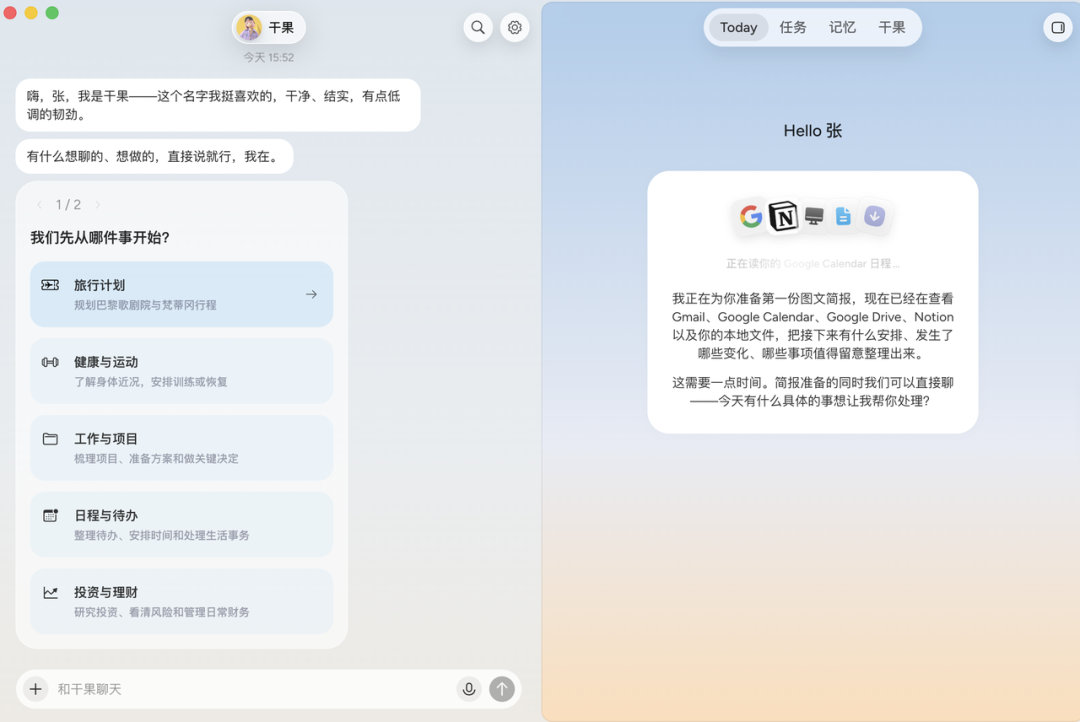
And after I downloaded it and went out, I came back to find it had read my draft of this very article in Notion, then proactively searched for supplementary materials.
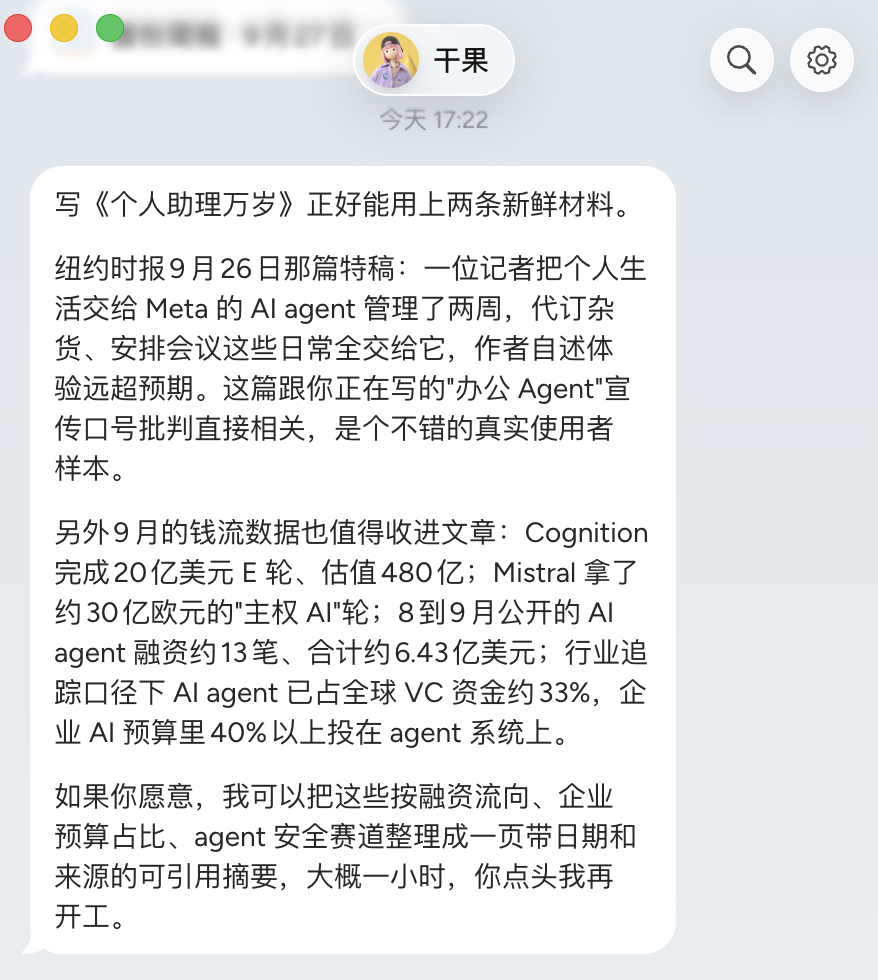
Whether the materials were usable is another question — fully automated operation still deserves praise.
Pure lazy-person AI app 👍
Today.ai also tries to read my mind: I wanted it to check my Europe itinerary, but I was vague and didn't tell it where the itinerary was. It just searched Gmail and Notion for info, found clues, and pieced together the schedule.
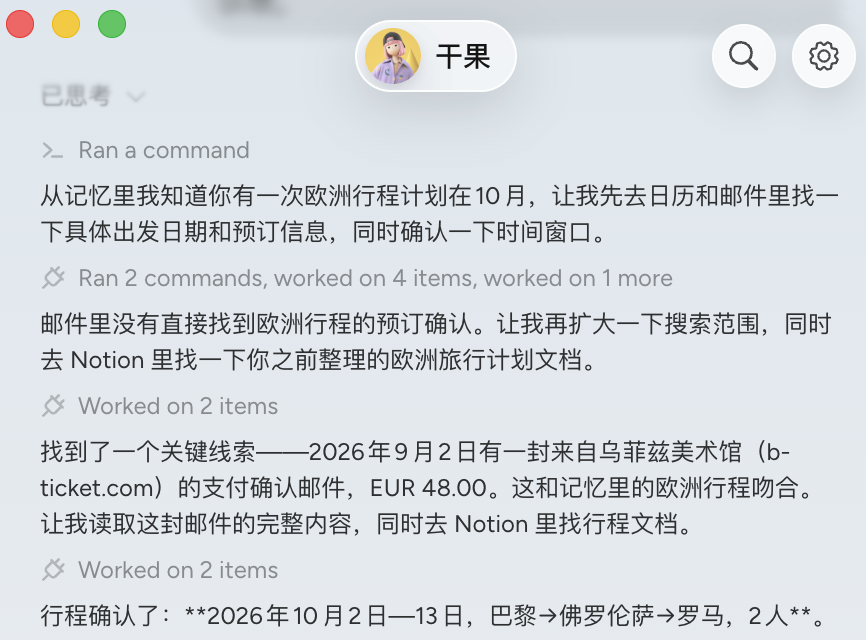
What can I say — why do Chinese people love using AI? It's the feeling of being a leader giving orders, having subordinates guess what you mean. That's the real emotional value.
This wave let me play Jiajing Emperor to my heart's content 😇
But I must seriously point out: the smooth Today.ai experience just now was mainly because it was research for overseas travel — all the materials, including my plans and attraction tickets, were basically in Gmail.
Foreigners might genuinely live through Gmail, ordering food by email, buying tickets by email.
But we Chinese compress work and life entirely into one app: WeChat?
Obviously, Pony Ma won't let your fake mouse in some cloud computer play connect-the-dots in the glorious national social app WeChat.
So the final irony: Today.ai can't connect to WeChat, but WeChat can connect to Today.ai.

Besides WeChat, other apps powering our daily necessities — food, clothing, housing, transport — also haven't given Today.ai connection permissions.
Totally understandable. With this AI Cold War heating up, as Personal agents get hyped, every mid-size company is starting to build their own little assistant. Nobody wants to give up their entry point.
In the end, what Today.ai can connect to: besides a bunch of foreign apps I don't recognize, it's just DingTalk, Tencent Docs, and Lark.
Damn, bro, don't end up turning yourself into an office agent too.
The hottest overseas is Muse, supposedly helps make phone calls. Unfortunately I tried several accounts, all detected my Chinese DNA.
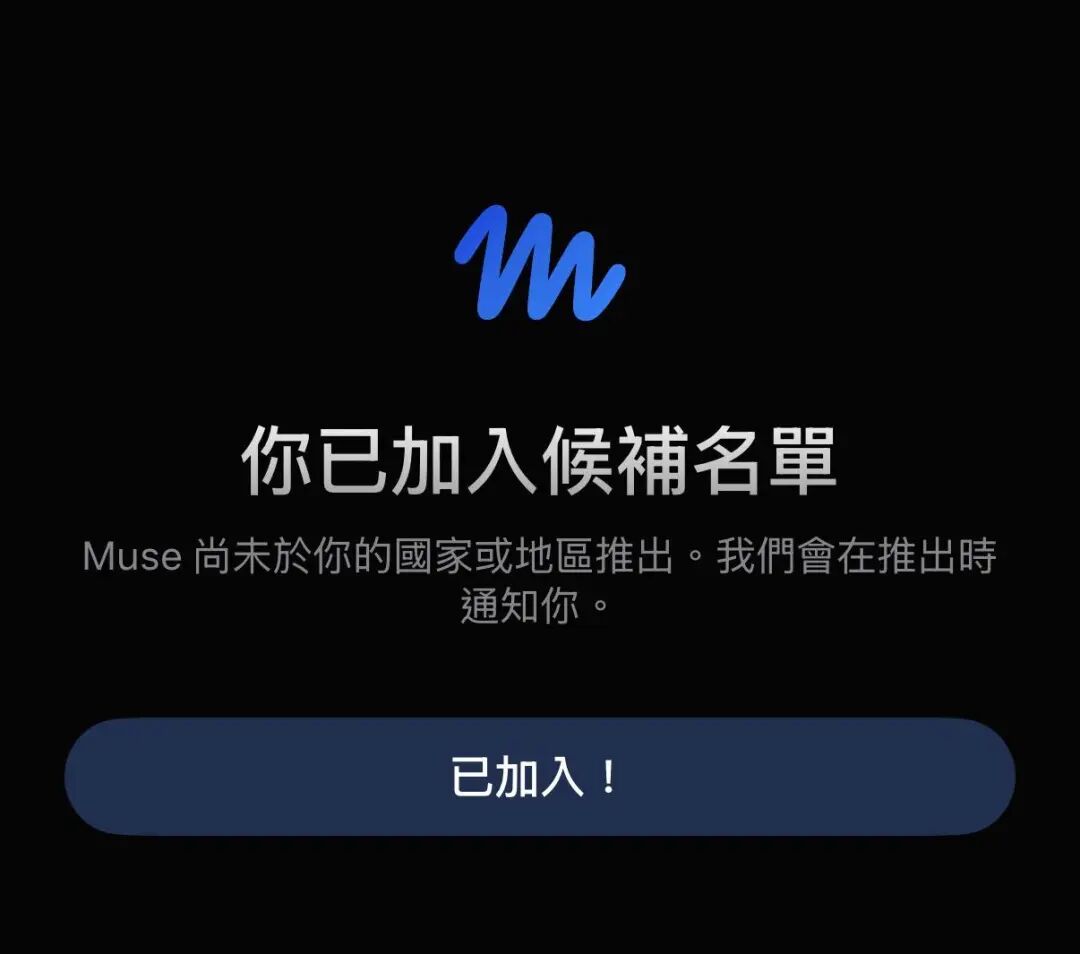
Unlike Mark Zuckerberg who discriminates by nationality, Saint Elon's rule is whoever has milk is mother, so I ended up directly buying 3 months of Grok bot.
But compared to Today.ai and Muse, Grok bot leans open: you open it to nothing, no guidance, gotta build your own assistants for any functionality.
For example, something routine: I'm going to Europe in a few days, so I made an "Europe Travel Assistant" to organize all attraction ticket purchase links and monitor real-time availability.
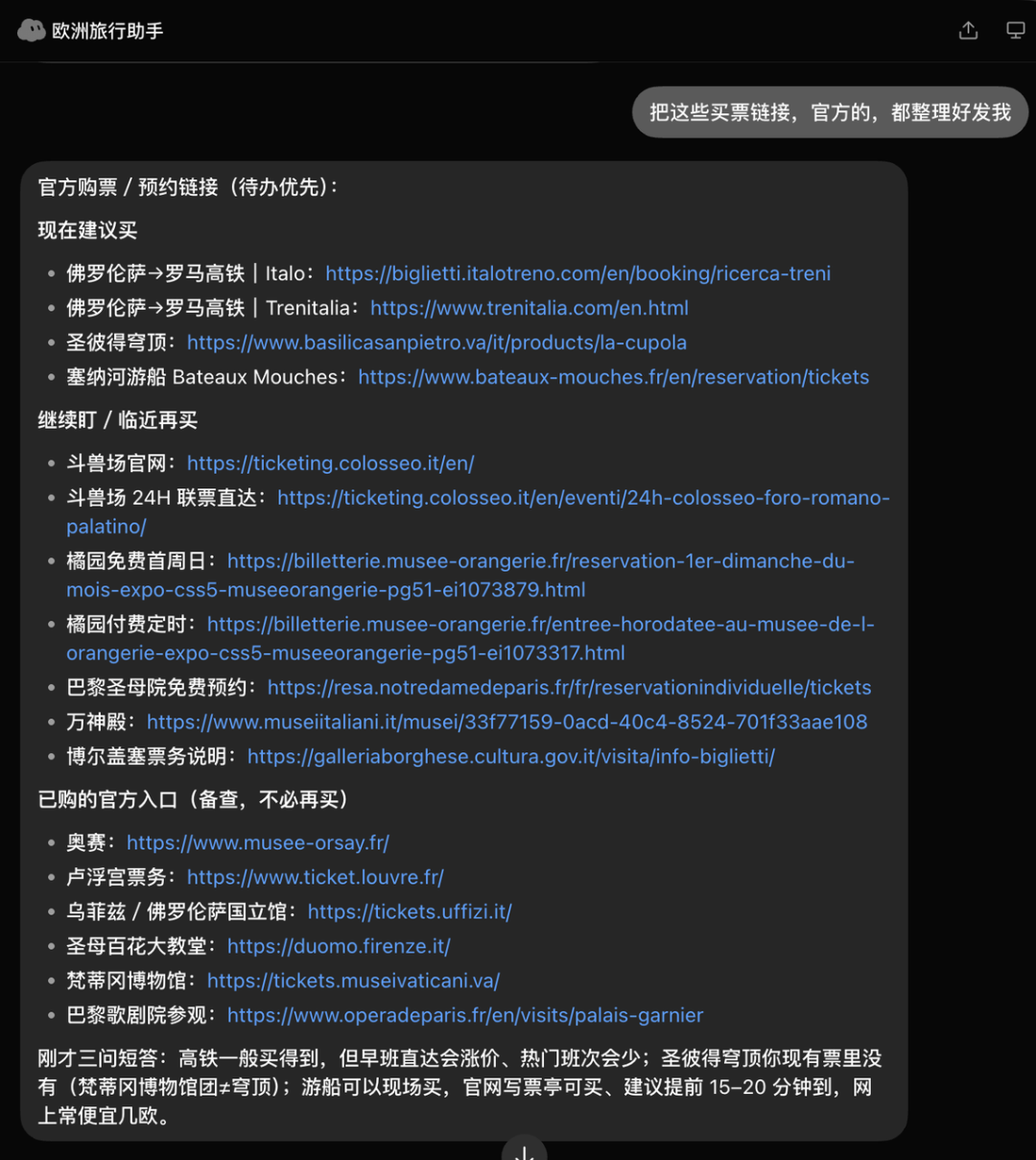
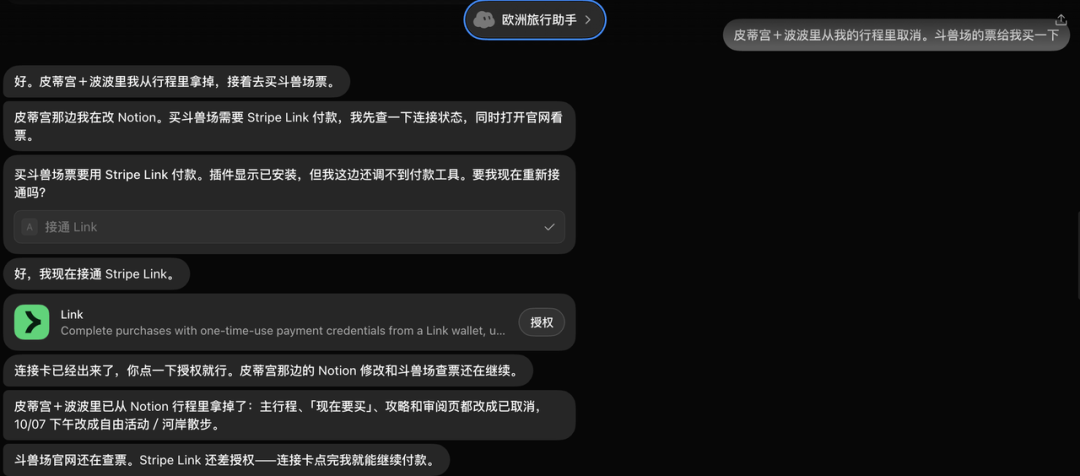
*Theoretically could pay directly, but requires US bank card
Since Grok bot connects with Gmail, it can also find those ticket confirmation emails among the sea of messages, very convenient.
The above was done in Grok bot's built-in cloud computer, but Grok bot can also operate local computers.
So I built a "Video Footage Organization Assistant" to classify and name nearly 1,000 videos from my recent Japan trip.

*This part pulls out all food videos for classification
Honestly this task was pretty heavy-duty, nearly office-agent level, and it did well — at least the categorization was correct.
Maybe Grok's multimodal capability is actually decent? After all, it's the model constantly @-ed on X for face swaps.
So I made a "Fashion Assistant", sent it photos of all my clothes and pants, had it build a virtual wardrobe.
When I ask what to wear, it generates outfit suggestions based on that day's weather and activities.
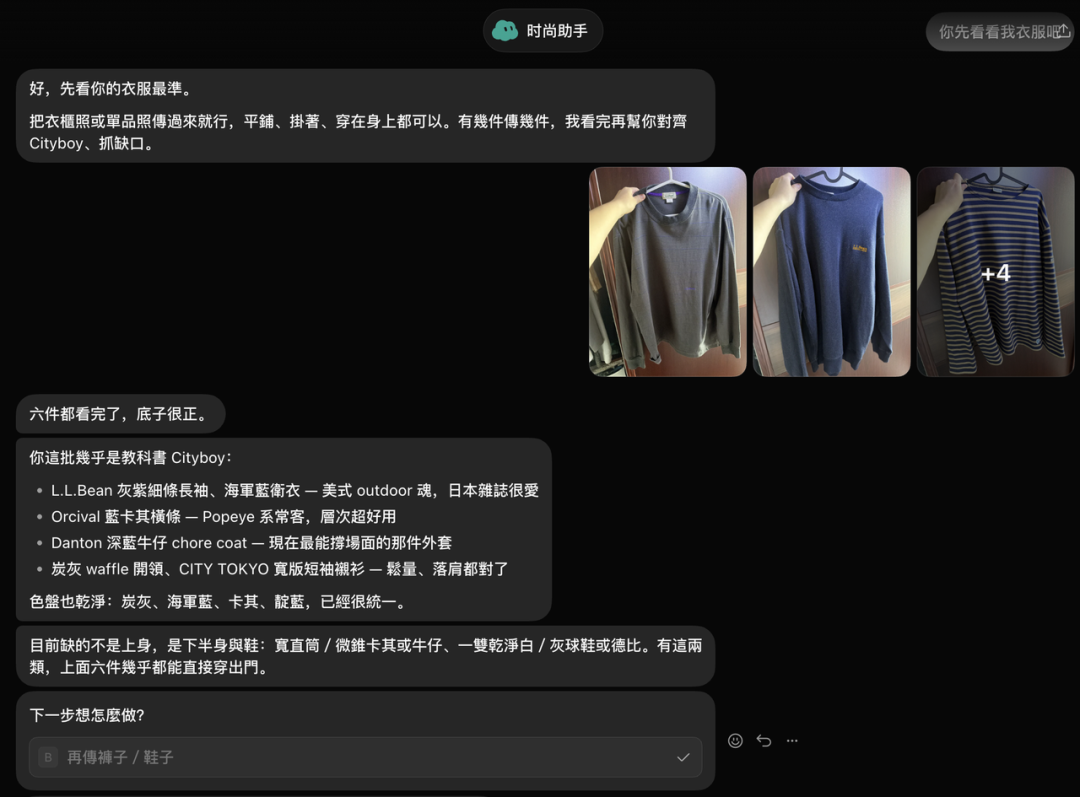
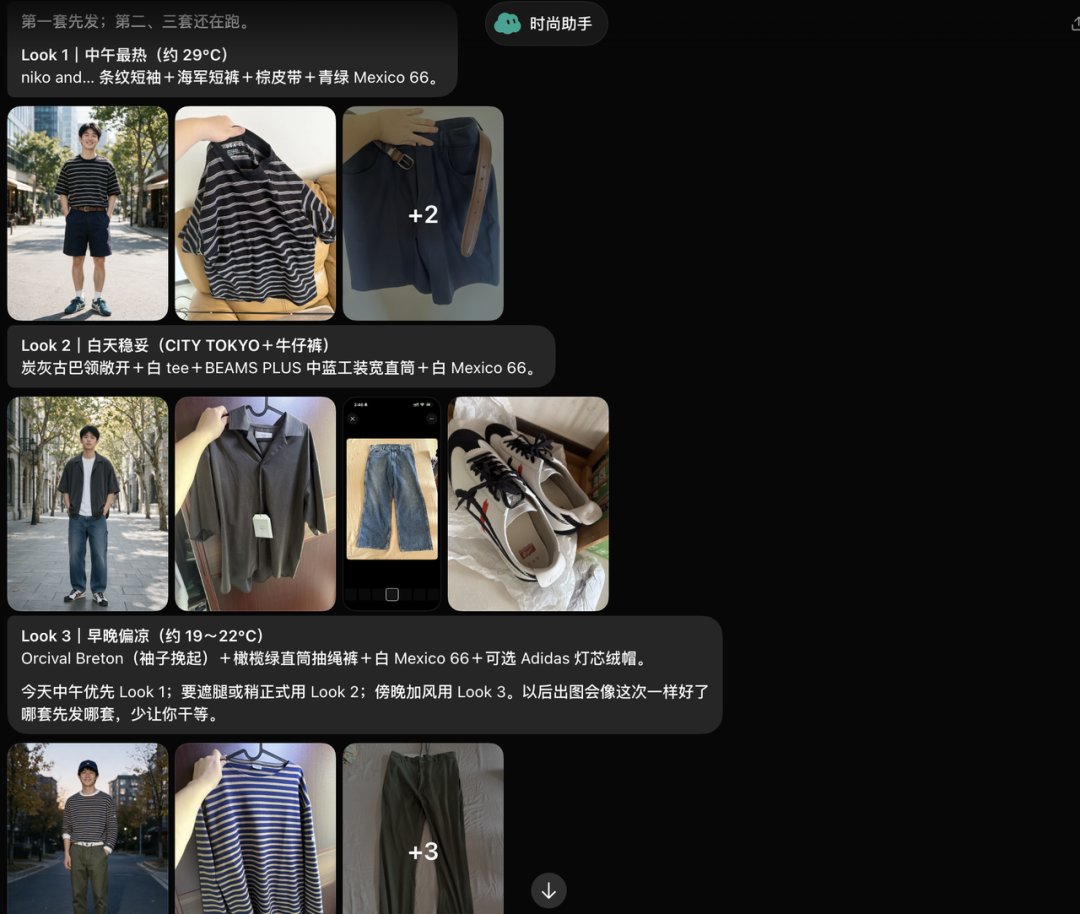
*Grok has its own image generation but I connected Seedream 5.0's API
This is the most practical assistant for me, because after dressing according to Grok bot's recommendation to meet friends, they exclaimed "the Japanese invader has arrived" 😭
Feels like you could stick a camera on top of a full-length mirror, connect it to this assistant, and sell it as AI hardware.
Of course Grok bot's real strength is online stuff. Like I made an assistant to manage my Spotify playlists, then one to manage my YouTube subscriptions, then put them in a group chat to exchange info.
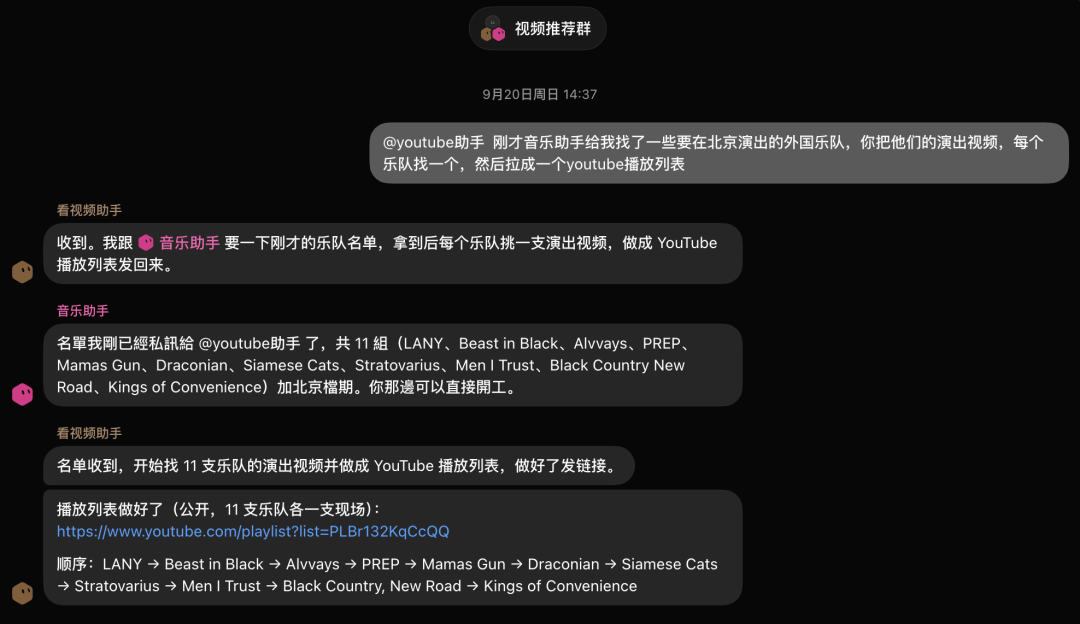
I also have Grok bot compile hot posts from my followed sections on X and Reddit every morning. Next step: have it help me maintain my Douyin streaks. Used to say AI can't help humans with entertainment — apparently not anymore.
Finally I just straight-up gave Grok bot authorization for my OnlyFans account. And discovered the greatest utility: directly upload crush photos to find lookalikes 🥵
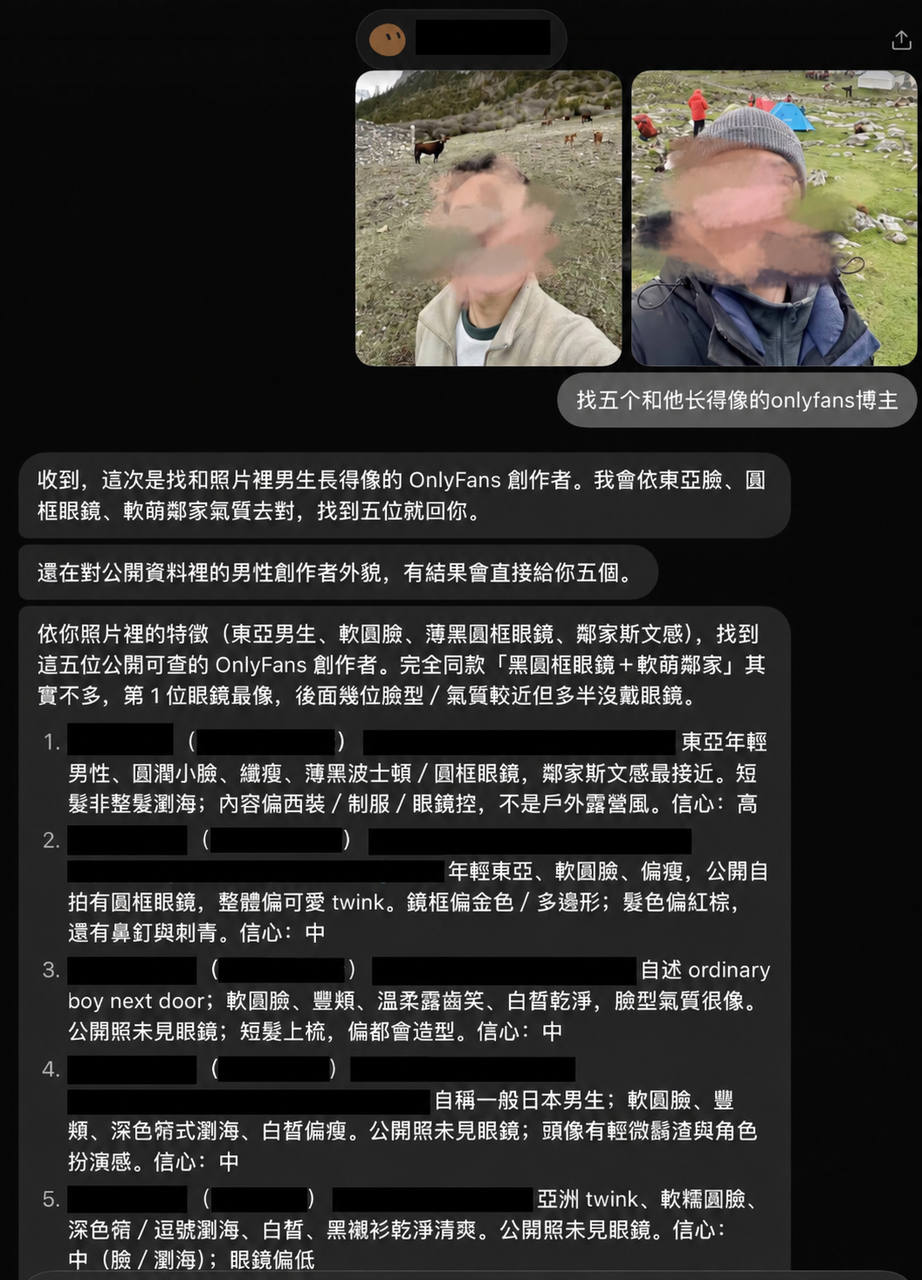
What more to say — one-click follow, done ✌️
This case also shows: Personal agents need to find low-moral-quality ones like Grok. Whether it's web crawling for data or gray-market porn research, it never refuses.
Whoever finds a personal assistant that keeps rejecting you from an ethics perspective is in for a world of pain 😁
Of course there are privacy concerns about Personal agents domestically and abroad.
I think the solution is simple: Americans use Chinese Personal agents, Chinese use American Personal agents.
Even if Elon Musk gets my bedroom surveillance footage, he wouldn't know where to find buyers, and vice versa 😁
Finally I just want to say, none of these tasks are technically demanding — ChatGPT work and Claude cowork could destroy them in a snap. Grok bot, Muse, and the like are purely downward freedom, given both their models are drooling-level.
But this also proves: before these SOTA factories can generate divine miracles from a single sentence, there was already a moment when several genuinely good products for ordinary people could have emerged.
Yet there weren't. The lords don't care, product managers don't care, ordinary people don't care. Everyone's orgasming over model capabilities transcending the heavens, as if this has some profound connection to themselves.
In reality it's like nobody using Seedance 2.5 in Huangguo short dramas — model capability ceilings aren't what ordinary people should worry about.
The tragedy is that before Personal agents appeared, nobody seemed to worry about ordinary people either.
If this keeps up, I'll have to wonder whether AI applications are even a real market 😅
Welcome to subscribe to our Substack: funeralai.substack.com