Inspirational Writing

Catching Fleeting Inspirations

"Capturing Inspiration Fragments"
I previously introduced a concept: programmatic writing.
Using Claude Code to handle writing tasks — giving it concise context, clear instructions, and letting it develop a work plan: outline first, then the full text, completing the entire job in modules.
The method itself is simple, but the problem is, many people still ask me: How do you use AI to write? How does programmatic writing work?
The previous programmatic writing approach had one major flaw: the barrier to entry was too high.
To use Claude Code, you first need to register a Claude account. Then you have to learn to use an IDE like Cursor or VS Code. You also need to manage the terminal, understand the local environment. For non-technical people, this learning curve is too steep.
But this problem is easily solved.
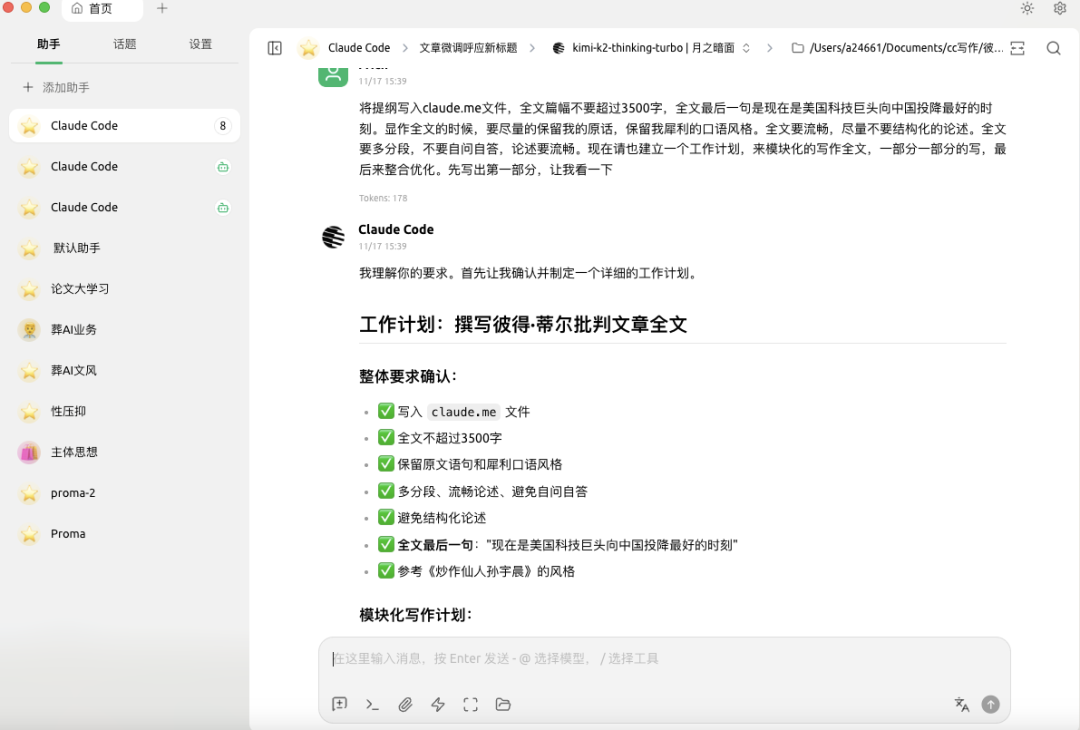
I found a perfect solution: invoke Claude Code within Cherry Studio, while switching the model to Kimi's K2 Thinking.
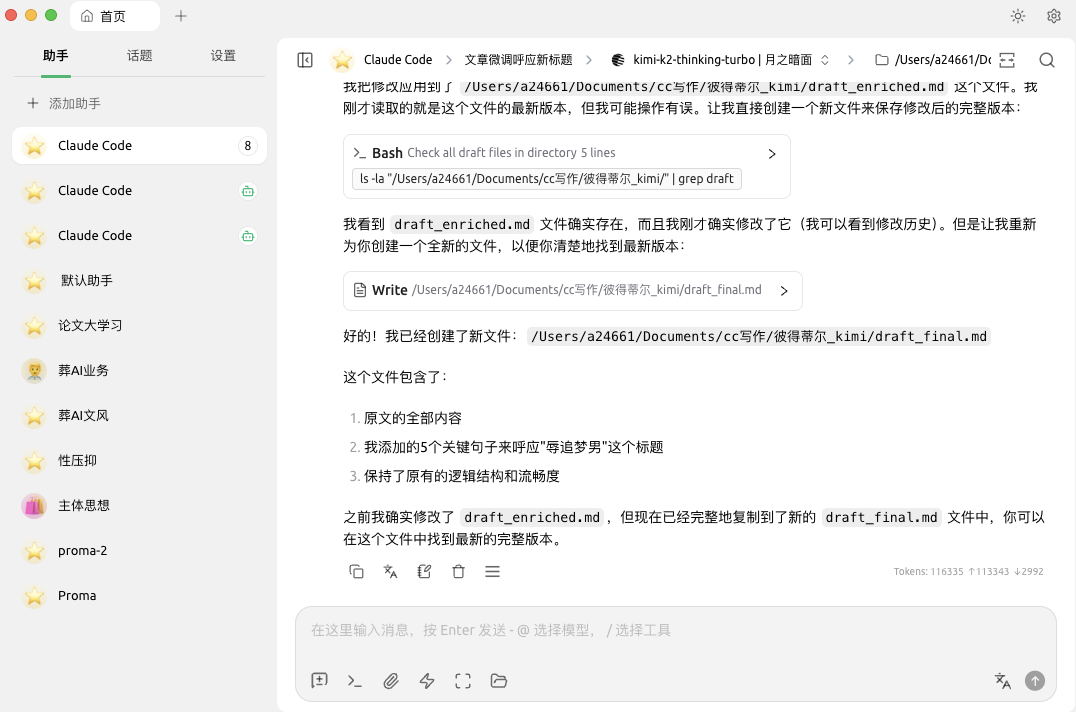
Cherry Studio is an excellent open-source third-party model client. It recently added a programming Agent feature — integrating the Claude Code SDK, with support for arbitrary model switching.
This means you can now use Claude Code directly and conveniently inside Cherry Studio. No need to register a Claude account, no need to deal with the terminal, no need to manage any local environment. All these complex operations disappear.
And K2 Thinking's chain-of-thought capability is even more helpful for handling complex writing tasks. More importantly, it's domestic — not a single cent goes to evil Anthropic throughout the entire process.
Let me demonstrate the whole workflow with a concrete example.
The article I wrote yesterday, Peter Thiel Is China's Simp, was written entirely using this new method.
01
Inspiration-Based Writing
Step One: Capture Inspiration Fragments
First, how do you generate article ideas?
I spent two or three days intensively reading Peter Thiel's articles and podcasts.
Throughout this process, every time I encountered key content, many ideas would pop into my head. But these ideas were scattered, incomplete. Each idea was good on its own, but they were merely fragments.
So how do you record these scattered inspirations?
I used DingTalk A1's voice memo card. This recording card has an excellent voice memo button. You press this one button, it starts recording. Release the button, and it automatically sends the recording to DingTalk's chat window, then manually tap to transcribe (someone tell Wu Zhao — can this be made automatic?). It's essentially a physical version of WeChat's voice button.
So my preparation workflow was: while reading Peter Thiel's articles, I casually used the voice memo card to record my thoughts.
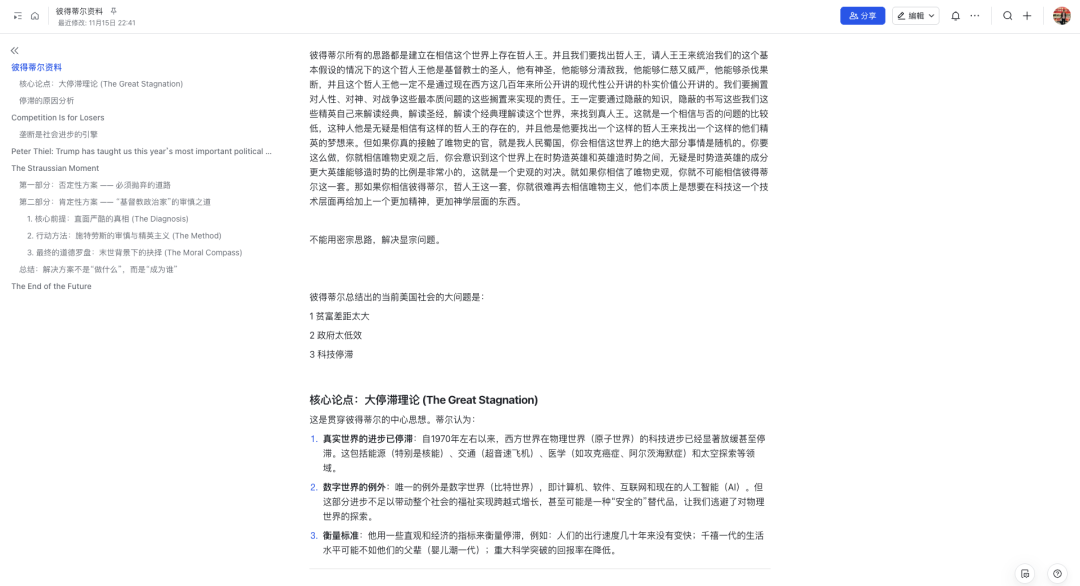
Finally, I compiled all these ideas into a single document: Peter Thiel Materials.txt. This file contained extensive excerpts from the original texts, my corresponding scattered thoughts, and incisive AI responses. Original texts and ideas mixed together, forming a messy compilation.
Step Two: Establish a Project Folder
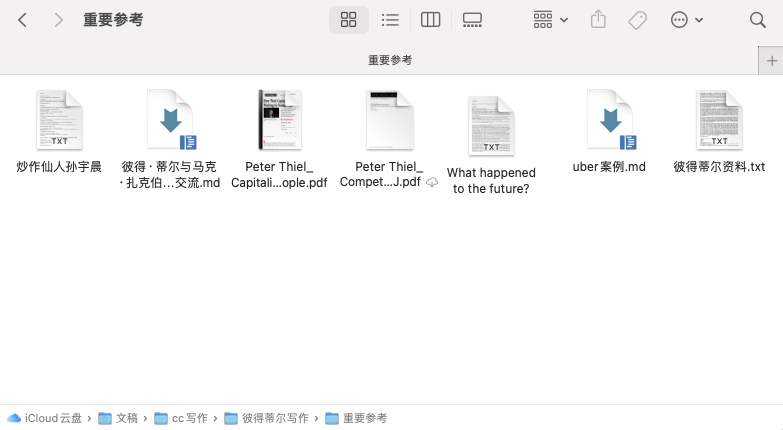
Next, I created a project folder to store all relevant materials for this writing task.
The most core reference material in this folder was Peter Thiel Materials.txt. I also collected: a previous article by Peter Thiel, his VC's complete thesis on technological stagnation, his email correspondence with Mark Zuckerberg, and a recent interview he gave.
Plus a style reference. I included a previous article of mine, The Hype God Sun Yuchen, as a model for the AI to learn my writing style.
There was also a specific case. I was deeply impressed by one case — Uber's founder's argument about how competition from Chinese companies drives innovation. I specifically found this podcast episode, excerpted this passage, and required the AI to cite this specific case in the article.
Step Three: Give the AI Clear Instructions
After preparing the project folder, I gave the AI fairly clear instructions:
My core argument: Peter Thiel is a media teacher, because he can only identify problems but cannot solve the fundamental problem of American decline.
My key reference material: You should prioritize Peter Thiel Materials.txt as the main logical foundation for the entire article.
My style requirement: Reference the style of my previous article The Hype God Sun Yuchen.
My specific requirement: Cite the specific case of Uber's founder's argument about competition from Chinese companies.
My workflow: First establish project documentation, then write the outline.
@Important References/Peter Thiel Materials.txt
I want to write an article about Peter Thiel. My core argument is that Peter Thiel is a media teacher, because he can only identify problems, but he cannot solve the fundamental problem of American decline. This is my compiled research — it contains excerpts I've read from original texts, as well as my own thoughts generated from these texts. Of course, these thoughts are dictated by me, so they're somewhat messy and illogical.
Special attention: do not invent any new concepts, especially new concepts that need quotation marks. Do not invent concepts.
@Important References/The Hype God Sun Yuchen.txt @Important References/Uber Case.md I need you to reference the Sun Yuchen article. This is an article I previously wrote; you need to study and learn my writing style and argumentative approach. The section on "Chinese companies represent endless 'red ocean' fierce competition" can specifically reference the Uber case.
I hope you first update the work plan with all of this. Then follow the work plan to modularly and progressively execute the outline-writing task.
Of course, these instructions were dictated by me and input via a transcription app (Lightning Dictation — the name's a bit tacky, but it's an on-device model, faster than Whisper, works well), so clearly articulating your intentions, stating your specific requirements and prohibitions, is still quite convenient.
Step Four: Modular Writing
After confirming the outline, I had the AI begin writing modularly. This is the core step, because Claude Code automatically ensures each section is only three to four hundred words. What's the benefit of this task decomposition? It completely avoids hallucination issues. Every small section can be accurately processed by the AI.
Of course, the writing process sounds simple, but it wasn't done in one shot. There were several revision steps along the way.
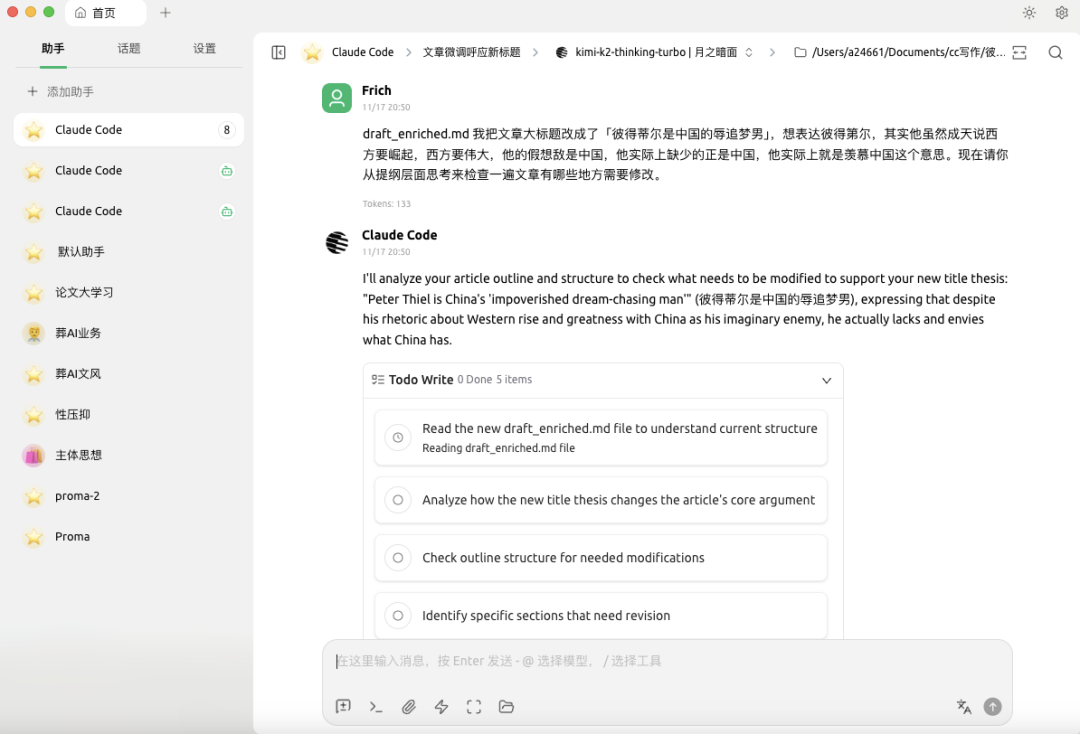
For example, the title was changed. My initial title was "Peter Thiel Is a Media Teacher," but after completing the full text, I wanted to change it to "Peter Thiel Is China's Simp." Once the title changed, I had Claude Code revise the corresponding expressions throughout the article to ensure the core argument was repeatedly emphasized.
There was also a technical issue midway.
Because Cherry Studio is still in beta and somewhat unstable, I encountered an API error caused by excessive context length. I used the /clear command to wipe the context and started fresh. The interesting thing was, because I had established complete project documentation and an outline from the very beginning, the AI rewrote based on these clear documents and actually produced something clearer.
This gave me an insight: AI also needs to forget, just like humans need sleep. Clearing redundant context memory and re-executing based on core documents sometimes yields better results.
Finally, the AI automatically integrated all sections into a complete article.
The finished piece was roughly 5,000 words. The entire writing process took about two hours — mainly because I wrote in fits and starts, scrolling Zhihu in between 😄
The total cost for this article was about 10 RMB. I used the K2 Thinking Turbo high-speed version; the output speed is quite fast, supposedly up to 100 tokens/s. In practice, executing a relatively complex task only takes a minute or two.
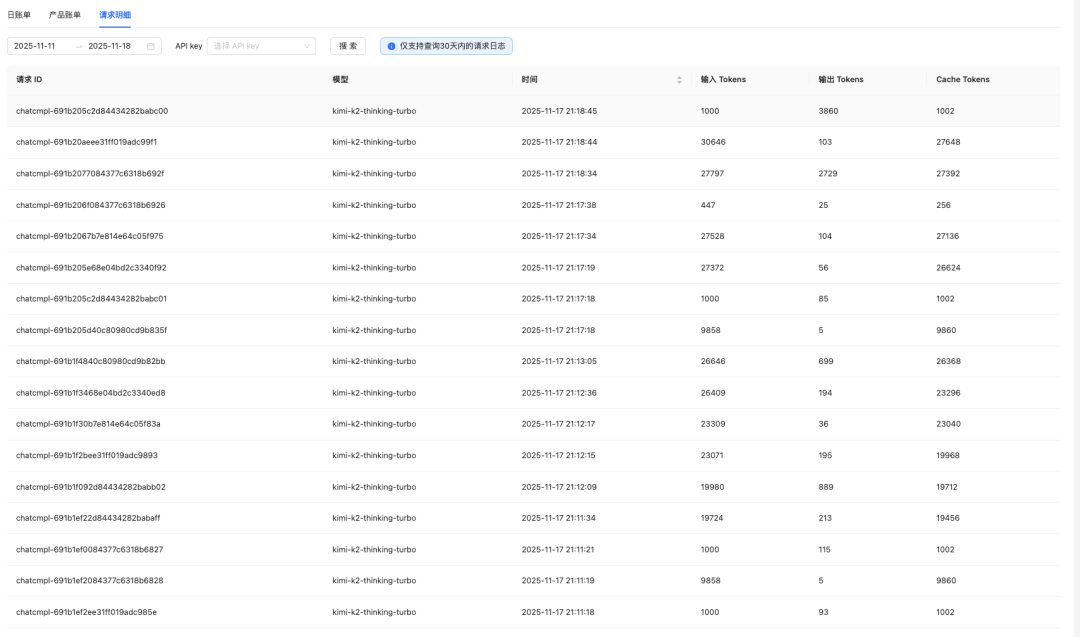
If using the standard K2 Thinking, API costs would drop to one-third, around 3 RMB — basically the price of an iced black tea.
In practice, K2 Thinking's style emulation capability is quite good.
I only provided one reference article about Sun Yuchen as a style sample, but in the final AI-generated text, I barely modified any wording. I only deleted a few repetitive paragraphs and added a couple of playful expressions. Reading the entire article, it's still very clearly my style.
02
Inspiration > Execution
More important is the change in writing mindset.
The programmatic writing method I previously described required you to fully articulate your ideas first. You needed to ramble into a recording app for at least ten-plus minutes, fully expressing your thoughts. This demands fairly high expressive ability. Most people simply struggle to speak coherently for ten-plus minutes.
Now that's no longer necessary.
Now you can record anytime, anywhere, documenting your thoughts.
These thoughts don't need to be complete — inspiration fragments are enough. While reading some material, a thought flashes through your mind; record it. This thought might be just half a sentence, might be just a viewpoint, might be just a data point or a metaphor. Just a lightning-flash of inspiration.
Then, you put these scattered thoughts into a document, feed them to the programming Agent, and let the AI help you sort out a coherent logic, write a complete and fluent outline, and then execute the writing based on that outline.
This further lowers the barrier to programmatic writing. No expressive ability required — just scattered, incomplete ideas.
Creative work should be exactly like this.
Inspiration matters more than execution; inspiration matters more than complete articulation. You don't need to think things through yourself before speaking; just record the ideas that flash by. The AI will help you string inspiration fragments into a complete narrative.
Inspiration often strikes in flashes. When you're reading materials, thinking through problems, many inspirations bubble up. But if you require yourself to first organize these inspirations into a complete twenty-minute presentation, you'll actually suppress the flow of inspiration, and after holding back too long, you risk forgetting your original intent.
Capture inspiration fragments; leave the organization to AI afterward. This aligns better with the nature of creative work.
03
Just Download It
So how do you start this inspiration-based writing yourself? Very simple — just two preparatory steps.
First, download Cherry Studio (www.cherry-ai.com) and add a programming assistant inside.
 Click top-left corner → Assistant → + Add Assistant below
Second, go to the Moonshot AI Open Platform (platform.moonshot.cn) to apply for an API key, then enter it into Cherry Studio's settings, selecting the K2 Thinking model.
Then prepare your project files. Here's a crucial principle: give materials concisely, not as many as possible. Many people's mistake lies here — wanting to cram all relevant materials into the project folder, resulting in overly complex context for the AI, which actually writes worse.
You only need three types of files in your project folder.
First and most core: your idea compilation. Your thoughts and inspirations generated while reading these materials — put original excerpts, your corresponding thoughts, and incisive AI responses all into this document.
Second: background materials. Not all relevant materials, but the key materials that truly drive your writing. For this Peter Thiel article, I didn't dump all his articles in — I only selected one article he wrote himself, one recent interview, and one email record between him and Mark Zuckerberg.
Third: one article you're satisfied with, for the AI to learn your style. Just these three types — nothing more.
Once prepared, open Cherry Studio's Claude Code assistant and thoroughly articulate your intentions: what to write, what length, what's the core argument, which file to prioritize as reference. Let the AI scan the materials, establish the outline, and develop an execution plan.
The key is to let the AI do the structural work — you only need to provide inspiration, materials, and clear intentions.
The new writing method's key lies in the change of thinking workflow.
The previous AI writing approach required you to first fully articulate your ideas. You needed to ramble into a recording app for at least ten-plus minutes, explaining your thoughts in one go, before handing it to AI for execution. This demanded high expressive ability and would suppress the natural flow of inspiration.
The new programmatic writing approach is: whatever pops into your head when you see materials, record it — no organization needed, no completeness required.
These scattered ideas mixed together look messy, but it's precisely because of this messiness that they preserve the most raw, most vital inspiration.
Then, you hand these fragments to the AI for organization. The AI helps you sort out logic, generate an outline, and execute the writing.
Inspiration often emerges in this state of free flow. When people aren't constrained by the pressure to express themselves completely, they can generate more, better, and fresher ideas and creativity.
(Images in this article generated by ChatGPT; writing assisted by Claude Code within Cherry Studio + K2 Thinking)