Kling AI Filmmaking Is Heartbreakingly Intense

Rules are rules.

"Rules Are Rules"
Our stance has always been: AI video doesn't need to keep chasing quality, because the masses basically treat this stuff as brain candy. The commercial ceiling for AI video is basically yellow-filter short dramas.
So when some model can see pores on a character's face, or another can spit out five-minute videos in one go, we've always treated it as entertainment. Feels like everyone's pretending they're in a nuclear arms race, getting all emotional about it.
Including when Kling AI announced its 4K update — we figured it was a gimmick, just stacking specs to find a shortcut to the table.
Right? Who watching Nailong, Fat Cat, or heartburn-free short dramas cares about video resolution? I'm already eating slop, what do I care about your specs?
But a few recent big stories made us realize: professional creators have their own judgment.
First, Kim Sung-su, director of 12.12: The Seoul Spring, released his own AI film. Here's the one-minute trailer ⬇️
A bit of The Substance in concept, some The Host vibes too.
Can't say the footage is hyper-realistic, but it's at least on par with CG tech, and cheaper.
And this at least proves one thing: domestically you've got Zhangke Jia watching short dramas; internationally you've got Kim Sung-su messing with AI. The upstream of entertainment is already actively embracing and using AI tech.
Your artsy-fartsy types are under attack from within and without.
Then at the Busan International Film Festival, Netflix openly disclosed data: they used AI in roughly 300 films, covering pre-visualization, art design, set design, editing, and VFX workflows.
Your actors' unions can cry in the Hollywood streets all they want — from directors to platforms, everyone's fully on board with superintelligence.
As audience members, we have no choice but to accept the mega-trend of high-end film and TV merging with AI. After all, we don't own the means of production — we watch whatever they make.
The funniest part? Kim Sung-su didn't use some Korean homegrown AI for this film. He used Kling AI, the same one that first dropped native 4K.
So we wronged Kling AI before. Turns out the guy really was playing the long game: 4K is useless for short dramas and phone screens, but necessary for the cinema screen.
And Kling AI's recent Kling 4.0 update pushes further in this direction: large movements, complex camera work, up to 30 seconds of native generation, plus the ability to combine up to 15 references from images, video, subjects, and voice timbre, supporting up to 10 keyframes.
Sounds pretty slick, like they're gunning for Seedance 2.5. How does it actually shoot? I made some test cases ⬇️
01 "I Wanna Go to China" Multilingual MV
Simply put, filmmaking is two things: dialogue scenes and action scenes.
First, dialogue. Kling 4.0 claims it can generate Chinese, English, Japanese, Korean, Spanish, Portuguese, German, French, and Hindi, plus mimic dialects like Beijing, Northeastern, and Sichuanese — rebuilding the Tower of Babel, basically.
So I designed a high-difficulty multilingual MV: English, Japanese, Russian, Shanghainese, and Henan dialect, some people singing while running, others singing in noisy trenches, with complex camera movement and "similar montage" connecting different characters.
Results below ⬇️
With constantly shifting shots and moving characters, the lip-sync stays locked in;
The sung lyrics and subtitle text both sync in real time, and the subtitles are crystal clear;
The wildest part is these completely unrelated scenes actually transition smoothly.
This is a relatively extreme test, since outside of Bollywood musicals, you probably don't need a multi-person MV sequence in the middle of a film.
So I also made a pure dialogue piece themed "I wanna go to China" ⬇️
This one shows Kling 4.0's chops: facial expression changes before, during, and after characters speak, plus tone and inflection in different contexts, all rendered well; it even uses silence to convey emotion. Very cinematic 👍
02 Phantom Step Fight Scene
Dialogue tested, now action. The phantom step meme has been hot lately ⬇️
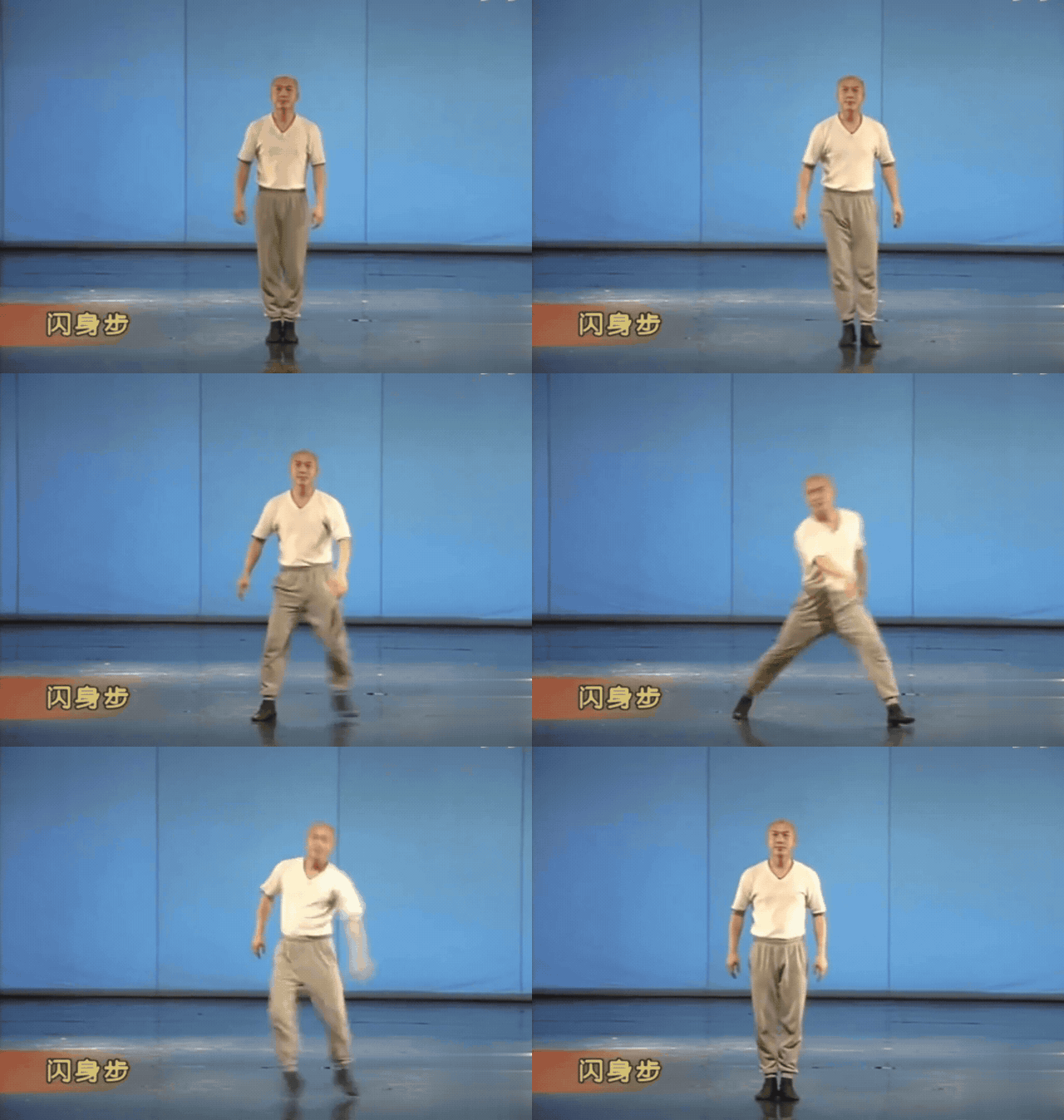
So I wanted to make a fight scene featuring this move: an old Chinese martial arts master encounters foreign assassins in a library, fighting them in tight quarters, using the phantom step.
To test Kling 4.0's coherence, I requested a direct 15-second long take — camera movement only, no cuts.
After several versions, here's the result ⬇️
Kling 4.0's spatial sense is strong. The two fight while moving, camera follows throughout, the set doesn't collapse.
The impact between people, the collision with bookshelves — the physics and sound design all match, with old Hong Kong film energy.
This is also an extreme test, since there are lots of books in the background; maintaining consistency and stability is tough 🥳
03 Heartburn-Free Cinema
Dialogue and action both tested — now let's see them combined. Can one person make an AI film purely with Kling 4.0?
"Heartburn-free" short dramas have been hot lately. Rough plot: a shop owner insists on good oil, customers balk at the price and leave, someone suggests switching to cheaper oil, owner says "rules are rules." Customers eat elsewhere and throw up, come back to the expensive stuff, saying it's pricey but "doesn't burn your heart."
Pretty dramatic arc. So I had Kling 4.0 make film versions in the styles of Wong Kar-wai, Wes Anderson, and Tarantino.
First, the Wong Kar-wai version ⬇️
The set and lighting design genuinely has that Wong Kar-wai flavor.
And looking closely at the characters — every person, every second, their faces are alive. Either micro-expressions or subtle eye movements, skin wrinkling accordingly. They don't just stand there like zombies while someone else talks.
Next, the Wes Anderson version ⬇️
From framing to color grading to score, unmistakably Wes Anderson.
This version often shows both shops simultaneously, doing the same actions — theoretically very easy to mix up.
But Kling 4.0 can reference up to 15 sources. Relying on this strong consistency and stability, this 30-second piece holds together until the very end.
Finally, the Tarantino version ⬇️
This one's even more on-point — not just mimicking color palette. The opening quick-cut close-ups, the mid-section violence aesthetic, both executed well.
And you can see Kling 4.0's physics are high-level: ice cubes rattling in glasses, soup bubbling in pots, leather jackets denting under high heels — all of it.
Another impression from generating these three videos: Kling 4.0 has strong holistic coherence. It doesn't feel like guessing frame by frame, but more like having a director's command center, planning the whole piece first then generating uniformly.
So all three videos have very measured pacing. Even the BGM matches the visuals well — music and plot consistently hitting climax together 🫡
04 Remaking 12.12: The Seoul Spring
Finally, since we opened with director Kim Sung-su making AI films, let's close by AI-remaking director Kim Sung-su's film. Paying him back in his own coin.
So I had ChatGPT reverse-engineer the prompt for that famous scene from 12.12: The Seoul Spring, then had Kling 4.0 regenerate purely from text, but as a one-take version.
Result: plot accurate, faces pretty close ⬇️
What can I say? This quality, I don't feel much difference from the original.
Especially check the close-up when General Chun delivers his signature line at the end — even facial muscle twitches create lighting changes.
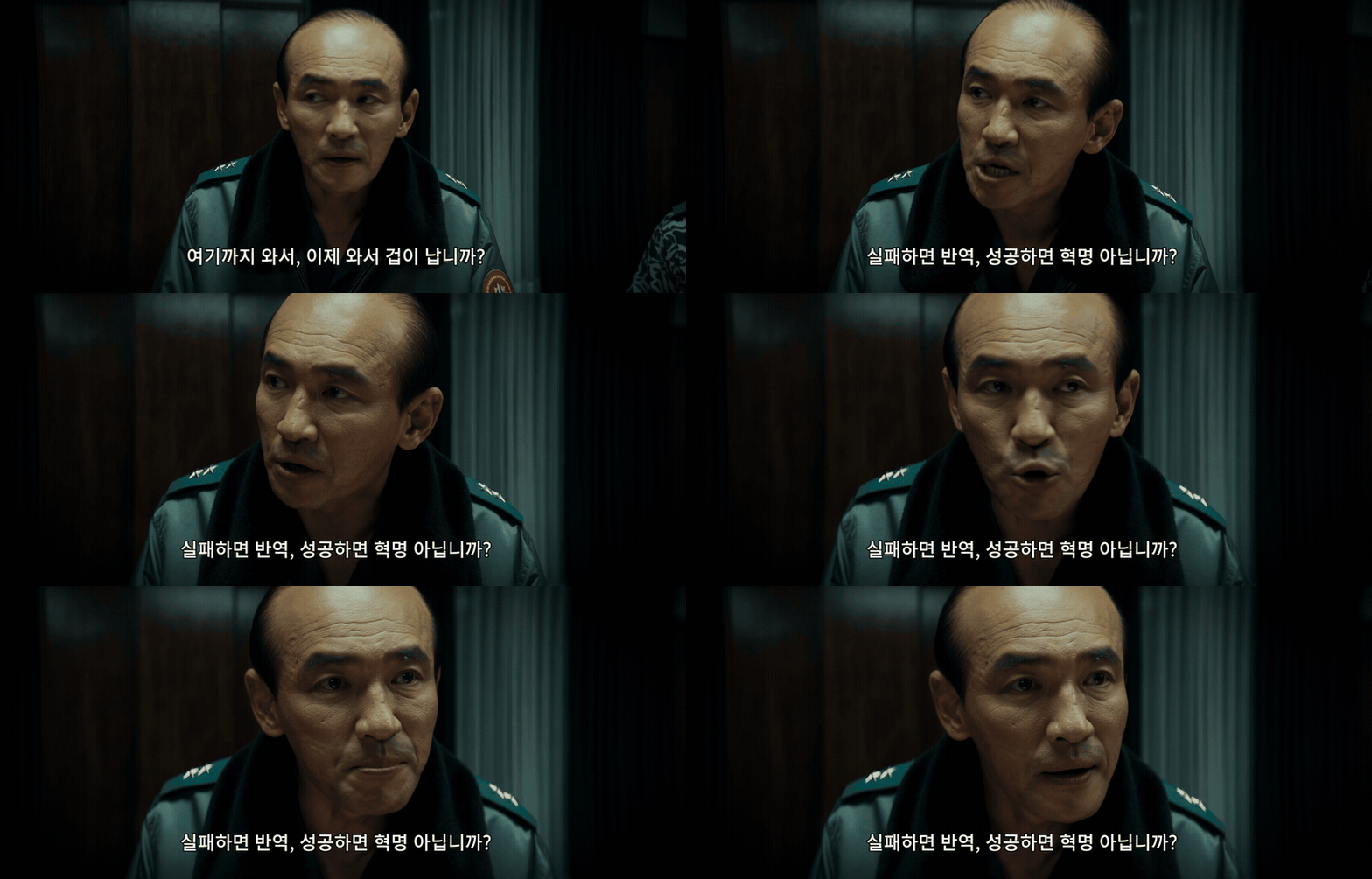
So nuanced. I can't imagine how many amateur directors will be hand-crafting Korean films once Kling 4.0 opens up 4K — just remake The Fifth Republic episode by episode and call it a day.
I'm genuinely scared someone will AI-remaster all these classic films. Soon finding stuff online won't be about pirated vs. legit — it'll be impossible to tell original from AI remaster.
So after this Kling AI update, traditional film directors should be feeling pretty heartburned.
No wonder Kim Sung-su rushed to make films with Kling 4.0 — turns out he's racing to be humanity's traitor, surrendering to our great AI overlord, making arrangements for the future 🤭
After making all these films, my biggest feeling is: Kling AI has at least found a suitable direction for itself — filmmaking.
Nowadays AI video model updates easily become buffets: some video editing, some animated comics, some 3D mimicry... looks comprehensive, but with a heart set on being a hexagonal warrior, you end up a Frankenstein.
Kling 4.0's update is very focused: large movements, complex camera work, 30-second generation, character consistency — all in service of making complete cinematic blockbusters.
Even Kling 4.0's weakness — prompts must be precise down to every sentence and action or the footage looks like PowerPoint — seems purpose-built for professional creators. After all, these pros are all control freaks who'd rather adjust frame by frame themselves.
Even their marketing is an open secret: collaborating with Korean directors, going to film festivals, practically tattooing "I LOVE FILMMAKING" on their forehead.
Saying is one thing, doing another. But Kling AI's current state is enough to integrate into professional film production workflows: certain scene shots and VFX shots, including non-human dialogue previously only achievable with CG — Kling AI fills those gaps perfectly.
Going forward, watching films may not require choosing between "shot by humans" and "AI-generated." Having both in one film, blended so audiences can't tell — that's the future normal for film and TV.
Then it'll be directors burning tokens, and Hollywood actors' unions burning with heartbreak 😭
⬇️
Subscribe to our Substack: funeralai.substack.com