Mulerun Wants to Build an AI Taobao

Wait for the big one to come

"Wait for the Big One"
"The most important thing about being online isn't learning—it's having fun ❤️
These days, my fellow hometown folks doing AI startups are running out of material. In light of this, I'm launching the Big Chess series, offering strategic takedowns of Agent platforms from a high-level perspective.
To play big chess, you gotta think like a boss. Our slogan: Everyone becomes Xing Wang, we all get to be Yiming.
First installment: Manus. Second: Coze. Third: MuleRun."
Picking up where we left off.
Last time we talked about ByteDance's Coze. The conclusion: regular users (UGC) can't sustain an Agent platform.
On one hand, the development part of low-code platforms has already been replaced by Vibe Coding. If users want to mess around, they just talk to AI and generate code directly—no need to drag and drop components anymore.
On the other hand, no new content format has emerged yet. No new short-video equivalent means no new AI content platform opportunity. Everyone's social and expression needs are already monopolized by traditional social media; there's no reason to migrate to a cold-start platform.
So here's the question:
It's 2025. I'm Mama Wu, looking at this half-dead pile of AI platforms on the market. How do I build another Agent platform?
Alibaba Cloud's Mulerun is a very Alibaba-flavored answer.
Mulerun's core philosophy: abandon UGC, do supply-side reform.
Previous Agent platforms—whether YouWare, MyShell, or Coze—all followed the demand-side reform playbook. They wanted regular users to create content on the platform, attract more users to consume it, and form a UGC ecosystem.
But事实证明, the demand-side reform path for Agent platforms is tough to pull off.
Mulerun's choice: go straight to small-B2C. Find professional developers to customize Agents, raise the quality of Agents on the platform, and attract regular users that way.
The platform raises the bar for developers. To apply as a Mulerun developer, you need to submit development case studies from professional platforms like Dify or n8n, then pass review.
Mulerun doesn't need a bunch of C-end users coming to mess around on the platform. It wants to solve the problem from the supply side.
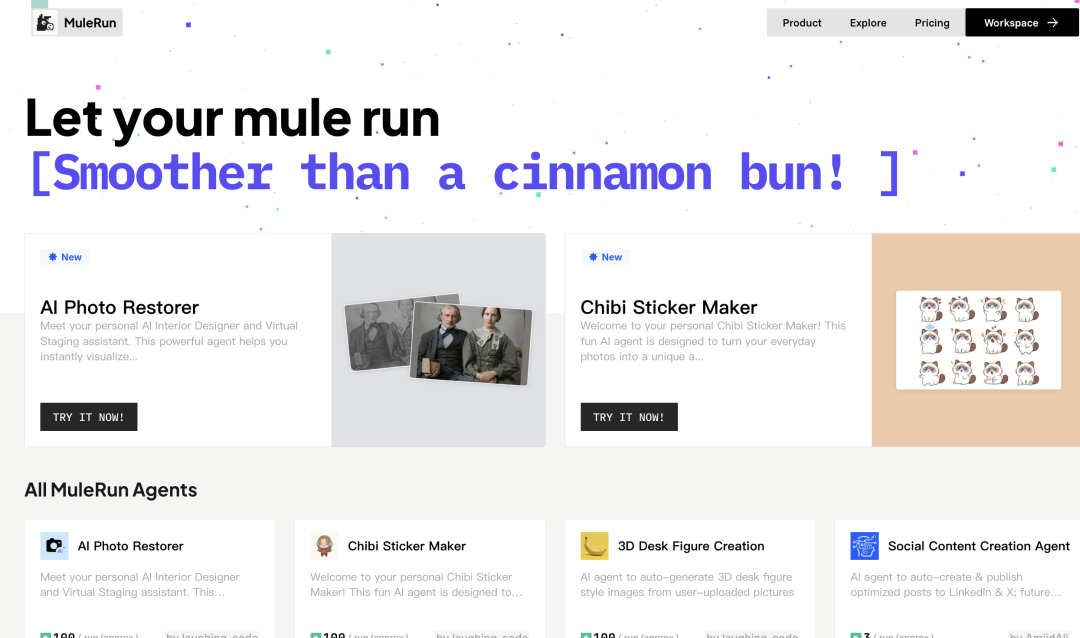
I don't need a bunch of regular users wasting server resources on my platform—it's not like they'd produce anything serious anyway. I'll go straight to professional developers, small teams, have them publish high-quality Agents on my platform. The platform provides the infrastructure—Alibaba Cloud compute, Wuying Cloud Computer, traffic support.
Then the platform takes these quality-approved Agents and sells them to the broad C-end user base.
This is pure, unadulterated Taobao thinking.
Taobao is a small-B2C platform; Tmall is B2C. What really made Taobao work was serving those foreign-trade factories and small merchants in Wenzhou, Yiwu, and Guangzhou.
eBay at the time was C2C—individual sellers offloading used stuff, platform taking transaction fees. The problem with this model: unstable supply, uneven product quality, sellers had no incentive to buy ads or do operations, platform couldn't turn a profit.
Taobao made a lot of mechanism innovations—no transaction fees, Alipay to guarantee transactions. Plus they built an incredibly strong sales team, aka the Alibaba Iron Army. Tons of wild-road sales bros went deep into Wenzhou and Yiwu factories, pulling those small merchants with stable supply but no national sales channels onto Taobao one by one.
These small-B merchants formed Taobao's core supply. They could provide massive, standardized product catalogs and were willing to pay for promotion.
Taobao, through supply-side reform, truly pried open the massive demand-side market.
What Mulerun wants to replicate is this story: I'll go find a bunch of AI Yiwu small-goods bosses myself, have them list their goods on my AI Taobao.
I took one look at Mulerun and cracked up.
First off, their UI design is gorgeous. On an internet flooded with mediocre, boring,小清新-style designs, Mulerun's design has taste—it's anti-mediocre, anti-boring modernism. Reminds me of the ancient download software eMule 🫏.

Second, their thinking is so classic. At a time when a whole generation of new entrepreneurs has been collectively brainwashed by Douyin—any big story has to be data flywheel + UGC community—the Alibaba bros pulled out their signature Alibaba e-commerce playbook. You gotta say, it's a version rollback.
But how's the inventory on eMule Mulerun right now?
Let's just say it's still very early.
Mulerun currently has all of 21 Agents. Average quality is definitely higher than YouWare or MyShell, but still not a single one that makes me want to pay.
A few cases left an impression.
One is "Honkai: Star Rail Auto-Grind"—it can't actually play the game for you, but it can auto-login to claim points. Another is the AI browser "General Browser Operator"—like using Manus, you input a question, it calls a cloud computer to browse the web, and generates a report for you. I honestly can't tell much difference between these generic Agent-generated reports.
Both of these Agents rely mainly on cloud computer capabilities. The Wuying Cloud Computer that Mule calls is pretty legit.
Manus calls AWS cloud computers—you can see a browser interface, and you can even enter it and operate the browser yourself. Coze Space's is rougher, just a command-line interface, no interactivity.
Mulerun's Wuying Cloud Computer directly displays a full Windows desktop. You can actually operate this cloud computer, just with some lag.
There's also a Web3 case. A crypto KOL had Mulerun custom-develop a trading Agent, which went live against a human trader and won. The Agent found a funding rate arbitrage opportunity, while the human trader ended up YOLOing and losing.
But this Web3 trading Agent isn't listed yet. You crypto folks hype too crazy—I'll stay out of it for now.
The rest are small tools you can totally imagine. Nano Banana can one-click generate figurine photos, and generate Mulerun-style avatars. These small tools aren't much different from My Shell.
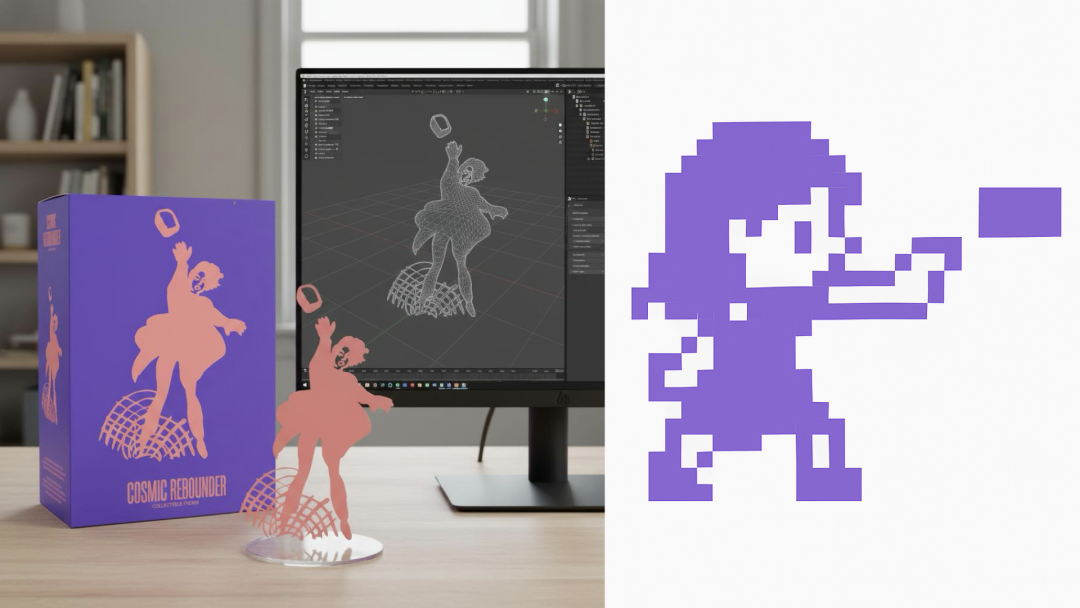
The most direct problem: Mulerun is still AI eBay, not AI Taobao.
Because the most core, essential feature that distinguished Taobao from eBay was no transaction fees. And Mulerun is planning to take a 5% cut.
How can an Agent platform charge transaction fees? When Teacher Ma built Taobao, the slogan was no fees for three years. Later the money came from selling search ranking ads to merchants.
There's an even more core problem: Taobao needed a search box. With thousands or tens of thousands of Agents in the future, users can't flip through introductions one by one. The platform has to provide a unified entry point.
The most direct form I can think of is something like Quark's "Super Box." Users put any demand into one search box, and the platform automatically routes to the most suitable Agent to execute.
But the most core question is: In the AI era, do we really still need a Taobao or an Agent Store?
Taobao and the App Store rose because in that era, the cost for small merchants and indie developers to build their own channels and acquire traffic was extremely high.
But times have changed.
Today, it's not impossible for an Agent small team to blow up overnight through social media. The barrier for small teams to build their own channels has genuinely lowered. What developers and small teams lack most isn't distribution—it's ideas.
This question, you can't dance around it like a shaman. No one can assert whether an AI Taobao will definitely exist in three years. This kind of thing, you just gotta bump into it and see.
My intuition is that eMule Run Fast has a shot. Because the situation of AI supply side aka professional developers is too similar to those small merchants back then who had goods but couldn't sell them. They need a platform that can connect users, solve trust, and provide infrastructure.
But building a platform was never a pure tech job. A platform is a connector—it requires operations, growth, sales, and extremely comprehensive combined capabilities.
The story from over a decade ago was: Alibaba Iron Army sales bros played the full court. After finishing Taobao, they went to Meituan and built the ground team, helping Meituan survive the legendary Hundred Regiments War.
My business story awakening was reading He Tao's The Vanishing Coal Bosses during evening self-study in high school.
During the Hundred Regiments War, coal bosses rolled up with hundreds of millions in cash to build group-buying sites. Thought they were financially invincible. Then they found out Xing Wang and crew could raise from US dollar funds, and completely lost confidence.
And now, these Agent platforms like Mulerun are still too early. Still in the stage of not wanting too many users, invite codes not even canceled yet.
The real war I'm waiting for—where the major giants go all in, go crazy with money burning, betting on an AI-era platform opportunity—is still far from arriving.
What can I say?
Go back now, drink two bottles of fake liquor, sleep until next year, and wake up when Alibaba, Tencent, ByteDance and these giants come in with their big money-burning budgets going all out. You'll find you didn't miss a thing.
Wait for the big one.
(Article illustrations generated by ChatGPT, Gemini 2.5 Pro assisted with writing. Preview of Thursday 8pm livestream: AGI Bar on Zhongguancun Startup Street, going live IRL with the founder of Macaron)