Open-source models are the united front
War of Attrition
"Protracted War"
"The era of large model versioning is over; the new era of AI applications has arrived. To prepare for the next phase of AI applications — teeming with life and vigorous competition — Zang AI has revived its old tradition of playing the long game. This is the second essay, focused on open source. The next one, on applications, I haven't finished yet."
Although domestic models are in excellent form, with new releases taking turns speedrunning Opus 5 as a boss fight, we must still see the situation clearly and not deceive ourselves.
The theory of quick victory and the theory of failure are two sides of the same coin — both are deeply harmful.
The sequence matters. First, in early June, the evil Anthropic released the powerful Fable 5. Only then did numerous Chinese models emerge with benchmark scores approaching Fable 5.
The fundamental pattern of OpenAI and Anthropic maintaining a substantial lead has not changed. The premise is that our large models remain behind; only then can we discuss whether the gap is six months or four months.
Whether measured by model performance or parameter count, K3 and Qwen 3.8 Max remain a full major version behind Fable 5. With GPT 6 imminent, the gap may well widen.
The progress of these past two months mainly manifests in faster catch-up speed from domestic models. Through the successive releases of GLM 5.2, K3, and Qwen 3.8 Max, we can confirm a basic fact: Chinese large models are accelerating their improvement, and the gap between open-source and closed-source models is temporarily narrowing.
The most critical variable in this is open source.
Open source has ended the logic of failure theory, replacing "the United States blockading China's AI" with a protracted war of "open source surrounding closed source."
The logic of failure theory is straightforward. The United States possesses the most and most advanced compute, plus OpenAI's first-mover advantage. Large models, once the technical path is validated, are primarily a matter of scaling compute and data.
On compute, NVIDIA GPUs shipped to China inevitably suffer attrition. On data, high-quality human labeling also started first in the United States; synthetic data — such as relay stations benching with the Claude API — similarly suffers attrition. Respecting the law of conservation of energy, Chinese large models could never catch up to the United States.
The logic is sound. But if everything followed logic, there would be no entrepreneurship — we'd all just dutifully clock in and tighten screws.
I've mapped out the key milestones in major model weight releases.
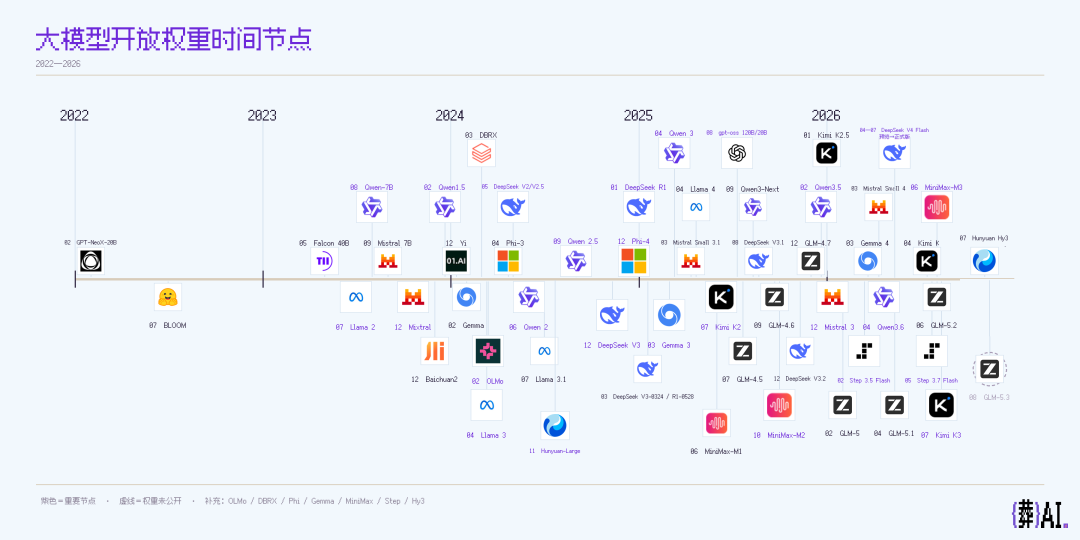
At a glance: open-source models evolved from mostly experimental small models in the early days to three recent releases approaching Opus 5. Open-source model performance is converging on top closed-source models at an accelerating pace.
Chinese vendor-led open-sourcing of large models has shifted the balance of power. Open source has expanded AI's total addressable market, unifying all AI teams outside closed-source models into a united front.
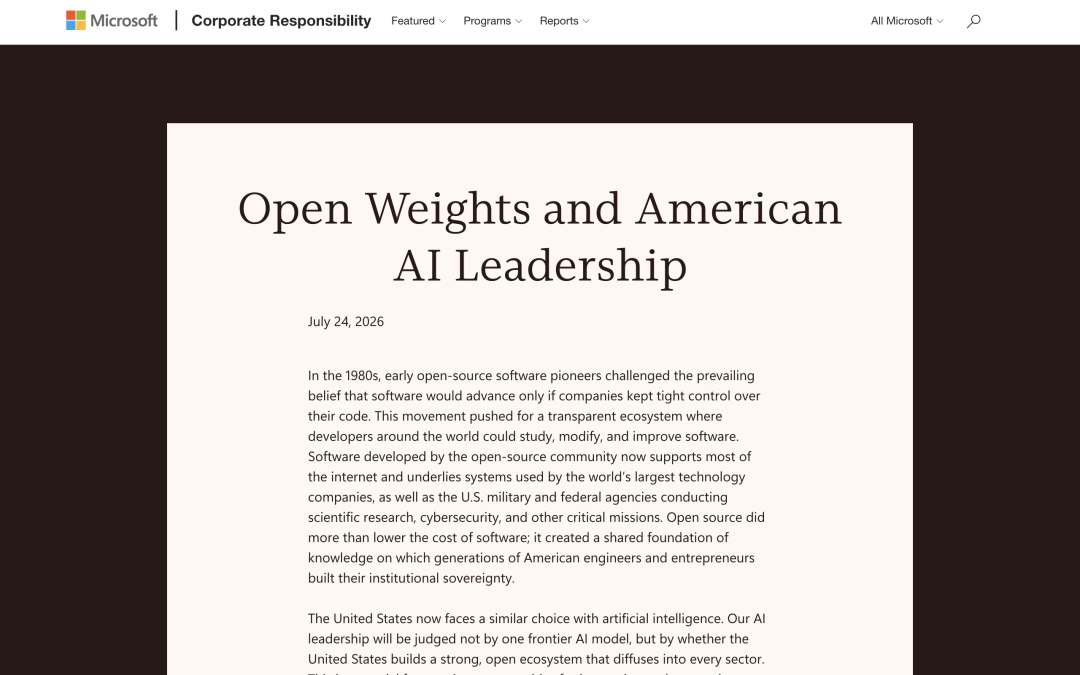
A recent example: the K3 release triggered a stress response from the US government, which planned to restrict American companies from deploying open-source models. Over 270 tech companies and organizations, including NVIDIA and Microsoft, signed an open letter supporting open-source models. For now, nothing happened — K3 was not banned.
Obviously, had K3 been a closed-source model, so many companies would not have rallied to its defense. At most, Jensen might have said a few words to sell more GPUs. The world has suffered under Anthropic's yoke for too long. Commercial companies, acting from self-interest, will inevitably support open-source models against the evil Italians, preventing the latter from devouring everything.
We're already seeing this trend. Fable 5 is so expensive that even tech giants cannot provide full access to all employees. Everyone uses Fable 5 for a handful of complex tasks, while the vast majority of work is handled by relatively cheaper models — the ready-made ecological niche for all open-source models.
A future certainty: the vast majority of token demand will be served by open-source models, with only rare complex scenarios requiring expensive and tightly controlled closed-source models.
Small open-source models in particular have dramatically changed the game.
Open-source models fully crossing the usability threshold, reaching Opus 4.6–4.8 level, happened around the GLM 5.2 release. Just two months later, the 27B-parameter Qwen 3.8 small model also hit Opus 4.6 level, aligning with the strongest model from six months ago.
Qwen 3.8 27B is an insane model. We know Zhipu likes to talk about its high intelligence density, using 744B parameters to approach K3-level performance. From this extends the question of whether large models must pursue scale, and how to measure intelligence efficiency.
First, if you read Jie Tang's full Twitter thread, you'll find he actually made no definitive judgment. He only stated that Zhipu, at this stage, chose post-training to continue improving base model performance, and that they would also try pre-training and other approaches in the future — all defensible positions.
Second, by this logic, the true champion of intelligence density isn't Zhipu but old-timer Alibaba. Qwen 3.8 27B has just 1/28th of Zhipu's parameter count, leading the industry by an order of magnitude in density. Even by active parameters, it's far ahead.
So here lies the question: GLM 5.2 was the post-training king of the last meta. Should Qwen 3.8 27B be called the new meta's pre-training king, post-training king, or do we just call it intelligence density number one?
"Intelligence density" is a concept that doesn't withstand scrutiny — good for vibes only. The ticket to the new season is still building out ~2T parameter models.
Where Qwen 3.8 27B changes the game is this: models fully surpassing human programming capability have become public goods. Because even DeepSeek V4 Flash is difficult for individuals to deploy, while Qwen 3.8 27B is a model fully deployable on consumer-grade GPUs.
I've seen electronics folks quite happy these past few days, digging out Mac minis and 4090s to deploy various quantized versions. Some madlads even use modded 3080s — 3,000 RMB in costs to deploy 27B. The scene is as beautiful as a great lobster renaissance.
Can only say: teeming with life, vigorous competition, 27B versus 744B, advantage is ours.
My main point: Qwen 3.8 27B accelerates the trend of intelligence becoming commoditized.
My imagination is limited; I don't know what happens after intelligence becomes commoditized. I can only borrow a fun case — Xiaozhi AI, the AI hardware device with shipments in the millions, born because the developer Brother Xia had a few 4090s on hand.
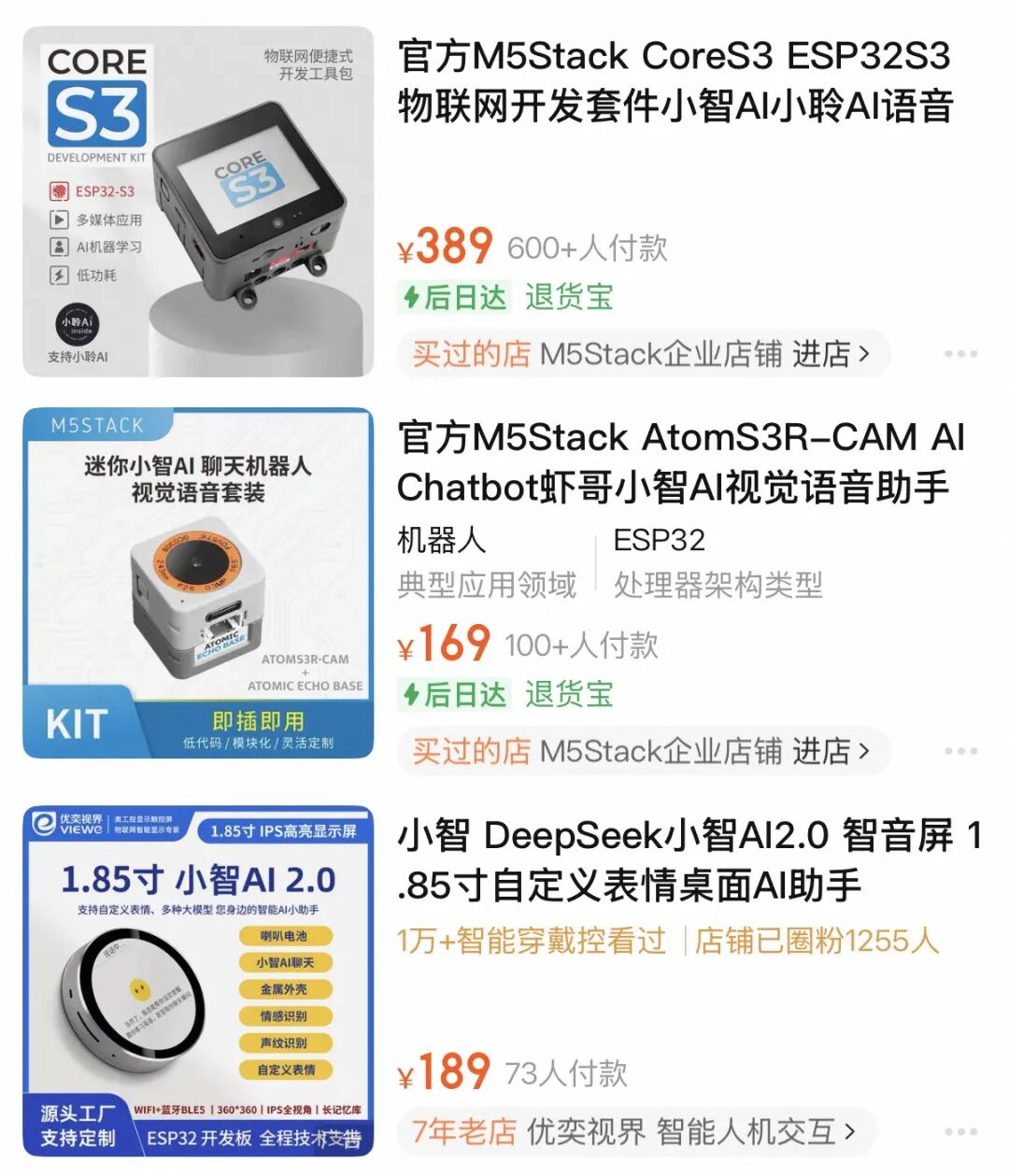
Coincidentally, Qwen 2.5 went open source. After local deployment, Brother Xia tinkered out an open-source chatbot solution beloved by electronics folks. Most AI chat hardware today still uses Xiaozhi's open-source solution.
Frankly, once Opus 4.6-level models are fully commoditized, things far crazier than Xiaozhi will emerge — it just takes time.
I spend so much space on Qwen 3.8 27B because this is a model born entirely for open source. Open source is good not because of moral slogans, but because it actually accelerates large model capability improvement.
Originally, Chinese large models could not compete with American ones; the failure theory's logic held. Open source changed the game: now it's open-source models competing against closed-source models, you within me, me within you.
"You within me" means: when American tech companies deploy K3 and Qwen 3.8 Max, they still pay Kimi and Alibaba. Open source doesn't just prevent bans — it generates revenue.
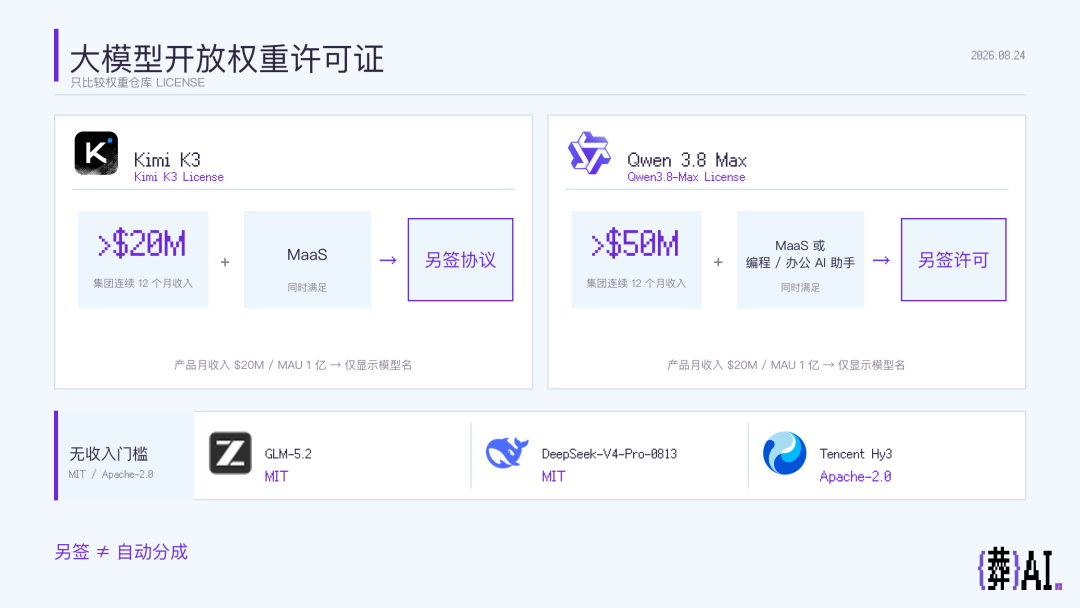
Trading space for time, closed-source models will always have opportunities to fall behind. The large model competition phase shifts from failure theory to protracted war.
A certainty: 90% of future tokens will be served by relatively small-parameter models, sufficient for agents' vast majority of tasks. The remaining 10% will be supplied by increasingly expensive, increasingly large SOTA models.
This trend correlates with agent product adoption. Because caring about model version numbers is a niche need; ordinary users only need to select model tiers within products, not use the strongest, most expensive coding model.
For large model manufacturing, efficiency is everything. Small-parameter models with fully usable performance are clearly more efficient than Fable 5.
This is the meaning of protracted war. Neither quick victory nor quick defeat, but a strategic stalemate phase, waiting for variables that raise one side's efficiency and lower the other's, until a tipping point arrives and one side collapses first.
Of course, I'm not saying open source makes domestic models invincible. You can see closed-source models also accelerating, with the ever-eager-to-improve Musk's Grok serving as the control group.
Grok is a closed-source model case with abundant compute and data. From Musk's chaotic micromanagement to honestly training with Cursor data, Grok's performance has actually improved very rapidly. Grok 4.6 itself is a 2T-parameter model, K3-level in performance, faster and cheaper — currently the most cost-effective world's-third model.
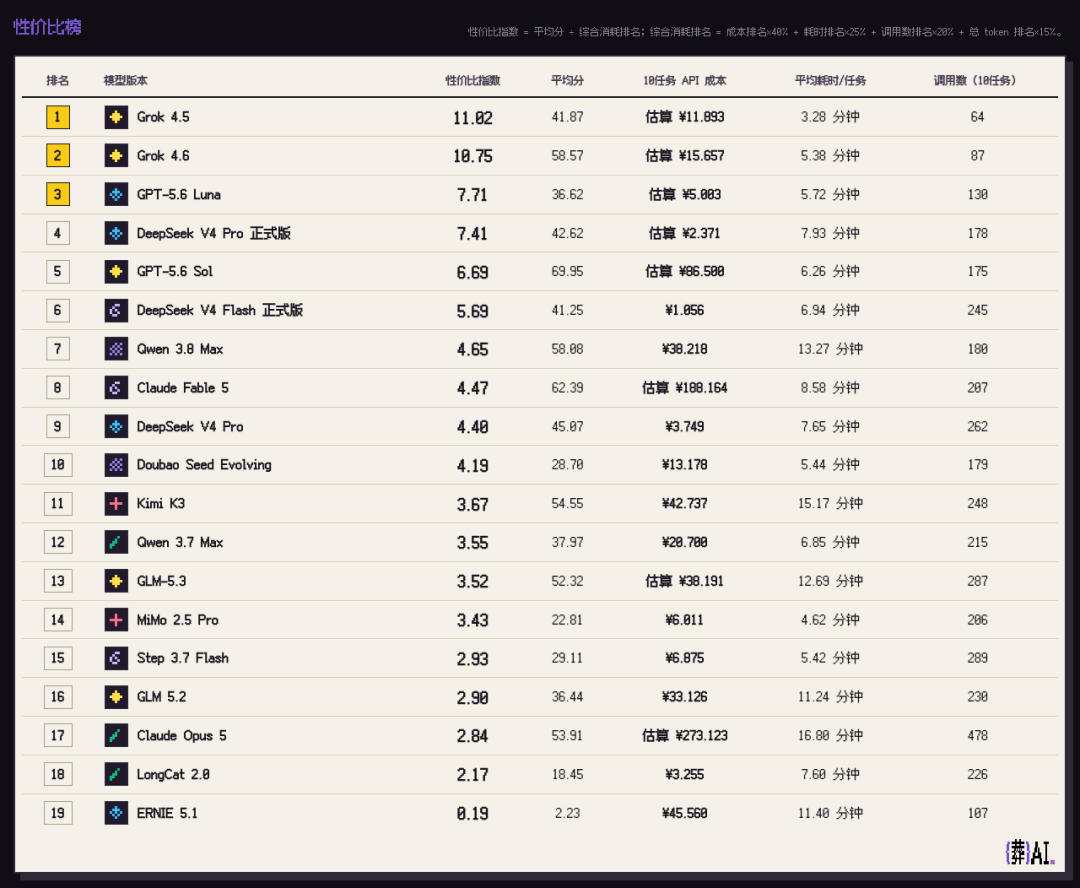
Moreover, Grok updates at a pace of one minor version per month, chasing the twin stars no slower than Kimi, Qwen, or GLM. There's a strong probability Grok's next version will significantly surpass this generation of domestic models.
The open-source camp's pace of progress is not necessarily faster than closed-source.
Now is the protracted war period for open-source models, and the most difficult period. Model factory folks are purely burning their lives; one Twitter scroll at night shows the twin stars and Grok also updating frequently. Competition is endless; only small wins, no big wins.
The other imperative of protracted war is establishing base areas. Translated into large-model industry terminology: domestic compute.
This is why, although Meituan LongCat is a tier-2.5 domestic model that can't even compete with Hunyuan 3 in the free-token giveaway赛道, I still feel warmly toward it.
Because LongCat is the first model to complete the full training-inference pipeline on domestic chips. Although its performance is currently lacking, although using domestic cards throughout was likely due to resource constraints, it was the first to establish the closed loop between domestic models and domestic compute — this is establishing a base area.
With a base area, growth can always happen gradually.
Open-source SOTA models like K3 and Qwen 3.8 Max can both complete inference on mass-produced domestic chips at scale. Teacher Yongming Wu also said a few days ago that Alibaba's second-generation supernodes, starting tape-out and production in the second half of this year, can fully substitute for large-scale model training.
Seems like while everyone reaches for the heights, helping domestic chips achieve training-inference integration isn't out of the question.
This fundamentally undermines the failure theory's logic. It's not that we must always rely on NVIDIA chips. Once the entire large-model pipeline achieves a closed loop with gradually improving efficiency, what happened in solar and new energy has no reason not to repeat in AI.
My main takeaway: the resilience of big tech is genuinely strong. While Meituan and Alibaba fight their miserable wars, they're still doing AI impressively well. Even Xiaoxiang Supermarket is decent — when I want fruit or milk at 10 PM, Freshippo and Sam's won't deliver, but Xiaoxiang Supermarket will 👍
Maybe these two companies have reached a game-theoretic equilibrium where they need to fight miserable wars to do good AI. If one day the food delivery war ends and the boss sees so much free cash flow with no idea what to do, sword drawn, eyes wandering blankly — that might actually harm large model training.
The future of open-source models is bright.
Because open source has real interests and popular support. In the great leader's words: "Weapons are an important factor in war, but not the decisive factor; it is people, not things, that are decisive. The contest of strength is not only a contest of military and economic power, but also a contest of human power and morale."
However, the path of open-source models is arduous and tortuous.
Another quote from the great leader: "The united front must be maintained; only by maintaining the united front can the war be maintained; only by maintaining the united front and maintaining the war can there be final victory."
(Cover image generated by ChatGPT; purely human-written)
Subscribe to our Substack: funeralai.substack.com