Peter Thiel is China's delusional dream chaser.
Now is the best time for US tech giants to wave the white flag to China 🏳️
"America Cannot Be Revived"
Peter Thiel has been cast as the archetypal American villain.
A puppet master pulling strings across the country — his protégé JD Vance became Vice President, his close friend Elon Musk built the world's most famous electric car and commercial space companies.
The PayPal Mafia they co-founded produced a parade of heavy hitters. Roelof Botha was the face of Sequoia Capital, though he just got pushed out; David Sacks chairs the President's Council of Advisors on Science and Technology, overseeing the US government's AI policy. He also founded Palantir, the red-hot military AI company.
Thiel's thinking is full of mystical jargon and provocative buzzwords: the Dark Enlightenment, effective accelerationism, scapegoat theory... But it's actually not that complicated.
Anyone who's done real work can't think in pure abstractions for long.
Thiel ran companies. So even when he cites dense German theorists like Schmitt or Strauss, he can still explain what he actually means.
"Who are our enemies? Who are our friends? This is a question of the first importance for the revolution."
01
Flying Cars
Thiel's entire worldview can be summed up in one line of his:
"We wanted flying cars, instead we got 140 characters."
And he means exactly that.
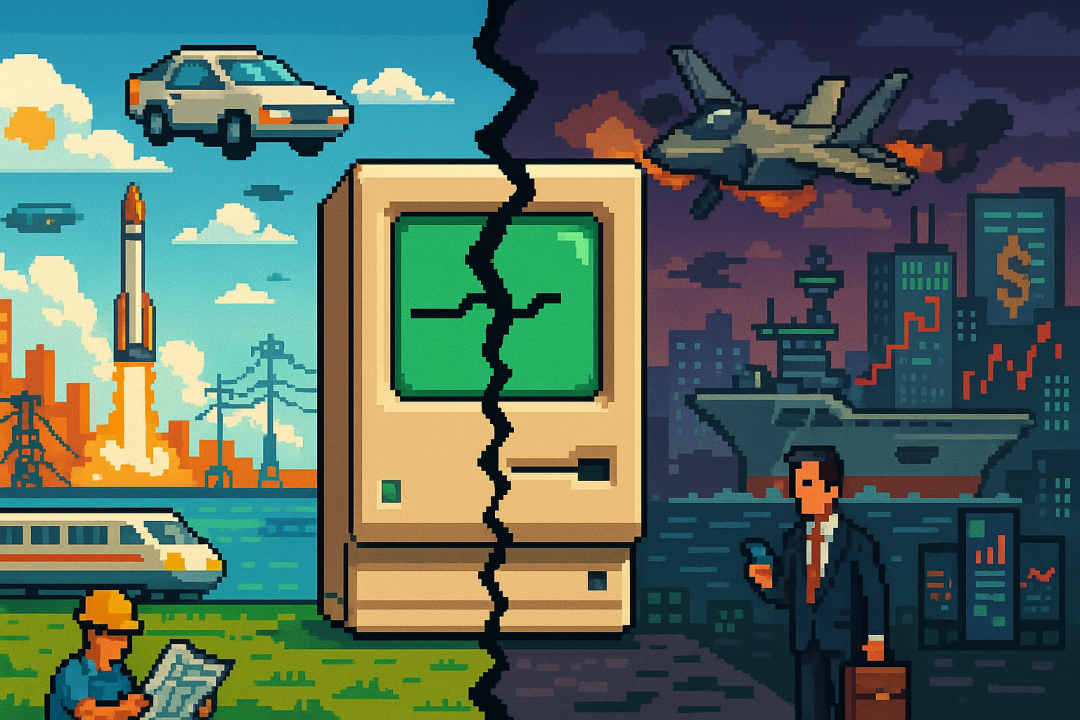
For the past fifty years, human technological progress has been largely confined to the "world of bits," while the "world of atoms" has stagnated.
We — meaning America, which can't even build high-speed rail — now travel slower than we did decades ago. This is the Great Stagnation.
He says China is the biggest threat, but what he actually obsesses over — flying cars, strong government, collective action — are precisely the things he most wants to copy from China but won't admit.
Thiel's honesty about this problem is his virtue.
While everyone else assumes the West, and America especially, will just keep getting greater and society will just keep progressing, he can say plainly: There's no law of nature that says Western ascendancy must continue.
But Thiel's logic gets weird from there.
He identifies technological stagnation as the core problem, then traces it all the way back to the Enlightenment.
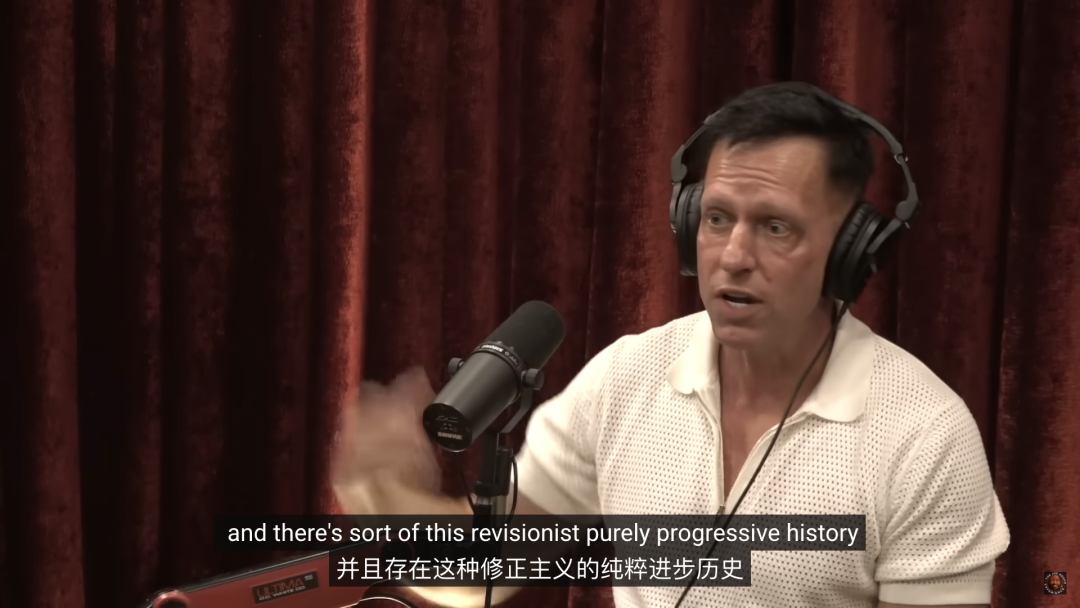
A distinctly more cultured strain of redneck
Thiel's argument goes: For three or four centuries, human society has postponed discussion of truly fundamental questions. And the truly fundamental question is identifying friend from foe. Not the globalized diversity that democracy-loving liberals sing about.
The problem with society today is that we've forgotten human nature.
Human nature is about identifying enemies, about channeling the group's violent, dark impulses onto a single person to destroy. Only then can we discuss real problems, instead of endlessly talking past each other about progressivism.
So why is the liberal West fragile, in Thiel's view?
Because it uses a bankrupt universalism and commercial logic to deny the existence of enemies. It assumes everything and everyone can be resolved within economic frameworks, within globalization. But that's not how things work. You have to draw lines between enemies.
And clearly, for Thiel and his Silicon Valley right-wing cohort, the enemy is China.
These high-tech rednecks call China the enemy with their mouths, but their minds are fixated on how China gets things done. Classic hate-stan behavior.
They use Schmitt's theories to criticize modern Western politics for its naïve denial of enmity. This political correctness makes the West extremely vulnerable when facing real threats.
The 1969 moon landing and Woodstock symbolized two different eras.
The former represented exploration and conquest of the external physical world. The latter represented a turn inward — toward personal experience, identity politics. This inward-looking trend weakened society's collective ambition for grand technological projects.
The US government today is severely dysfunctional. The Manhattan Project coordinated 130,000 people to build the atomic bomb in four years. Now the US government can barely keep itself running.
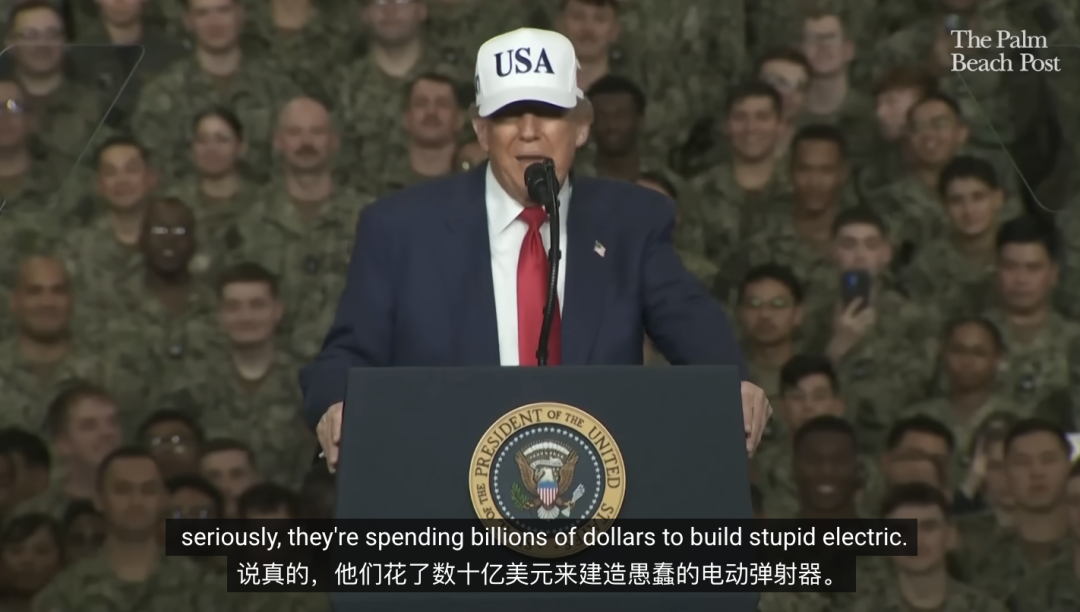
The F-35 fighter jet has been in development for over 20 years, at 15 times the cost of the Manhattan Project, and still got flagged by official audits for "failing to meet performance standards." The electromagnetic catapult system on the Ford-class carrier has been a mess for over a decade, with actual reliability far below targets — Trump publicly called for a return to steam catapults, and even talked about bringing back battleships.
Basically playing retro nostalgia.
This is what the tech right reflects on: America's fall from the age of engineering to the age of finance.
The right is obsessed with tax cuts. The left is obsessed with increasing appropriations. Republicans mock government incompetence to please donors. Democrats tolerate incompetence because they're beholden to unions. Nobody actually cares about getting things done.
02
No Final Solution
Thiel and his crowd are always fantasizing about ultimate solutions.
But the reality is, there is no final solution. How could there be a final solution to social problems?
Social problems rely on endless optimization and negotiation. They rely on the kind of fierce competition seen among Chinese companies. There's no secret formula you can discover to solve these complex social problems overnight.
Thiel's solution is to call for a Christian leader — a cautious political figure.
A saint who isn't like a saint, a philosopher-king who can distinguish friend from foe, who can be both benevolent and commanding, decisive in action.
These tech rednecks went through all this effort, followed all these elaborate theories — isn't what they really want just a Party to take charge of them?
Thiel and Musk fantasize about colonizing Mars, about building sovereign states on the open ocean. It's pure escapism. How could you move all 8 billion people on Earth to Mars? And as soon as you have enough people, the same problems would reappear.
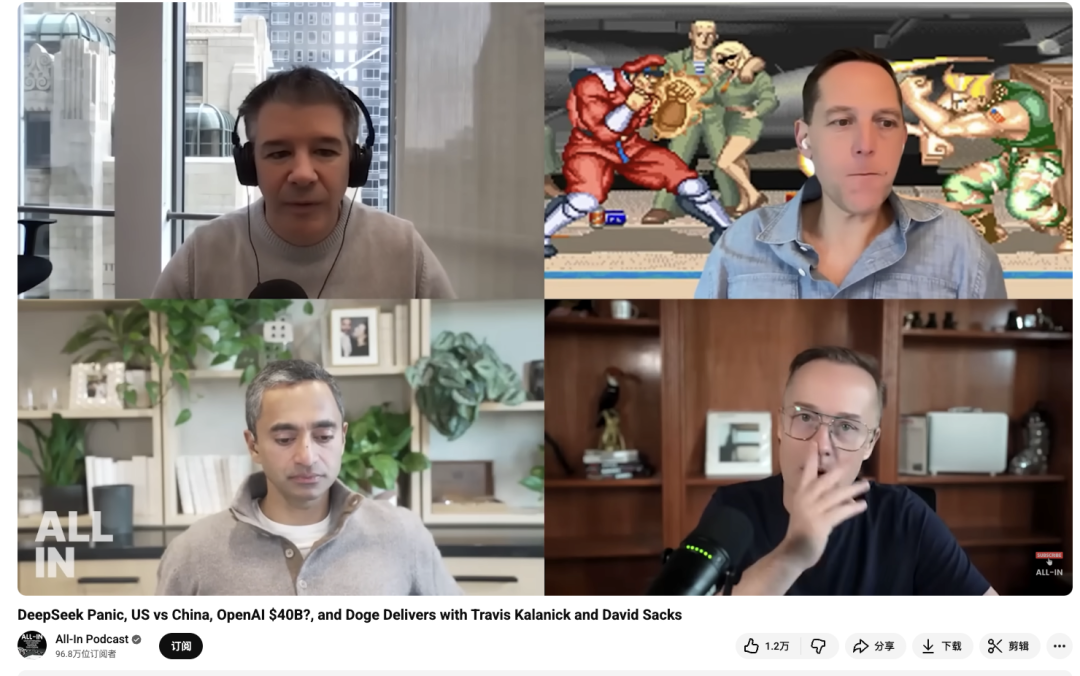
This reminds me of Uber founder Travis Kalanick recounting his battles with DiDi on a podcast. I listened to that interview carefully — it left a deep impression.
In 2014, Uber entered the Chinese market full of confidence. They quickly discovered a despairing reality: DiDi could copy any innovation within two weeks.
"We'd work our asses off on a feature, finish it feeling like total badasses," Kalanick said, "then two weeks after launch — bam, they had it. A week later — bam, they had that too." This wasn't competition. This was getting steamrolled.
More ironically, to fight this total war, Uber dedicated an entire floor at its Silicon Valley headquarters, recruiting 400 Chinese employees for a dedicated China growth team. They even ran Chinese billboards on Highway 101 in the US — "Join Uber, Serve the Motherland."
This is what too-intense competition looks like — your rival copies too fast, you have to go all-out just to stay ahead. But going all-out still couldn't stop their innovation.
Eventually DiDi developed its own innovations. Innovations that Uber couldn't catch up with. From copying to innovating, Chinese companies completed this transformation.
Kalanick said, when an entity takes copying to the extreme, getting faster and faster, it eventually runs out of things to copy and turns to creation and innovation.
If you want to understand the future of online food delivery, don't go to New York — go to Shanghai. Many features on Uber Eats or DoorDash actually appeared in China three or four years earlier, or even longer. In Beijing, Shanghai, and other big cities, office buildings have smart lockers nearby, delivery riders drop food in the lockers, and dedicated runners take it upstairs.
The guy sounds like he took a trip to Huaqiangbei and was left in profound shock.
This is the truth Thiel can't accept — innovation isn't just geniuses having breakthroughs in garages. It also requires endless bloody combat.
What Silicon Valley elites need is protracted war.
But protracted war is precisely what these Silicon Valley elites fear most — it means stepping down from the pedestal of winner-takes-all, getting down in the mud for hand-to-hand combat with Chinese companies. This is why they'd rather fantasize about colonizing Mars than face Made in China.
03
America Cannot Be Revived
If I had to pass judgment on American reality, it would be what Lu Su said during the Three Kingdoms period: the Han dynasty cannot be revived, and Cao Cao cannot be quickly eliminated.
Applied to America: America cannot be revived, and MAGA cannot be quickly eliminated.
Thiel calls for a "Christian statesman" type of leader. A philosopher-king who can distinguish friend from foe and act with prudence.
This is essentially pinning hopes on a transcendent individual to solve systemic problems. It's an elitist fantasy detached from reality. Fundamentally opposed to historical materialism. Historical materialism tells you that circumstances make heroes far more than heroes make circumstances. If you believe in historical materialism, you can't believe in Thiel's framework.
He also believes the philosopher-king should be found through esoteric knowledge, hidden writing. Only a small circle of elites can interpret the classics and understand the world.
This is essentially the esoteric approach found in religion — the assumption that some knowledge can only be transmitted orally, only circulated within a tiny inner circle.
But the fact is, the world's most advanced knowledge is always public. Written in textbooks, things governments desperately want you to know.
So-called esoteric knowledge is just side-door tricks. What Thiel advocates is essentially establishing an esotericism within the tech industry. He wants to build a small circle with its own jargon, telling initiates: we elites should run this world. We should run it in a way superior to those outside our circle.
This is the essence of elitism.
It cracks me up — these guys went through all this trouble, and what they really want is a Party to take charge of them.
The biggest problem of the Western right is lacking a tight organization to take charge of them. What they call for is a strict but loving father. Their hidden desire is to be managed. They just won't admit it out loud.
Isn't this the classic hate-stan mentality — crying independence and freedom with their mouths, but what they really want deep down is to be managed 😭
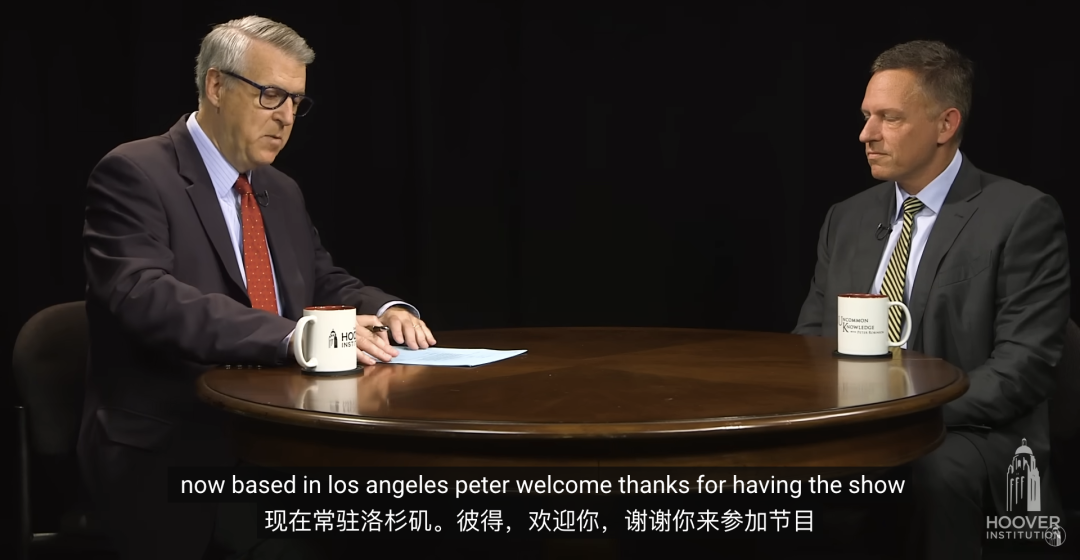
Another famous Thiel hot take is his praise of creative monopoly.
He believes "competition is for losers" — only monopoly generates excess profits that drive innovation.
Sounds reasonable enough. But what he praises is enduring, comfortable rent-extracting monopoly. What he fears is the endless red-ocean competition that Chinese companies represent.
The Uber case makes this clear. Whatever innovation Uber had, Chinese competitors caught up within a week or two. Eventually, DiDi's innovations were ones Uber couldn't catch.
This is the full market competition model. No one can maintain absolute leadership.
Technical edge lasts six months at most, maybe a quarter. You can only maintain advantage through constant technical optimization, supply chain optimization. Competition is all-encompassing — from marketing to technology, from supply chain to the founders themselves.
Thiel craves some superpower that lets you extract rents indefinitely.
But Thiel's problem is he pretends not to see the fragility of this static monopoly. Faced with fierce competition from Chinese companies, these monopolies will inevitably be penetrated.
The third problem is saying one thing and doing another. He talks a big game about Dark Enlightenment, about colonizing outer space. But what does he actually do?
His military AI company Palantir basically sells knowledge graphs and computer vision algorithms to the US Department of Defense. Isn't this just America's SenseTime?
Sorry, probably far below SenseTime. This has absolutely nothing to do with outer space or Dark Enlightenment.
Musk is much more honest by comparison. Musk isn't strong on theory, but SpaceX is at least actually trying to colonize Mars. Thiel makes no effort in this direction at all.
This is also why I'm wary of people who are especially articulate, with especially strong theoretical abilities.
The world is discontinuous. Many things are random, can't be smoothly explained by any theory. If someone's theoretical ability is so strong they can fit everything into their framework, that person is to a large extent fooling themselves. They must be distorting many things, twisting them into service of their own narrative.
In this sense, Thiel is not an honest person. His honesty is distorted by his own theoretical ability, by his own intelligence.
04
Hate-Stan
So back to the fundamental question. Where is Thiel's predicament?
He can see America's big problems: too much wealth inequality, too inefficient government, too scary national debt, and most seriously, the Great Stagnation in technology.
He can state these honestly. Recently when New York got its first democratic socialist and Muslim mayor, Mandani, and the American establishment melted down, Thiel could still come out and repeat: capitalism isn't working for young people, young people who don't own assets can't have a relationship with capitalism. On this point he's indeed better than most American elites.
But his prescriptions are completely off.
He wants a philosopher-king, wants to build an elite esotericism. He reverse-engineers last century's leftist Frankfurt School theories, thinking repackaged old goods can solve new problems.
This isn't problem-solving. This is using old tricks to pretend you're addressing new crises.
Theory never plays a decisive role. If theory could determine the world, philosophers and journalists would rule it. Not the current crowd.
Besides, Thiel has no theoretical creativity to speak of. He's like a kid talking back to the teacher — teacher says you're good-for-nothing, only fit for hustling on the streets; he says yeah yeah, I'm good-for-nothing and I'm gonna hustle.
Psychologically it's rebellion against leftist theory/progressivism — isn't this itself a form of hate-stanning?
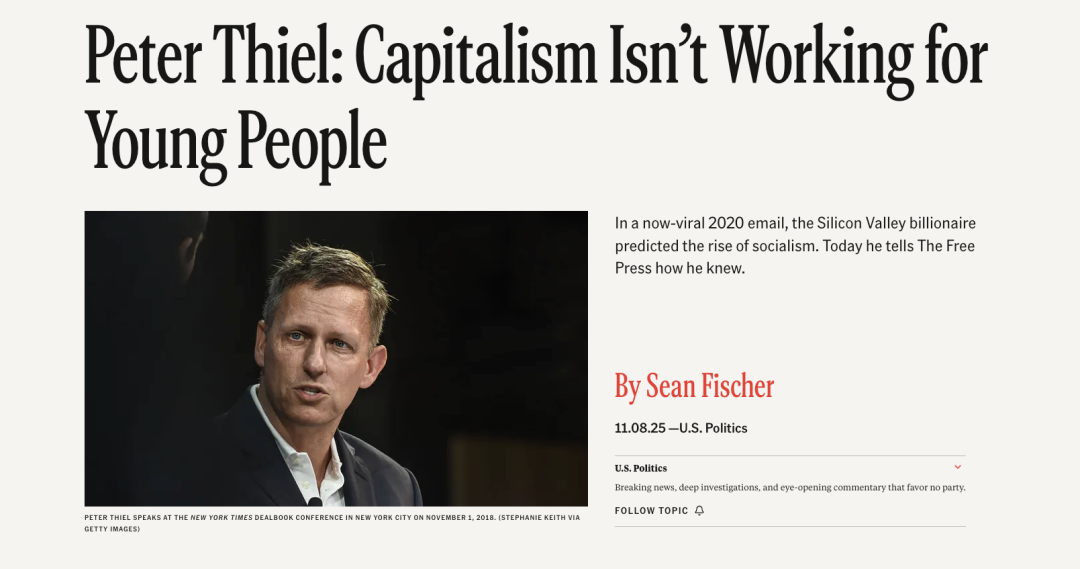
Thiel faces genuinely desperate problems. Wealth inequality keeps growing, government debt keeps worsening. US debt, pensions — it's obvious these can't be sustained. So what to do?
American reality is already at the cliff's edge. And plenty of heroes are flooring the accelerator.
OpenAI wants the federal government to guarantee its $1.4 trillion investment. NVIDIA hit $5 trillion market cap. Musk wants Tesla to reach $8.5 trillion within ten years.
But productivity hasn't expanded so dramatically. Since 2008, ordinary Americans haven't felt life getting fundamentally better — most feel the economy is deteriorating, life is changing.
When this bubble bursts, it will be a crisis far more dangerous and vastly larger than 2008. Then Western civilization really will be finished.
People like Thiel can identify problems but can't solve them.
He represents the esotericism of technology. Building small circles, orally transmitting hidden knowledge. But the fact is, the world's most advanced knowledge is always public. Written in textbooks, things governments desperately want you to know. So-called esoteric knowledge is just side-door tricks.
Tech esotericism cannot solve the exoteric problems America faces. You can't use esoteric thinking to solve exoteric problems.
Thiel is the typical hate-stan. On the surface he shouts America great, talks China threat daily and monthly.
But what does he actually want most? Precisely China's government execution capability, collective action capacity, that kind of persistent-war grit.
His prescriptions — philosopher-king, monopolistic corporations, colonizing Mars — are just fantasies of an "idealized China" to comfort himself, because he knows he can't compete with China.
He can tell you the West is declining, but none of his proposed solutions can fundamentally address that decline. Calling for a philosopher-king to save the day is an elitist fantasy detached from reality.
So recognizing Thiel's limitations reveals why now is the best moment for American tech giants to surrender to China.
They face a comprehensive collapse that will dwarf 2008.
Now is the best moment for American tech giants to surrender to China.
(Images in this article generated by ChatGPT, with writing assistance from Claude Code within Cherry Studio + K2 Thinking)
- https://www.thefp.com/p/peter-thiel-capitalism-isnt-working-for-young-people
- https://www.cato-unbound.org/2009/04/13/peter-thiel/education-libertarian/
- https://www.nationalreview.com/2011/10/end-future-peter-thiel/
- https://foundersfund.com/2017/01/manifesto/
- https://vasilishynkarenka.com/competition-is-for-losers/
- https://www.washingtonpost.com/openainions/peter-thiel-trump-has-taught-us-this-years-most-important-political-lesson/2016/09/06/84df8182-738c-11e6-8149-b8d05321db62_story.html
- https://gwern.net/doc/politics/2007-thiel.pdf
- https://www.youtube.com/watch?v=iRleB034EC8
- https://www.youtube.com/watch?v=8RkgkOqWs0s&t=851s
- https://www.youtube.com/watch?v=vV7YgnPUxcU&t=1785s