Qwen Office wants to connect enterprises

"Connect the context" or "Link the context" (If you're asking me to connect with previous context from our conversation, I don't have access to prior messages in this thread. Please share the relevant text you'd like me to work with, and I'll be happy to help.)
"Connecting Context"
I recently went to Cloud Computing Conference with Xianyu, and my biggest takeaway was how everyone seems to be cashing in on Alibaba. Some projects are pure post-training on Alibaba's open-source models, yet they've managed to rebrand themselves as model companies. Others are data firms surviving entirely on Alibaba's orders.
To express our appreciation for Alibaba's open-source spirit, we'll be releasing a series of Cloud Computing Conference observations — more details on our WeChat Channels.
As you may know, we hosted a casual Qwen Office hackathon at the conference yesterday.
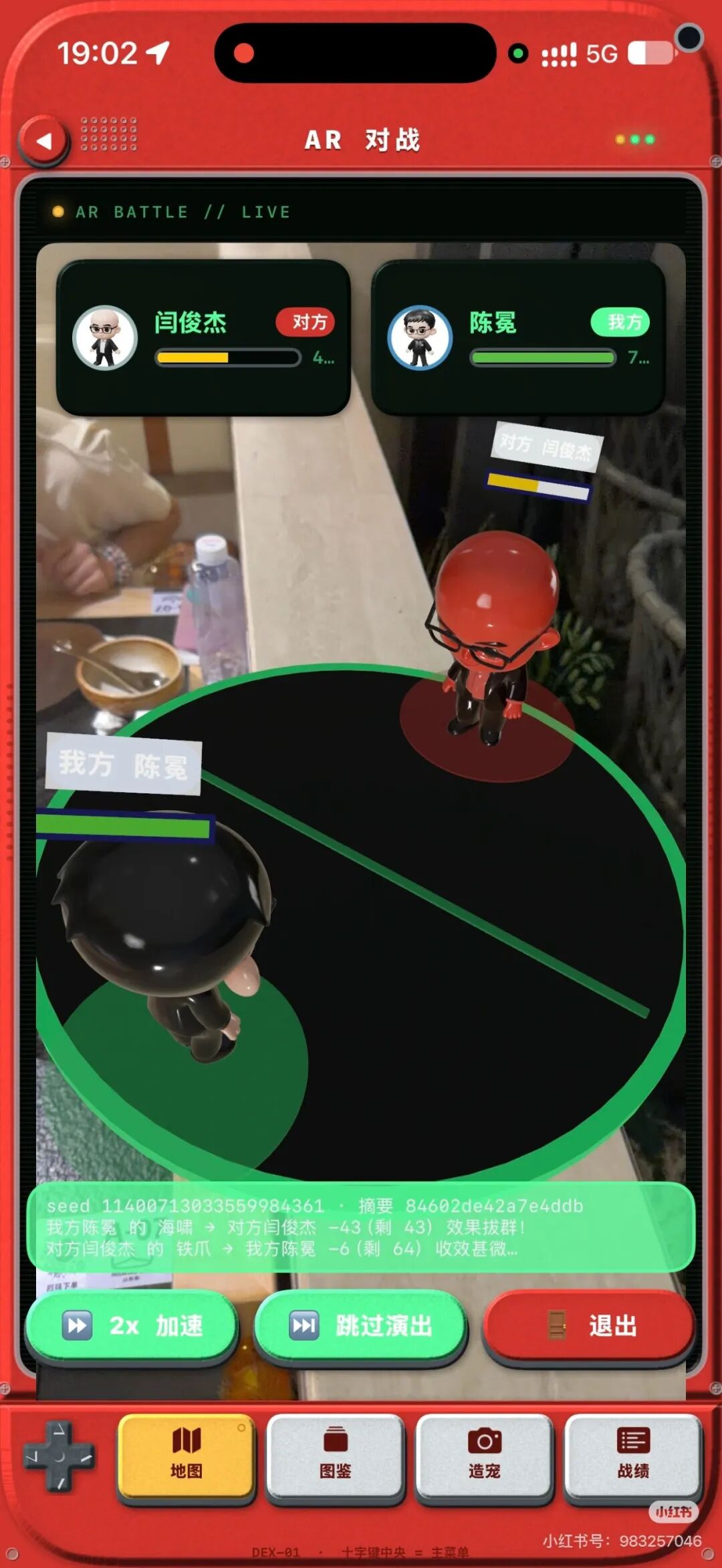
The contestants built all sorts of things. One guy resurrected desktop sprites in 2026. Another created a Wanwu Pokémon, pitting Melvin Chen against Yan Sheng in battle.
The wildest entry was an investor-version Tantan — the creator swiped through 50 investors live on stage.
The Mac Mini winner built a retro Windows XP, complete with classic startup music, blue-sky wallpaper, Kingsoft Typing, Happy Farm, Panda Burning Incense, Spider Solitaire, Storm Media Player — the works.
My takeaways from running this event: agent evaluation remains a long and difficult road, because extended tasks inevitably hit bugs.
Another realization: one person building a relatively polished app in a few days is no longer impossible.
So what happens when everyone in an organization uses this?
This brings me to Qwen Office's newly launched product: "Enterprise Context."
Before explaining, I have to complain about the name — at first glance it doesn't look like a product, more like technical jargon.
"Enterprise Context," as the name suggests, helps companies organize scattered information from group chats, documents, knowledge bases, and other sources into structured context.
This way, every task given to Qwen Office can draw from "Enterprise Context."
I love their framing of this product: connect and compress — connect as much context as possible, then compress what you've connected.
With B2B customer context, current models can solve most office challenges.
I previously outlined several paths for office agents in A Subjective Take on the ByteDance-Alibaba-Tencent Agent Wars, and hardware-software integration struck me as the most critical step.
I've always believed hardware (at this stage, recording cards) represents a crucial entry point for office agents.
Qwen Office clearly agrees. Yesterday they launched QwenNote A2, an upgrade from the previous DingTalk A1 recording card — and they wisely unified everything under Qwen instead of DingTalk.
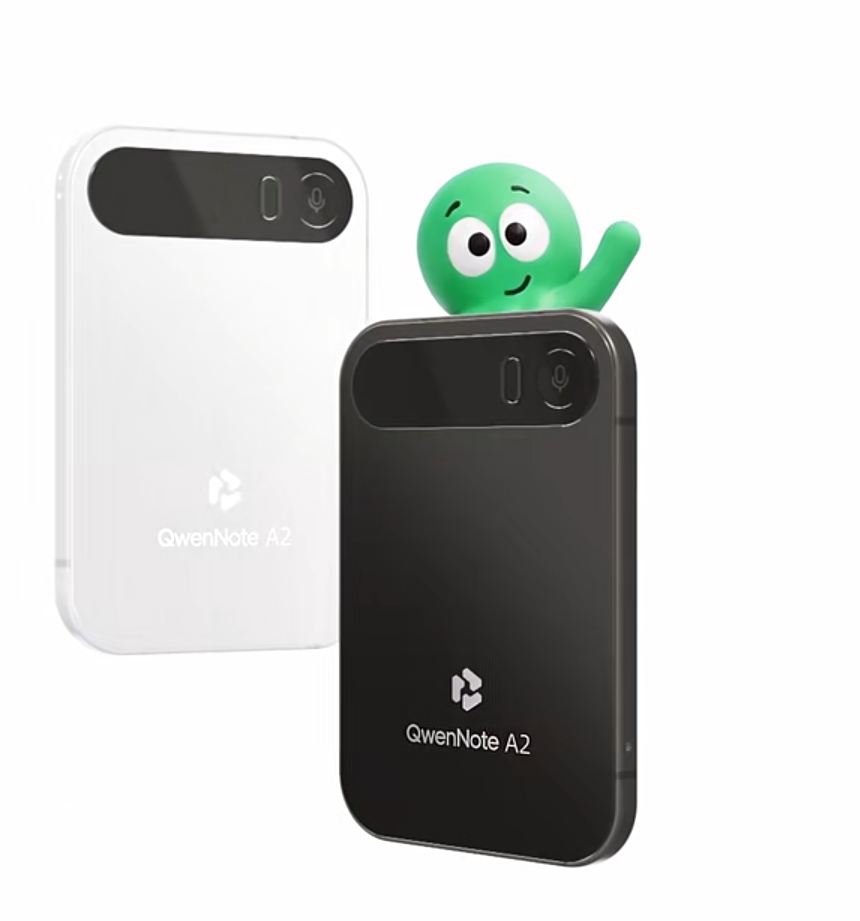
Go get 'em, Alibaba Cloud sales — bundle Qwen Office with QwenNote A2, aim to double that renewal rate.
For organizations, equipping everyone with QwenNote A2 has two benefits. First, obviously, meeting recordings that generate documented records.
More importantly, it gets people opening Qwen Office more frequently.
Because speaking to this recording card sends directly to Qwen Office — way cooler than a microphone. It's essentially forced AI-native behavior.
As for recording card privacy concerns, QwenNote's solution is remarkably bold. The gist: in default mode, QwenNote doesn't record; audio gets sent to the cloud for one-time ASR transcription to text, then permanently deleted.
Truly innovative thinking.
I ran this by a former Plaud colleague. His first question: once you delete the audio, if users later want to label speaker information, there's no way to match specific voiceprint characteristics or enable cross-audio speaker identification.
As he'd told me before, "The current recording card market probably needs to address the wearer's own concerns more than those of people around them."
Perhaps the focus should be reducing others' detection vigilance, rather than telling them "I'm recording, but just taking notes, don't worry."
But it's all still early — we're in the recording card infrastructure era.
The QwenNote A2 launch also made me realize Qwen Office and Plaud are targeting exactly the same people.
As Plaud's founder Gao Xu summarized, Plaud's audience is the "three highs": high knowledge density, high conversation dependency, high decision leverage — typically lawyers, finance professionals, and doctors in China.
Qwen Office is aggressively pursuing these same people in B2B. I'd even suggest they try a reverse approach: practically give away recording cards to this crowd first, then get them hooked on Qwen Office.
Turns out Qwen Office is Plaud's real disruptor. If QwenNote A2's build quality improves further, Plaud's days in China are truly numbered.
Beyond hardware for popularizing office agents, AI collaborative work needs attention too.
Because the future can't be everyone as individual contributors — organizations will still exist. If one person works faster with an office agent while others don't use it, that person is basically slacking off.
Qwen Office's previous multi-user workspace addressed this, and today they pushed further with collaboration features.
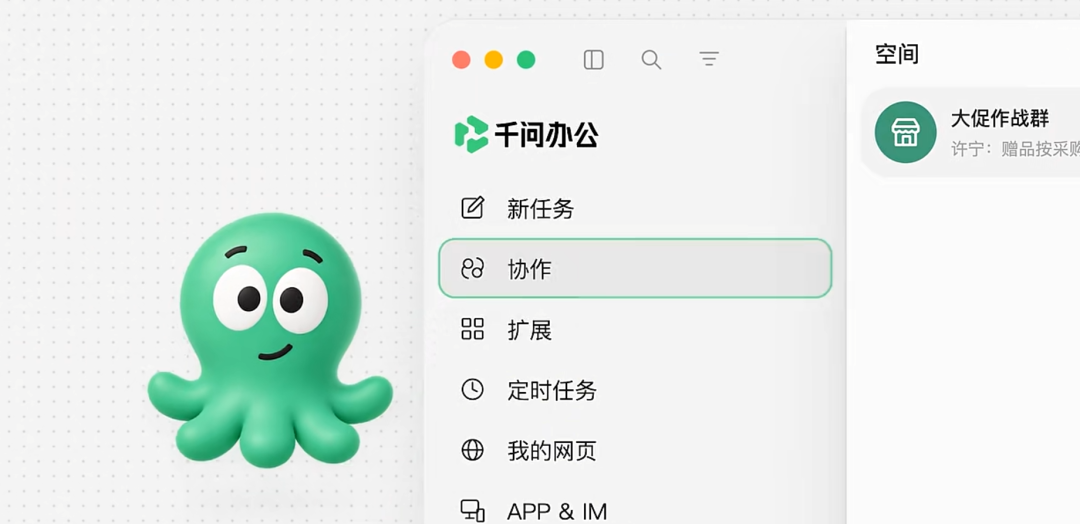
You could start by creating a digital employee in Qwen Office — though this only works if they know the enterprise context, which connects back to what I mentioned above.
Employees can @ the digital employee in IM to solve problems. For collaborative scenarios, pull them into a group chat where everyone uses the same digital employee with shared context. That's real collaboration.
The intent is obvious. Qwen Office aims to connect enterprises internally.
From pharmaceuticals, logistics, and home furnishings to the National Astronomical Observatories — they're going deeper into B2B. My understanding is Qwen Office helped the National Astronomical Observatories build a research-grade telescope digital simulation system, feeding simulation data directly to agents for monitoring.
Hoping for early UFO detection.
Oh right, almost forgot the models. We've mentioned several times that Qwen Office worked with the model team to customize Qwen 3.8 Flash, specifically trained and fine-tuned for Qwen Office scenarios — a classic case of integrated model and application.
This new Enterprise Context release also relies on the new model Qwen3.8-Omni-Flash. Because enterprises hold massive multimodal data, text-only models would overwhelm inference cards trying to analyze it all. A full-modal understanding model like Qwen3.8-Omni-Flash becomes tremendously valuable.
I've heard the WorkBuddy-Hunyuan mutual reinforcement story eight hundred times. Qwen Office will clearly do better here — though primary credit goes to the models being strong.
(Cover image generated by ChatGPT; article purely human-written)
⬇️
Subscribe to our Substack funeralai.substack.com