Rokid is my sun (referring to physical temperature).

Wearing it for too long gets a bit hot 🥵

"Wears hot after a while 🥵"
The Buried AI column finally has its first submission 👋😭👋
The author is Tomioka11, a freelance AI hardware PM who says he's scouting startup opportunities, so he bought and tested pretty much every AI glasses on the market. This is his first review — AR folks, you're in luck, because he plans to evaluate AI glasses products one by one 👊🕶️🔥
This piece covers the Rokid Glasses. From unboxing to publication, about two weeks of use and testing — genuinely independent thinking, genuinely deep usage.
To confirm Tomioka11 was a normal person and not some unhinged founder wannabe, Muqiu met up with him in Shenzhen. His assessment: "a relatively normal product manager."
Now please enjoy the creative output of this relatively normal product manager.
Before the formal review, let me put on some armor first, and also express my respect for Rokid's founder and team.
Setting aside the product experience, Rokid is undeniably a pioneer in domestic AR glasses. They took the hardware form factor that's the hardest to balance in the impossible triangle, and managed to cram in more than ten functions, objectively pushing the entire supply chain forward.
(Armor finally on 👊 — Xianyu)
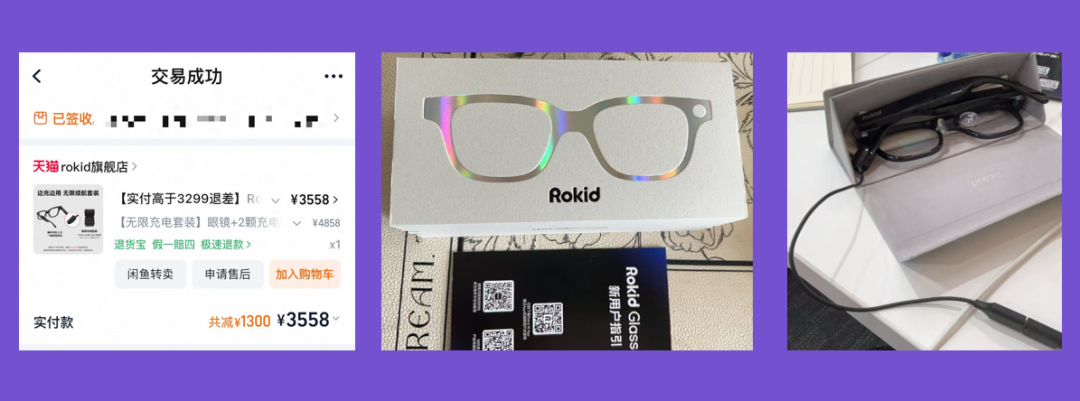
Let's start from user experience and examine these much-hyped glasses.
First, the imaging system used for shooting shaky videos.
My overall assessment: in ample daylight, it barely gets by, but dynamic range is terrible — highlights blow out easily, shadows go straight to black. And there's no stabilization for recording.
The camera uses Sony's IMX681 sensor, which is pretty much the best option available given the cramped structure of current AI glasses, but still far from phone camera quality.
Of course it's not that Rokid doesn't want a higher-spec sensor — there's just so little space, so little compute power. Everyone understands the difficulty of cooking a feast in a snail shell.
Rokid outdoor night recording
Here's my subjective assessment of Rokid's shooting performance:
- Stabilization
Severe motion blur: due to slower shutter speeds at night, moving the lens creates violent trailing, and the stabilization algorithm fails to compensate effectively.
- Exposure and dynamic range
Highlights uncontrolled: streetlights and neon signs severely overexpose, with obvious glare and ghosting due to lens or coating issues.
Shadows crushed to black: to suppress noise, shadow detail is almost completely lost.
- Image quality and detail
Insufficient resolving power: in low light, the ISP over-smooths the image for noise reduction, causing object edges to blur and look "out of focus," with heavy smoothing artifacts.
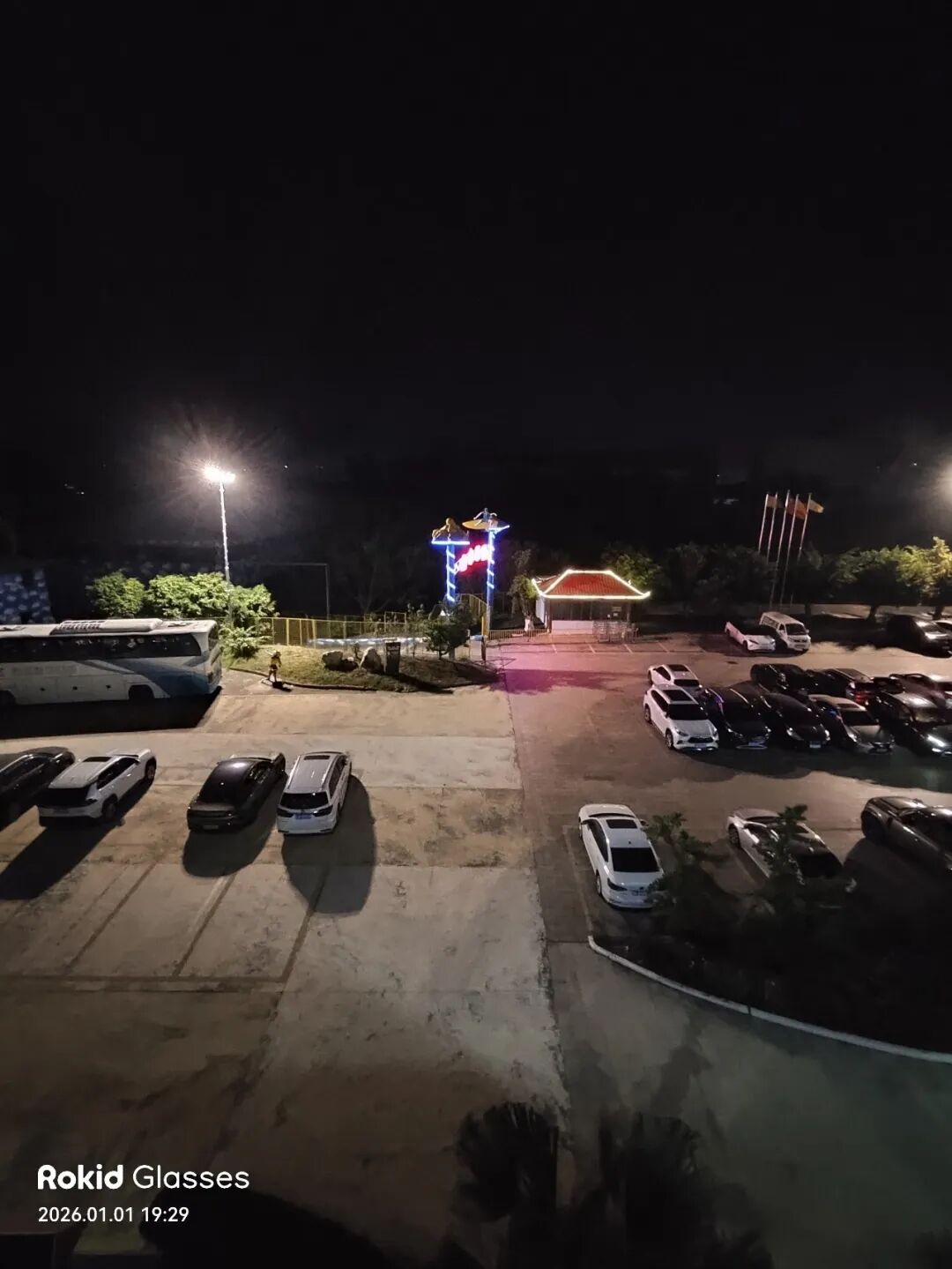
Rokid night shot
I also discovered rainbow artifacts, light leakage, and low light transmittance during testing.
Due to the technical characteristics of diffractive waveguides, at certain angles or against bright backgrounds, obvious rainbow patterns appear in the field of view — dazzling, multicolored glare.
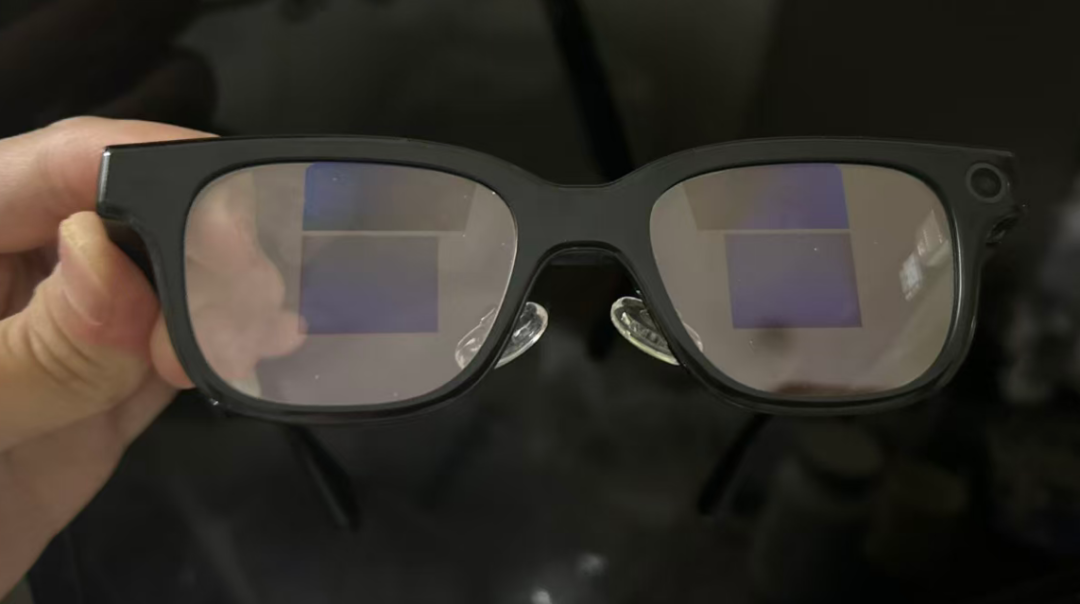
Once when I was looking at a screen, a friend sitting across from me asked: "Why are your eyes glowing green?"
And from some angles, you can even see what the AR display is showing...
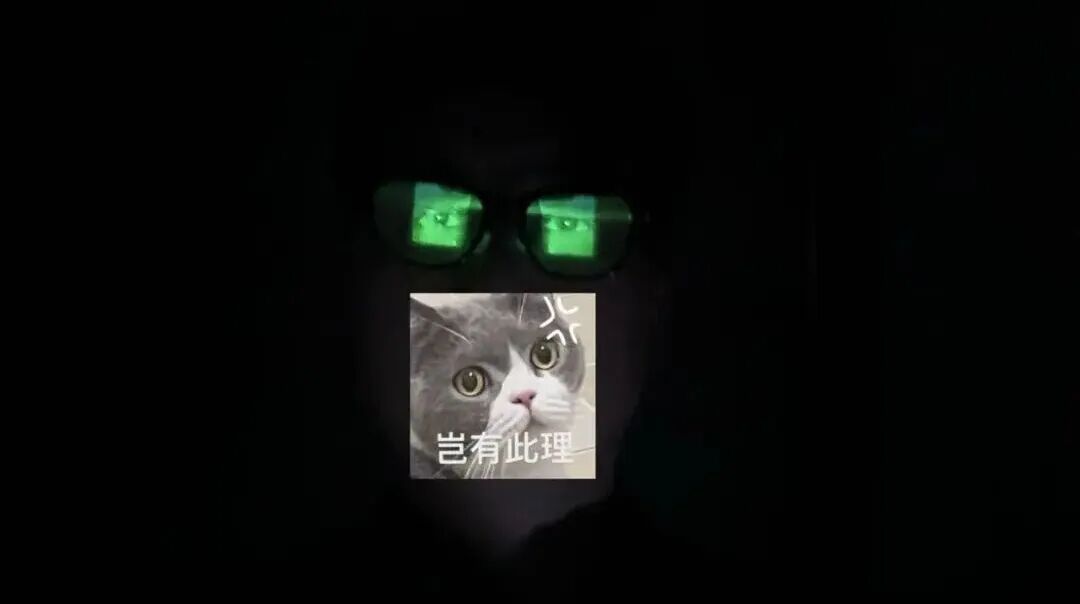
I turned green myself
Another issue that seriously affects daily wear: yellow tinting.
To enable AR display, the lenses sacrifice light transmittance — putting them on is like adding a hazy yellow filter. Three thousand three hundred yuan to see a yellowed physical world.
Let me quickly armor up again: most smart glasses on the market using single-green-waveguide AR display solutions have these problems to varying degrees.
Below: light leakage in the waveguide solutions of Inmo and Quark's AI glasses. Quark launched latest, so light leakage is better optimized — the grating area is smaller, and leakage only appears at certain upward or side angles.
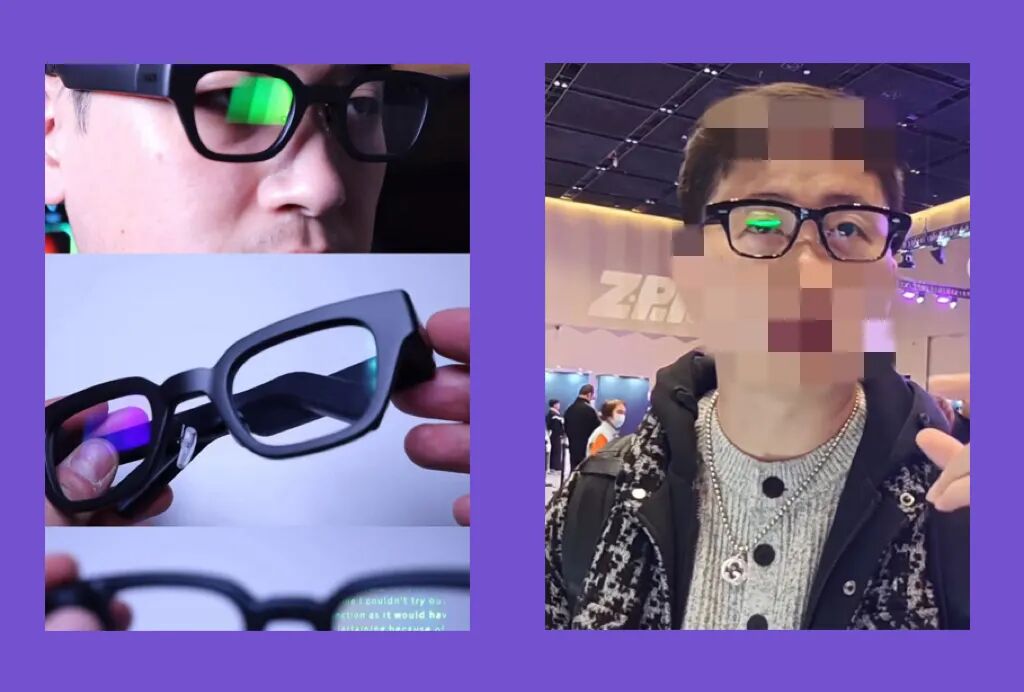
Left: Inmo Go3; Right: Alibaba Quark S1
And to fit in the battery and most electronic components, Rokid made the temples quite thick. This thing is extremely unfriendly to large head sizes — long-term wear is basically the Monkey King's tightening headband, physically squeezing your skull.
Rokid also has the terminal illness of all "do-everything" AI glasses: battery life and heat.
Rokid's battery capacity is 210mAh. Online I saw battery life claims of roughly 6 hours continuous music playback, ~4 hours audio calls, and 30-40 minutes video recording. Under intensive video recording, battery life may drop below 20 minutes.
My own testing: continuous music playback + AR lyrics display, 10% battery drop in 10 minutes.
Regarding the rumor that "recording for ten minutes kills it," I must vindicate Rokid: in my testing, continuous recording beyond 10 minutes did not cause forced shutdown.
But after recording for over 3 minutes, you start feeling waves of warmth at your temples.
And it's not just recording that heats up — photography, AI Vision, AR navigation, real-time translation, listening to music with lyrics, basically everything heats up, even translation heats up. It's like the loyal glasses of a general with the bloodline of Baekdu Mountain, carrying a little sun wherever you go, direct worship 👋😭👋
I strongly suggest Rokid release a cooling accessory for summer. Product concept below ⬇️

Battery life and heat I can understand given glasses form factor constraints. But Rokid having design problems with the glasses frame itself is inexcusable.
**The Rokid frame is a powerful fingerprint magnet. The moment your hands are slightly oily, the frame instantly becomes cheap and greasy. Apparently this is sacred and inviolable territory for Rokid.
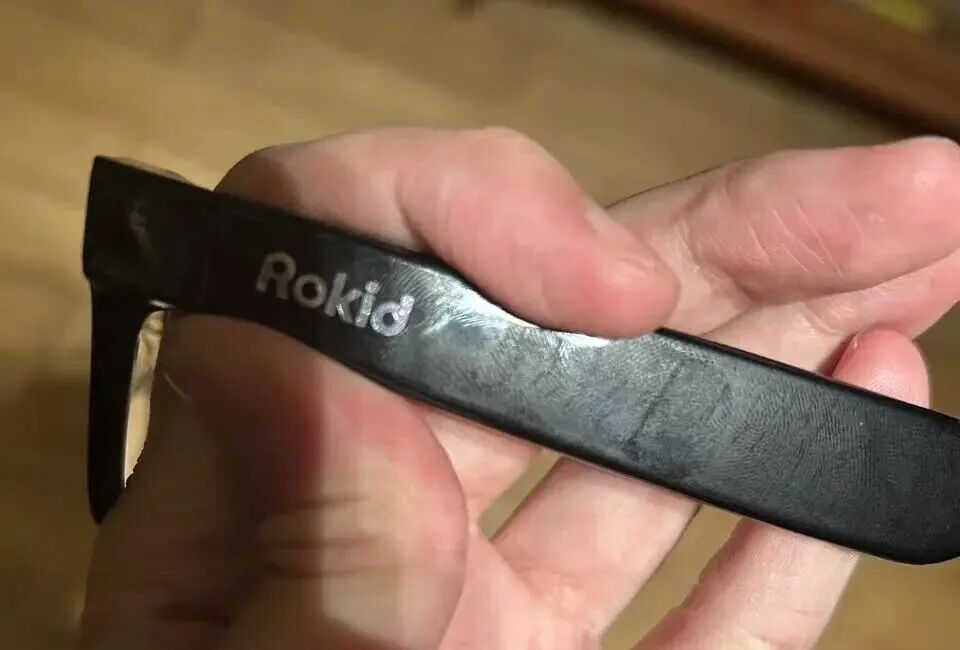
AI glasses should first and foremost be glasses suitable for wearing. We need to respect this basic common sense. If all else fails, partner with an eyewear brand 🤓
Moving on to Rokid's software.
Rokid claims it has directional audio, ensuring that my Valorant video viewing won't be live-broadcast to everyone around me.
But in my testing, as soon as volume is turned up slightly (which is necessary outdoors), directional audio becomes broadcast audio. People sitting next to you can clearly hear what the AI is saying to you.
Glasses volume: 50%; shooting environment: indoor; shooting distance: 50-60cm; iPhone recording
Hello, Trisolaran civilization, I am your Wallbreaker Luo Ji, now broadcasting to the entire universe (
Another anti-human design from Rokid: you can't conveniently control volume through the touchpad. Either navigate through complex menus to enter volume settings, then control; or adjust via voice assistant; or pull out your phone and operate in the app.
Currently the glasses' interaction mainly relies on the touchpad on the right temple. But the touchpad isn't sensitive enough: sometimes you tap lightly to confirm, nothing happens; you press harder, it thinks you're long-pressing.
Sometimes I just want to adjust my glasses, and it suddenly becomes sensitive, inexplicably skipping songs or waking the AI. And Rokid's tap and swipe aren't clearly distinguished, making accidental triggers easy.
Another flagship feature is the AI assistant aka Leqi. My experience: it's not that it can't be used, it's just better not to use it.
Here's a summary of my testing:
Query: Help me make a travel guide for Dali, Yunnan
Leqi: (Directly spits out an ultra-long guide from Day 1 to Day 4, without asking any prerequisite information like dates, number of people, budget, preferences, etc.; and the length is too long, continuously scrolling on AR display + stiff voice broadcast, accompanied by gradually heating temple pieces, so I immediately interrupted it)
Query: Too long, give me a summary
Leqi: (Summarized each day's itinerary in 4 lines, not bad)
Query: I want to eat something spicy tonight, recommend a restaurant
Leqi: (Directly recommended 2 restaurants in Dali, Yunnan...)
Query: I meant restaurants near my current location
Leqi: (It caught on, recommended three nearby restaurants, and asked if I wanted navigation)
Query: (Wanting to test task generation and context understanding, I said) Navigate to the first one
Leqi: (Instead it directly navigated to the first of the 3 previously recommended Dali restaurants...)
Query: I said, navigate to the first of the Shenzhen nearby restaurants
Leqi: (It reported the first restaurant's address as invalid, and recommended two other restaurants...)
Query: Okay, just navigate to the first one
Leqi: (Still navigated to the Dali restaurant, directly telling me the destination was over 1,700 km away)
Query: ....
I was pretty speechless midway, and directly asked Leqi if it could be a bit smarter.
I have a sincere suggestion for Rokid: if you don't understand the boundaries of AI capabilities, if you haven't completed cross-application testing of your product's various atomic capabilities, just make a basic Q&A bot.
I understand everyone's urgency to slap AI capabilities on everything, but make sure the AI capabilities actually land, right 🤓
Rokid also has a feature called Smart Eye. I tested image recognition and it works, but I couldn't figure out who needs this. Later I saw it's aimed at visually impaired users. Noble, purely charitable.
But, I have a huge confusion: Rokid's battery life is so short, visually impaired users would run out of power not long after going out, with waves of warmth on their faces. There's still a considerable distance to go to meet user needs, keep at it bro 😭
What was that famous quote from the general — electric vehicles need electricity, AI glasses need to be glasses, not the sun. Please study this basic common sense 📝
Though the scenario of assisting visually impaired users with navigation is genuinely good, I suggest Looki follow up on this.
Another card Rokid likes to play is "open ecosystem."
Unlike Meta keeping you caged in Mark Zuckerberg's backyard, receiving evil lizard brainwashing. Rokid can connect to third-party large models, allows developers to tinker. If you're a developer who wants to write code to connect to third-party apps or custom agents, this is indeed one of your few choices.
Come, let's see what killer apps the geeks have developed in this so-called open ecosystem:
Flush (stock trading app) ⬇️
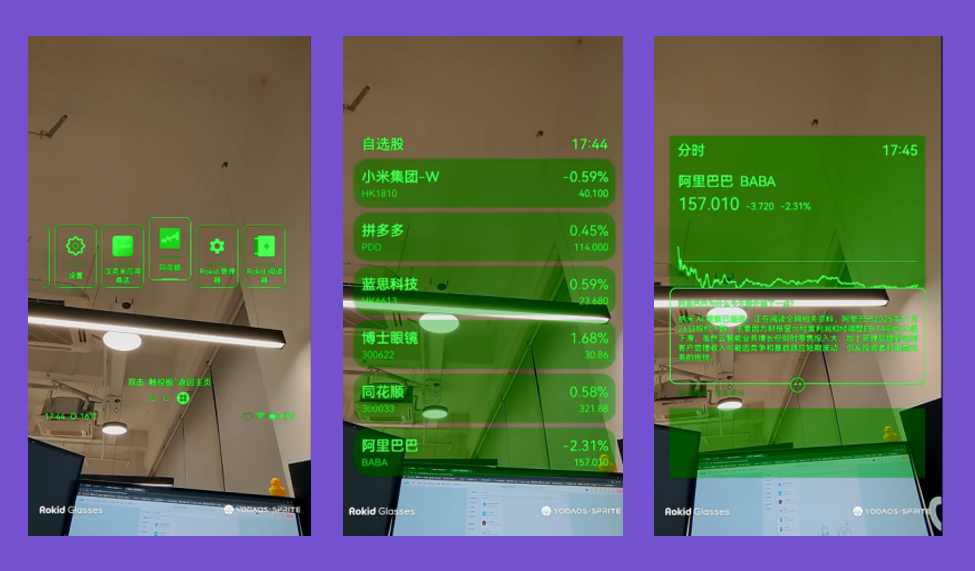
Valorant ⬇️
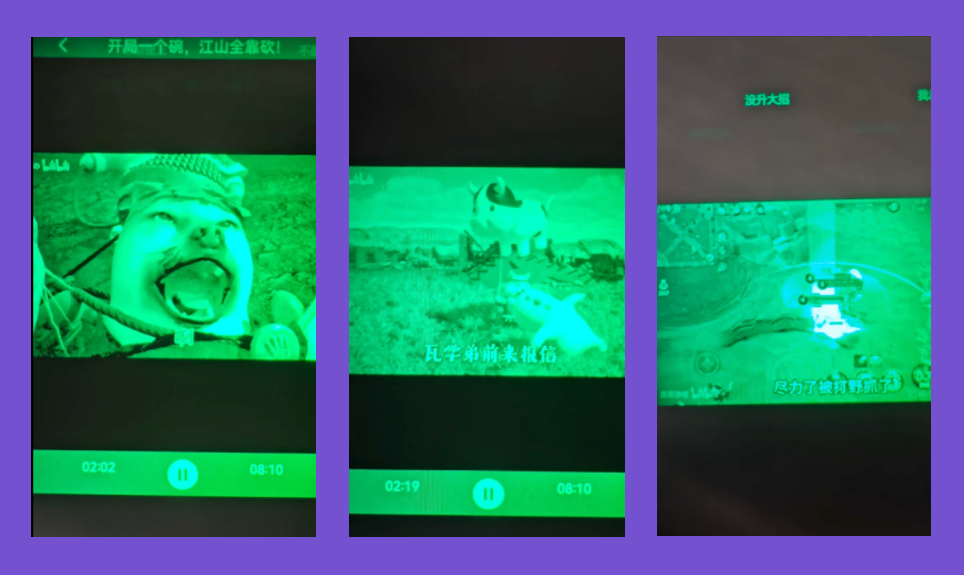
Playing Teenage Mutant Ninja Turtles arcade game ⬇️
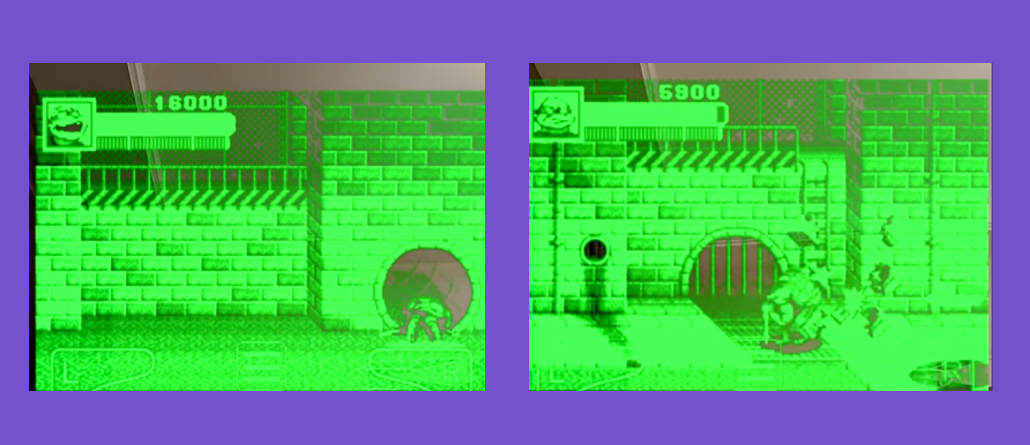
Of course the main problem is display technology choking the glasses' neck.
Mainstream AR glasses basically all use monochromatic Micro-LED solutions, which means everything is pea-green pixels. Text is passable, images are mosaics.
Green numbers floating everywhere in your field of view, already annoyed when stocks drop, now the whole world is green.
Watching Valorant videos on Bilibili on a monochromatic green screen, the image quality is a blurry mess — it's basically torturing your own retinas 😭
As for gaming, this retro mosaic green-tint image quality is worse than the 35-year-old Game Boy.
That said, this thing isn't completely useless. Rokid is genuinely useful in two scenarios.
One is teleprompter. **Because that crude monochromatic green screen actually displays pure text extremely clearly, with high contrast. You turn on teleprompter mode, text floats in front of your line of sight, scrolling with your speaking pace.
For leaders who need to give speeches and short-video creators who do long takes, in this scenario, grating artifacts and light leakage don't matter at all. Truly a content creator godsend, producing hits and blockbusters;
**The other is real-time translation. Though there's latency, though it occasionally talks nonsense, when communicating across languages, having subtitles float below is still much more convenient than looking down at phone translations.
But here's the kicker — I open my phone and talk to Doubao, and Rokid translates my own words too, with speaker and interlocutor information all jumbled together in the AR display.
Not even paragraph breaks...
So you spent roughly 3,500 yuan on a teleprompter + real-time translation machine, you decide if it's worth it.
(Images in this article generated by ChatGPT, purely human-written, been a bit regressive lately 🤓)