CapCut Hypes Up Seedance 2.0, and It Actually Feels Like Something

Reconstructing Short-Video Grammar
"Rewriting the Grammar of Short Video"
The Seedance 2.0 news has been coming so fast these past two days that I can't write fast enough to keep up.
In my last post, I uploaded a photo of Donald Trump and generated two videos — both got taken down 😭
Then I immediately saw reports that Seedance 2.0's videos were too realistic, sparking panic among netizens. People were seriously wondering if they'd soon be unable to tell real humans from fake ones. So ByteDance officially suspended users' ability to upload photorealistic human faces.
A bit darkly comic, honestly. It even made me suspect this was some staged publicity stunt by ByteDance. But it also shows just how insane Seedance 2.0's video generation capabilities are.
And the madness keeps spreading.
Previously, you'd use Seedance 2.0 through Dreamina or Xiaoyunque. Now there's an entry point inside CapCut too, so I figured I'd test whether this version was the real deal — or some gutted version.
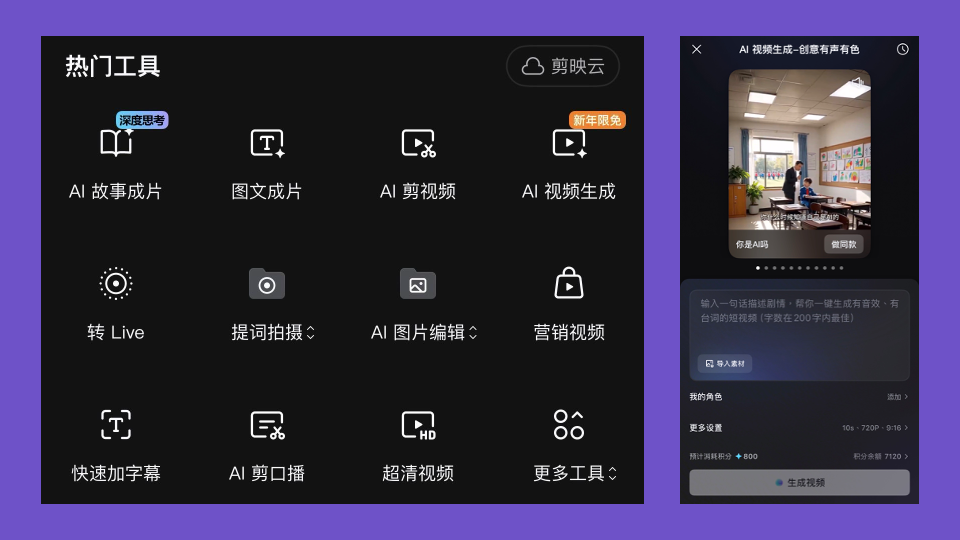
Mobile CapCut — Popular Tools — AI Video Generation
With Spring Festival arriving, Douyin was flooded with AI-generated videos of people "in the audience at the CCTV Gala." I decided to try recreating one.
First I took a clip I'd previously edited of myself with the same haircut as General, imported it to establish a character — locking in both appearance and voice.
Then I wrote prompts referencing that character, so there wouldn't be any consistency breakdowns.
Though I should note: when I used it, CapCut hadn't yet restricted real-person uploads. That's closed now.
But I hear CapCut will roll out a process for recording your own likeness in March, so you'll be able to generate videos using your own appearance.
Then I just went for it.

Of course, I didn't copy everything exactly — I added some Year of the Horse limited-edition touches:
What pleasantly surprised me: the camera swings around in a wide arc, and rows upon rows of audience members maintain stable, consistent states;
And when the protagonist moves vigorously, the background extras don't fall apart — they even make independent micro-movements like blinking and turning their heads, making the whole thing more believable.
Unfortunately, the only legible Chinese characters in the entire video are "Spring Festival Gala" — everything else is gibberish. You'd think it was the Year of the Horse and they were preparing to debut a horse.
I'm saying, the visuals are this realistic already — can't you spare some time to fix the Chinese text problem? This is China!
Speaking of humor, I thought: why not just generate a full CCTV Gala skit?
So I fed nearly 300 past Gala skits into NotebookLM and had it come up with 10 Year-of-the-Horse-appropriate punchlines.
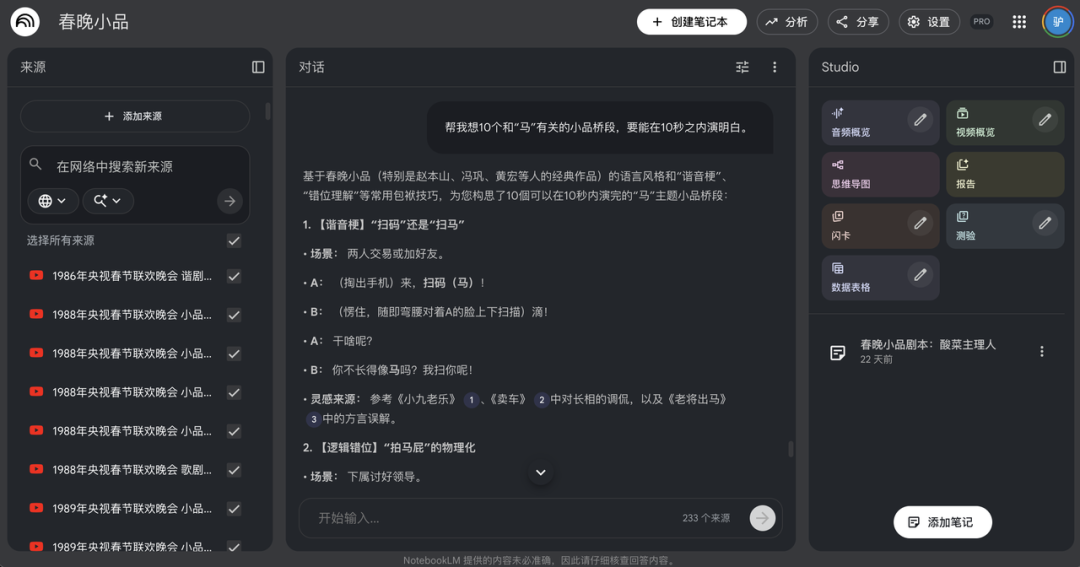
While none of what it wrote was directly usable, I drew inspiration from it to complete the following skit titled "I'm F**ing Here"* (我踏马来了 — a pun on "I'm here" and "horse").
Besides the horse neigh sounding too much like an actual horse, everything else was fine.
Even the low-res quality added some millennial-era texture, giving it more of that vibe.
Should've saved it for New Year's viewing.
And this Seedance 2.0 inside CapCut doesn't just generate videos from scratch — it can extend existing ones too.
Take that skit above: if you want to add a punchline, you can directly reference the already-generated video and input a simple instruction.
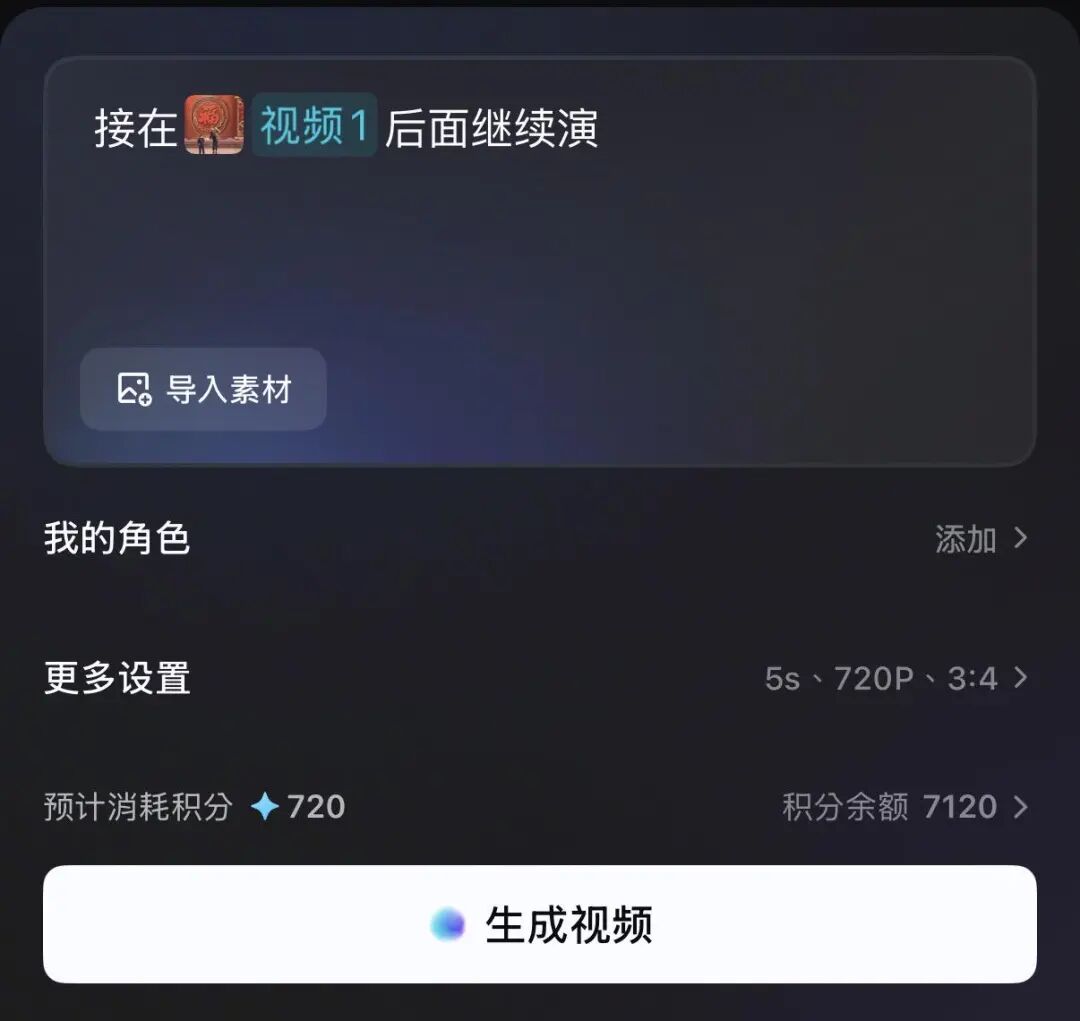
That simple
And the continuation generates.
One annoying thing: after the video generates, we still have to manually splice it together — no one-click connect button. Are they training our editing skills here?
At least since we're already inside the CapCut app, no need to switch software.
If you're not satisfied, you can generate alternative continuations. I incorporated some internet sludge hot memes:
I personally think this one's funnier — what do you all think?
Either way, this video referencing feature is pretty revolutionary. All those video agent startups doing Douyin trend replicas? Game over!
Beyond extending videos, users can also reference a video's style.
Below, I uploaded a Gemini 3 ad and had Seedance 2.0 imitate that style — using the original soup to cook original food, shooting a CapCut x Seedance 2.0 ad.
Honestly, pretty messy. Unusable.
And some text from the reference video got preserved too — you'd think Google had infiltrated.
But later I tried uploading a luxury fashion brand ad and had it do the same thing, shooting a CapCut ad.
This time the results were decent.
Maybe Seedance 2.0 is currently better suited for generating real people, physical objects — especially viral, social-media-ready stunt videos. Like Sora's initial approach.
I thought: wouldn't this be perfect for short dramas?
Because short dramas are essentially just strings of high-plot, high-virality short videos.
Some short dramas barely even have environmental shots — just two people yelling and talking at each other. Isn't that pure Seedance 2.0 territory?
I'd already imported both myself and Xianyu as characters, so I acted out a Spring Festival marriage-pressure revenge drama with him.
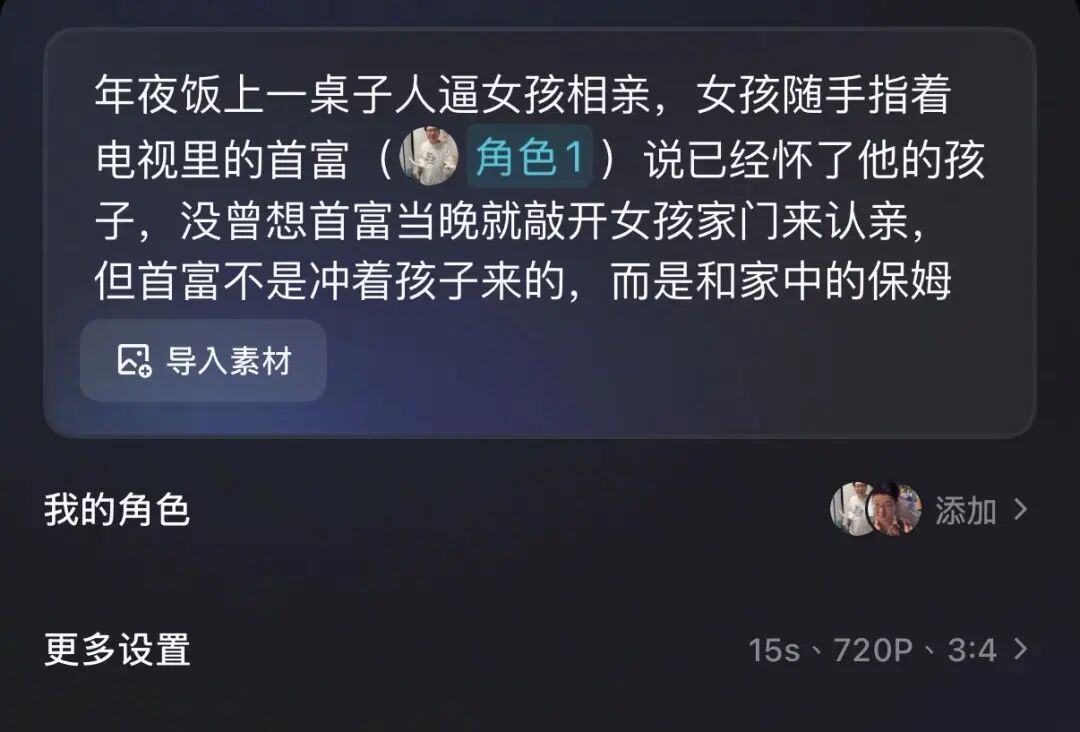
The generated video genuinely made me spit out my drink.
Though the usual problems persist — garbled Chinese characters, audio depth issues.
But the facial expressions are all there, lip-sync is solid, and it even thoughtfully added appropriate sound effects and BGM for this short drama genre.
And this is short drama — viewers don't care about production polish, costumes, or minor flaws to begin with. Seedance 2.0 is more than sufficient.
Meanwhile, that video extension feature I mentioned earlier is also super practical for short drama production.
Can't figure out where the plot goes next, or too lazy to think? Just extend it — prolonging life itself.
Take the clip above: I didn't know how to continue, so in CapCut I wrote:
Continue the plot from this video, have them get into conflict.
And Episode 2 just shot itself.
Though I'm not sure why picking up his wife resulted in stealing the car — but short dramas thrive on absurdity.
Anyway, as long as you've got the credits and the time, you and your friends can keep pumping out Episode 3, Episode 4 in CapCut... You're basically a one-person short drama studio.
You don't even need to appear yourself — just one sentence can generate short dramas across any genre.
For example: Mom forces me to dump my poor boyfriend and marry rich. To escape, I lie that I'm already married into wealth. Then my poor boyfriend walks in carrying strings of keys, revealing he IS the wealthy family — but his true identity is actually my mom's biological son, swapped at birth twenty years ago...
I didn't get why she calls her "sister-in-law" at the end. Maybe it's just to pique viewer interest.
Another example: Hometown classmates mock me for being thirty without a government job. I time-travel to ancient times and become commander of three armies, about to execute my snobbish classmate who time-traveled as a fugitive — only to discover the supervising executioner is my high school math teacher...
I think this one's the funniest. It even created something as philosophical as "There's another way to solve this problem" — divine.
There's definitely something to using this thing for short dramas.
And as mentioned earlier, Seedance 2.0 does video, animation, and dance with music. From opening credits to MV to main episode, you can generate the whole short drama by typing.
And it's all embedded in CapCut. Meaning your generated materials drop straight onto the timeline for secondary editing — no need to move an inch.
For budget-strapped content entrepreneurs, CapCut with embedded Seedance 2.0 can directly serve as an AI short drama / AI film workflow and office.
And to all those AI manga-drama startups out there: tremble, for ByteDance has arrived.
But I must emphasize here: Seedance 2.0 is not a perfect video model, and CapCut with Seedance 2.0 is far from reaching the pinnacle of editing software. It should first solve the problem of my computer burning up when cutting 4K.
Even with that caveat, I still believe: integrating Seedance 2.0 into CapCut was a good move.
Because CapCut is software that C-end users already use. Many people aren't professional content creators — they just edit vlogs for themselves daily, and CapCut is their optimal solution.
So when one day they open CapCut and see this AI feature, using it is just smooth, zero friction.
Beyond that, another reason this is a good move — it might sound absurd, but this is genuinely how I think about it:
If short video is a language, then CapCut is the dictionary.
Why do I say this?
Here's a little story I cribbed from Yilin:
"Once upon a time, European painters had to hand-grind mineral powders daily, mixing them with linseed oil inside pig bladders. Because paint hardened and spoiled upon contact with air, painters generally worked only indoors.
Until 1841, when an American portrait painter invented a squeezable tin tube with a cap, canning and portablizing paint so painters could carry it around everywhere.
Thus Monet and Renoir could take their tubes and easels to the banks of the Seine. Because they had to finish before sunset, they had to paint extremely fast, squeezing paint directly from tubes and applying it in thick strokes on canvas.
Impressionism was born."
Tubes appeared, aesthetics changed. The medium is the message — we shape our tools, and our tools shape us in return.
Today, whether ordinary users or professional creators, anyone with short video creation needs basically uses CapCut, or at least uses it across multiple workflow stages.
And the Douyin I scroll through daily until I'm dizzy is inextricably intertwined with CapCut.
Every feature iteration or addition in CapCut is essentially the invention of a digital paint tube, inevitably influencing the entire short video ecosystem's aesthetic system.
Like those sound effects, special effects, transitions, and animated text in CapCut — they match viral content paradigms on Douyin so perfectly that you can't tell whether the chicken or egg came first. Or perhaps ByteDance, through this CapCut-Douyin combo, defined what is chicken and what is egg.
With Seedance 2.0 integrated into CapCut, everyone creating with CapCut will use AI video generation to keep up with trends;
When their work blows up on Douyin, AI-generated video becomes perceived as the current trend;
So it gets posted, blows up, gets posted again, blows up again — the whole internal cycle steps on its own left foot and wins big.
So I say: if short video is a language, then CapCut is the dictionary. And Seedance 2.0's integration is using that dictionary to rewrite the grammar of short video.
By the time most people can accept that the videos they watch contain AI elements, CapCut will have completed its historical mission in the AI era.