Shenzhen AI Hardware Is Completely Normal

Turning clouds and overturning rain

"Stormy Weather"
I've been in Shenzhen for almost two months now, and my impressions come in waves.
One stretch, the skies were clear and bright. The next, sudden downpours. I check my WeChat Moments daily — friends either posting about diverting to Huizhou Airport on their way to Shenzhen, getting an up-close look at Justin Sun's hometown, or sharing photos of rain-lashed skyscrapers over Shenzhen Bay that put the song in my head: "Kuala Lumpur's weather, it turns and it pours ~ but I'm not used to not having your lighter ~" Sorry, I've been listening to too much汽水音乐. The AI hardware I've encountered comes in waves too. One wave, all I met were the crazy bros. Somina Lab, the sex robot startup, was fully in hype mode — several media outlets made special trips to help them pump it up, writing long sociological essays analyzing bedroom intimacy and embodied emotional companionship. These articles quoted the bros' plans for sex robot "deep experience centers" and "adding oral structures on top of dexterous faces to fully satisfy users' diverse needs." Not sure if the authors kept a straight face writing that, but I sure didn't.
Lately though, what I've seen has been surprisingly normal — hardware products you'd actually gift to a partner or a kid. Proof that Shenzhen has normal people too, and hardware entrepreneurship has directions suitable for all ages!
Below, my dispatches from normal hardware Shenzhen.
1.
I met the one AI hardware product I genuinely want to buy.
Moya is a hugging robot, or more vividly, a Baymax — hope Disney doesn't send a cease-and-desist. (Muqiu: Why would you buy a Moya, you that starved for affection?)
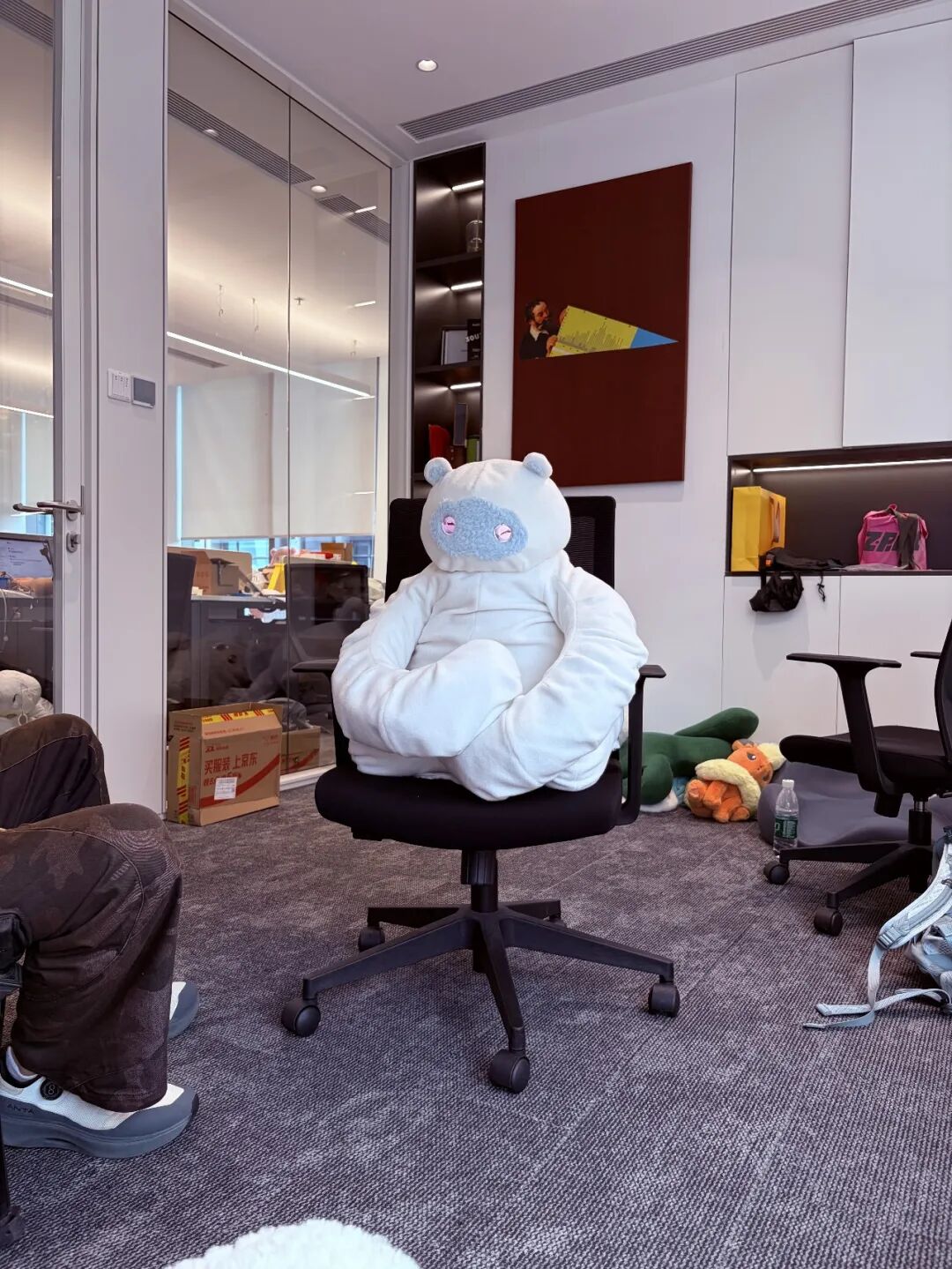
As the name suggests, Moya's main function is to hug you. Its two arms are airbag-driven; founder Qian Zheng says they sourced from the EV massage seat supply chain. Moya's embrace has real pressure, and it keeps gently patting you. I hugged it for a while — somewhat like a massage experience. But it doesn't do anything extra, just holds you and pats. Its only actual feature: Moya can talk. Zheng says they put enormous effort into making its conversation not seem smart, not seem too dumb, but achieve a particular flavor of dumb-cute and cute-dumb that makes you drowsy after two sentences. So when you're falling asleep hugging Moya, you can tell it what time to wake you up. The next morning, this soft Baymax robot will keep calling to you in its adorably stupid voice.

Supposedly the founder's looking increasingly haggard — whether from shyness at seeing me or what, I don't know. Brother Zheng's demeanor is almost too presentable, and he told a seamless founding story. He has anxiety and insomnia himself, so he built a harmless, warm, cute, soft, adorable robot. Zheng claims he falls asleep hugging Moya every night. His office colleagues each have one too — when work gets frustrating, they hug their Baymax. I couldn't help asking: doesn't entrepreneurship increase stress? Has building Moya made him more anxious, or helped him sleep better? The answer: they cancel each other out, like how vibe coding hasn't actually made your work any easier. Though looking at the guy's haggard face, I suspect he's being diplomatic. The good news: it's not too expensive. Zheng says they're planning a domestic price around 1,000+ RMB, shipping second half of this year. Very fitting for tech gifting needs. Chatting with folks at Bambu Lab, I learned many of their customers buy to gift others too. Think about it — at one or two thousand RMB, that's mid-to-low range for a phone, but gifting a Bambu Lab printer or a Moya works great. First, they're physically large, look impressive. Second, they're genuinely tech products, so the gift doesn't seem tacky. That said, Moya still has room for improvement. The airbags in its arms are a bit hard — you can feel the edges when hugging. And when it gently pats you, you can clearly hear the air pump running. Zheng's explanation: this was originally car massage seat tech, nobody ever made airbags this long. They've optimized a lot, but plenty remains. Also the current plush fabric feels mismatched to a 1,000+ RMB price point; Zheng says everything will be better at launch. We'll see. After I posted a video of Zheng hugging Moya, one friend had dissenting views. He pressed: did you actually feel warmth? Do you have a partner? Then left with: guess people really are different. Indeed. Someone else asked if I like octopuses, if I'm too repressed — outright personal attacks 😠
2.
Great hardware, mainly because it's useless.
Usefulness breeds ambition. Give it a screen, and users will compare it to phones at the same price. A 1,000 RMB AI hardware screen definitely won't match a Redmi phone — feels cheap, and you're finished. Looi, the desktop robot, does this well. All the promo images made me think it had a screen. Turns out it doesn't — it's essentially a phone stand, you put your own phone on as the display.
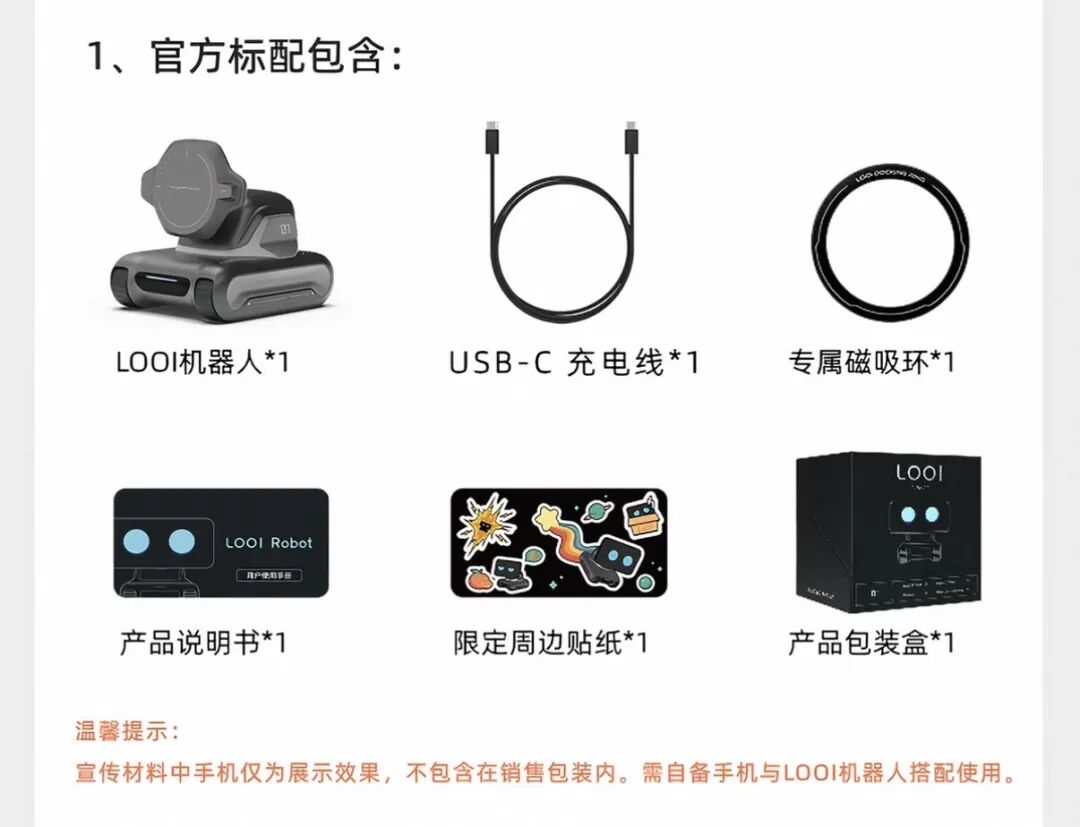
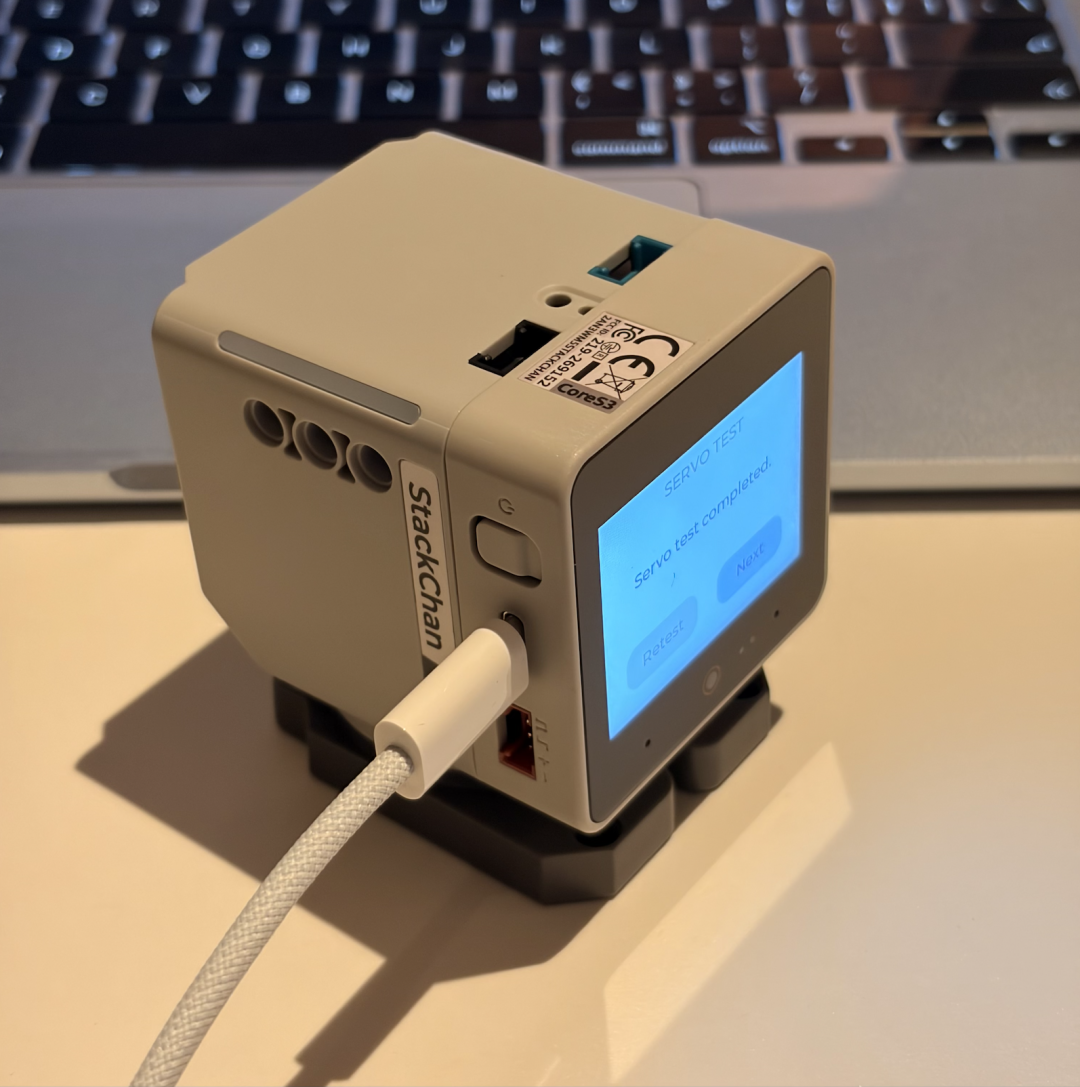
At first I thought 1,299 RMB without a screen was absurd. Then I realized: with a screen, it couldn't sell for 1,299. We've all seen what Alipay's tap-to-pay screens look like; a small company sourcing their own would be worse. Like the 699 RMB M5Stack desktop robot I bought — basically a Xiaozhi AI shell, the casing looks great in an electronics-nerd way, more functional than Looi too, can connect to Codex for custom software. But the screen is pure Y2K quality, worse than the MediaTek tablet I secretly bought in middle school to read web novels in class.
3.
Overall, the AI hardware ecosystem is still very early, very primitive.
Most AI apps I've written about, good or bad, useful or useless, share one trait — without LLMs, they couldn't exist. Toki, Cherry Studio, Youware, Macaron, then more recently Slock, Bloome. Hardware isn't like that. Much of what I've seen would still work as hardware without AI. And among the truly AI-native hardware, there are basically two use cases: one, recording and summarization; two, heart rate monitoring. Then mix and match those two.
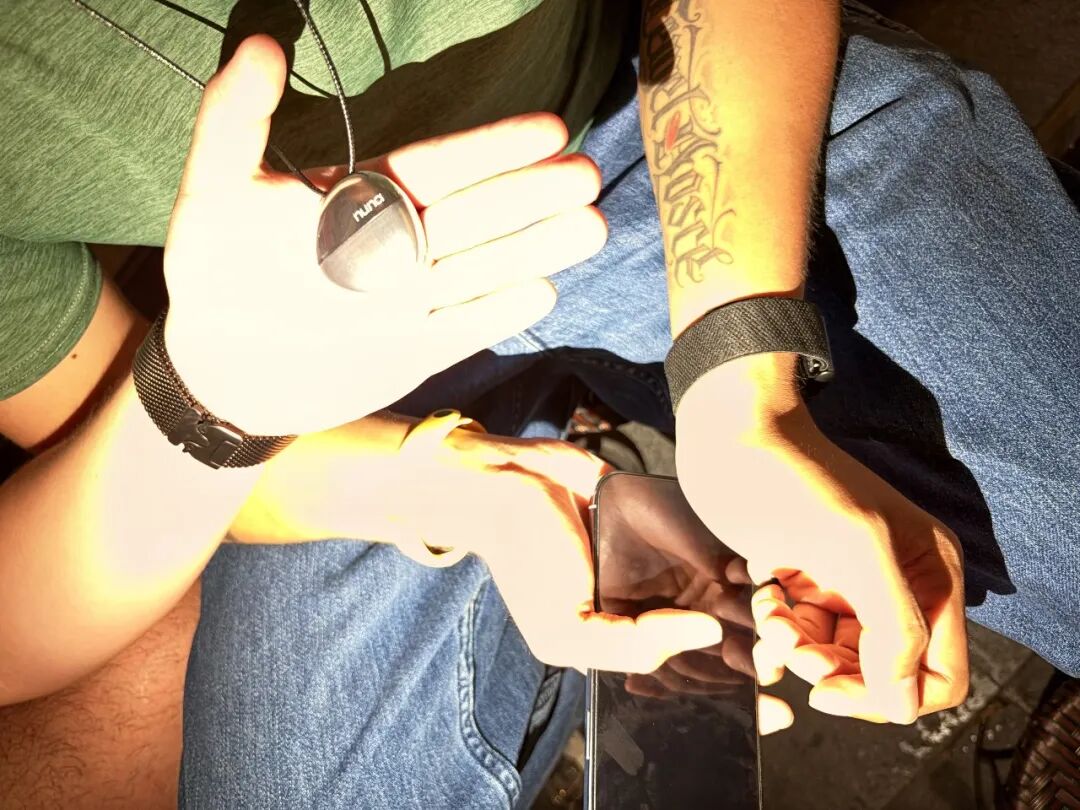
I was having dinner with a friend once — a guy who works at a hardware factory, wearing two bracelets and a pendant necklace. Good thing he wasn't wearing AR glasses, or customs might've stopped him for excessive electronics. The pure black, screenless Whoop bracelet is admirably focused: only heart rate, body temperature, and sleep time, targeting athletes,主打 14-day ultra-long battery life as health companion. The brilliant part: they mainly sell subscription memberships, annual tiers at $199, $239, $359, hardware comes free with membership. Premium version even does ECG. This makes sense — invincibility is purity. A pure black bracelet can't really look bad. Plus their marketing is all pro athletes wearing it. Whoop also sells配套 underwear for贴身 wearing, a steal at just $29.
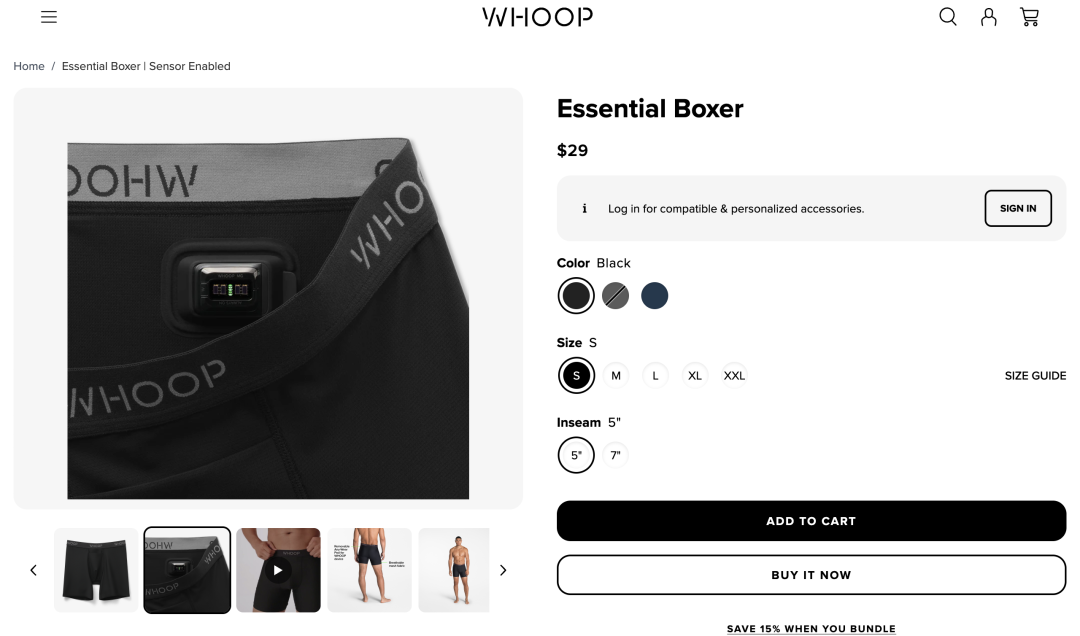
Besides the underwear, the second most震撼 thing was the most eye-catching pendant necklace, Nuna. Because this thing measures heart rate while recording audio. But a pendant doesn't touch skin — how does it measure heart rate? Well, Nuna packed a millimeter-wave radar. How do heart rate and recording combine? Nuna doesn't give you utilitarian transcription; instead, heart rate acts as automatic highlighting, giving you emotion-infused recording summaries. Tell me that's not 带派? Still, Chinese founders are practical. Nuna's got millimeter-wave radar and all, yet JD.com lists it at just 1,399 RMB. Compared to the Whoop bracelet hyped by Harvard folks, that's like McSpicy Wings versus Gaga's 75-RMB English breakfast.
4.
Also visited our dear friends at Odyss, makers of health necklaces. Founder Chris was very business, very presentable — forgot everything we talked about. I just want to suggest Odyss give Liangzi a beta test; if even Liangzi finds it useful, Odyss will definitely blow up.
Another great thing about Shenzhen: AI entrepreneurs all cluster together. I visited one hardware product company whose office is right next to DJI, same floor as a hardware design solutions firm — same-floor business闭环. The MixC World area assembles the full startup ecosystem from software/hardware to VC. Sure, you could say Haidian, center of the universe, has the full LLM ecosystem to rival it. But Shenzhen's advantage: entrepreneurs here are in good spirits. The crazy ones are亢奋-crazy, the normal ones are living-well normal. Haven't seen the universal 苦哈哈 faces of Haidian folks — maybe building foundation models requires more grind 💪
Digressing. Let me tie this together.
From my two months of shallow observation, AI hardware is still stuck at the chatbot stage; the agent stage hasn't arrived. Software's trend this half-year: AI app hype has阶段性 disappeared, numerous 2025 AI apps have been相继 debunked, the valuable ones remain Doubao (chatbot), Manus (general agent), plus Codex and Claude Code — these model-company products packaged as coding tools that are actually general agents.
Hardware? The only three valuable scenarios remain conversation, recording summarization, and health monitoring. Typical representatives: Xiaozhi AI and Plaud — collectively stuck at the chatbot stage. Muqiu says every founder he's met trying to build somewhat useful hardware is grinding on recording summarization, and all of this presupposes that Plaud's own AI isn't trying hard enough.
Various innovative hardware devices collect user privacy data in endless creative ways: all-day recording, video capture, blood oxygen, blood pressure, heart rate, even stuffing it into underwear. But gathering all this data only produces health suggestions and recording summaries — you might as well chat more with Doubao.
What's the general-agent version of AI hardware? Nobody knows. Hoping some founder family member drops something big — stop with the data collection stories, at least produce something useful.
Waiting for Godot.
Of course if you just want to game without producing, I recommend scanning the QR code to sign up for this weekend's Hangzhou internet café hackathon.

(Cover image generated by ChatGPT, text 100% human-written)
Subscribe to our Substack