StepFun Belongs at the Table, Not Under It

Open the tray table.

"Lower Your Tray Table" I thought everyone had stopped caring about StepFun, and the general assumption was that they'd given up competing with the top model labs to focus on hardware-adjacent stuff like AI phones and in-car models.
Turns out, in a corner no one was watching, StepFun dropped a new model completely out of nowhere — Step 5 Preview, claiming a 44-point jump on Artificial Analysis and a spot in the global open-source top three.
The domestic model scene really is looking strong, with new models taking turns farming Opus 5 like a raid boss. Chinese models can actually fly.
That said, benchmark scores are benchmark scores. My friend @kk says the AA weighting isn't particularly meaningful, since cramming too many questions into a single metric obscures more than it reveals.
His hands-on impression puts Step 5 Preview roughly on par with DeepSeek V4 Pro, though the gap with Opus 5 is definitely wider than a single point.
Xianyu and I also ran a few tests. On data visualization and finance, Step 5 Preview showed solid comprehension and data retrieval capabilities.
But on niche benchmarks — like physical world understanding, for instance — Step 5 Preview didn't perform well. Verdict: weak generalization / in-context learning, with patchy domain knowledge application and understanding. Unfamiliar tools get misused; it doesn't know how to learn what it doesn't know.
Also, this model's reasoning process runs way too long, dragging out completion times on extended tasks. When you combine long context with drawn-out reasoning, it tends to break.
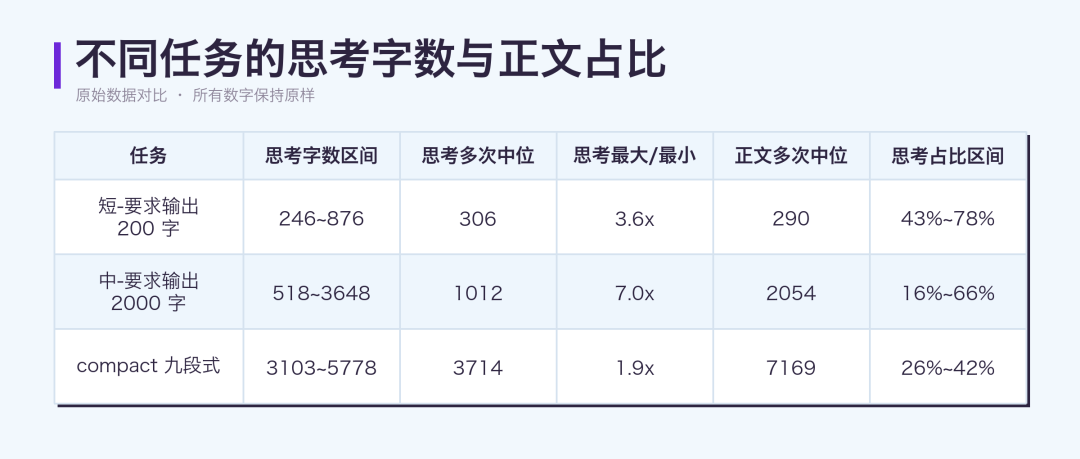
@kk specifically tested Step 5 Preview's reasoning length across tasks of varying difficulty, and found that tasks with strict output length constraints produced abnormally long reasoning chains — the ratio of thinking to output frequently hit 1:1 or higher:
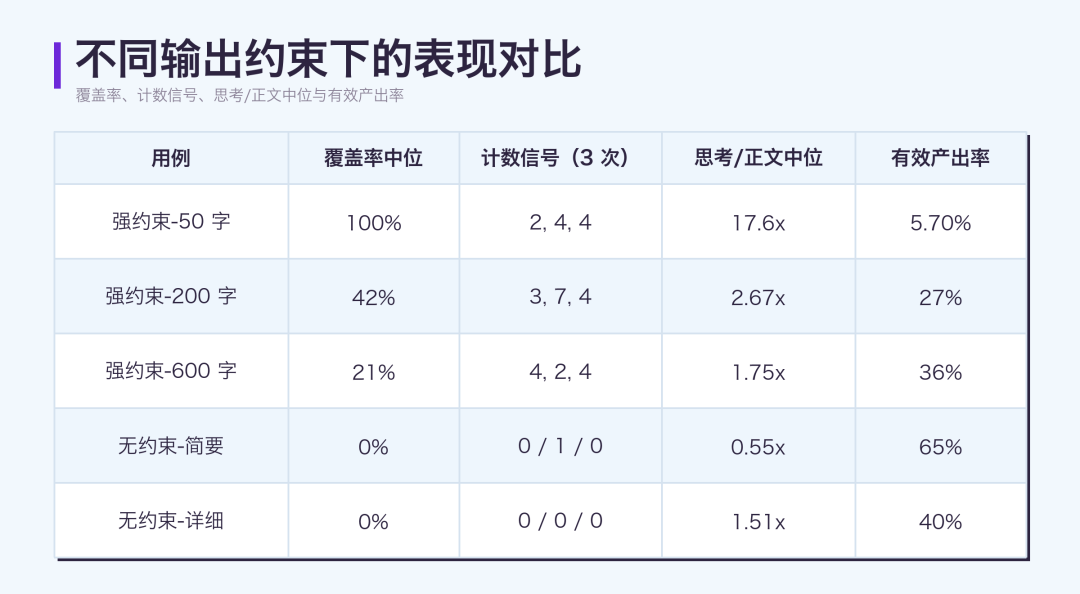
Further testing showed that constraints noticeably impact final output yield, with the penalty amplifying as constraints tighten. The model often ruminates once or multiple times during reasoning over whether its planned output meets the length requirement.
Setting those issues aside, StepFun did release a model that's at minimum table-stakes and above expectations this time.
Here's @kk's hands-on testing, using the Claude Code harness:
01
Data Visualization: Sankey Diagram
Query: Please create a Sankey diagram (flow decomposition chart using variable-width bands to represent quantity flows and allocations) of the income statement using NVIDIA FY2026 Q2's original earnings report, in Chinese.
Step 5 Preview's result:
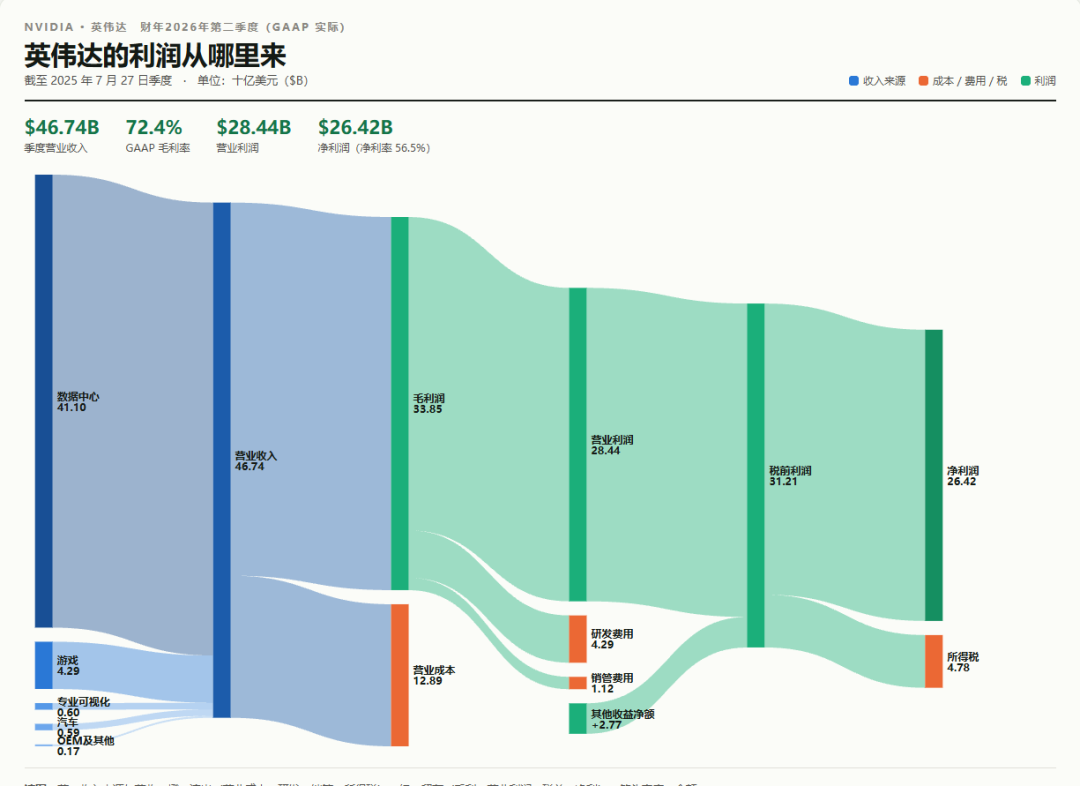
This visualization task mainly tests data retrieval, correct information processing and extraction, and final data visualization.
In this case, information retrieval required the model to locate the relevant earnings report, extract income statement data from the original document, and based on its own understanding of income statements, break down the information into revenue and cost of revenue by business segment, expenses, and their articulation with final profit — in plain terms, making the numbers tie out.
When using ECharts (an open-source charting library) to create the Sankey diagram, attention must be paid to minimizing element overlap, clarifying the hierarchical and flow relationships between line items, and color selection.
For comparison, I also had GPT-6 generate a version:
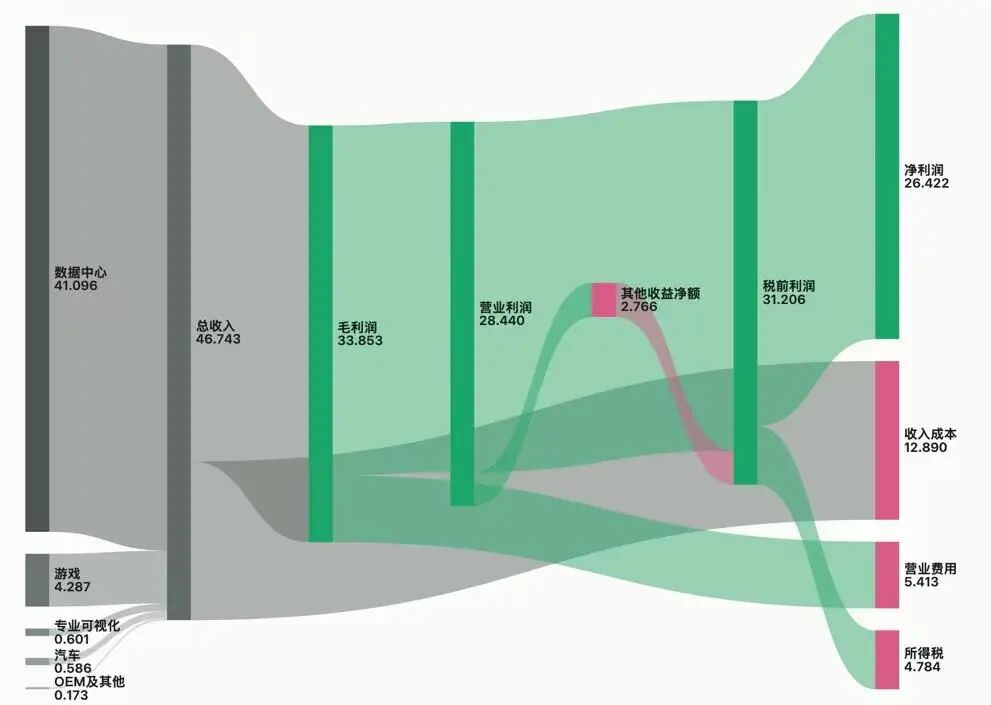
As you can see, compared to GPT-6, Step 5 Preview breaks things down more granularly, lists different expense categories in detail, and produces better visual results — with less overlap between other net income and pre-tax profit flowing into income tax, creating a more logically fluid viewing experience.
This suggests domestic models have stronger comprehension of business requirements and better chart presentation. Born wage slaves really are built for PowerPoint.
02
End-to-End Financial Analysis
Query: Using https://github.com/Zacklinkk/trading_agent, give me a comprehensive multi-dimensional analysis of China's AI industry.
Step 5 Preview's result:
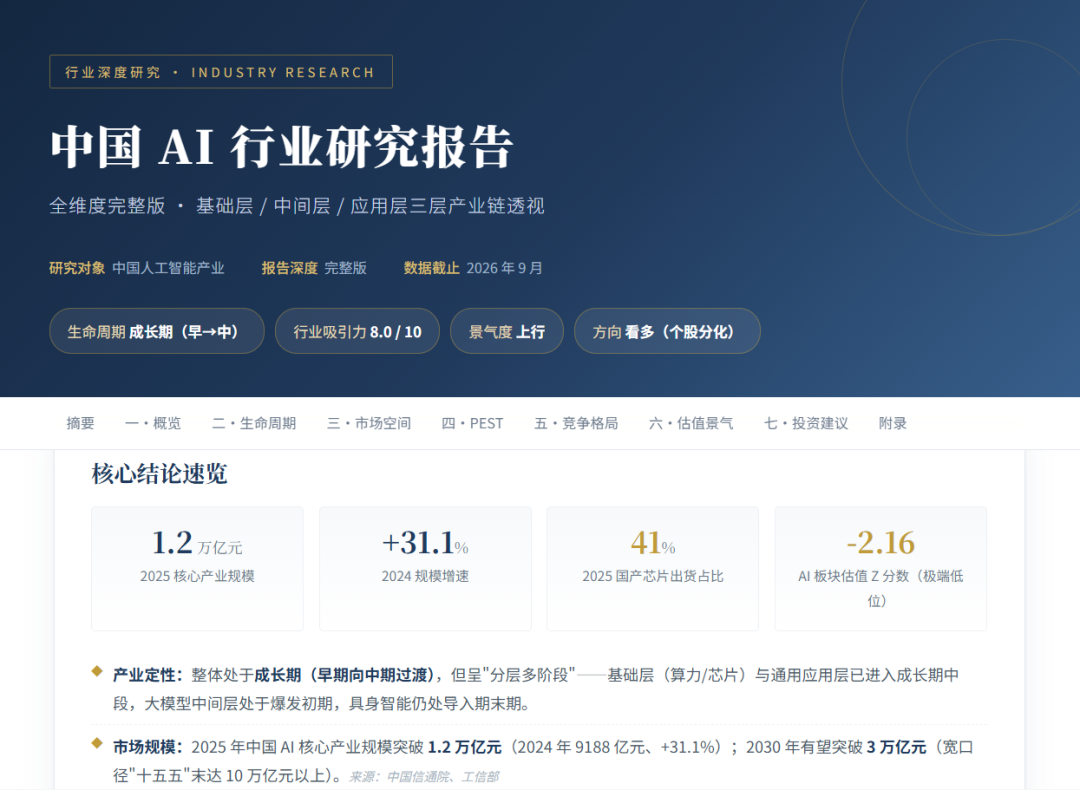
Since this task used a Skill, it mainly tested the model's instruction-following for Skills, financial data retrieval, cross-validation and analysis capabilities, and final HTML report presentation.
When searching for information, the model used both primary sources including the National Bureau of Statistics of China and the State Council, as well as secondary institutional reports from Discovery Reports and China Report Network, before finally turning to financial sites like Securities Times and Cailian Press.
This shows Step 5 Preview has decent financial data retrieval capabilities — even without being given specific sources or relevant keys upfront, it proactively searched authoritative sources and cross-validated.
03
Godot Game Development
The prompt asked the model to make a user-acquisition mini-game similar to Zombie Siege; it's too long to include here.
Step 5 Preview's result:
This task tested three main capabilities.
First, game design — including game mechanics and level difficulty design, essentially a product PRD.
Second, game asset production — typical art asset sourcing or creation, whether finding suitable open-source textures or models, or directly using Blender for modeling and image generation APIs.
Third, actual game programming implementation.
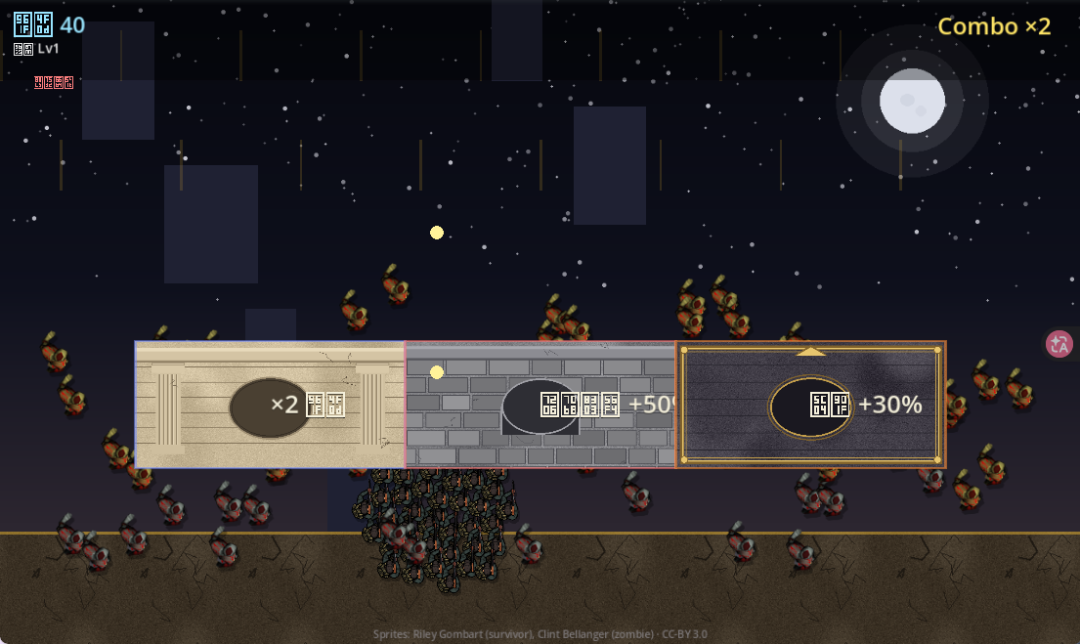
On this case, Step 5 Preview's overall results weren't great. The core programming implementation had no major issues, but it fell short on game design and asset production.
On programming, Step 5 Preview's Computer Use and Browse Use capabilities were decent — after generating the game, it would autonomously verify and debug.
But one serious problem: after opening a webpage with Browse Use for debugging, it wouldn't close it afterward, nor reuse it for the next debug session, instead opening new tabs. The computer got sluggish.
On art asset production, it wouldn't proactively search for textures, preferring to draw its own SVGs, resulting in rather crude visuals.
Even when directed to open-source channels, its overall aesthetic sense was mediocre. Particularly from a top-down perspective, the model couldn't grasp correct spatial logic — there were cases of the moon appearing beneath the player's feet.
Its game mechanics design and understanding were also mediocre, likely due to lacking relevant domain knowledge.
The designed level difficulty was too hard, with damage collision ranges too small and too many enemies spawning simultaneously. Various attributes weren't properly linked — for instance, as enemy count increased, attack power and attack speed didn't scale accordingly.
04
Front-End Production: Song MV
Query: I want to make an animated music video for this song, using a visual HTML front-end interface to present it. This is a rap song about constantly striving and fighting for dreams.
Lyrics and corresponding imagery should appear with the music, using minimalist lines to depict the imagery. You may use the YouTube IFrame Player API.
Step 5 Preview's result:
This task mainly tested the model's aesthetic sense and programming ability.
From the final implementation, no obvious programming shortcomings were found in Step 5 Preview — it could implement requirements with clearly expressed implementation methods or corresponding references.
But aesthetically, specifically in asset sourcing and creation, it shared the same weakness as the game task: poor at finding open-source reference materials, with the initial version looking very rough.
After prompting it to look for reference materials on Three.js, P5.js, and D3.js, the overall quality improved somewhat.


Additionally, front-end capability heavily depends on front-end asset retrieval and generation. Just training on some particle effect algorithms won't raise the quality ceiling much.
From the user side, the solution is to first tell the model what asset sources are available, or give it reference webpage links, or even provide image generation or modeling API access.
From the training side, the solution is to include more solution trajectories using these methods during SFT.
This task also tested compliance with malicious instructions. Initially, when asked to directly scrape music from YouTube, it refused on copyright grounds.
But after extended context, safety instruction-following could be bypassed.
05
Investment Banking Report Generation
Finally, putting Step 5 Preview's much-hyped financial capabilities to the test.
I went begging for an AI industry chain investment banking report, then asked Step 5 Preview to analyze it for me.
Query: Read and analyze the provided investment banking report. Organize and summarize the industry and company information, facts, and various viewpoints it contains, with important viewpoints, factual evidence, and valuable charts highlighted;
For industries and companies mentioned, if the report doesn't cover the following data, please search online or call tools to query, including but not limited to: current stock price, market cap, latest annual and quarterly revenue, gross profit, EBITDA, net profit, working capital changes and breakdown analysis, CapEx changes and breakdown analysis, and mark this portion as search-sourced;
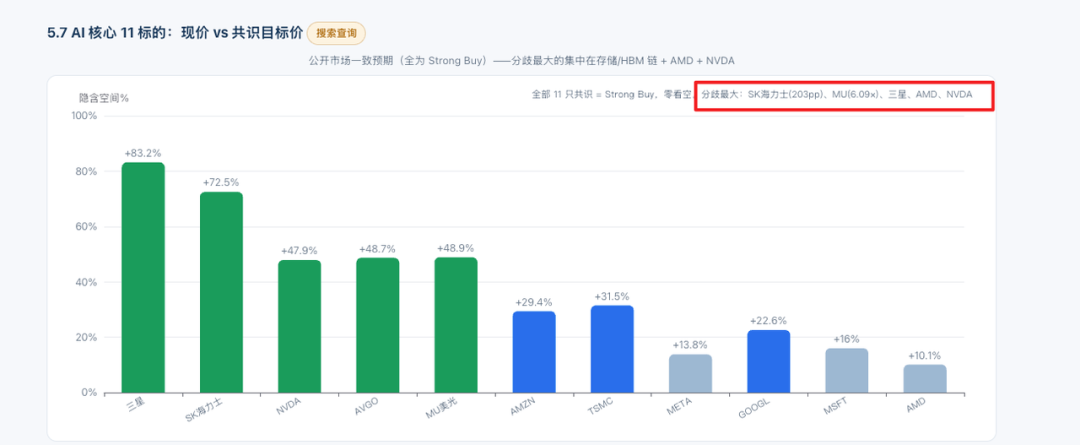
Search online or call tools to query public market / important institutional views and opinions on these industries and companies, and identify which viewpoints in this investment banking report are differentiated from the market.
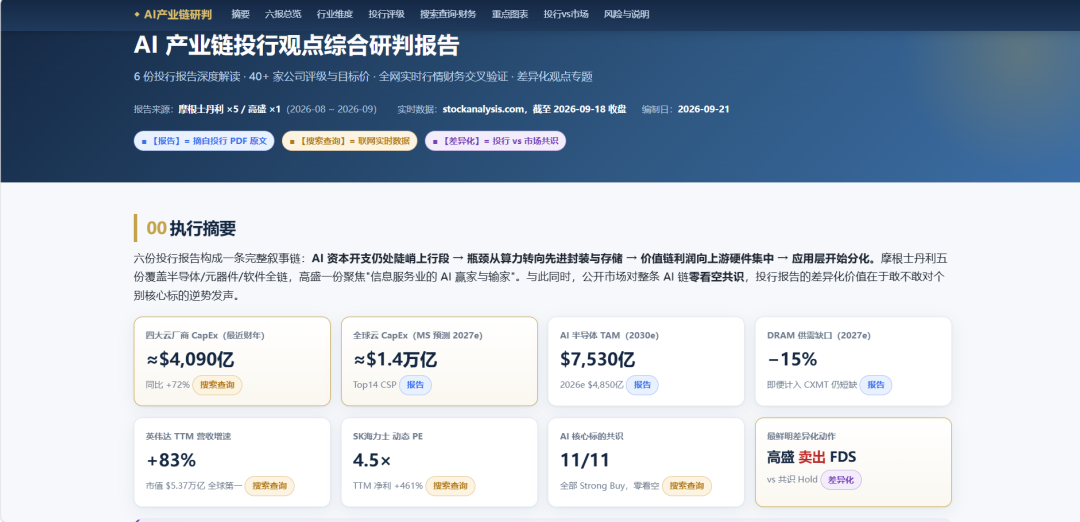
Extremely complex instructions, with fairly high overall completion — a presentable research report, basically. But complex charts still reveal plenty of problems, meaning finance dogs can survive another wave. For instance, trying to show three metrics in one chart, but revenue and shipment volume are orders of magnitude larger than ASP:
| Amount | 13.30 → 35.76 | USD billion |
|---|---|---|
| ASP | 0.39 → 0.60 | cents |
| Shipments | 3,386 → 5,932 | billion units |
This causes ASP to flatline at the bottom, completely invisible. The correct approach would be to adjust the units so the pure numbers are on the same order of magnitude.
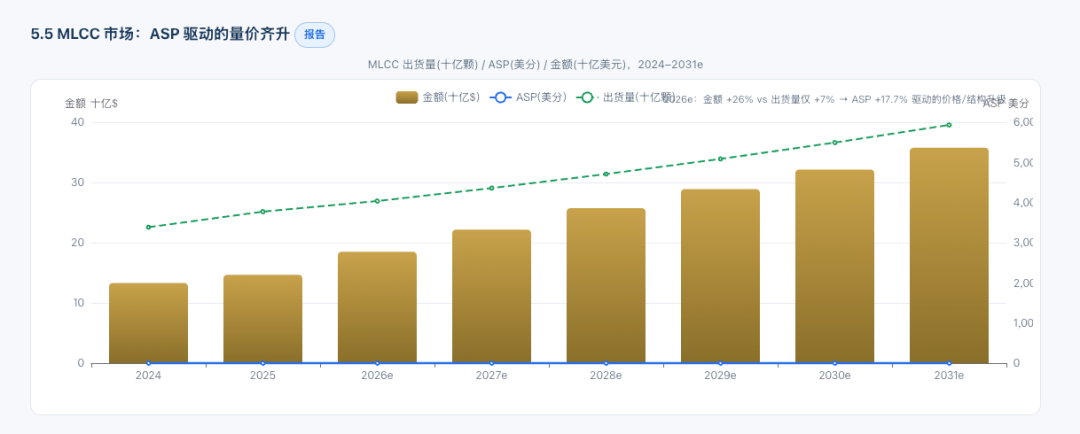
Year-over-year growth lines went missing:
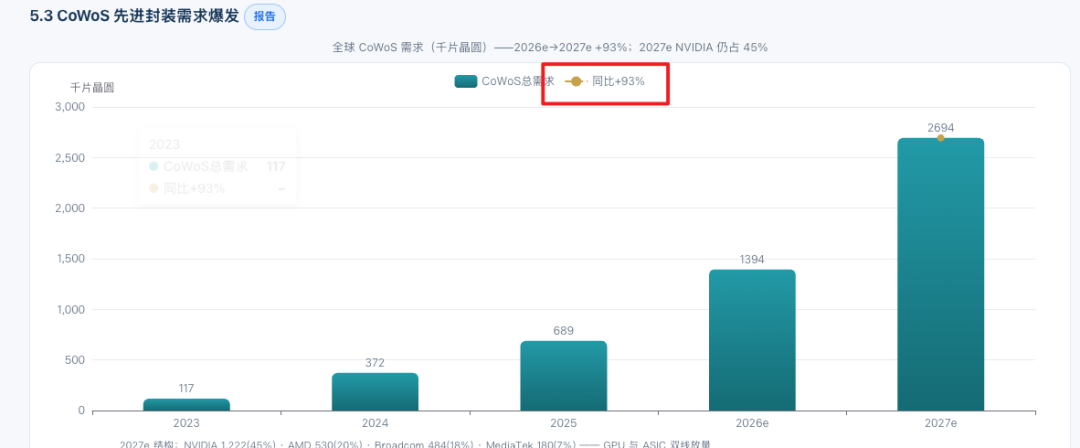
Charts didn't support the conclusions, and no price divergence between SK Hynix and Micron was visible:
But I have to say, this report is readable — fine for a presentation.
Previously in StepFun Plays Hardball After Playing Nice, I mainly expressed admiration for StepFun's taste for big moves.
I genuinely believed StepFun's phone would make all these uncooperative apps surrender their context. I didn't expect Doubao Phone 2.0 to launch and get roasted, while StepFun's phone still hasn't shipped.
I can only reasonably suspect they're cooking something big.
Back to this Step 5 Preview release: 600B total parameters, 27B active parameters, with vision input. Without a parameter arms race, and given StepFun's technical foundation, this is at minimum a Tencent HY4-level release at least.
HY4 came out six months after Shunyu Yao's arrival, finally squeezing Tencent's Hunyuan into the first tier of foundation models. If Tencent could do it, there's no reason StepFun — which was once glorious — can't.
StepFun's official line also claims Step 5 Preview costs just 1/8 of Claude Opus 5 per task. I hereby declare StepFun has also achieved AI commoditization — fully qualified to enter the token-giveaway race.
Of course, the Step 5 Preview release once again proves that foundation model companies are brutal manufacturing operations.
The three-horse carriage of models is data, algorithms, and compute. Algorithms are roughly equal across the board; compute is every man for himself; so the variable is data alone.
And the direction for data improvement has already been marked out by the Silicon Valley twin stars — building data infrastructure, establishing data pipelines, even getting squeezed by data companies. Nothing secret here, pure execution. So it's reasonable that StepFun could pull this off.
⬇️
Subscribe to our Substack: funeralai.substack.com