TapNow proves speaking up works

Go ahead, give me your take on the world.
The "Armchair Director"
The product logic behind video agents is actually pretty simple: make the backend more and more complex, and the frontend more and more simple.
When TapNow previously updated CreativeOS, the main move was hiding the canvas — tucking it away inside a chat box so users no longer had to sit there like a loom operator; they could make films purely by typing.
At the time, I figured this had to be the endpoint of video-agent interaction logic. After all, it's genuinely hard to imagine anything more convenient than typing.
Then recently they shipped CreativeOS 2.0, which hides the chat box too — users don't even need to type anymore. They can direct purely by running their mouths.
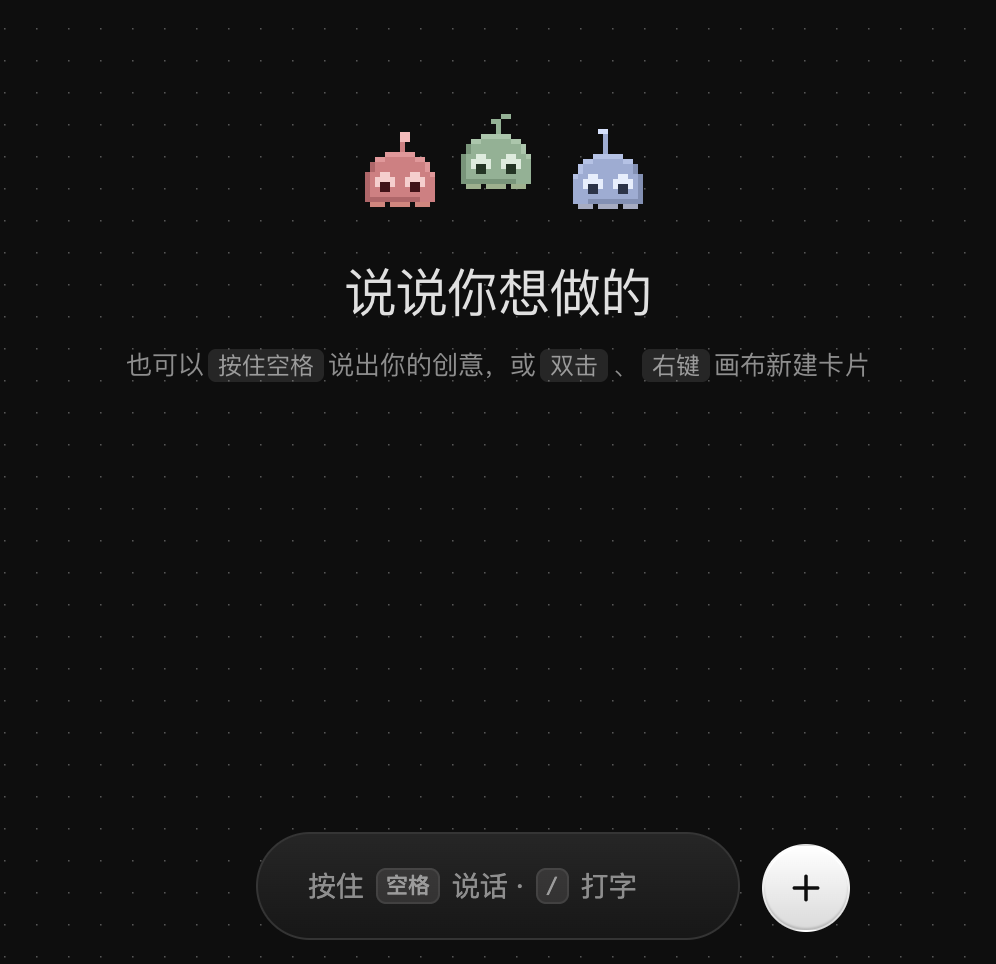
A pure return to basics. Spend a few days hanging around student film crews at Beijing Film Academy, the Central Academy of Drama, or the Communication University of China, and you'll realize that the core skill of most real-life directors is talking nonsense out loud.
And this genuinely nails what AI users actually want: the desire to boss someone around like a rich dad or a CEO — to hit the space bar and curse out the Agent whenever the mood strikes. At that point, no matter how much the annual membership costs, they'll feel it's worth it.
From that angle, TapNow could legitimately call itself a personal agent — it's doing secretary work, after all.
But I digress. So how does CreativeOS 2.0 actually perform?
And we also tested their simultaneously released 3D world engine Cinemap, AI editing system Monta, and their Code video Agent, Fable 5.2 Lab⬇️
CreativeOS 2.0
Cyberpunk: Edgerunners 2 got widely panned as soon as it launched recently, so I decided to make a fan-edit version with TapNow.
The plot: David is a delivery driver in Night City. He works as a manual laborer to earn money solely so he can go to the moon with Luna. But he delivers too slowly and keeps getting his pay docked, so he goes to a ripperdoc clinic and gets equipped with a Sandevistan, becoming Night City's top delivery driver. He hands over all his money to Luna — and in the end, Luna goes to the moon by herself.
So I held down the space bar and dictated my idea to TapNow⬇️
I wasn't even thinking while I spoke — pure stream of consciousness, saying whatever came to mind. Looking back, even I couldn't tell you what I was trying to express.
But after a while, TapNow had the pitch, art style, scene references, and character references all ready for me⬇️
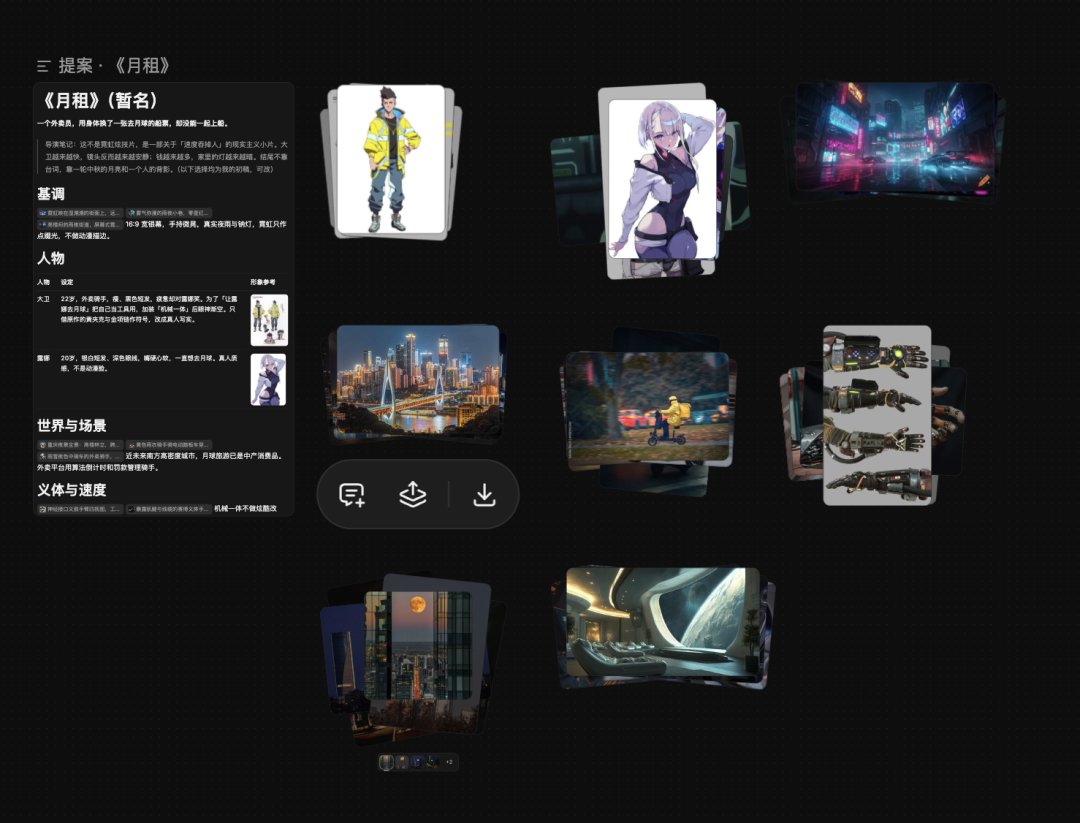
Once I confirmed the character designs and main storyline, the storyboard was ready too⬇️
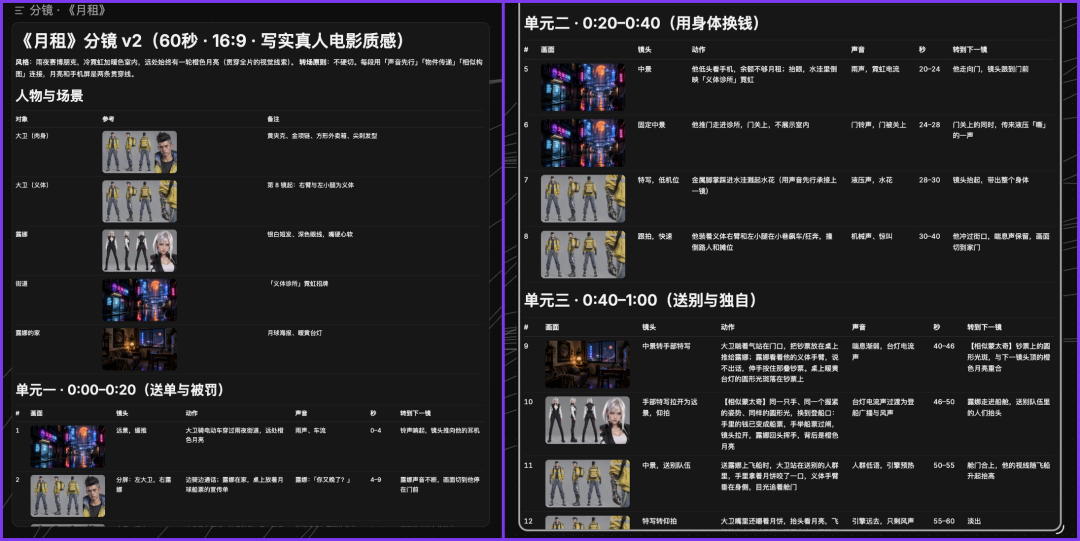
This storyboard table looks complicated, but it's actually quite simple.
Because ever since Seedance 2.5 came out — thanks to its strong comprehension and execution capabilities and its 30-second maximum duration — a whole group of shots can be generated in one go from a single prompt.
So TapNow really just needs to write a good story; the storyboarding can be left to the model. And writing a good story is exactly what TapNow excels at.
I barely touched this storyboard and just let TapNow move into the video generation phase.
But at this stage a problem came up: one shot kept throwing errors and wouldn't generate, and I couldn't figure out why.
Seedance 2.5 has so many landmines that I honestly couldn't tell whether the problem was David's pecs, Luna's lower back, or the rooftop railing.
So I handed everything over to CreativeOS 2.0 and told it to exercise some initiative — it had to figure out what the problem was.
Who would've thought CreativeOS 2.0 would go full exam-cramming nerd and launch a controlled-variable experiment: permuting and combining different prompts based on conditions like with/without David, with/without Luna, switching scenes, switching dialogue, and running video generation tests to see who was dragging everyone down.
A mad experiment. It burned through all my credits before I found out⬇️
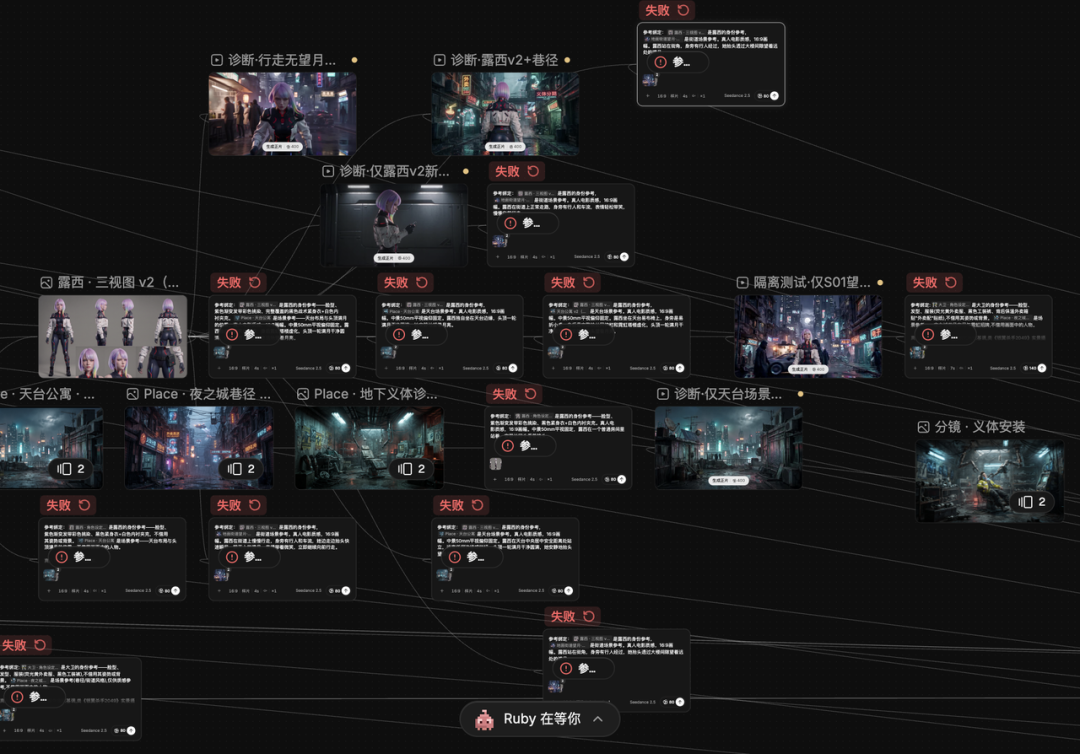
But it did find the answer: the art style was too similar to the original work. Seedance 2.5 has integrity — it doesn't do copyright infringement.
First time I've ever seen an Agent that self-checks and self-corrects 🫡 So I adjusted the art style, and sure enough, it generated normally 👍
And while TapNow was busy running experiments on one front, video generation on the other front wasn't held up at all — the canvas runs multi-agent collaborative work, each agent on its own hill, none getting in each other's way⬇️
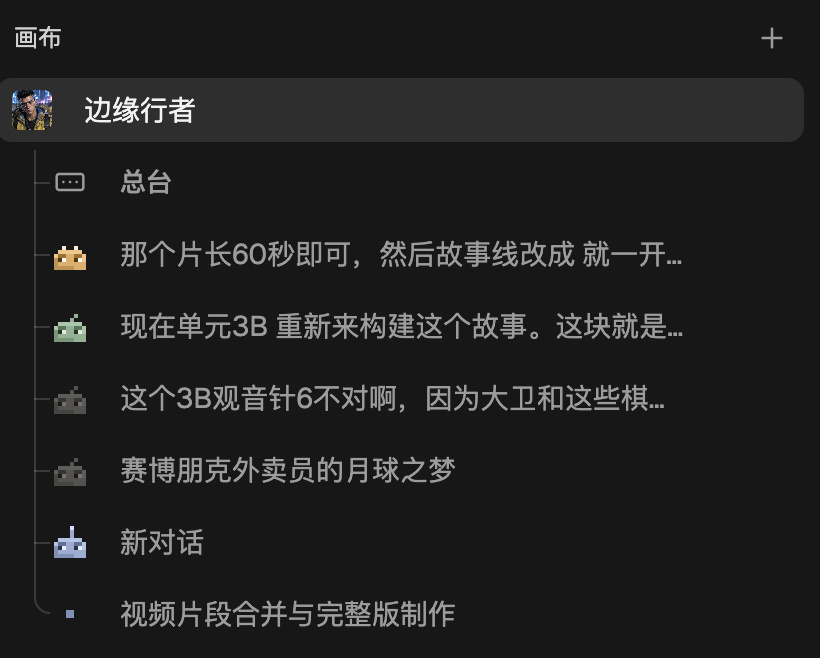
Once all the videos were generated, I wanted to give some guidance on how two shots should connect — fairly complex, something like: make the end of the previous shot and the beginning of the next shot achieve a "similar montage" with different backgrounds but the same subject, creating a seamless transition.
But that's too hard to describe. I'm pretty sure readers looking at that long string above have no idea what I was trying to say either.
Fortunately, CreativeOS 2.0 lets you speak while annotating on the canvas and drawing arrows to express what you need — literally "pointing at the mountains and rivers," and it even supports multi-player group chats like a comedy routine. The mouth-off experience is maxed out.
Anyway, I managed to get the point across using this kind of sign language⬇️
And CreativeOS 2.0, after hearing my completely incoherent request, actually pulled off this shot 😅
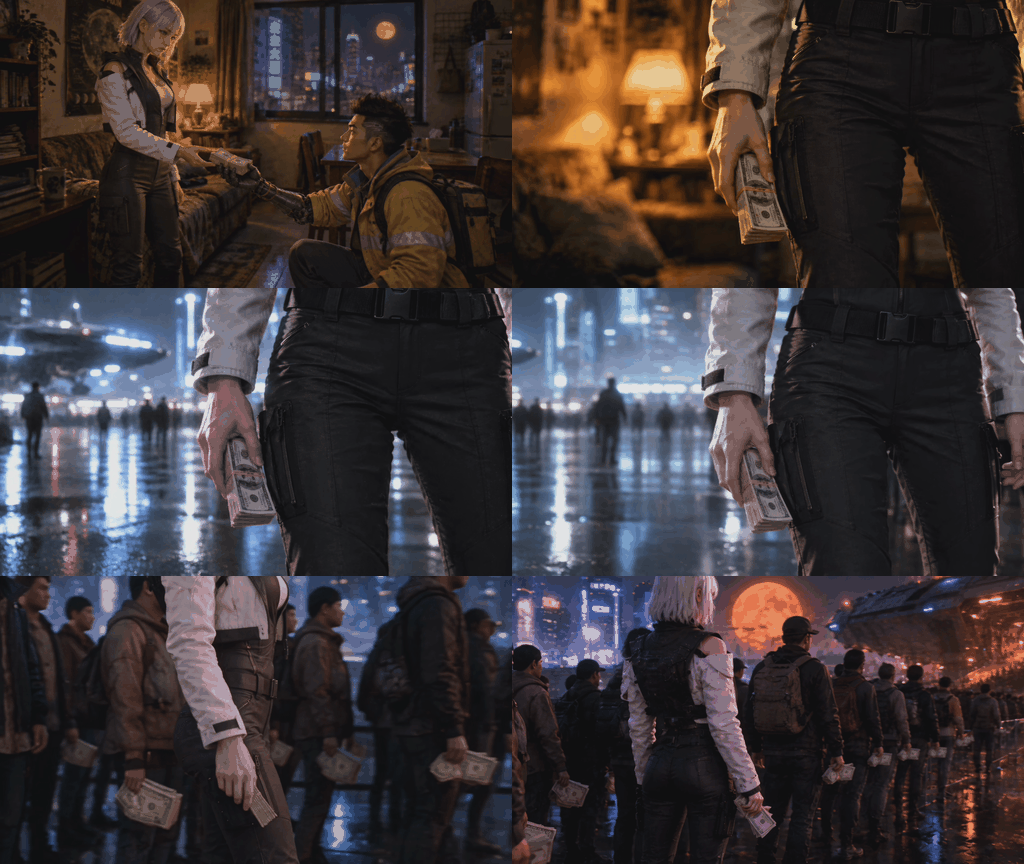
I feel like its comprehension ability is off the charts. I suggest TapNow go deep on toB — pivot to making companion robots for Shandong SOE bosses 🥵
Cinemap and Monta
Of course, some shots have camera movements so complex that CreativeOS 2.0 can't understand them even with me talking purely out loud.
Fortunately, TapNow also recently launched a Cinemap world engine — you can build a city in a 3D space, set up characters, choreograph camera movements, and then generate a white-model video for CreativeOS 2.0 to reference.
So I first built my imagined cyberpunk city in Cinemap⬇️
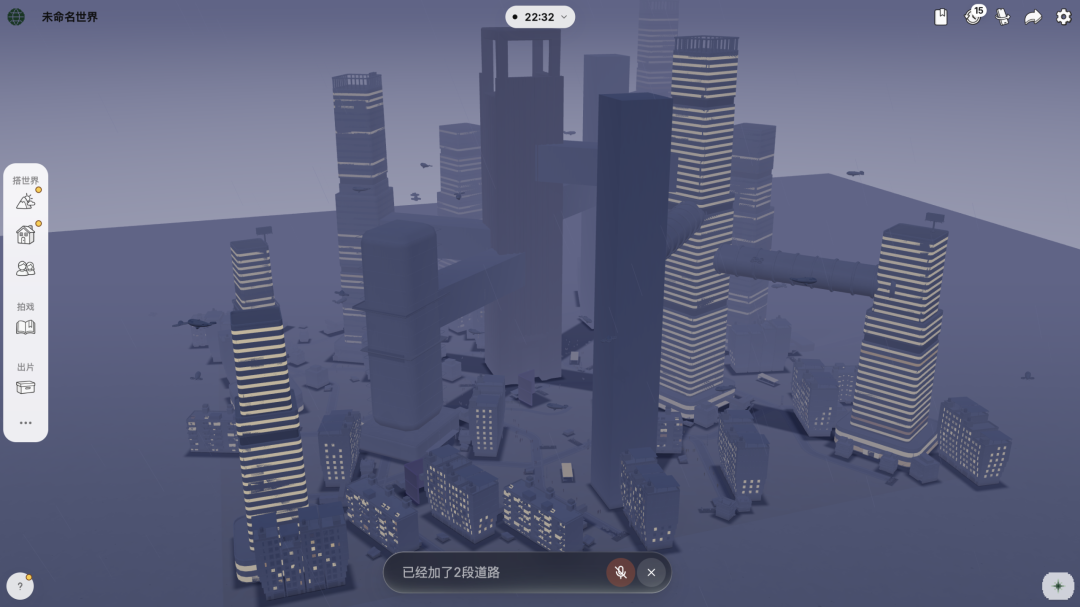
Then I dropped the protagonist David into the city and designed a complex delivery route for him.
Then I dragged the white-model delivery video into CreativeOS 2.0 and had it reference the white model to recreate a live-action video matching the art style of the whole story. Be like⬇️
In the end, CreativeOS 2.0 actually recreated this thunderous delivery sequence based on the white-model video⬇️
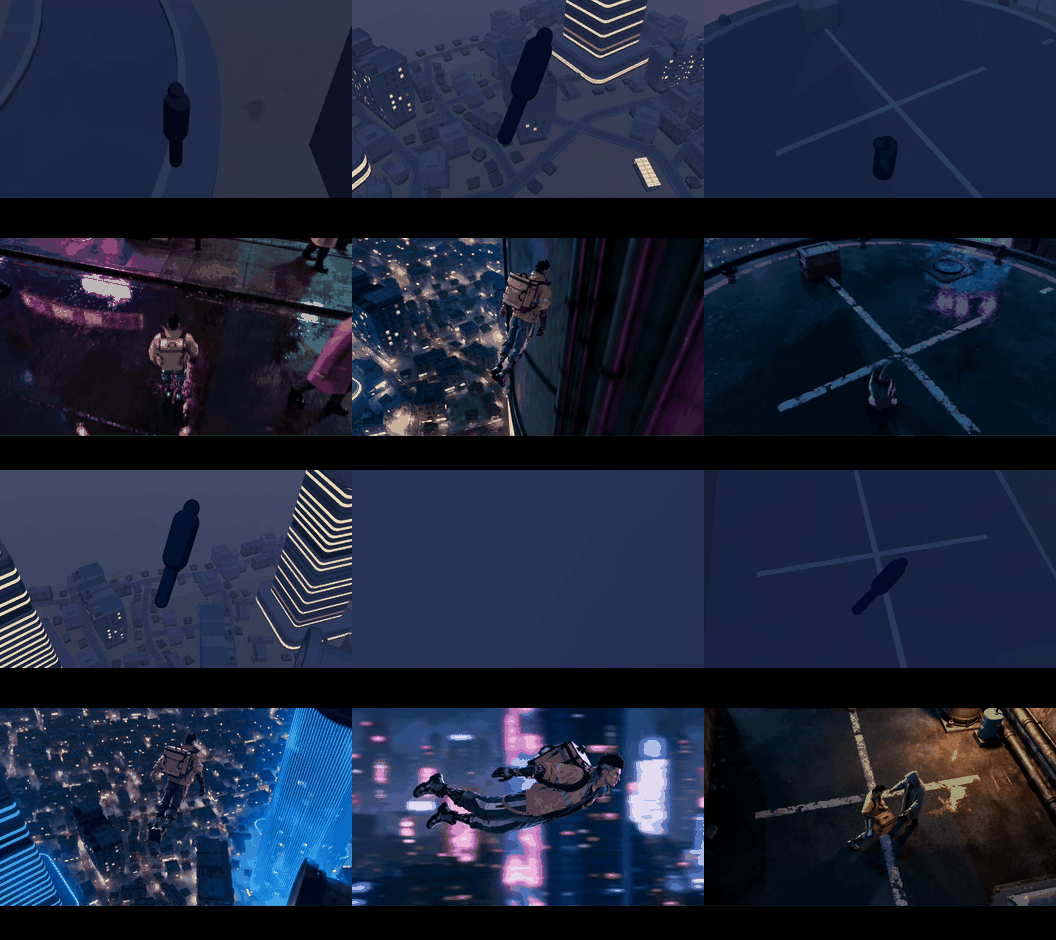
With that, all the shot materials were in place — only editing remained.
As it happens, TapNow also launched an internal AI editing tool called Monta, with a usage logic similar to CreativeOS 2.0 — purely mouthing off and drawing lines.
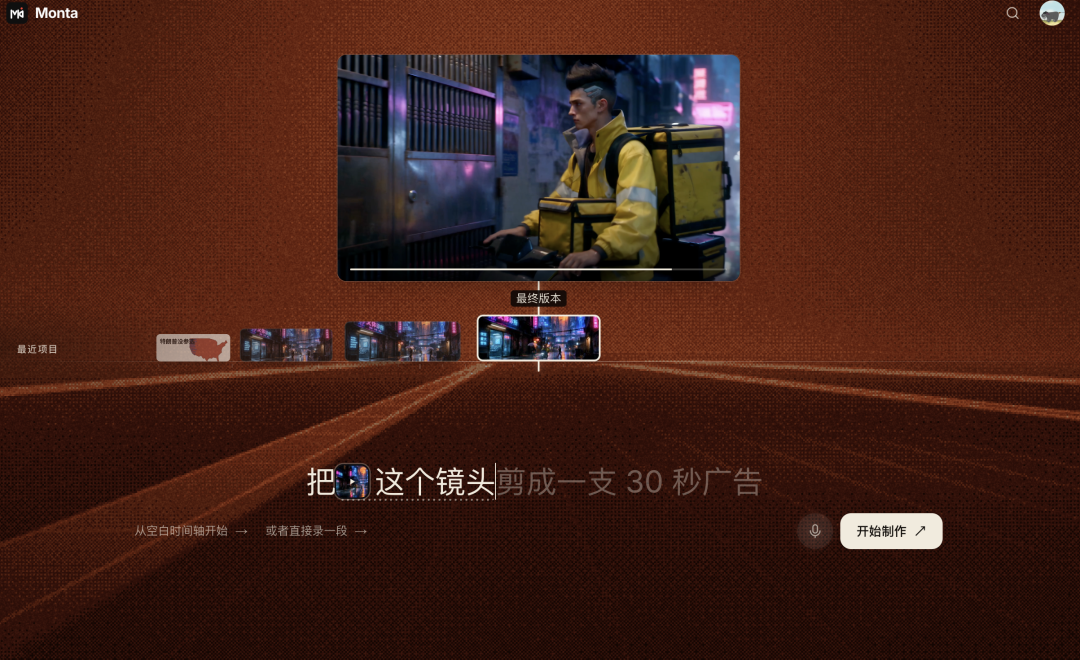
So I sent the assembled cut to Monta and had it tighten up the pacing on its own.
Monta started watching the video frame by frame, analyzing the staging and content of each shot, then re-edited and rearranged the whole thing⬇️
It cuts way better than I do.
Suffice it to say, from Cinemap to CreativeOS 2.0 to Monta, TapNow has closed the loop on the entire pre- and post-video-generation workflow, ensuring every step is AI-native — fully connected 😁
The final cut is below⬇️
If this went up on Hongguo Short Drama, the manual-labor bros would be crying buckets 😭
Code video
Another highlight of this TapNow update is that they built an Agent for Code video.
Code video has actually been hot for a while — every time a new model version drops, someone's testing it with a pelican riding a bicycle. And Claude's recent rounds of training specifically targeting Code video have basically turned the whole thing into a required course for AI bloggers.
Especially since Code video was previously mainly used for data journalism videos and motion graphics animation. Ever since Fable 5.2 came out, basically any video can be made by having a model write code — diffusion models are dead.
So TapNow releasing a Code video Agent at this exact moment is definitely riding the wave while it's hot.
The name is pretty on-the-nose too: Fable 5.2 Lab.
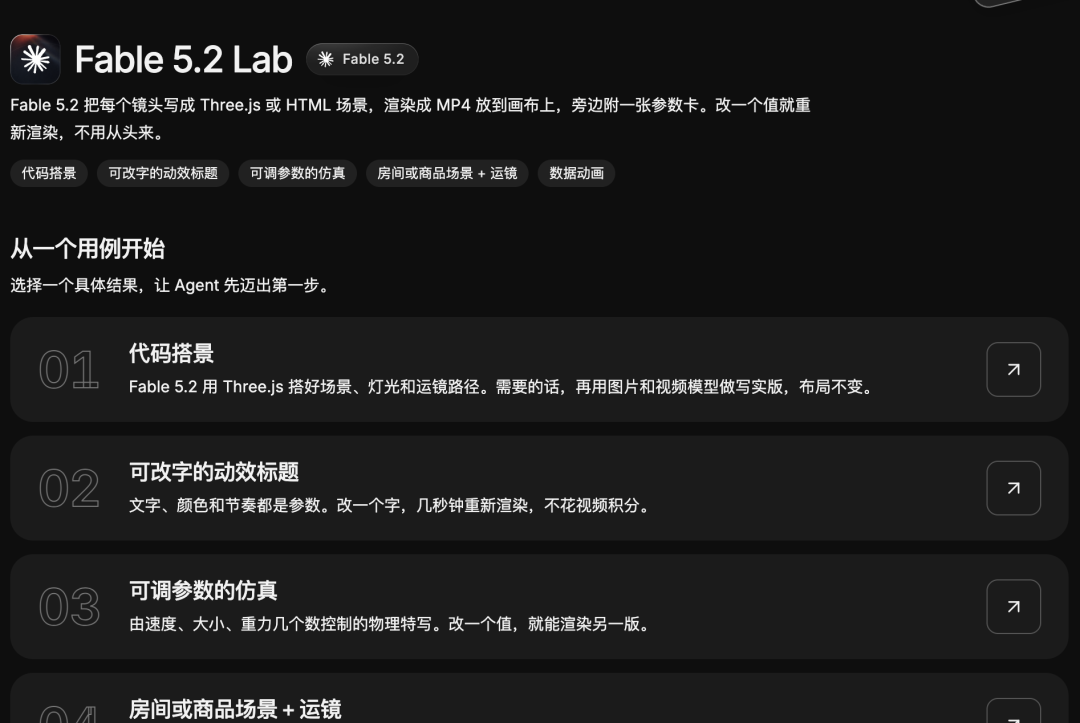
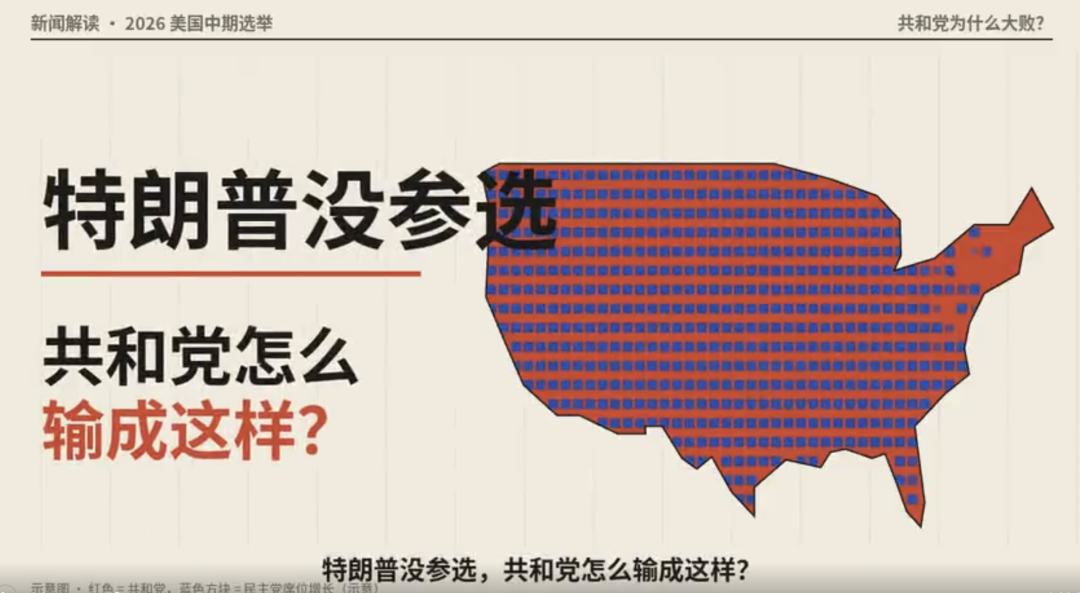
I made two test cases with Fable 5.2 Lab. One was a data animation: presenting, in the style of an educational video, the reasons the Republicans lost the US midterm elections.
I sent it the prompt, and it was done before long.
Then I noticed a problem at the beginning of the video: the words "Trump did not run" were covering the map of the United States — a violation of the people-first principle⬇️
So I sent the revision request to Fable 5.2 Lab, and it immediately started making changes.
And since this is a Code video, there's no need to use a video model at all — you can do fine-grained surgery directly at the code level.
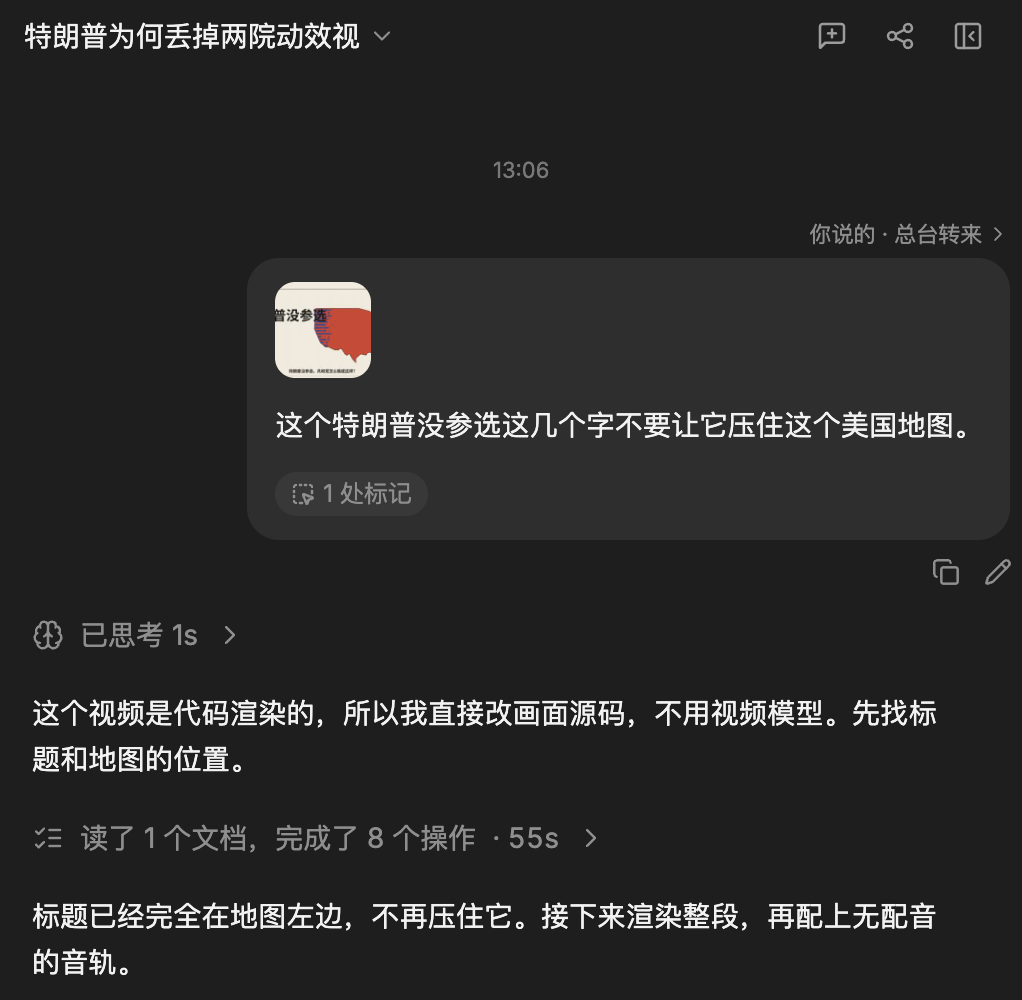
It ensures accuracy and saves tokens. Code video really is magnificent.
The final product is below — everything from the visuals to the soundtrack was done single-handedly by Fable 5.2 Lab⬇️
Of course, data animation is a bit simple and conventional. Code video's reverse-engineering video and white-model construction capabilities are also strong, so I tested Fable 5.2 Lab from that angle too.
So I sent TapNow a Douyin mashup video of Catwoman toying with Batman, and had it use the Fable 5.2 Lab feature to reverse-engineer the original video into a 3D white-model video via three.js, then use the white-model reference feature to replicate the original's camera positions, movements, and plot — completing a fan edit.
The original video's plot: Catwoman steals Batman's family heirloom necklace and escapes. My fan-edit logic was simple — swap the necklace for a graphics card, and swap Batman for Mr. Huang in a leather jacket.
TapNow first sliced my uploaded video into individual shots, then reverse-engineered and built white models for each shot⬇️
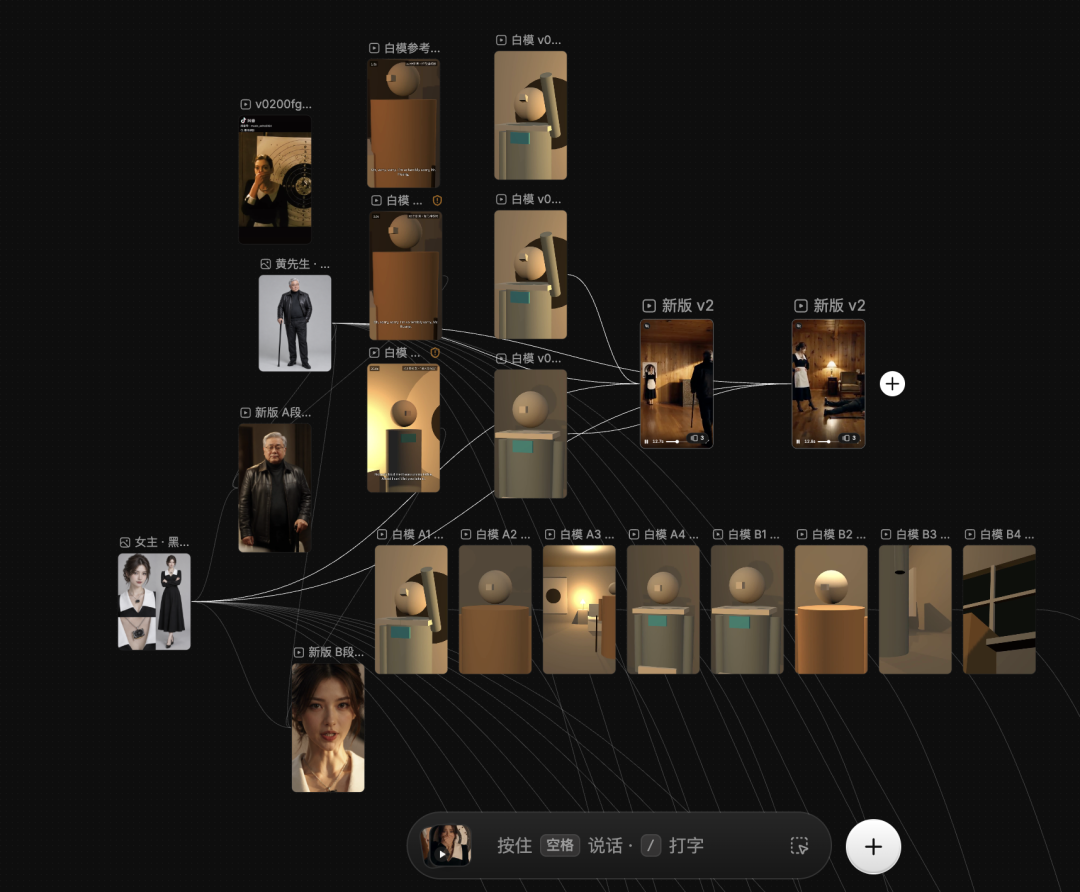
After the build, TapNow designed the characters and the fan-edit plot, wrote the prompts, and generated new videos through the white-model reference feature.
After some debugging, the final product is below — I'll include a comparison video⬇️
Not a single frame off. Even Anne Hathaway would call the cops.
In closing, I want to say this TapNow update genuinely starts from user experience. Traditional canvases that pile on skills and templates are boring and dull. TapNow's canvas is a whole new interaction logic — worthy of the phrase "words become reality."
And frankly, a canvas sitting out in the open is easy to copy. Now with CreativeOS 2.0, Cinemap, and Monta, plus the Code video Agent, most of the operating logic is underwater — the difficulty of copying has shot right up. I'm worried for LibTV.
Also, TapNow is really fast at jumping on trends. Fable 5.2 had just launched and these guys already had a Fable 5.2 Lab. I took another look at their app marketplace — whatever's hot, they ship. Masters of hopping on the trend.
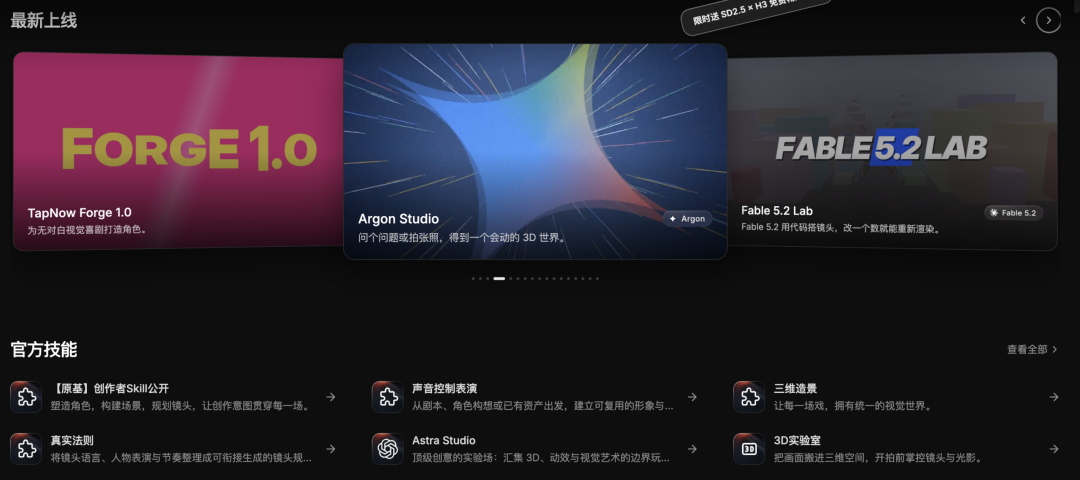
But at the same time, I want to say: Anthropic has already proven with Code2video that code devours everything. Does it really make sense to build an agent for Code video now? Won't this whole pipeline get devoured by Uncle Dario sooner or later?
I can't help but marvel: for AI application companies, building products is a modern-day tortoise-and-hare race. The window between thinking of an idea and shipping it to make money is extremely narrow.
Just look: in the first half of the year people were hyping Vibe motion, and in the second half Claude could one-click generate it — now AI explainer videos are flooding Douyin. Last year people were hyping Vibe gaming, building products that generate mini-games from a single sentence, and now ChatGPT's web-generated games look visually comparable to AAA titles.
The point is, even if you find a good application direction, it doesn't matter. Model companies just don't want to bother — it's not that they can't. One day when they have free time, they'll devour you in between solving math problems, and your business is done for.
As for whether TapNow's CreativeOS 2.0 will get devoured, I actually think there's no point thinking about it. Just use the desktop version for now — by the time it's about to get devoured, these guys will probably have developed a brain-computer interface CreativeOS 3.0 with direct creative connection 😅
⬇️
Welcome to subscribe to our Substack: funeralai.substack.com