Tripo Is the Best at Screwing People Over

And it has rickets.
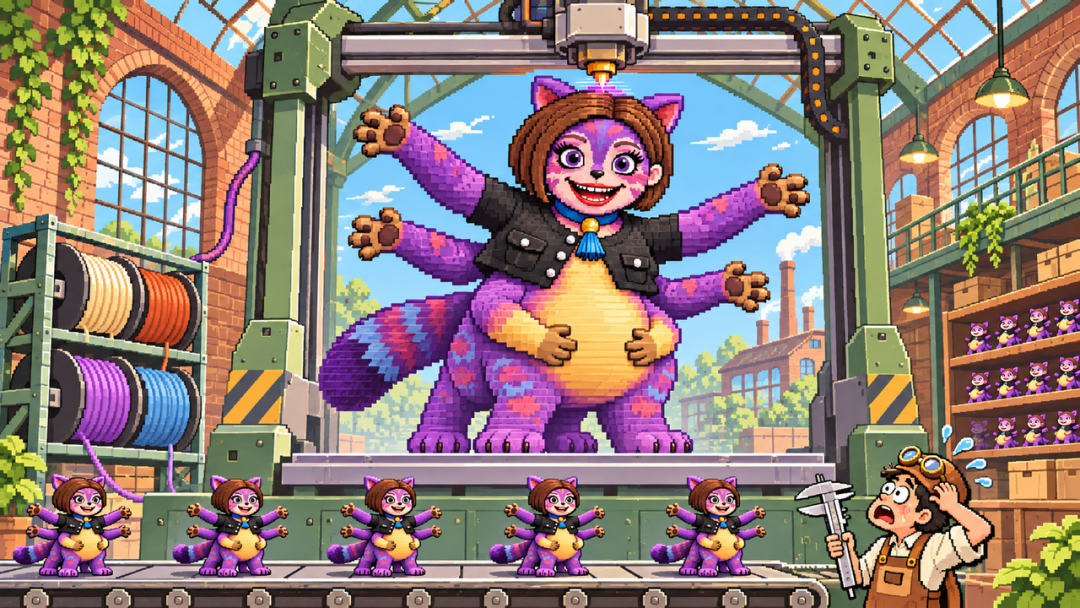 "Also Has Rickets" The hype around domestic large language models has already zeroed in on 3D generation. Every update has to show off some faux-AAA production cobbled together with Three.js.
As for one-click animations of pelicans riding bicycles or shoot-'em-up mini-games, those are already washed-up old news.
So we tested a few of the AI 3D specialists too — Tripo, Meshy, Rodin — and today we're mainly talking about Tripo.
First, because Tripo is one of the highest-valued of the bunch, has raised money from various state-owned funds, and is gunning for an IPO.
Second, because Tripo is the biggest drama queen of the lot.
While the other two are still grinding away as manual laborers, these guys jumped the gun and released a world model, diving into the hype lane that inflates valuations the most.
I tried their world model too. Some parts were pretty amusing — we tested it at the end of the article.
Third, because Tripo left the deepest impression on me.
Why's that?
Because when I first started using it, Tripo offered a hefty discount, so I happily signed up for a premium membership.
Then when auto-renewal hit, the price straight-up doubled — they hit me for 600 yuan in one go 😡
Of course it's an old trick. I only fell for it because my English is terrible 😭
But I'm also kind of stupid — I was traveling at the time, and by the time I noticed the auto-renewal, more than a week had passed.
So I started directing a Grok bot to draft refund emails to Tripo and Rodin. Figured I hadn't used a single credit, so getting my money back shouldn't be hard — after all, I'd forgotten to cancel my Dreamina subscription plenty of times and gotten refunds just fine.
Tripo stood firm on principle, making me pay for my lesson 😭 Fortunately, Rodin showed mercy and graciously returned my money.

I'd say I've done my part for China's AI entrepreneurship scene.
All jokes aside, here's an objective review below.
01
Printing the Musk Jet Car
Tripo's capabilities are actually pretty straightforward: it generates 3D models. It further divides these into two categories — ones for printing, and ones for game production.
Printable models need more detail and higher precision; game-ready ones need sensible topology and poly count control. So the division makes sense.
I decided to test the printing side first. I sent Elon Musk's jet car invention to both Tripo and ChatGPT 6 Astra, then 3D-printed the results to see whose was more realistic.
Here's what I uploaded ⬇️

Here's what Tripo made ⬇️
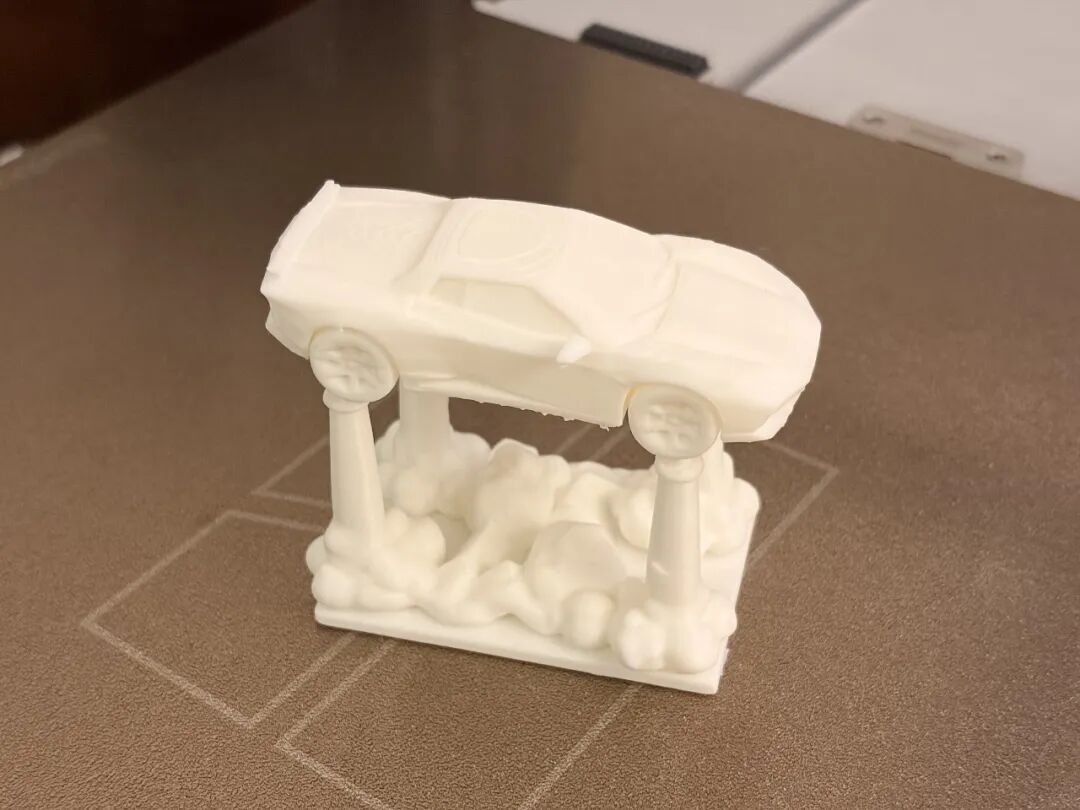
Here's what ChatGPT 6 Astra made ⬇️

As you can see, ChatGPT 6 Astra's car is overly minimalist and abstract, and the jet exhaust has all these bubbles that look disgusting, almost Lovecraftian.
Tripo's result looks more like an actual car.
But at the same time, Tripo also imagined some details that didn't exist in the original — like side mirrors that weren't in the source image.
This betrays the sacred vision of Saint Musk.
All in all, these two are about six of one, half dozen of the other.
02
Nailong Whistle
But 3D printing can't just be about making figurines — after all, the population of fat otaku weebs on this planet is limited.
The real differentiator for AI 3D products is whether they can print tools usable in specific scenarios.
So for the second test, I had Tripo and ChatGPT 6 Astra each generate a whistle incorporating the Nailong character. Let's see whose could actually make a sound, and whose was purely decorative.
This time I gave both pure text prompts — no uploaded Nailong image, no explicit instructions on how to combine the character with a whistle — so the final products diverged wildly.
Tripo's Nailong holds the whistle in its mouth; to get it to "dragon roar," you have to go mouth-to-mouth with it ⬇️
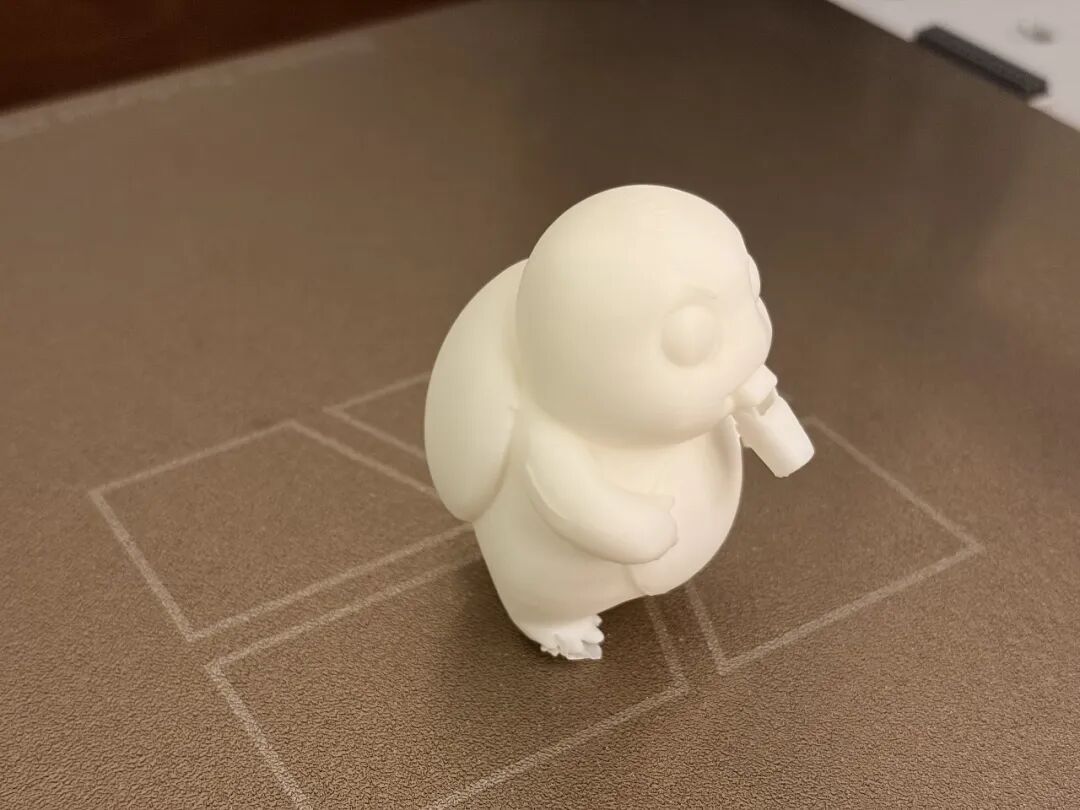
ChatGPT 6 Astra went more aggressive, stuffing the whistle directly up the rear — sound is produced via reverse flatulence ⬇️
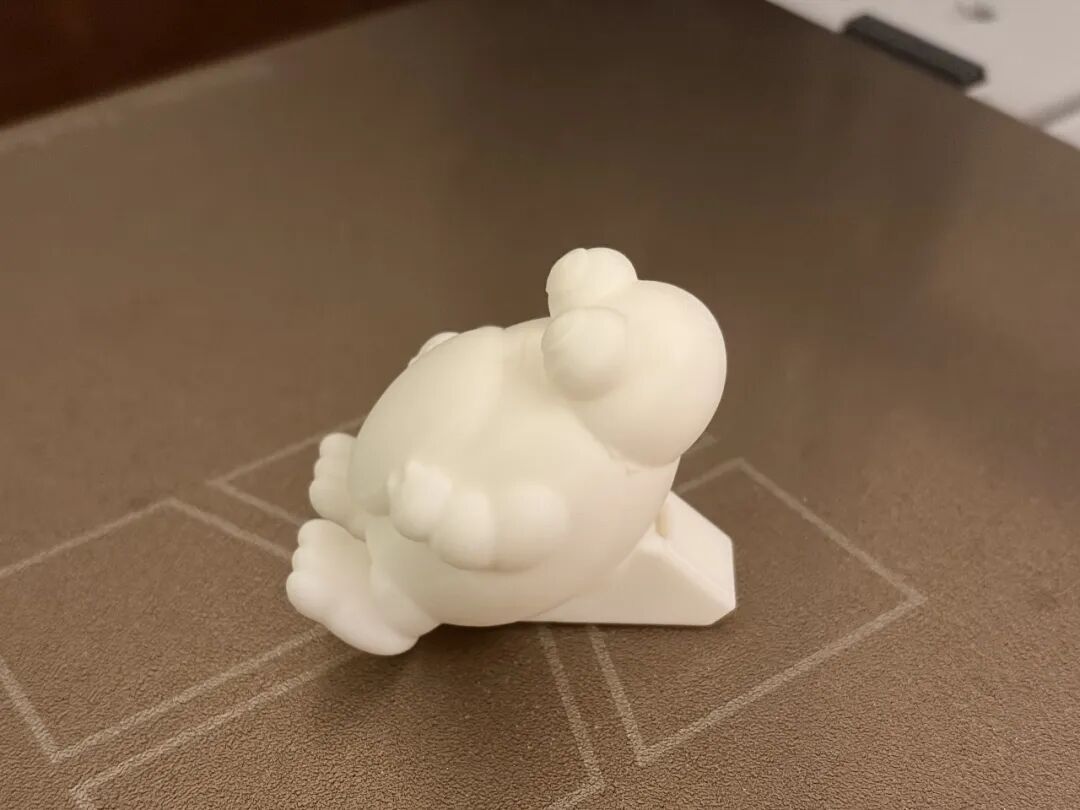
Let's just say each has its own brand of vulgarity. So who ultimately won? Roll the tape ⬇️
That's right, ChatGPT 6 Astra took the victory 🫡
But hold on — Tripo has a very humorous feature: if you feel its model generation isn't good enough, you can pay $9.99 for a "deep repair."

Then wait 1–3 business days, and a flawless model will appear in your asset library.
The key phrase here is "1–3 business days." I can't help but suspect Tripo is running a team of college students doing manual model repairs.
Not that there's anything wrong with that — wasn't there that report about Muse's phone call feature being powered by human customer service reps? Same playbook.
In this era of AI displacing human workers, Tripo and Meta are striving to carve out job opportunities for carbon-based life in the cracks of compute power. I'm not crying, you are.
Unfortunately this feature was suspended when I tested it. Don't tell me the humans got optimized out in a cost-cutting drive 😭
03
Fat-Nail-Dou
Finally, let's test whether Tripo's generated models can actually be used for games and animation.
Coincidentally, I recently saw someone on Douyin stitch together Fat Cat, Nailong, and Doubao into a single entity, so I borrowed that idea and created this "Fat-Nail-Dou" ⬇️
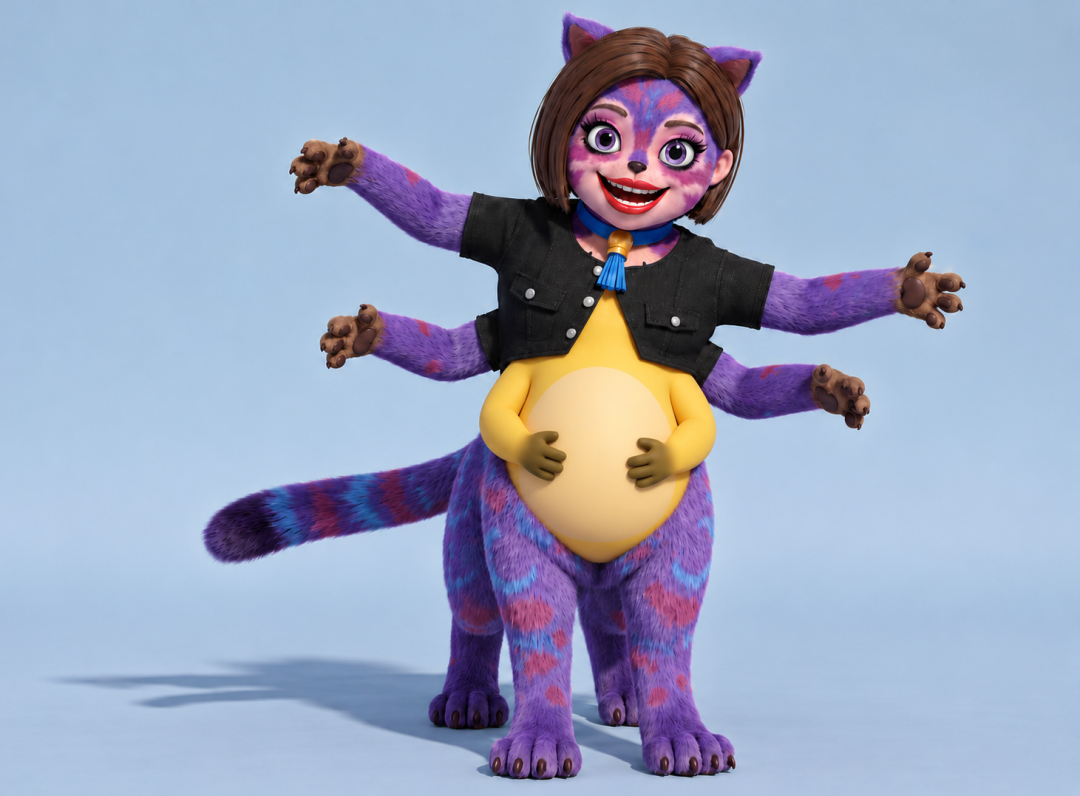
This Fat-Nail-Dou has human parts, animal parts, more than one pair of hands, different skin textures — basically perfect for testing.
I sent it to both Tripo and ChatGPT 6 Astra, asking for game-ready 3D models.
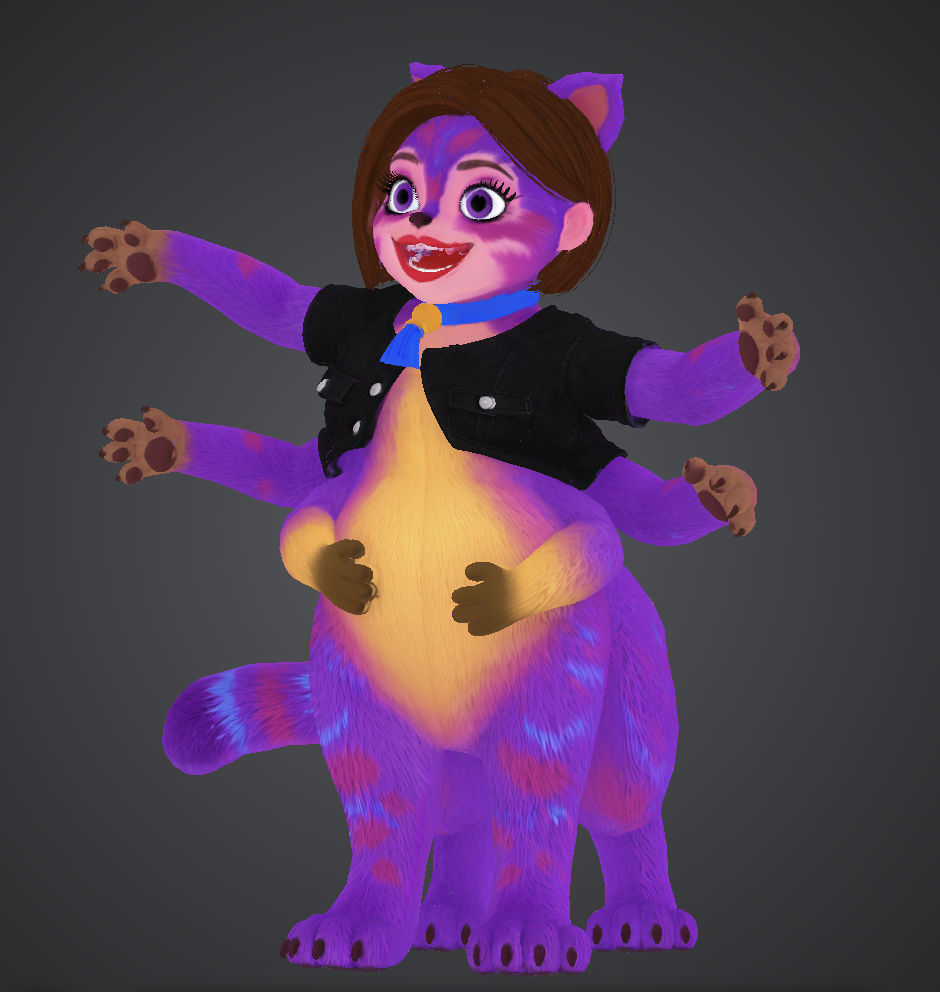
Tripo's result ⬇️
ChatGPT 6 Astra's result ⬇️
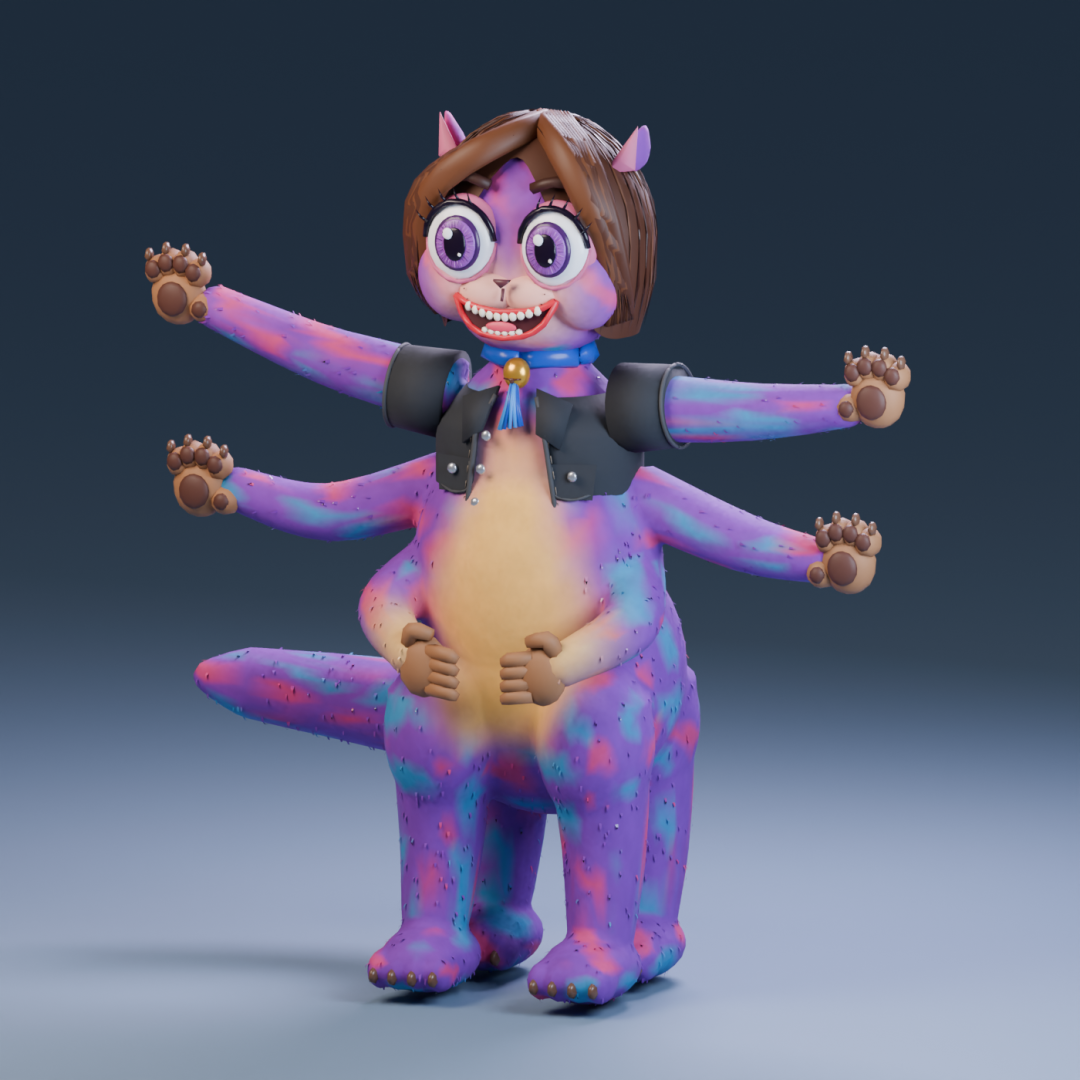
This time Tripo absolutely dominated. Its Fat-Nail-Dou is plump yet sharp, with vivid expression, dignified posture, and naturally transitioning fur.
ChatGPT 6 Astra's result, by contrast, is some filthy wretch straight out of a horror film — one glance and you won't sleep that night.
These three cases show:
ChatGPT 6 Astra and other LLMs doing 3D still work by writing code in Blender, piecing together geometric primitives, so everything comes out looking like it studied under Picasso himself;
Tripo and other AI 3D tools were probably trained on massive amounts of 3D model data, then generate shapes and textures through something like diffusion, so their outputs are more suited for human viewing.
But does Tripo actually understand what the hell it's generating?
Tripo has a built-in rigging feature. I asked it to rig the bones for its own Fat-Nail-Dou.
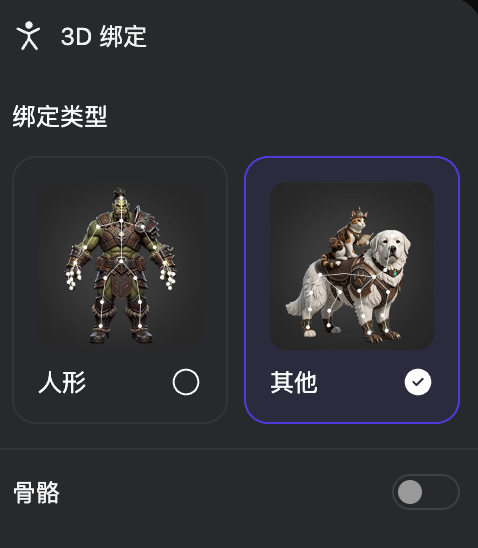
You can choose humanoid or other; I picked other
Tripo looked at this multi-limbed monstrosity and only rigged two hands and two legs — so the rest were just treated as excess flesh, huh? ⬇️
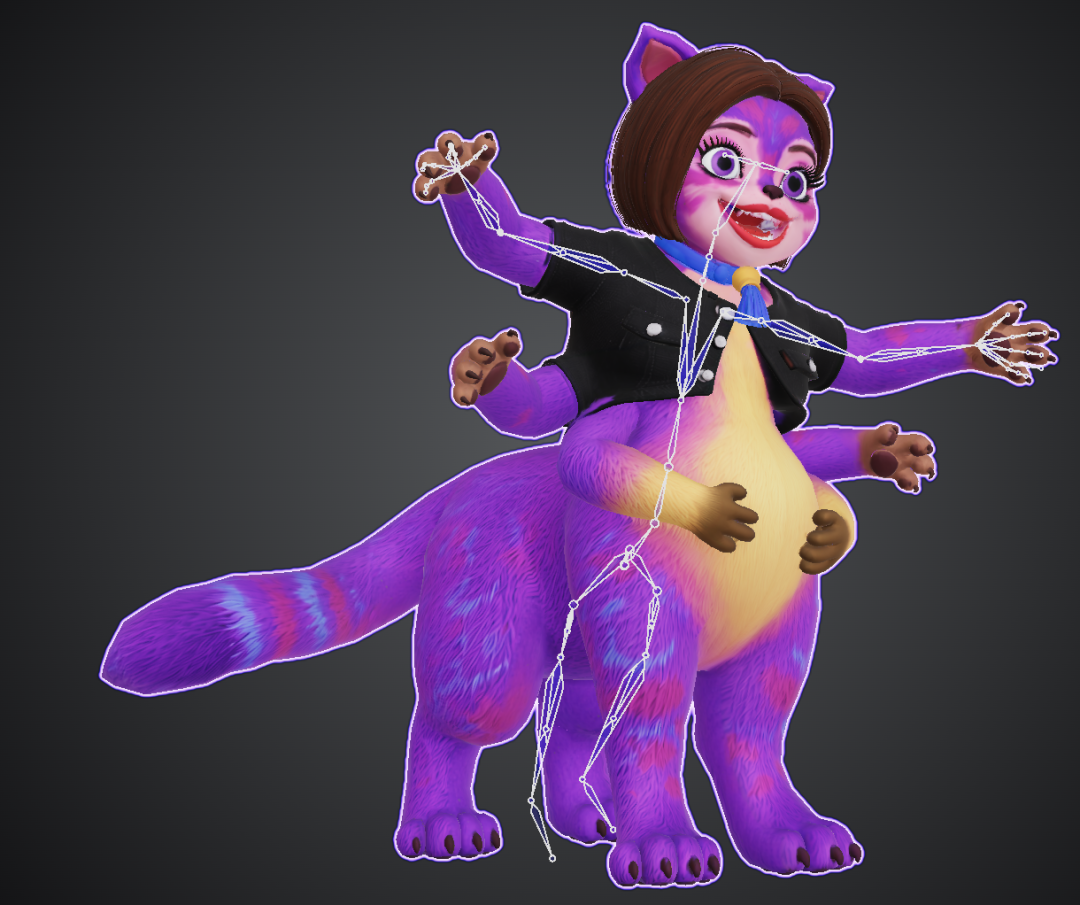
Rigging isn't a huge deal, of course — people actually making games or animation will rig things themselves anyway, and won't trust AI to handle everything.
But when it was ChatGPT 6 Astra's turn, not only did it rig all six hands and four legs, it even took care of the tail ⬇️
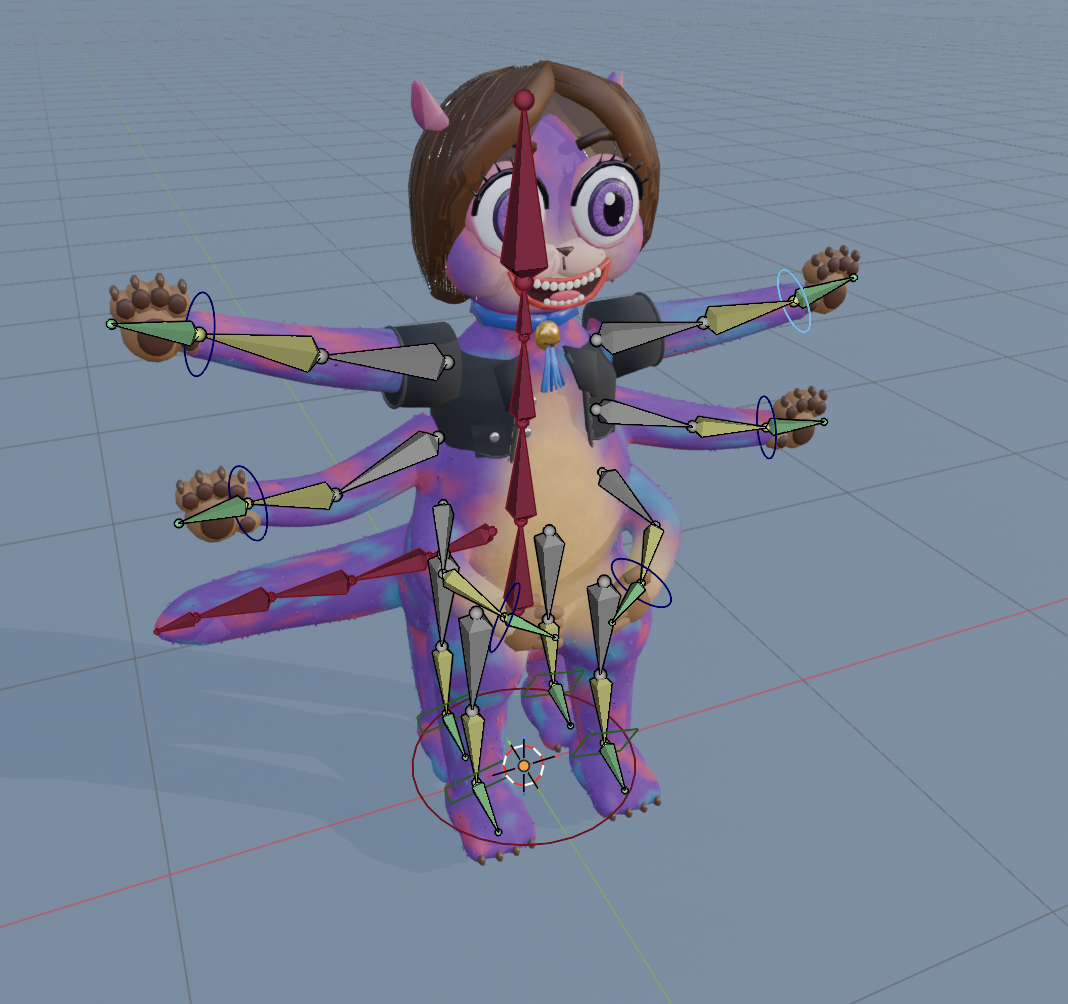
Facing such an unsightly creature yet still giving its all — ChatGPT, a true gentleman 🥵
To not let this enthusiasm go to waste, I decided to give Tripo and ChatGPT 6 Astra one final showdown.
I had ChatGPT 6 Astra build an octagonal cage arena, stuffed both Fat-Nail-Dous inside, and had them attack each other with their limbs and tails to see who'd die first.
The result: the fully-rigged ChatGPT warrior won, while the rickets-stricken Tripo warrior conceded defeat 😥
And because the Tripo warrior's bones were rigged so poorly, its movement was extremely abstract — pull one part and the whole body went haywire.
Later I used Tripo to generate a few simple humanoid characters, and found its comprehension of its own creations was genuinely poor.
For example, I had it make an anthropomorphized Doubao. Tripo rigged the bones itself, then used its built-in animation feature to generate a "fear" motion, shown below ⬇️
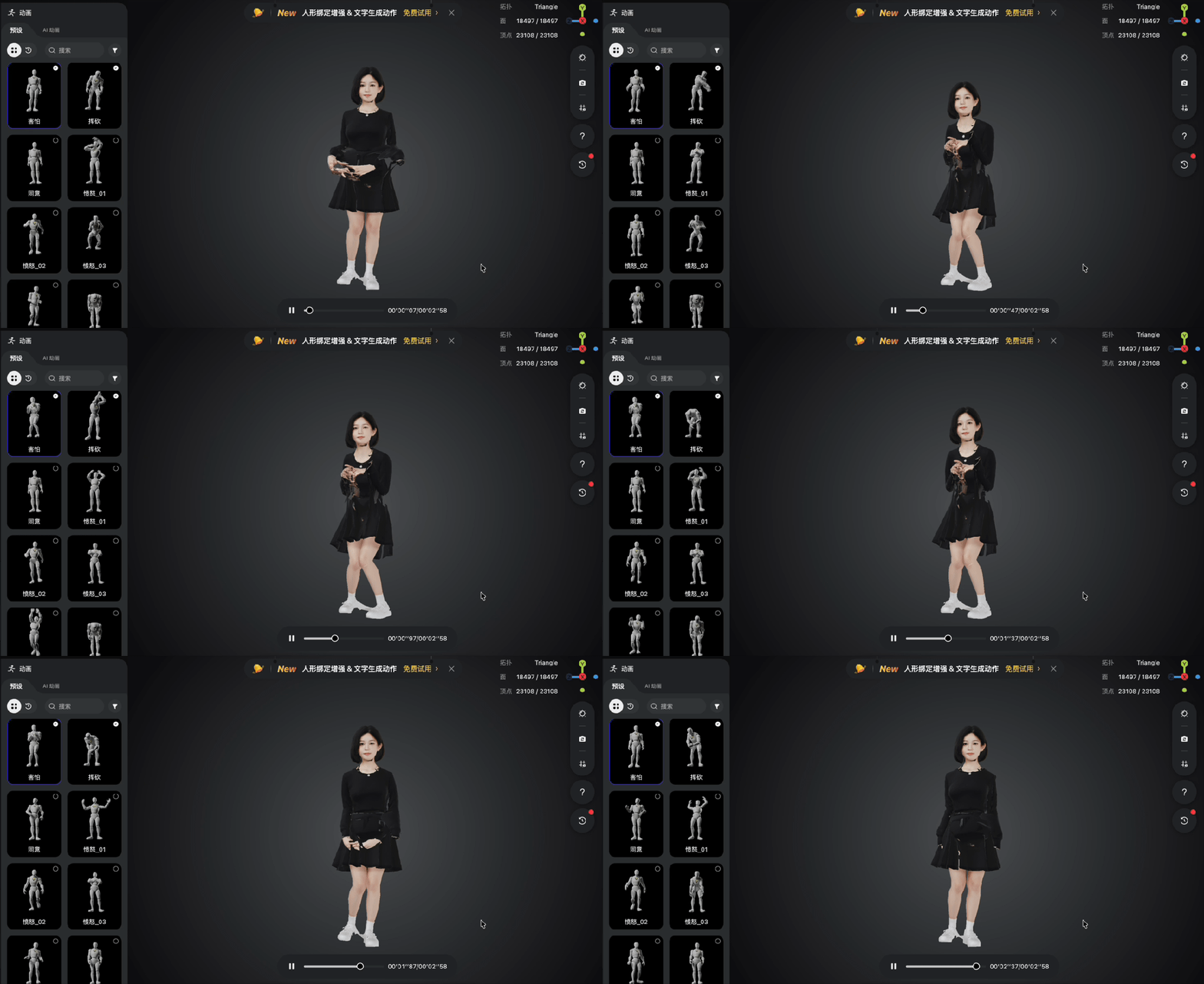
It is indeed fear. I was terrified.
Sure, games call outfits "skins," but you can't actually treat them as skin. This is basically Painted Skin territory at this point.
Then I checked Tripo's tutorial, which said that if you generate models in fixed poses like "T-pose" or "A-pose," rigging and animation generation works more smoothly.
So I followed instructions and had Tripo generate a vampire in "A-pose." The rigging was actually decent ⬇️
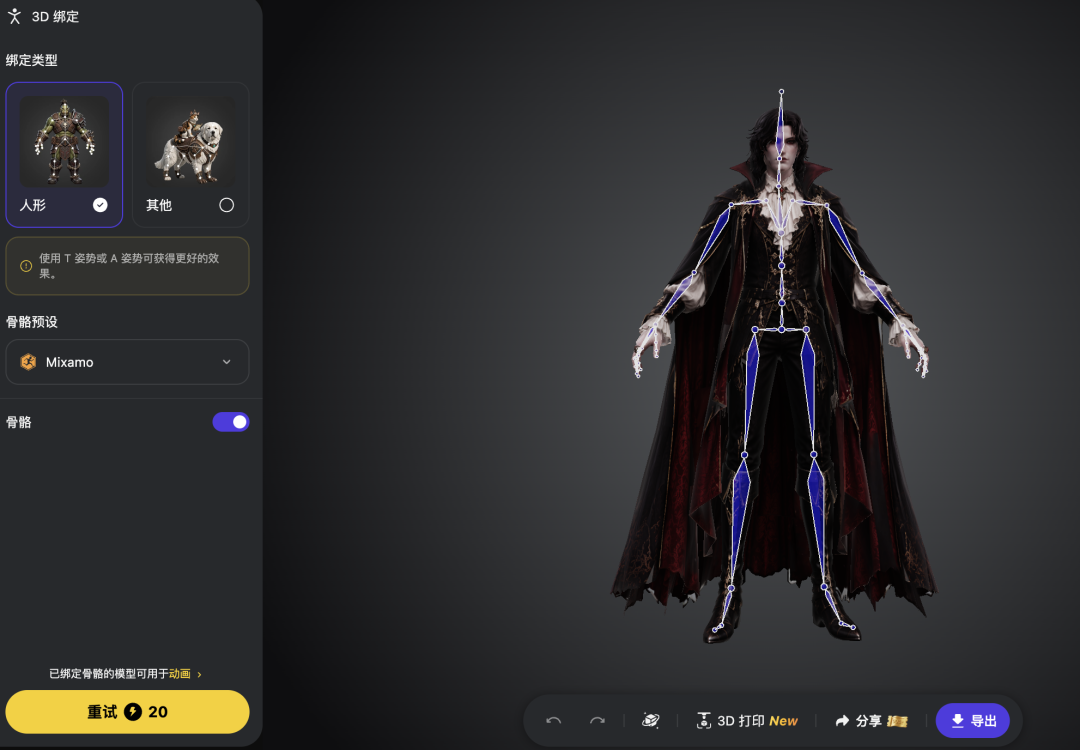
But once I asked Tripo to generate animation, it still terrified me ⬇️
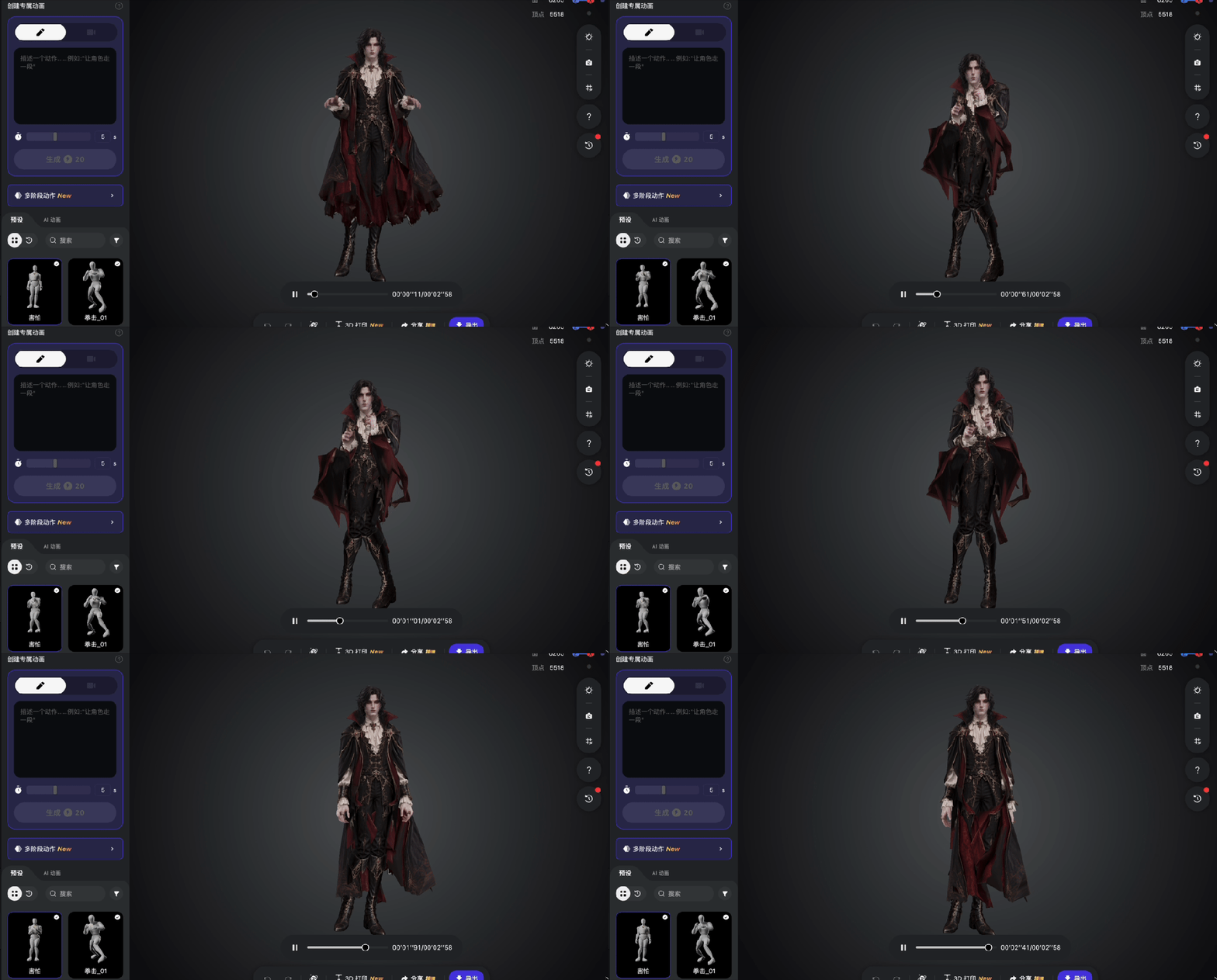
Case closed: Tripo literally treats clothing on characters as skin, as tattoos. Not a single asset in its entire library could pass a civil service exam.
Previously, Eggy Party and Where Winds Meet did collabs with Tripo, running those "speak and it appears" in-game events — users type something and it generates in the scene. Sounds hype.
But I took a look, and in both collabs, users were mostly allowed to generate static objects, not monsters or characters.
Makes sense — it's just for fun, and since Tripo treats everything as a lump of flesh regardless of whether you're human or ghost, not letting it randomly rig bones and make models move weirdly is basically looking out for the faint-hearted.
So my final conclusion: Tripo is still better suited for making voodoo dolls — that is, pure decorative mini-figurines for 3D printing.
I'm not making this up — they even connected to a 3D printing service. Just $30, from keychains to keycaps to fridge magnets, print whatever you want, wherever you point.
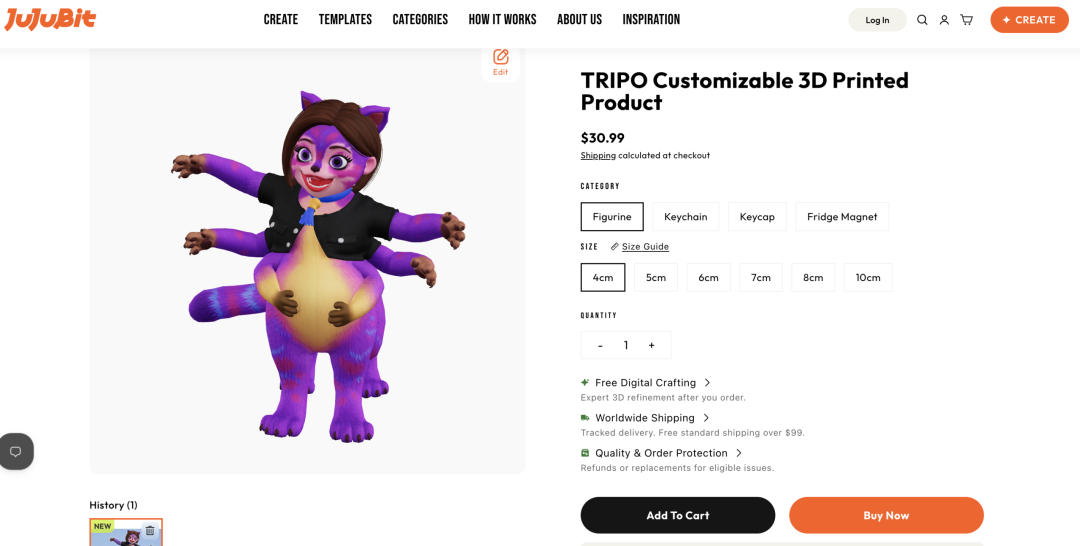
A new-generation Pop Mart if I ever saw one. Someone get Yongping Duan on the phone!
04
World Model
Finally, as mentioned at the start, Tripo parent company VAST has recently been working on something called Project eden, a world model.
This world model is essentially post-trained on Wan — not fundamentally different from what a bunch of other world model wunderkinds are doing. If you had to name a difference, it's that while everyone else is on MiniMax H3 now, VAST's version is a bit behind the curve.
VAST's Project eden also explicitly states it leverages the 3D model capabilities accumulated through Tripo.
That really gave me a scare. The moment I see "world model" I think real-time generation, and if Tripo struggles with delayed generation, won't Project eden real-time generation just create a concentration camp of mangled flesh?
I don't have a GPU, so I tested through their official demo portal, experiencing EdenLive which handles real-time generation, and found the actual results were okay.
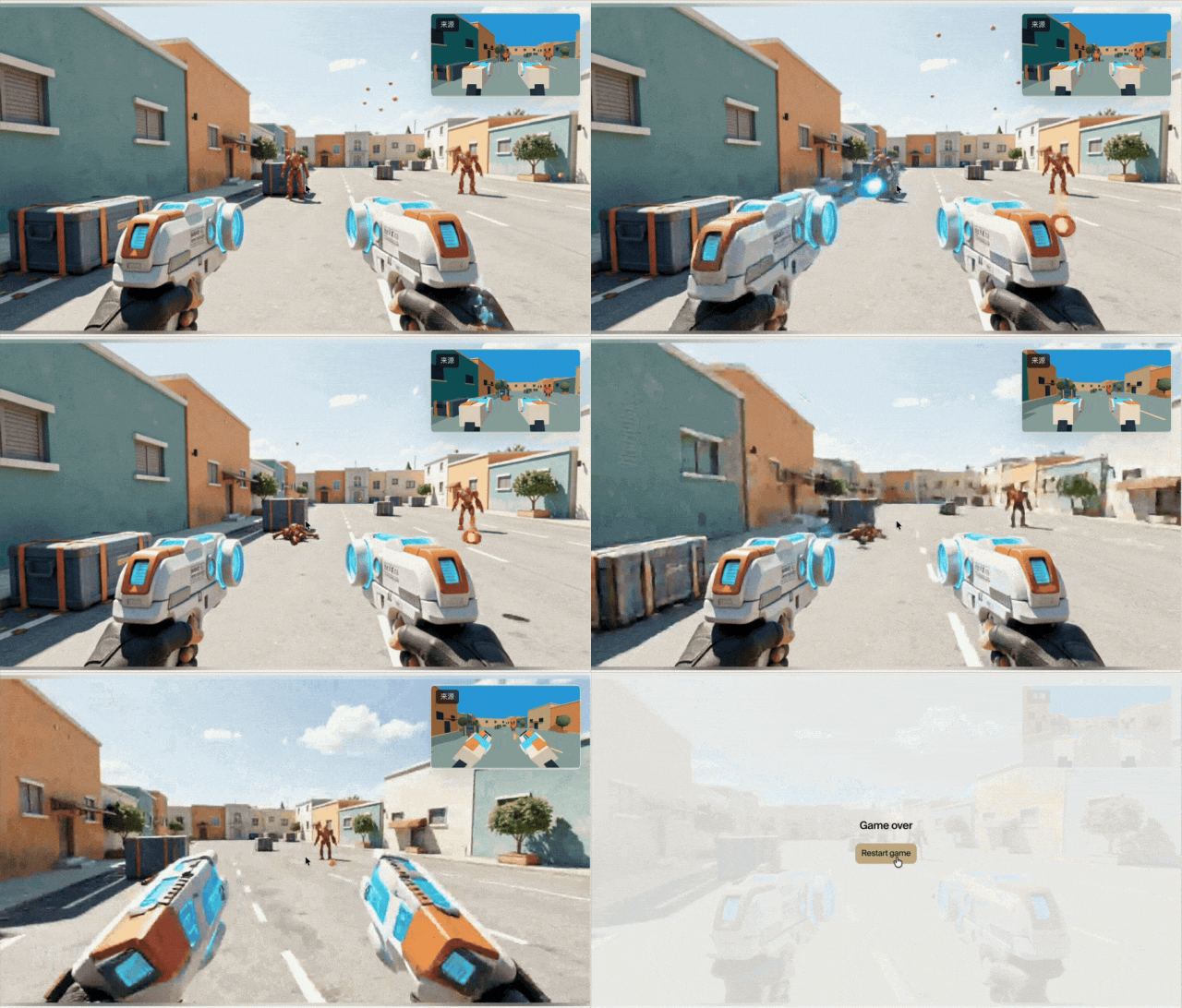
This is a shooter where the player can move, change time, and shoot ⬇️
This part is more creative — players can shoot ice pillars at rocks to enlarge them, allowing safe passage over lava ⬇️
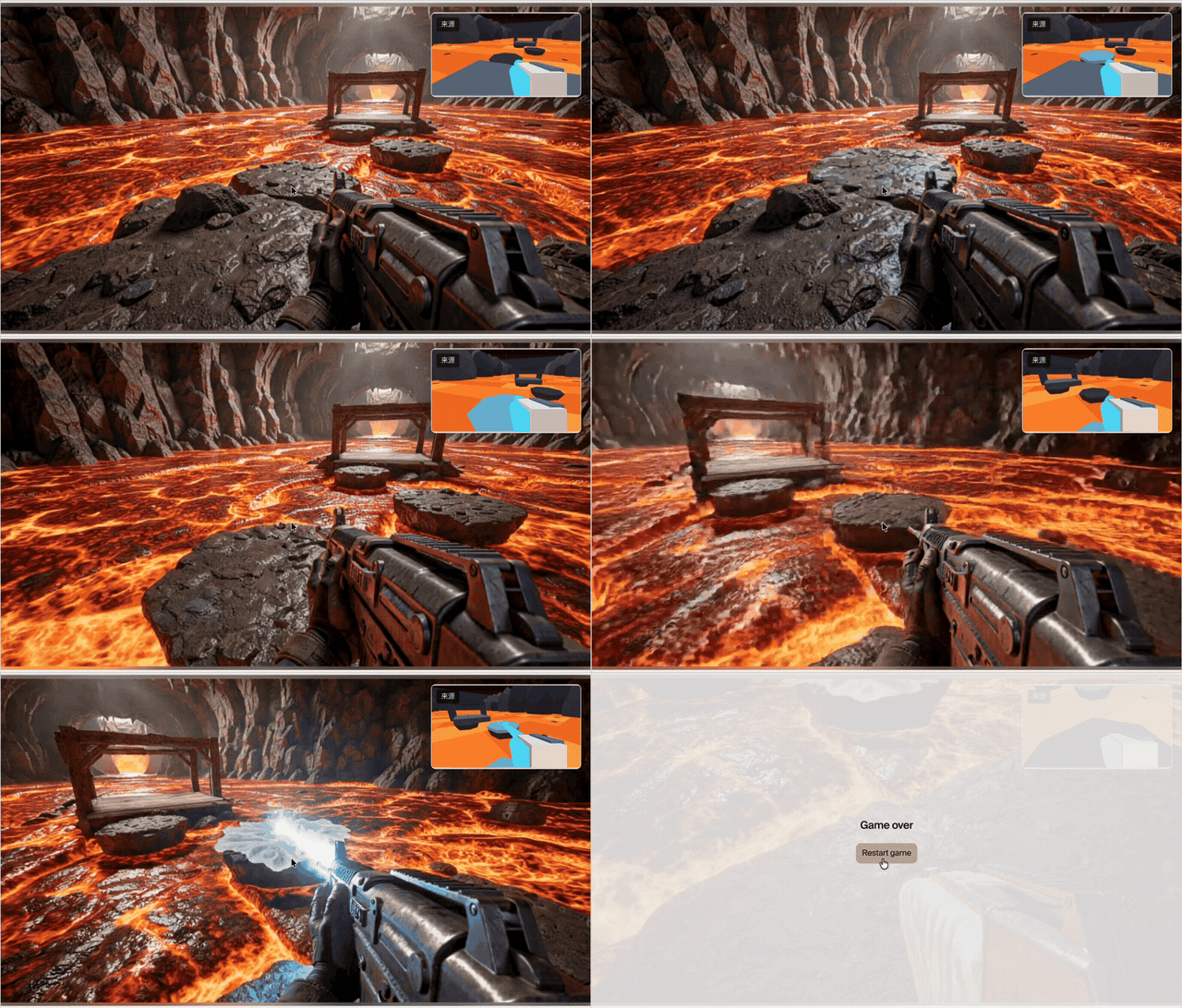
Look closely at the top-right corner of both GIFs and you'll see VAST's world model logic: first build a 3D game space, then the user plays in this low-poly space, and finally it's rendered into video in real-time.
Case closed — perfectly sidesteps all of Tripo's 3D generation ailments, betting everything on Wan post-training. Following in Vivix's footsteps, pure Liu-ism.
Right, the only difference from previous Liu-style videos is that besides live-action footage, VAST's world model can also reference 3D space...
Wait a minute, isn't this just the white-model-to-painting pipeline that video Agents have been hyping for months?
Just goes to show AI entrepreneurship really is better the later you start, because the later you begin, the more things you can stitch together.
But VAST's world model lacks freedom. In the demo, simply changing the prompt doesn't let you freely add or swap objects that can participate in the game, and the map is constrained to the initial low-poly space.
For example, in the case below, if you want to temporarily swap the spider for another animal, it's a bit of a hassle, and walking out of the cave is instant game over ⬇️
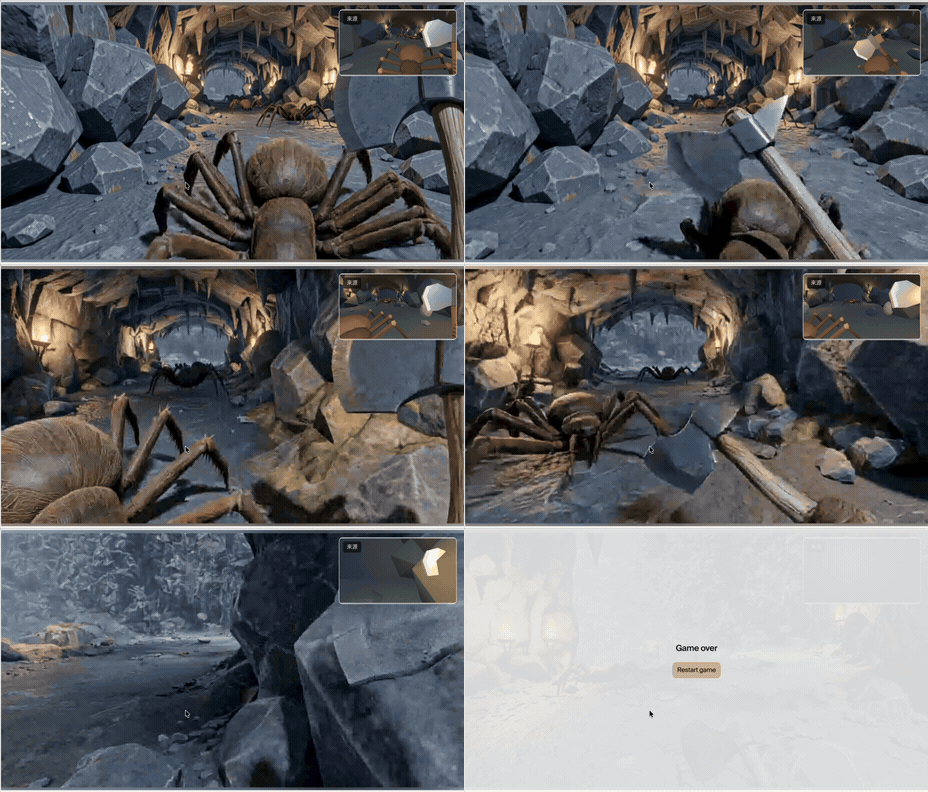
Then I suggest don't call it a world model — "diorama model" would be more accurate.
Of course, I think VAST's world model has very real strengths: first, it's open-source and not a money grab; second, by doing 3D models first then rendering, it at least guarantees physical plausibility.
But seeing all this, I couldn't help getting the entrepreneurial itch myself — because making a world model looks way too easy:
First find ten liberal arts college students who love gaming, have them craft SKILLS for one-click game rule generation;
Then connect to cheap domestic model APIs, link to Blender, automate 3D model generation for characters and scenes;
Then Wan and MiniMax H3, activate!
Everyone can make world models. The AI circle is full of world-ists.
⬇️
Subscribe to our Substack: funeralai.substack.com