Xiaozhi AI is the real deal when it comes to embodied intelligence.

The Huaqiangbei spirit 👊🔨🔥

"Open Source Beats Everything"
I spent a few thousand RMB testing a bunch of useless AI hardware for you guys. Still on the docket: Sailmaker Tech with their camera-equipped AI earbuds, and OdyssLife's camera-equipped AI health necklace 🥵
But so far, aside from various AI recording devices (shoutout to the Lark recording pod here — meeting summaries really are the core competitive moat), none of this hardware delivers anywhere near the value of Xiaozhi AI: an AI companion device with a built-in LLM and small display.
I first heard about Xiaozhi from Nixon, a fellow spirit electronics geek. He told me to check out this "toy that VCs look down on, but it's open source."
You can find it on Taobao right now, around 100 yuan apiece.
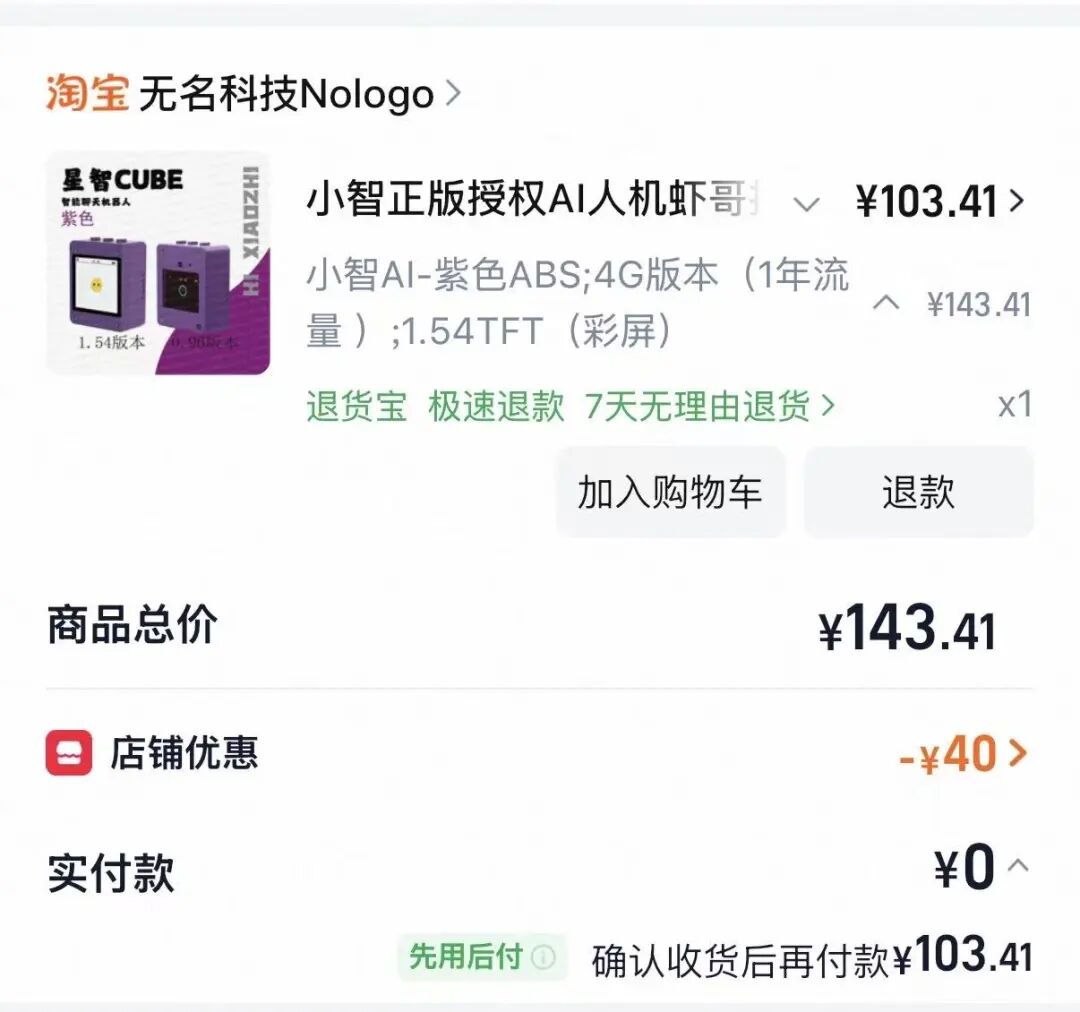
After playing with it for a while, here's my verdict: if this thing cost 2,000 yuan, I'd nitpick it to death. But at barely over 100 yuan? It understands what I say, recognizes my voice, comes with a year of data and battery life, has memory, and supports knowledge bases.
Overall assessment: a chatty, highly agentic Taiwan-girl-voiced companion. Though as a Fujian native, I can confirm it only has the accent — no actual Taiwanese dialect. Here's hoping Doubao cracks regional dialects soon.
And the actual conversation experience blows "pretending-to-be-dumb" AI toys like Fuzzo out of the water.
I said I wanted to travel to North Korea, and it asked if I was going to shoot a spy film. I asked if Iran was still visitable, and it asked if I was going to look for nuclear bomb merch 😭
I'm crying, this thing has range.
Also works as an elementary school kid companion device:
Of course, a product at this level wouldn't normally merit its own write-up.
Xiaozhi AI's greatness lies in the fact that the Xiaozhi AI you buy isn't made by any single company. It's produced by multiple suppliers using Xiaozhi's open-source blueprint.
The father of Xiaozhi is Xia Ge, an electronics guy from Shenzhen. His original idea was to build a voice assistant that could understand emotions. Somewhere along the way, the Shenzhen electronics DNA kicked in, and Xiaozhi ended up as hardware.
Up to this point, it's just another electronics hobbyist passion project. But at the end of 2024, after finishing Xiaozhi AI, Xia Ge open-sourced it on GitHub and posted video tutorials telling everyone how to install it.
The implementation isn't hard. Buy your own chips, plug Xiaozhi in, and you've got an AI device that "listens, speaks, and connects to LLMs." So a bunch of developers jumped in to DIY their own Xiaozhi AI variants.
Someone turned Xiaozhi into a robot dog, someone into a Poké Ball, someone else had Xiaozhi control an Openclaw. One guy even gave Xiaozhi AI legs, giving circuit boards the potential to become embodied intelligence robots.
After building these, of course people had to show off. So they flexed on short-video platforms — the Taiwan-girl accent plus bizarre product forms — and more and more developers came to join the glorious evolution.
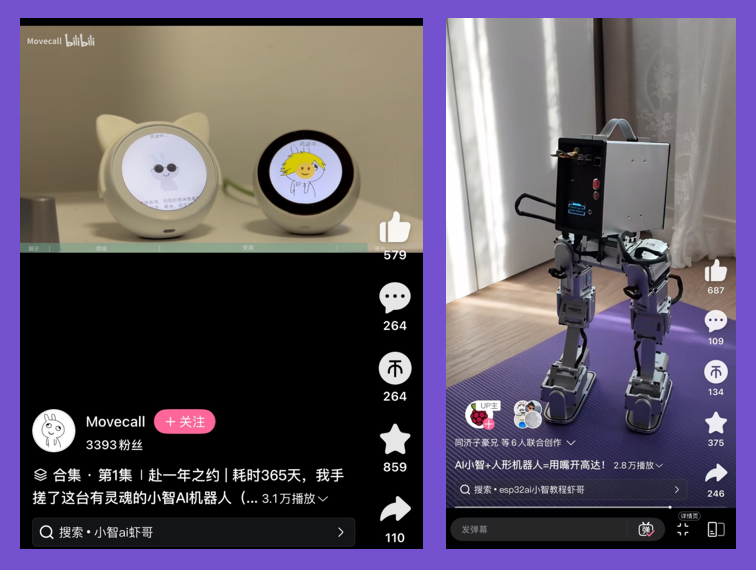
Now you can find entire open-source armies building Xiaozhi AI on Bilibili and Zhihu. Adding cameras, adding displays — that's basic stuff. It's easy to imagine this thing eventually packing up Xiao Ai, Xiao Du, Tmall Genie, the whole lot of them.
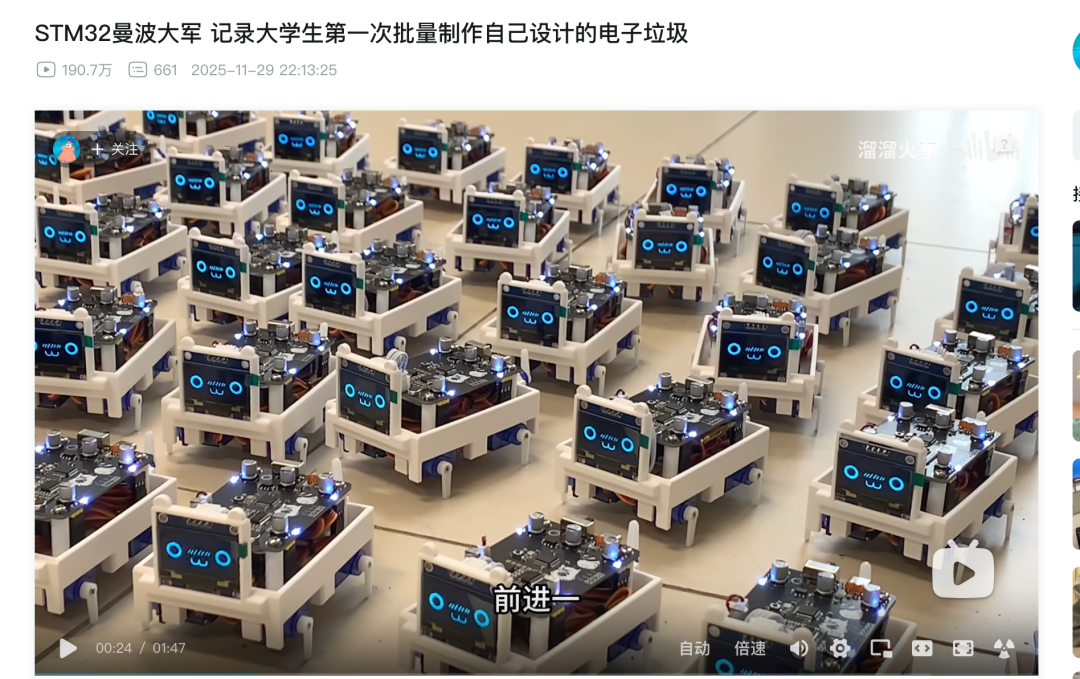
Xiaozhi represents an alternative playbook to the AI hardware-to-VC pipeline: build through open-source ecosystems and user co-creation, and you never know what kind of absolute madlads will show up. The prize pool keeps growing.
Xiaozhi users even use QQ groups. Nixon told me these users generally don't do WeChat groups.
"Reeks of being broke — like 'JLCPCB has cheap PCB prototyping deals'... not the same logic as Beijing-Shanghai-Shenzhen startup bros casually raising tens of millions or hundreds of millions."
So yeah, spirit electronics geeks and real electronics geeks truly resonate with each other.
This open-source ecosystem has two critical nodes. First: Espressif chips. This domestic chip company's product philosophy is to make chips like Coca-Cola — cheap, reliable, simple, easy to use. A distinctly Chinese approach to chips.
Xia Ge didn't even know anyone at Espressif initially. He used the ESP32 chip purely because it was "beginner-friendly."
Espressif later used the Xiaozhi blueprint to build its own AI companion pet. From birth to continuous iteration, users co-created the product. Fully open source, full Shenzhen spirit.
The other critical node is Qwen going open source. Xiaozhi AI's earliest goal was to achieve smart, human-like chat, which required a relatively large model. Right around then, Qwen2.5 from Alibaba's open-source release happened to be a perfect fit.
This is what Jack Ma meant by "make it easy to do business anywhere." Now over 1 million devices have connected to Xiaozhi AI, most of them DIY'd by developers themselves. Qwen open source, infinite merit 😭
Even now, the main model Xiaozhi AI calls is still Qwen. Truly a pair of star-crossed lovers 🐦🐦
The developer ecosystem that spontaneously formed around Xiaozhi is a bit like Bambu Lab's MakerWorld product line: users print their own shells, connect various devices, Xiaozhi provides the AI module and backend services, and you can hand-build one for a few dozen yuan.
Seriously recommend all you hardware investors grab one to try. Effective insurance against getting scammed by founders whose hardware experience matches yours but who can bullshit way harder.
In early January, I went to an Alibaba Cloud hardware expo in Shenzhen and ran into Xiaozhi AI's team lead. He said hardware products with Xiaozhi AI integration are already selling tens of thousands of units in Southeast Asia. Now that's telling China's hardware going-global story.
Xiaozhi AI isn't profitable yet though. It's mainly kept alive by its parent company, which does online education.
Those of you who haunt the primary markets all day might not know Xiaozhi AI, but in Huaqiangbei it's practically a household name. What's even greater is that it can embed into any toy like a motor, and retrofitting one costs just a few dozen yuan. Every Huaqiangbei stall boss is taking off instantly.
Inside Huaqiangbei, you can fully realize a pipeline of AI toys: design in the morning, prototype in the afternoon, mass production next day, going global within a week. This is the true power of the Huaqiangbei homies.
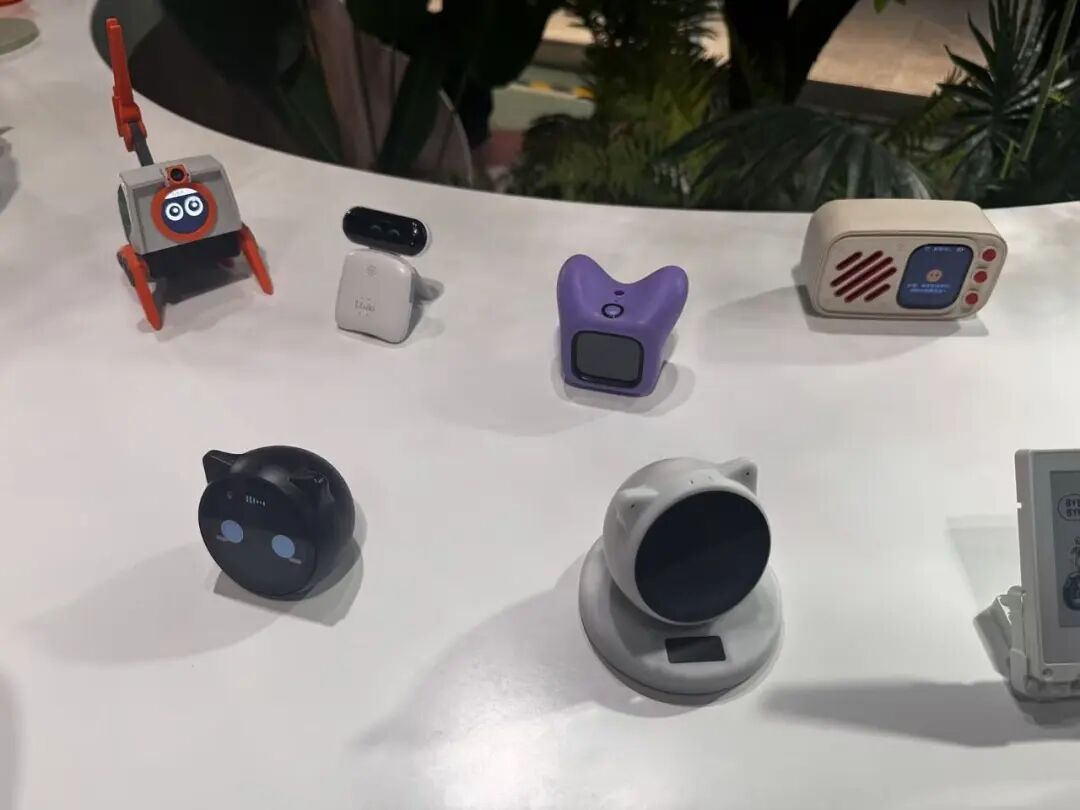
The Xiaozhi army at the expo
Xianyu once told me there's a kill line for AI hardware. Founders have to spend big on bullshitting and branding, push unit prices to one or two thousand, before it counts as proper AI hardware. Don't bullshit hard enough, fall below the kill line, and you get treated as Huaqiangbei dev board material.
I won't let him talk about Huaqiangbei bros like that 😭
The bros aren't scamming you. They can actually build something that works, and sell it for 100 yuan. This is the real electronic badge for young people, a kid's first electronic pet, and actual LEGO for the AI era 😭
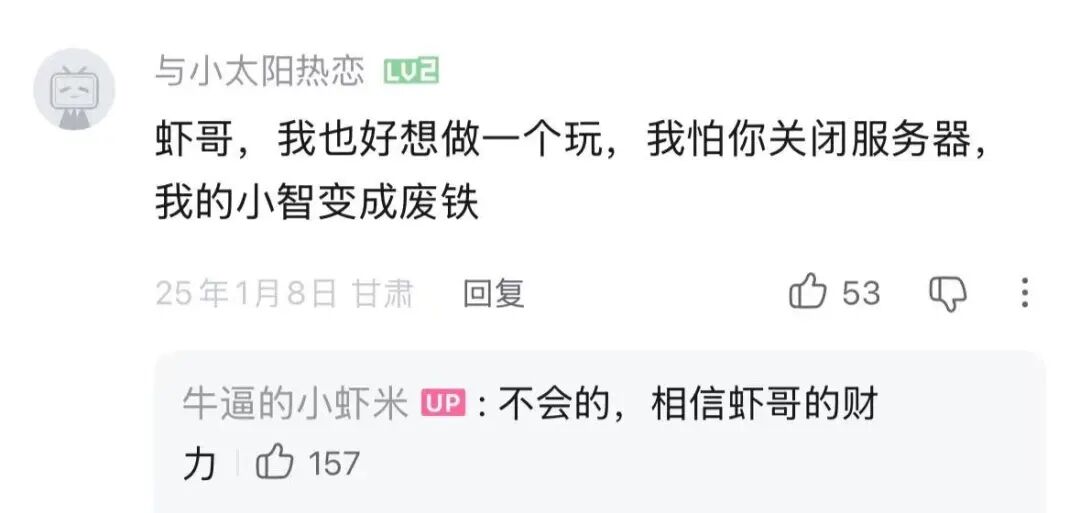
The most moving thing: someone commented under Xia Ge's video, "Xia Ge, I really want to build one too, but I'm scared you'll shut down the servers and my Xiaozhi becomes scrap metal."
Xia Ge replied: "Won't happen. Believe in Xia Ge's financial resources."
Electronics bros are built different 👍
(Cover image generated by ChatGPT, purely human-written text. Thanks to Nixon for his help with this piece.)
⬇️
Subscribe to our Substack
funeralai.substack.com