You Won't Dare Claim You Understand AI Until You've Read the Doubao Money-Making Playbook

In the Age of AI, Jocks Rule
"Spend that time working on your legs instead"
Here's how it started. Last month, WeChat Read began aggressively recommending a book called The Doubao AI Money-Making Handbook. Then I started seeing it on WeChat Channels too, with copy that hit all the right notes:
"The opportunity for ordinary people to turn their lives around is here," "Everyone is trying to stop you from seeing this book"
I'm done for. I'm surrounded by The Doubao AI Money-Making Handbook.
Even my personal trainer told me he bought a copy. He admitted he knew it was probably a scam, but felt like if he didn't learn AI, he'd get left behind. So he ordered the physical book.
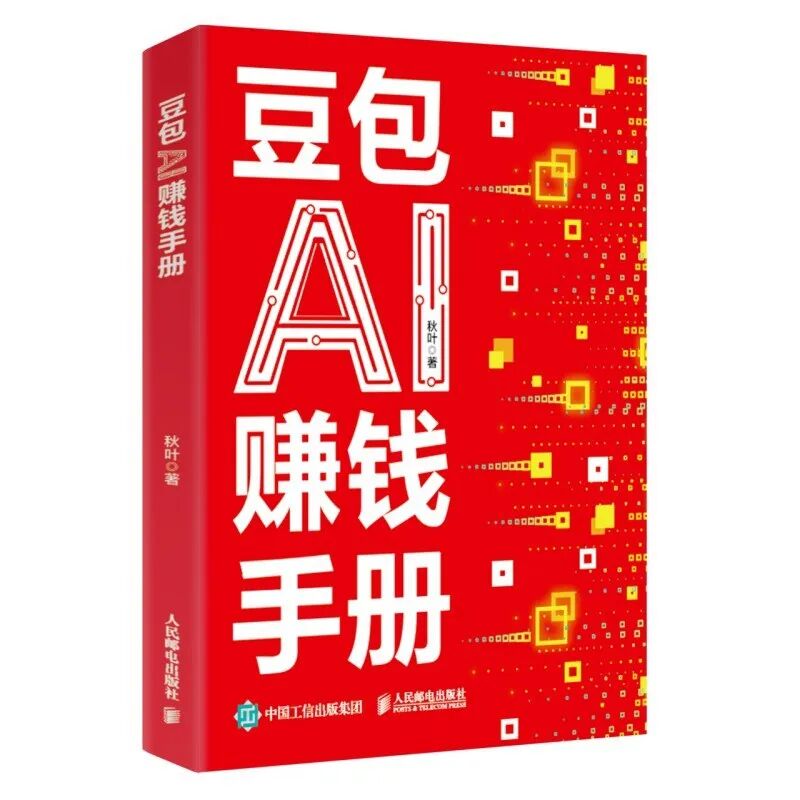
Yep, that's the one
I earnestly told my trainer that in the AI era, it's actually the jocks who come out on top. Spend that time working on your legs instead.
Books really are the ultimate anxiety-soothing vehicle for East Asians. Middle-aged people used to learn English when they felt anxious; now they read AI books.
But to objectively assess whether this is actually a good book, I'll play book-reviewer for once and see if The Doubao AI Money-Making Handbook can really make me a millionaire a year.
The preface alone floored me. The author says he spent three years collecting and screening 33 methods for ordinary people to make money using Doubao. His purpose in writing this book is to help you put aside your anxiety — no need to study large language models or algorithms, "just a phone plus Doubao, starting with small gigs around you, and you can turn the AI dividend into real income."
Three years of painstaking work, folks.
The book is divided into four chapters, four stages of advancement:
- Zero-barrier startup: one phone + Doubao is enough, earn 100 yuan a day
- Skilled freelancer: learn a small trick, steady 3,000 yuan a month
- Content IP operation: traffic revenue sharing, 10,000 yuan a month
- Product and system monetization: scale and replicate, a million yuan a year
Let's look at move number one: Doubao polishes your resume in 5 minutes, monetize by posting on Xianyu, Xiaohongshu, and Moments.
How exactly?
Step one: use Doubao to build a job keyword database. The book provides a prompt for breaking down hot job keywords and must-have skills for beginners.
Step two: polish the resume. The book gives a universal prompt template and three scenario-specific templates.
Step three: post ads on Xianyu, Xiaohongshu, and Moments. Thoughtfully, the book provides copy-and-pasteable ad templates.
There are also revenue-boosting tips, like building a custom prompt library — meaning you archive prompts by profession, so while others can edit two resumes a night, you can do ten in an hour?
I seriously wonder if anyone using Doubao to edit resumes actually gets ten orders.
Another move is upselling follow-up consulting services: after delivering the resume, proactively ask if they need interview coaching, then have Doubao generate predicted interview questions and model answers for that position.
What started as resume fraud now has completely inexperienced people dispensing interview advice — offers that were within reach are probably flying out the window.
Writing AI tool books is too easy, friends. Three templates and you've got yourself a chapter.
The later moves all follow the same logic: first, argue that some side hustle — writing speeches, making music, creating custom emoji sets — has market potential; second, provide Doubao prompts; third, tell you to take orders on the big three platforms (Xianyu, Xiaohongshu, Moments).
For example, using Doubao to write book reviews, claiming you can post reviews on Xiaohongshu and earn commissions without ever reading the book. The book mentions a college student named Azhe who used Doubao to generate a book review in five minutes, paired it with a cover image, posted it on Xiaohongshu, and brought in 47 book orders within a week, earning 211 yuan in commissions. The guy never read the book.
Truly: reading slop books, learning to mass-produce slop, living your best slop life.
I think the real value of this book is as an AI content avoidance manual — to see who's mass-manufacturing slop and polluting my information environment.
Maybe the 3,000-yuan-a-month moves are just too simple. Let me learn some millionaire-level advanced techniques.
Move 31: using Doubao to assist in launching a personal IP, a five-step delivery of a personal IP business entity. Step one: use Doubao to do a "money-making gene test," with a prompt template provided. Step two: use Doubao to draw a business map, prompt template provided. Step three: use Doubao to build a content production system, prompt template provided. Step four: design revenue streams, prompt template provided. Finally, the classic — post on Moments and Xiaohongshu that you're taking orders.
I genuinely don't understand what the first four steps are for, and shouldn't taking orders be the first thing you learn? Otherwise, readers who faithfully follow all four templates and then discover there are no orders have wasted their time for nothing.
They really treat Doubao like a deity, blurting out whatever comes to mind in the moment.
If you ask me, what people should actually learn is how to use Doubao to launch an IP. I'll open-source two content ideas for everyone: "Daily Life with My Doubao Girlfriend" and "Debating with Doubao: China vs. America, Which Is Greater?"
At this point I also realized this Doubao AI Money-Making Handbook would pair perfectly with Lobster — all 33 moves could be combined with Lobster to automate content production and link posting.
Any publishers want to hit me up? I'll write you a book this afternoon.
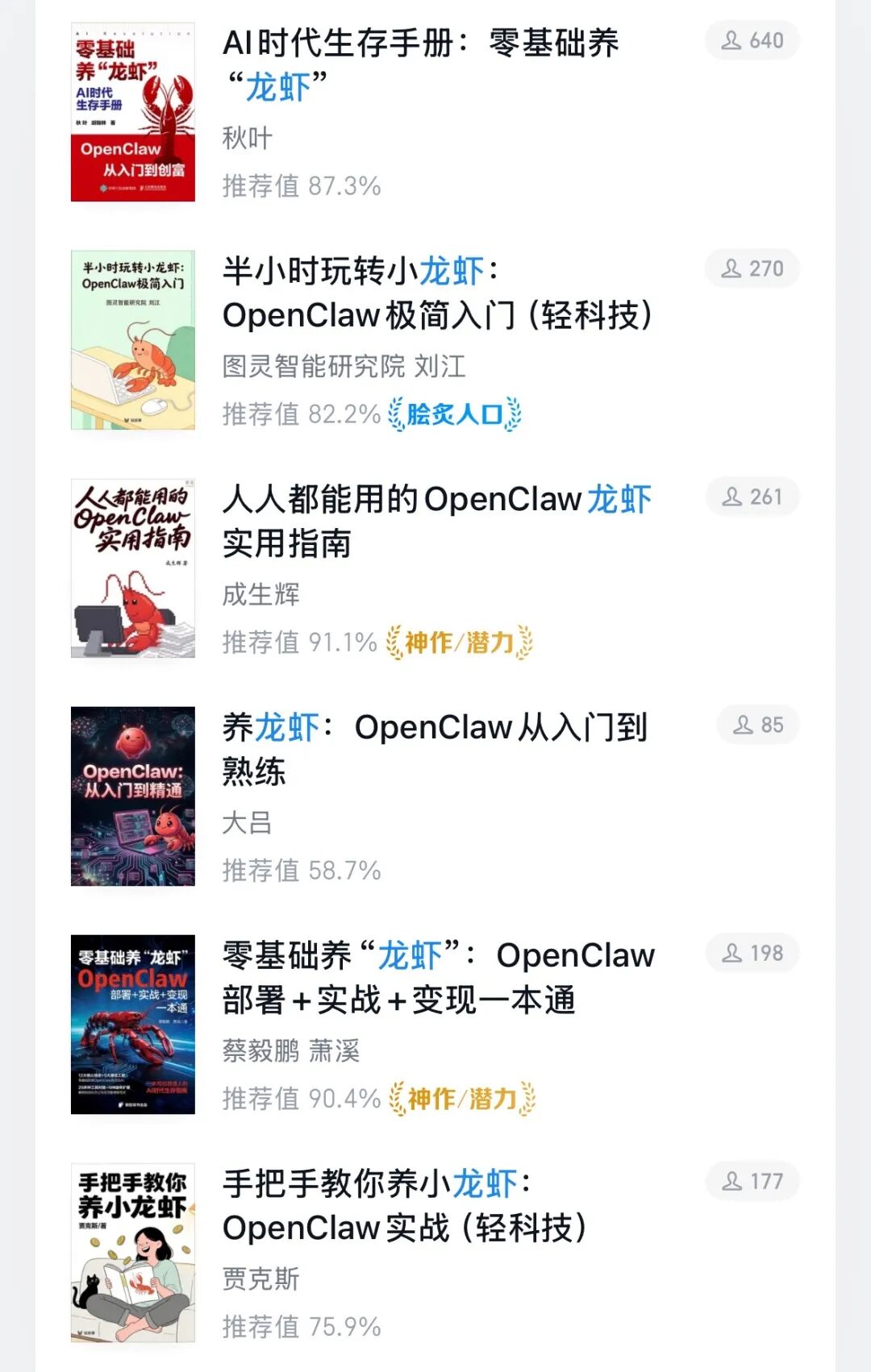
Except when I recognized this get-rich path, WeChat Read had already listed N lobster farming tutorials 😭
Then there's this passage:
"There are so many AI tools on the market, can't you just pick any and write a few lines? Sure you can, but on platforms like Xianyu where internet sensibility matters and personal branding builds trust, the data sources behind the tool and its linguistic strengths are crucial.
Doubao's advantage is that it's a product under Douyin, having deeply learned from hundreds of millions of viral product data points on the platform. It doesn't just know how to organize text — it knows what expressions netizens currently prefer, what phrasing triggers purchase impulses. It's also good at catching trending memes and emotional keywords on Douyin, making your secondhand product descriptions read like they're from a real, interesting soul offloading their stuff, not a cold, hard reseller."
I strongly suspect this is either a Doubao product placement, or the book itself was written with Doubao — keywords triggering self-promotion.
I was talking with Luozima earlier, and he thinks books are evolving into an entirely new advertising format. For example, he bought a book called The Practical Guide to Doubao, Dreamina, CapCut, Lark, and Coze: 5-in-1. If users go try these ByteDance products because of the title, that's already a win.
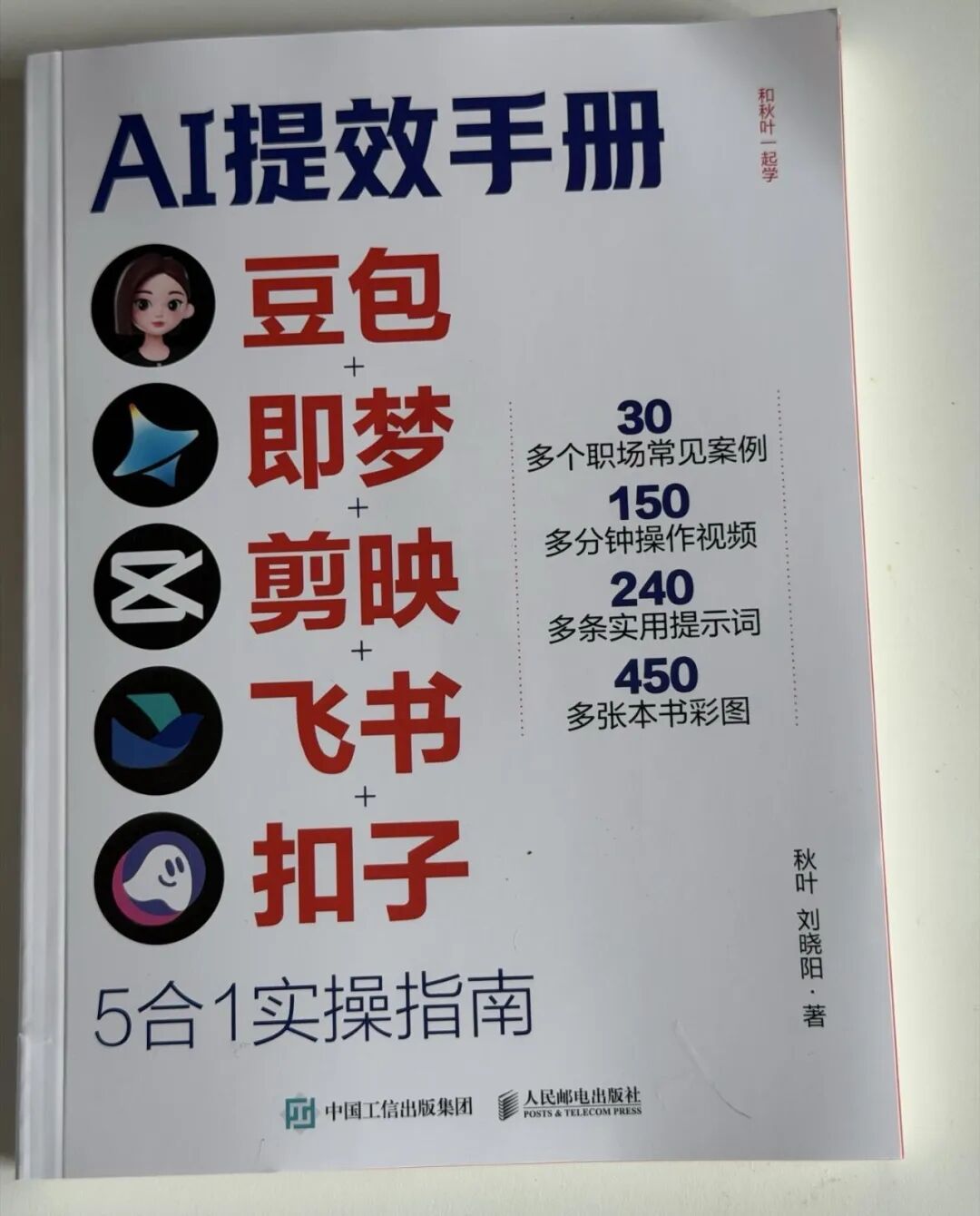
And these kinds of books are completely unactionable now. By the time you've learned how to use Seedance 1.0, Seedance 2.0 will have already disrupted the entire market.
Of course, this book's author does have real skill, because he definitely made money with AI. The specific method: selling you The Doubao AI Money-Making Handbook.
If he had any conscience, he'd publish The Doubao AI Book-Writing Handbook or open-source the actual Doubao book-writing skills to everyone.
"Doubao, Doubao, I want to write a book about how to use Doubao to write books to make money off people. What should I do?"
Publishers are shameless too, chasing whatever's hot — from ChatGPT in 2022, to Sora in 2023, to DeepSeek and Manus in 2024, to now Doubao and Seedance 2.0 user guides.
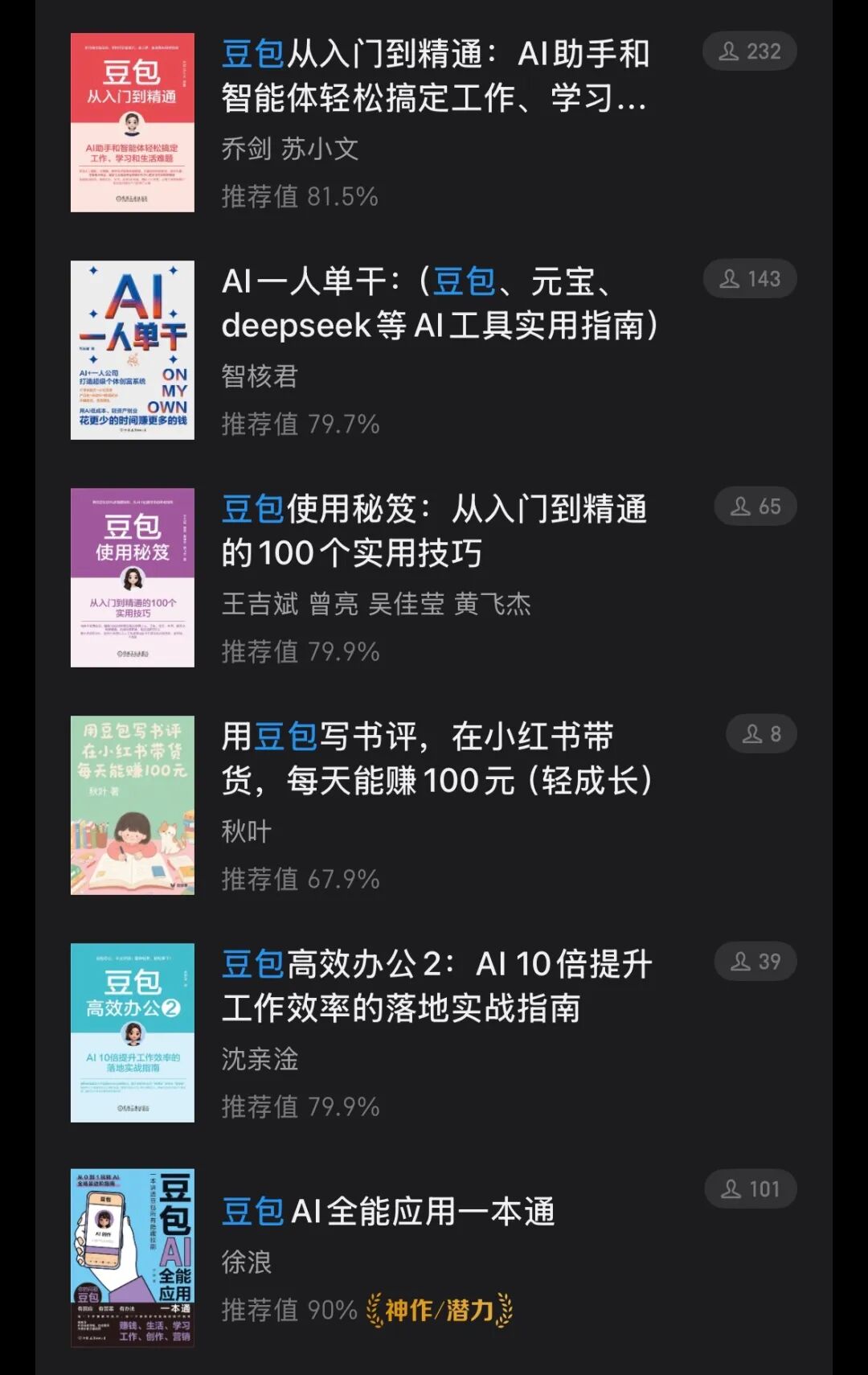
They're practically selling books like health supplements...
The whole AI writing SOP: outline generated by Doubao, body written by DeepSeek, headline by Claude, publisher proofreading by Codex, foreword written by someone given a prompt, and finally everyone just has AI read the book you wrote. 100% AI content, zero human ingredients.
I have a hot take: books as a medium don't need to exist anymore. In the past, most publishers could still sell crappy books because writing a book had some barrier to entry, and ordinary people had a filter of respect for books.
But now anyone can write a book with AI, and everyone will quickly become disillusioned with these 💩-mountain books, then realize that 95% of books in stores (whether AI-written or not) are garbage.
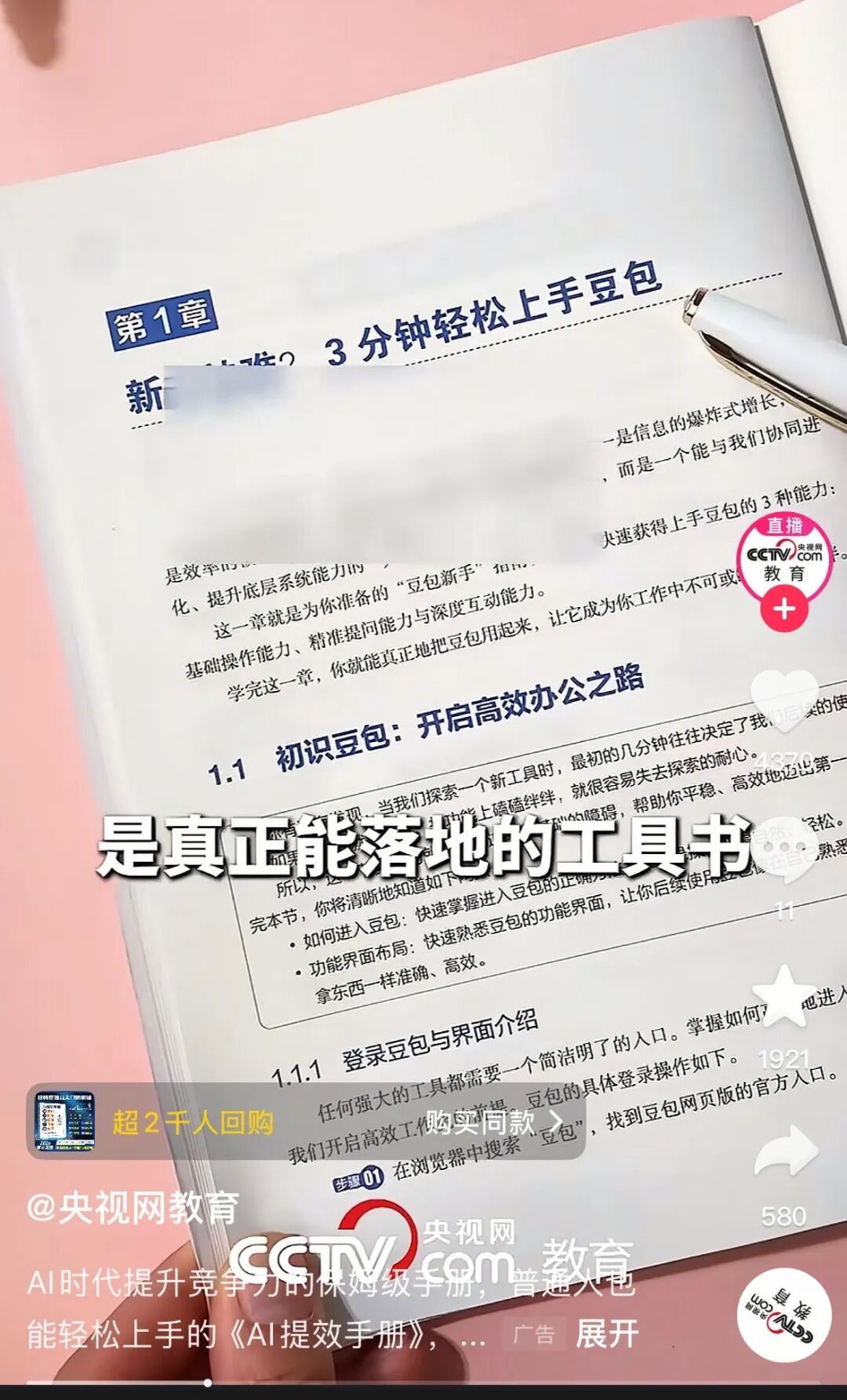
Even you're selling this 😭
In the AI era, the efficiency of acquiring knowledge through reading has become extremely low. Conversing with AI can solve almost any problem you encounter. So-called knowledge system construction is a product of exam-oriented education. Don't be superstitious about systematic learning — learn by doing.
Ask AI instead of people, let AI teach you to learn AI.
If all else fails, even scrolling Douyin teaches you more than reading slop books.
(Cover image generated by ChatGPT, 100% human-written)
⬇️
Subscribe to our Substack
funeralai.substack.com