Securing 100+ Manufacturing Clients: Sequx's Next-Gen Multi-Agent Platform Boosts Both Efficiency and Quality in Industrial Design | Gaorong Future

Use AI to empower the entire process, from industrial design through manufacturing.
Over the past 30-plus years, the proliferation of CAD (computer-aided design) software has fundamentally transformed engineering and manufacturing, giving rise to global giants like Siemens, Dassault, and Autodesk.
Founded in 2020, Shexu Technology chose a technical architecture and product roadmap radically different from traditional CAD software. Shexu believes in AI's massive potential to reshape industry — and the opportunity to leapfrog industrial software from "tool empowerment" to "outcome-driven."
In just over five years, Shexu built Shanshe, an industrial AI generative design software that lets designers generate 3D design proposals and 2D engineering drawings with a single click. The company has steadily extended its product matrix along the industrial chain, achieving end-to-end coverage from "design requirements" to "process planning."
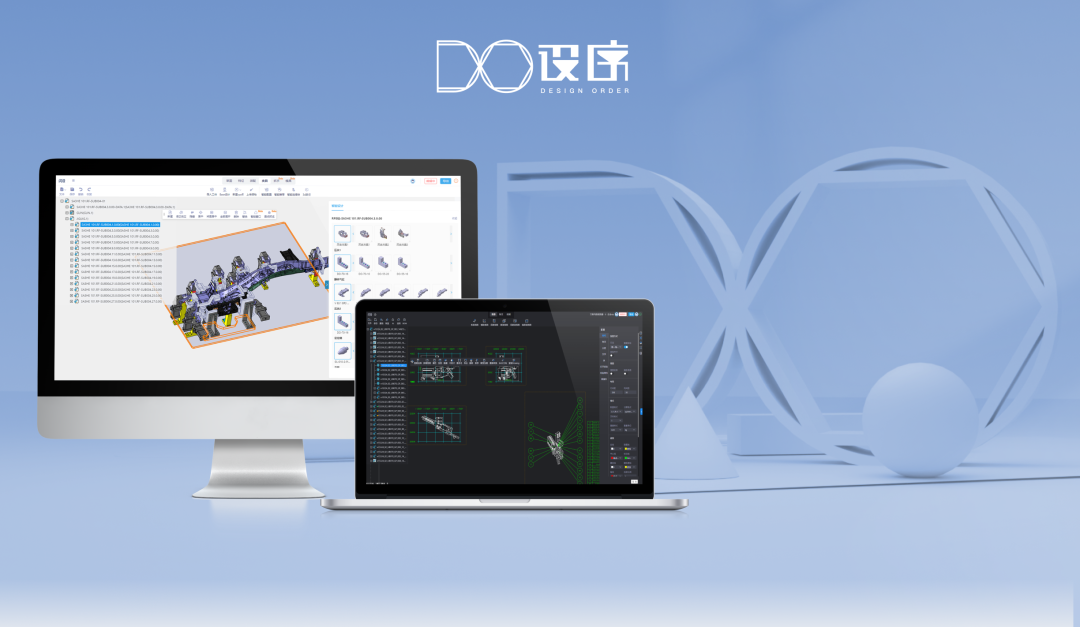
Today, whether at Honda, Yutong Bus, Dongfeng Motor, COMAC, or Tesla's factory in Nevada, designers use Shexu products daily — or work with equipment manufactured from Shexu-generated design drawings. The company now serves over 100 major enterprise clients and broke RMB 100 million in revenue in 2025. Shexu also completed three consecutive funding rounds in the past year, bringing total capital raised to over RMB 100 million.
"From day one, Shexu never set out to build a domestic replacement for CAD. Instead, we followed an AI Native path, defining from scratch a completely native modality and industrial world model that lets AI fully understand and empower the entire process from design to manufacturing. This is why Shexu can create differentiated value and deliver real returns for customers."
Recently, we sat down with Yongrong Wu, founder and CEO of Shexu Technology, to discuss the vision of building a next-generation industrial multi-agent platform. Gaorong Ventures invested in Shexu's angel round and doubled down in subsequent rounds.
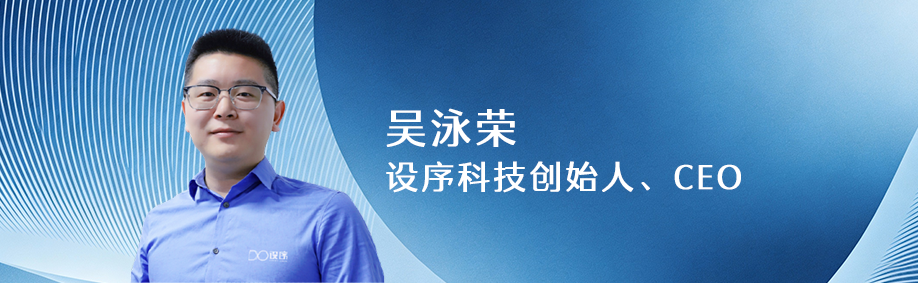

Wu spent years on the manufacturing side of the automotive industry, previously serving as a researcher at General Electric's Advanced Manufacturing Lab and as an intelligent manufacturing expert at NIO, where he led AI technology applications. "We'd often argue on the factory floor — sometimes because produced parts couldn't meet quality standards, sometimes because manufacturing processes couldn't achieve consistency. When we traced these problems to their root, we'd find many originated in design."
Wu recalls that while AI has already found applications in manufacturing-side scenarios like visual inspection, pick-and-place, and maintenance, the industry still faces a massive unmet need: whether AI can penetrate further upstream to help design and R&D engineers dramatically improve both efficiency and quality. Of course, the ultimate goal isn't to stop at the design phase, but to use AI to power design and R&D, driving complete industrial product delivery from design to manufacturing — truly achieving "Design for Manufacturing."
Wu recognized that "AI transforming industry" represented a major opportunity, and one that matched his background and experience. His years in automotive gave him firsthand exposure to complete delivery processes and deep understanding of industrial needs: "Industrial scenarios span conceptual design, structural design, electrical design, machining, assembly, and on-site commissioning — and data across these stages is deeply interconnected." Meanwhile, in his previous roles, Wu wrote code, built models, and collected and trained data himself, giving him thorough understanding of AI's underlying technical principles.
"Combining both, we knew what AI could and couldn't do in industrial scenarios, and where its limits and boundaries lay."
A team with cross-disciplinary expertise in both industry and AI, plus support from industrial partners and access to massive proprietary datasets — "the right timing, favorable conditions, and unity of people" — Wu and his team embarked on their entrepreneurial journey.

Wu notes that in a manufacturing powerhouse like China, demand for industrial design is enormous. "Just in China's automotive industry alone, there are 500,000 industrial design engineers. With each engineer generating roughly RMB 200,000 in annual output value, that's about RMB 100 billion in total output value."
Traditionally, generating a design proposal required designers to spend enormous time on early-stage concept development and subsequent manual sketch modeling in CAD software. To address this, Shexu developed Shanshe 3D Agent, an intelligent design platform where designers simply input requirements to directly generate 3D design proposals containing process and assembly information.
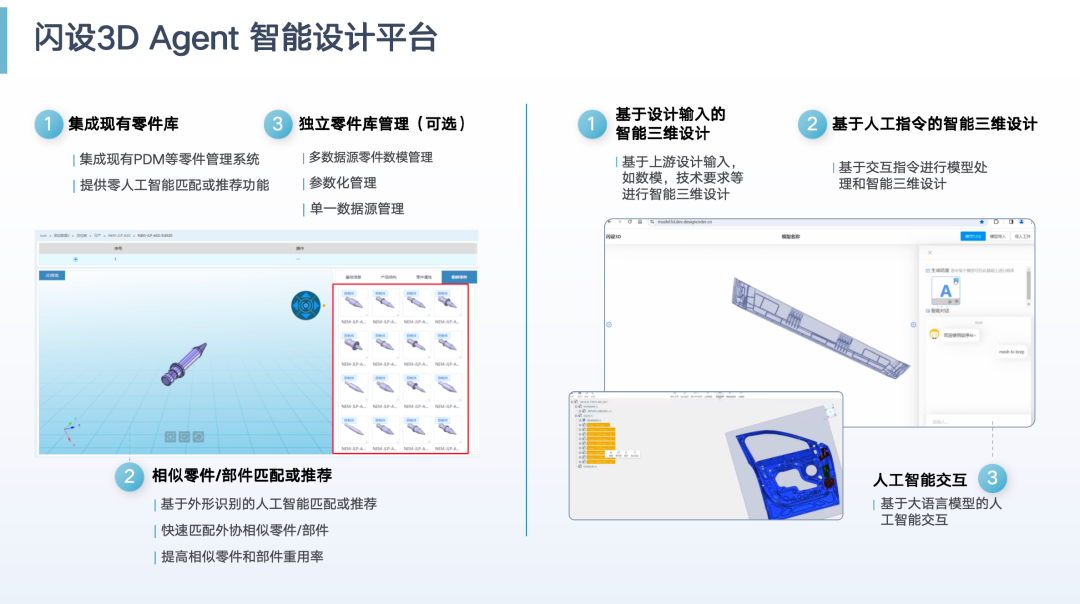
Building on this foundation, Shexu launched three additional agents: Shanshe 2D Agent automatically generates machining drawings with complete element information; Drawing Review Agent validates dimensions, processes, and standard compliance; and Process Planning Agent outputs executable process plans — achieving seamless connection from design to production.
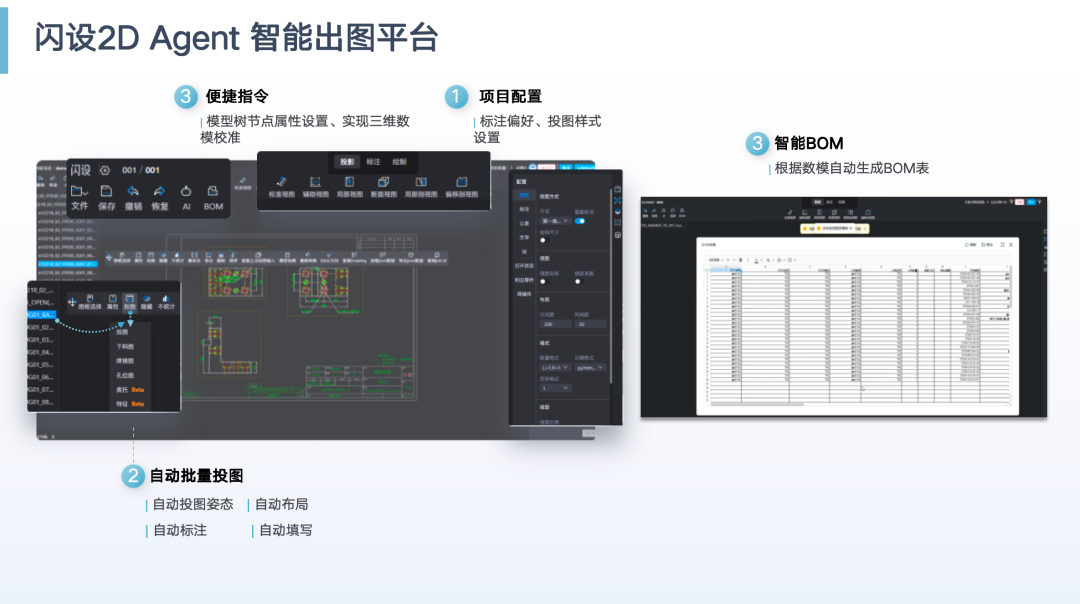
Wu explains that after adopting Shexu products, clients found they could simultaneously satisfy dual demands for improved design efficiency and design quality, creating many "aha moments" and "irreversible experiences." "Just in terms of design cycle efficiency, we've shortened designer delivery time by over 10x. More importantly, we significantly improve design quality."
"Because when designers are under intense workload, they make basic errors that lead to material waste and rework on the shop floor. AI generally doesn't make basic errors — it raises consistency by a whole tier."

Of course, the industry harbors certain doubts about the accuracy, consistency, and usability of industrial design agent outputs.
Wu identifies two major challenges in deploying industrial design agents. First, AI-generated results must conform to industrial mechanisms and specific standards — a shared challenge across the AI for Science field. Second, within massive industrial delivery systems, the work goes far beyond drawing to involve interweaving and coordination of diverse tasks, requiring agents with sufficient intelligence to decompose, manage, and advance tasks.
Many traditional CAD software companies are also talking about AI, but mostly using natural language large models to build user AI assistants. Wu points out that if you rely solely on natural language models, AI might understand some modeling or drawing processes, but struggles to comprehend how these geometric models are actually machined on the shop floor or what the manufacturing requirements are.
Shexu's product platform is built on collaboration between its self-developed industrial world model and natural language large model-encapsulated intelligent agents. The industrial world model embeds complete industrial information and process mechanisms from industrial scenarios, meeting industrial precision standards to handle vertical industrial tasks.
Shexu's industrial world model uses a dual-layer nested graph neural network as its foundation architecture, with a special structure that tells AI that data has assembly relationships, feature relationships, and constraint relationships. The first nested network expresses multiple parts within an assembly and their assembly relationships; the second nested network expresses the geometric features of parts themselves — how many fillets, how many slots, how many holes, and so on.
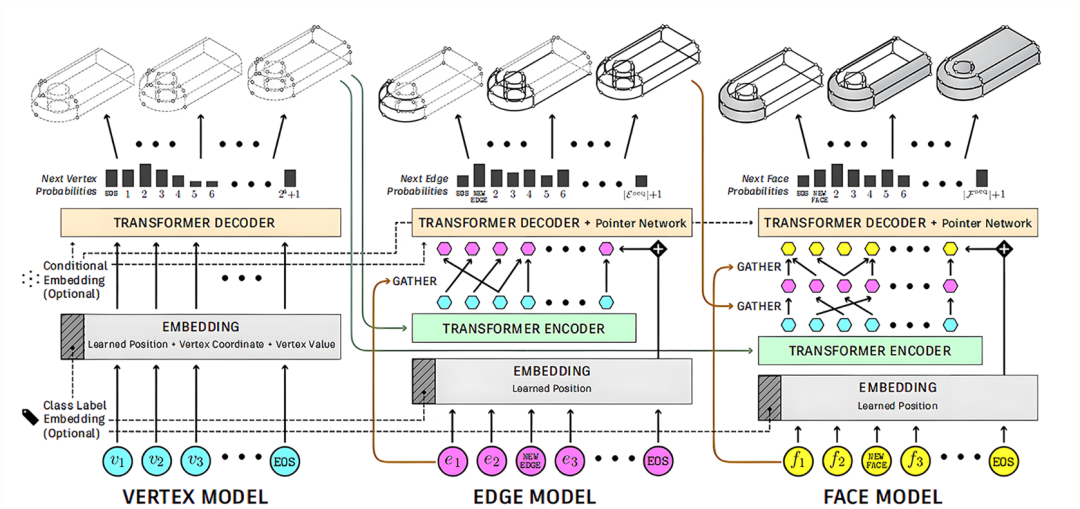
Based on this entirely new modality, it can completely express three dimensions of information for industrial assemblies. First, the part dimension — part types, materials. Second, the sub-part dimension — what features a part has, such as how many holes or slots. Third, the super-part dimension — where this part is assembled, and with what other parts. "With these three dimensions of information, you know the assembly's positioning and the business functions it needs to achieve."
Beyond model architecture, high-quality training data is critical for vertical models. Wu explains that Shexu's industrial world model is trained on nearly 1 billion parameters, 100% from proprietary datasets. **"Partly from nearly 20 years of data accumulated by industrial shareholder partners, partly from Shexu SaaS customers and data from Shexu team's own deliveries." Currently, Shexu's SaaS product on the public cloud generates no fewer than 50,000 drawings or parts daily — over 20 million annually.
Additionally, the Shexu team applies reinforcement learning with industrial mechanisms, keeping AI-generated results within certain constraint ranges to safeguard industrial standards.

As products mature and model capabilities improve, Shexu has gradually evolved into an industrial multi-agent platform.
On one hand, Shexu's products have truly reached agent-level capabilities, with continuous improvement in generation accuracy, consistency, and autonomous task judgment and response.
Second, in industrial delivery workflows — from task decomposition, management, and review to final delivery — the process involves multi-task collaboration with deeply interconnected stages. Today Shexu has built corresponding agents around different stages of the delivery workflow.
Wu notes that understanding so-called industrial multi-agents is actually quite simple: "From the user perspective, a requirement comes in, and even without project managers, AI can directly manage the project, break down tasks, generate specific proposals, and ultimately review and deliver."
Wu gives the example of a Wuxi-based manufacturer that proactively approached Shexu to implement AI-powered automatic pricing. Based on the Shexu platform, AI design proposals can rapidly generate processes and automatically calculate machining costs for outsourced manufacturing. "The reason Shexu can do this is that our generated design results all contain process and manufacturing information."

While products continue evolving, Shexu is also exploring business models better suited to the AI era beyond SaaS subscriptions and private deployments. Earlier this year, discussions in North American AI circles about AI directly delivering results as a potentially better business model — RaaS (Result as a Service) — inspired the Shexu team.
"Looking back at commercial competition over the past two years, we'd ask: How can a SaaS product with real product power maximize its commercial value? Perhaps the answer is getting paid by delivered results."
Wu points out that from the perspective of user needs and payment habits, in industries like automotive, delivery is an action that happens smoothly every day across the value chain.
Second, doing delivery allows products to be more deeply coupled into overall industrial workflows. "Imagine if most drawings in an industry or scenario are delivered through your platform — then the platform becomes the new definer of that industry. The previous generation of industrial software giant Dassault originally built fighter jets; they developed a set of best practices to deliver fighter jets." Wu believes that in the AI era, whoever uses AI to develop a set of best practices could become the new era's industry definer.
Currently, Shexu has established ecosystem partnerships with multiple industrial design firms to deliver AI design results to end customers. In 2025, Shexu's RaaS segment already accounted for one-quarter of annual revenue.
This year, beyond serving automotive, 3C, and energy industry clients, Shexu has also added many cross-industry leading customers — such as Bozhon in 3C, CRRC in rail transit, and L'Oréal in fast-moving consumer goods. "Industrial design needs happen around us constantly. For example, L'Oréal's global innovation division proactively approached us, hoping to use Shexu products to design L'Oréal's extensive packaging and display materials."

Discussing goals for 2026, Wu highlights three priorities. First, proving out the RaaS business model. On the R&D side, achieving an order-of-magnitude leap in model parameters and capabilities,打通 the process-to-manufacturing link. Finally, launching international expansion — "We already have overseas clients proactively reaching out, such as a well-known German heavy industry enterprise."
Looking further ahead, Wu notes that as embodied intelligence and robotics continue developing, the massive design and R&D data accumulated behind Shexu will become extremely valuable for actual training and deployment on the factory floor.
A simple example: when a robot wants to grasp a component, traditionally it uses cameras to perceive physical size, material, etc. — which can lead to misjudgments. With design-side data, combined with real-time photoelectric signals captured by factory cameras for joint judgment, model accuracy and robustness both improve significantly.
"This is a small case, but要知道 all physical objects on the manufacturing floor have complete data from the design phase — it's one-to-one corresponding digital twin data." Shexu's entry point from the design side, and the data it accumulates, will have profound significance for future manufacturing stages and embodied intelligence scenarios.
"A human tells AI a requirement, and AI automatically completes design, process, and manufacturing, ultimately delivering the physical hardware to the human. We believe this scenario will certainly arrive," Wu says.

For business cooperation or investment inquiries