Lark's Zhang Nan: How ByteDance Scaled from 100 to 100,000 People Through Tool-Driven Organizational Evolution | Ronghui Practical Insights

How to "scientifically" improve an organization.
From a startup team of a few dozen people in 2012 to a global organization of more than 100,000 today, ByteDance has seen its market and business models constantly evolve through this period of rapid growth. What hasn't changed is the company's organizational capabilities and its deepening understanding of the market and industry.
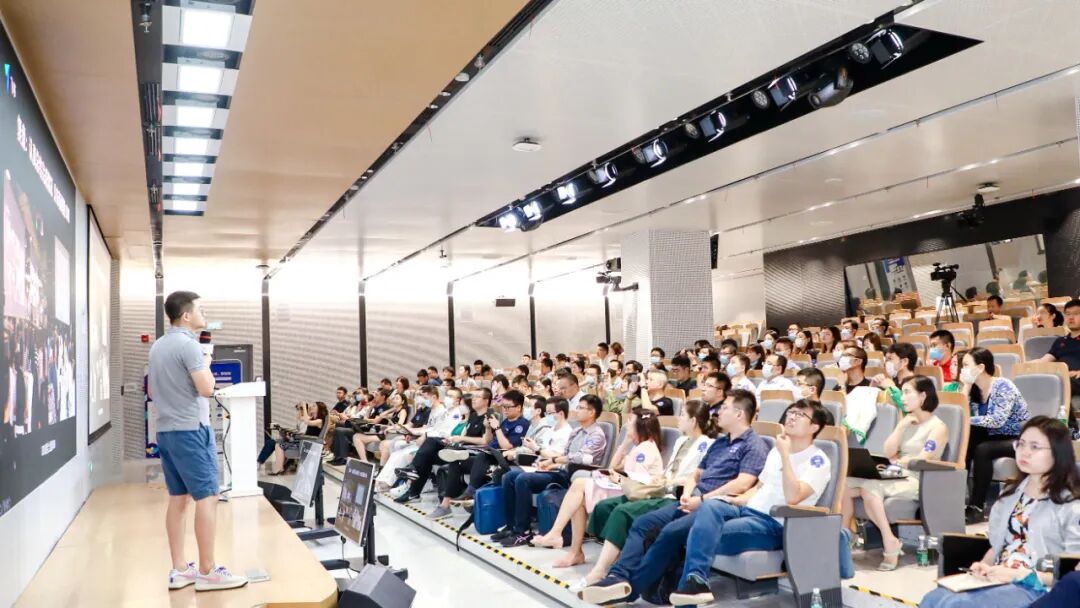
At different stages of organizational scale, ByteDance — like many startups — faced various management challenges: how to build a goal-driven organization, how to make corporate culture tangible, how to prevent culture from being diluted and collaboration efficiency from dropping during rapid expansion, how to hire the right people, use them well, and motivate them. What set ByteDance apart was that "tools" were treated as an extremely important element in its organizational upgrades and transformations. Because of this obsession with and dedication to tools, ByteDance kept thinking about how to solve organizational problems through tools when facing them. Lark became a large-scale testing ground and core vehicle for organizational change, and today Lark externalizes these best practices. Recently, Gaorong Ventures invited more than 60 investment and ecosystem companies to visit Lark. Zhang Nan, President of Lark, shared ByteDance's thinking on organizational management with entrepreneurs, and how tools have driven organizational upgrades all along.
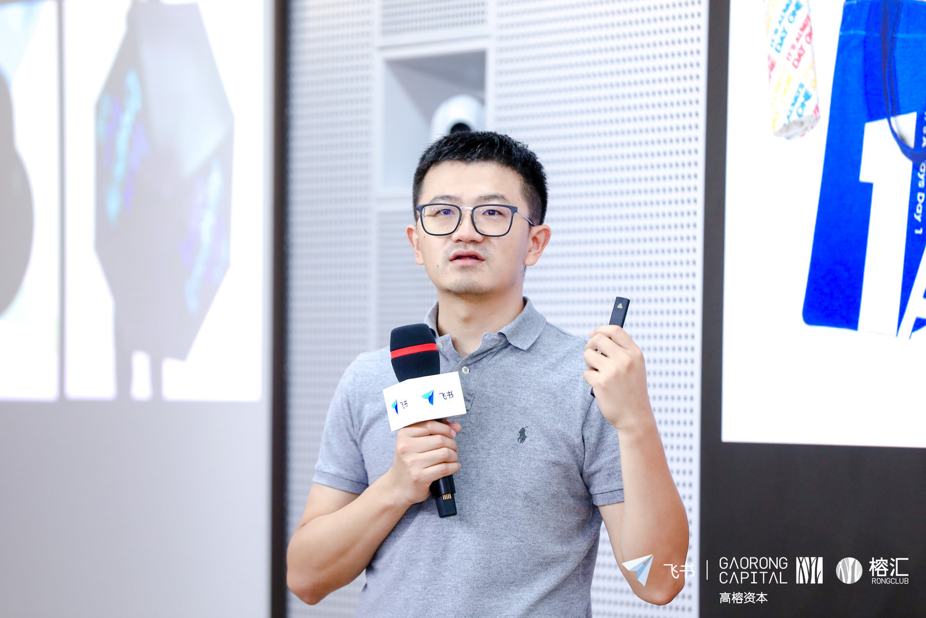
Looking back at ByteDance's business development, from its founding to today, the company has continuously expanded its business boundaries and gone from China to overseas. In terms of organizational scale, starting from 2017, the company's headcount grew very rapidly, exceeding 60,000 in 2019 and surpassing 100,000 in 2020. To address challenges at different organizational scale stages, ByteDance consistently sought more effective tools and methods to drive the organization forward.

Around 100 people (2013): How to build a goal-driven organization?
In 2013, when the team was around 100 people, ByteDance began using OKRs to help build a goal-driven organization. Today, many companies have also started using OKR tools for management. ByteDance believes that OKRs serve a bridging function, making concrete the company's mission, vision, and strategy to guide the formulation and execution of projects and tasks, which then break down to every team and even every individual's work.
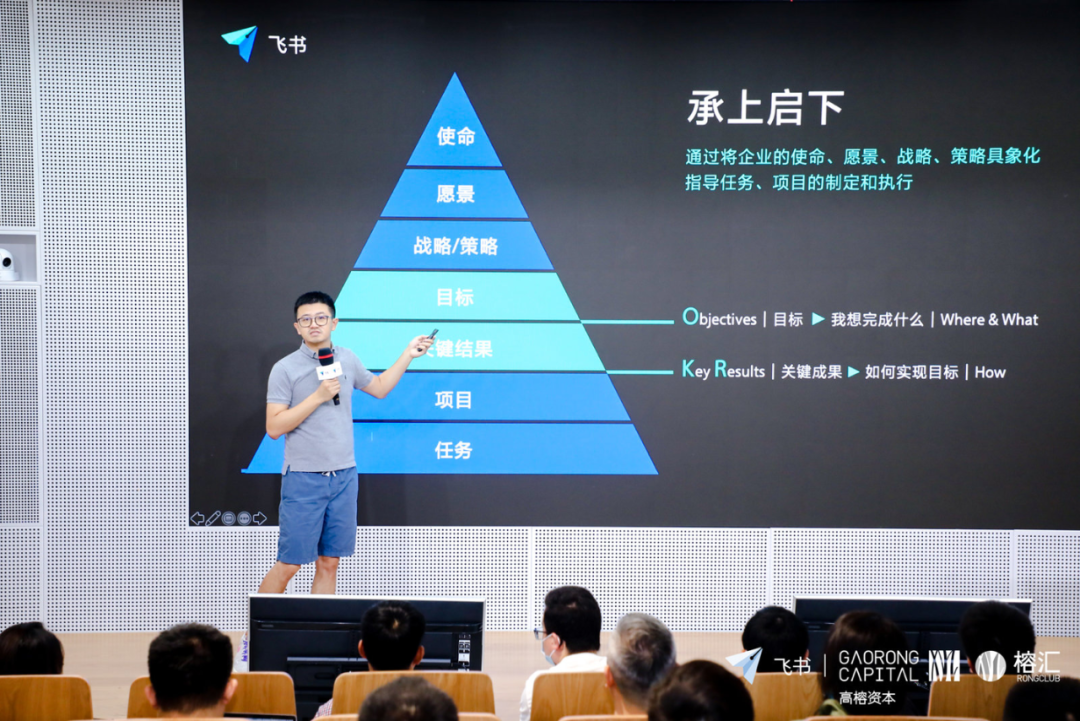
The OKR execution process includes four stages: setting, alignment, tracking, and review —
Setting: Once every two months;
Alignment: Cross-departmental and cross-functional alignment, turning goals into a top-down + networked collaborative state;
Tracking: Bimonthly OKRs must be deeply integrated with the most granular daily management work (such as weekly reports, weekly meetings, etc.);
Review: Review the overall results of the previous OKR cycle, then set the next cycle's OKRs.
ByteDance also continuously tested and practiced efficient OKR management tools, from Word to Wiki, to today's Lark OKR. Zhang Nan believes that "in today's era, if you still need a PC entry point to check OKRs, it must be ineffective." Therefore, Lark OKR supports clicking on an employee's Lark profile picture to easily view their OKRs and understand their goals and key results for this cycle, making goal alignment easy and cross-team collaboration efficient. Lark OKR is also deeply integrated with Lark Docs, conveniently allowing OKRs to be inserted into weekly report documents, so that OKRs run through daily detail management.
After about eight years of operational practice, what benefits has OKR brought to organizational development?
First, it ensures clear goals and effective transmission. ByteDance has always adhered to a fundamental principle: information must flow to have value. Zhang Nan pointed out that if OKRs only exist in the boss's head and are invisible to all employees, their value is limited; if OKRs are buried in a webpage that requires turning on a computer and clicking more than 20 times to access, their value is also limited; but when OKRs become information within easy reach, their value becomes enormous. Second, OKRs allow the organization to focus its energy on the most important things, with sufficient focus. Third, OKRs reduce communication costs and make cross-team collaboration smoother.
Thousands of people (2016): How to build corporate culture?
In 2016, entering the stage of thousands of employees, how to build corporate culture became an important proposition. Starting around 2015, ByteDance spent considerable time internally summarizing what qualities excellent employees possessed, and distilled them into today's "ByteDance Style" — pursue excellence, be pragmatic and bold, open and humble, candid and clear, always be entrepreneurial, and embrace diversity. So how should such organizational culture be implemented? ByteDance firmly believes that all culture should become standards. Therefore, starting from 2016, the company included a "ByteDance Style" evaluation independent of performance in its performance assessments. Short-term performance output may demonstrate an employee's capabilities to some extent, but culture ultimately determines whether an employee can grow together with the company and business in the long term, and even lead the business to greater heights.
Thousands of people (2017): How can tools help improve organizational efficiency?
When the company reached thousands of people, ByteDance began focusing on how to help the organization ensure that culture wouldn't be diluted and organizational capabilities would keep improving during rapid expansion. For many growing companies, when organizational headcount is foreseeably going to exceed 10,000, past manual management methods or soft culture penetration approaches almost always fail. The breakthrough is still tools. As a knowledge-intensive organization, simple IM tools couldn't solve the problem of internal information accumulation. Therefore, ByteDance began pushing for Lark's self-developed solution, and by the end of 2017, all employees had switched to Lark. In Lark's definition, it aims to become a one-stop advanced enterprise collaboration and management platform. Only by integrating IM, calendar, video conferencing, cloud documents, enterprise email, and service desk functions can collaboration efficiency be maximized while helping organizations accumulate knowledge. Lark's most well-known product is Lark Docs. The reason it can significantly improve organizational collaboration efficiency, Lark attributes to its holistic design concept of integrating documents and IM experience from Day One. Additionally, Lark Docs' product design emphasizes content over form, aiming to free people from the constraints of traditional headers, footers, margins, character spacing, and other formatting. Each Lark document is a canvas, giving ample creative space. Lark Docs also has strong collaborative editing capabilities, including the ability to @ people directly in the document body or comments, achieving seamless integration of information and notifications, and assigning tasks to individuals. One typical case of documents helping organizational collaboration: the 2021 Spring Festival Gala red envelope partnership, which went from project initiation to the Gala stage in just 27 days, involving close coordination among thousands of R&D, product, and other functional colleagues. Facing such high-density collaboration, all project team employees used a single Lark document to view the project management handbook; at the same time, there was an online spreadsheet (Gantt chart) updated daily for real-time progress updates and risk synchronization. Many companies encounter the problem of ineffective and lengthy meetings, especially cross-departmental meetings involving multi-department reporting sessions. Lark introduced the innovative "Feiyue Meeting" format: write meeting documents before the meeting; during the first half of the meeting, participants read silently and leave comments; after reading, everyone discusses based on the comments; finally, conclusions and action items are formed in the document.
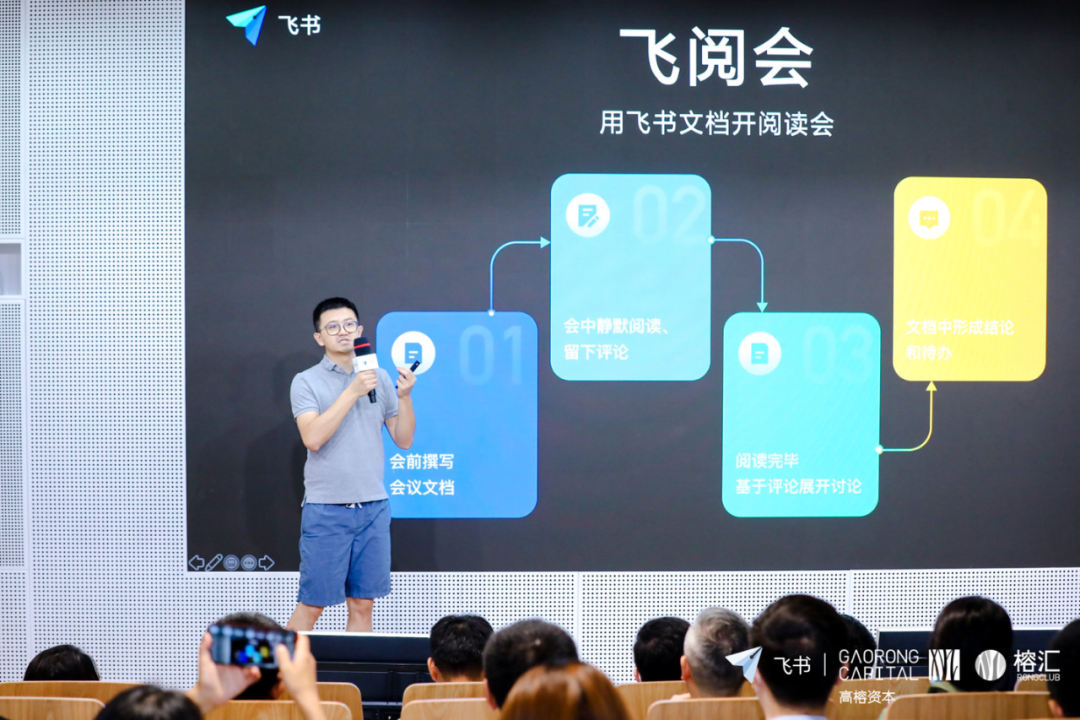
It's worth emphasizing that "Feiyue Meeting" documents are generally networked collaborations, with one department's materials broken down for different responsible teams to write separately. A single department's bimonthly meeting document might have hundreds of people participating in its writing, because frontline employees have the most direct firsthand information about details.
10,000 people (2018): How to go international?
Today, many innovative companies are seeking overseas expansion opportunities. For cross-regional organizational collaboration, tools can also help improve efficiency. For enterprises with cross-regional teams, language has traditionally been a hard barrier to team operation and collaboration. Lark believes that good tools can help break language barriers and improve information flow efficiency. Lark strongly encourages people to use the language they're most comfortable with for daily communication, because in environments with language pressure, participation is suppressed. In Lark's cross-national communication groups, group chats can be automatically translated; documents support one-click translation; video conferencing supports real-time subtitle generation and translation.
Tens of thousands of people (2019): How to hire well, motivate, and use people well?
How to hire well, motivate, and use people well is also a proposition that every startup constantly thinks about. When ByteDance's organizational scale reached tens of thousands, how to fully attract quality talent? Zhang Nan shared that the company followed employees' recruitment, onboarding, OKR setting, and performance evaluation processes, gaining insights into high-performing employee profiles along the way, abstracting a high-performing employee model, and feeding this back into the recruitment process, thereby forming a virtuous cycle of quality talent. In these dimensions, Lark has correspondingly launched products including Lark OKR, Lark Recruiting, and Lark Performance.
Recruiting
In recruiting, ByteDance has three hiring principles:
First, hire for essence, hoping to avoid formalistic hiring and encouraging managers to think more and redefine talent;
Second, high standards, encouraging finding the best people in exhaustible domains rather than people who basically meet requirements;
Third, quality over quantity, avoiding lowering hiring standards because this correspondingly increases the company's management costs and pressure.
Correspondingly, Lark's product goal is to make it easy for HR to hire people, and for managers to hire the right people, improving efficiency and quality at every step of hiring. In the talent sourcing stage, Lark Recruiting can do structured information extraction on candidates' resumes, tag them, and greatly improve efficiency when HR does resume screening in the dynamic talent pool. Lark has also seamlessly integrated interviewing with Lark video conferencing, group chats, and calendar, so team leads can complete time scheduling and video interviews without interacting with HR. Today, more than 90% of ByteDance's interviews are video interviews.
Performance Management
The key to performance management is doing value evaluation and value distribution well. The process is: first evaluate performance output, then conduct 360 feedback, then examine relative contribution, calibrate performance results, and finally achieve performance result application.
When building its performance management product module, Lark also incorporated considerable product strength and data capabilities to make performance management more scientific.
Self-evaluation and invited 360 evaluation: Evaluators can view employees' past three OKR settings and completion status through the system, not just recent work, avoiding the "recency effect."
Manager gives evaluation results: Managers can see evaluators' assessment scales through statistics, such as whether a person tends to grade strictly, moderately, or leniently overall, avoiding subjective bias.
Calibration: This is the most critical step in performance management. Lark Performance can statistically and visually present performance results by different departments and teams, different levels, different sequences, different tenure, and other dimensions, helping identify anomalies. Performance calibration goes from frontline employees all the way to the CEO. Through layer-by-layer calibration, on one hand, performance evaluation avoids bias as much as possible; at the same time, managers can horizontally compare different departments' evaluation results to form management insights.
And all performance results are accumulated on Lark. For managers, with this information input, it helps them better identify high-potential talent within a massive organization — this value is enormous.
100,000 people (2020-2021): How to manage a mega-organization?
Starting from 2020, with more than 100,000 employees, the problems ByteDance faced were how to manage a mega-organization, while also entering a stage of deeper thinking, judgment, and optimization about how the company operates.
For many complex organizations, approval is often a major pain point. Zhang Nan pointed out that approval hasn't been solved well in the vast majority of companies, generally facing the problem of fragmented approval systems. Therefore, Lark developed a one-stop approval task center, integrating multiple original approval systems into a single entry point, enabling centralized approval of offers, compensation, project initiation, contracts, procurement, permissions, and more. Combined with approval efficiency dashboards, it can prompt timely approvals and optimize approval flows.
Zhang Nan concluded that for organizational management, the most important things are systems, culture, and tools. It's very hard for a company to change its culture, but changing tools is fast, and tool changes can influence organizational culture. Lark hopes to start from the tool entry point, to accumulate and output ByteDance's and advanced enterprises' best practices, helping companies scientifically improve their organizations and address problems encountered at different scale stages.



12 New Trends and 12 New Growth Models in Global To B in 2021 | Gaorong To B Growth Camp