One Year Into Globalization, Tens of Thousands of Overseas Customers: How XTransfer Nailed Its Opening Move Abroad | Gaorong Ventures

Hearing someone else tell a story and going out to experience it yourself are completely different kinds of stimulation.
In the export manufacturing circles of Yiwu, Dongguan, Guangzhou, Ningbo, and beyond, XTransfer is anything but a stranger. As China's largest B2B cross-border trade finance platform by customer count, XTransfer serves more than 450,000 small and micro foreign trade businesses, helping them collect international payments safely, conveniently, and at low cost — protecting their hard-earned revenue and ensuring it actually lands in their accounts.
In May 2023, XTransfer embarked on its own vast and challenging journey overseas, alongside the export clients it serves, launching its international business in Hong Kong. By October 2023, XTransfer's international services were live in over 200 countries and regions, with growth surging. Tens of thousands of small and micro trade businesses overseas have already registered to use XTransfer, efficiently completing cross-border payments in the course of their operations.
Starting last year, XTransfer co-founder and CFO Xiaogu Sun began intensive overseas travel. In 2017, he and several other co-founders launched XTransfer under the leadership of founder and CEO Bill Deng. Five years later, they began another journey from zero to one.
Through direct engagement with overseas clients, Sun discovered that the difficulty small and micro businesses face in accessing quality cross-border financial services — or the high barriers and costs when such services are available — is a global pain point.
In January this year, while visiting the local Guangdong Chamber of Commerce in Dubai, he met a Chinese business owner who imports electronics from Guangdong and other regions, operating distribution stores in Dubai with substantial volume. In theory, Dubai's financial sector should be highly developed, yet merchants trying to remit money from the UAE to Chinese suppliers still encounter account limits, lengthy review periods, frozen accounts, and other problems. This owner opened an XTransfer account and can now compliantly, quickly, and cost-effectively transfer and settle funds to Chinese sellers. The seamless experience led him to start recommending XTransfer to his business contacts in Dubai.
On the road, Sun encountered many similar client stories; yet digging deeper into different regional markets revealed countless diverging details — each market's financial environment and customer pain points vary enormously.
On the first anniversary of XTransfer's international expansion, we spoke with Sun about how the company won its opening battles overseas, found product-market fit, and its plans for deeper cultivation across different regions. Gaorong Ventures invested in XTransfer's angel round and participated in multiple subsequent funding rounds.

In fact, XTransfer's decision to go global wasn't made in the past two years — internationalization was the target from day one. Sun told us, "When XTransfer was founded in 2017, we explicitly defined our mission as 'bringing the benefits of financial services to SMEs worldwide.' So from Day 1, we were a global company."
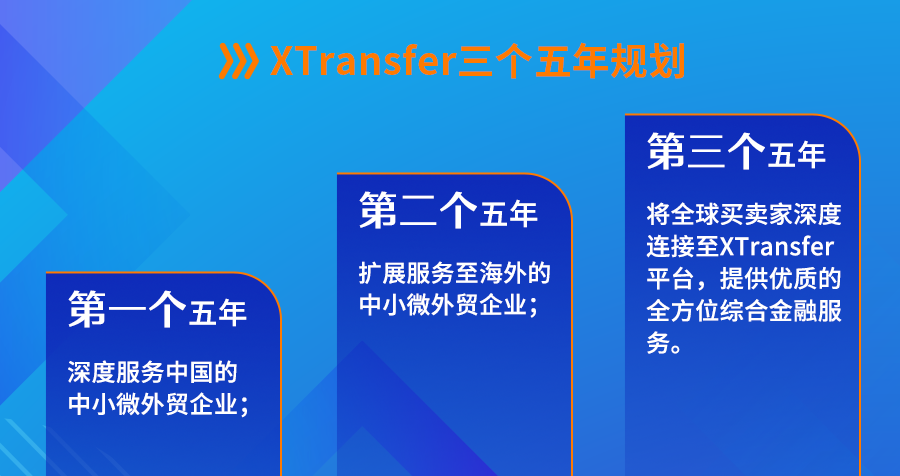
The founding team also laid out three "five-year plans": the first five years, to serve China's small and micro foreign trade businesses well; the second five years, to expand to overseas SMEs; the third five years, to connect global buyers and sellers through XTransfer's platform, forming a global trade payment network. "Last year, when the company began its first international service station, it happened to mark the beginning of our second five-year period."
Whether deepening its China presence or expanding overseas, XTransfer targets the same customer segment: small and micro trade businesses. Sun noted, "Over the past 20-plus years, a major trend in global B2B cross-border trade has been the shift toward smaller, more fragmented transactions." Take China as an example: over 20 years ago, export licenses were typically held by state-owned enterprises or other large corporations; today China has over 5 million small and micro foreign trade businesses, which like "an army of ants" connect China to the world, contributing 60% of foreign trade volume. The rise of this ant army stems from the continuous improvement of global trade infrastructure. For instance, where exporters once needed to attend expensive trade shows to find buyers, they can now acquire customers through platforms like TikTok and Google; logistics and financial services have also improved. This enables even very small businesses — perhaps just one or two owners — to trade globally.
Sun added that this trend isn't limited to China; it's the same overseas, "because the optimization of these trade infrastructure elements is happening globally."
Facing the evolution of the global economy and trade landscape in recent years, the XTransfer team firmly believes market opportunities persist throughout, and that the overall upward trajectory of international trade will not change. "Still using China as an example, while Europe and America's share of Chinese foreign trade may be declining, many emerging markets — such as Southeast Asia, the Middle East, Africa, and Latin America — are showing rapid growth. Moreover, infrastructure in these regions is relatively underdeveloped, making demand for financial services even more urgent."

Over the past decade-plus, global anti-money laundering regulations have continuously tightened. Traditional banks and financial institutions, due to compliance costs and other factors, have insufficient incentive to serve small and micro businesses, making it difficult for SMEs to enjoy cross-border financial services comparable to those available to large multinational corporations.
Beyond the UAE trip early this year, Sun and his team have also visited Thailand, Vietnam, and other countries, with Mexico next month and Africa after that — all with the primary purpose of understanding local clients' real pain points up close. "When meeting overseas clients, the first thing we say is never about how great we are, but rather to understand their 'moments of pain' in the cross-border payment process. Through these conversations, we've found that most SMEs have encountered payment difficulties to varying degrees — bottlenecks exist at nearly every step of the chain."
First, regarding the availability of financial services: to operate, businesses need an account, yet SMEs face certain thresholds for account opening qualifications at banks — such as minimum deposit requirements or purchasing wealth management products — and the account review process can take several months.
Even with an account, a series of problems arise when paying or receiving funds globally.
For example, slow speed: through traditional financial networks, cross-border payments generally take several days or longer to arrive, and if compliance review is involved, a payment can get stuck in the review process for weeks or even months; high fees: taking a payment from South America to Southeast Asia as an example, the funds may pass through multiple intermediary banks, each charging service fees, so a $1,000 remittance could have nearly $100 deducted in fees — when a trade transaction's profit margin might only be 10%; additionally, due to issues like delayed compliance review during transactions, account freezes after receiving payment from overseas buyers occur with some frequency.
Sun emphasized that exchange rates are also critical in cross-border payments. Traditional institutions generally earn hidden fees of 3% or higher on currency conversion, which is no small burden for small businesses.
Through serving its mainland Chinese foreign trade clients, XTransfer has built a comprehensive system of intelligent compliance, product technology, and service capabilities around cross-border payments. "This product is a global cross-border payment infrastructure" that can be readily redeployed to serve overseas SMEs and help them solve these pain points.
After registering with XTransfer, overseas clients can within 24 hours obtain free trade collection accounts provided by globally renowned banks including JPMorgan, DBS Bank, Deutsche Bank, and Bank of China, enjoying convenient cross-border payments, efficient currency exchange, and other services — safely and compliantly.
"Compliance is XTransfer's foundation for survival and its growth engine." XTransfer has already obtained payment licenses in Hong Kong, the UK, the US, Canada, and Australia, and is actively applying for payment licenses in Southeast Asia, the Middle East, and other regions this year. In some regions, it also achieves compliant operations through partnerships with locally licensed financial institutions. "We serve as a bridge connecting large financial institutions and banks with small and micro businesses, using AI-powered anti-money laundering compliance technology to improve review efficiency and help financial institutions save on operational costs — so this is a virtuous, mutually beneficial collaboration model."
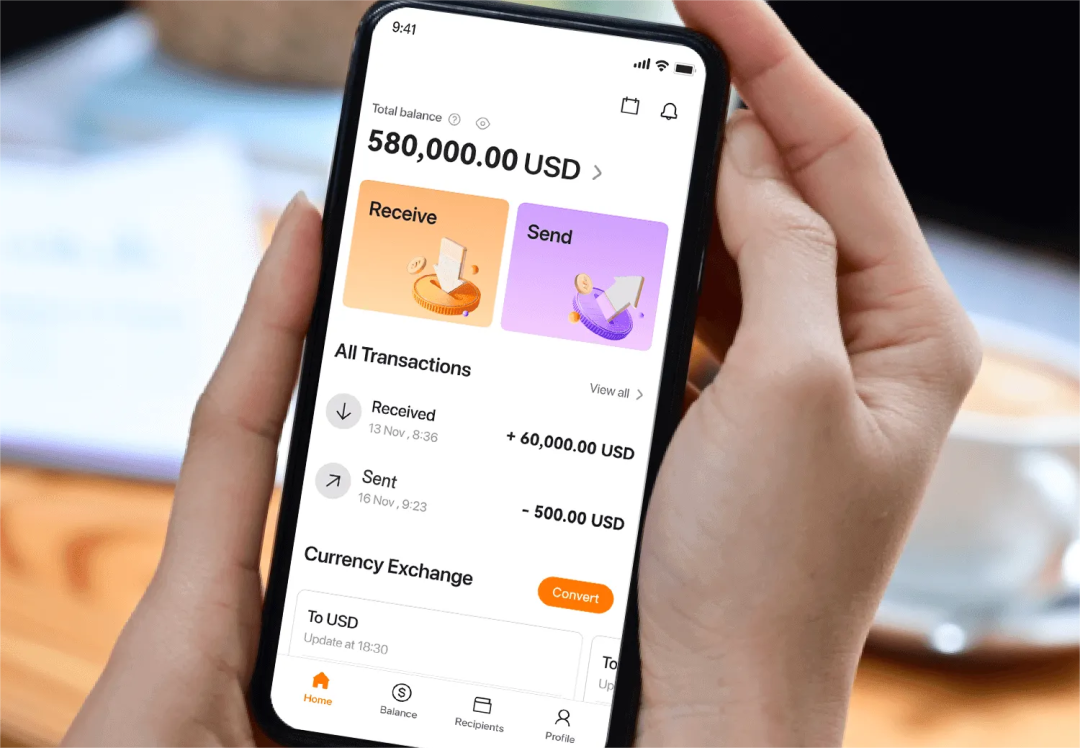
Recently, XTransfer also launched its international app, allowing clients to check collections, initiate payments, view exchange rates, and convert currencies anytime, anywhere. "Moreover, clients in regions like Africa may prefer using mobile directly, essentially skipping the PC stage entirely."

For Chinese companies entering new overseas markets, how to cold-start and break through is a common challenge. For XTransfer, the 450,000 small and micro foreign trade clients accumulated in mainland China are the best lever for prying open overseas merchant adoption. When Chinese sellers hear that their buyers are facing various problems and high costs in making payments, they're quite willing to recommend XTransfer to the other party.
Once both buyer and seller are using XTransfer, cross-border payments between them can settle in seconds, and for free — a revolutionary change that makes cross-border business cheaper and more efficient for both sides.
The reverse works too: for instance, when XTransfer onboards a buyer client in Hong Kong, that buyer will recommend it to their mainland suppliers — and the buyer's voice carries more weight.
In fact, when both buyer and seller use XTransfer accounts, not only can payment arrive within seconds 24/7, but they can also expect to save an estimated 95% on remittance fees and 20% on currency exchange costs.
Sun pointed out, "Global buyers and sellers form a network — this is an important reason our international business can develop rapidly." When the network effects of mutual recommendations between buyers and sellers kick in, they bring exponential growth and substantially improve operating capital efficiency for global trade businesses.
Since the official launch of international services, "the volume of client inquiries pouring in has been enormous." Sun revealed that at this point, XTransfer's overseas client count is growing at a doubling pace.

Looking back on this year of pushing overseas, Sun and his team's biggest realization is that understanding local markets requires going deep, deeper, and deeper still. "The broad direction may be something everyone agrees on, but the details of each market are vastly different. The biggest pain points differ from client to client, so the service focus must be differentiated accordingly."
For example, even within Southeast Asia, Thailand is a relatively financially liberal country, while Vietnam's financial services remain comparatively traditional.
Africa's current total trade volume isn't large, but growth is very fast, and there's strong demand for compliant, low-cost financial services. Take Nigeria: the local currency, the naira, experiences extreme exchange rate volatility. "First, being able to exchange for US dollars; second, getting a good rate — if you can do these two things, there will be massive numbers of clients to serve."
In the Middle East, such as Dubai, US dollars aren't scarce; the standout pain point is compliant, efficient cross-border remittance. Thus an important service XTransfer provides in the Middle East today is helping overseas buyers compliantly remit and settle funds to mainland Chinese sellers.
For Europe and America, trade volume is large and capital flow restrictions are relatively minimal, so speed and cost become paramount. One of XTransfer's distinctive services is local collection accounts, helping sellers open local collection accounts in the eurozone, Southeast Asia, and other global locations, allowing them to directly receive buyers' local currencies with same-day arrival and no fees.

To understand and root itself more deeply in regional markets, Sun believes the core team must go out themselves. "Hearing others' stories versus being in that environment yourself — your perception, the stimuli you receive, are completely different."
XTransfer is intensively building local teams in key target countries and regions. On one hand, deploying colleagues as ground advance forces to quickly understand markets, find product-market fit, and identify local benchmark clients; simultaneously, beginning recruitment of local employees, with plans to add 500–1,000 overseas local team members this year.
"We need to find people with deep local knowledge. You can't understand a new market by staying one or two months; in one or two months you can only see some scenery, not its culture."

On collaboration between local teams and headquarters, Sun believes the right mechanisms and culture can improve overall operational efficiency. "Let those who hear the gunfire call in the artillery. We encourage frontline colleagues to feed back to middle and back-office teams — including compliance, customer service, product, and technology — whenever they spot client needs or bottlenecks in the service process, through whatever channels necessary."

"Being able to see the future — this is tremendously exciting." This year of going global has left Sun and his team feeling fulfilled and energized. "Including myself going to various trade shows or meeting clients, after talking with them, they all feedback that as long as you come, as long as you can solve local pain points, your business will instantly become very powerful."
More importantly, when identifying major client needs, the team realized they could truly help vast numbers of small and micro businesses globally. "Summoned by this sense of mission, everyone is highly motivated to drive business growth."
"If last year our international business was the start from zero to one, this year's goal is the leap from one to ten." On XTransfer's international business objectives going forward, Sun noted the need to continue deepening regional assessment and expansion models. "Including for priority breakthrough regions, we need to figure out our own approach around market expansion methods, marketing spend, local partnership building, local direct sales team construction, and so on — including what are more efficient methods, what level of team input-output ratio is reasonable..."
The diversity and complexity of overseas markets present XTransfer with its toughest battle since founding seven years ago. Yet with vast oceans for fish to leap and boundless skies for birds to fly — having seen the enormous scale of global trade exceeding $30 trillion, having seen global division of labor and collaboration rolling forward, having seen the pain points faced by clients in every country — the XTransfer team presses on.

XTransfer founding team