Making Automation Easier! After Two Years of R&D, Rvbust Unveils Three Hardcore Products
By combining vision with robotics, we dramatically lower the barrier to using robots and make automation simpler.
Recently, Shenzhen RVBUST INC. (hereinafter referred to as "RVBUST") unveiled three breakthrough products: two computer vision offerings — the RVC X series 3D camera with micrometer-level 3D imaging precision, and the Visual Displacement Analyzer (VDA), a non-contact, high-precision visual displacement measurement tool — plus a robot motion planning controller deeply integrated with mainstream industrial robots.
Founded in early 2018 by experts in computer vision, robotics, and optics, RVBUST focuses on visual perception and motion planning. The company is dedicated to solving critical technical challenges in these fields, developing core technologies and products with the goal of dramatically lowering the barrier to robot adoption through the integration of vision and robotics, making automation simpler.
In robotics, hardware performance is already excellent — sufficient for the vast majority of automation scenarios. However, shortcomings in software algorithms mean robots remain difficult to use and deploy at scale in industries with frequent scene changes and complex, variable tasks, such as 3C electronics, construction, food service, healthcare, and logistics. Meanwhile, industrial 3D cameras that combine high precision, speed, and cost-effectiveness remain scarce. The current state of robotics and vision technology constrains automation levels across numerous industries.
"Automation levels across all industries will improve significantly in the future. To drive that change, we need tight integration of vision and robotics," said Hui Li, CEO of RVBUST. "RVBUST's first step is to develop better vision technology, robot motion planning technology, products, and system software to make the design, development, and deployment of automation solutions simpler."
RVBUST's two computer vision products, developed over nearly two years of hardware and software R&D, achieve world-class levels of speed and precision, with broad applications in industrial, transportation, medical, and scientific research fields. The robot motion planning controller launched alongside them is already compatible with mainstream robots from ABB, YASKAWA, UR, and FANUC, allowing developers to achieve precise robot control without needing to understand specific robot models or their proprietary programming methods. These three products lay the groundwork for RVBUST's ongoing R&D in robot perception and motion planning technology.
High-Precision 3D Camera and Visual Displacement Analyzer VDA Solve Core Industry Challenges
RVBUST's founding team brings deep expertise in computer vision and optics. CEO Hui Li has ten years of visual algorithm development experience, with previous roles at Qualcomm and Mujin. The company's self-developed RVC X series 3D camera leverages ultra-high-precision camera calibration and proprietary striped structured light technology to dramatically improve 3D point cloud accuracy.
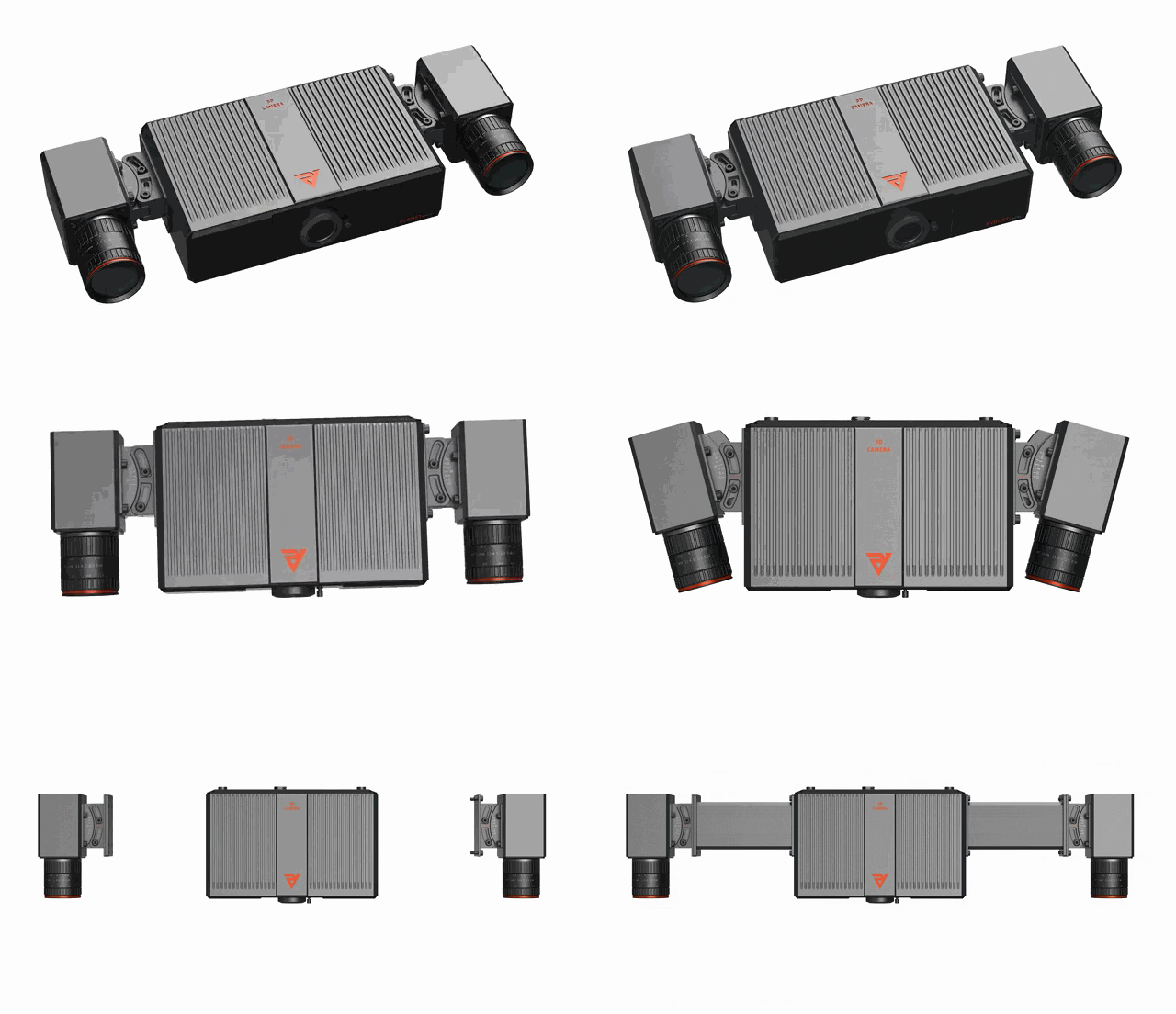
RVC X Series 3D Camera
The self-developed RVC X series 3D camera features:
- Micrometer-level precision
- High speed: up to 5fps in high-precision mode, and 15fps while maintaining 0.1mm accuracy
- High flexibility: adjustable working distance and field of view for multi-purpose use
- Compact design suitable for various mounting configurations
- Developer-friendly: C++/Python/C# APIs for rapid development on Linux/Windows
#Video: RVC X Series 3D Camera
While developing the RVC X series, RVBUST's vision team conducted continuous experimentation, analysis, and optimization, combining algorithmic and hardware innovations. After one year, they launched the Visual Displacement Analyzer (VDA), enabling non-contact measurement of object deformation and displacement with extremely high precision.
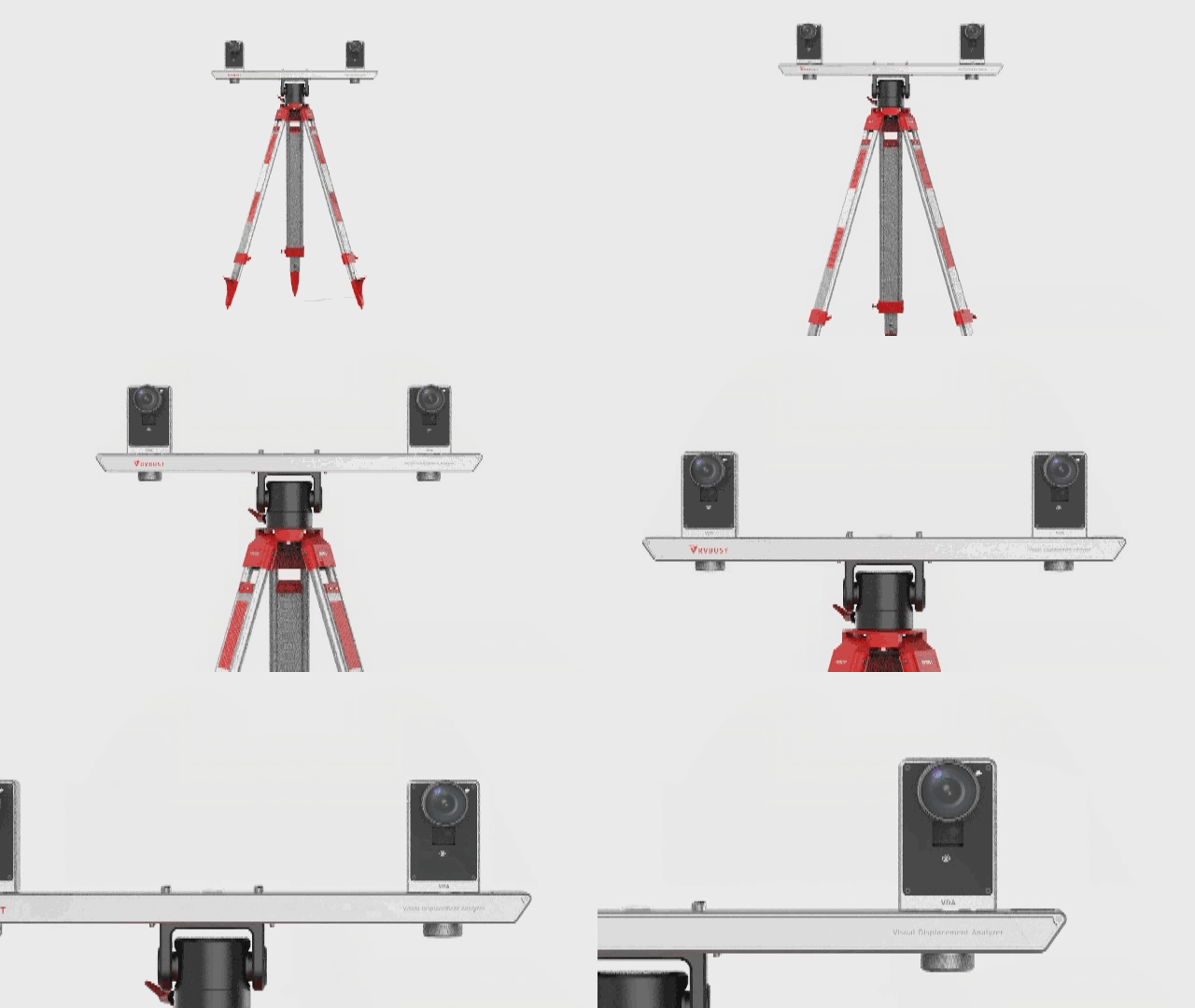
Visual Displacement Analyzer (VDA)
The VDA features:
- High precision: micrometer-level monitoring accuracy within a 10-meter range, greatly expanding application scenarios for deformation and displacement measurement
- Easy deployment: field installation and setup in under five minutes
- Multiple measurement modes: online, offline, single-point, multi-point, and area measurement
- High customizability: algorithms, software interface, and accessories can be tailored for different industries
As a high-precision, non-contact measurement product, the VDA has significant potential in industrial, transportation, medical, and scientific research applications. In high-speed rail, for example, ensuring track health requires regular monitoring of vibration frequency and amplitude. The VDA enables round-the-clock multi-point vibration measurement of railway tracks, with software analysis to assess track condition — providing easier-to-use automated equipment for track maintenance and saving substantial labor. In materials strain measurement, the VDA can directly calculate changes at every pixel on a material's surface, outputting deformation heat maps to obtain detailed strain information for each point.
#Video: Visual Displacement Analyzer (VDA)

Robot Controller and Motion Planning Technology Make Robots Easier to Use
"Currently in industrial robotics, every manufacturer has its own programming language and teaching methods, resulting in high barriers to use and long deployment times," said Qiang Qiu, CTO of RVBUST. "To dramatically improve robot usability, we need robots that can automatically calculate and execute motion trajectories based on visual perception. This will significantly shorten the design and deployment time for automation projects."
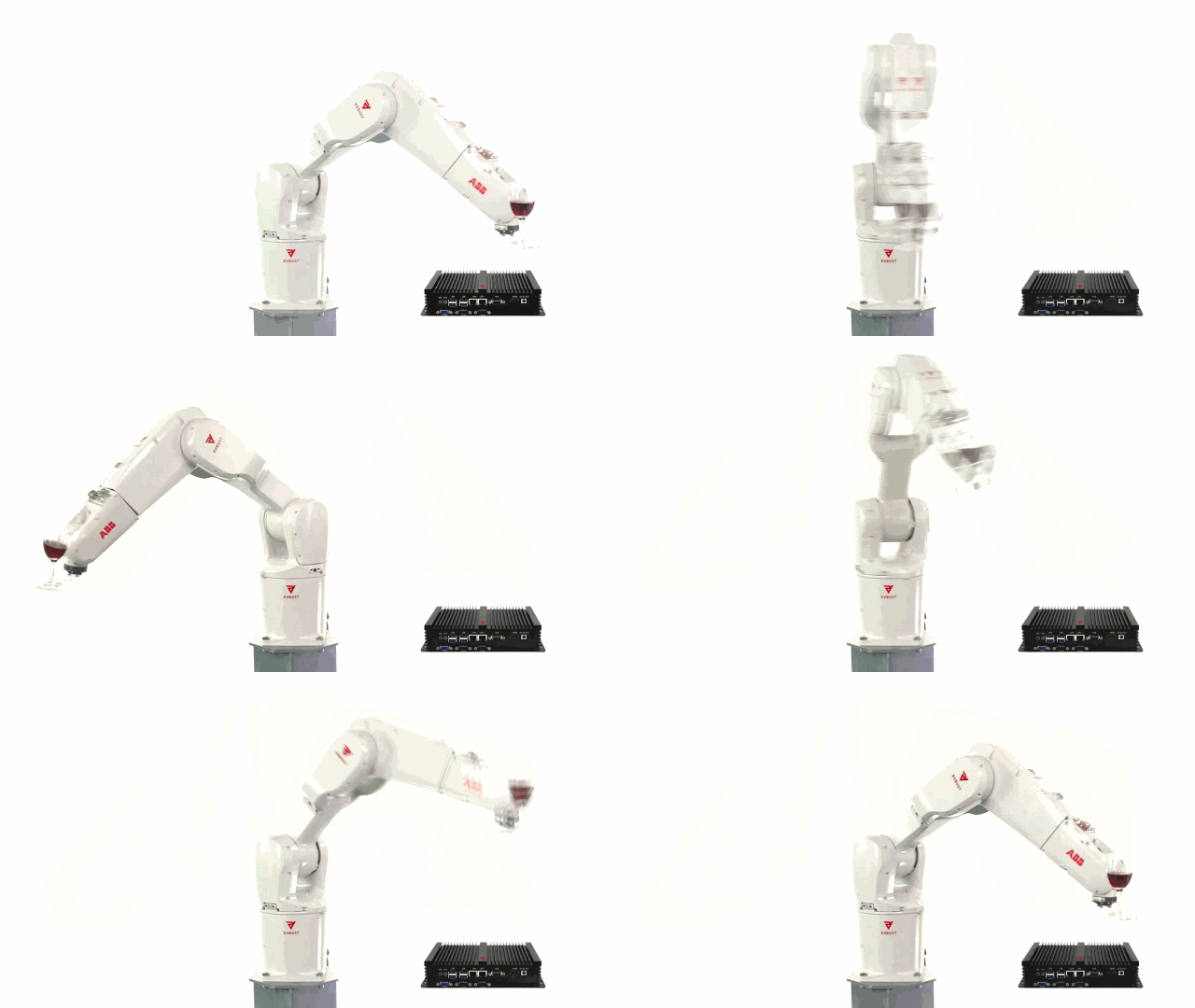
Robot Motion Planning Controller
Currently, mainstream robots each have their own programming languages and platforms. Deep integration with each robot's native controller is a prerequisite for motion planning. After more than a year of development, RVBUST's robot controller is compatible with mainstream robots from ABB, YASKAWA, UR, and FANUC, with the following advantages:
- Unified Python/C++ API that shields developers from underlying robot differences
- Acceleration-level trajectory control for true WYSIWYG planning results
- Real-time, dynamic trajectory adjustment to meet diverse process requirements
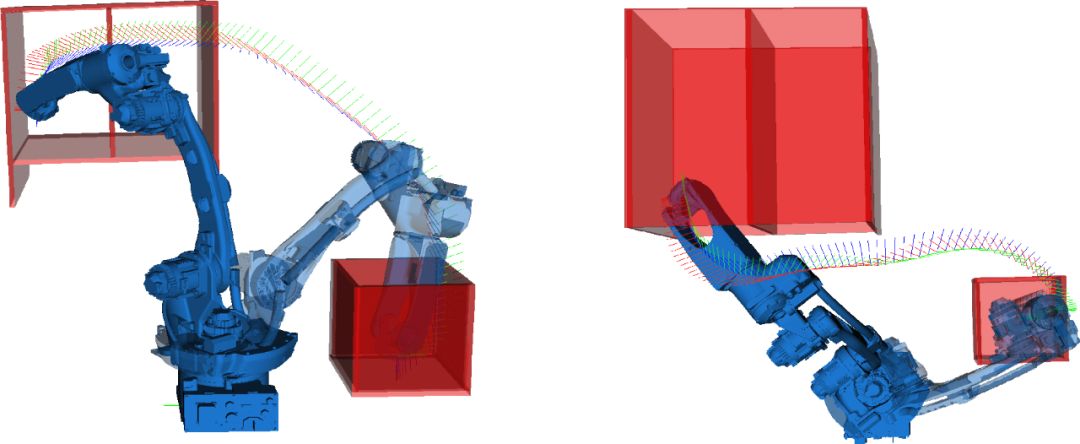
Robot Motion Planning
This deeply integrated controller allows developers to achieve precise robot control without understanding specific robot models or their usage methods. Based on this controller, RVBUST's robot motion planning technology is already deployed in real-world environments. Compared to traditional teaching methods, RVBUST's motion planning technology offers:
- Rapid generation of collision-free, singularity-free trajectories
- Compatibility with different robot configurations
- Adaptation to environmental and task changes, enabling flexible production
#Video: Robot Motion Planning Control
Meanwhile, RVBUST is developing solution design software that integrates the robot controller and motion planning technology, expected to launch in 2020. This will enable seamless connection from solution design to deployment in automation projects, dramatically lowering deployment barriers and expanding robot applications across more automation scenarios.
In its product roadmap, RVBUST plans to leverage its self-developed high-precision vision products to launch a convenient, low-cost robot calibration product for high-precision calibration of robot kinematics, deflection, and other parameters — improving absolute positioning accuracy in real-world applications.
Automation is an extremely complex field, and advancing it requires coordination and collective effort across many companies. Since its founding, RVBUST has established deep partnerships with Huajian, CSCEC, CETC, ABB, and Dongfeng Nissan, among others. The company hopes to form closer collaborations with more partners, applying vision and robotics technology to more scenarios and jointly driving the普及 of automation.
RVBUST received several million dollars in angel funding from Gaorong Ventures in early 2018. Yuebin Gao, founding partner of Gaorong Ventures, said: "In early 2017, I met Hui Li for the first time at the UEC Cup Go AI competition in Tokyo, and we hit it off immediately. That year, multiple robotics startups invited Hui Li and Qiang Qiu to serve as CTOs, but they declined. In early 2018, when Hui Li and Qiang Qiu decided to found RVBUST together, we couldn't wait to invest. The core team had a clear vision for both the long-term mission and short-term objectives, with sufficient capability to build world-class products. I'm not at all surprised by the progress so far — this is just the beginning."
After nearly two years of R&D, RVBUST's vision products and robotics technology have gained initial market recognition. Going forward, the company will expand its team and continue launching high-quality products and services to make automation simpler.



IoT Industry Leader Lumi United Completes Series B2 Funding to Accelerate Overseas and B2B Expansion