Shipments Exceeding 200 Million: The Mass Production Journey of Vertilite's VCSEL Laser Chips | Gaorong Ventures

Driven by industrialization thinking.
When a beam of light shoots vertically from a chip, passing through layers of epitaxial structures, it becomes a bridge that can precisely perceive distance and connect the digital and physical worlds.
With the rapid development of 3D sensing, autonomous driving, and artificial intelligence, VCSEL (Vertical-Cavity Surface-Emitting Laser) — a semiconductor light source — has been increasingly deployed in consumer electronics and automotive electronics in recent years. VCSELs can be found everywhere in smartphones, AR/VR headsets, robot vacuums, and automotive LiDAR.
As a Chinese company, Vertilite has firmly established itself in the top tier globally of the VCSEL laser chip industry. Since its founding, it has not only achieved breakthroughs in core technology but also, crucially, mass-produced its chip products — taking seven years to ship its first 100 million chips, then just seven months to ship its second 100 million.
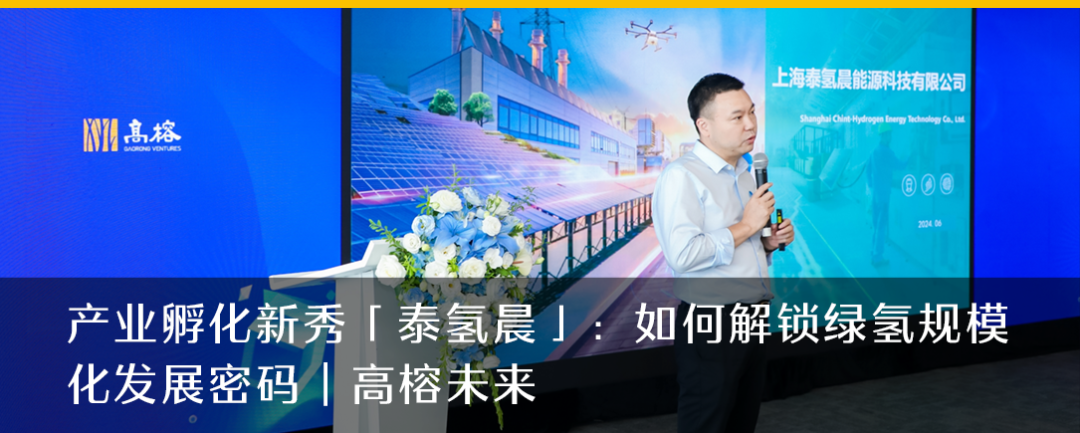
Gaorong Ventures participated in Vertilite's Series B round in 2018 and has continued to invest in subsequent rounds. Recently, at Gaorong Ventures' "Capital Acceleration Closed-Door Meeting & Pan-Tech Demo Day," Xiaochi Chen, co-founder and general manager of Vertilite, took us on a "tour" of the company's mass-production journey, revealing the continuous iteration and industrial mindset behind it.
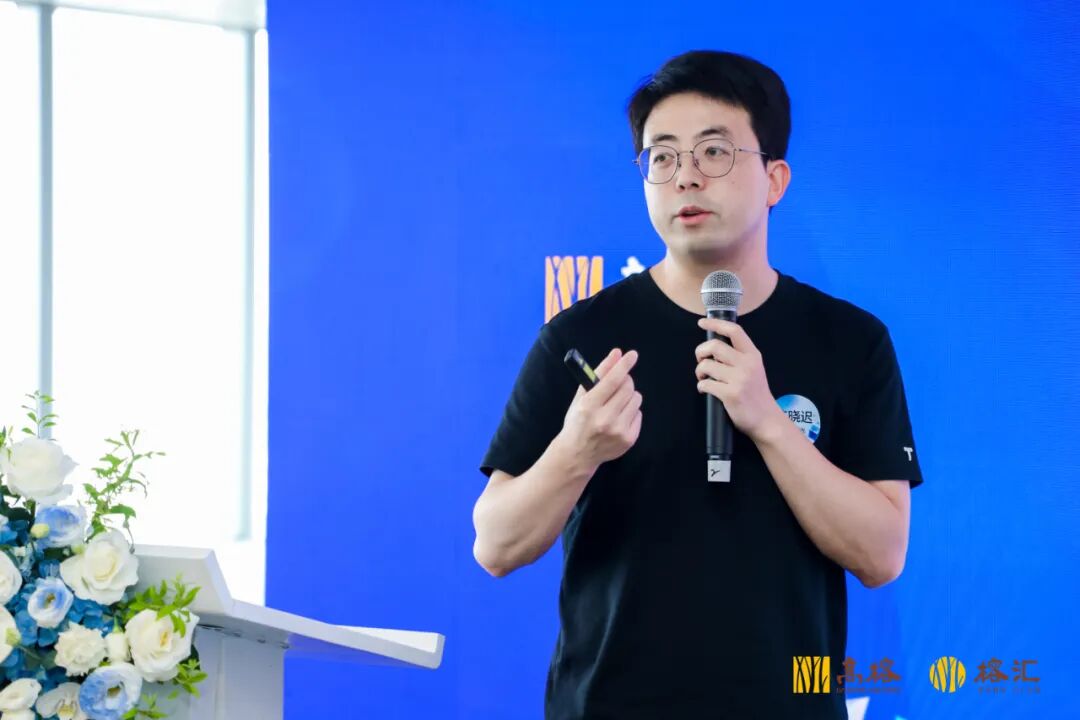
The following is Xiaochi Chen's presentation (edited):
Before 2017, VCSEL was a very niche optoelectronic chip. It wasn't until Apple introduced it in the "notch" — the Face ID feature — in 2017 that VCSEL entered the public consciousness.
As a semiconductor light source, VCSEL emits light perpendicular to the chip surface. The working principle is that the laser fires a beam at a target object, and by measuring the time difference between laser emission and capture of the reflected light, it calculates the distance to the target object; when many beams are fired, it can construct a 3D model of space.
Compared to other common semiconductor light sources like LEDs and EELs (Edge-Emitting Lasers), VCSEL is exceptionally well-suited for 3D sensing applications and has several core advantages. First, it's low-cost and can be tested at the 6-inch wafer level — meaning you can use probes for pre-shipment testing rather than cleaving the wafer and testing photoelectric performance from the edge. Second, it has high beam quality with minimal wavelength drift as temperature changes, which is very helpful for improving the signal-to-noise ratio of 3D sensors.
Historically, there were few VCSEL players because the technical barriers were high. From an epitaxial perspective, LEDs typically have around a dozen layers, EELs might have 20–40 layers, while VCSELs have 250–300 layers.
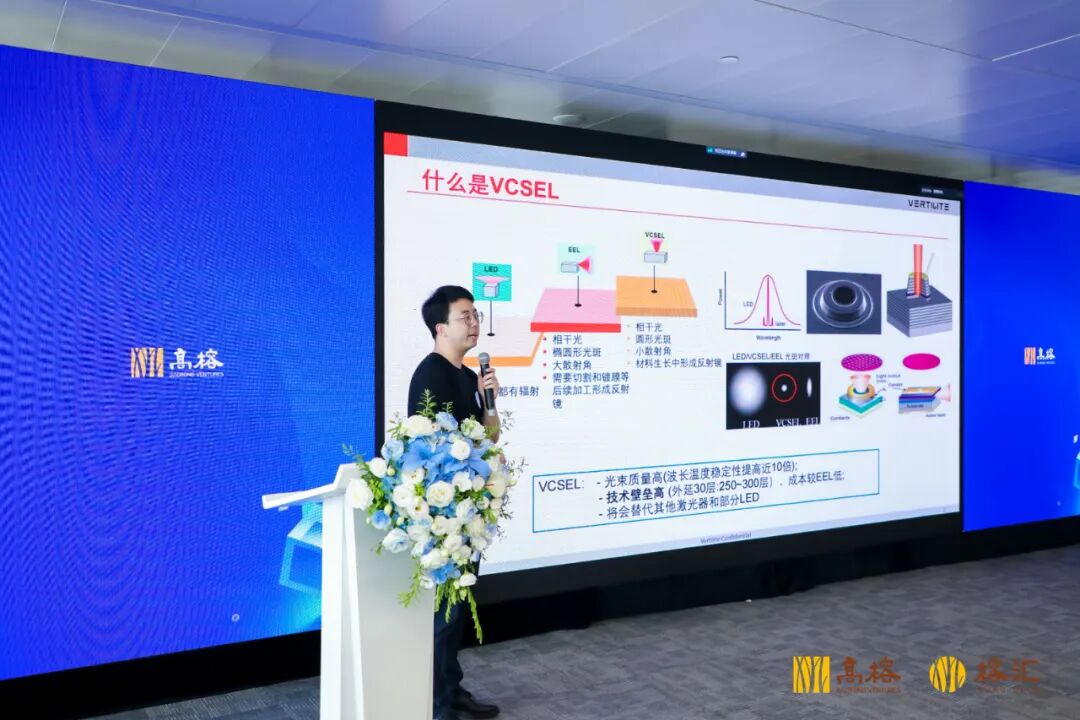
In recent years, VCSEL's market applications in consumer electronics, automotive electronics, and other fields have continued to expand, driven by advantages in cost, temperature stability, and beam quality.
In consumer electronics, VCSEL has been widely adopted in smartphones. For example, Apple's Face ID feature — every time you unlock your phone with facial recognition, 30,000 infrared light spots from a VCSEL are projected onto your face, creating a 3D map of the user's face for secure authentication.
VCSEL is also being integrated into rear-facing phone cameras. Features like Apple's LiDAR Scanner and Honor's Magic series laser radar array focusing system provide phones with fast, precise distance perception capabilities for spatial modeling, with future opportunities for AR/VR integration.
Beyond phones, robot vacuums now carry numerous VCSELs for obstacle avoidance or SLAM (Simultaneous Localization and Mapping) functions, allowing robots to navigate and clean autonomously in unknown environments. AR/VR headsets also widely use VCSELs — Apple's Vision Pro alone uses at least four, distributed across the LiDAR Scanner for spatial modeling, the TrueDepth Camera for facial recognition, and IR Illuminators for infrared fill lighting.
In recent years, as new energy vehicles have entered the second half of the intelligence race, VCSEL has risen to prominence in automotive electronics. The most familiar application is in-vehicle LiDAR — as more models adopt advanced driver-assistance systems (ADAS), using LiDAR for distance and obstacle perception has become the mainstream approach.

The second application scenario is DMS (Driver Monitoring System) and OMS (Occupant Monitoring System). DMS can identify driver fatigue states and driving behaviors and issue timely warnings, and 3D cameras only collect 3D data without privacy concerns. We believe DMS and OMS will become tied to driving safety in the future — for example, real-time monitoring of driver or passenger posture so that in the instant of a collision, airbags can adjust deployment direction or force based on seating position.
The third application is in-vehicle night vision illumination. During nighttime driving, infrared fill lighting can detect road conditions ahead and display them on the center console screen.
It's fair to say that VCSEL's applications in consumer and automotive electronics represent an inevitable trend. Because images have evolved from 2D to 3D — 3D gives both humans and machines more information; only with depth information on the Z-axis can more applications be realized. And once 3D sensing is involved, VCSEL is the best choice for the emitter.

Vertilite originated from Stanford University. Six co-founders, after graduation, worked at top-tier optoelectronics companies in Silicon Valley on VCSEL R&D and mass production. Later, we developed entrepreneurial aspirations, hoping to combine Silicon Valley's research capabilities and mass-production experience with domestic market advantages to develop and manufacture high-end optoelectronic chips and fill the gap in China's high-end optoelectronic chip sector.
We began our domestic development in 2017. From then until 2020, we focused on the consumer electronics sector, taking several years to thoroughly break through and establish a solid position there.
In 2018, when the team still numbered just over 30 people, we entered Huawei's supply chain based on the global scarcity of our technology and products — no easy feat — and achieved flawless delivery on Honor, P series, and Mate series phones. 2019 was Vertilite's true mass-production milestone year, with annual deliveries exceeding 10 million units.
Currently, in consumer electronics, Vertilite holds the top market share domestically and ranks among the global leaders. For domestic Android phones using VCSELs, Vertilite is essentially the sole or primary supplier; for leading robot vacuum brands, we're also basically the primary supplier; and Vertilite has begun collaborating with domestic AR/VR headset customers, with mass production expected this year.
From 2020 onward, Vertilite focused on automotive electronics. That year we obtained AEC-Q102 automotive qualification certification, passed IATF 16949 automotive certification in 2021, and began mass production and shipment of automotive products from late 2021. From initial batch delivery of DMS VCSELs, to batch delivery of infrared night vision VCSELs, to LiDAR project mass production starting in 2023. To date, Vertilite has secured design wins with more than six of the world's top ten LiDAR manufacturers, gradually bearing fruit, and ranks in the top two globally in automotive market share.
Compared to consumer electronics, LiDAR imposes entirely new requirements on VCSELs. These include better reliability; high beam quality; low cost; and sufficiently high optical power density to see far enough. We've also developed corresponding VCSEL products based on different LiDAR technical approaches — semi-solid-state, fully solid-state 1D/2D scanning, Flash, and others.
In fact, before 2020, light sources used in LiDAR included EELs, fiber lasers, and VCSELs. It was only after this that leading LiDAR players gradually shifted their technical roadmaps toward VCSEL. The reason was that VCSEL previously had a major shortcoming: insufficient optical power density, limiting it to consumer electronics applications with perception ranges under 10 meters.
From 2020 to 2022, after three years of effort, Vertilite made its contribution to the LiDAR field, developing multi-junction VCSEL and narrow-angle VCSEL technologies, enabling VCSEL to be applied in LiDAR for long-distance perception of 200 to 300 meters.
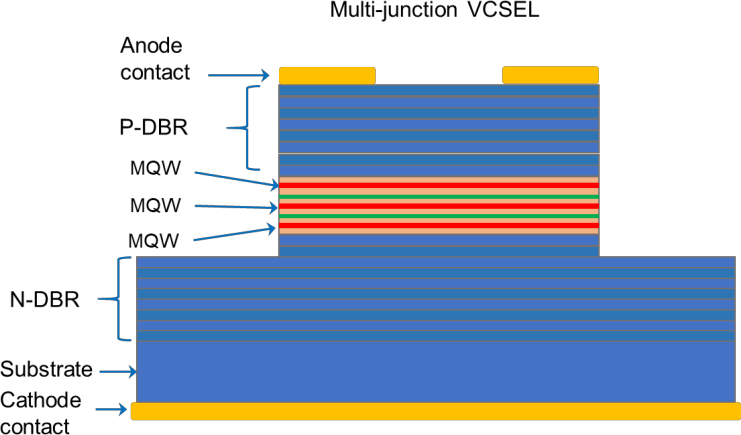
Multi-junction VCSEL essentially connects multiple PN junctions in series at the epitaxial level, achieving optical power density 3x, 5x, or even now hundreds of times greater than before within the same chip area, thereby enabling long-distance perception. This was a major breakthrough in the LiDAR industry, and consequently gave VCSEL the opportunity for extensive application in LiDAR.
To date, Vertilite is the only domestic VCSEL supplier simultaneously in mass production for both smartphones and automotive LiDAR, with cumulative chip shipments exceeding 200 million — equal to the sum of all other domestic VCSEL manufacturers combined — and expected to surpass 300 million by year-end.
More importantly, we maintain zero field failures. The real challenge of VCSEL isn't making one or two chips, but how to repeatedly produce millions, tens of millions, hundreds of millions of chips while maintaining performance consistency, high reliability, and longevity. Currently, there are no more than five global players who can truly achieve this.
How do we do it? It fundamentally stems from our constant guidance by mass-production and industrial thinking, and our establishment of a mature supply chain with autonomous design and proprietary production lines for core segments, ensuring R&D iteration speed and continuity of mass-production supply.
At the design level, we insist on autonomous design from upstream to downstream; we have our own 6-inch epitaxial production line capable of 2,000 6-inch gallium arsenide epitaxial wafers per month; for chip fabrication, we currently have sufficient capacity at outsourced foundries and are planning proprietary production lines; and we maintain our own complete packaging production line.
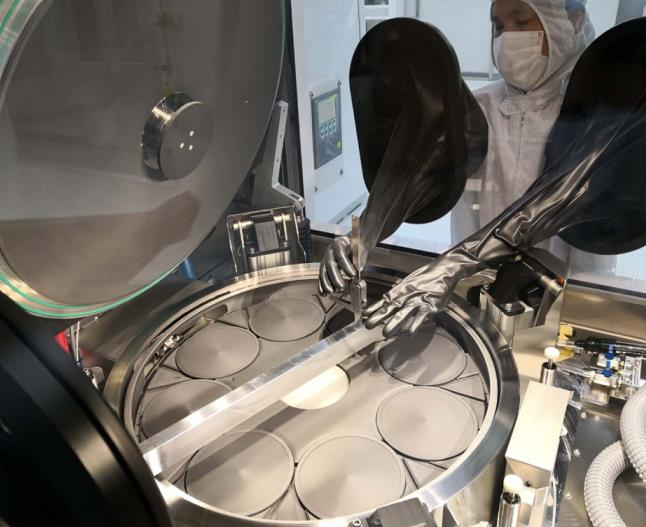
Among these, the proprietary 6-inch epitaxial and packaging/testing lines are particularly critical. For VCSEL optoelectronic chip processes, materials matter more, so epitaxy essentially determines 70% to 80% of VCSEL performance and reliability.
Additionally, we work with customers on module and algorithm adaptation, accumulating substantial experience during early mass-production introduction.

From returning to China to start the business in 2017 to now, filling the gap has been achieved; today our mission is more about competing with ourselves, hoping to achieve further breakthroughs in VCSEL cost, performance, and reliability, and to enable applications in more fields.
Facing market competition, on one hand we must achieve absolute technological leadership; in the long term we must also reduce costs and increase efficiency — through yield improvement and design-side cost reduction — to give us sufficient cost advantages.
It's worth noting that VCSEL applications in optical communications are rapidly exploding. With the surge in AI large models, exponentially rising demand for computing, data, and bandwidth has generated massive demand for multi-mode optical modules. Market forecasts project 2024 total demand for 800G optical modules at 5 to 6 million units.
Optical communications is also a market sector that Vertilite plans to focus on over the next 3–5 years, aiming to leverage our experience in technology, engineering, and products to "hit the mark on the first try" and capture market share.
Vertilite achieved sales of 50G PAM4 VCSEL chips in 2023. Currently, 100G PAM4 VCSEL sample specifications are aligned with international leading manufacturers, with spectral width metrics superior to international leaders — beneficial for longer-distance signal transmission — and we are rapidly advancing mass production to meet the fast-growing AI market demand.
In the long term, we hope to develop Vertilite into a platform company with numerous optoelectronic chip product lines. Beyond gallium arsenide-based VCSEL chips, we plan to develop indium phosphide-based DFB (Distributed Feedback Laser), EML (Electro-absorption Modulated Laser), and other optoelectronic chips. We believe we have the opportunity and capability to compete in international markets and achieve even greater progress.