Rongbao · June | BOSS Zhipin and Dingdong Maicai successfully go public; medical, industrial upgrade, and chip companies close new funding rounds

Xingji, Dongjing Yiwan, Qitan Technology, and other companies have completed new funding rounds.

About Gaorong Post: Gaorong Post is a monthly digest curating notable updates and insights from Gaorong Ventures and its portfolio companies.
Each issue features ten items — spanning not just major funding news and milestones, but also emerging trends, new innovations, and fresh perspectives.
Aligned with Gaorong's vision of "creating a better life through innovation," we believe every step forward unlocks infinite possibilities.
Enterprise Services · BOSS Zhipin, China's Largest Online Recruitment Platform, Lists Successfully
On June 11 Beijing time, China's largest online recruitment platform BOSS Zhipin officially debuted on Nasdaq under the ticker symbol "BZ."
Gaorong Ventures participated as a lead investor in BOSS Zhipin's Series C round in 2016, and continued to invest in subsequent rounds.
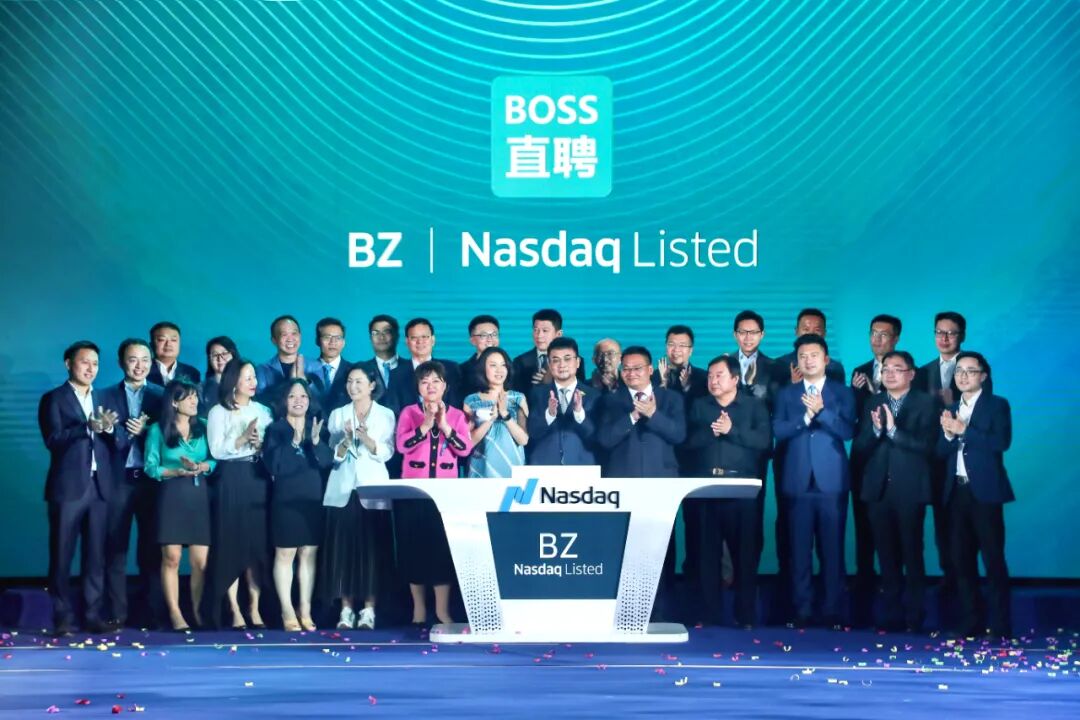
Since its founding, BOSS Zhipin has focused on addressing the pain point that SMEs and the vast long-tail of job seekers have been underserved by existing recruitment services. Through its industry-pioneering direct-hire model, the company has improved efficiency for both employers and candidates. The model is mobile-first, built on intelligent matching, and enables direct chat between job seekers and company representatives.
BOSS Zhipin's average MAU reached 19.8 million in 2020, up 73.2% year-over-year from 2019. By March 2021, MAU had further climbed to 30.6 million. In terms of average mobile MAU growth in 2020, BOSS Zhipin was the fastest-growing company among China's top five online recruitment platforms.
Revenue primarily comes from online recruitment services for enterprise clients. In the twelve months ended March 2021, BOSS Zhipin served 2.89 million paying enterprise customers. In 2020, revenue reached 1.94 billion yuan, up 94.7% year-over-year; in Q1 2021, revenue hit 790 million yuan, up 179.0% year-over-year.
The prospectus indicates that proceeds will be used to expand investment in recruitment technology infrastructure and R&D, upgrade AI and other recruitment-related technical capabilities, and develop new products and services for broader geographic and user segments.
Fresh Retail · Dingdong Maicai Lists Successfully, China's Fastest-Growing Instant E-Commerce Platform
On June 29 Beijing time, Dingdong Maicai — a leading domestic instant e-commerce platform and the fastest-growing in its category — officially listed on the NYSE under the ticker symbol "DDL."
Gaorong Ventures invested in Dingdong Maicai in May 2018, becoming its earliest investor and the sole investor in its first two funding rounds, with continued participation in subsequent rounds.

Founded in May 2017, Dingdong Maicai is committed to upgrading the fresh food supply chain through technology. Its model combines direct sourcing from origins, front-warehouse fulfillment, and delivery as fast as 29 minutes, delivering consumers quality, speed, and selection. As of Q1 2021, the company served 29 cities including Shanghai, Beijing, Shenzhen, Guangzhou, and Hangzhou, operating 40 city-level sorting centers and 950 front warehouses.
Full-year 2020 revenue reached 11.336 billion yuan, surging 192.15% year-over-year. From 2018 to 2020, GMV grew from 742 million to 13.032 billion yuan, representing a compound annual growth rate of 319.2%. According to CIC data, this growth rate ranked first among China's top five instant e-commerce platforms.
Per the prospectus, IPO proceeds will primarily fund market expansion, upstream supply chain development, and technology R&D. The company will continue advancing direct sourcing, optimizing intelligent supply chain capabilities, and leveraging consumer operations and big data analytics to improve both supply chain and consumer-facing service quality at scale — ensuring consistency in quality, timing, and product assortment.
Healthcare · Qitan Technology Closes Over 400 Million Yuan Series B, Leading Nanopore Gene Sequencing
On June 8, Qitan Technology announced a Series B round exceeding 400 million yuan, co-led by Hillhouse Venture Capital and CDH VGC (Innovation and Growth Fund), with participation from multiple new and existing shareholders. Gaorong Ventures had led Qitan's Series A in 2020 and continued to invest in this round.
Founded in 2016, Qitan Technology specializes in the independent R&D, manufacturing, and application development of nanopore single-molecule gene sequencers and supporting reagents and chips. Its domestically developed nanopore gene sequencer — the first of its kind in China — is planned for mass production within the year. Upon launch, Qitan will become the only domestic company and the second globally to reach commercial application of fourth-generation gene sequencing technology, breaking foreign monopoly over single-molecule gene sequencing core technology.
Qitan's technical approach employs nanopore strand sequencing, the frontier of gene sequencing technology. Its R&D team accomplished in four years what took foreign competitors nearly a decade, delivering a working prototype in 2020. The company has established a complete pipeline from research to commercial application, with full independent intellectual property across protein engineering, microfluidic chips, signal processing electronics, and software algorithms.
Compared to previous generations, nanopore gene sequencers offer significantly lower barriers to entry, more granular application scenarios, and faster detection speeds. Precision diagnosis of infections, genetic disease and tumor variant detection, and forensic applications represent ideal initial markets.
Going forward, Qitan will increase R&D investment and accelerate industrialization, evolving toward an upstream platform model that provides core instruments and consumables to enable downstream ecosystem development around fourth-generation sequencing technology.
Industrial Upgrade · Packaging Industry Internet Platform Dongjing Yiwan Closes 250 Million Yuan Series B+
In June, Dongjing Yiwan — a leading packaging industry internet platform and digital solutions provider — announced a 250 million yuan Series B+ round led by Gaorong Ventures. Proceeds will fund further technology development, business expansion, brand building, and team development.
Dongjing Yiwan is the packaging industry internet platform of Zhejiang Dongjing Technology, founded in 1994 with 27 years of packaging enterprise management experience and 22 years of packaging industry IT development. The platform introduces internet technology, industrial big data, and intelligent manufacturing to traditional packaging, offering full-process, digital, and intelligent services across the packaging value chain. By connecting online and offline, it effectively links supply and demand with supporting resources throughout the chain, eliminating cost and efficiency black holes to reduce costs, improve efficiency, and create value for SME packaging companies.
As of end-May 2021, Dongjing Yiwan had served over 30,000 paper packaging enterprises and upstream/downstream supporting companies, with full coverage of Zhejiang Province and accelerating expansion into national markets.
Going forward, Dongjing Yiwan will focus on user needs and industry pain points to develop more practical digital solutions and comprehensively drive digital transformation in the paper packaging industry.
Semiconductors · EDA Digital Implementation Solutions Provider Xingji Closes Hundreds of Millions in Pre-A Round
On June 7, EDA digital implementation solutions provider Xingji announced a Pre-A round of hundreds of millions of yuan, co-led by Gaorong Ventures, HSG, Pine VC, and Yunhui Capital, with ZhenFund also participating.
Xingji focuses on digital implementation EDA innovation and premium digital chip design services, integrating rapidly advancing machine learning and distributed computing technologies to reconstruct next-generation digital implementation EDA architecture. The company aims to substantially improve chip design efficiency while continuously optimizing performance, power, and area — ultimately accelerating the rapid iteration of intelligent end-products.
The company will build upon its world-class R&D team to attract additional top talent and experts in emerging technologies, sustaining innovative development and accelerating commercialization of next-generation digital implementation EDA products to support partners in AI, intelligent vehicles, 5G, cloud computing, and other IC sectors.
AI · Zhuiyi Technology Secures New Strategic Investment to Deepen AI and Empower Industrial Digital Intelligence
In June, leading Chinese AI company Zhuiyi Technology announced a strategic investment of hundreds of millions of yuan from China Internet Investment Fund and China Mobile Innovation Industry Fund, with Gaorong Ventures and 5Y Capital also adding to their investments. Gaorong had led Zhuiyi's Series A in 2016 and participated in subsequent rounds.
The strategic funding will primarily support core AI technology and product R&D, emerging business and market expansion, and industrial ecosystem partnerships.
Over five years, Zhuiyi has built on leading natural language processing and multimodal technologies to develop conversational and analytical AI applications, creating a dialogue and analytics AI platform and AIForce digital worker product suite for enterprise marketing, sales, service, and operations scenarios.
Zhuiyi has become a leading AI service provider in finance, telecommunications, and government sectors, serving over 300 benchmark clients with top-client renewal rates well above 100%.
Going forward, Zhuiyi will continue exploring the breadth and depth of intelligent interaction and analytics applications, including integrating its platform and AIForce products into WeCom service and marketing to build full-chain intelligent solutions spanning customer acquisition, management, service, marketing, and analytics. For 5G-era video interaction, its multimodal digital human solutions enable more efficient and personable experiences. The company is also beginning to export its advanced AI products and capabilities globally.
Enterprise Services · Cross-Border E-Commerce Platform Dianxiaomi Acquires 17TRACK to Accelerate Global Expansion
On June 30, one-stop cross-border e-commerce service platform "Dianxiaomi" announced the completion of its full acquisition of 17TRACK, a leading global logistics tracking service provider.

The acquisition will connect logistics tracking channels between hundreds of thousands of sellers and hundreds of millions of overseas consumers, making seller operations more convenient while improving the end-consumer shopping experience. It also supports Dianxiaomi's strategy of building a richer product matrix atop its platform-level ERP system, addressing more industry pain points and expanding its global e-commerce services footprint.
In early June 2021, Gaorong Ventures led Dianxiaomi's Series B+ round.
Founded in 2014, Dianxiaomi is a global leading e-commerce IT services company providing one-stop SaaS services for online sellers. Its products include the free cross-border e-commerce ERP "Dianxiaomi ERP," Amazon refined operations system "Saihu," Southeast Asia local e-commerce ERP "BigSeller," domestic shared warehouse "Xiaomi Cloud Warehouse," and global logistics tracking platform "TrackDog." The company is actively expanding globally and exploring diverse seller service needs to make global business more efficient.
17TRACK is one of the leading logistics tracking service providers for cross-border e-commerce, offering one-stop package tracking services to sellers and consumers in over 220 regions worldwide. Combined app installs and web registered users exceed 36 million, with over 8 billion queries in 2020.
AI · Qiyuan Intelligence Wins CVPR 2021 Habitat Challenge in Robot Visual Navigation Without Localization
In June 2021, Qiyuan World's robotics team won first place in the Habitat Challenge 2021 with PointNav at CVPR 2021, defeating AI teams from Facebook AI, National University of Singapore, and other top institutions. The team effectively solved the problem of autonomous robot indoor navigation without localization.
Habitat Challenge 2021 with PointNav, hosted by Facebook AI for its second year, operates in the Habitat simulation environment developed by Facebook AI. In the challenge, AI controls the LoCoBot robot to navigate to target points — specified relative to the starting position — using only RGB and depth camera inputs without additional localization.
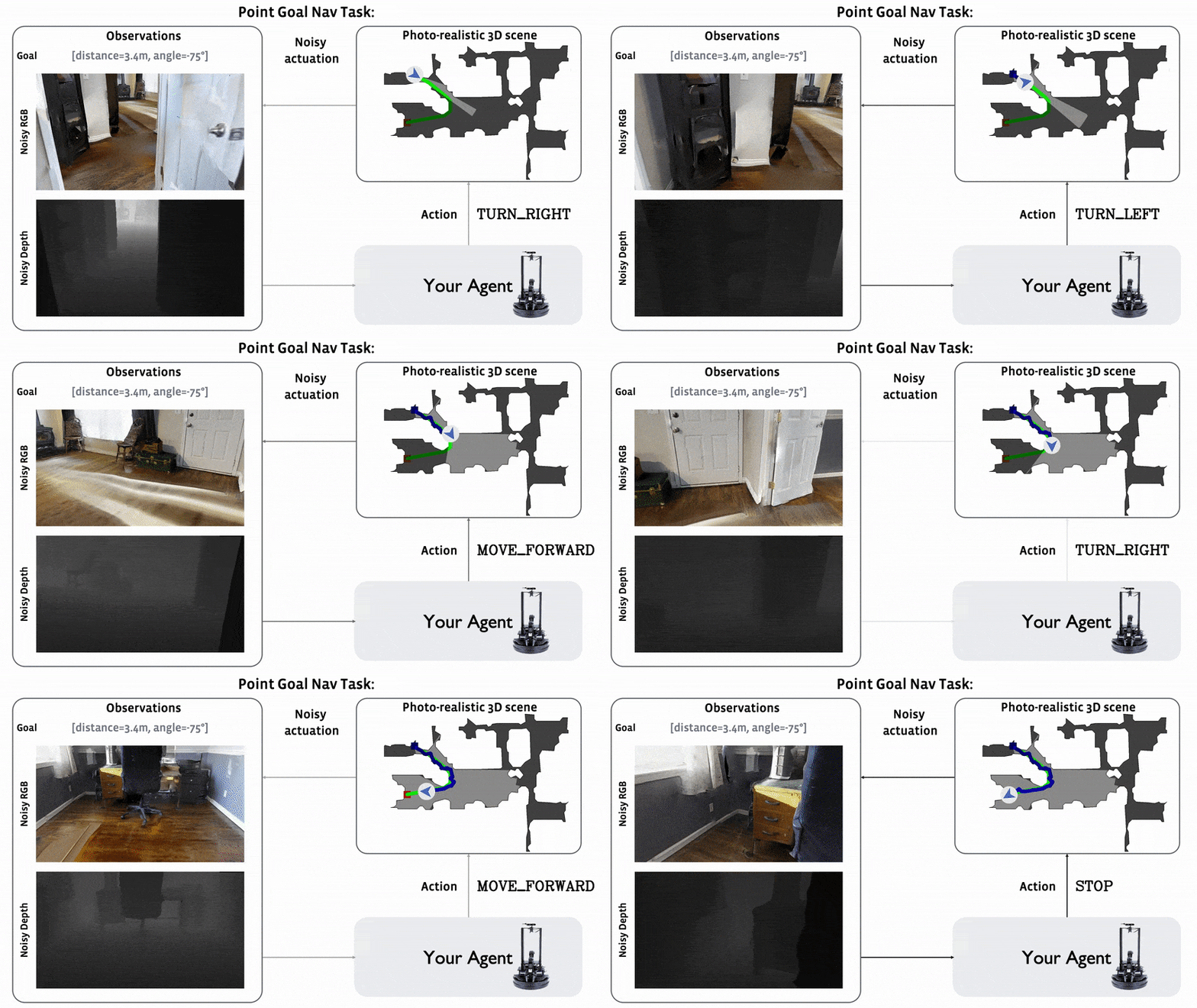
Qiyuan World trained the entire neural network end-to-end on its autonomous large-scale intelligent agent training cloud. Through reinforcement learning-based exploration, it generated sufficiently rich data for localization, ensuring the navigation policy was familiar with localization network characteristics. This ultimately yielded action sequences that could localize accurately while following shortest paths. Continuous training then improved neural network localization and navigation capabilities, ensuring stable and efficient performance during competition.
Founded in August 2017, Qiyuan World is a global leading AI platform company creating intelligent agents with self-learning, self-decision-making, and self-evolving capabilities. It aims to bring intelligent agents to every industry, every home, and every person — enhancing industrial efficiency and life experiences.
Qiyuan World noted that using only "eyes" for localization and navigation is instinctive for many animals. Through the Habitat Challenge 2021 with PointNav, the company advanced AI significantly toward comparable capabilities. It will continue innovating in autonomous robotics and accelerating technology commercialization.
Robotics · Flexiv Unveils Self-Developed General AI System "NOEMA"
On June 7, Flexiv officially released NOEMA, a self-developed general AI system. NOEMA is a cloud-edge-end collaborative general intelligent robot brain for all industries, capable of AI algorithm research and application product development based on multi-modal robot perception including vision, force, and touch. It represents the technical evolution foundation for intelligent general-purpose embodied agents.
The NOEMA system is knowledge-driven, with active and passive full-perception capabilities for visual, force, and auditory signals. It features a built-in knowledge engine that directly guides operations, along with advanced task programming frameworks and AI algorithms.
In operation, NOEMA completes parsing, judgment, learning, and deployment of complex tasks through its five functional modules: task compiler, perception module, knowledge engine, execution module, and central processor.
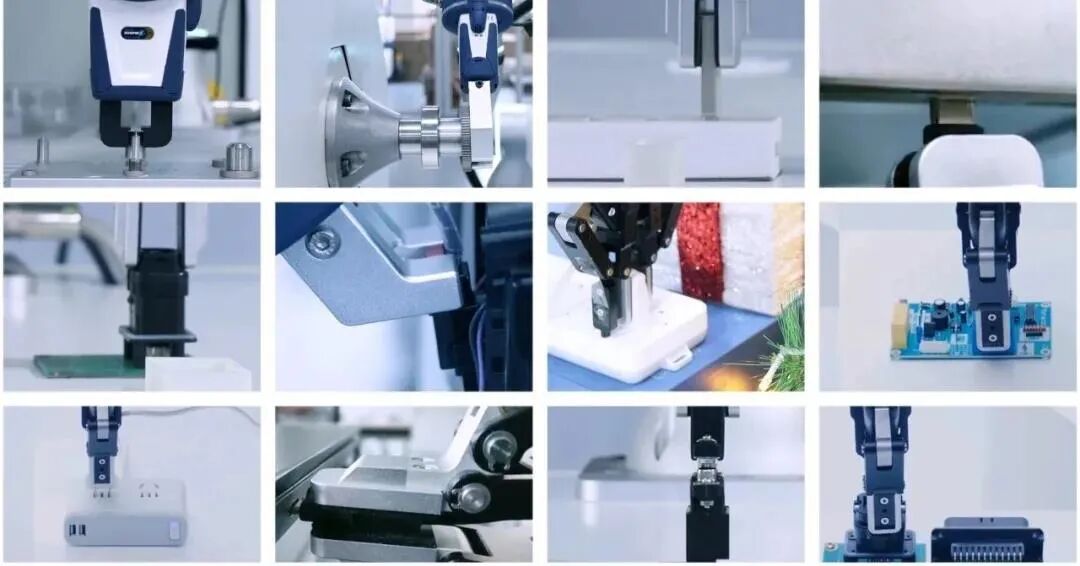
NOEMA features strong transferability, maintaining accuracy, success rates, and operational efficiency while achieving high generality. Consequently, its comprehensive learning cost (measured by AHCR) declines continuously over time.
The system already integrates numerous leading algorithms including complex pose estimation, point cloud semantic segmentation, one-shot learning, state-of-the-art general object grasping, force perception fusion, force feedback learning, and human body analysis. With its algorithm and model library updating rapidly, NOEMA will create more possibilities for robots to deliver value across manufacturing, healthcare, agriculture, services, and home applications.
Perspectives · Exploring Multi-Level Capital Markets and Innovative Anhui; Learning Major Account Sales and Iron Triangle Mechanisms at Huawei
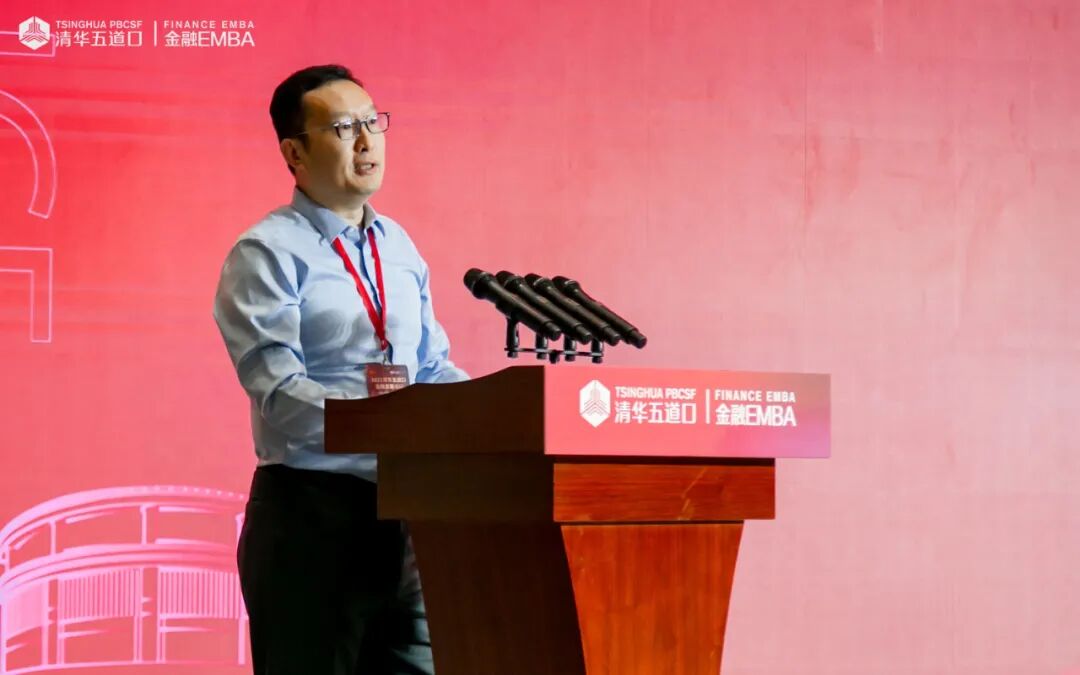
On July 3, the 2021 Tsinghua PBCSF Financial Development Forum convened in Hefei, Anhui Province. Themed "Multi-Level Capital Markets and Innovative Anhui," the forum gathered over 200 experts, scholars, and entrepreneurs from government, business, and academia to discuss Anhui's economic development and "Three Lands, One Zone" construction under China's new development paradigm. Liao Li, Executive Vice Dean of Tsinghua University PBC School of Finance and Dean of Tsinghua University Institute of Fintech, delivered opening remarks on behalf of the organizer. Wang Qingxian, Governor of Anhui Province, and Bao Xinhe, President of University of Science and Technology of China and Academician of the Chinese Academy of Sciences, attended and addressed the forum.
Chang Chen, Founding Partner of Gaorong Ventures and alumnus of Tsinghua PBCSF's EMBA program, shared perspectives in the keynote session on "Leveraging Multi-Level Capital Markets to Support Anhui's Innovation and Emerging Industries." He noted that innovation requires a complete and supportive ecosystem, and that hard tech enterprises with technological moats will achieve substantial development amid China's push to build a world leader in science and technology. On these companies' innovation journeys, government, finance, markets, and universities will increasingly coordinate to provide greater support across industrial chains, capital chains, innovation chains, and talent chains.
On June 17, the 2021 Gaorong To B Growth Camp visited Huawei to study major account relationship management, sales project operations management, and the iron triangle collaboration mechanism. Zhang Shengxing, former Vice President of Huawei's South Pacific Region and Huawei advisor, shared Huawei's customer relationship management processes and sales project operations mechanisms based on the evolution of Huawei's sales model.
Zhang Shengxing highlighted that the greatest insight from Huawei's "iron triangle" is unified goals and collaborative operations. By taking end-to-end responsibility from opportunity identification to contract fulfillment, the model eliminates disconnects between functional departments, improves contract quality, and aims to achieve both efficient process-based operations and high project profitability through shared KPIs and working as one integrated unit. Moreover, the iron triangle is not merely a front-end mechanism but effectively drives and influences organizational transformation. Through small front-ends and large platforms, tactical resources stay close to the front lines while strategic resources are centrally shared.