A Playbook for Billion-Dollar Drug Development: Navigating Uncharted Waters and Making Landfall | Ronghui

From Prozac to Gleevec — how to persevere on the long and winding road.
The journey of new drug discovery has never been a smooth one. Behind the discovery of blockbuster drugs throughout history lies both the inevitability born from countless scientists' relentless research and the serendipity of fortunate breakthroughs. So what experiences and critical decisions can increase the probability of success in drug development? When selecting drug targets, how should one approach strategic and tactical planning?
Recently, Gaorong Ventures and The Paper's STAR Market Daily co-hosted "Into BioBAY — Braving the Frontier of Medical Innovation," a biopharmaceutical industry event. At the event, Dr. Yanping Xu, Senior Vice President of R&D at Sironax, shared his reflections on new drug development, drawing on over 20 years of scientific and leadership experience at global biopharmaceutical companies.
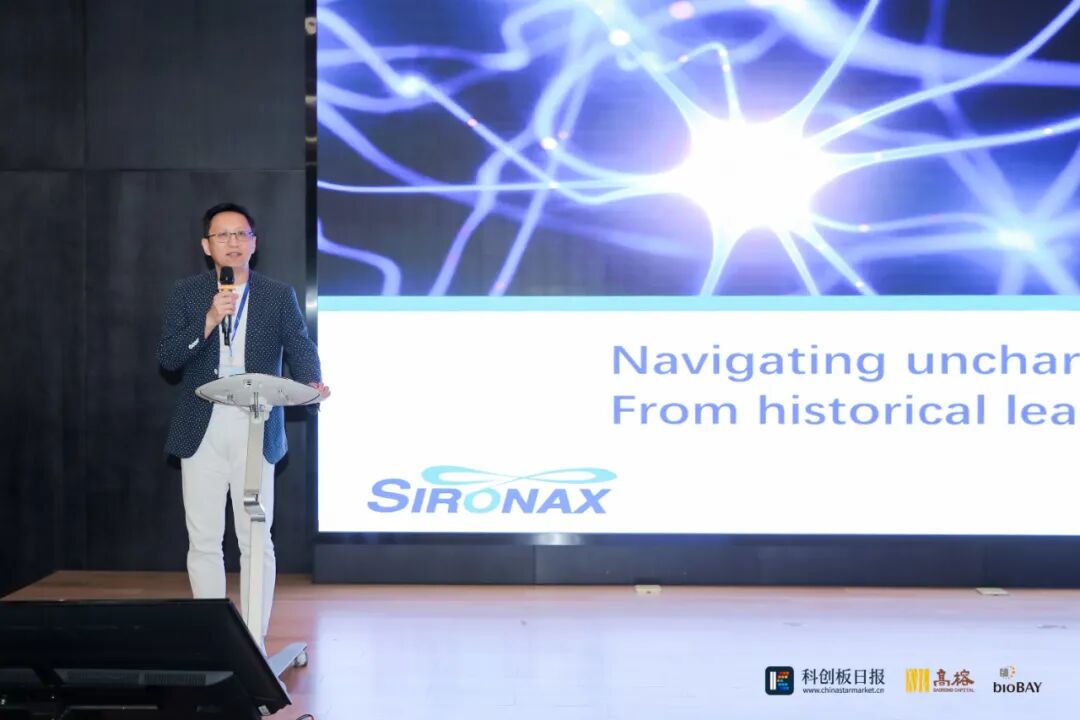
Sironax is dedicated to discovering and developing innovative therapeutics for age-related degenerative diseases on a global scale. Gaorong Ventures co-led Sironax's Series B financing in 2022.
As a seasoned drug hunter, Dr. Yanping Xu has a proven track record of leading multidisciplinary project teams in small-molecule drug discovery. Before joining Sironax, he served as Head of Medicinal Chemistry at Janssen Shanghai; prior to that, he spent 20 years at Eli Lilly and Company, holding positions as Senior Organic Chemist, Director of Discovery Chemistry Research and Technologies, and Research Advisor.
The following is his presentation (edited for clarity):
There is a line in an ancient Roman epic: "Through chances various, through all vicissitudes, we make our way." This applies not only to investors but also to first-in-class biotech startups — a reminder that "through fortune and adversity, through rise and fall, we press on undeterred."
From the development journeys of two transformative first-in-class drugs — Eli Lilly's Prozac and Novartis's Gleevec — we can learn how to advance drug development amid profound uncertainty, what critical decisions to make along the way, and what lessons to heed.

Lessons from Two Blockbuster Drugs: Critical Decisions in Drug Development
Prozac: Insights from Surviving Multiple "Crises"
Prozac (fluoxetine hydrochloride) was a truly life-changing, transformative drug in the treatment of depression. Even today, more than 30 million prescriptions are written for it annually in the United States. Fluoxetine is a selective serotonin reuptake inhibitor (SSRI) antidepressant that works by inhibiting the reuptake of the neurotransmitter serotonin by synaptic cells, thereby increasing extracellular serotonin levels available to bind to postsynaptic receptors.
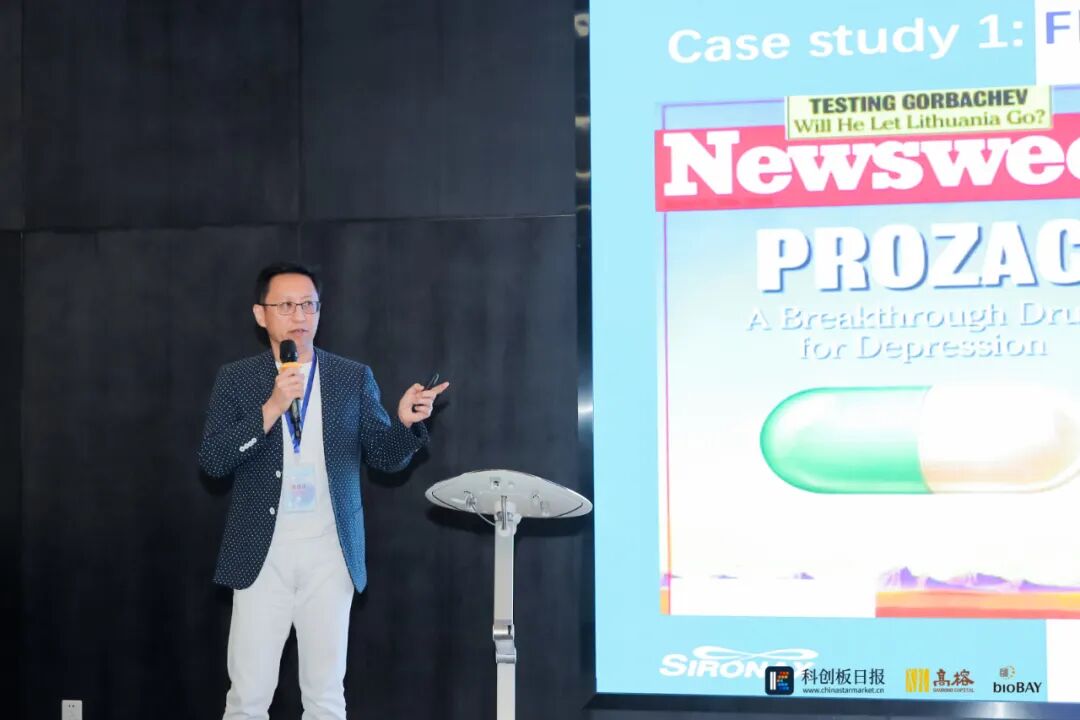
But looking back at Prozac's development journey, to quote its principal inventor David Wong, "it was a very long, winding, and bumpy road." The process weathered several crises from which young biotech companies can draw lessons.
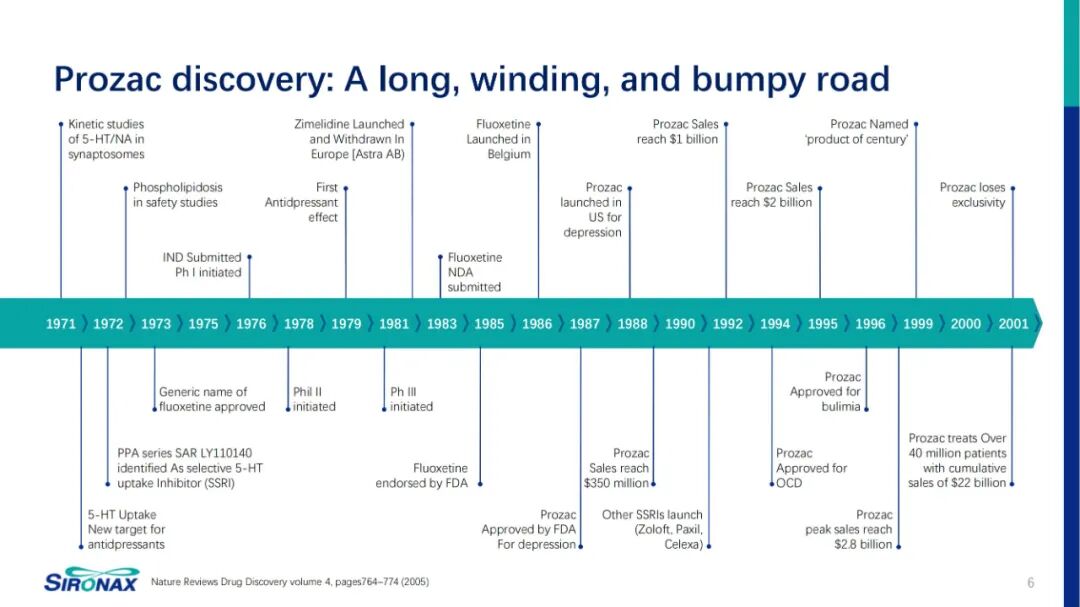
Flash back to the 1970s: in preclinical models, fluoxetine failed to produce tricyclic antidepressant (TCA)-like behavioral effects, casting doubt on this approach. In fact, TCAs operate through different mechanisms of action. Fortunately, biomarker studies demonstrated that this pathway played an important role in depression. The first lesson: early biomarker assessment using human samples deserves attention in drug development.
Later, during toxicology studies, animals were found to exhibit intracellular phospholipid accumulation after dosing. In reality, phospholipidosis does not always cause adverse toxic effects in humans. This suggests that translation from animals to humans requires care, because animal models are far from perfect.
Moving into Phase II clinical trials, scientists found that the drug showed no significant efficacy in a small cohort of depressed patients. Frustrated, they consulted further and discovered that many of these patients had also failed to respond to other antidepressants. Patient selection in clinical trial design is critical.
Finally, in drug development, "luck" is also "part of the game." At the time, a competing product, Zelmid, caused rare side effects including flu-like syndrome; fortunately, fluoxetine did not share this liability. It was not until 1988 that fluoxetine was launched in the United States under the name "Prozac."
Gleevec: 40+ Years of Solid Basic Science Enabled Rapid Market Entry
The other revolutionary drug, Gleevec (imatinib), treats Philadelphia chromosome (BCR-ABL)-positive chronic myeloid leukemia (CML). It ushered in a new era of targeted cancer therapy, raising five-year survival from 30% to 89%, with 98% of patients showing significant hematological responses after five years. The drug reached $1 billion in sales within two years of launch.
From the 1960 discovery of the Philadelphia chromosome in CML patients to the drug's market approval, more than 40 years elapsed. It was 30 years of solid foundational scientific research, plus over a decade of drug discovery, that ultimately enabled the drug to advance rapidly from clinical trials through FDA approval in just three years.
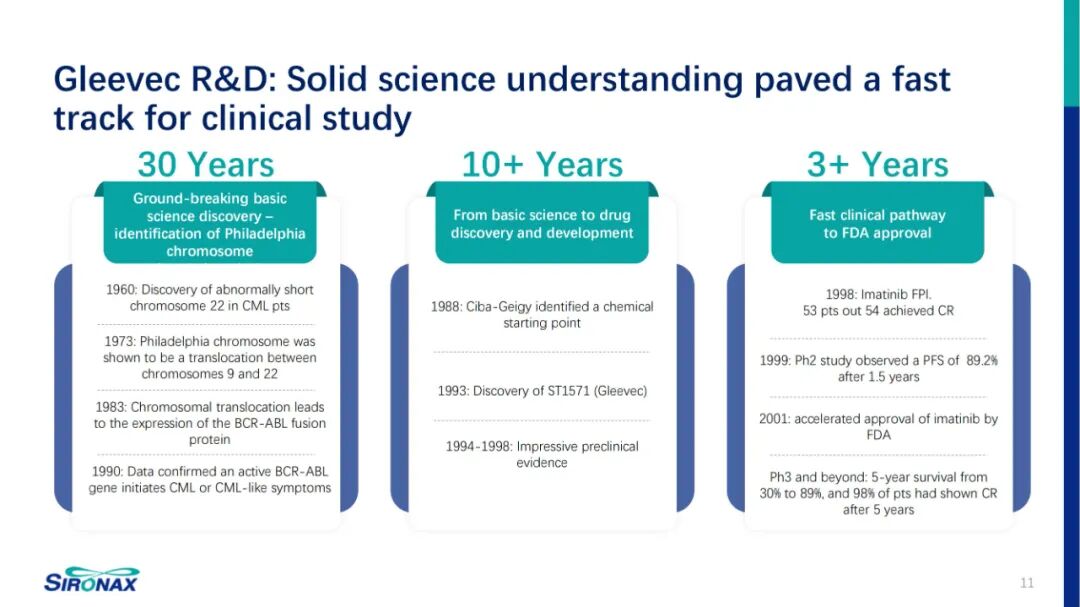
Initially, Novartis hesitated to greenlight the project, believing the target patient population was limited, and Gleevec's selectivity and targeted approach were seen as market disadvantages. But once patients began taking the drug, survival rates proved remarkably long, completely transforming the market landscape. This prompts us to reflect on the original purpose of developing new drugs: ultimately, patient needs come first.
Gleevec's path to development was not without obstacles. Early clinical trial recruitment progressed slowly; it was extraordinary Phase I data that convinced physicians to accelerate patient enrollment. Former Novartis Chairman and CEO Daniel Vasella, assessing the team behind Gleevec, said, "I can only admire their imagination, dedication, and perseverance."
Strategy and Tactics: A Field Guide to Drug Target Selection
When selecting a new drug target and initiating a project, we need to ask the right questions — including:
- Is the target biologically compelling?
- When others cannot succeed, can our technology?
- Do we have sufficient execution capability to carry out the plan?
- Can we demonstrate value to patients as early as possible?
- Is the market demand real?
Beyond this, several core issues merit consideration. Especially for startup biotechs, we must constantly remind ourselves: are we doing something truly meaningful, or merely something that makes us feel good? Do less of what makes you feel good; do more of what creates value.
- See the patient's need
- Put it into practice
- Minimize losses wherever possible
- Stay vigilant against risk
- Make the drug wanted, not sold
At the strategic level, traditional target selection typically proceeds from scientific publication to discovery of molecular mechanism to identification of disease-associated genetic variants. Drawing on the cases discussed above, this process often encounters these challenges: first, translatability; second, the need for appropriate preclinical models; and third, distinguishing disease association from causation.
Fortunately, advances in technology have brought us to a new stage in target discovery. First, our understanding of biology has deepened, including continued discoveries in genomics, functional genomics, and multi-omics. Second, for target validation, we now have in vivo models using genetic engineering or advanced tissue culture techniques, and in vitro models using primary cells. Finally, our toolbox has expanded, broadening therapeutic modalities to include cell and gene therapies, siRNA, PROTAC, and novel antibodies and other biologics.
Sironax: Developing Innovative Therapeutics for Age-Related Degenerative Diseases
Sironax is dedicated to discovering and developing innovative therapeutics for age-related degenerative diseases on a global scale.
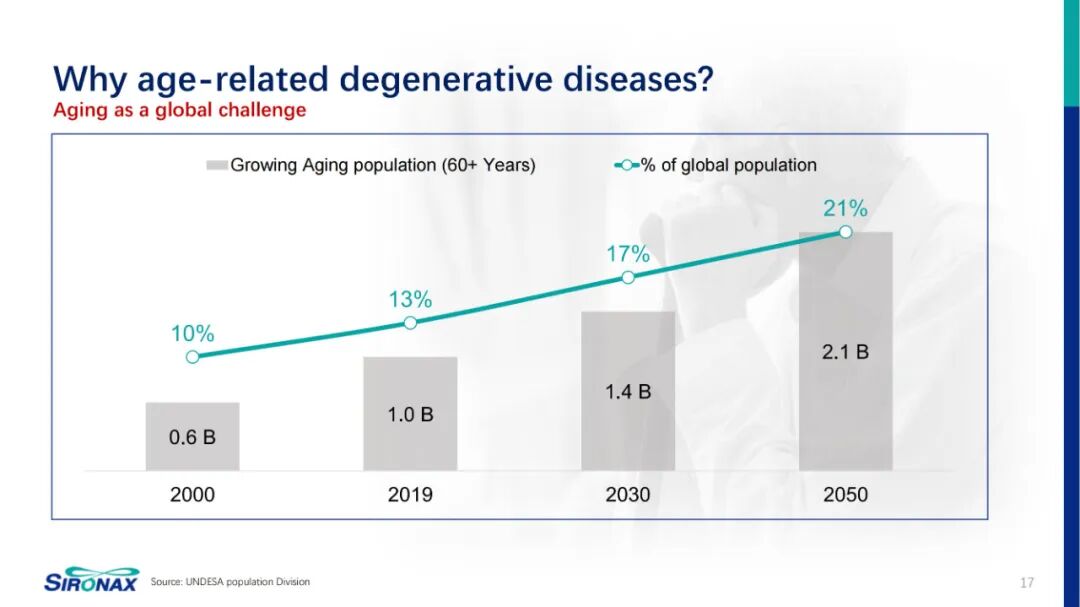
Why focus on this area? Because we see aging as a global challenge. By 2030, the global population aged 60 and above is projected to reach 1.4 billion, accounting for 17% of the total population.
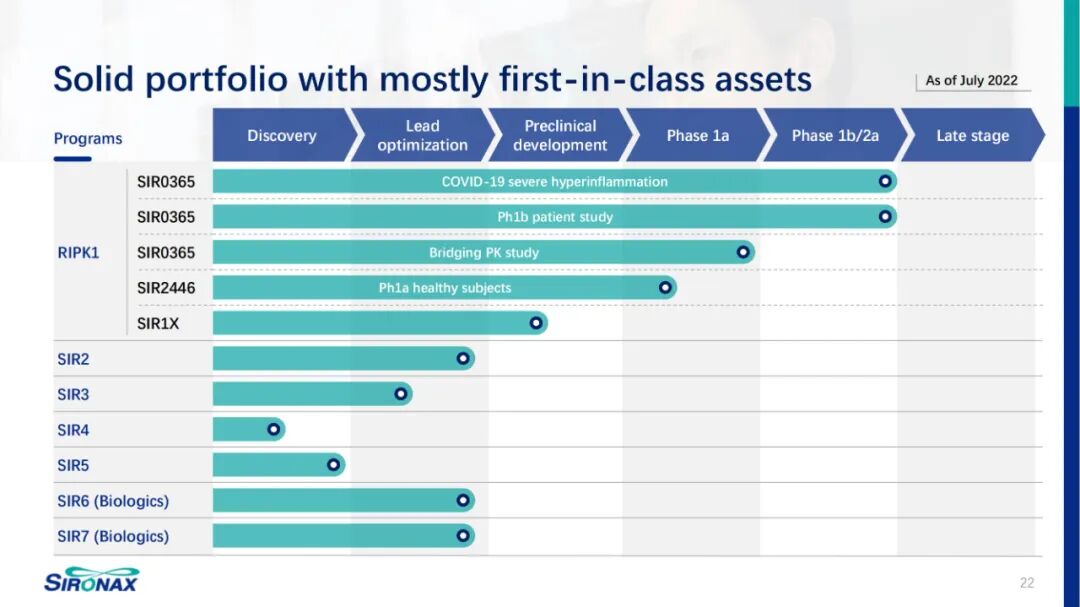
Sironax focuses on the pathogenic mechanisms of age-related degenerative diseases, including programmed cell death, neuroprotective pathways, and neuroinflammation. Based on a series of breakthrough scientific discoveries — including much work by our co-founder, Academician Xiaodong Wang — Sironax has built a robust and novel R&D pipeline targeting multiple key signaling pathways in degenerative disease pathogenesis, encompassing both small-molecule chemical drugs and large-molecule biologics, with two drug candidates already in clinical trials.
Our R&D strengths include: 1) deep biological insight, including our founders, scientists, and advisory team's profound understanding of drug targets; 2) emphasis on biomarker development; 3) strong translational resource accumulation.
I remember when I began my career at Eli Lilly, someone told me, "For every drug, it takes the substantial resources, energy, and dedication of hundreds of people inside and outside the company, plus thousands of patients participating in clinical trials, to make it a reality."
So in drug development, we must have sufficient sense of responsibility. For scientists, science is the foundation of everything; one must have a pragmatic spirit. Second, a team-oriented mindset. And finally, unwavering dedication and commitment.