Gaorong Ventures' Xiang Gao in Conversation with HUYA Inc.'s Rongjie Dong: Live Streaming Still Has Plenty of Room to Grow

A Candid Conversation on Darkest Hours, IPO Traps, and the Future of Livestreaming
On November 23–24, the 11th Annual Entrepreneur Conference was held in Beijing. Gao Xiang, founding partner of Gaorong Ventures, was named "Investor of the Year 2018," while two Gaorong portfolio companies' leaders — Dong Rongjie, CEO of HUYA Inc., and Wang Tao, Chairman and CEO of Ping An Good Doctor — were named "Entrepreneurs of the Year 2018."
During the conference's "Investor-Entrepreneur Dialogue" session, Gao Xiang and Dong Rongjie discussed "The Future of Live Streaming." Gaorong Ventures participated in HUYA's Series A round in May 2017, and HUYA went public on the NYSE in May 2018, becoming the "first gaming live-streaming stock." In this conversation, Dong Rongjie candidly shared HUYA's darkest hours, his post-IPO anxieties, and his vision for how live streaming will integrate into more industries. The full transcript follows.
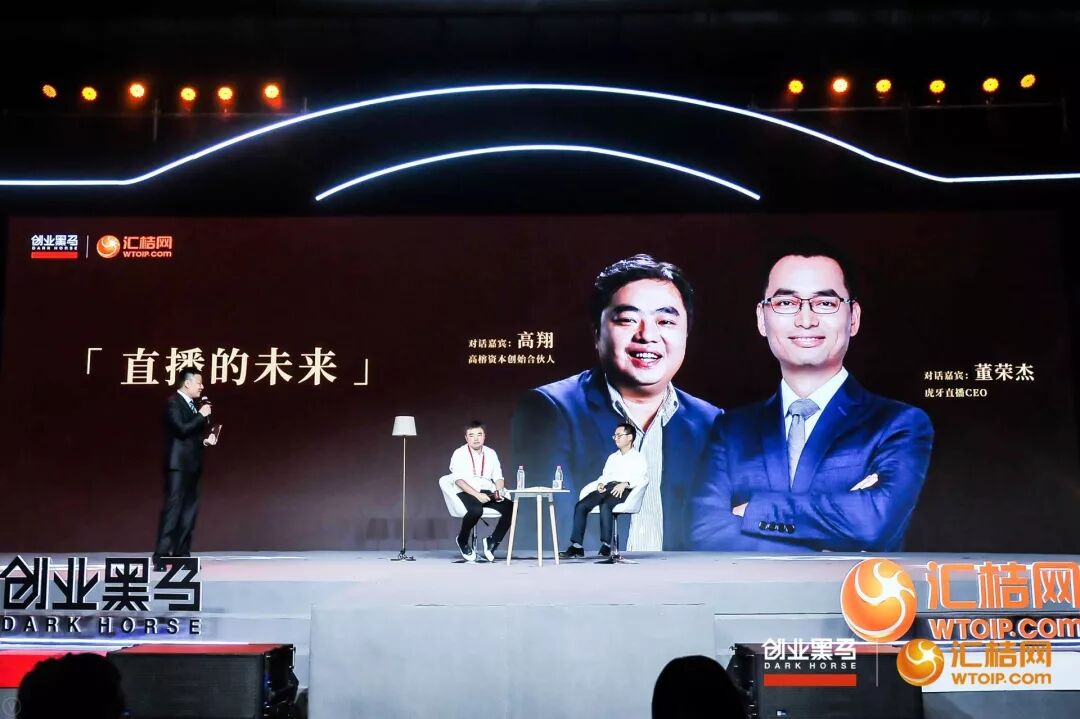
Gao Xiang: Thanks to Entrepreneur for inviting us. Today's topic is "The Future of Live Streaming," but before we get there, I want to chat with you about entrepreneurship. My first question: in yesterday's speech you talked about how HUYA emerged from its "darkest hour." Looking back, is there anything you regret, any missteps? If you could do it over, what would you improve?
Dong Rongjie: Thanks to Entrepreneur for this opportunity, and thanks to Gao Xiang for investing in HUYA.
In 2014, HUYA faced competitors who used financial leverage to enter the live-streaming industry. At the time, we still thought of live streaming as a business we could build gradually on our own.
Looking at it another way, what was the essence of HUYA's problems in 2014 and 2015? Entrepreneurship requires identifying a real need, breaking through at a single point, and scaling the company to a certain size. Once a company finds that need and breaks through, the next challenge is defending that success. HUYA had reached this stage by 2014. Then we faced competitive attacks.
We talk all day about competitiveness, moats — all the positive framing. But we can also look at it from another angle: how to defeat competitors, how to dominate the entire track, how to make it impossible for rivals to even enter.
In 2014 and 2015, HUYA's real problem was this: we had created the gaming live-streaming industry, but we weren't prepared to defend our success at that moment. The question becomes: when a company enters an industry and is doing well, how does it maintain its competitive advantage?
China's startup environment is relatively harsh. In 2016, live streaming became a "hot风口." Once a风口 takes off, it attracts massive capital support. In 2016, the live-streaming industry saw what I call the "Hundred Broadcasters War." Suddenly, from being the only player, we found ourselves with 100 competitors rushing in — the same pattern you see with bike-sharing and other风口s.
The problem with Chinese entrepreneurship today is this: once you validate a风口, capital floods in and a flood of companies doing exactly the same thing rushes after you. For entrepreneurs, the question becomes: how do you survive inside a风口?
In 2014 and 2015, HUYA hadn't figured out how to defend our success — or put another way, how to continuously find new competitive advantages and moats after you've already achieved results, making it hard for new competitors to enter comfortably. Our biggest reflection is that we hadn't clearly thought through what a live-streaming company's real competitiveness was.
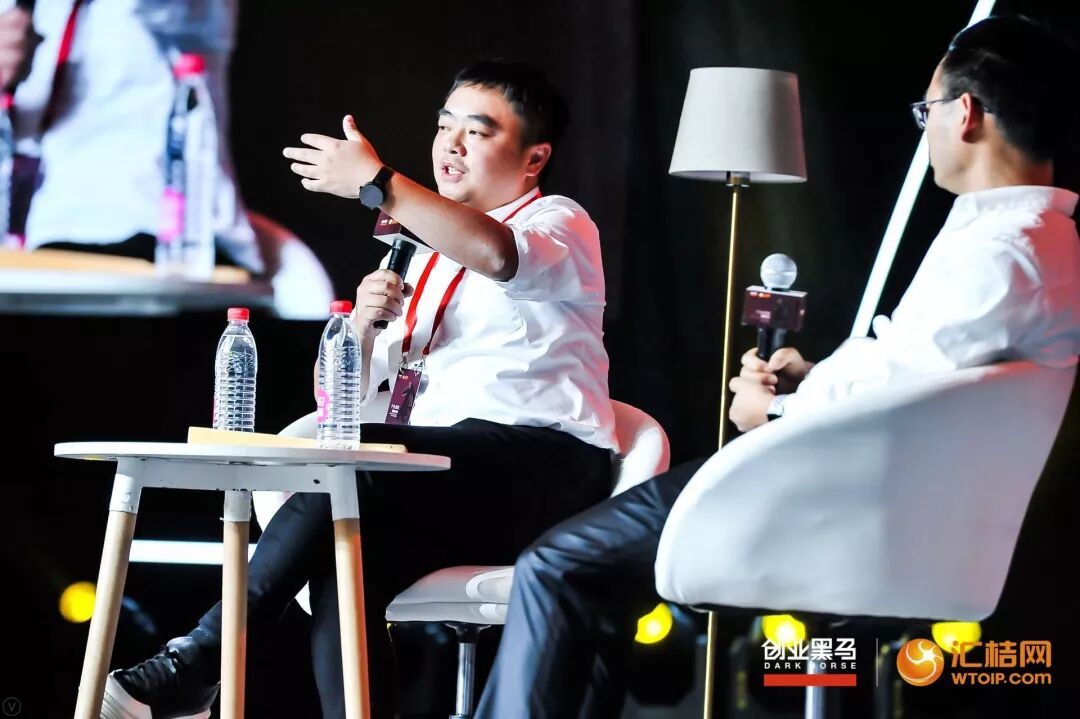
Gao Xiang: So you're saying strike early and decisively, and competitors can't get in?
Dong Rongjie: Exactly. The methodology for building something and the methodology for defending it are different. We often ask: is it harder to conquer territory or to keep it? I've found the challenges differ at each stage.
Gao Xiang: I'd like to hear your thoughts since HUYA went public. These six months since IPO, HUYA has been through some dramatic ups and downs. What's fundamentally different about the past six months compared to the previous four or five years of building the company?
Dong Rongjie: Let me start with the biggest anxiety IPO has brought me.
I've looked carefully at Chinese companies that have gone public, whether in the US, Hong Kong, or A-shares. A large number of them face the same problem: in the three years after IPO, most new business growth stagnates. I call this the "IPO trap" — very few companies can continue iterating and rapidly iterating their business after going public.
Some cases I know of, like Alibaba, Apple, Amazon. But most companies we know of — their business at IPO looks the same as three years after IPO. This shows that in those three years post-IPO, the company's aggressive drive isn't what it used to be.
My biggest question is how to face this change. It's an objective fact; everyone has to confront it directly, not pretend it doesn't exist. In this situation, how do you keep the entire company growing rapidly? Frankly, this is what I'm most anxious about.
In terms of changes: after a company goes public, I've found the dimensions I encounter are different. Previously I rarely interacted with investors; few people came to me saying this company looks good, want to invest? Very little of that.
After HUYA's IPO, I've encountered massive new opportunities. A flood of people tell me HUYA should do this, should do that — anyway, you have money, you have users. So the first change post-IPO is encountering many new opportunities — how do I face them?
The second change: after IPO, the demands on the team naturally shift. So another thing I'm particularly anxious about is how my core team elevates their capabilities to a higher dimension, or how our core team can handle the company's challenges at different stages.
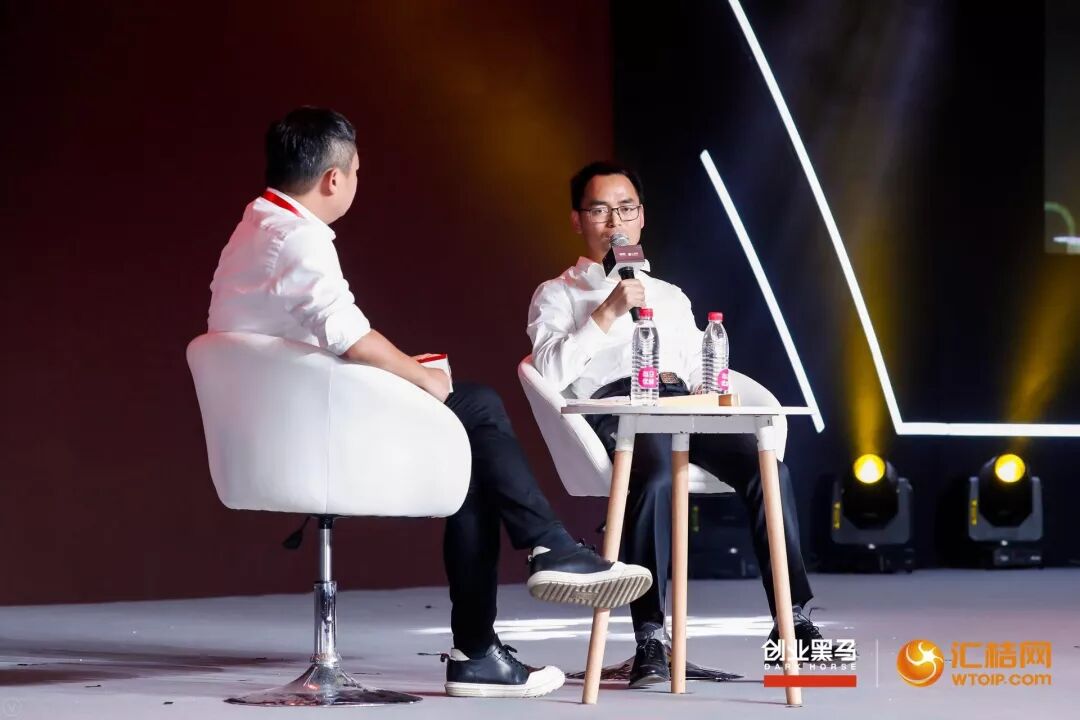
Gao Xiang: You mentioned HUYA faces many new opportunities now. The live-streaming market, from entertainment to gaming, is relatively mature. What new opportunities do you see ahead?
Dong Rongjie: First, I personally believe the evolution from video to live streaming, whether through entertainment or education, represents the internet's virtual, online approach infinitely approximating the offline experience.
Take education: New Oriental Online is about to go public; its core business is video education, which represents very early-stage internet education. VIPKID represents live-streaming education. In the 5G era, or the next phase, I believe today's live streaming is still weakly interactive. But live streaming is inherently strongly interactive — weak interaction is actually harder to achieve. Today's live-streaming interactive experience remains relatively weak.
So I believe live streaming uses the online internet to approximate the offline. What's offline? Offline tutoring: a teacher sits in front of you, one-on-one with a student, answering questions directly. Pure video was completely non-interactive — students couldn't ask any questions.
Companies like VIPKID let students ask some questions, but the teacher's experience is terrible. Perhaps in the 5G era, true bidirectional interaction becomes possible — students ask questions, and the teacher's experience dramatically improves.
To use an easily understood example: live streaming represents using internet methods to continuously simulate offline entertainment, offline information acquisition. Therefore, live streaming has enormous potential to combine with all fields in the future.
Gao Xiang: Is this what you mentioned before — your hope that HUYA becomes a forest, not a single big tree, with a particularly rich ecosystem that can integrate with many industries? Today, which industries do you think live streaming can most easily combine with?
Dong Rongjie: We can already see that live streaming plus education has been validated; live streaming plus e-commerce has been partially validated. HUYA validated live streaming plus gaming, and live streaming plus entertainment. We're also recently exploring live streaming combined with film and TV drama content, and so on.
Live streaming has the opportunity to combine with all fields; the key is how other fields combine with live streaming. Live streaming's real advantage is interactivity. How do you apply this interactive video model to other fields? This is what the entire live-streaming industry, myself included, is thinking about. When live streaming combines with any new field, the first question must be: how does interactive video qualitatively improve that original field?
Gao Xiang: We're out of time, so let's wrap here. Finally, I sincerely hope HUYA can avoid the "IPO trap" and achieve even greater development. Thank you, everyone!
Recommended Reading
Congratulations to HUYA on NYSE Listing, Becoming the First Gaming Live-Streaming Stock

- Gaorong Ventures manages USD and RMB funds totaling over RMB 11 billion, focused on TMT early-stage and growth-stage investments.
- Its limited partners include top global institutional investors as well as Chinese giants in finance, retail, advertising, and other industries.
- Additionally, dozens of successful entrepreneurs — founders of companies including Tencent, Baidu, Taobao, Xiaomi, 360, Focus Media, Sohu, JD.com, Vipshop, Tudou, Ourpalm, Meituan, Dianping, Autohome, Ganji.com, and others — are also LPs in Gaorong Ventures.
- The founding partners have led investments in numerous outstanding companies, including Xiaomi, Razer, Baofeng Technology, G-bits, Tudou, Wondershare, Archermind, 91 Assistant, 3G.cn, MOGU, Dota Legend, Yuanfudao, and others.
- Since its founding, many of Gaorong's portfolio companies have grown into national or global leaders in their industries, including: Pinduoduo (NASDAQ: PDD), HUYA Inc. (NYSE: HUYA), HMI (NYSE: HMI), Lifesense (SZSE: 300562), Meituan (HKEX: 03690), Ping An Good Doctor (HKEX: 01833), Zhongrongjin (acquired by Homa Appliances), DeePhi Tech (acquired by Xilinx), Qian Daibao (acquired by Meituan), Ufida, Beibei.com, Leqi E-commerce, DotC, Nuro, YITU, Roborock, Tiangong Intelligence, Zhuiyi Technology, Tigerobo, Oasis Labs, Beitai Haoche, QuantGroup, Shuidihuzhu, Testin, Doumi, BIGO LIVE, Danke Apartments, Miss Qian, Re La Sheng Huo, and Ucommune.
- Gaorong Ventures has investment teams based in Beijing, Shanghai, Guangzhou, Shenzhen, and Hangzhou.
Long press the QR code to follow Gaorong Ventures

Thank you, good friends of Gaorong