A Conversation with NeuraXess: Before Digital Immortality, Let's Use Brain-Computer Interfaces to Cure Diseases | Gaorong Ventures

Delivering breakthrough solutions for treating a wide range of brain-related diseases.
In the 1980s, Scottish sci-fi author Iain M. Banks introduced the concept of "Neural Lace" in his Culture series — a mesh implanted in the brain that connects human minds directly to computers, enabling direct communication and even personality backup and uploading.

Science fiction's vision of brain-computer interfaces (BCIs) has found real-world echoes. Elon Musk's Neuralink, founded in 2016, drew partial inspiration from the Neural Lace concept.
The potential applications of BCIs spark boundless imagination. Some futurists predict that "brain-machine fusion" or "human-machine integration" will eventually lead to human immortality. But before digital eternity arrives, "the earliest and most important application scenario for brain-computer interfaces is healthcare" — a view that has increasingly become industry consensus.
Xiaojian Li, founder of Neuralink Medical (微灵医疗) and a professor at the Chinese Academy of Sciences' Shenzhen Institute of Advanced Technology, firmly believes that "BCI technology will bring hope to patients with motor and sensory disabilities, elevate clinical diagnosis and treatment of mental disorders, and deliver breakthrough progress in treating major brain diseases."

Li has spent over two decades in neuroscience and neural engineering, including research on visual and motor system implantable BCIs at Georgia Regents University and Northwestern University's Feinberg School of Medicine from 2010 to 2018. After returning to China in 2018, he joined the Chinese Academy of Sciences' Shenzhen Institute and subsequently founded Neuralink Medical. From day one, the company targeted serious medical needs — developing medical-grade implantable wireless BCI full-stack technology, becoming China's first company to establish a complete full-implantable BCI technology chain.
The brain is the most structurally complex organ in the human body, containing roughly 100 billion neurons. The Milky Way comprises some 200 to 400 billion stars — each of our brains is as vast and mysterious as a galaxy. The brain-computer interfaces bridging this organ with the digital world represent the cutting edge of global technology, requiring collaboration across multiple disciplines. Recently, Li served as the initiator of the "Neural Engineering Transformative Technologies International Conference" in partnership with Nature Publishing Group, bringing together over 20 top global experts in AI, neuroscience, materials science, biomedical engineering, and clinical neurology to Shenzhen. They exchanged the latest research progress on challenges facing BCI applications in healthcare.
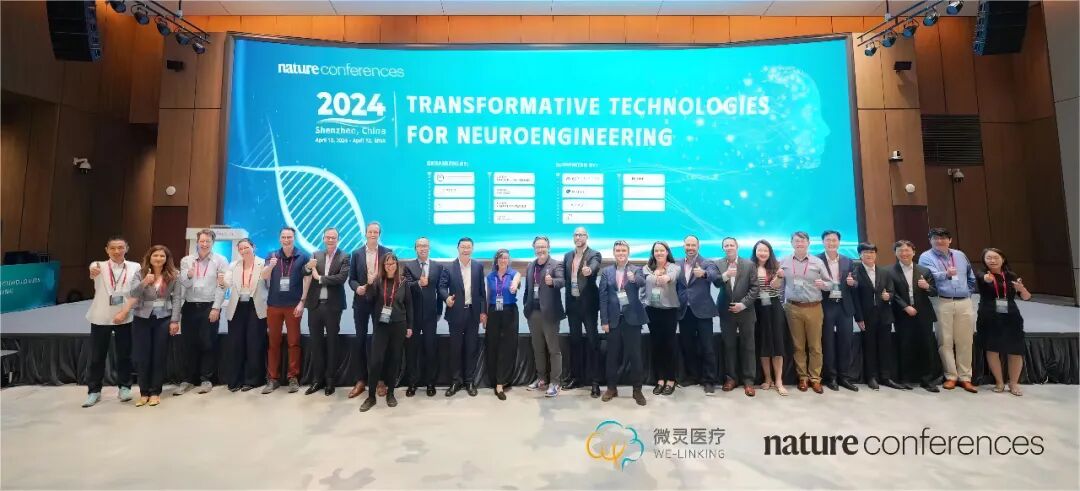
Gaorong Ventures led Neuralink Medical's angel-plus funding round in 2023. Drawing on the company's latest R&D progress, we sat down with Professor Li to discuss the potential and challenges of BCI technology in medical applications.

"In Avatar, the protagonist achieves consciousness transfer with direct brain-to-brain information transfer between different organisms — that's true science fiction. But in Alita: Battle Angel, neural connections between a biological brain and electronic devices enable a human brain to control a mechanical body, which has solid physiological grounding."

Li explains that after half a century of development, BCI technology is steadily moving from science fiction toward reality. In 1973, Jacques Vidal, a computer scientist at UCLA, coined the term "Brain-Computer Interface" and built the world's first non-invasive BCI system — detecting real-time brain signals through scalp electrodes and translating them for computer control.
In principle, the closer sensors are placed to neurons, the clearer the signals. Implantable BCIs (iBCIs), with sensors placed on or inserted into the cerebral cortex, can collect high-throughput, high spatiotemporal resolution neural signals, giving them far greater potential than non-invasive systems for real-time, precise brain-machine interaction and clinical applications.
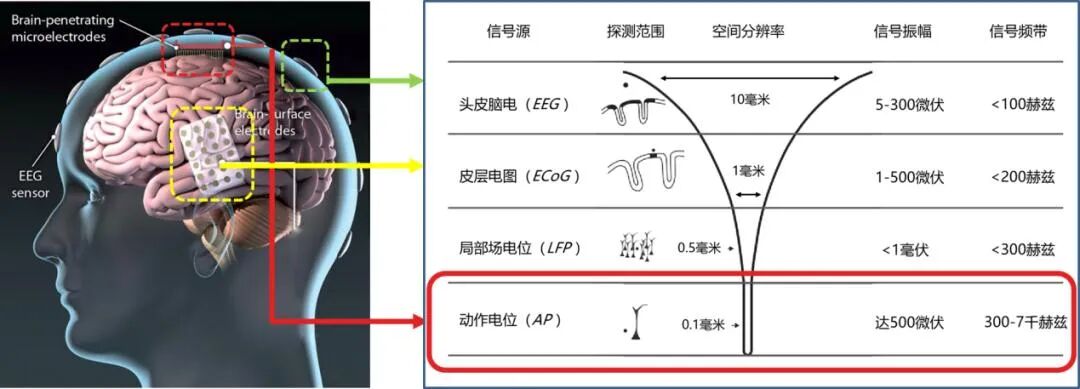
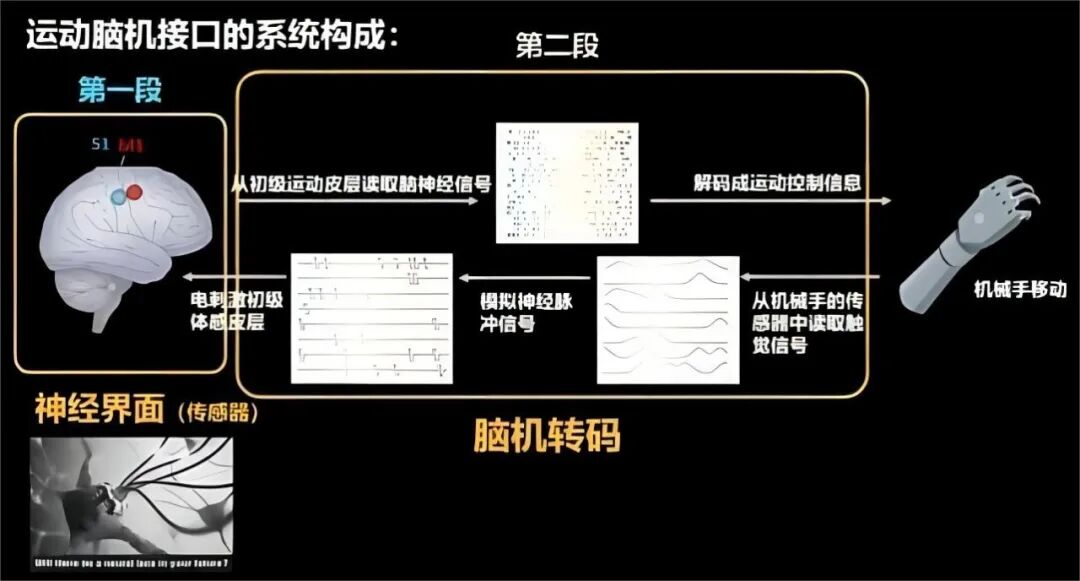
Li describes how implantable BCI systems work, training the brain to control external electronic devices:
First, neural signals recorded from the human motor cortex are converted into digital signals that computers can process;
Through real-time algorithmic decoding, the person's movement intentions are inferred;
These intentions are then translated into cursor movement on screen, robotic arm grasping, wheelchair navigation, or speech generation and text writing;
Going further, tactile information from robotic fingers can be converted into microcurrents fed back to the sensory cortex, giving the user a sense of "touch."
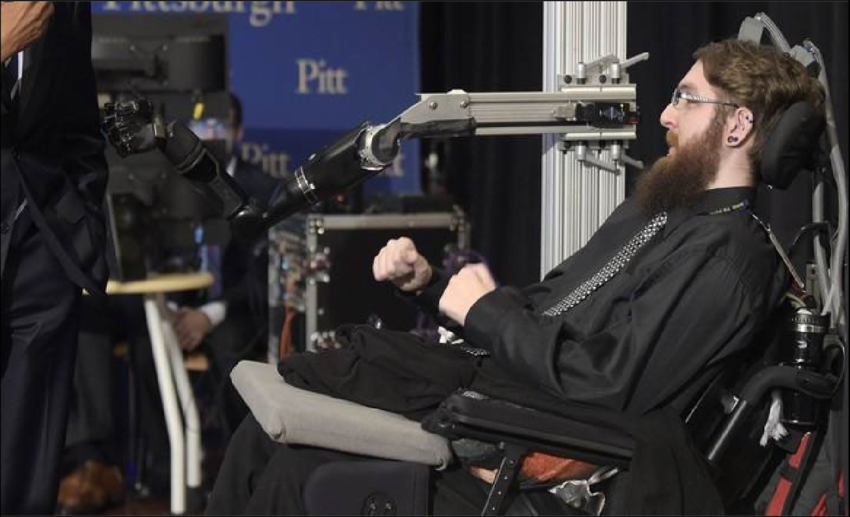
Implantable BCI technology and applications have advanced rapidly in recent years. From brain-controlled robots enabling paralyzed patients to manipulate mechanical hands with dexterity in 2016, to brain-controlled typing and internet communication in 2017–2018, the first neural speech decoder in 2019, and recent applications of deep brain neurostimulators for treatment-resistant depression... Growing attention is focused on clinical applications. As Musk told the Neuralink team in 2021, "If you can make someone in a wheelchair walk again, people will immediately understand the importance of this work. It will strike right at the heart."
Li further elaborates on the therapeutic potential of implantable BCIs. Beyond providing alternative pathways for autonomous motor control to patients with ALS, spinal cord injury, paralysis, and sensory disabilities — enabling self-care and normal social interaction — they can also be applied to neurostimulation for epilepsy and pain management. Additionally, they show promise for treating mental illnesses such as severe depression, and memory impairments caused by neurodegenerative diseases like Alzheimer's.
"Currently, precise treatment of brain diseases faces major challenges. As a precision therapeutic approach, BCI technology represents a 'root-cause' treatment at the foundational level of life sciences, operating in a different dimension from gene therapy."

The BCI technology chain comprises four stages: signal, data, information, and interaction. "Each stage has its core technology — high-performance neural sensors for signals, specialized neural electronic integrated circuits for data, efficient decoding algorithms for information, and brain-control training paradigms for interaction."
Neuralink Medical has assembled senior researchers from leading international BCI research institutions, including the Chinese Academy of Sciences, Northwestern University, Brown University, the U.S. National Institutes of Health, and RWTH Aachen University, with extensive experience in fundamental research, engineering practice, and clinical medicine for implantable BCIs.
The company pioneered in China the development of high-density, ultra-compliant neural sensor arrays for cortical surface implantation — an approach that avoids the single-lifetime limitation of penetrating electrodes due to brain tissue damage. "This electrode array employs state-of-the-art nanocomposite reinforcement technology, enhancing safety and long-term stability while recording neural electrical signals with higher spatial resolution and signal-to-noise ratio."
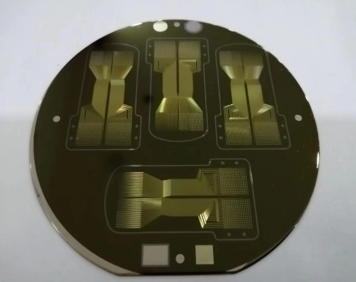
Neuralink Medical micro cortical electrode array
Beyond sensors, Neuralink Medical has developed closed-loop neural electronic chips with integrated acquisition and stimulation, hundred-channel neural signal acquisition chips, thousand-channel miniaturized brain-machine information interaction devices, and wireless brain information transceivers, alongside software systems including preprocessing algorithms, decoding analysis algorithms, and brain-inspired control algorithms.
Taking BCI-dedicated chips as an example, Li notes: "We designed two categories — one optimized for high-throughput neural signal acquisition, the other for integrated acquisition-stimulation operations with 16 high-performance electrical stimulation channels. This enables simultaneous multi-channel synchronized neural signal recording with precise, programmable high-power neural electrical stimulation."
Additionally, Neuralink Medical's founding team was the first internationally to develop "non-genetic optical nanoneural remote control technology," with results published in Nature family journals in 2018, 2019, and 2023. This technology enables micro-device miniaturization, flexible minimally invasive implantation, controllable device lifespan, and wireless information exchange for BCIs.
Neuralink Medical's fully implantable BCI system comprises three components: the implant, a digital terminal, and an intelligent wheelchair robot. It has the potential to provide medical-grade full-stack solutions for multiple conditions, such as enabling paralyzed patients to control intelligent wheelchair robots with ease.
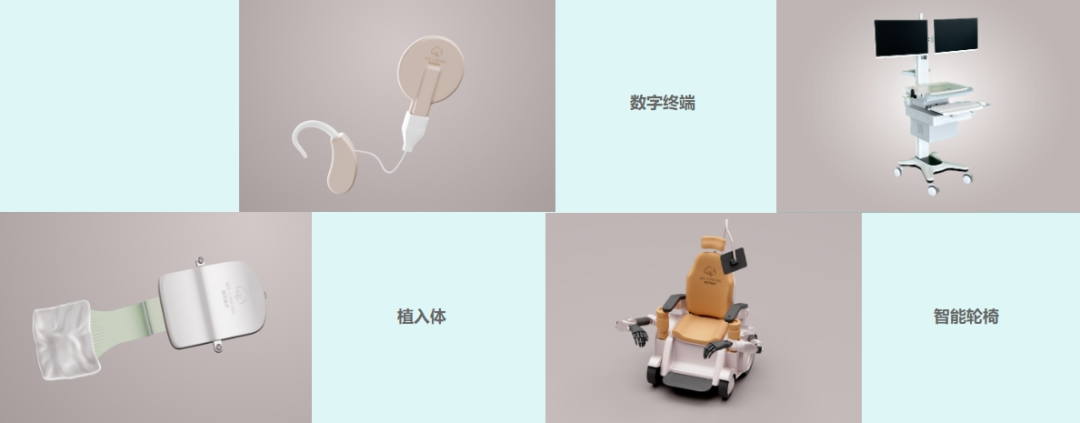
Neuralink Medical fully implantable BCI system
"Neuralink Medical has mastered the full chain of autonomous technologies for minimally invasive implantable BCIs. We are currently the only team in China capable of independently developing brain-machine therapies and completing targeted solutions." Regarding full-stack technology deployment, Li believes that possessing end-to-end capabilities across the entire industry chain is essential for successfully integrating product systems — avoiding both the technical短板 (shortcomings) that create木桶效应 (bucket effect) performance drags and无效长板 (ineffective over-engineering) that compromises functionality.
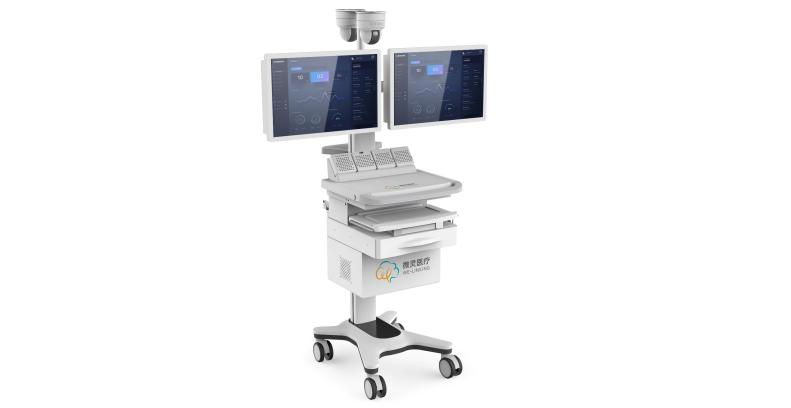
Neuralink Medical high-throughput full-band digital EEG machine

Full-stack R&D demands not only scientific excellence but also clear understanding of product system functionality and development timelines. Neuralink Medical has established a roadmap for future technology development and clinical application.
Within 3 years: Pioneer clinical application of micro cortical electrode arrays and thousand-channel full-band digital EEG machines, serving fine-grained human brain functional mapping, enhancing understanding of brain's fine functions, improving neurosurgical outcomes, and empowering exploration of novel brain disease therapies.
Within 5 years: Deploy fully implantable wireless BCI systems for patients with motor and sensory disabilities, restoring their ability to control their own bodies.
Within 10 years: Expand fully implantable BCI system applications to mental health disorders and other major brain diseases.
Li notes that for implantable BCIs to become mainstream technology for serious medical applications, minimally invasive implantation, diversified targets, and miniaturization of electronic devices are prerequisites. This depends on the accelerating spiral effect of advances across multiple frontier technology domains. On one hand, rapid development in microelectronics, power systems, and wireless communications continuously upgrades BCI hardware; on the other, AI improves efficiency in human brain data analysis, facilitating optimization of decoding algorithms and deeper understanding of brain operating principles.
Beyond technological progress, safety and stability are paramount for BCI technology. As Class III medical devices, implantable BCI systems must undergo rigorous evaluation standards, with full demonstration of clinical trial safety and efficacy before human trials are permitted. Neuralink's FDA approval for human clinical trials last year energized the industry, and this year's progress and safety data from its first human trial participant have drawn significant attention.
Li states that Neuralink Medical will strictly follow medical device approval regulations, designing and evaluating all safety indicators in its products, while favoring surgically simple approaches. "Overall, commercializing BCIs requires indispensable three-party collaboration — technology iteration by developers, clinical experimentation by hospitals, and proactive guidance from regulators."
Accelerated multi-party efforts may bring the healing light of BCI technology sooner. Li expresses confidence that "in the coming 5 to 10 years, we can provide breakthrough solutions for treating multiple brain-related diseases, dramatically improving patients' quality of life."