A Conversation with Pulnovo Medical: A Chinese Original Medical Device Company's "Great Voyage" | Gaorong Ventures

"Created in China," always moving forward.

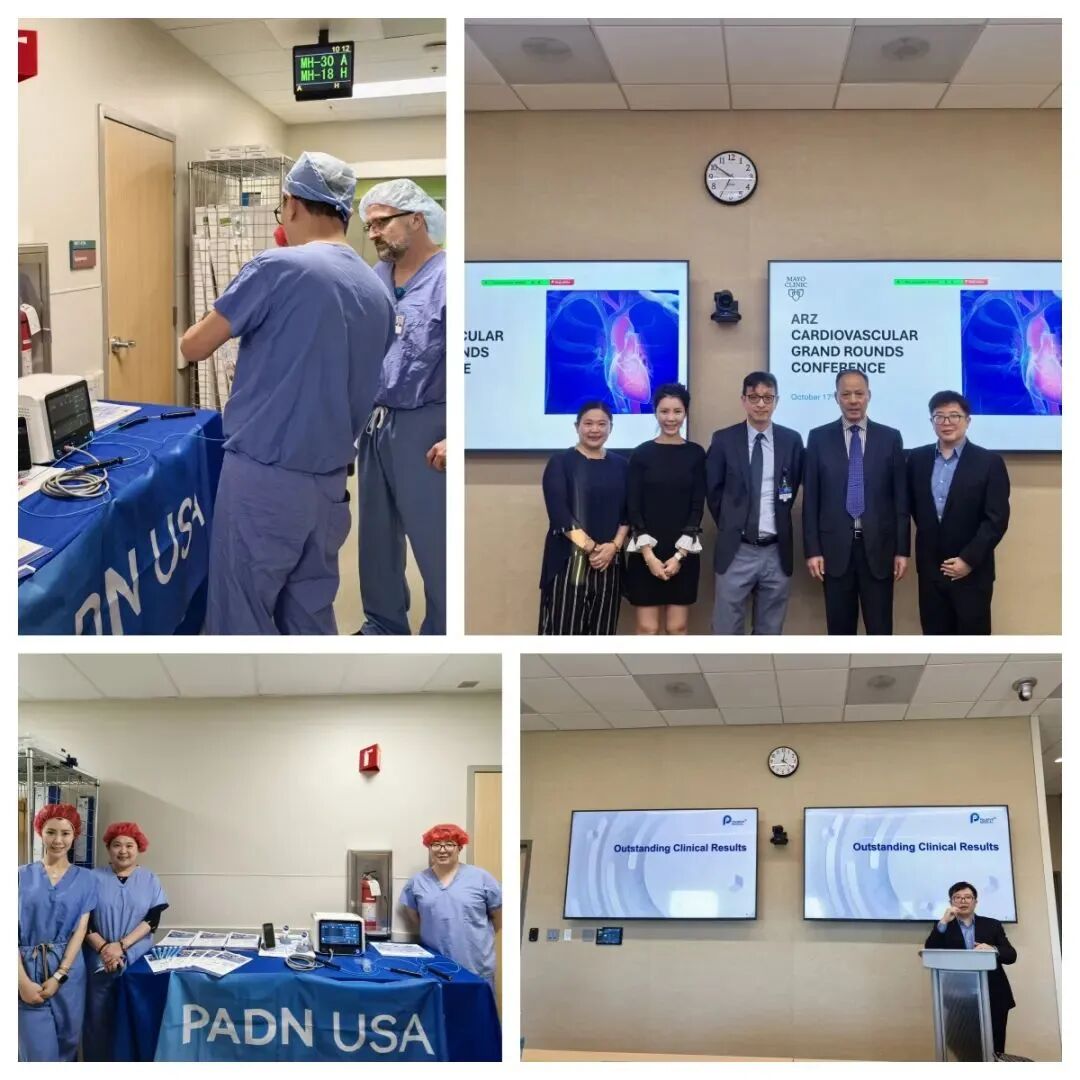
This October, a team from Pulnovo Medical was invited to Mayo Clinic in the United States to conduct the first-ever North American clinical training on Percutaneous Pulmonary Artery Denervation (PADN).
Mayo Clinic is a world-renowned top-tier medical institution, having been ranked the #1 hospital globally by Newsweek for the sixth consecutive year this year. It is also a leader in adopting novel medical approaches and technologies. Pulnovo's visit signals the arrival of a "Chinese solution" at one of the world's highest peaks of medical innovation.
PADN is a minimally invasive interventional therapy for treating pulmonary hypertension. Pulmonary hypertension (PH), when severe, can lead to heart failure and death — earning it the grim nickname "cancer of the cardiovascular system" — and treatment options remain limited. PADN uses radiofrequency ablation to block sympathetic nerves in the pulmonary vascular intima, effectively reducing pulmonary artery pressure and slowing disease progression.
The treatment concept was developed entirely by Chinese physicians, and realized by a Chinese R&D team. The original medical devices Pulnovo developed for PADN — a "disposable circular pulmonary artery radiofrequency ablation catheter and pulmonary artery radiofrequency ablation device" — are also being brought to global markets by a Chinese commercialization team.
During the clinical training, the Pulnovo team invited Mayo Clinic physicians to personally experience and operate the PADN catheter and device. The experts responded positively, stating they would "actively promote subsequent clinical trials in the United States."
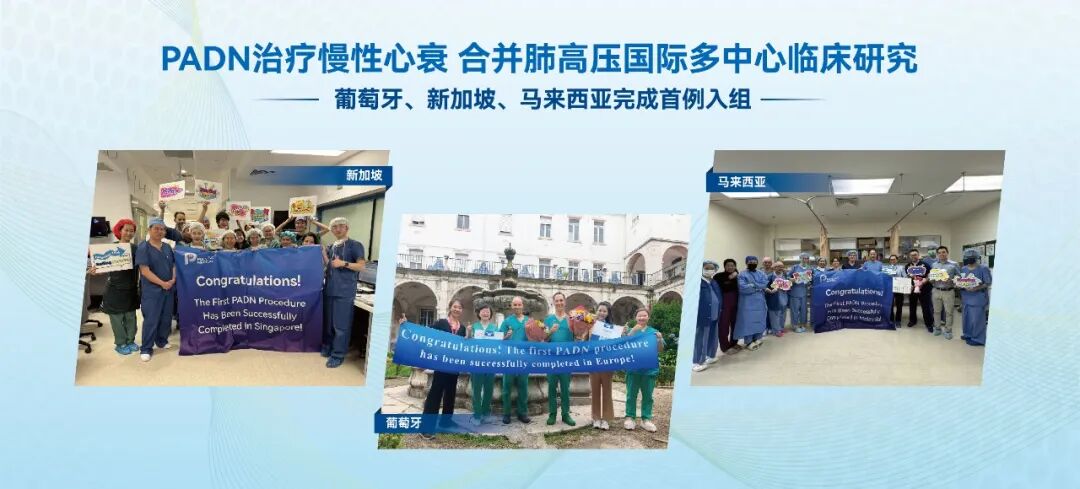
Beyond the US, Pulnovo has been tirelessly traveling this year with its original products to Portugal, Singapore, Malaysia, and other locations to conduct clinical trials and patient enrollment, continuously advancing the global multicenter clinical research program for PADN.
Pulnovo Medical is a profile of China's rising medical device innovation. As the Pulnovo team reflected after their North American trip: "In the past, we learned medical technology from abroad, following step by step; now, we stand at the source of innovation. In the field of non-pharmacological and interventional treatment for pulmonary artery hypertension, we are leading global development."
Meanwhile, Pulnovo's product received approval from China's National Medical Products Administration at the end of 2023, becoming China's first globally first-in-class original medical device for pulmonary hypertension approved for market. An increasing number of domestic hospitals have begun adopting this technology, successfully performing surgeries and benefiting patients.
Facing heart failure and pulmonary hypertension — two indications with massive unmet needs — how did Pulnovo Medical develop a "breakthrough therapy" from scratch? What hard capabilities must a Chinese original medical device company possess to go global?
Gaorong Ventures invested in Pulnovo Medical in two consecutive rounds. Recently, Cynthia Chen from Pulnovo Medical shared their "voyage" story with us.


Shortness of breath, limb weakness, edema... these are common symptoms of pulmonary hypertension. Some patients struggle to even walk. Pulmonary hypertension can be caused by various underlying conditions, leading to elevated pulmonary artery pressure and pulmonary vascular resistance.
China has approximately over 12 million pulmonary hypertension patients. Based on different pathologies, the World Health Organization classifies pulmonary hypertension into five categories: Type 1 is pulmonary arterial hypertension, and Type 2 is pulmonary hypertension associated with left heart disease.
Before targeted drugs became available, Type 1 pulmonary arterial hypertension patients had an average survival of only 2.8 years. However, the multiple targeted drug combinations currently recommended by guidelines tend to cause叠加 side effects, and after 3 to 6 months of medication, patients experience diminished pulmonary artery pressure control due to tolerance or compliance issues, even hitting a "ceiling effect" — where drug efficacy plateaus or declines. Even with optimal targeted therapy, the five-year survival rate is only about 60%.
For Type 2 pulmonary hypertension patients, there remains no effective pharmacological treatment overall, with care focused primarily on symptom relief. Type 2 pulmonary hypertension accounts for over 50% of all pulmonary hypertension and heart failure patients. There are approximately 7.1 million Type 2 patients in China and 3.8 million in the US, representing a market exceeding $50 billion.
Additionally, due to low disease awareness and the need for invasive diagnosis, a considerable portion of pulmonary hypertension patients are missed or misdiagnosed.

Heart failure is another area Pulnovo Medical is committed to researching. Heart failure has become an increasingly serious health problem, with China's heart failure patient population growing at a compound annual rate of 4.0% and mortality increasing at 1.1%. A large number of patients respond poorly to drugs, and treatment options remain inadequate.

Faced with such enormous unmet needs, developing safe and effective treatment technologies is urgently needed.
A growing body of research shows that excessive activation of the sympathetic nervous system plays an important role in the development and progression of pulmonary hypertension. Based on this, PADN uses a specialized catheter to deliver radiofrequency energy to the sympathetic nerves in the pulmonary artery adventitia, causing nerve myelin sheath disappearance and axonal fusion, thereby inhibiting sympathetic nerve activity, increasing cardiac output, reducing pulmonary artery pressure, and suppressing pathological pulmonary artery remodeling — ultimately improving patients' exercise tolerance and cardiac function, achieving "one minimally invasive procedure, long-term benefits."
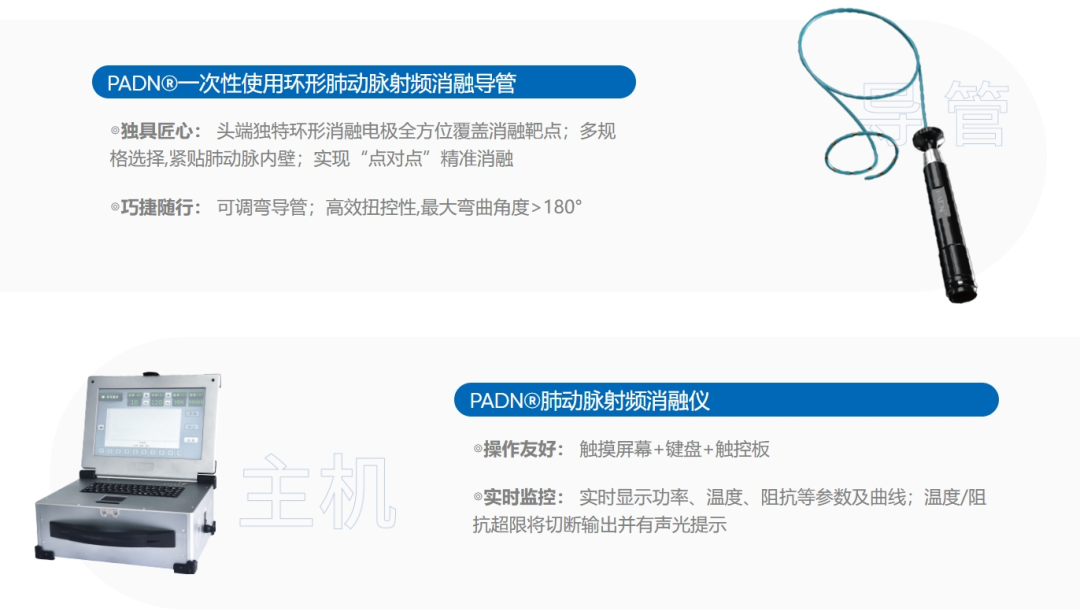
Before surgery, physicians use imaging to precisely identify ablation targets. During the procedure, the PADN catheter is precisely delivered to the junction of the main pulmonary artery and the left pulmonary artery opening. The catheter shape is micro-adjusted according to pulmonary artery anatomy to ensure close contact with the pulmonary artery wall, followed by point-to-point precise ablation of the targets. The procedure is very fast, with the ablation process taking approximately 10 minutes.
Clinical data shows that PADN can effectively reduce pulmonary artery pressure post-procedure, achieving effective treatment.

Medical device innovation is typically incremental. How can an original Chinese medical device truly enter mainstream European and American markets? Pulnovo believes three foundational pillars must be established.
1. Extensive clinical case validation, continuously proving safety and efficacy
In its global expansion, Pulnovo found that overseas markets and clinicians primarily focus on clinical data performance — whether clinical outcomes have been extensively validated, and whether they are reproducible.
Over the past 10 years, Pulnovo has collected data from nearly 500 clinical cases, continuously demonstrating safety and efficacy.
For Type 1 and Type 2 pulmonary hypertension, Pulnovo has accumulated complete clinical data spanning preclinical to clinical trials, with 1-year and 3-year follow-up.
For Type 1 pulmonary arterial hypertension, the primary endpoints under global standards are 6-minute walk distance and clinical worsening. Data shows that PADN treatment can effectively improve patients' exercise tolerance and hemodynamic indicators. Regarding clinical worsening, control group patients had already experienced mortality within one year, while the PADN group maintained robust long-term efficacy.
For Type 2 pulmonary hypertension, 3-year long-term follow-up results published in 2023 similarly validated PADN's long-term effectiveness.
2. Becoming the industry therapy "gold standard"
In recent years, PADN technology has been incorporated into several international and Chinese guidelines, demonstrating significant potential to become the industry therapy "gold standard."
Over the past 8 years, Pulnovo has presented annually at TCT (Transcatheter Cardiovascular Therapeutics), the most influential summit in US cardiovascular care — marking this Chinese original technology's recognition by the global pulmonary hypertension treatment academic and clinical community. Consequently, when Pulnovo launched clinical trials overseas, interventional cardiologists had already become familiar with PADN to varying degrees.
In 2018, PADN was included in China's pulmonary hypertension diagnosis and treatment guidelines; in 2022, it was incorporated into the European Society of Cardiology and European Respiratory Society guidelines; in 2024, Chinese expert recommendations for PADN treatment of pulmonary arterial hypertension were released.
Furthermore, thanks to superior patient data, in 2021, PADN received FDA Breakthrough Device designation for Type 1, Type 2, and Type 4 pulmonary hypertension in just 16 days; in 2023, PADN received FDA Humanitarian Use Device designation for Type 1 pulmonary hypertension.
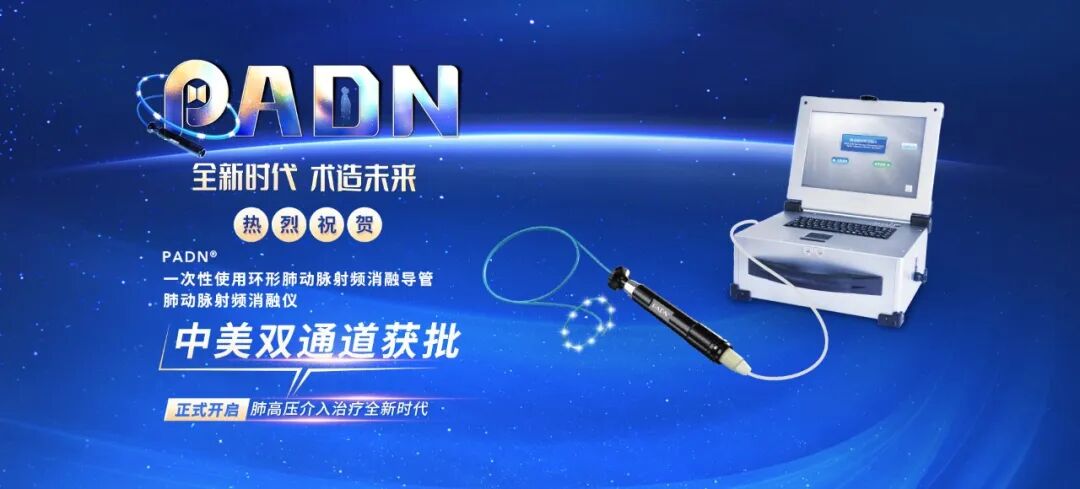
In November 2024, Pulnovo's PFlexi disposable vascular introducer sheath set successfully passed FDA 510(k) clearance — the fifth FDA certification for Pulnovo Medical, and the first FDA market authorization.
As more real-world data is generated and validated, Pulnovo expects to rewrite international and Chinese pulmonary hypertension guidelines in the coming years. This may become the first time in cardiovascular interventional therapy history that a Chinese device company defines the industry gold standard.
3. Strong global clinical research capabilities
Pulnovo currently has multiple clinical programs globally. Beyond a large registration clinical trial for Type 2 pulmonary hypertension being conducted in China; with support from top hospitals and research institutions across Europe and Asia, an international multicenter clinical study on PADN for Type 2 pulmonary hypertension has launched and begun enrollment, with pilot sites covering Singapore, Portugal, Malaysia, Italy, Switzerland, and other countries.
For its global clinical trials, Pulnovo has established a Global Clinical Steering Committee comprising over 12 renowned European and American experts, including Professor Gregg W. Stone and Professor Raymond Benza, who are highly esteemed in US heart failure and interventional cardiology.
Going forward, Pulnovo will vigorously advance clinical enrollment in the United States, bringing this life-saving original technology to pulmonary hypertension and heart failure patients in need worldwide. Over the next 3-5 years, Pulnovo Medical's strategic focus will be on enhancing global market influence, obtaining additional market access certifications such as EU CE and US FDA through continuous PADN technology improvement and extensive validation.
Through hardship to the wilderness. With precise clinical insights, globally competitive original technology, efficient clinical trial execution, and internationally minded commercialization, Pulnovo Medical will continue its voyage, bringing "heart-stirring" therapies that restore patients' vitality to broader horizons.