ASTRONSTONE Raises 1 Billion RMB, Racing Toward First Flight of Reusable Medium-to-Heavy Launch Vehicle

Gaorong Ventures co-led the round.
Beijing ASTRONSTONE Space Technology Co., Ltd. (hereinafter referred to as "ASTRONSTONE") recently announced the completion of a 500 million yuan Series A funding round, bringing its total raised to 1 billion yuan. The round attracted multiple top-tier investment institutions, with Gaorong Ventures serving as a co-lead investor.
The proceeds will primarily fund rocket assembly and testing, chopstick recovery technology validation, rocket production capacity expansion, and team building — all to support the maiden flight of its AS-1 rocket and subsequent scaled operations. The company plans to produce three rockets in 2026, ensuring a first flight mission in the first half of 2027, with commercialization following in the second half.

Committed Strategy and Product Positioning:
Reusable Medium-to-Heavy Launch Vehicles
Looking back at 2025 and 2026, ASTRONSTONE has continued to earn capital market recognition for its technical approach and commercial prospects. Over the past 15 months, it has completed five funding rounds and gained favor with multiple top-tier financial institutions and strategic industry players.
Competition in commercial aerospace has intensified and consolidated in 2026. The STAR Market has explicitly required commercial rocket companies to achieve successful first orbital insertion with a reusable medium-to-heavy launch vehicle payload, providing regulatory endorsement for the 4-meter-diameter liquid oxygen-methane reusable rocket path. This requirement also aligns closely with the demand from low-earth orbit internet constellations for heavy lift capacity and low cost, validating ASTRONSTONE's strategic resolve and product positioning.

Expanding Production Capacity and Talent Pipeline:
"One Center, Two Bases" Strategic Layout
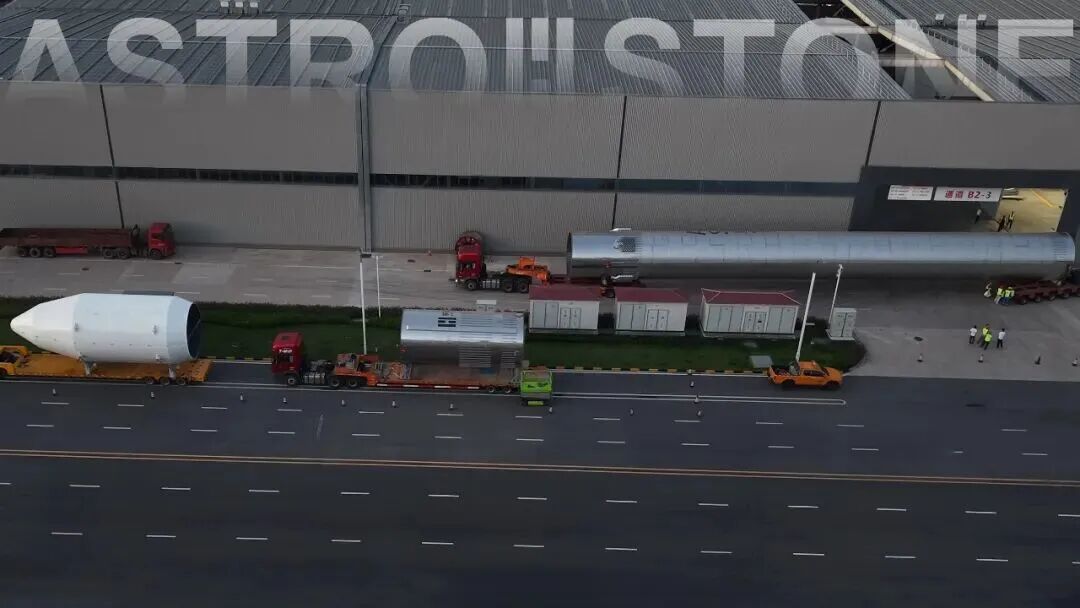
On the production front, ASTRONSTONE has continued expanding its "one center, two bases" strategic footprint. Its Northern R&D Center has grown to over 4,000 square meters, with a newly commissioned electrical integration test center providing critical support for rocket electrical system validation. Its Hunan Rocket Development and Assembly Base has partially entered operation and is expected to be fully delivered in Q3 2026, with an annual production capacity of eight rockets once at full capacity. Construction has also begun on its Avionics Center and Chopstick-Arm Ground Joint Test Base, further completing its end-to-end layout spanning design, manufacturing, test validation, orbital delivery, and recovery/reuse.
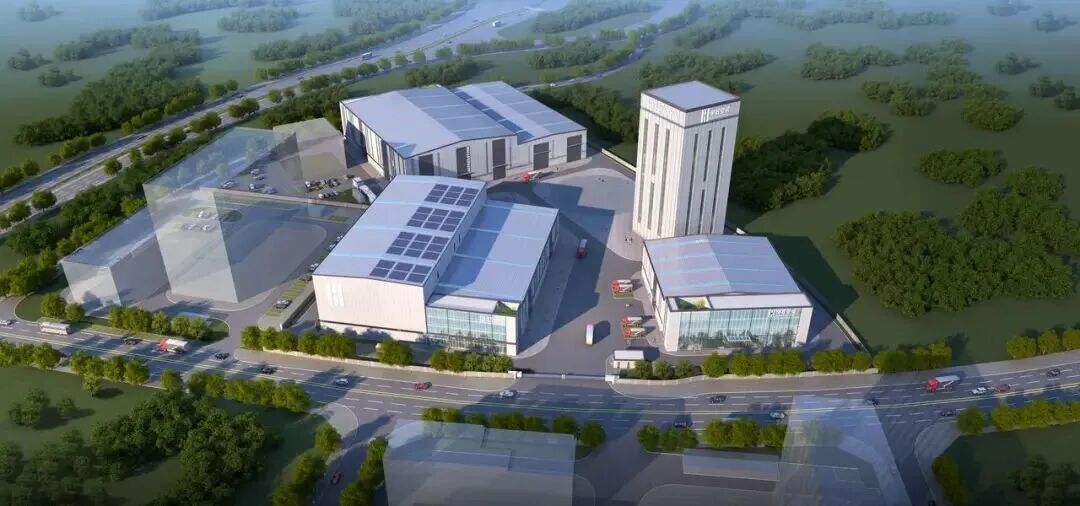
With new facilities coming online and the new test center entering formal operation, ASTRONSTONE has also been steadily growing its team. As of May 2026, headcount has surpassed 200, with R&D personnel accounting for over 70%. The team is expected to reach 350–400 by year-end 2026, building core strength for the maiden flight and subsequent scaled operations.

Full Sprint Toward Maiden Flight:
Four Priority Missions for 2026
As the only domestic commercial rocket company pursuing the "stainless steel airframe + liquid oxygen-methane propulsion + chopstick-arm recovery" technical approach, ASTRONSTONE has established the first closed-loop stainless steel design capability spanning materials, components, and full vehicles, and has achieved breakthroughs across the entire industrial chain from design to process, production, and testing. It stands as a pioneer in the engineering application of stainless steel rockets, ensuring it will become the second company globally to achieve successful orbital insertion with a rocket exceeding 4.2 meters in diameter.
In 2026, the ASTRONSTONE team will focus on four core missions in its all-out push toward maiden flight: 1) full-scale chopstick-arm prototype ground joint testing; 2) first-flight booster assembly and integration; 3) first-flight booster static fire testing; and 4) full-vehicle assembly and integration for the first flight.

"Space Android" Strategic Positioning:
A Low-Cost, High-Efficiency Rocket Company
Exploring the vast cosmos and building China into a space power is the mission entrusted to the nation's aerospace industry by the era, and it is also the founding purpose that drives ASTRONSTONE's participation. As global competition for space resources grows increasingly fierce, low-cost launch and reusable technology are reshaping the aerospace industrial landscape. With its "Space Android" strategic positioning, ASTRONSTONE aims to establish an open, compatible space infrastructure ecosystem that substantively lowers the barrier to space access, enabling space infrastructure to truly empower industries across the board and inject surging momentum into China's space power ambitions in the age of space consumerization.
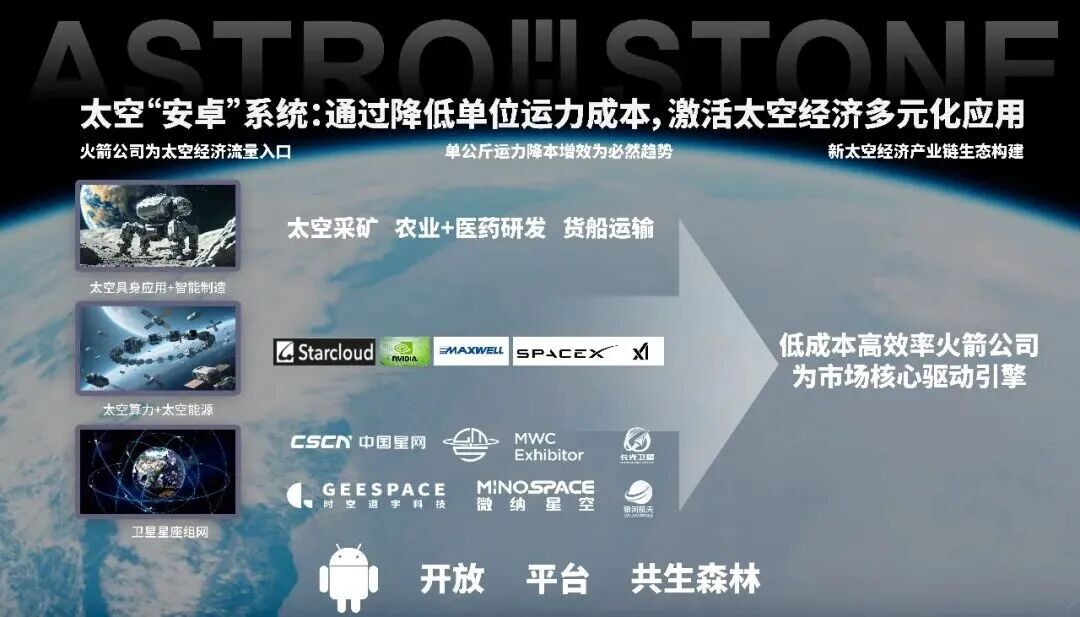
A Gaorong Ventures project lead commented: "As the core foundational infrastructure for strategic industries including satellite internet, space-based computing, and 6G, commercial aerospace is advancing from the R&D validation phase into the 2.0 era of scaled commercial deployment. Heavy-lift, reusable rockets have become an industry imperative. ASTRONSTONE is among the earliest domestic commercial rocket companies to fully benchmark against SpaceX, focusing on the development of 4-meter-class medium-to-heavy reusable liquid rockets. The team has consistently targeted the technological high ground of the commercial aerospace track. While maintaining firm commitment to its ultimate technical roadmap, the ASTRONSTONE team, led by Dr. Tang Wen, has demonstrated formidable execution with impressive engineering progress. We look forward to witnessing ASTRONSTONE set more industry milestones in the near future."
About the ASTRONSTONE AS-1 Launch Vehicle
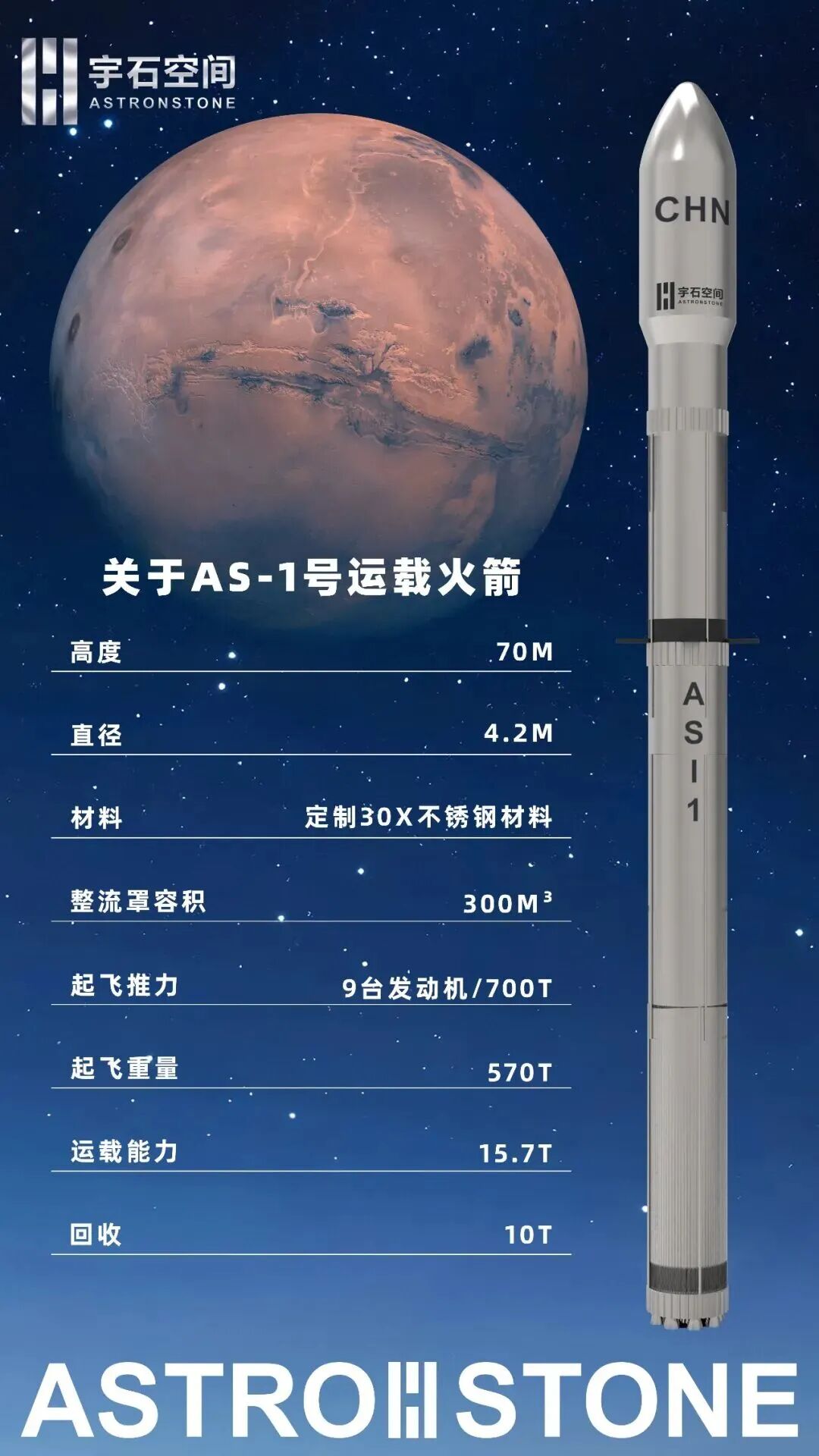
The AS-1 is a low-cost, two-stage medium liquid rocket employing a stainless steel structure, liquid oxygen-methane propulsion, and chopstick-arm recovery and reuse, primarily targeting the medium-to-low earth orbit payload launch market.
The AS-1 stands approximately 70 meters tall with a liftoff mass of roughly 570 tons and a 4.2-meter airframe diameter. It delivers 15.7 tons to LEO (Low Earth Orbit) in expendable configuration and 10 tons to LEO in reusable configuration.