Yiu-Cheung Chan: The Future of Retail

Do traditional retailers need digital transformation? How are technology drivers reshaping the retail industry? And how can companies win in the fiercely competitive fresh grocery and online fresh produce markets?
Do traditional retailers need digital transformation? How are technological forces reshaping retail? And how can companies win in the fiercely competitive fresh grocery and online grocery markets?
At the 2019 Gaorong Ventures CEO Summit, Chen Yaochang, investment partner at Gaorong Ventures and former CEO of Walmart China, delivered a compelling talk on the future of retail.
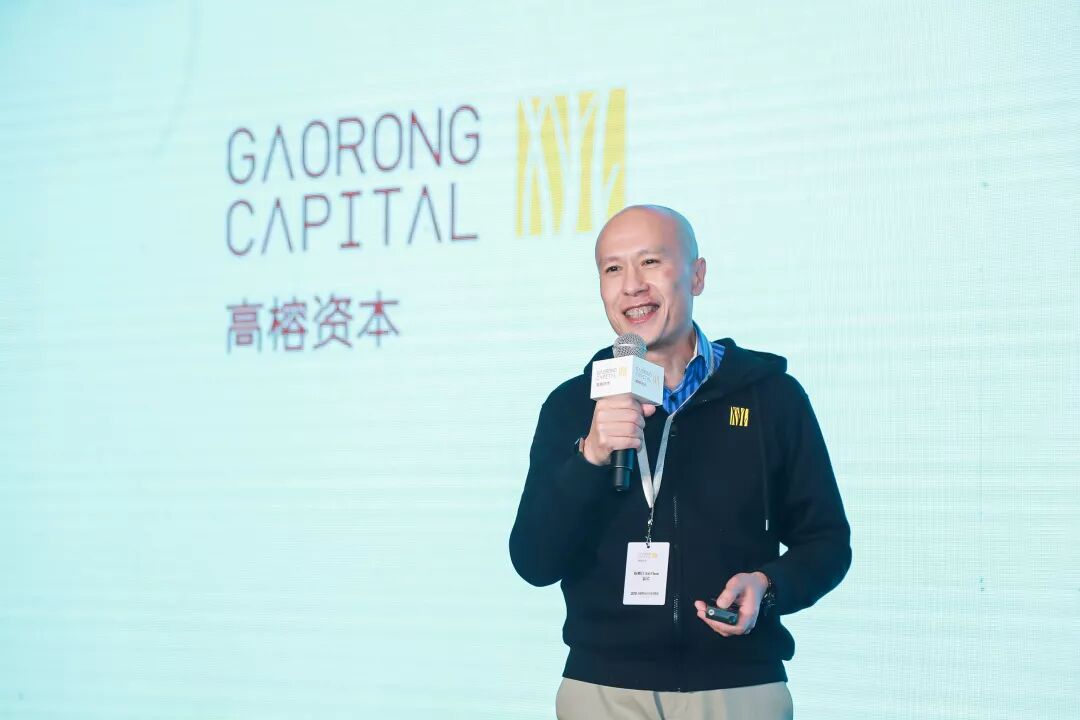
Chen Yaochang, Investment Partner at Gaorong Ventures and Former CEO of Walmart China
Chen's key insights:
- The world's best retailers are, paradoxically, laggards online. Excellent retailers that have mastered supply chains and built stable core customer bases are exceedingly rare globally. For these retailers, developing online channels is inevitable — though the timeline need not be so urgent.
- For large-scale, low-margin fresh grocery delivery, "last-mile" costs can still be reduced. He hopes robotics, automation, autonomous driving, and AI will drive down delivery costs. Low-cost renewable energy will be a critical enabler for automated delivery and fully or semi-automated cold chains.
- Last year, fresh grocery e-commerce accounted for just 7% of China's multi-trillion-yuan agricultural products retail market. Fresh grocery e-commerce will inevitably become the largest source of growth in total e-commerce transaction volume.
The following is a transcript of Chen Yaochang's remarks:
Hello everyone. I'm glad to talk about "old retail" in front of so many tech company CEOs today. My topic is The Future of Retail. Is the future already here? Will the future be better? Or has the future already passed? I don't have answers yet, but I believe different retail models will have different opportunities — it depends on whether you seize them.
Before entering retail, I worked at McKinsey & Company and in the music record business. Joining Dairy Farm was my first foray into retail. Dairy Farm was special — it mastered back-end supply chains, which enabled diverse front-end businesses including 7-Eleven convenience stores, Mannings, Yonghui Supermarkets, and more. It also represented IKEA and Starbucks in Asia, with world-class retail resources.
I currently serve as an independent director at Hong Kong's Link REIT, arguably the world's leading company in fresh food wet markets. In Hong Kong, retail demands high sales per square meter and strong tenant affordability, yet fresh food markets keep growing — and after upgrading, they've reclaimed fresh retail business from well-run supermarkets.
Digital Transformation Is Inevitable for Retailers
Digital transformation is painful for retail enterprises. Skip it and you miss the era; do it and you suffer too. Kroger, the world's largest fresh grocery chain with $120 billion in annual sales, announced 51% online sales growth in Q4 last year, with 91% of customers able to order online for in-store pickup or home delivery. Yet Kroger's Q4 profit was $390 million, down 20% year-over-year, and its stock dropped nearly 10% that day.
Walmart has been working online for 20 years. Its 2019 operating profit was $22 billion, below $29 billion five years prior. Walmart's online business grew 40% last year, but it exited many offline markets including Brazil and India. It acquired Latin American e-commerce platform Cornershop and bought Indian e-commerce company Flipkart for $16 billion. Over 20 years, Walmart's stock CAGR has been 1.5%.
For two decades, traditional retail has struggled to catch up online, and online self-operated sales have proven difficult to profit from. Internet companies can subsidize online businesses through other operations — Amazon derives 70% of revenue from AWS; Alibaba has its platform, with cloud computing and advertising as major profit drivers. Yet Alibaba is now operating Hema and acquired RT-Mart.
Currently, the world's best retailers are surprisingly behind online. Germany's ALDI, Costco, IKEA — including Link REIT's traditional wet market transformations — all excel at traditional retail. Excellent retailers that have mastered supply chains and maintained stable core customers are extremely rare globally. But these four are all online laggards; IKEA has made only modest efforts.
So, should these excellent traditional retailers develop online? Using wet markets as an example, I believe it's inevitable. If you're fundamentally a strong retailer with supply chain and consumer advantages, you can certainly expand online. However, the online transformation doesn't always need to be so rushed.
How Technology Can Improve Future Retail Efficiency
For large-scale, low-margin fresh grocery delivery, last-mile costs can still be reduced. I hope robotics, automation, autonomous driving, and AI can bring costs down — this is critically important for improving retailers' profitability.
Supply chain inefficiency and waste represent major opportunities. People are gradually considering C2M models, letting consumers see production processes and trace upstream manufacturing. But agriculture remains backward — weather's impact on crop yields and standardization is hard to predict, causing massive waste. So if AI can address waste upstream in the supply chain, it could be a significant business opportunity. For example, combining weather and soil data for production simulation to synchronize demand with production.
Mid-to-long-term technologies can empower consumers and transform markets. People accustomed to wet markets could, with 5G or better networks, select groceries remotely from home. Advanced satellite or micro-satellite imagery could enable more accurate upstream supply chain predictions.
Renewable energy is crucial. Masayoshi Son of SoftBank has invested heavily in renewable energy, saying we'll eventually see nearly zero-cost renewables — a major industry breakthrough.
One application is greenhouse farming, which can minimize upstream agricultural supply chain waste and convert non-arable land into farmland. Currently, 70% or more of greenhouse costs are energy; if energy costs drop to one-quarter, the volume of standardizable agricultural products would increase substantially.
When renewable energy becomes very cheap, it can accelerate automated, electric vehicle delivery and fully or semi-automated cold chains, plus smart front warehouses — immediately reducing fresh grocery retail's operational and delivery costs.
Fresh Grocery Retail's Past and Future
Fresh grocery e-commerce has a 20-year history. It began in late-1990s UK and Hong Kong supermarkets with home delivery of fresh products, using stores as sorting centers and phones and fax machines for order transmission. After 2000, internet development brought stores and front warehouses. Around 2010, China's local life community home services began, initially with restaurant delivery, followed by first-generation O2O including O2O fresh supermarkets and front warehouses.
Why did last year become an inflection point for fresh grocery e-commerce? Beyond "new retail," Hema Fresh made major innovations in online fresh groceries, cultivating consumers' "fresh groceries to home" habit. But Hema's customer base is relatively upscale, with premium, lower-frequency fresh categories. Now Hema is also deploying front warehouses, moving toward higher-frequency, mass-market directions.
Recently emerged players like Dingdong Maicai and community group buying feature much higher purchase frequency, with customers even including people in their 50s and 60s who previously shopped at traditional markets.
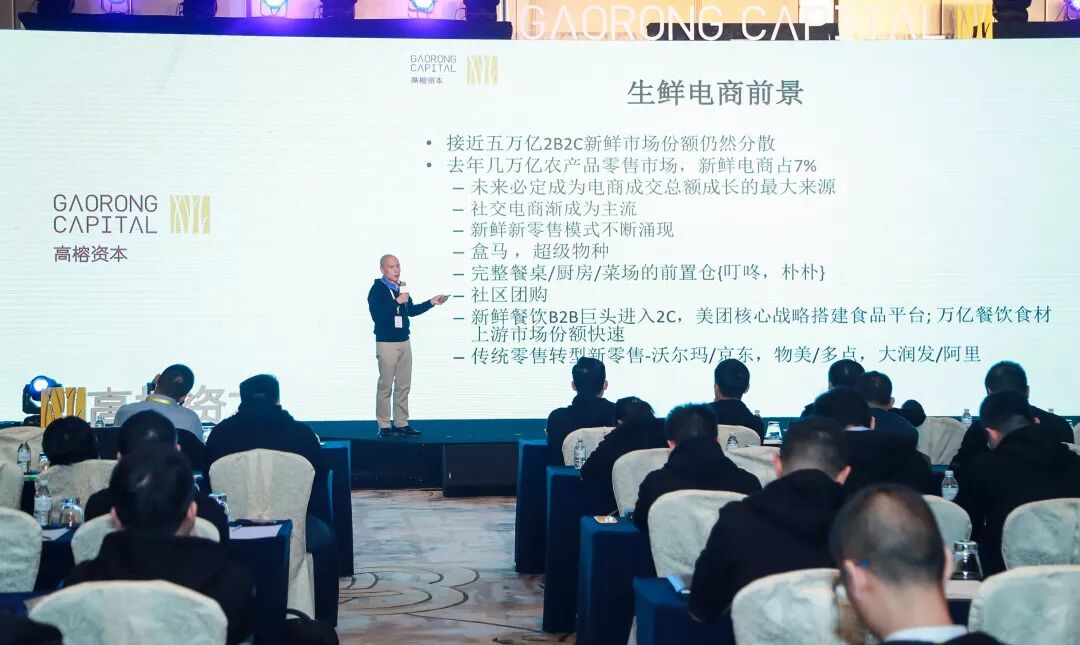
Looking at fresh grocery e-commerce prospects, fresh retail is the slowest-developing, highest-frequency, and largest-volume track in e-commerce. Beyond the massive market space, integrating upstream supply chains through fresh groceries creates continuous future business opportunities.
In a multi-trillion-yuan agricultural products retail market, fresh grocery e-commerce holds just 7%. Why is Alibaba doing fresh groceries? Because there's still 93% conversion potential — huge opportunity remains.
This year or in the first half of next year, China will see direct-operated fresh grocery e-commerce platforms with annual sales of 100 billion yuan. No offline Chinese retailer approaches that in fresh groceries alone, and at that scale, fresh grocery e-commerce can transform upstream supply chains.
New fresh grocery retail models are emerging rapidly — Hema, Super Species, front warehouses, community group buying, foodservice B2B giants entering B2C, and traditional retail transforming to new retail. With upstream supply chains secured, different formats can all experiment. So fresh grocery retail must rapidly achieve scale effects, simplify single-city models, improve operational capabilities, and replicate quickly — don't overcomplicate things.
One additional point: China hasn't yet seen large-scale traditional market upgrades. Traditional market upgrades plus new retail home delivery gives us further room for imagination.
How to Win in Fresh Grocery Retail/E-commerce
How can fulfillment costs be reduced? Does meeting consumers' instant needs — shortening delivery from 30 minutes to 15 minutes — increase fulfillment costs? The answer is that with bulk purchasing, fulfillment costs decrease. Fulfillment costs fall as density (order volume,网点), sorting efficiency, and accurate data forecasting improve.
How to increase product flexibility and meet consumers' varying meal needs? Drawing from previous 7-Eleven experience, shelves could change products across 3-5 time periods daily. If front warehouses did the same, with three daily deliveries to stores, SKU count would increase, driving sales.
Most essential fresh ingredients are highly local. Regional-scale and national fresh grocery e-commerce will coexist.
Of course, fresh grocery retailers must analyze their capabilities and competitive environment, choosing the most suitable regions for sustainable development rather than blindly doing everything. While continuously improving customer service, they must enhance internal operational efficiency to reach profitable scale. Capital deployment and scientific cash flow management are also critical.
The fresh grocery retail market is vast, with no single monopolistic winner. If a 100-billion-yuan direct-operated fresh grocery e-commerce platform emerges in the second half of this year or first half of next year, it could mark a major starting year for fresh retail and upstream supply chains. I also hope tech companies will consider improving upstream supply chain efficiency as a future business opportunity.
Recommended Reading
Visual Guide to Gaorong's Retail Investment Model: Why We Keep Betting on Fresh Grocery
Advanced Retail Formats Need to Intercept Consumers Across Time and Space

- Gaorong Ventures manages US dollar and RMB funds totaling approximately 15 billion yuan, focused on early-stage and growth-stage investments in TMT.
- Its limited partners include top global institutional investors as well as Chinese industry leaders in finance, retail, and advertising.
- Dozens of successful entrepreneurs, including founders of Tencent, Baidu, Taobao, Xiaomi, Meituan, Dianping, 360, Focus Media, Weibo, Sohu, JD.com, Vipshop, Tudou, and Autohome, are also Gaorong LPs.
- The founding partners previously led investments in numerous outstanding companies including Xiaomi, Razer, Baofeng Technology, G-bits, Tudou, Wondershare, ArcherMind Technology, 91 Assistant, 3G.cn, Mogujie, Dota Legend, and Yuanfudao.
- Since its founding, Gaorong's portfolio companies have grown into national and global industry leaders, including: Pinduoduo (NASDAQ: PDD), HUYA Inc. (NYSE: HUYA), Huami (NYSE: HMI), Mogujie (NYSE: MOGU), Lifesense (300562.SZ), Meituan (03690.HK), Ping An Good Doctor (01833.HK), Zhongrongjin (acquired by Homa Appliances), DeePhi Tech (acquired by Xilinx), Qianbaibao (acquired by Meituan), BIGO LIVE (acquired by YY), Fanpu Jinke, Beibei, Poizon App, Leqi E-commerce, DotC, Shiheng, Nuro, YITU, Roborock, Tiangong Intelligence, Zhuiyi Technology, Tigerobo, Geek+, Oasis Labs, Beitai Haoche, Quantgroup, Meili Jinrong, Shuidihuzhu, Testin, Boss Zhipin, Doumi, Danke Apartments, Hellobike, Qian Damei, Perfect Diary, and Ucommune.
- Gaorong Ventures maintains investment teams in Beijing, Shanghai, Guangzhou, Shenzhen, and Hangzhou. We welcome pitches and referrals: bp@gaorongvc.com
Scan the QR code to follow Gaorong Ventures

Thank you, good friends of Gaorong