A Conversation with Deel Cofounder Shuo Wang: How the Fastest-Growing SaaS Company in History Manages a Fully Remote Team Across 80+ Countries and 1,300+ Employees

It shattered global SaaS growth records — and our assumptions about what a truly globalized organization could look like.
Deel was one of the most closely watched SaaS companies globally in 2022. As a leading global compliance and payroll company, Deel grew its ARR from $1 million to $150 million in under two years, setting a new record for the fastest growth in SaaS history.
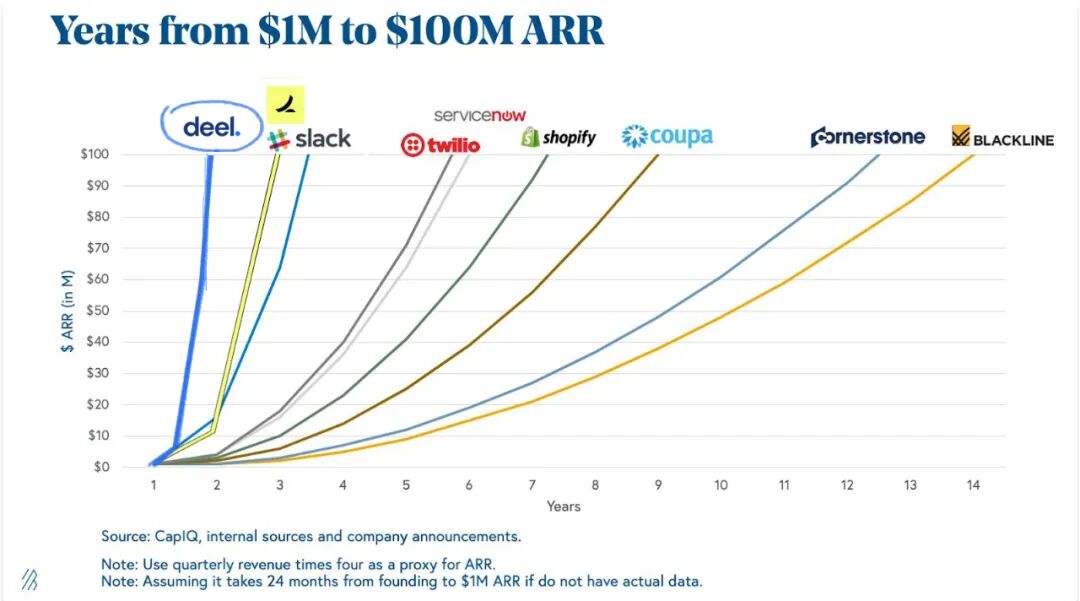
Today, Deel provides products and services to over 8,000 clients across more than 160 countries, enabling both large enterprises and SMBs to hire employees in a new country within minutes and "smoothly" resolve everything from onboarding to contracts, payments, benefits, compensation, and compliance.
In the era of "born global," cross-border remote hiring and work have become mainstream trends. Deel not only helps clients solve real problems in global talent employment, allowing talent worldwide to be unleashed and flow freely, "leading a revolutionary transformation in work and society"; at the same time, Deel itself continually experiments with new paradigms for the future of organizations.
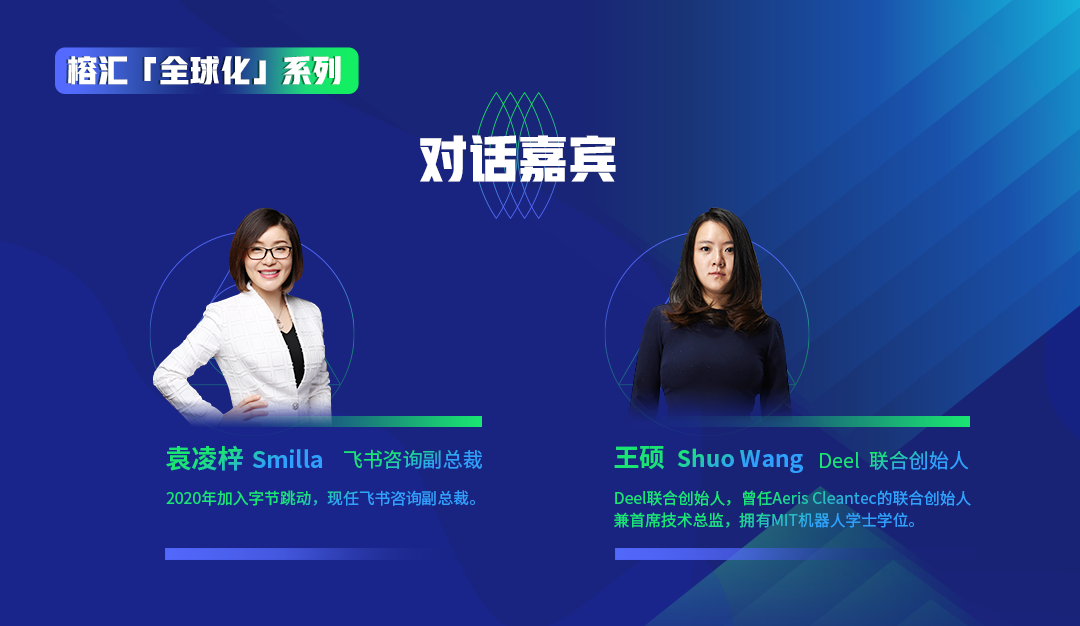
Recently, Deel co-founder and CRO Shuo Wang, Lark Consulting VP Lingzi Yuan, and other guests joined Ronghui's online event on "Global Organization Building and Management for Innovative Enterprises." In conversation with Yuan, Wang shared that Deel has been a fully distributed company from Day 1, with over 1,300 employees spread across more than 80 countries and regions, with no concept of a headquarters and no physical offices.
The conversation touched on questions everyone is curious about: How does Deel build its global organization to support high-speed growth? How does it attract top talent worldwide? How does it navigate cultural conflict challenges?
Organizational Structure Supports Business Growth
A global dimension means vast market share and talent pools
Yuan: Deel is the "hottest thing" in the global market right now, and Shuo is a very young and outstanding entrepreneur. Please tell us about your business, the speed of your global expansion, and the organizational scale and management approaches that match it.
Wang: The original vision for founding Deel came from seeing two major trends. First, around 2017, when I returned to China, I saw how aggressively WeChat Pay and Alipay were doing ground promotions, yet payments overseas remained a massive pain point.
At the same time, we saw some large overseas companies already adopting hybrid work models, with more and more tools and platforms like Slack emerging to support online collaboration.
If remote work was a major trend, what pain points existed in between? Cross-border payments would certainly be one; compliance was also critical, since every country has different employment laws, tax requirements, and so on.
Deel was founded in January 2019. At the time, we spent a lot of time researching enterprises, understanding their attitudes toward remote work and their pain points, and realized this was a very large market. Deel's first product launched in April 2019, and went through multiple iterations afterward. After the pandemic in 2020, the trend toward remote work accelerated further.
Deel focuses on solving compliance and global payroll problems for internationalizing companies. We provide compliance, payment, compensation, and tax solutions for companies looking to quickly expand into global markets. For example, if a company was originally positioned in Southeast Asia and now wants to rapidly expand into Latin America but hasn't yet established a company in Brazil, they can hire employees through Deel's Brazilian entity — what's known as EOR (Employer of Record).
The Deel team has grown from an initial 10 people to over 1,300 today, distributed across 80-plus countries. Deel has no headquarters and operates in a purely online model. I'm primarily based in Seattle, while my co-founder Alex Bouaziz is mainly based in Europe. I interviewed the first 400 hires online, and the team's culture and values are relatively consistent.
We strongly believe in the remote work model because it saves a lot of time and costs, and also gives us many more possibilities in hiring talent, increasing hiring speed, and more efficiently bringing talent together.
Yuan: Deel has no so-called headquarters concept, which itself breaks our usual assumptions about organizations. From an organizational structure perspective, does Deel manage globalization by functional lines, or does it manage and expand more by region?
Wang: Actually we do both. From its founding day, Deel was clearly an international company, not one focused on the U.S. market. We knew the product we wanted to build, the people we wanted to serve, and the solutions we wanted to provide were all international.
From a functional perspective, Deel's engineering and product design teams are in Europe; the sales team is global — we have sales teams in the U.S., Europe, Asia, and Latin America, each with a marketing team underneath. Although these sales teams started very small, once we figured out the model and refined the product, we could enter each market very quickly. So thinking about selling to global markets from Day 1 was essential for our growth.
Additionally, both Alex and I have international backgrounds. I grew up in China until 16, then went to the U.S. for two years of high school, and completed my bachelor's and master's at MIT. After graduating, I returned to Beijing to start a company for three years, then co-founded Deel. Alex grew up in France, went to Israel at 16, and later got his master's at MIT. Alex and I met at MIT and became very good friends. We also frequently travel to various countries to see how different countries operate. We know that talent is distributed everywhere, and so are opportunities. For companies today, starting from a single country is inferior to starting from a global dimension — whether in terms of market share or talent pools, it's vastly larger.
Our sales team matches different strategies to different customer types. For small businesses, we take a fast-track approach; for mid-market and enterprise, we place sales leaders and teams locally, along with corresponding channel partners.
Today over 8,000 companies globally use Deel's services, including large enterprises like Coinbase, Shopify, and Dropbox, as well as traditional companies like airlines. Among SMBs, many overseas unicorns and tech startups use us.
Yuan: Does Deel currently set up P&L (Profit and Loss) centers by region?
Wang: Currently our P&L is centrally managed by the corporate finance department. Because we have teams in over 80 countries, if each country had its own P&L center, it would become uncontrollable.
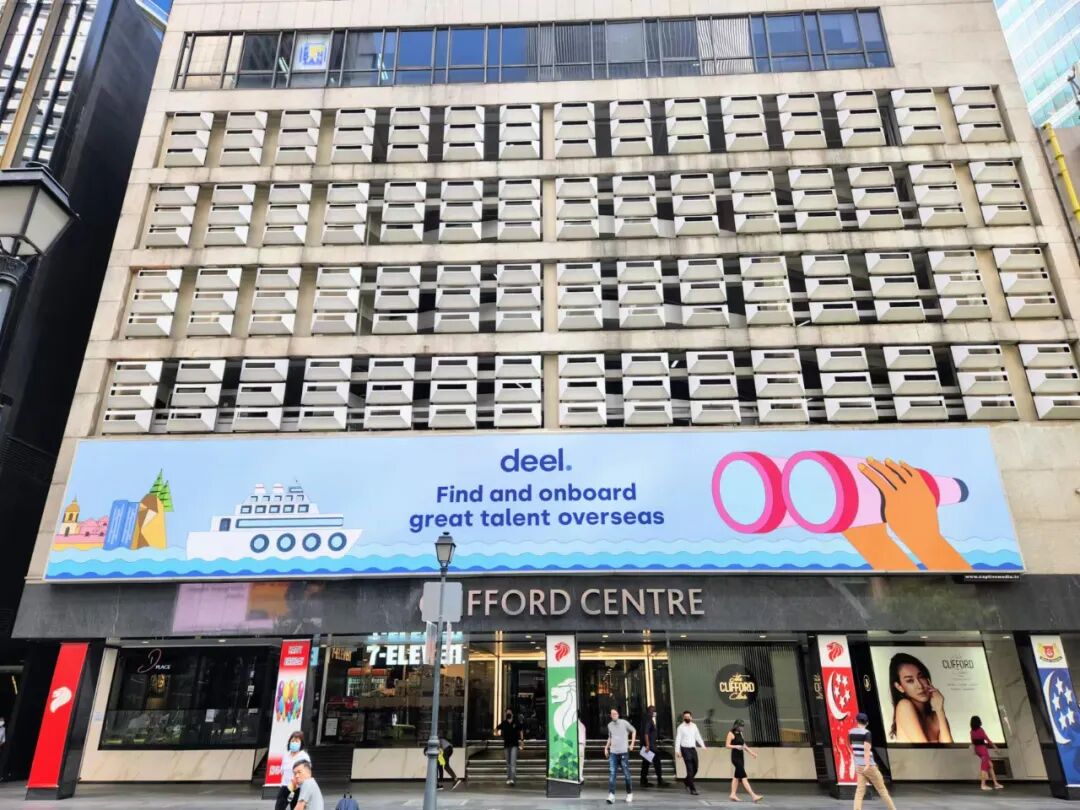
However, if we have an on-the-ground sales team in a particular country, we give them clear sales targets and make strategic adjustments in a timely manner based on local growth potential. For example, Singapore is a relatively fast-growing market, so we choose to do more events and marketing there, with corresponding adjustments to P&L and budget.
Talent Attraction
Goal-oriented rather than task-oriented, creating value together
Yuan: So the Deel team first has very high market acumen; second, the organizational model itself is very flexible, including the sales team expanding locally based on where customers are — a very flexible, fast, business-close model. Then what traits does Deel look for in candidates? How does Deel attract excellent talent?
Wang: For talent allocation, we adopt different strategies depending on whether it's a Tier 1 or Tier 2 market. For Tier 1 regions with large market potential, we hire more marketing, events, and sales people — for example, we currently have nearly 100 salespeople in Europe. For sales leaders in Tier 1 markets, we prefer to hire locally; the candidate profile often includes experience at both large and small companies, ability to build a team, and relatively rich resources in local channels and clients.
In hiring we focus on two things. If a candidate basically meets the requirements, a question I often ask is: What are your expectations, what are your future career plans, and what do you hope to gain by joining us? Through their answers, I can tell whether Deel's platform and what we're doing can meet their expectations and whether we can grow together.
Additionally for sales, we heavily value whether they have data analysis capabilities. Making strategic developments based on data analysis is very important. If sales lacks data analysis capability, it could be a disaster.
Yuan: So sales isn't just about having client relationships and potential business growth, but also about whether they can achieve continuous growth based on data.
Wang: Exactly. Alex understands European and Middle Eastern culture relatively well, while I understand Asian, American, and Latin American culture relatively well, so we have certain advantages in managing global teams.
I often joke with the team that we now have two management styles. One is the so-called "American" style: "You're great," "You're awesome," "You can do it" — works every time. There's another approach: if sales asks for a lot of resources, we'll use a more "Chinese" way and say, "You have to deliver." That means setting very clear targets, giving them very clear budgets, down to who they hire, what the salary is, what support this person needs, and so on. If there's an analyzable model, by year-end when we look at team performance, it generally meets expectations.
Actually, behind both communication styles, the core is to give sales teams greater authority in what they're good at. They have channels, understand clients, and know how to take appropriate sales strategies — we must support them. But if they say "I can only produce results if I have this money," then we need to very carefully look at the ROI.
Yuan: So it's more about "matching authority, responsibility, and benefits." Then are there some small frictions in work details? The biggest challenge for Chinese companies going global is often the "996" culture — we don't see this as Chinese corporate culture, but rather a work mode that's hard to avoid for high-growth startups. Has Deel encountered this situation? We typically think European employees have higher expectations for work-life balance.
Wang: This is a very good question. Our approach is to try to avoid potential problems during the interview process. For example, by asking about their expectations and career plans during interviews, we can tell whether the other person values work-life balance more, or cares more about career planning and wants to create value together.
Sales teams may be more data-driven; for roles like product and marketing where KPIs are harder to define, we break down KPIs and manage through individual projects. If every project has a KPI, clear timeline and process planning, and we look at results in the end, then to achieve the final result, employees will have stronger autonomy.
Actually remote work already gives employees considerable flexibility to plan their own time. We've found some employees are very suited to remote work, and some are not, so during interviews we need to observe candidates' self-planning and time management abilities to find employees who are more efficient at remote work.
I don't know if you watch Rock & Roast — I love it. There's a bit about OKRs and KPIs. KPI is "write 10 jokes a day"; OKR is "win Rock & Roast this year," so how do you become champion? "Then write 10 jokes a day." So rather than telling employees what they should do, it's better to give a phased goal and let employees autonomously tap their potential and plan for themselves. This approach has been very workable for us so far.
Yuan: Very good, this is very similar to our culture. First, filter out people with mismatched expectations during selection; second, more and more employees accept goal-driven rather than task-driven approaches. Goal-oriented is an upgrade in work philosophy, resolving the traditional opposition between so-called "996" culture and European work-life balance culture in another way. To some extent you've provided a way of working that meets the latest market expectations.
Cultural Conflict and Integration
Empowering teams and mechanisms, building a diverse atmosphere
Yuan: Looking deeper into the organization at culture, how employees of different races, religions, and countries in global enterprises can better understand and communicate with each other is a huge challenge. Especially for many Chinese startups in the globalization process, cultural integration is very challenging. What cultural pitfalls have you seen? What measures have you taken?
Wang: This is also a very good question. At first we thought with employees from so many countries coming in, there would definitely be cultural differences that required training and such work. And because Deel has grown so fast, every month new colleagues join, and likely their manager has only been at the company for 1-2 months — having managers do training would likely be a disaster.
So we established an Enablement team relatively early, specifically to conduct training for employees, including the company's mission, values, development progress, stories, and so on, as well as how to efficiently use collaboration tools. The Enablement team also designs different courses, some in video format. I believe for remote collaboration companies, dedicated investment in Enablement is very valuable. In the future we're also considering whether to incorporate Enablement into Deel's product, or build it together with our partners — this should help solve collaboration, communication, and values issues for many companies.
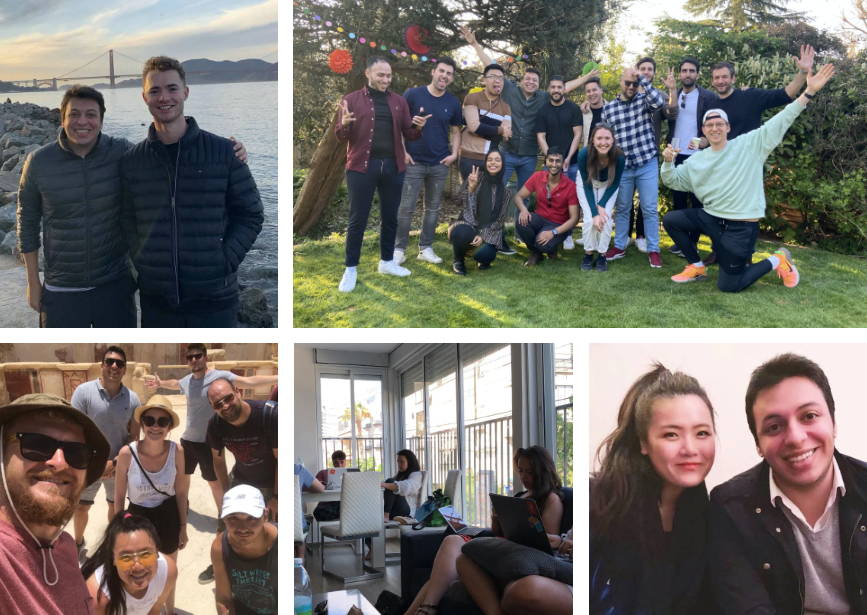
We've also designed an internal Connect mechanism, giving employees about 30 minutes each week to communicate with colleagues from different regions and departments, to better understand each other.
Additionally, every two weeks we have an All Hands meeting where the CEO syncs on company progress, and we also invite people from different countries to introduce local cultures and customs. This lets employees understand that everyone is in a particularly diverse atmosphere — your thinking also needs to be diverse and international, working very openly with colleagues from different cultural backgrounds.
Currently Deel's team turnover is relatively low. Taking the sales team as an example, we currently have no precedent of salespeople voluntarily leaving. Because we pay great attention to upfront screening, to employees' own value, giving them a platform for self-development where they can grow with the company, while giving teams autonomy and more training. These are very important to employees.