Exploring New Frontiers: How Chinese Entrepreneurs Going Global Can Spot Opportunities and Find Breakthroughs | Ronghui · Inside Huawei

Build globally differentiated competitive advantages.
This year, whether it's the standout performance of the "Four Little Dragons" of cross-border e-commerce, China's new energy vehicle exports pulling far ahead of the pack, or the rush to tap into markets in the Middle East, Southeast Asia, and even Europe and America, going global has remained a constant magnet for entrepreneurs.
Globalization is a critical strategic choice for business growth, because only by leveraging comparative advantages in global competition can companies pull themselves to the next level. Of course, the path to globalization is filled with challenges and trials, requiring unwavering commitment and sustained investment.
What are the certain opportunities for Chinese startups going global today? How can companies match target markets to their own resources and capabilities? After entering a new market, how do you find the key breakthrough point, and through rapid iteration and organizational upgrades, "keep winning battles"?
As early as 1996, Huawei launched its overseas strategy; its operations now span more than 170 countries and regions worldwide. From the ambition of "crossing the Pacific with high spirits" at Huawei's 2000 send-off for overseas troops, to the resolve of "the duck knows first when the river warms in spring, and we swear not to return until Loulan is conquered" at the 2016 deployment of 2,000 R&D personnel, Huawei's globalization journey has been full of trials, and has distilled a methodology for building competitive advantage.
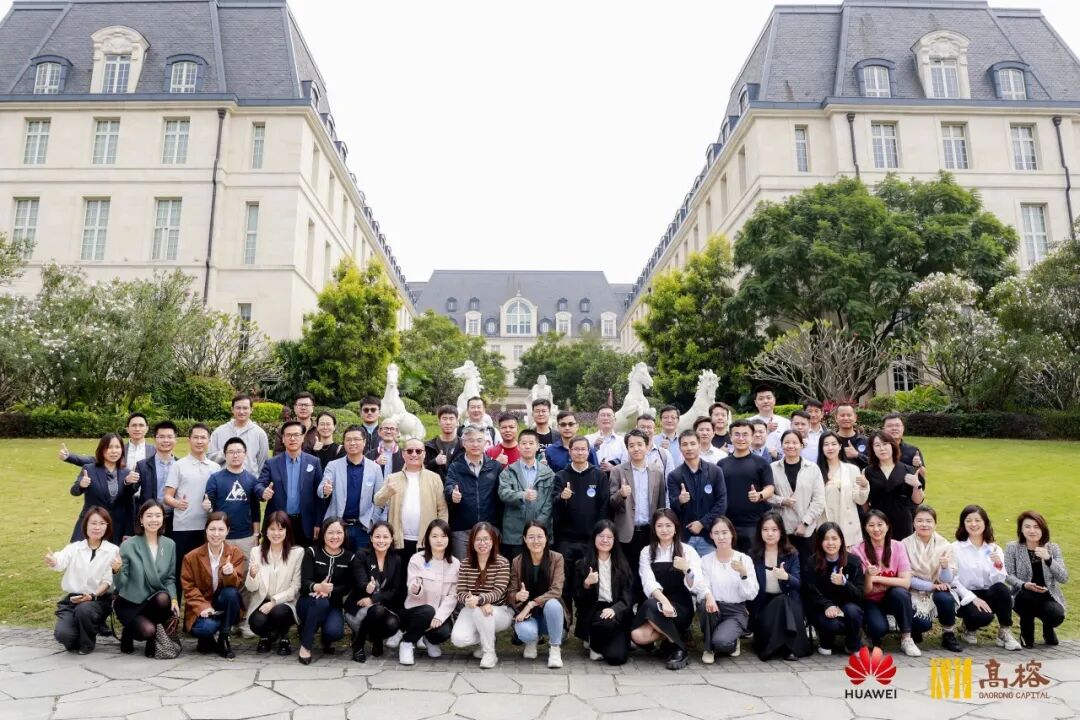
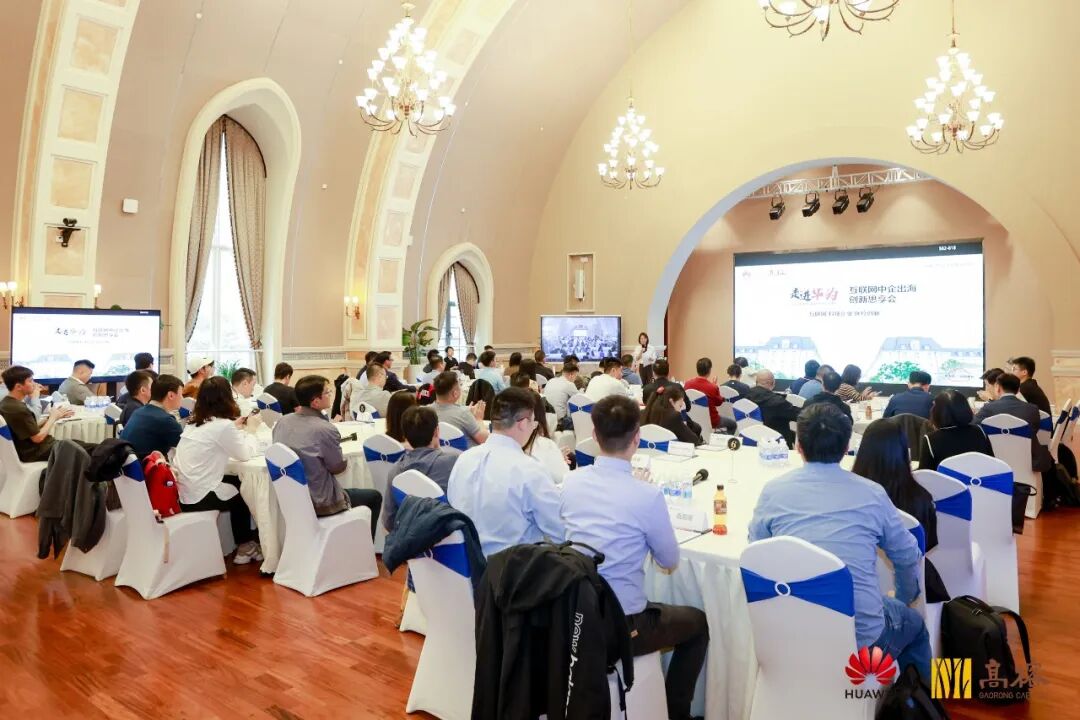
Recently, Gaorong Ventures' Ronghui program, in partnership with Huawei Cloud, invited over 60 CEOs and executives from internet, frontier technology, healthcare, and other sectors to Huawei's Songshan Lake base to study Huawei's globalization strategy, market expansion, and local operations methodology, and to explore opportunities in overseas markets such as the Middle East, Southeast Asia, and Europe.

Going Global: Full of Challenges, Boundless Potential
"Chinese companies face fierce competition in the domestic market, but looking at top internet companies, even amid such a complex macro environment, outstanding Chinese companies have achieved excellent results overseas. Going global is a blue ocean market waiting to be actively explored."
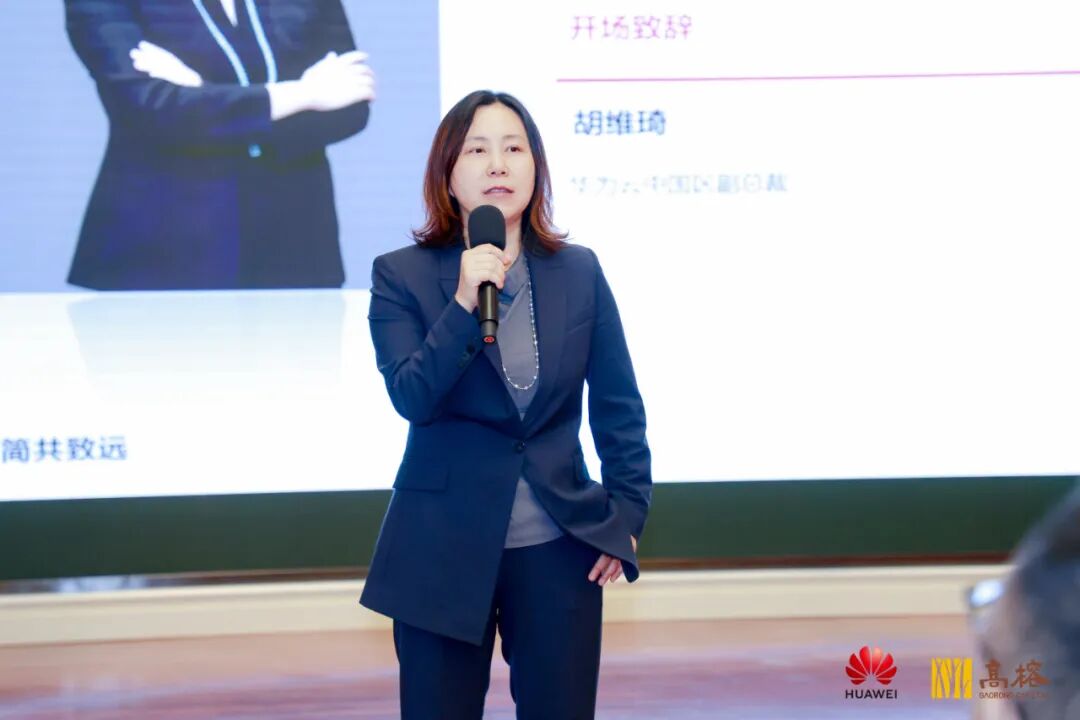
In his opening remarks, Huawei Cloud China Vice President Hu Weiqi noted that going global holds boundless potential, but is also full of challenges. The fundamental reason is that Chinese experience cannot be directly transplanted or copied — whether it's localizing products and operations, or deeply understanding local policies, economics, society, and culture, it's all an arduous process. He expressed hope that Huawei Cloud could become a partner for companies taking their first steps overseas, "running alongside them."
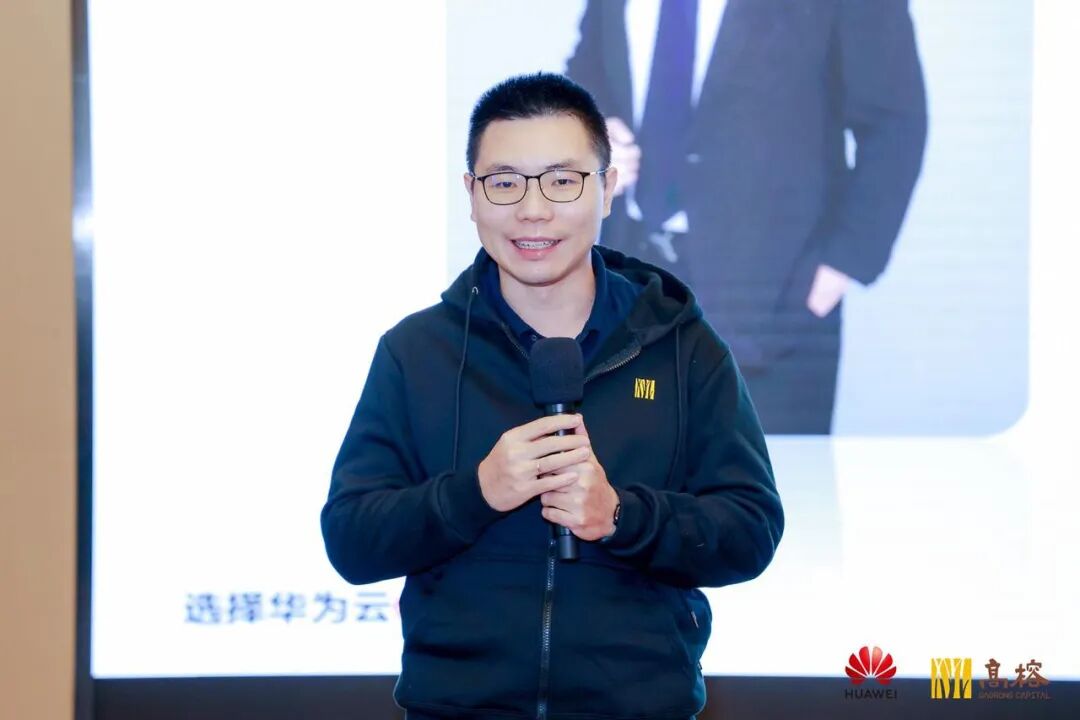
Hu Shuo, Managing Director at Gaorong Ventures, stated that global value chains are being restructured and evolving, constantly giving rise to new opportunities. "We very much look forward to Global Chinese Founders with 'born global' thinking, who can allocate resources globally across markets, teams, supply chains, and technology, to seize global market growth opportunities."

Certain Growth Opportunities in the VUCA Era
In the VUCA era, entrepreneurs need to evolve not just from an export mindset to a born-global mindset, but also to focus more sharply on certain opportunities. Liu Xinhua, Investment Partner at Gaorong Ventures, shared growth opportunities that appear relatively certain at present.
"Looking back at the past year, AI is undoubtedly the light of human growth in an anxious world." The reason is that large language models and generative AI technology mark the beginning of an entirely new super cycle, fundamentally changing how information is created and interacted with, and even how services are delivered. Moreover, AI has the potential to reshape both supply and demand sides, giving birth to new AI Native/AI-First Marketplaces. "Marketplaces with network effects remain the most exciting business model in the world." At the same time, AI is also accelerating industrial and scientific research processes — applications in medicine, meteorology, physics, and other fields demonstrate the potential of AI for Science and AI for Industry.
Alongside AI, climate tech represents another certain opportunity. Climate issues are a global consensus, and climate tech covers a broad scope. China leads the world in electric vehicles, batteries, and energy storage, which are poised to become a new growth pole for Chinese companies going global.
Addressing entrepreneurs' concerns about choosing their "first stop" for going global, Liu Xinhua identified the Middle East, Southeast Asia, Northern Mexico, and Japan as regional markets worth watching. In 2023, Chinese e-commerce's "Four Little Dragons" — Temu, Shein, TikTok Shop, and AliExpress — delivered standout performances. "Chinese e-commerce models are beginning to achieve global export," and Chinese e-commerce going global is also transforming from white-label exports to brand and platform exports. Facing the global supply chain reshuffle, Liu Xinhua cautioned entrepreneurs: "As key links shift to nearshoring and friendshoring, companies need to enhance supply chain resilience and flexibility, and actively leverage new technologies to upgrade their supply chains."
In closing his presentation, Liu Xinhua called attention to the latest technological progress and application of quantum computing. "The new generation of AI technology transformation is driving explosive demand for computing power; quantum computing is expected to usher in a new era of computing revolution."

Huawei's Global Journey: From Winning Benchmark Customers to Breaking Into Premium Markets
Huang Jin, Huawei Cloud Vice President and President of Strategy and Industry Development, shared the core levers for overseas market expansion, drawing from Huawei's globalization history.
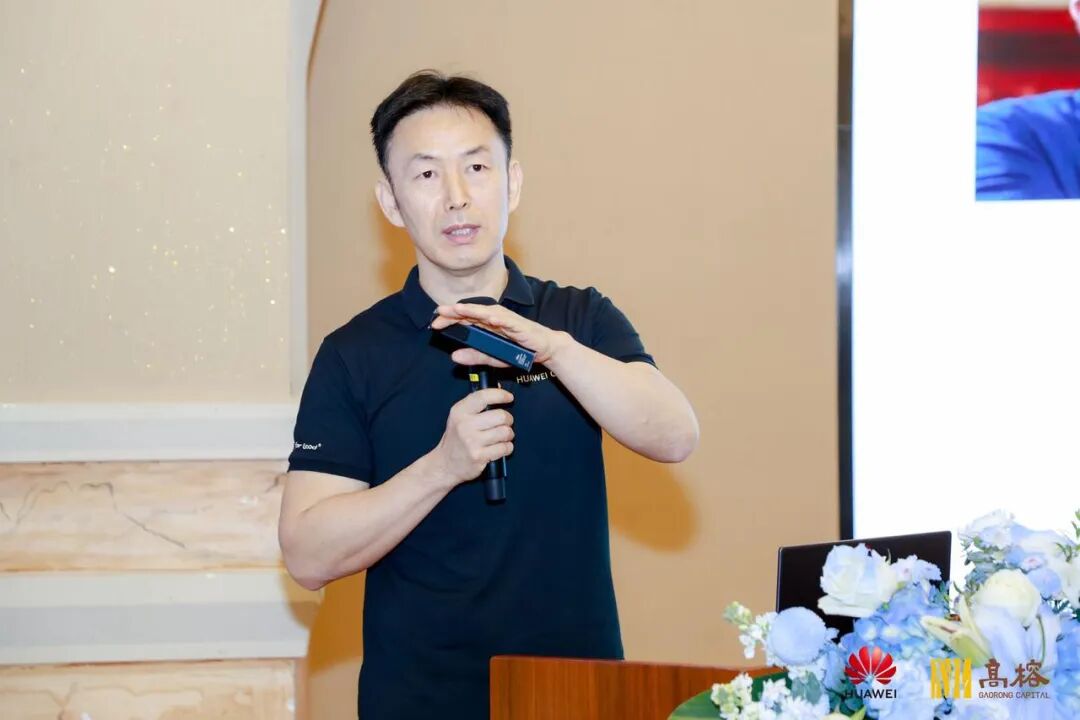
"A company needs global strategic vision to strive for excellence; a company needs to build a global commercial ecosystem to thrive endlessly." Huang Jin pointed out that only with a global mindset can a company pull its product competitiveness and overall capabilities to the next level.
During Huawei's first overseas deployment in 2000, entering emerging overseas markets, "finding benchmark customers with representative significance in the industry was crucial — win one customer, and others will follow." Huawei gave frontline representative offices autonomous decision-making authority; each was a business unit, "villages fighting on their own, yet not fighting alone."
By 2016, Huawei's second "deployment" sent large numbers of outstanding senior experts and managers overseas. With deep understanding of products and technology, they quickly grasped customer needs while pushing R&D and product development to iterate continuously, forming a virtuous cycle. "This deployment helped Huawei achieve breakthroughs in premium products and premium customers, capturing the high ground of value."
Huang Jin also shared observations on trends in Chinese companies' globalization. He noted that Chinese companies are undergoing an upgrade in their global development: in the past five years, over half of new companies going global were founded during the three pandemic years. From a layout perspective, Chinese companies' overseas business is gradually spreading from traditional mature markets like Europe and America to emerging regions like Southeast Asia, Eastern Europe, and the Middle East. Regarding prospects for Chinese companies going global, he believes that "many Chinese companies have already built strong capabilities domestically. Under the guidance of the national Belt and Road and dual circulation strategies, if they go overseas, adapt to the overseas environment, and choose the right customers, the future will be boundless."
From past to future, Huawei Cloud, based on its two core capabilities of technological innovation and overseas operations experience, helps Chinese companies expand into global markets across five directions: global layout, technological innovation, localized services, security and compliance, and user growth. Taking technological innovation as an example, Huawei Cloud adheres to focus + capturing the "next jump", concentrating R&D resources on cloud-native, database, AI, and other directions to drive technological innovation.

Building Global Competitiveness: Why "Far Ahead"?
"Internationalization and globalization are different. Internationalization is Chinese companies going international; globalization is achieving optimal allocation of talent, capabilities, experience, and resources globally." Zhang Wei, Distinguished Professor at Huawei University and Senior Management Advisor, delivered a systematic presentation on Huawei's globalization practices, competitive advantages, and organizational building.
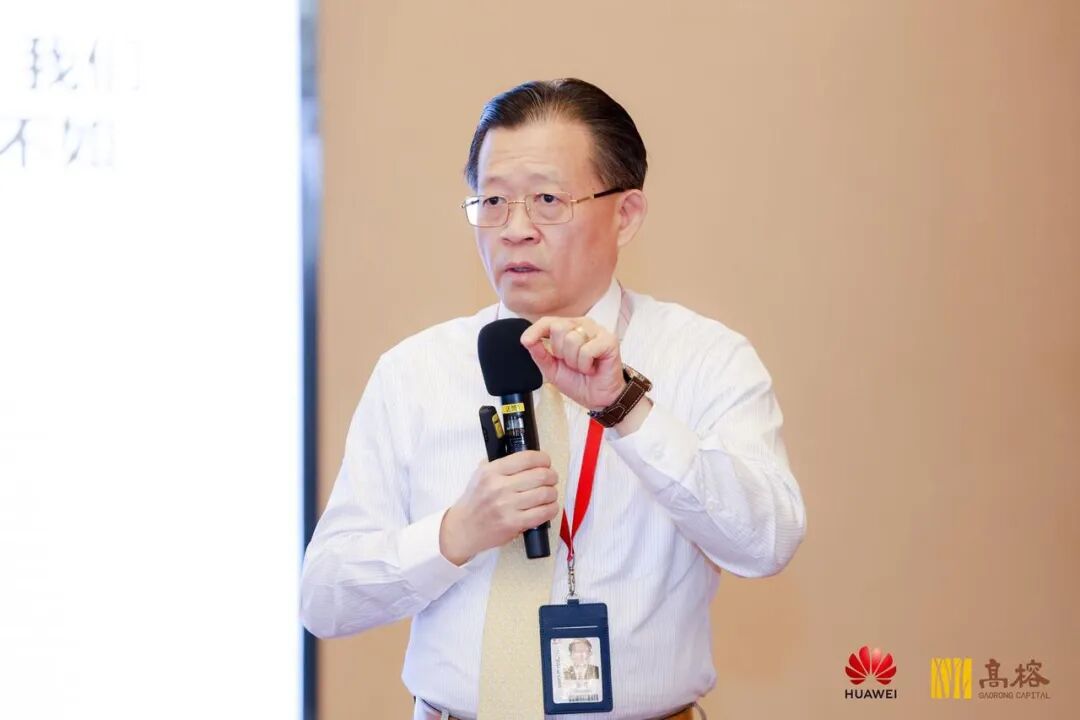
"As Chinese companies go overseas, where is their real expertise? What gives them the right to be far ahead? How do they keep winning battles? The hardships of overseas markets are, in some sense, even more difficult than domestic ones." Zhang Wei emphasized that "if you want to do good work, you must first sharpen your tools." Over the years, Huawei has built core competitiveness across different countries and regions, including strong R&D and innovation capabilities, market focus on ICT infrastructure and smart devices, continuous iteration of management systems, establishing process-based institutional mechanisms moving from "rule by man" to "rule for people," and most importantly, the internal driving force — Huawei's core values.
On the globalization path where hardships and challenges are everywhere, Huawei identified four key breakthrough points: compliant operations, process-based organization, local operations, and global resource allocation. Speaking of local operations, Zhang Wei emphasized the need to focus on attracting global talent and improving organizational efficiency — on one hand helping Chinese expatriate employees adapt to diverse cultures, while cultivating local employees to become "fellow travelers, people of shared purpose." "When a company's accumulated core values can be highly recognized by foreign employees and even global customers, that is true soft power."
For overseas management selection, Zhang Wei noted that Huawei adheres to four priority principles: selecting from successful practices and successful teams; selecting from main battlefields, front lines, and overseas hardship regions; selecting from key events affecting the company's long-term development; and leveraging a horse-racing culture.
Compliance is both a required course for Chinese companies going global and a growth engine for building differentiated competitiveness. Qin Dezhi, Head of Huawei Cloud's Legal Department, shared globalization compliance management practices through case studies. From a principles perspective, Qin Dezhi noted that compliance management should avoid oversimplification, globalization, and one-size-fits-all approaches. It must be based on risk, based on country, and based on business to be targeted and effective.
Today's compliance has also permeated every aspect of business operations, reminding companies to pay attention to qualification compliance, employment compliance, cybersecurity and privacy protection, consumer protection, content compliance, marketing compliance, platform responsibility, anti-unfair competition, and financial compliance. Huawei Cloud is also committed to building secure and trustworthy services with compliance as a prerequisite, allowing people to confidently enjoy the intelligent world of all things connected.

On-the-Ground Insights from New Hotspots for Going Global: Middle East, Indonesia, and European Markets
In recent years, the Middle East, Southeast Asia, and Europe have become important destinations for companies going global. Huawei business leaders for the Middle East, Indonesia, and European markets shared their frontline observations on regional market potential, business environments, and opportunities for going global.
An Bohui, Vice President of Huawei Middle East and Central Asia Public Cloud Business, said, "The Middle East is a land full of dreams." From a demographic perspective, the Middle East has a population of up to 420 million with a youthful structure — "the average age in the UAE and Saudi Arabia is only 31." In terms of market development stage, "it can be analogized to China at the beginning of reform and opening up," exchanging markets and capital for technology and production chains. Regarding opportunities for Chinese companies going global, An Bohui pointed out that the Middle East has high internet penetration, with fast growth in media entertainment and gaming, while local policies encourage and support AI, automotive, new energy, and other industries, hoping to introduce advanced Chinese business models and drive local industries — for example, the UAE has proposed an "AI Strategy 2031." Huawei has been rooted in the Middle East for over two decades, and hopes to accompany more partners in growing together.
Wu Zimeng, Director of Strategic Insights and Communications at Huawei Indonesia, shared that Indonesia has a large and young population, with over 60% under age 40, and 70% of those aged 15-59 possessing basic ICT skills. Indonesia's current per capita GDP is roughly at China's level 15 years ago, with rapid economic development. Notably, Indonesia is gradually becoming a manufacturing hub for Southeast Asia, with manufacturing accounting for 20% of total GDP. High-growth potential industries in Indonesia to watch include manufacturing, ICT, and e-commerce.
Pan Jie, Vice President of Huawei Cloud European Cloud Business Unit, noted that China is the EU's second-largest trading partner. The European market is very mature, with high operating costs and compliance thresholds, requiring significant investment to adapt products to local markets. Key industry trends observed include digitalization and SaaS — the European SaaS market is projected to reach $140 billion by 2027. From a regional selection perspective, the Netherlands, Europe's "digital gateway," is considered the "first stop for entering Europe," with key industries including manufacturing, logistics, and high technology; Ireland, known as the "Silicon Valley of Europe," is also a hub for software, internet, and biopharmaceutical companies going global; additionally, Turkey has a young population structure and strong economic growth momentum, while Hungary has attractive investment policies for new energy and high technology, both worth attention.

Crossing mountains and seas, encountering the future. Setting foot on new land is only the beginning. Only by focusing on target markets, taking innovation as the foundation, and building solid local operational capabilities can companies cut through thorns and brambles on the journey of globalization.