From Finite Resources to Infinite Games: What Hellobike Got Right at Age Three | Gaorong Ventures "Beautiful Life" Feature

How Hailo's Technical DNA Helped It Win a Brutal War of Attrition

Editor's Note: We are living through an era of innovation's "spiraling descent." In the second half of the game where the internet merges with the real economy, entrepreneurs face greater challenges than ever. Beyond competition,博弈, and risk, what deserves more reflection today is technology's underlying驱动力 for industries — and, deeply understanding the people whom technology serves.
The internet changes in the blink of an eye, but humanity's desire for a better life endures. Gaorong Ventures' vision is to "create" a better life through innovation. We hold fast to our original conviction that technology and innovation will make human life more beautiful.
In the coming weeks, we will roll out Gaorong's "Better Life" series, decoding Gaorong Ventures portfolio companies and observing how they use technology and innovation to build a better life. In the end, the only opponents we face may be ourselves and time.
In the battleground of bike-sharing — fraught with conflict and noise — Hellobike's survival path and present-day comeback have indeed exceeded many people's assumptions about so-called endgames. From a "late entrant" with limited resources, to the eventual market leader in bike-sharing, to continually expanding its business boundaries into a mobility platform encompassing Hellobike bicycles, e-bikes, electric vehicle services, and battery swapping — Hellobike took just three years to break out of its prescribed circle and play an "infinite game." Today marks Hellobike's third anniversary. Based on conversations with the Hellobike team, Gaorong Ventures seeks to answer three questions:
- If entrepreneurship is like a poker game, when do you choose to sit at the table? Does a latecomer advantage exist?
- How did Hellobike's technology DNA help it prevail through grueling battles?
- What further room for imagination does Hellobike's future hold?
Hellobike Today: Technology at Its Core
8:30 a.m., Lijing Road, Tianfu New Area, Chengdu. White-collar workers pedal Hellobike bicycles toward their offices, forming a blue-and-white cycling scene.
During the morning rush hour, demand along this stretch exceeds 1,000 bikes, often creating short-term supply shortages. How to solve this? Hellobike hopes to improve supply-demand matching efficiency through an ever-evolving intelligent system.
Powered by big data, artificial intelligence, and cloud computing, Hellobike's intelligent system can issue real-time dispatch instructions to operations staff — including which nearby stations to relocate idle bikes from, how many to move, and the optimal routing — moving toward intelligent operational decision-making.
At the end of August, during the 2019 World Artificial Intelligence Conference, Hellobike officially released its latest upgraded intelligent system: "Hellobike Brain 2.0."
This intelligent system stems from Hellobike's understanding of bike supply-demand dynamics. Hellobike believes that bikes shouldn't meet all possible demand through unlimited deployment; rather, they should provide the most stable supply of运力 during the highest-frequency time periods and locations, serving the most刚需 users.

Ren Liangliang, Hellobike's VP of R&D, explains: "Bike-sharing is a business with extremely fragmented supply and demand, so the demands on algorithms, data, and real-time performance are very high." Previously, operations staff relied on experience and intuition to judge bike dispatching within their jurisdictions, unable to achieve lean, efficient operations.
In practice, Hellobike Brain continually adjusts its parameters. Hellobike runs A/B tests across different cities. Results show that under Hellobike Brain's intelligent dispatching, average bike "turnover rate" (riding frequency per bike) within regions has improved by over 15%, with continued iterative upgrades.
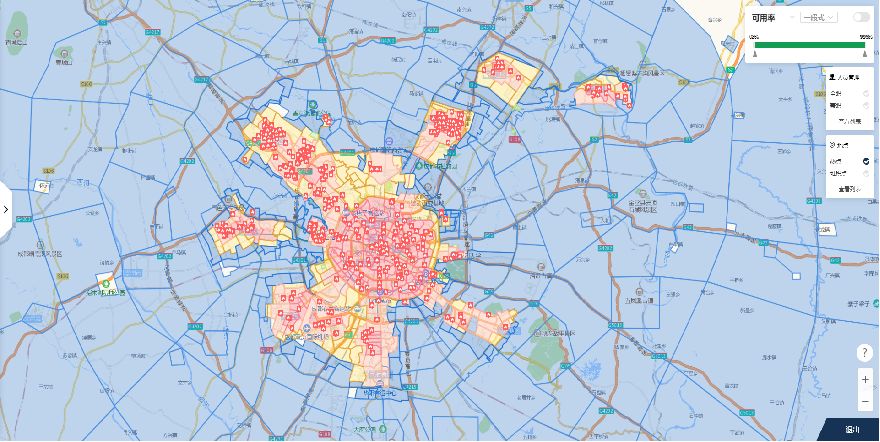
Hellobike Intelligent Dispatching System
Beyond optimizing supply matching, Hellobike also uses big data and AI to improve operational efficiency — "reducing costs and increasing efficiency."
The bike-sharing industry contains operational "black holes" that devour human and capital resources. For example, early user online故障 reporting accuracy was only 40%, wasting substantial operational costs; bikes that became "lost" due to vandalism or other reasons were extremely difficult to recover.
"We chose to reduce costs and increase efficiency through technology, saving massive amounts of cost," Ren Liangliang explains. Hellobike developed an intelligent fault-reporting system that uses neural network algorithms and machine learning to assess the credibility of system-reported faults, then decides whether to proceed with repairs. Since launch, fault judgment accuracy has reached 90%. A lost-bike early warning model analyzes海量 data including smart lock status, regional data, and historical bike loss patterns to predict loss risk, enabling预判 and early warning before a bike actually goes missing.
Visual recognition technology, meanwhile, equips Hellobike's operations system with a high-precision telescope, providing real-time recognition and intelligent judgment for subsequent operations and urban traffic management. Hellobike's Argus intelligent visual interaction system can identify both shared bikes and private vehicles within specific areas. If bike parking in an area reaches a warning threshold, the system can issue dispatch alerts to relevant government management departments and the company in real time. On the enterprise side, machine decisions can generate operational work orders; on the city management side, it can help address random parking, intentional vandalism, and other issues, making management more efficient.
Currently, Hellobike has piloted the Argus system at high-traffic stations including Shanghai's Qibao Metro Station.
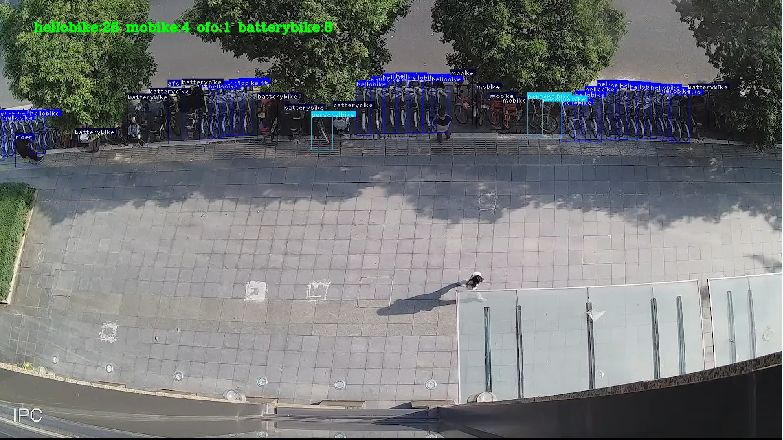
Hellobike Argus Intelligent Visual Interaction System
AI technology has been integrated across Hellobike's entire business chain, driving the refinement and intelligence of this heavily operations-dependent industry. As Hellobike CEO Yang Lei stated, the release of Hellobike Brain 2.0 "marks Hellobike's entry into a new stage of intelligent two-wheel operations across all business lines, with artificial intelligence becoming a powerful driver for two-wheel mobility development."

Hellobike's "Technological Pragmatism"
Hellobike's official data shows that Hellobike Bike currently has over 260 million registered users, has entered 360+ cities, processes over 20 million daily orders, and holds over 50% market share. On July 23, QuestMobile's "2019 China Mobile Internet Semi-Annual Report" showed Hellobike's monthly active users across all platforms exceeding 63 million, firmly ranking first in the bike-sharing industry.
To crack the code of Hellobike's comeback, one must start from its birth.
In September 2016, Hellobike's bike-sharing business officially launched, at a time when Mobike, OFO, and other entrants were already deep in battle. How did Hellobike achieve latecomer advantage with limited resources?
Grounded in its understanding of industry needs, from its very first day at the table, Hellobike did not treat competition as its top priority — or rather, chose to ignore the resources it controlled; instead focusing on how to make the unit economics work, and how to use technology to improve efficiency across business processes.
"Bike-sharing, in most people's eyes, isn't a strongly technology-driven industry. But in our view it's completely different. From day one in this industry, we thought very little about competition. Most of our time and energy went into how to use technology to make operations more efficient," Yang Lei shared at Gaorong Ventures' CEO Summit this past March.
From Hellobike's founding, "even during extremely difficult times, investment in technology was very substantial. Everything could be cut, except technology," Yang Lei said.
In China, two-wheel mobility demand has a very high ceiling — approximately 1 billion two-wheel trips per day, with 1-kilometer commuting being particularly刚需.
Facing massive demand, Yang Lei and his team "grew more reverent the more they did, because this business is completely dependent on technology." Looking back at Hellobike's three years, technology-driven development runs throughout. However, Yang Lei also clearly points to the pragmatic nature of its R&D: "We're not researching what black-box tech. All our technology investment and R&D revolve around one direction: how to improve efficiency."
One of Hellobike's underlying codes may be — using a technology mindset to solve problems, holding technological idealism in decision-making, while practicing pragmatism in execution.
In November 2016, Hellobike 1.0 launched. Despite tight finances at the time, the team firmly chose to develop smart locks, "because only with smart locks can precise management of bike operations be achieved through technological means."
In 2017, Hellobike further considered how to operate bikes efficiently. Compared to dispatching through very heavy offline operations teams, Hellobike hoped to achieve intelligent operations through systems and machines. "At the time, Shanghai had 300,000 users daily riding shared bikes from downtown to suburbs. Human logistics dispatching costs were extremely high. Hellobike chose to develop electronic fences to achieve automated interception — when users rode beyond a certain range, the electronic fence would issue a reminder."
On September 17, 2018, Hellobike Bike officially announced its name change to "Hellobike," growing from a single bike-sharing company into a comprehensive mobility platform encompassing Hellobike Bike, Hellobike e-bike, and car services. For each mobility hardware product developed, Hellobike chose highly self-developed core software and hardware combined with极致 supply chain management.
Take e-bikes as an example: Hellobike equips them with MTK highly integrated chips, supporting GPS + base station + Bluetooth multi-mode positioning. Ren Liangliang, responsible for Hellobike platform hardware R&D, notes: "We want to not only control all core elements but push them to the extreme, because we hope to operate business lines over a longer time horizon, rather than making 'cannon fodder bikes' for competitive posturing."
Facing the challenge of disorderly bike parking in cities, Hellobike also chose to solve it through technological means, launching the industry's first application-level adaptive Bluetooth electronic fence. When detecting a bike hasn't been parked in a designated area, the smart lock automatically pops open. This technology achieves over 95% success rate at the sub-meter level in testing, ranking industry-leading. It has currently been deployed in over 10 cities including Shanghai and Nanchang.
Ren Liangliang explains: "Bluetooth beacons face enormous干扰 factors in practical application — rain, nighttime signals, and so on all differ. We had to grind through the hard problems. We embedded neural network algorithms that can better predict and sense signal strength, improving precision and accuracy." During the World AI Conference exhibition, despite significant interference from complex factors inside the venue, the beacon recognition success rate reached 100%.
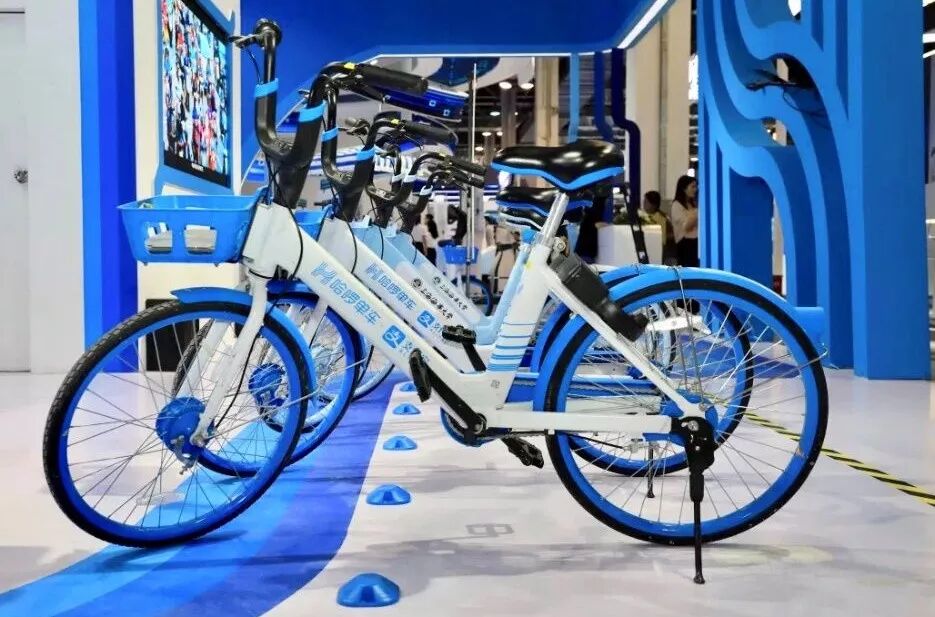
Through sustained technology investment and R&D, Hellobike has achieved significant improvements in input and output efficiency, providing users with better mobility services while laying groundwork for scalable profitability. Currently, Hellobike Bike is profitable in over half of China's cities.
Hellobike's R&D team now exceeds 1,000 people, comprising half of Hellobike headquarters staff.

Hellobike's Future: Can a Bike Have Dreams?
Technology is paramount. As Yuval Noah Harari said, technology will change human life, "but how? There are so many different paths, and we still have choices about how to apply these new technologies."
For Hellobike, how to apply technology to user needs and industry development in the future merits more thought.
How should Hellobike be defined today?
What is clear: Hellobike started with bike-sharing, but won't stop there. Chang Chen, founding partner of Gaorong Ventures, believes that "an industry satisfying users'刚需 needs, as it continuously evolves and develops, requires service providers to keep upgrading their technology and products to better serve consumers."
Today, Hellobike drives refined operations through intelligent technology, while continually enriching its two-wheel-centric mobility ecosystem. "Bikes become the traffic foundation business, then expand to e-bikes, two-wheel EV leasing and sales, battery swapping services, ride-hailing, and other rich business forms."
The mobility big data Hellobike has accumulated will also continuously释放 potential going forward. In 2018, Hellobike upgraded its organizational structure, with its newly formed "middle platform department" achieving "big middle platform, small front ends." All company-level data is stored in the middle platform data cabin, with different business departments able to access needed data in a timely manner — for example, the data required by Hellobike Brain 2.0 comes from the middle platform. In external data integration, Hellobike will also coordinate with traffic management departments to provide big data support for future intelligent transportation.
Facing the accelerating commercialization of 5G, Hellobike is also investing R&D resources. Ren Liangliang points out that 5G's high bandwidth and low latency will further assist Hellobike's business. For example, based on 5G, Hellobike is exploring end-to-end cloud, enabling vehicle-to-vehicle communication and aggregation, which will further improve system communication and decision efficiency. In the Argus system, 5G's arrival can support real-time recognition of every port, combined with high-precision image recognition, achieving precise end-to-end zone management.
Three years in, technology is deeply rooted in Hellobike's DNA and continues driving business evolution. Hellobike has already broken out of the bike-sharing circle, steadily advancing toward building a "world-class technology company." Having achieved the fusion of technological idealism and product pragmatism, Hellobike will better advance into the future-facing "infinite game."



YITU Claims Another World Championship — This Time in "Voiceprint Recognition"!