From the Flywheel to Working Backwards: How Amazon Made Innovation a Habit | Ronghui

Ronghui Organizational Upgrade Season: A Deep Dive into Amazon's Innovation Culture, Architecture, and Mechanisms
Since its founding, Amazon has spent 27 years building one industry-first innovation after another, growing into a massive enterprise spanning both B2B and B2C with over 1.5 million employees.
Data shows Amazon's full-year 2021 revenue reached $469.8 billion, up 22% year-over-year. First-party e-commerce accounted for 47.2% of revenue, third-party marketplace services for 22%, and cloud services generated 13.2%. Other businesses include Prime, physical retail, and advertising.
What gives Amazon its powerful innovation DNA of "Always Day One"? What consistent mindsets and methodologies underpin it? And what battle-tested mechanisms can startups learn from Amazon?
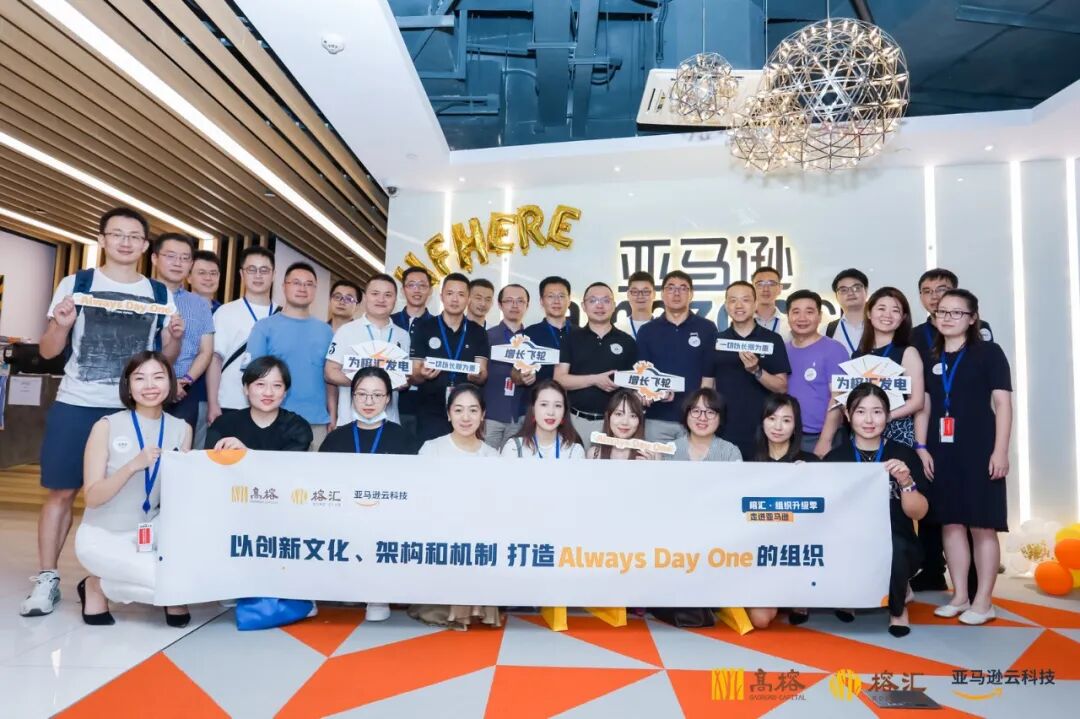
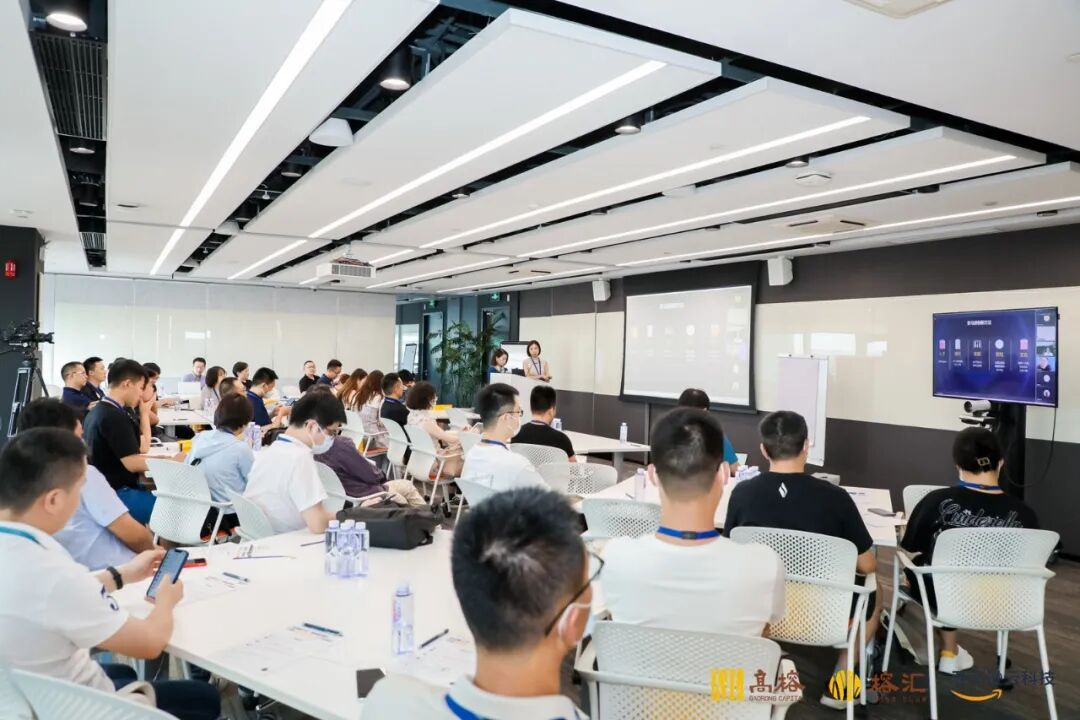
Recently, Gaorong Ventures invited portfolio companies to visit Amazon Web Services to study Amazon's innovations in culture, architecture, and mechanisms — the organizational capabilities that ultimately sustain business growth. Below, we've compiled key insights from four AWS experts to share with fellow entrepreneurs.
How Does Amazon Succeed Across Multiple Sectors?
Innovation Method = Talent + Organization + Mechanisms + Architecture + Culture

Adam Gu — General Manager, Strategic Business Development, AWS Greater China
Amazon is widely seen as a highly diversified company. Behind this diversity runs a single thread: customer obsession and boundary expansion. Amazon focuses on three core customer groups: C-end consumers, B-end clients including third-party sellers, and developers — a segment that emerged with cloud services. We continuously expand our boundaries around these customers.
Moreover, Amazon's businesses are fundamentally platform services. Platform businesses require massive upfront investment — e-commerce warehouses, logistics, cloud infrastructure. Only with sufficient upfront investment can we earn customer trust, attract more users to the platform, and ultimately get the flywheel spinning.
The success across diverse businesses and sectors also reflects Amazon's formidable innovation capacity. Amazon's innovation method spans several dimensions: talent, organization, mechanisms, architecture, and culture.
On talent, we prefer to hire Builders. Take product managers: a true Builder doesn't treat product launch as their proudest moment, but rather as Day One — the beginning of relentless iteration.
Organizationally, Amazon encourages two-pizza teams that can operate independently. AWS itself was an internal startup incubated by current Amazon CEO Andy Jassy, who initially led an atomic team of 57 people spanning product, engineering, operations, and finance.
As organizations scale, good mechanisms are needed so that everyone has a working model that promotes innovative thinking.
On architecture, Amazon advocates cloud-native architecture, microservices, and DevOps. The essence is letting developers focus their energy on business logic rather than undifferentiated repetitive work.
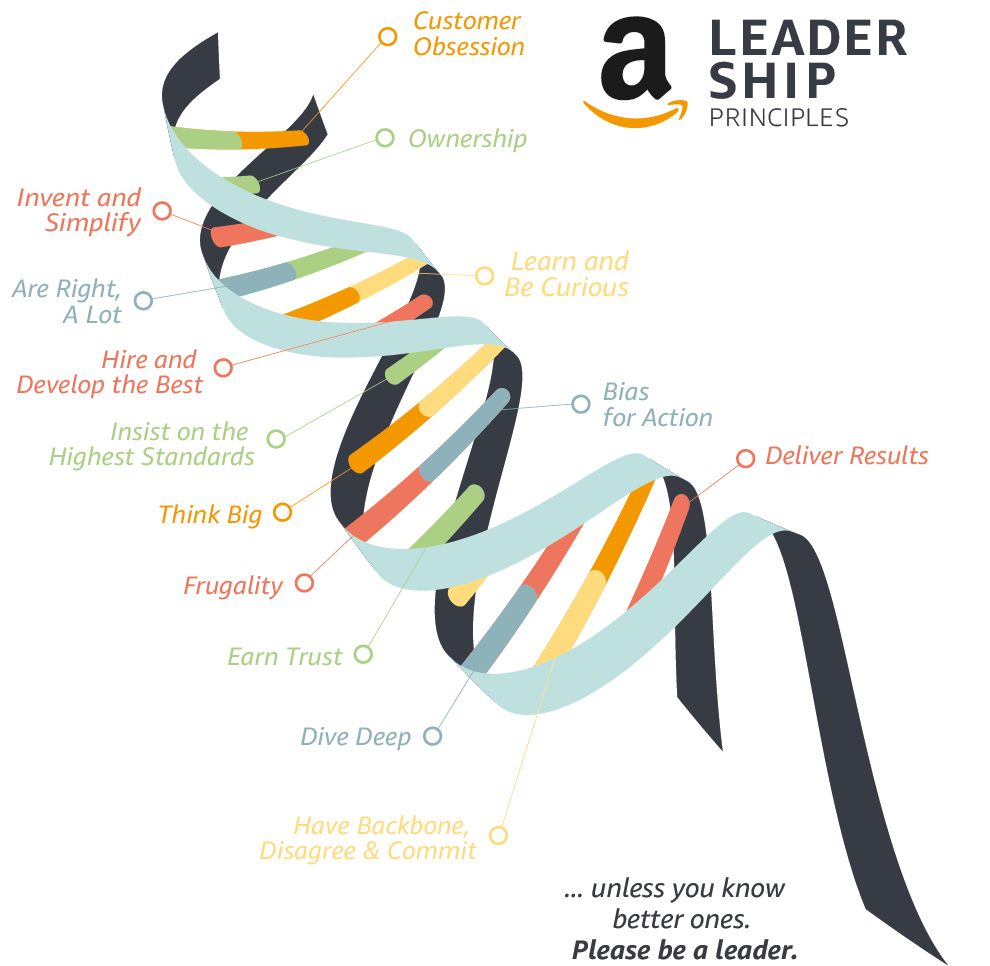
Amazon also has distinctive cultural traits. Take "permission to fail": we value input. Even if a particular innovation's output doesn't succeed, the people and technology brought in through that input still matter.
Amazon's Cultural Innovation
In Times of Change, Focusing on What Never Changes Is More Valuable

Ying Hu — Director, Startup Ecosystem and Investment Business Development, AWS Greater China
Today's era is full of shifting external factors: digital nativity across industries, cross-sector innovation becoming standard, globalization broadening and deepening, Gen Z rising, and more. These external factors create multiple governance tensions inside companies: the tension between low barriers to product development and higher decision-making difficulty; between management flattening and employee individualization; and between top-down decision-making and bottom-up innovation.
In times of change, what's most precious is strategic steadiness — focusing on what doesn't change.
Constant 1: What Customers Want Doesn't Change Easily
Customer Obsession
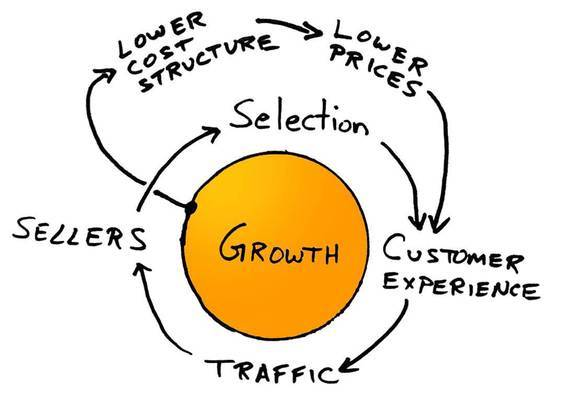
Take consumer businesses: for users, lower prices, faster delivery, and better experiences never change. We're all familiar with the "growth flywheel": more selection and lower prices lead to better user experience, which attracts more returning customers and traffic, which in turn attracts more sellers, bringing even more selection. But we should pay attention to the outer "handle" — how to achieve lower prices? Through a more optimized cost structure. Combined with more selection, this enables long-term, high-quality customer experience.
Starting from the user perspective, deeply mining latent user needs and product ideas, we can even discover essential needs and motivations that users themselves aren't aware of. For example, Kindle launched Vella, an e-book serial service in the US and other markets. By step-by-step excavation of the user needs behind web fiction, Amazon discovered that web fiction's core advantage is being the only truly interactive cultural product.
Constant 2: The Need to Raise Hiring Standards Never Changes
The Bar Raiser Mechanism
Everything in a company's growth depends on people. Amazon continuously raises its hiring standards through an internal "Bar Raiser" mechanism. During interviews, Bar Raisers assess whether a candidate would raise the bar — specifically, whether they would exceed 50% of existing employees at the same level in skills and leadership principles. Bar Raisers have veto power, with almost no restrictions based on rank or organizational relationships.
Constant 3: Human Cognition and Behavioral Patterns Don't Change Easily
Type 1 vs. Type 2 Decisions
Human cognition has blind spots, and choices carry biases. Therefore we need stable decision-making mechanisms. Amazon calls this Type 1 vs. Type 2 decisions. Type 1 decisions are one-way doors — once made, reversing them carries enormous cost. Type 2 decisions are two-way doors — their impact can be quantified, and if wrong, you can walk back through. We consider issues related to customer experience, reputation, and legal matters as Type 1 decisions; specific business practices and pricing as Type 2 decisions.
Whether something is a Type 1 or Type 2 decision actually depends on a company's true beliefs and commitments. Decisions are painful often because we want this, and that, and the other thing too. We need to think about what we ultimately want when conditions and resources are limited. On decision quality, "slow is fast" — the process requires extensive data support and time.
Type 2 decisions don't mean abandoning prudence; they mean making risk explicit. If you can't afford the cost of failure on something, abandon it early. If you can afford it, map out the risks and decision-makers in advance. This also helps avoid bureaucracy in the name of "prudence," encouraging everyone to take calculated risks.
Amazon's Architectural Innovation
Future-Leading Enterprises Will Be API-First
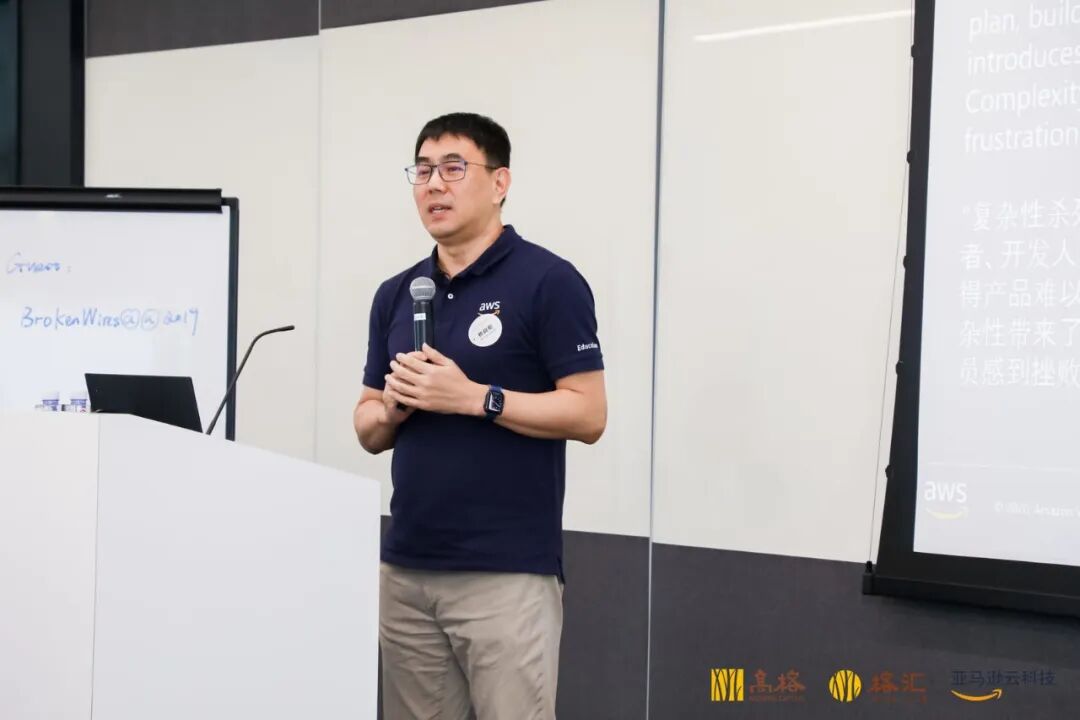
Lianghong Fei — Chief Architect, AWS Greater China
Software today faces enormous challenges — exponential complexity. "Complexity kills everything," widening the gap between ideas and reality. Open source itself is a beautiful dream, but brings endless complexity and uncertainty. There are over 700 programming languages in mainstream use today. As technology iterates, we keep reinventing the wheel.
The key to modern software design is reducing complexity. Modern software has six measures: security, resilience, elasticity, modularity, automation, and interoperability. The critical path to these standards is API governance.
APIs — application programming interfaces. API economics is already in full swing: over 90% of developers use APIs, the API management market reached $5.1 billion by 2023, and 83% of internet traffic belongs to API-based services.
What do APIs mean for a startup? Fundamentally, APIs determine a company's identity — what APIs you provide determines what kind of enterprise you become. Amazon's business is so diverse it's hard to capture in one concept; but measured by the APIs it delivers, everything becomes immediately comprehensible. Today, every function on Amazon's e-commerce platform has been abstracted into an independent API, and each independent API can scale horizontally without limit to meet different business peaks and new challenges.
For leading enterprises today, becoming API-first rather than API-last involves several self-assessment criteria:
Can you inventory your databases, applications, and services — accurately knowing how many APIs you have and where APIs are missing? Understand your organization's API generation methods — determining where standard processes exist and where they don't; Define business domain boundaries and map organizational structure to these boundaries; Adopt and standardize an API platform; Train engineering, DevOps, and product management teams on API-first practices.
Amazon's own growth story is also one of API governance evolution. Today Amazon has become one of the world's largest monetized API platforms. As Amazon CTO Werner Vogels summarized lessons from 15 years, they crystallize into API practices. These aren't technical concepts, but rather simple standards and management approaches for viewing problems and business needs.
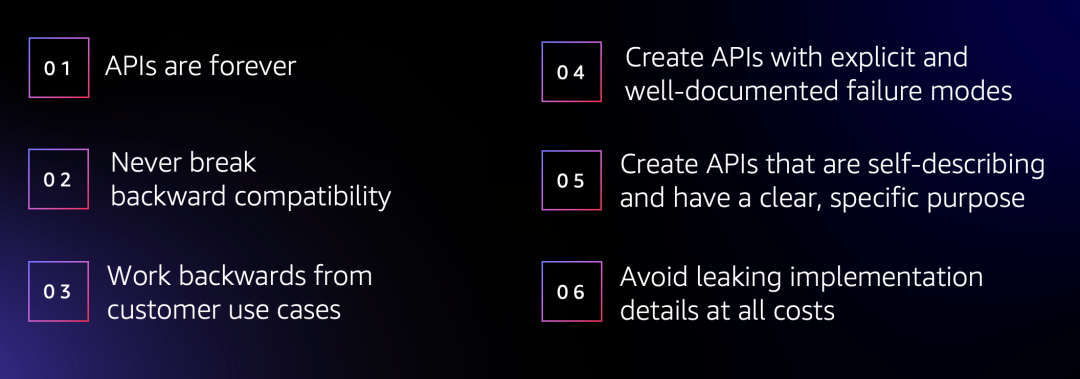
Amazon's Mechanism Innovation
Working Backwards: Starting from Serving the Customer

Tao Xu — Digital Innovation Specialist, AWS
Amazon's mission is to be Earth's most customer-centric company. Amazon's innovation starts from working backwards in service of the customer.
Amazon has a mechanism for solving business pain points that creates a virtuous cycle. The mechanism's first step is clarifying the business challenge — identifying the real business problem to solve. The second step is output: determining what results are needed to solve the problem. Then, to achieve that output, examining what tools can be used and what measures taken, with repeated validation; thus clarifying what inputs are needed. Of course, the process requires continuous iteration.
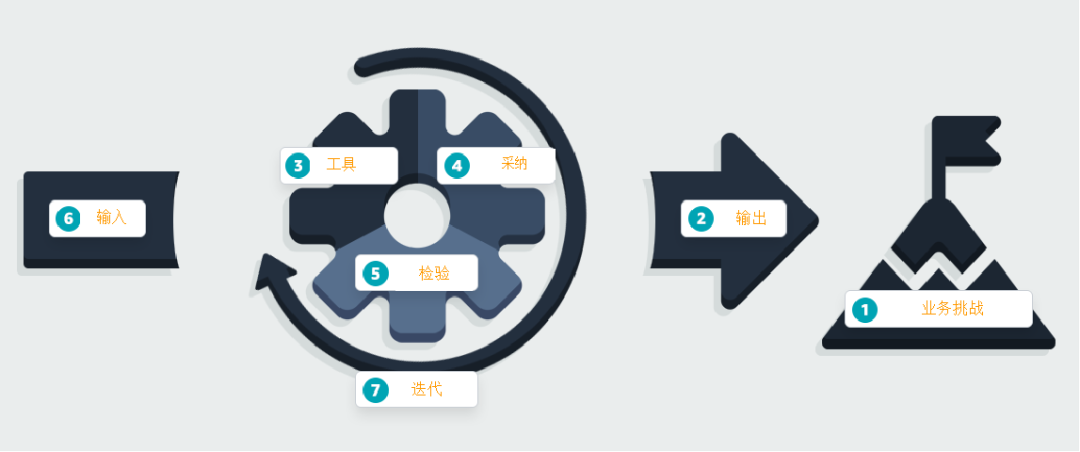
Under this mechanism, many mature working methods have emerged, including weekly business reviews, narrative writing, annual planning, and Amazon's interview process.
Many of Amazon's well-known products, such as AWS and Kindle, were created through Working Backwards. The Working Backwards innovation mechanism typically has three components: the press release, frequently asked questions (FAQ), and visual materials. When a team plans to launch a new product, they first use customer-centric language to explain the product vision within one page. This approach gets everyone thinking from the customer perspective, and serves as an excellent tool for teams to communicate vision.
Before writing the press release, we must ask ourselves five questions — Amazon's famous five questions. 1) Who is the customer? 2) What is the customer's pain point or opportunity? 3) What is the customer's core value proposition? 4) How do you know what the customer needs? 5) What is the customer experience?
A company implementing Working Backwards means investing more thought and resources in product philosophy and user experience, including extensive training and implanting new concepts. But it ensures product success rates, helps the company truly become customer-oriented, and avoids many detours on the long journey.
Amazon's never-ceasing innovation capability is the strongest moat of its commercial empire. Behind this, beyond a complete set of concrete, replicable management principles and working methods, lies the more important core mission of customer obsession continuously pulling the organization forward — permeating, iterating, and breaking through at the levels of culture, architecture, and organization.