GalaxySpace Closes New Funding Round, Accelerating China's Satellite Internet Buildout

China's first unicorn in the commercial space and satellite internet sectors.
GalaxySpace, a Chinese commercial aerospace company, has completed its latest funding round at a post-money valuation of roughly RMB 11 billion. CCB International led the round, with participation from Anhui Province's "Sanzhong Yichuang" Fund, Hefei Industrial Investment, and Zhenwei Capital. Existing shareholders Legend Capital and Chaos Investment also continued to invest. Gaorong Ventures had backed GalaxySpace in two consecutive rounds in 2018.

Building China's First LEO Broadband Communications Test Constellation, Advancing Satellite-Ground Integrated Networks
Founded in 2018, GalaxySpace is China's first unicorn in commercial aerospace and satellite internet. On March 5 this year, six low-Earth orbit (LEO) broadband communications satellites — the first batch-produced satellites of their kind in China — were successfully launched. Together with GalaxySpace's inaugural satellite, they formed China's first LEO broadband communications test constellation, establishing a satellite-ground integrated 5G test network called "Little Spider Web."
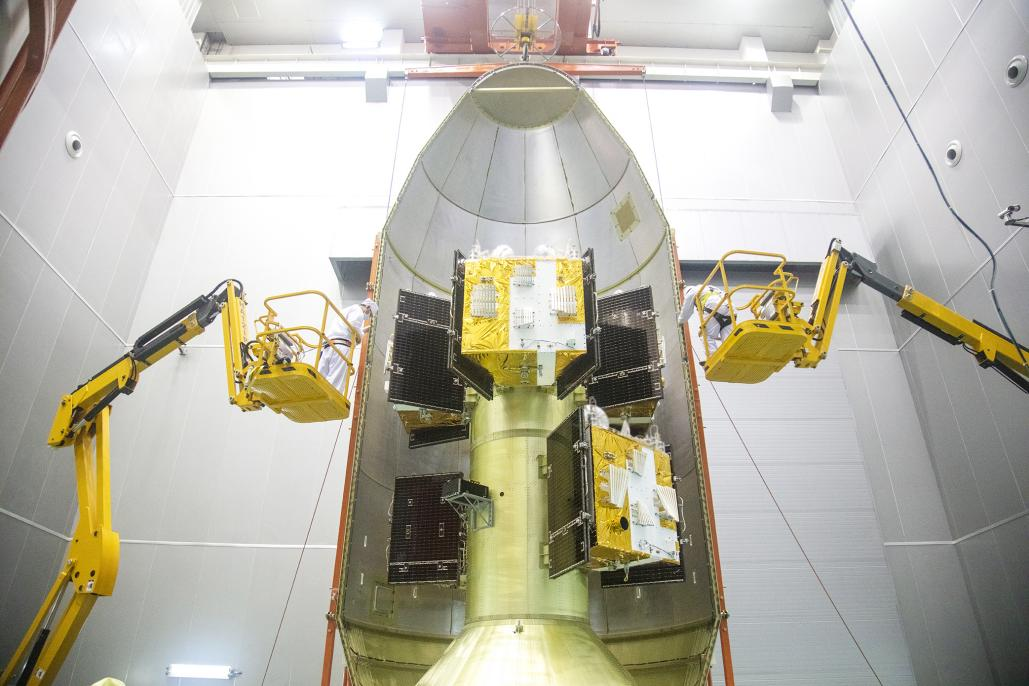
Six self-developed LEO broadband communications satellites by GalaxySpace
To date, "Little Spider Web" has completed multiple satellite internet application validations, including China's first test integrating LEO broadband communications satellites with a 5G private network, China's first V-band LEO satellite telemetry and control, "mobile-on-the-move" vehicle communications tests using the LEO broadband test constellation, and multi-satellite continuous communications tests — marking a significant step forward in building satellite-ground integrated networks.
Accelerating R&D and Commercial Expansion in Satellite Internet
Xu Ming, founder, chairman, and CEO of GalaxySpace, said the new funding will primarily go toward R&D in satellite internet technologies and the expansion of commercial applications. The company will accelerate development of core technologies including stackable flat-panel satellites, multi-beam phased arrays with flexible on-orbit beam allocation, flexible solar arrays, and digital processing payloads. It will also build out low-cost, batch manufacturing capabilities for satellites, steadily advancing toward the 6G era of ubiquitous high-speed connectivity integrating terrestrial and space networks.
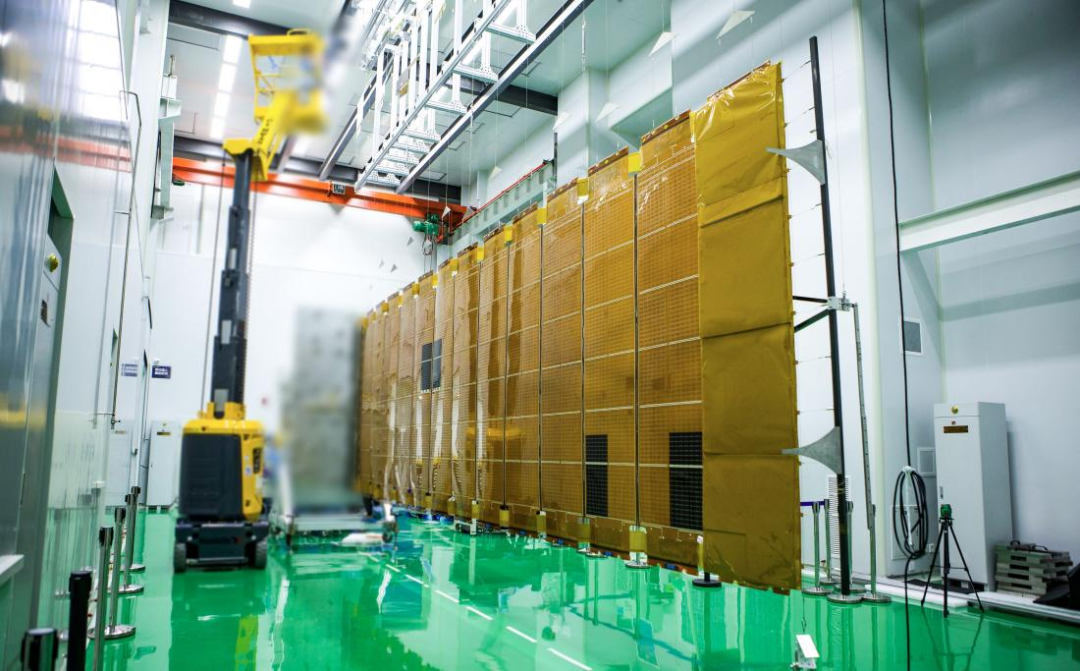
GalaxySpace's self-developed flexible solar array
Global space infrastructure development has already shifted into high gear, with commercial aerospace becoming one of the new drivers of the world economy. A Morgan Stanley report projects that the global space economy will reach $1 trillion by 2040, with satellite internet expected to account for 50% to 70% of that growth.
In recent years, satellite internet has become a global race, with countries accelerating LEO constellation deployment. SpaceX's Starlink program in the U.S. has already launched more than 3,200 satellites.
GalaxySpace's next-generation stackable flat-panel satellite has now entered the qualification model development phase — the first of its kind domestically — and is scheduled for launch early next year.
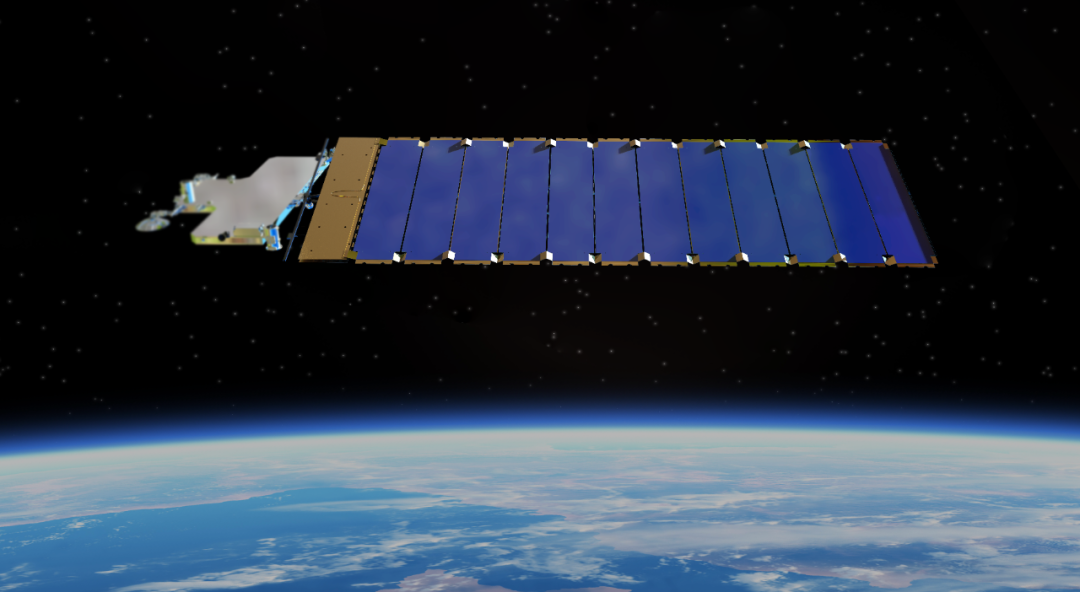
In-orbit simulation of GalaxySpace's self-developed next-generation stackable flat-panel satellite
Xu Ming noted that developing stackable flat-panel satellites will enable batch manufacturing and rapid large-scale constellation deployment. Going forward, GalaxySpace will seize opportunities under China's new national system framework, fully leverage the advantages of commercial aerospace — rapid iteration and agile development — and continuously innovate and push boundaries to support China's satellite internet build-out.