Gaorong Ventures in Conversation with Hejeya and Qitan Tech: How Innovative Medical Devices "Cross the Razor's Edge"

"When you meet a mountain, you cut a path through it; when you meet a river, you build a bridge across it."
In recent years, China's medical device industry has steadily advanced. It began by achieving domestic substitution in low- and mid-tech barrier segments, and today, an innovation wave is emerging in high-tech barrier areas.
Yet every step for innovative medical devices — from R&D and product development to mass production, clinical expansion, and market promotion — is fraught with challenges.
"The edge of a blade is always hard to cross." What differentiated competitive advantages must China's medical device industry cultivate to cross these many blades and ultimately reach the shores of commercialization and globalization?
Recently, Zhongguancun Dongsheng Science Park hosted "Meet the Future: Global Tech Innovation Review," where Gaorong Ventures held a dialogue with medical device companies including Qitan Tech and Hygea, tracing their journey of "building roads through mountains and bridges across rivers."
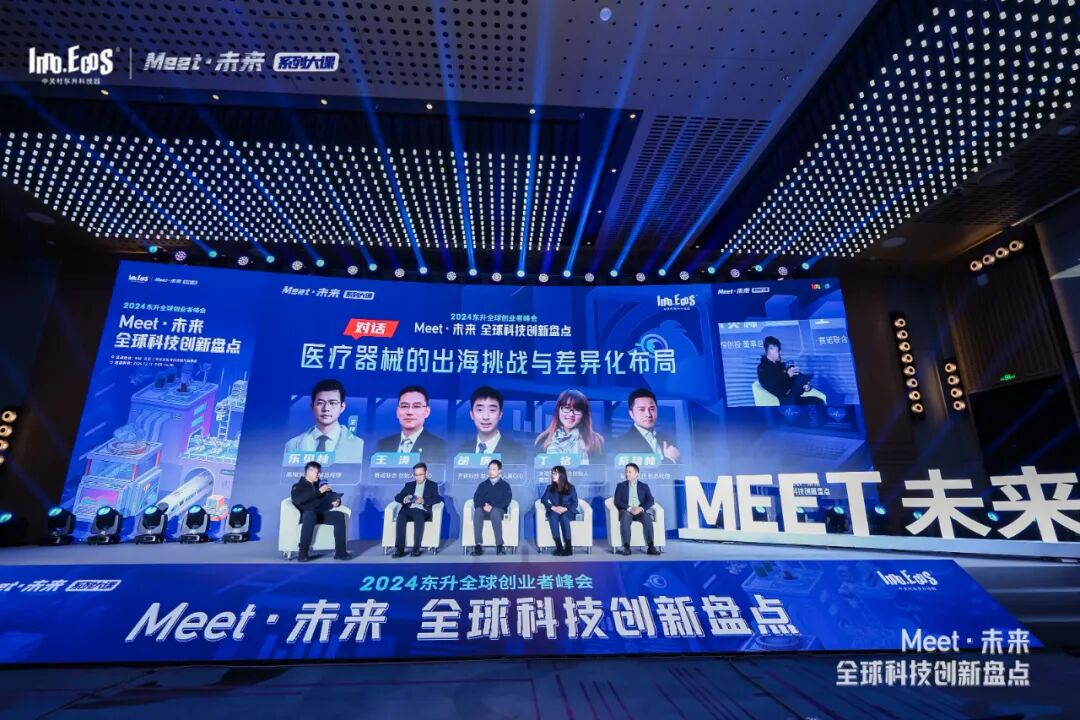
Gaorong Ventures has been continuously seeking out innovative companies in the medical device space and supporting their growth. It led Qitan Tech's Series A round in 2020 and participated in its Series B; in 2021, Gaorong was the sole investor in Hygea's Series C+ round and made additional investments in its Series D.
Dialogue Guests
Geng Hu, Co-founder and CEO, Qitan Tech
Bilin Cai, Deputy General Manager, Hygea Medical
Beilin Le, Managing Director, Gaorong Ventures (Moderator)
Independent R&D
Bridging the "Last Mile" of Technology Transfer
Beilin Le: Please start with brief introductions of your companies, including your core technologies and products.
Geng Hu: Qitan Tech was founded in 2016, dedicated to the independent R&D, manufacturing, and application development of nanopore gene sequencers and supporting chips and reagents.
Gene sequencing is a key technology for exploring the core mysteries of life, with broad applications in both medical and non-medical fields — such as genetic and rare disease diagnosis, gene editing therapy, agricultural breeding, customs, judiciary, and criminal investigation.
Compared to mainstream second-generation gene sequencing products on the market, nanopore gene sequencing equipment offers real-time sequencing, streamlined operation, portability, and ultra-long read lengths, solving problems that previous gene sequencing devices could not overcome.
In June 2017, Qitan colleagues successfully ran China's first nanopore sequencing signal in an ordinary cookie tin. In December 2021, the company launched China's first independently developed nanopore gene sequencer, the QNome-3841, achieving commercialization and bridging the "last mile" of R&D成果转化, ushering in an era of domestic nanopore gene sequencing.
To date, most products on Qitan Tech's sequencing platform have been broadly deployed in clinical application research, and the company is currently applying for NMPA Class III medical device certification.
Just last month, CCTV's Xinwen Lianbo "High-Quality Development Research Tour" visited Qitan Tech. As "pioneers of domestic nanopore sequencing technology," we also feel the mission of "Intelligent Manufacturing in China."
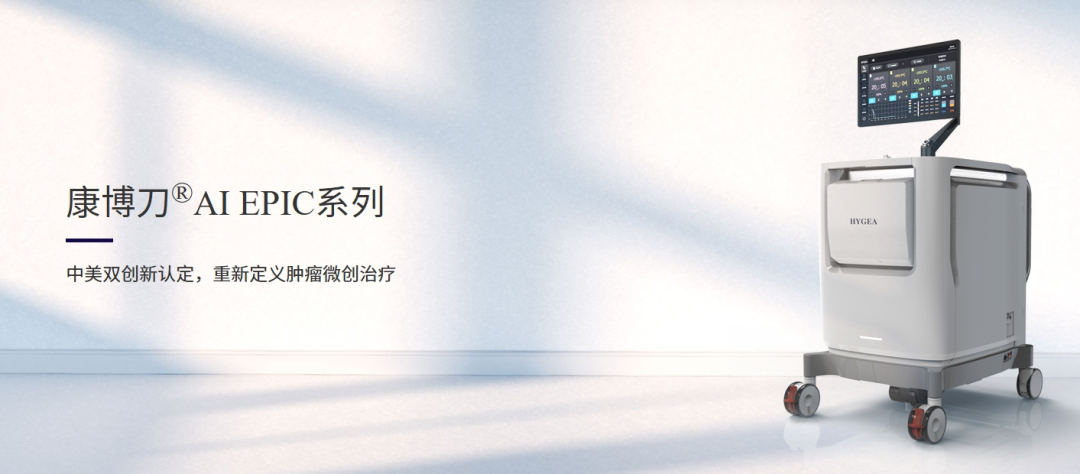
Bilin Cai: Hygea was founded in 2010, specializing in minimally invasive tumor treatment technologies. Its marketed products include the combined cryoablation system, microwave ablation system, and AI surgical planning system. Its flagship product, the combined cryoablation system "Cryo-Hit", broke the dependence on imports for minimally invasive tumor treatment and holds a leading market position.
As you may know, tumor treatment methods include traditional surgical treatment (i.e., surgical resection), radiotherapy, and chemotherapy. In recent years, minimally invasive interventional therapy has become the "fourth pillar" of tumor treatment, increasingly accepted by clinical experts and patients. Currently, Cryo-Hit can be used for minimally invasive treatment of various solid tumors including lung cancer, liver cancer, breast cancer, kidney cancer, pancreatic cancer, prostate cancer, bone tumors, and soft tissue tumors.
The inventor of Cryo-Hit is Professor Jing Liu, Hygea Medical's Chief Scientist and jointly appointed professor at Tsinghua University and the Chinese Academy of Sciences. Unlike traditional cryoablation, Cryo-Hit uses liquid nitrogen and anhydrous ethanol as working media. In addition to providing ultra-low temperatures of -196°C, it can also achieve high-temperature heating up to 85°C, enabling physical eradication of tumor treatment sites while effectively reducing complications such as bleeding and tumor seeding. This technology is a global first. The first-generation Cryo-Hit product was approved for market in 2017, received EU CE certification in 2020, and began commercial use in Europe; it has since undergone three generations of iterative upgrades.
Product Matrix
Achieving Platform-Level Innovation
Beilin Le: Today, the "accessibility" of medical equipment is being discussed more and more. How do you identify needs in clinical and application scenarios, and continuously expand your product portfolio so that patients and customers in need can better benefit from the welfare and convenience brought by technological innovation?
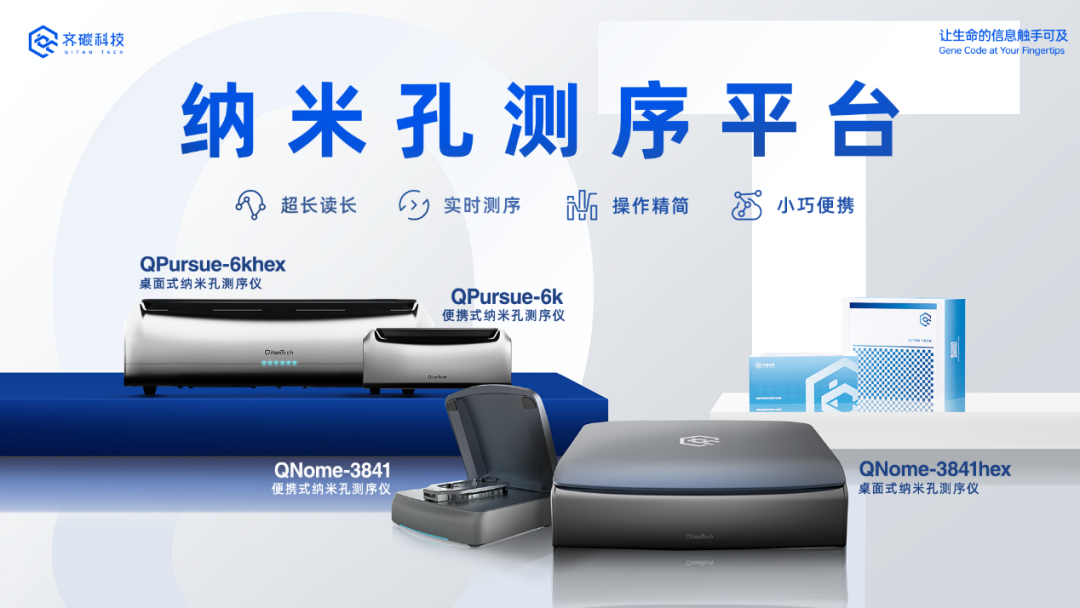
Geng Hu: Based on user needs, Qitan Tech has formed a sequencing platform with nanopore gene sequencers at its core, supported by chips, reagents, and software; in addition, there are application support products such as laboratory automation and bioinformatics analysis, providing users with full-process solutions spanning the entire nanopore sequencing workflow.
Following the launch of China's first commercial nanopore gene sequencer QNome-3841, Qitan Tech released the mid-throughput nanopore sequencing platform QPursue in 2023, covering both portable and desktop nanopore gene sequencers. With 10x growth in sequencing throughput, this marked the advancement of domestic nanopore gene sequencers toward mid- to high-throughput capabilities.
Today, Qitan Tech's product line enables users to achieve a full sample-to-answer workflow, ensuring accuracy up to three nines past the decimal point, read lengths exceeding 1 Mbp, sequencing throughput up to over 120 Gbp, and real-time sequencing for rapid access to results of interest.
Bilin Cai: Hygea's layout in the tumor interventional therapy field is divided into percutaneous intervention and transvascular intervention pipelines, aiming to provide clinicians with a comprehensive series of minimally invasive interventional diagnosis and treatment solutions for tumors.
In percutaneous intervention, it has launched multiple tumor ablation products including Cryo-Hit, microwave ablation, radiofrequency ablation, and pulsed field ablation, combined with AI surgical planning systems and puncture surgical robots to form an intelligent tumor ablation treatment platform; in the transvascular intervention field, it has launched products including TACE microspheres, microcatheters, TIPS puncture kits, and covered stents, with a product portfolio leading the tumor market.
Hygea's products have also gradually proven their competitiveness globally. In 2020, Cryo-Hit received EU CE certification, achieving reverse technology export; in January 2024, Hygea's microwave ablation equipment passed US FDA certification and entered the American market; in April of the same year, Cryo-Hit received FDA "Breakthrough Device Designation," becoming China's first and only pan-solid tumor ablation treatment system with dual innovation recognition from both China and the US to receive "Breakthrough Device Designation."
Competitive Moats
Building Roads Through Mountains, Bridges Across Rivers
Beilin Le: In certain areas, homogenization among some medical device manufacturers is quite serious. In your view, what constitutes the core moat for medical devices?
Geng Hu: To a large extent, Qitan Tech's moat is determined by its technology path.
The principle of nanopore gene sequencing technology is to pass single-strand DNA molecules to be sequenced through a nanometer-scale protein pore, apply voltage to the solution within the pore to measure current, and different base sequences (A, T, C, G) passing through cause current jumps. At this point, biochips collect and measure the current signals, which are then transmitted to computers to decode the genetic sequence information.
This principle seems simple and direct, but bringing it to an engineered product involves multidisciplinary expertise spanning biology, materials, chemistry, electronics, and computer science. Developing and producing a finalized product is no less difficult than building an airplane. The core technologies behind it include protein biochemistry, biochips, ASIC chips, and sequencing algorithms.
First, we need to create nanopore proteins with pore diameters of just over 1 nanometer — such proteins require structural design, extensive mutant screening, and corresponding biochemical environment design to achieve; for biochips, thousands of nanopore channels need to be constructed on the chip, with our latest generation product already having 15,000 channels, requiring攻克 of many micro-nano fabrication technologies; subsequently, to capture weak single-molecule sequencing signals, we custom-developed ASIC chips to address high-integration, high-resolution weak current detection; for the sequencing algorithm portion, we use large amounts of known DNA passing signals to train artificial neural networks, giving them the ability to "infer from one instance."
In the manufacturing phase, we also face many challenges, both in supply chain and product yield. Biochips in particular can have their stable operation affected by high and low temperatures and vibrations during storage and transport. This year, our sequencing products were deployed at an altitude of 3,650 meters in Lhasa, verifying stability and reliability in extreme plateau environments. They not only successfully produced high-quality data, but channel utilization also performed excellently.
On the supply chain front, Qitan has been comprehensively laying out domestic supply chain localization, with over 95% of materials and equipment now sourced domestically.

Bilin Cai: Medical devices must first address safety, then consider efficacy, affordability, and accessibility. Therefore, control over product safety and quality during the R&D and production phase is the primary key point.
Second, for medical device products to achieve commercialization, yield must be guaranteed, so there are also extremely high requirements for production processes. For example, the finest ablation needle for Cryo-Hit has a diameter of only 1.7 millimeters, with tube clearance of only 0.1 millimeters. We need to allow liquid nitrogen to circulate smoothly within it while achieving vacuum insulation with a temperature difference approaching 300 degrees — insulation strength (temperature gradient) surpassing spacesuit工艺, the difficulty of which is imaginable.
After product approval and market launch comes the market access phase, where pricing, reimbursement, and medical insurance work must be completed one by one. Currently, Hygea maintains a leading position in cryoablation market share, with broad coverage in core tertiary hospitals for tumor treatment domestically, and market access work has been completed in many regions.
Beyond this, for an innovative technology to achieve widespread clinical application, it requires clinical physician buy-in, which necessitates clinical mindset elevation and professional education work. Today many doctors are enthusiastic about new technologies, but a new technology is only truly recognized by the broad clinical expert and physician community when it is written into treatment guidelines. Therefore, we need to do extensive clinical education work, such as collaborating with leading experts on clinical trials and experience summarization validation, publishing articles to form consensus, until it is written into treatment guidelines, continuously promoting and popularizing the technology and products.
Having come this far, although every step has been extremely arduous, it also reflects the advantages of domestic medical device enterprises — rapid action, timely problem resolution, and swift iteration when issues arise.

Setting Sail Overseas
Bridging the "Last Mile" of Technology Transfer
Beilin Le: Today, Chinese innovative technologies are continuously going global. Which markets has your company tried or planned to enter, and what preparations have you made?
Geng Hu: Qitan Tech has already established presence in Southeast Asian markets, with the Middle East, North Africa, and South America as key focus areas for next year.
In the process of going overseas, intellectual property has been a consistent priority.
Of course, our foundation lies in independent innovation capability and a complete intellectual property system — in short, one must be strong oneself to forge iron.
Additionally, overseas patent maintenance costs are very high, so we need to selectively choose target markets to better完善 patent barriers in those markets and allocate resources more effectively.
Bilin Cai: From its founding, Hygea has had a clear positioning — rooted in China, facing the world. To date, Cryo-Hit has achieved落地应用 in countries including Germany, the Czech Republic, Turkey, Russia, India, and Indonesia. Going forward, we also plan to further promote Cryo-Hit and microwave ablation products into the US market.
For overseas sales channels, there are three main models that medical device companies can choose from or combine based on their own circumstances and stage.
First, finding overseas distributor partners locally. Beyond registration regulations, attention must also be paid to patent protection.
Second, partnering with European and American companies, leveraging their overseas channels and brand influence to open markets, while also protecting core assets.
Third, building own teams, which enables closer relationships with local customers, better customer service, and helps build brand influence, but at relatively higher costs requiring careful evaluation.
As China's R&D innovation capabilities are unleashed and the medical device supply chain matures, more First-in-Class products will emerge in the medical device field, representing "Intelligent Manufacturing in China" to gain more market share and voice in the global market.