Gaotu Techedu Co-founder Lü Weisheng: The Top Trait He Looks for Is 'Drive,' and Winning Battles Is the Best Team Building | Ronghui

How do you identify the right people when building a startup? How do you lead a team to win?
Once you've identified the right market and a clear benchmark, finding the right people and building a strong team is the foundation of startup success. How do you identify the right person in an interview? When a position opens up, should you promote from within or bring in an outsider? If you can't find a perfect candidate, what's the most important dimension to consider? What do you do when early veterans can't keep up with the company's growth?
Recently, at an online interactive salon in the Building Internal Strength: Entrepreneurial Leadership Battlefield series co-hosted by Gaorong Ventures and Tsinghua University's PBC School of Finance Global Entrepreneurial Leadership Program (click "Read More" for details), Lü Weisheng, co-founder of Gaotu Techedu, shared his firsthand thinking on identifying and deploying talent with 200 representatives from Gaorong Ventures portfolio companies and program participants. Drawing on over 17 years of organizational management experience at Gaotu Techedu and New Oriental, Lü joined Gaotu Techedu in 2015 as co-founder, where he built and managed the company's national branch network, founded and operated Chengxii Business School, and oversaw all instructional operations across the Gaotu Techedu and Gaotu Classroom platforms. He previously spent 12 years at New Oriental, rising to Group Assistant Vice President.
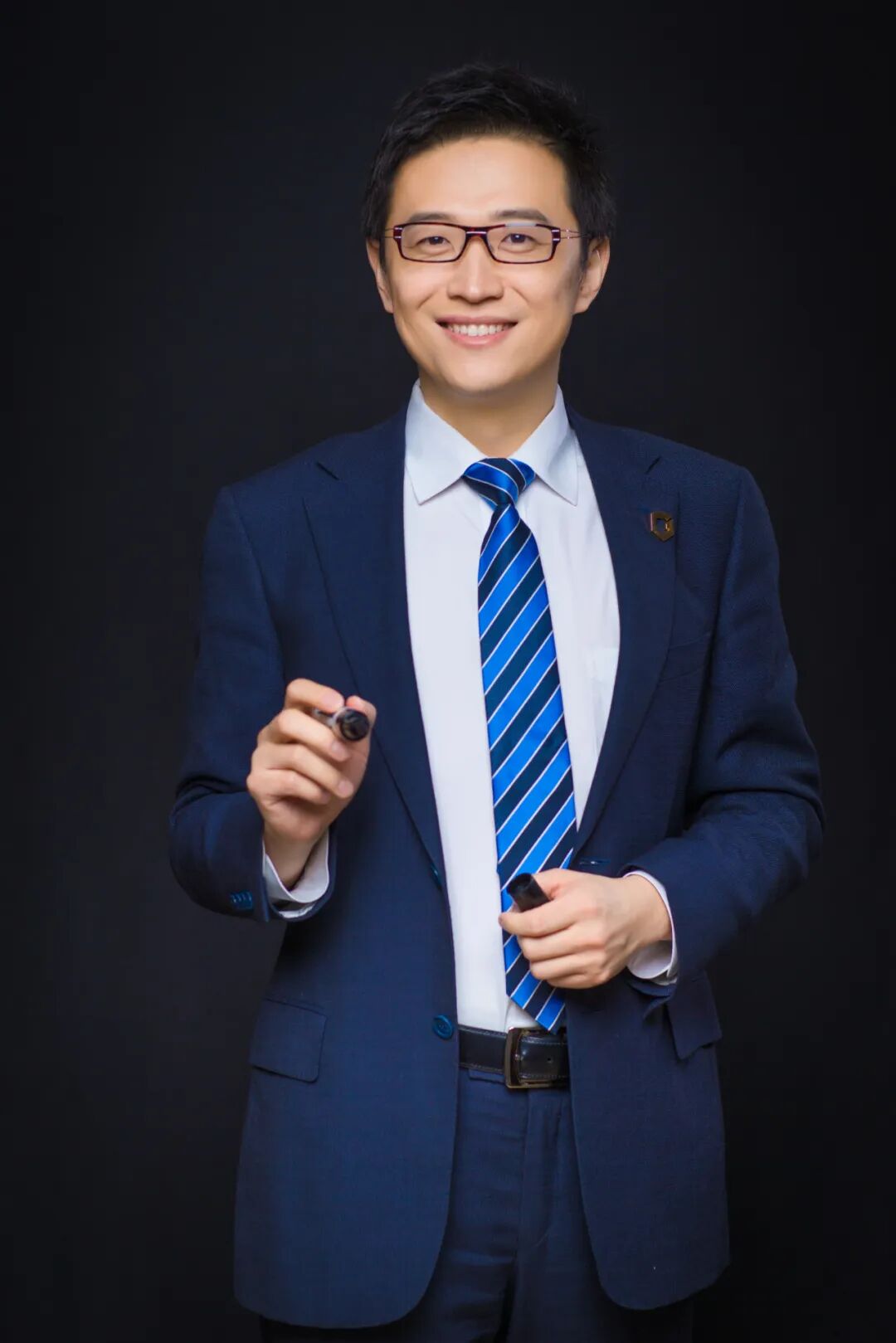
Lü shared his 16-character credo for team management: hire precisely, deploy ruthlessly, manage strictly, treat kindly. He also offered clear, pragmatic frameworks for 10 pain points that founders face in talent identification and deployment. We've edited the transcript to share these insights more broadly.
Edited transcript of Lü Weisheng's remarks:
My career has two main chapters. The first was at New Oriental, where I started as a teacher and became a professional manager. Before leaving, I oversaw the Southeast China region (Zhejiang, Fujian, and Jiangxi provinces) with more than 4,000 employees. During my 12 years there, I spent over a decade assigned to field operations.
In 2015, I joined Gaotu Techedu as a co-founder. Gaotu Techedu is an online education company sharply focused on one business model: online dual-teacher live-streaming large classes. It listed on the NYSE last June and is currently the world's highest-valued online education company.
Three Keys to Startup Success: Market, Benchmark, Team
I believe there are three critical elements for startup success: market, benchmark, and team.
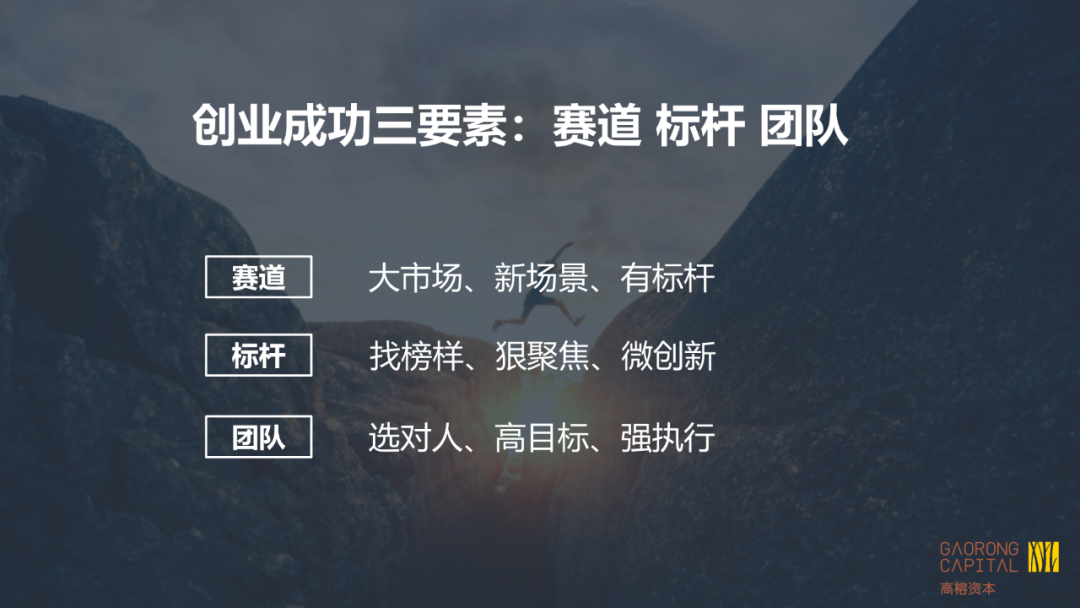
First, a good market needs large scale, new scenarios, and benchmarks.
Second, benchmarks mean finding role models, focusing intensely, and innovating incrementally. I especially want to emphasize one point — the power of focus is extraordinarily strong. We often see entrepreneurs whose first business isn't profitable, so they pivot to something else. What they don't realize is that every business is independent. A family struggling to raise one child won't do better raising several unless fundamental conditions change. Even large enterprises are endangered by diversification; even small companies can dominate through focus. Unfortunately, many people make the mistake of not focusing. Why do I feel this so deeply? Because Gaotu Techedu made this exact mistake in its early days, expanding horizontally and vertically before validating its profit model. Most of our business units underperformed. Only when we cut everything else and focused solely on "online dual-teacher live-streaming large classes" did we go public in just two years.
The third element is team: find the right people, set high goals, and execute strongly. Put simply, once the market is set and the benchmark is clear, getting the right people and building the right team gets you more than halfway to success.

The 16-Character Credo for Team Management
First, a question for you: which matters more, recruiting or training?
That's right — recruiting always matters more than training. If you hire a tree seed, it can eventually grow into a towering tree; if you hire a grass seed, it will never grow. Hire the wrong person, and no amount of training helps.
Here's the most important lesson I've learned from New Oriental and Gaotu Techedu over the years — the 16-character credo for team management: hire precisely, deploy ruthlessly, manage strictly, treat kindly.
These 16 characters are truly classic. Don't forget a single one, and don't change the order.

Hire precisely — first, how to choose the right people. Get this right, and your venture is more than halfway to success.
Deploy ruthlessly and manage strictly — let's look at these together. Here's a question: in the long run, do employees prefer strict leaders or lenient leaders? One type is very demanding; employees tremble and tread carefully, working desperately hard. But after a few years, their salaries multiply, they get poached by other companies, or they start their own successful ventures. The other type is all harmony and goodwill — no criticism for mistakes, no firing for poor performance.
I believe employees may prefer lenient leaders in the moment, but they prefer strict leaders in retrospect. I want to be the kind of leader where employees are afraid of me while we work together, struggling daily to meet my standards; but years later, when they've moved to other companies, they look back and realize those years with Lao Lü were when they grew fastest. That would be my success and my honor.
Finally, treat kindly. If you've done the first three well, this one is relatively easy.
10 Critical Questions on Identifying and Deploying Talent
Question 1: A critical management position opens up. You finally find a candidate with the right skills and experience, but they won't work overtime. Do you hire them?
Some say yes, some say no. In reality, most people have no choice — "I'm lucky to find anyone at all." But if you hire this person, you destroy your team.
Countless people will ask: why doesn't he have to work overtime when I do? Over time, the company's culture will rot. What was once a strong atmosphere of hard work and dedication will completely deteriorate. That's extremely dangerous. Unless you can transform them through team culture and personal influence into someone willing to work around the clock with you.
So how do you identify the right people in the startup process? When looking for colleagues or co-founders, should you seek someone complementary or similar? Fundamentally, finding a co-founder is like finding a partner — remember this: look for someone with complementary skills and experience, but similar values.
Different values, ruined life. Finding a partner with mismatched values is incredibly painful. You believe startups require relentless hard work and total commitment; they believe in work-life balance, that otherwise it's unsustainable, that stability is fine. Different values, impossible to work together.
However, work capabilities and experience should be complementary. If you come from marketing and operations, you need a partner who understands product and technology. You can't have another marketing person — then no one on the core team understands product.
So whether to hire someone who won't work overtime is fundamentally a values question. Not hiring such people makes recruiting painful — many candidates won't make it through. Gaotu Techedu is like this. Every time we recruit, we put the ugly truths up front. Basically, as soon as we mention working hours, more than half of candidates drop out. But precisely because of this, everyone we hire shares similar values, so the company can develop quickly with everyone pulling in the same direction.
For critical positions, we even ask first: where do you live? If it's far, would you be willing to move near the office? Many Gaotu Techedu employees are married but have actually moved near the office for work, becoming weekend couples. Some might consider this inhumane. Values aren't right or wrong, good or bad — it's about what you choose.
Question 2: How do you choose co-founders?
Spouse, relative, classmate, colleague, friend recommendation, external recruit... if choosing a co-founder, who would you prioritize?
For especially critical positions, particularly co-founders and core team members, I strongly discourage choosing someone you don't know. Starting a company with someone you didn't previously know has an extremely low probability of success. If you do find such a person to co-found with you, simply getting the team to gel and trust each other in the first three years would be an achievement — basically nothing gets done in those first three years. Regardless of whether they're a close friend's recommendation or an investor's referral, even with excellent reputation, the probability of success is very low.
The most reliable startups are with classmates and colleagues. The first priority is colleagues, because you've worked together in a professional setting and know what they're like at work. Classmates are good too — four years of college or three years of high school together means you know each other well, but not as well as colleagues, because you haven't seen their work performance.
For externally recruited people, I suggest starting them as regular employees or middle managers, getting to know them through work, then gradually promoting them to co-founder or senior leadership.
Question 3: When a position opens up, promote from within or bring in an outsider?
Jack Welch, the "world's greatest CEO," said that of the people he hired, one-third succeeded, one-third failed, and one-third remained to be tested. Even someone as capable as Jack Welch only had a one-third success rate with his hires. So I want to emphasize: consider when to use internal people and when to use external ones.
There are three situations where bringing in an outsider works. First, when no one internally understands the role you're hiring for — then you can recruit someone from outside who does.
Second,空降 executives are well-suited for doing unpleasant things that make enemies. For example, when Alibaba hired Savio Kwan, what he did was typical of a "transitional leader." His first act was mass layoffs. At the time, Alibaba had taken funding and expanded globally with extremely high burn rate. Kwan flew around the world firing people. He was remarkably successful: first, the layoffs were decisive and clean; second, after layoffs he did the psychological rebuilding with remaining employees, systematically articulating Alibaba's values and proposing the Six Veins Spirit Sword (then called the Solitary Nine Swords).
A third scenario: if a team grows too fast, too quickly, without time to build a leadership pipeline or promote from within, yet urgently needs talent in volume, then external hiring becomes necessary. Take DiDi, which expanded to tens of thousands of employees in just four or five years. It would have been nearly impossible to promote enough managers internally, since developing someone from the front lines to senior leadership typically takes three to five years. In such cases, parachuting in external executives is normal and expected. Still, I wouldn't recommend staffing core business functions entirely with outside hires. The best approach combines external recruitment with internal promotion.
Beyond these exceptions, if your organization has cultivated fertile ground for developing talent and established a leadership pipeline, prioritize promoting from within. Once you reach a certain scale — say, 300 to 400 people or more — I'd strongly urge founders to systematically assess their frontline and middle management talent. Use professional tools, and do it through meetings, training sessions, reports, town halls with the CEO, and other structured touchpoints.
The Falcone Management Method includes a revealing case study about a parachuted executive. The author writes: "I knew an outstanding sales director who worked for a Brazilian company. He was not only a recognized excellent leader but also a true sales champion, deeply loved by his team and highly respected throughout the company. He received an invitation from a competitor, jumped to the new firm, and expected to replicate his success. What he expected never materialized. A year later, he left, his mission unfulfilled."
Why? "He overlooked a fundamental concept: leadership is cultivated over years. He needed to design reliable processes and develop outstanding, well-trained, motivated employees. When this sales director launched his initiative at the new company, he didn't find a team like the one he'd had before, and a single year wasn't enough to build one. He failed. His previous company had constructed a leadership system; his new position lacked that environment."
This case deserves our careful study. As you know, a parachuted executive faces one of two situations: either taking over a well-functioning operation or inheriting a mess. What I want to emphasize here is that the competency profile you need differs dramatically depending on which scenario you're hiring for.
Some people are built for fixing messes — what we call "desperate diseases require desperate remedies." Their work style, their intensity, their willingness to grind are all turned up higher. They tend to have more distinctive, forceful personalities. They arrive and wield the axe. Others are only suited for maintaining what's already working well.
Fourth question: How do you identify the right person in an interview?
Let's be honest — plenty of people are sharp. Many "interview masters" have excellent communication skills and high emotional intelligence. How do you see through that? Here's my most important piece of advice: don't listen to what they say. Watch what they've done.
Someone might fake their interview, but fabrication usually targets results or data. The specific how and why of their work — that's much harder to falsify.
For example, someone claims they were top salesperson for multiple consecutive quarters. Ask them: can you walk me through how you did it? If they can't articulate it, or what they say fails to convince you, then this person doesn't measure up. Either their results were fabricated, or they never deeply reflected on their success. They got lucky, lacking the ability to reflect, summarize, and learn.
If someone says: when I took over the team, we faced these five challenges; leadership set these three goals; we analyzed our environment for hitting those targets, identified necessary changes, then executed these steps; along the way we encountered these obstacles, and I led the team through collective sacrifice to ultimately deliver — if they lay this out with rigorous logic and genuine persuasiveness, that shows not only that they actually did it, but that they possess reflection, growth, and learning capacity. Then verify through background checks: speak with their direct manager, their colleagues. Understand their values, their track record, their compensation, why they left, what issues or weaknesses they might have. All of this is critical.
In fact, most people won't lie about their values. If they dislike overtime and believe in work-life balance, ask about their hours at their previous company. Few will falsely claim they worked until 10 or 11 p.m. every night when they didn't, because they don't believe overtime is right in the first place.
The ancients left us considerable wisdom for reading people. Consider the "Nine Observations" from Zhuangzi's "Lie Yukou" — nine methods for observing and discovering character.
The nine are: send someone far away to observe their loyalty; draw close to observe their respect; burden them with troubles to observe their capability; question them suddenly to observe their knowledge; press them with urgent deadlines to observe their trustworthiness; entrust them with money to observe their integrity; tell them of danger to observe their moral fiber; get them drunk to observe their discipline; mix them in diverse company to observe their composure.
To read a person, place them in these nine different environments and watch how they act.
"Send them far away to observe loyalty" — dispatch someone to a distant location for what appears to be a trivial assignment, and see whether they execute with genuine care. Or deliberately cold-shoulder a capable person and observe whether they complain incessantly or continue doing solid work regardless. "Draw close to observe respect" — deliberately get near someone: share meals, drinks, business trips, even hotel rooms, and see whether they still maintain appropriate boundaries with superiors. "Burden them with troubles to observe capability" — deliberately overload someone with tasks and see if they handle them well. "Press them with urgent deadlines to observe trustworthiness" — suddenly make an urgent request of someone and see whether they immediately drop everything to accommodate you, or whether they hold to their principles and commitments. "Tell them of danger to observe moral fiber" — deliberately describe a crisis you're facing and see whether they panic, want to quit and withdraw, or commit to seeing things through with you. Finally, "get them drunk to observe discipline" — deliberately intoxicate someone and watch their behavior afterward.
So merely listening to what someone says in an interview is useless. I strongly recommend asking many, many questions — and not just what happened, but why it happened. When I'm seriously interested in a candidate, I spend at least two hours per round, typically conducting two to four rounds, and I always do background checks.
Fifth question: How do you identify short-term opportunists?
Same principle: don't listen to what they say, watch what they've done. Past work history matters enormously.
If someone constantly changed jobs — four positions in five years, all of them failures — either they have a problem, or their luck is catastrophically bad. Why does misfortune always find them? More likely, this is a short-term opportunist.
If someone's previous role lasted ten years, or they graduated and worked one job for five years, and you're their second employer, they're unlikely to be a short-term opportunist. Even if they weigh personal interests, they're not unwilling to fight for long-term goals.
Sixth question: If you can't have perfection in hiring, what matters most? Education, appearance, gender, age, experience, management skills, track record, capability, emotional intelligence, drive — with so many criteria, which do you choose?
Some say learning ability. Some say character. Some say management skills. Let's consider a multiple-choice question: if your company needs a Chief Human Resources Officer, and you have two candidates, whom do you pick?
A: Female, 38, associate degree, married with one child, extensive HR experience at a large company, salary expectation: 20,000 RMB per month.
B: Male, 27, bachelor's degree, unmarried, worked as HR specialist at a large company and HR manager at a small company, salary expectation: 15,000 RMB per month.
I won't claim B is necessarily right, but I definitely wouldn't choose A. A has experience and maturity, but a 38-year-old asking only 20,000 RMB, with an associate degree and no effort to upgrade — that signals very low learning ability and motivation.
B has relevant experience from both large and small company contexts, is young, and likely has drive.
At Gaotu Techedu, we basically hire only two types. First, slightly older candidates who are genuinely very capable and highly committed. Second, very young candidates — even fresh graduates — provided they have enough hunger and aggression. Many of our employees are born in 1995 or 1996; many managers are 1992 or 1993. Only for top executives do we accept somewhat older candidates. Our sweet spot is people two to three years out of college, who've worked only one job.
So if you can't have perfection, what's the single most important criterion?
Years ago, Cao Cao and Liu Bei discussed heroes over warming wine. Cao Cao asked: "Xuande, you have traveled widely and must know the heroes of our time. Please name them." Liu Bei replied: "Yuan Shao of Hebei, with his four generations of high ministers, his network of old retainees, his clouds of fierce generals and rain of strategists — surely he qualifies as a hero."
How did Cao Cao assess Yuan Shao? "Shao appears fierce but is timid at heart. He loves to scheme but cannot decide. He clings to his own safety when pursuing great causes, yet forgets his life chasing petty gains. No hero, he." In other words: Yuan Shao looked formidable but was actually cowardly; appeared strategic but was indecisive; unwilling to risk himself for great endeavors, yet threw himself recklessly at small advantages.
I believe that among all these hiring dimensions, if you must choose just one, the most important is "drive." By drive, I mean motivation, commitment, willingness to grind. Is someone willing to go all-out, to fight for something significant? Or do they talk about work-life balance while claiming they want to do something big, to build a company? We founders have no right to talk about work-life balance — who told you to start a company?
A person with drive holds themselves to standards. They cannot tolerate doing slipshod work. They cannot tolerate delivering anything less than excellent, even with no one checking, no one demanding — they still strive for perfection.

For example, I once did academic administration work — scheduling classes, assigning classrooms, coordinating teachers. It was routine stuff, but I went further. I'd track enrollment changes for each class. For classes that were too full, I'd even knock down walls to merge classrooms, making the class bigger and more profitable. For undersubscribed classes, I'd shut them down or consolidate them to avoid wasting faculty and resources. No one asked me to do any of this. So why did I? Because I hold myself to a standard. I have yaoxing — that hunger to make my work excellent.
Different people respond to the same predicament with completely different mental wiring. Some think: I'll find a way to get this done no matter what. Others think: This target is impossible, the person who set it is the problem.
So what's the use of having capability without yaoxing? On the surface, someone might have impressive credentials and strong abilities, but if they're unwilling to grind, they're useless — you can't build anything with them. As long as someone has yaoxing, as long as they're willing to fight and commit, it's fine if their skills and experience are lacking — those can be learned.
For instance, when building a sales team, examine whether the leader down to every rep has enough yaoxing. Do they dare to commit to targets? And once they commit, do they absolutely refuse to compromise? "There's no product I can't sell" — salespeople need that kind of swagger and conviction. With that belief, you'll notice their whole bearing changes. Come visit Gaotu Techedu — everyone's howling like wolves. You can feel the morale the moment you walk in.
In education, there's a talent selection model called the PSD model: Poor, Smart, Strong desire to become rich — young people from humble backgrounds, sharp minds, and burning ambition to change their fate. I come from an ordinary urban intellectual family. We weren't poor, and I don't consider myself particularly smart. But I too wanted to change my fate. I too have yaoxing.
Question 7: Can you use troublemakers?
Some say troublemakers might be capable — many talented people have tempers and strong personalities. Let me tell you: troublemakers aren't necessarily capable; they might just be contrarians for the sake of it. And capable people aren't necessarily troublemakers.
There are indeed some capable people who take pride in having a temper, in being a troublemaker. "Capable people have tempers — so what if mine's big?" Troublemakers can be used, but with technique. Founders need to reason with such employees.
Let me ask you: four types of people — capable with temper, capable without temper, incapable with temper, incapable without temper. Who ranks highest? Who ranks lowest?
The worst is incapable with temper — people who get no respect outside and take it out on their families at home. Between capable with temper and capable without temper, who's truly top-tier?
The truly top-tier person is capable without temper. Such people are often entrusted with great responsibility — you'll find them as leaders of major corporations, even national leaders.
Take Emperor Taizong of Tang, Li Shimin. A man of extraordinary ability — he could seize enemy generals from amid thousands of horses and troops, and in one decisive campaign, eliminate both Dou Jiande and Wang Shichong. Yet this formidable man had absolutely no temper before Wei Zheng.
Wei Zheng was a candid minister. Once he came to see Li Shimin, only to find him playing with a pair of birds sent as tribute from Vietnam. Wei Zheng berated him relentlessly. After he finally left, Li Shimin breathed a sigh of relief and took out the birds again. Suddenly Wei Zheng returned — he'd been so focused on scolding the emperor that he forgot his actual business. Li Shimin panicked and hid the birds in his sleeve. Wei Zheng talked on and on, spittle flying. When Li Shimin finally took out the birds, they had suffocated.
Or take Liu Bang, during the fierce Chu-Han contention. Han Xin demanded to be made acting King of Qi. Liu Bang was furious and was about to explode in front of the messenger. His advisor stepped on his foot. Liu Bang immediately realized — I cannot lose my temper now. He instantly put on a smile and issued an edict making Han Xin full King of Qi. Han Xin saw that Liu Bang still valued him, so he led troops south from Qi to support Liu Bang, ultimately helping him win the realm. If Liu Bang hadn't endured that moment, who knows whose realm it would be today.
So truly first-rate talent is capable without temper. Founders should tell their people: capable with temper is merely "second-rate talent." Founders too must control their emotions — emotional control is genuinely important. A mature person, a capable person, is necessarily a true master of emotional control.
Question 8: Can serial entrepreneurs succeed?
Some favor serial entrepreneurs; others refuse to invest in them — if someone failed at three or five things, the new thing won't work either.
I believe serial entrepreneurs have both advantages and disadvantages. But my advice is this: if you're a serial entrepreneur, you must pay attention to one thing — don't let your team disperse.
Jack Ma was a serial entrepreneur before building Alibaba, having tried three or four ventures that didn't work out. Xing Wang was a serial entrepreneur before building Meituan. But what distinguished both men: their teams never dispersed. Whatever they did, whether it made money or not, however hard it got, the core members stuck with them. That's rare and precious — it shows someone with the bearing of a great commander, someone who can gather talent.
So serial entrepreneurship isn't scary. What's scary is when every time you start something, everyone around you scatters. Whether entrepreneurship succeeds depends on whether you have true followers, whether excellent people are willing to follow you. So how do you cultivate long-term followers?
In today's era, relying purely on money or purely on loyalty to keep someone with you long-term is actually very difficult. The ultimate test is when you have a startup idea, and the other person already has a good job — they don't even need you to talk money or position, they come out to join you immediately with one word. That's incredible. That person is incredible, and so are you.
How do you get such people? You must genuinely help others when they're in difficulty. Among ancient Chinese emperors, one excelled at this: Yongzheng. When princes competed for the throne, they all used people recommended by others. Only Yongzheng used people he had helped during his travels across the country — poor, struggling people he had assisted.
Helping others doesn't make us opportunists taking advantage of others' misfortune. Rather, when someone truly needs me, I'm genuinely willing to help. I help first — if you're willing to follow me, I'm delighted; if you don't, that's your prerogative, no resentment. When you have such opportunities, truly help others well.
Question 9: Do you believe in people with unrecognized talent?
When hiring, have you encountered people with "unrecognized talent"?
In today's era, I don't really believe in unrecognized talent anymore. If you meet someone older, very articulate, who pours out their life story of grievances before you, thinking "this person is amazing, they just never got the right opportunity — gold always shines, my place is where you'll shine" —
I can only say you're too naive. Don't believe such people. Today, "unrecognized talent" most likely means they lack ability, they can't choose well, they lack judgment, or they have a bad attitude and complain constantly.
So Gaotu Techedu's hiring philosophy is: either hire older people with genuine ability, or hire younger people who may lack experience but have wolf-like drive — such teams are easy to lead. Today we must boldly promote young people.
Question 10: Early veterans can't keep up with company growth — you want to remove them. How?
In early startup stages, we often have to use "budget husbands" — adequate but not exceptional. But as the organization and business develop, many people can't adapt to the company's evolving needs. You need to open up better positions to promote new talent or bring in new executives. What to do with early veterans?
This is genuinely thorny. We cite Zhao Kuangyin's "releasing military power over a cup of wine." Some call it cruel — actually he handled it quite well, solving leadership transition without killing a single meritorious official. That's rare and commendable.
What to do? Two methods. First, the cup-of-wine approach: offer sufficiently good benefits, and handle the conversation personally. Second, bring in external executives or consulting firms to help you execute. Both are difficult — you'll need to gradually learn through experience.

As the top leader, how much time do you spend on recruiting?
These ten questions cover core methods for identifying and using talent. You might ask: why would excellent talent come to our company? Startups have limited resources and budgets — we simply can't attract great people. Or HR might think the CEO's standards are too high, that people meeting such criteria simply don't exist.
Then I must ask: how much time do you spend on recruiting?
Startup leaders must remember: devote 80% of your energy to recruiting. If you've chosen the right track and set the right benchmarks, getting the right people to execute means you're 90% of the way to success. Recruiting is the most important success factor — bar none. As the top leader, as core senior management, saying you have no time for recruiting, delegating it entirely to HR or department heads — that's wrong.
After Gaotu Techedu invested in large-class courses, besides recruiting external star teachers, we needed to cultivate our own. We believed we had to recruit Peking University and Tsinghua University graduates to train, because education highly values academic credentials — when parents enroll their children, they don't know the teachers personally, so degrees serve as proof.
The person responsible for teacher recruitment at the time said: how is that possible? Why would Peking University and Tsinghua University graduates come to us? I said: then I'll go find them myself. I spent a full half-year and finally found an excellent person with recruitment channels and experience at Peking and Tsinghua. Next, my job was to support his work.
A year later, what was our teacher caliber? We recruited 45 top teachers graduated from Peking and Tsinghua. I can confidently say that among all education companies in China, Gaotu Techedu was among those that recruited the most and highest-quality Peking and Tsinghua graduates that hiring season.
Recruiting is hard — it depends on whether you're willing to spend time and energy on it, whether you have good methods. Once you've built the team, how do you cultivate them into what you want? How do you improve execution? How do you lead the team to victory?
The first and most important thing is setting high goals. A general's duty is not to make soldiers like him; it is to lead them to victory, bring them home alive, secure honors for their families, and win them promotions — that is a general's mission. Only with ambitious goals will employees continually challenge themselves, dare to take on bigger things, and accomplish what they previously couldn't imagine or didn't dare to imagine. Winning battles is the best team-building — far more important than any perks you could offer.
Finally, I'd like to share my biggest insight from entrepreneurship: the most important thing is making decisions facing toward your goal. Many people revise, lower, or even abandon their goals the moment they encounter difficulties. But anyone aiming to do something significant will inevitably face countless obstacles. The difference between successful people and ordinary ones is this: when faced with difficulties, successful people find every possible way to overcome them and achieve their goals; ordinary people give up at the first sign of trouble.
As a founder, as the person in charge, what matters most is unwavering goals and conviction — always making decisions facing toward your objective.
Before I conclude, I'd like to share two passages I particularly love. The first is from Theodore Roosevelt: "It is not the critic who counts... the credit belongs to the man who is actually in the arena, whose face is marred by dust and sweat and blood; who strives valiantly; who errs, who comes short again and again, because there is no effort without error and shortcoming; but who does actually strive to do the deeds; who knows great enthusiasms, the great devotions; who spends himself in a worthy cause; who at the best knows in the end the triumph of high achievement, and who at the worst, if he fails, at least fails while daring greatly."
The second passage I wrote myself: A leader's greatness lies not in how glorious they are after success, but in their resilience in the face of adversity, their patient restraint while waiting for opportunity, their ability to strike back from rock bottom, and their unwavering original aspiration when tempted. Thank you all!



A CEO's 33 Days: Organizational Transformation in Action Amid the Pandemic | Ronghui