Warm congratulations to Saint Bella on its successful Hong Kong IPO. Gaorong Ventures was an early investor and has been a long-term partner throughout.

Hong Kong's stock market welcomes the "first share of family quality care."
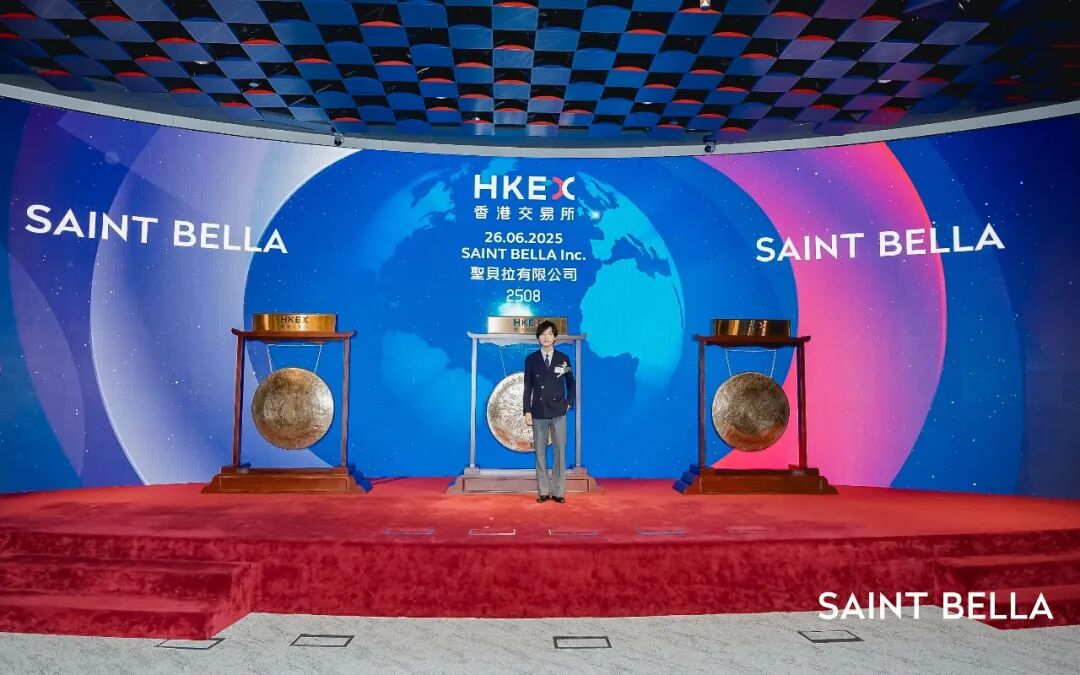
On June 26, SAINT BELLA (stock code: 02508.HK) listed on the main board of the Hong Kong Stock Exchange, becoming the "first global premium family care stock" in Hong Kong and officially embarking on a new chapter. SAINT BELLA's IPO price was HK$6.58 per share; as of 09:40, it was trading at HK$8.69 per share.
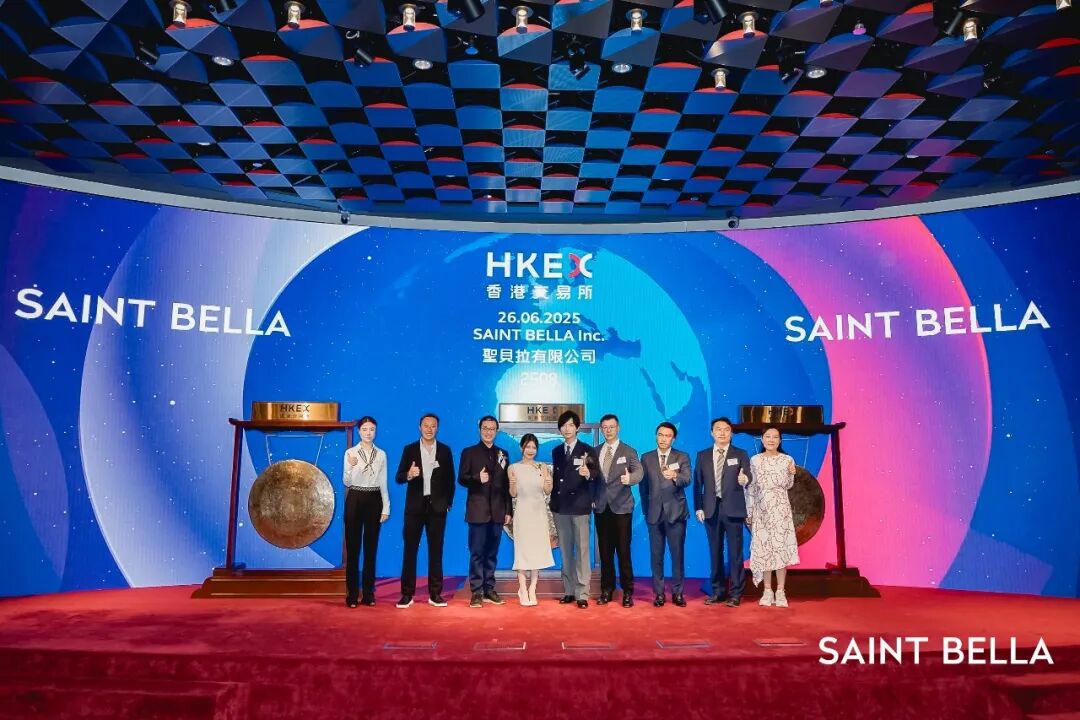
Gaorong Ventures participated in the company's first market-based funding round in early 2018 and continued to invest in multiple subsequent rounds.
Hua Xiang, founder and CEO of SAINT BELLA, said at the listing ceremony, "In 2017, driven by my belief in Eastern care culture, I created SAINT BELLA together with my team. In just eight years, we have become the largest postpartum care group in China and across Asia, with operations covering 30 cities worldwide. This journey would not have been possible without the efforts of every SAINT BELLA team member. Here, I extend my sincerest gratitude to all shareholders, all employees—especially every care worker—and our listing partners. Our stock code is 2508, which sounds like 'love and protect you' in Chinese. Going forward, we will work even harder to serve countless women and families."

Building a Comprehensive, Multi-Layered Family Health Care Ecosystem
From its inception, SAINT BELLA entered the postpartum care and recovery segment in first-tier cities, building user trust through premium service. After establishing a solid foothold, the company expanded nationwide and internationally under the banners of "Baby BELLA" and "Aiyu," growing its brand influence and gradually becoming an industry leader.
By revenue generated in 2024, SAINT BELLA has become the number one postpartum care and recovery group in China by market share, as well as the largest and most internationally oriented postpartum care and recovery group in Asia. Currently, SAINT BELLA operates an extensive network of 96 postpartum care centers under the SAINT BELLA, Bella Isla, and Baby BELLA brands, comprising 62 self-operated centers and 34 managed centers.
To meet increasingly diverse customer needs and build multiple growth curves, SAINT BELLA has expanded its business footprint and enriched its product portfolio beyond its core strengths in postpartum care and recovery. Leveraging user trust and premium services and products as connective tissue, the company is committed to creating customer lifetime value.
In 2018, SAINT BELLA identified latent demand in the family care market and launched its home care service "Yujia." The company standardized training for infant care specialists, building a professional, regulated childcare service team. In 2021, SAINT BELLA acquired Guanghetang, formally entering the food business. Guanghetang has over 20 years of expertise in nutrition, health, and wellness. After the acquisition, SAINT BELLA leveraged Guanghetang's strengths in health and wellness while shifting the business focus to e-commerce sales of women's health foods, addressing nutritional needs across women's life stages from menstruation through pregnancy, breastfeeding, and postpartum recovery.
To date, SAINT BELLA's services and products span postpartum care, postpartum recovery, home care, and health foods, forming a comprehensive, multi-layered family health care ecosystem.
Investing in AI R&D, Expanding Overseas Markets
According to its prospectus, SAINT BELLA's revenue climbed from RMB 472 million to RMB 799 million between 2022 and 2024, representing a compound annual growth rate of 30.15%. The company was also profitable for two consecutive years in 2023 and 2024, with adjusted profit of RMB 42.26 million in 2024, demonstrating its market competitiveness and business expansion capabilities.
In the AI era, SAINT BELLA has established strategic partnerships with leading artificial intelligence companies to jointly explore applications of large language models in maternal and infant care and family health care. According to its prospectus, SAINT BELLA plans to allocate a portion of its raised funds toward artificial intelligence, introducing AIoT devices, large language models, and other technologies to fully leverage the company's data assets and build an intelligent health care service platform.
As the first postpartum care center from China to expand overseas, SAINT BELLA has steadily advanced its internationalization. In 2022, it opened its first managed center in Hong Kong, China, taking its first step toward overseas expansion. In 2023, it opened its first self-operated overseas center in Singapore, further broadening its international footprint. In 2024, it opened its first overseas center in Los Angeles, USA, marking SAINT BELLA's formal entry into the North American market. As of June 10, 2025, SAINT BELLA's operations cover 30 cities globally.
Fast and Slow: Being a "Long-Termist" in Family Care
As a "long-termist" in the family care industry, SAINT BELLA will continue to anchor itself on user experience, consolidating its competitive advantages through digitalization and ecosystem development.
Beilin Le, Managing Director at Gaorong Ventures, noted that SAINT BELLA's ability to secure a strong position in today's highly competitive environment stems from the company's mastery of "fast and slow."
"Fast" manifests in the speed of business expansion, brand iteration, ability to capture consumer demand, and the pace of international operations development. "Slow" shows in the company's meticulous refinement of service processes, establishment of talent development systems, development of supporting facilities and derivative products, and unwavering investment in digital, intelligent, and standardized infrastructure.
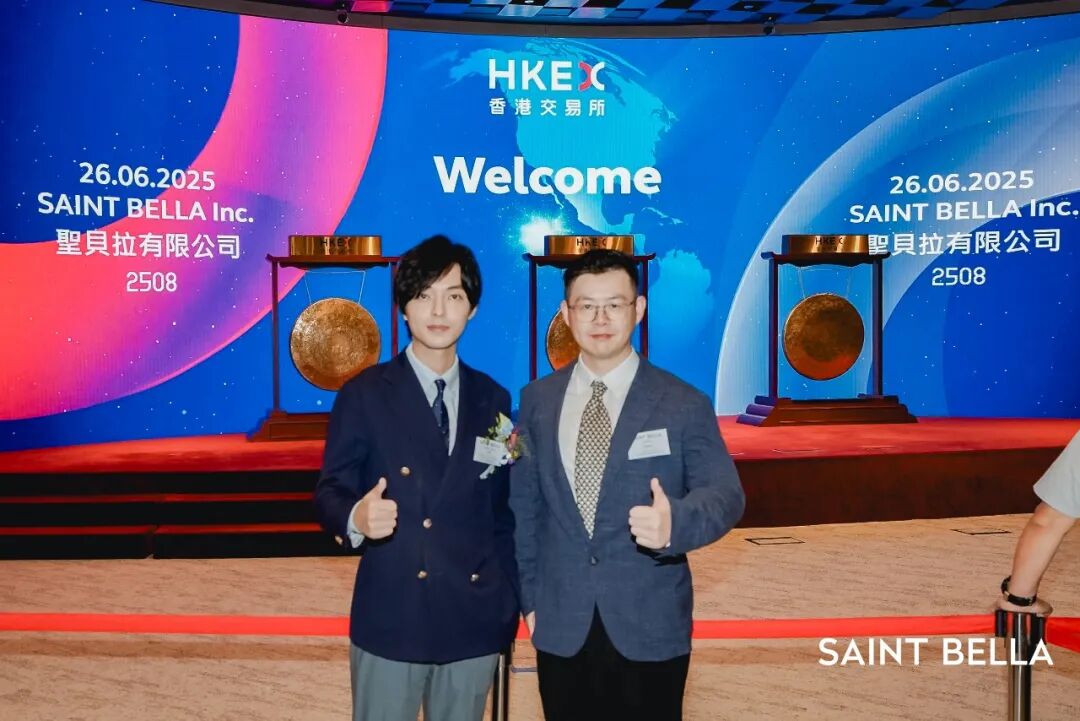
Beilin Le added, "Congratulations to SAINT BELLA on its successful listing on the Hong Kong Stock Exchange's main board! There remains substantial room for growth in the penetration of premium maternal and infant care services in China. We believe SAINT BELLA's user-centric philosophy, excellent service system, and continuous innovation will win the favor of more users. We wish SAINT BELLA continued success as it sails forward—extending vertically into a full-cycle family care ecosystem and expanding horizontally across the globe, enabling users worldwide to enjoy better family care services."
At this listing milestone, Gaorong Ventures sat down with Hua Xiang, founder and CEO of SAINT BELLA, to discuss his original vision, pivotal "one-in-ten" decisions, and thoughts on brand and globalization.
Beilin Le, Managing Director at Gaorong Ventures, recalled, "Before Gaorong invested in SAINT BELLA in early 2018, the industry was still in its infancy. The maternal and infant care market was large and aligned with people's essential needs. At the time, Gaorong systematically researched over 30 postpartum care chain brands on the market, and SAINT BELLA stood out to us. On one hand, the business model it had chosen and its emphasis on care talent matched our investment criteria for the sector. On the other hand, we were also optimistic about the entrepreneurial passion and drive we saw in founder Hua Xiang."
"Having accompanied SAINT BELLA to this point, we've witnessed the founder's growth throughout—rolling up his sleeves, pursuing excellence, cultivating patiently, until today becoming an entrepreneur steering a global brand."

Hua Xiang at the 2019 Gaorong CEO Summit
The following is our conversation with Hua Xiang:

The farther you go, the clearer your original vision becomes. Looking back eight years, why did you want to start a business?
Hua Xiang: Before founding SAINT BELLA, I was working in healthcare M&A at UBS. I discovered that demand in the non-acute healthcare sector was urgently unmet, industry talent was uneven in quality, and standardized industry norms were lacking. I saw enormous potential in this market and decided to build a leading company in non-acute healthcare.
Why start with maternal and infant care? This segment sits at the very front of the family care value chain. And why enter through the postpartum center niche? Because "sitting the month" is a uniquely Eastern experience that women in other countries don't have. If we could become number one in Asia, we'd have a shot at becoming number one globally. I also hoped to bring Eastern culture to the world through SAINT BELLA.

Looking back at eight years of entrepreneurship, where do you see the truly meaningful value? What drives you to keep giving your all and pursuing excellence?
Hua Xiang: The motivation and original vision behind everything we do is also SAINT BELLA's founding mission: to transform the industry's supply chain and enable more people to access higher-quality, standardized services. How do we transform the supply chain? It can be broken down into several dimensions:
First, "perfecting the talent supply chain." Every position at each center has tiered levels, and through different standards we've built a systematic service system, achieving talent that can be incubated, replicated, and iterated.
Second, we built a "SaaS system." For multi-region operations, we shifted from people-dependent management to digital, platform-based management, extending our management radius to various cities.
The third dimension is "global layout." We've provided a reference development direction for the family care industry: bringing Eastern services to the world. Our presence in the US, Singapore, and elsewhere is helping the world understand Eastern care systems.
Another dimension is "service standardization." Traditional postpartum centers had uneven service quality, relying more on experience than systematic, standardized service processes. Through the establishment of service standards and supply chains, we've transformed a traditional industry into one that can be scaled and replicated globally.

In a fully competitive track, what factors—or relatively correct decisions—have given SAINT BELLA its current strategic advantage?
Hua Xiang: First is "one-in-ten" focus — we concentrate on niche, high-quality service segments.
Second is "being different" — we place great emphasis on POD (products of difference). With every product and service we launch, we break from tradition and convention. SAINT BELLA's pioneering "art therapy" concept, the acquisition of Guanghetang, investments in women's and children's hospitals—these were all things no one in the industry had done before.
Third is "long-termism" — we firmly believe that "slow is fast." SAINT BELLA didn't choose explosive growth in its first four or five years. Instead, we cultivated slowly, step by step, investing more energy in building robust service systems and a mature talent supply chain. It was through these early accumulations that we were able to achieve later breakthroughs.
Finally, "consumer perspective" — we always maintain a "from customer" approach in product design. Today's mainstream consumers in the maternal and infant care market are new-generation families, and all our innovations stem from observed customer needs.

Looking at China's family care ecosystem with endgame thinking, what else is worth "doing over"?
Hua Xiang: Many categories are talking about "doing over," driven by generational turnover in consumer demographics. Their decision-making criteria for consumption have changed, calling for new industry supply. The family care industry is the same—today's main consumers are the post-90s and post-00s generations. Based on their needs, the entire industry needs to be redesigned.
Another point: the endgame of family care is inevitably full-lifecycle service. In the past, family care businesses were highly fragmented—childcare was childcare, eldercare was eldercare, with almost no crossover between segments. In fact, there is much these sub-sectors can learn from each other.
Based on these two points, SAINT BELLA extends vertically across business domains, from postpartum centers to childcare to eldercare, covering the full lifecycle; and expands horizontally across business segments, from maternal and infant care to broader consumption scenarios for China's new-generation families, such as in-home care, retail foods, and postpartum recovery.

What is the first keyword you want users to associate with SAINT BELLA and its brands?
Hua Xiang: "Beautiful aspiration." From SAINT BELLA's earliest days, I hoped it would be a brand that delivers emotional value. Beyond providing the most basic functional value, I hope SAINT BELLA can bring beautiful feelings to everyone who experiences our services and products.
At the same time, we hope SAINT BELLA is a brand that creates memories. I've said before that in my mind, the true definition of luxury is "time." The most precious thing luxury brings you is never the product's own glamour or nobility, but rather the people, places, moods, and states of mind that accompany you as you use or experience it—these elements weave together beautiful memories and feelings.
Taking SAINT BELLA as an example, what we truly hope to provide customers is a family's memory of welcoming new life, a beautiful memory of an important milestone in life. In my view, a brand capable of providing such memories transcends cost-performance to pursue quality-performance.


As a family care company, why choose to continuously invest in new technologies like AI?
Hua Xiang: As a service company, we actually began laying technological groundwork quite early. SAINT BELLA invested in building its SaaS system five years ago, and in the past two years has begun investing in large AI models. It was precisely this early investment in SaaS that allowed us to accumulate rich industry data, positioning us to embrace transformation when the AI era arrived.
Looking ahead, we believe the service industry will ultimately move toward unmanned, intelligent operations, and we're prepared to become a fully intelligent family care service company within the next 10–15 years.
Any company seeking future development must integrate into the era of "life intelligence." We work backward from this endpoint, striving to digitize and scale the supply chain, service system, and service quality of the family care industry.

What challenges and insights have you encountered in the process of global expansion?
Hua Xiang: From day one, our vision has been to become a world-leading family care brand, so globalization is in our DNA.
We've devoted considerable thought to how to forge a path of globalization. Service exports, compared to product exports, require local supply chains before going overseas—meaning high barriers to entry, essentially rebuilding existing supply chains in each country and adapting them to local conditions.
We also deeply understand that Chinese brands going global inevitably face "acclimatization" issues. Especially with services like the postpartum "baby honeymoon," we need to translate them for overseas consumers. Moving from "no demand" to "creating demand" is extremely challenging for us.
In our overseas expansion, we adjust based on local consumption habits. For example, in the US we don't only offer traditional postpartum products, but adapt to local conditions by launching seven-day packages, two-week postpartum recovery programs, or baby passport packages.

Gaorong was one of the company's earliest institutional investors and has continued to invest across multiple rounds. How do you evaluate Gaorong?
Hua Xiang: I'm deeply grateful for the trust and support Gaorong gave us in the early days of entrepreneurship. When I first sought external funding, I probably met with no fewer than 200 investors. At that time, SAINT BELLA had only two stores. After fully explaining SAINT BELLA's business philosophy, development blueprint, and business segments, Gaorong chose to stand with us.
Not just at the beginning—throughout SAINT BELLA's subsequent development, Gaorong provided us with tremendous support. This companionship, in my view, is the most precious thing. It's been an honor to walk this path together, and I believe the future holds great promise.