How Can AI Empower Healthcare? "Smart Healthcare Symposium" Hosted by Tsinghua University's Department of Electronic Engineering, Co-organized by Gaorong Ventures, Explores the Question in Depth
Give the product a clinician's diagnostic mindset.
Healthcare is a vital domain that touches people's daily lives. Every day, 21 million people in China walk through the doors of outpatient and emergency departments seeking medical care. At China's top-tier hospitals, each radiologist must review at least tens of thousands of medical images per day. The Chinese healthcare system faces world-class challenges.
How can we free physicians from repetitive labor? How can limited high-quality medical resources be multiplied through technology? Gaorong Ventures believes artificial intelligence can create real value by improving medical efficiency and patient experience. At a recent "Smart Healthcare Symposium," academia, industry, and the investment community explored these questions in depth.
The "Smart Healthcare Symposium," hosted by Tsinghua University's Department of Electronic Engineering and co-organized by Gaorong Ventures among others, was successfully held at Tsinghua University. Academician Dong Jiahong, president of Tsinghua Chang Gung Hospital, along with representatives from Tsinghua's Department of Electronic Engineering and School of Software, as well as innovative companies in medical equipment, healthcare big data, and medical imaging, attended and engaged in deep discussions about the smart healthcare industry. Xin Wang, Vice President at Gaorong Ventures, moderated the symposium and led discussions with medical imaging companies on the current state and future of algorithms and commercialization during the "Medical Imaging" session.
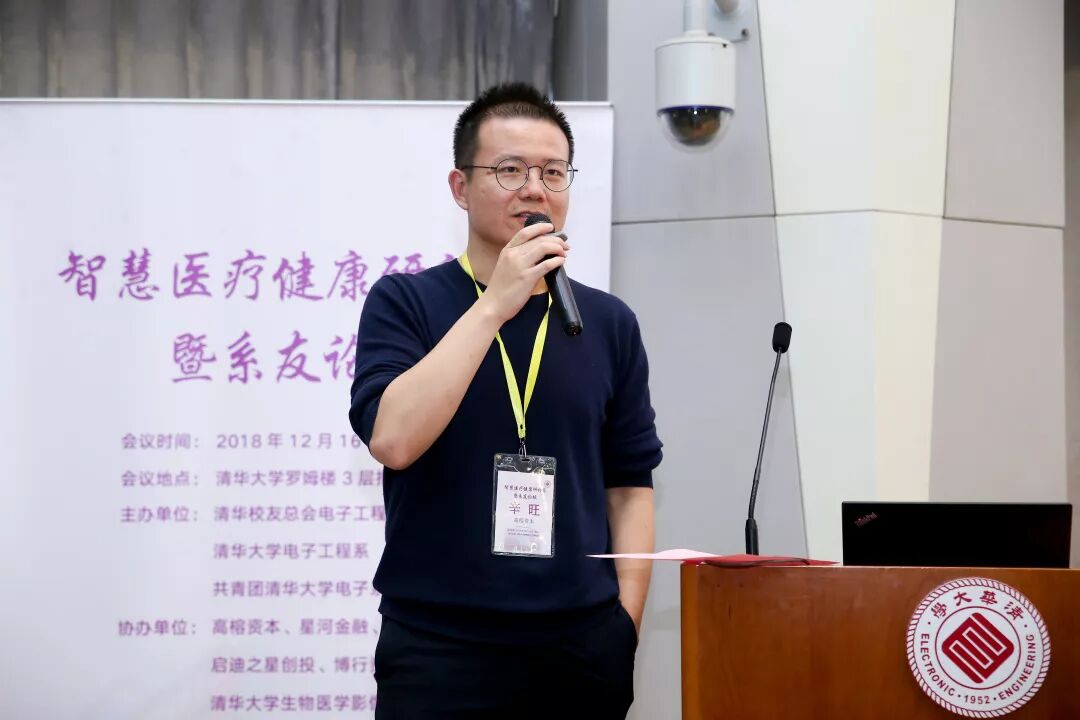
Xin Wang, Vice President at Gaorong Ventures
Representing the clinical perspective, Dong Jiahong delivered a keynote presentation titled "Smart Healthcare Driving Transformation in Health and Medicine." He argued that amid global challenges facing the healthcare industry, technological development offers powerful support for addressing them, with smart healthcare enhancing diagnosis and treatment, improving efficiency, and extending the reach of medical services.
Wang Zhao, Senior Product Director at YITU Healthcare, a Gaorong portfolio company, shared YITU's practical applications of AI in healthcare. At China's top-tier hospitals, each radiologist must review at least tens of thousands of medical images daily; 21 million people seek outpatient and emergency care every day. How can radiologists be freed from repetitive work? How can workflows be restructured to make medical services more efficient? How can limited high-quality medical resources be multiplied through technology and made accessible to all? YITU, with its world-class algorithms and engineering team, saw the value of using AI to improve medical efficiency and patient experience — and founded YITU Healthcare.
Wang noted that YITU won first place in two consecutive FRVT (Face Recognition Vendor Test) competitions held by NIST, achieving over 99% accuracy at a false positive rate of one in ten million. However, in healthcare, algorithmic leadership doesn't mean solving all problems. Beyond algorithms, YITU prioritizes clinical significance, providing technical solutions that meet real clinical needs. Wang gave an example of product iteration for lung nodule detection at a top-tier hospital. Rather than treating improved sensitivity and reduced missed detection rates as the core metrics, YITU focused on what mattered more to physicians: reducing false positives and improving feature extraction accuracy. For instance, 2-4mm high-density solid nodules are almost never cancerous and carry limited clinical value in certain scenarios. YITU found that actively lowering sensitivity for such nodules in some contexts actually improved physician experience and feedback.
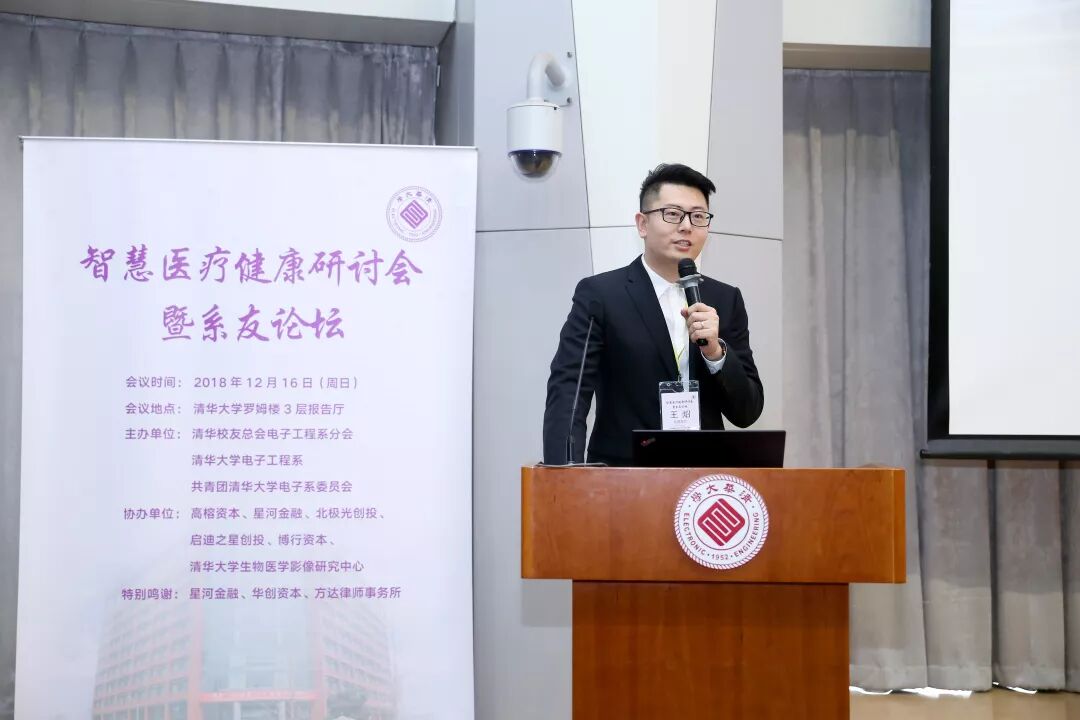
Wang Zhao, Senior Product Director at YITU Healthcare
This approach — optimizing products with a physician's mindset rather than fixating on performance metrics — has received strong positive response from hospitals. In medical AI, algorithms are not merely a technical problem; they require extensive thinking about scenarios and what physicians actually need, so that products can embody clinical reasoning.
Lesion detection is only the first step in a physician's work, not the end of effective diagnosis. Analysis and description of lesions, along with diagnostic conclusions and recommendations, still remain. Wang explained that YITU is also considering how AI can assist physicians in analyzing lesions. Changes in a lesion over time are far more medically meaningful than looking at a single slice. Yet without technological assistance, physicians can barely accomplish this — they would need to locate lesions across all of a patient's prior scans and make continuous comparisons. So YITU introduced a "lesion follow-up comparison" feature that automates this for physicians. Here, the value of algorithms extends beyond efficiency gains to genuine capability enhancement.
Wang shared that multidisciplinary team (MDT) models will become an important direction for the treatment of many malignant tumors. YITU Healthcare aims to integrate diverse clinical data — not just imaging, but also physicians' clinical notes and reports from other diagnostic methods — to enable richer diagnoses of patient conditions. The AI technologies required extend beyond computer vision to include speech recognition and natural language understanding.
Recommended Reading
YITU Wins Global Face Recognition Competition for Second Consecutive Time | Gaorong Shares
YITU's Leo Zhu: In the New Era of AI, We Believe Because We See | Gaorong Shares
- Gaorong Ventures manages USD and RMB funds with total committed capital of approximately RMB 15 billion, focusing on early- and growth-stage investments in TMT.
- Its limited partners include top global institutional investors as well as Chinese corporate giants from finance, retail, advertising, and other industries.
- Additionally, dozens of successful entrepreneurs — founders of companies including Tencent, Baidu, Taobao, Xiaomi, Meituan, Dianping, 360, Focus Media, Weibo, Sohu, JD.com, Vipshop, Tudou, Autohome, and Ganji.com — are LPs in Gaorong's funds.
- The founding partners previously led investments in numerous outstanding companies, including Xiaomi, Razer, Baofeng Technology, G-bits, Tudou, Wondershare, Archermind, 91 Assistant, 3G.cn, MOGU, Dota Legend, Yuanfudao, and others.
- Since its founding, multiple Gaorong portfolio companies have grown into national and global leaders in their respective industries, including: Pinduoduo (NASDAQ: PDD), HUYA Inc. (NYSE: HUYA), HMI (NYSE: HMI), MOGU (NYSE: MOGU), Lifesense (300562.SZ), Meituan (03690.HK), Ping An Good Doctor (01833.HK), Zhongrongjin (acquired by Aoma Electric), DeePhi Tech (acquired by Xilinx), Qian Daibao (acquired by Meituan), Ufintec, Beibei, Leqi E-commerce, DotC, Nuro, YITU, Roborock, Tiangong Intelligence, Zhuiyi Technology, Tigerobo, Oasis Labs, Beitai Haoche, QuantGroup, Shuidihuzhu, Testin, Doumi, BIGO LIVE, Danke Apartment, Qian Damai, Perfect Diary, and Ucommune.
- Gaorong Ventures maintains investment teams in Beijing, Shanghai, Guangzhou, Shenzhen, and Hangzhou.
Scan the QR code to follow Gaorong Ventures
Thank you, friends of Gaorong