How Did Green Hydrogen Player "Zhongke Qingyi" Win Over Industry Investors in Its Latest Funding Round? | Gaorong Ventures

Breaking the "curse of mass production."

"Today is the best time to enter the hydrogen energy industry."
In 2022, Qingyi He, who had accumulated extensive mass-production experience in separator materials, saw that the green hydrogen industry was on the eve of explosive growth. He decided to join forces with his senior lab-mate Nanwen Li to develop new membrane materials for alkaline water electrolysis hydrogen production electrolyzers, founding Zhongke Hydrogen Easy (中科氢易).
"Because downstream industries have fairly urgent needs, they can provide core materials companies with sufficient resources for validation. The outcome is still undecided, and we have the opportunity to work alongside downstream industrial partners toward our ideal goals."
From early 2023 to the present, Zhongke Hydrogen Easy has completed four funding rounds. This includes the recently completed RMB 50 million Pre-A+ round, which attracted strategic investment from Taiqing Hydrogen Morning (泰氢晨) — established by Chint Group with RE-FIRE as a founding shareholder (Gaorong Ventures led Taiqing Hydrogen Morning's Pre-A round in early 2024) — as well as continued support from existing shareholders State Power Investment Corporation, Lingge Ventures, Sungrow Green Hydrogen, Gaorong Ventures, and Zhenhai Sci-Tech Innovation. Gaorong Ventures led Zhongke Hydrogen Easy's Pre-A round in 2023.
As the green hydrogen trend becomes firmly established, hydrogen production equipment is developing rapidly. Among these technologies, water electrolysis is increasingly dominating the mainstream, driving rapid market growth for alkaline electrolyzers — which offer high maturity and superior economics.
In alkaline electrolyzers, the separator is the highest-barrier core component, accounting for approximately 20% of electrolyzer costs. The previous-generation separator product was PPS membrane. Zhongke Hydrogen Easy's "membrane magic" product is a composite separator that helps improve hydrogen production efficiency, reduce energy consumption, and offers high safety and adaptability to fluctuating power sources. Composite separators have long been monopolized by overseas manufacturers; domestic production of composite separators is key to long-term cost reduction in electrolyzers.
Leveraging its technical accumulation and engineering experience in membrane materials, Zhongke Hydrogen Easy has developed composite separator products that match international first-class standards, targeting pain points in real-world engineering applications.
More importantly, Zhongke Hydrogen Easy has established production lines and achieved mass production of wide-format composite separators, becoming one of the few composite separator suppliers globally with high-quality delivery capabilities, high yield rates, and production capacity.
Recently, we spoke with Qingyi He, CEO of Zhongke Hydrogen Easy, to look back on his two-plus-year entrepreneurial journey, how he broke the "curse of mass production," and how he's riding the green hydrogen industry wave alongside industrial players.

Gaorong: Going back to when you started two years ago, what stage was China's green hydrogen industry at? What signals did you catch that made you feel you had to get in?
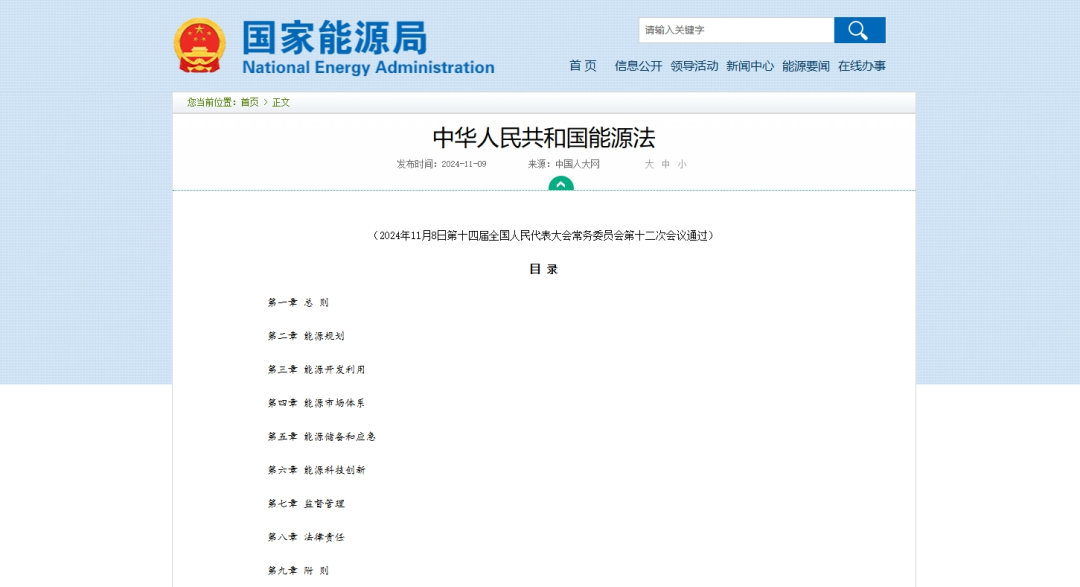
Qingyi He: As China advances its dual-carbon goals, green hydrogen has become a core pathway for deep decarbonization. We've also seen favorable policies for the hydrogen energy industry continuously released. Just recently, China's Energy Law was issued (effective January 1, 2025), incorporating hydrogen energy — meaning hydrogen is formally recognized as an energy category.
Beyond directly replacing traditional fossil fuels, if hydrogen can serve as an energy transfer medium in the future — for example, converting China's abundant solar and wind resources into chemical products like methanol and liquid ammonia, or storing energy for later power generation — it would unlock even larger markets.
Earlier on, there weren't many downstream companies making hydrogen production electrolyzers domestically, and user-side demands regarding electrolyzer energy consumption, adaptability to fluctuating power sources, and so on were virtually nonexistent.
In recent years, more and more energy and chemical companies have entered this space. To secure competitive positioning, these new players want differentiated improvements in device capabilities. Additionally, electrolyzer use cases have expanded from grid-connected hydrogen production to off-grid hydrogen production. The original core materials and supply chain systems can no longer meet market demands.
Against this backdrop, we believed core materials in the green hydrogen industry were worth betting on.
Gaorong: As the green hydrogen industry develops, how large is the market opportunity for separator materials?
Qingyi He: Based on dual-carbon targets, we estimated green hydrogen demand from 2022 to 2030 according to carbon emission reduction requirements, then worked backward to derive demand for electrolyzers and separators. Our calculations suggest that global demand for composite separators could approach RMB 10 billion by 2030.
Of course, the downstream economic logic for green hydrogen hasn't fully worked out yet. We believe that after 2-3 years of validation, and once backend hydrogen offtake shows clear growth or large-scale demonstration projects emerge, growth should be exponential.
Furthermore, beyond directly replacing fossil fuels, if hydrogen has the opportunity to become part of energy storage — enabling seasonal or even annual cross-period storage — this would further stimulate demand.
Looking at the electrolyzer industry itself, ongoing industry upgrades continue to generate new demands for separator materials. This year, some domestic companies have begun laying out square electrolyzers, opening up greater possibilities for separator materials.
Gaorong: In your interactions with industrial partners, what are their core demands? What possibilities exist for deep collaboration between Zhongke Hydrogen Easy and industrial players going forward?
Qingyi He: This question is actually quite simple. The most critical pain point in the green hydrogen industry right now is solving hydrogen production costs — truly completing the commercialization loop and achieving market-based economic returns.
Hydrogen production isn't as simple as many people think; it requires tight coordination across every link in the value chain. The clearer industrial players are about pursuing positive unit economics, the more enthusiastic they are about adopting new technologies and materials.
Take Taiqing Hydrogen Morning as an example. We began engaging with them in July 2023, and they essentially witnessed every stage of our journey from pilot production to mass production. Going forward, we'll work closely with Taiqing Hydrogen Morning to validate the routine performance and durability of our composite separators in alkaline electrolyzers, enabling new materials to find good application in hydrogen production and truly help reduce costs.

Gaorong: How does an alkaline electrolyzer work? Among hydrogen production equipment materials, why is the separator considered the highest-barrier component?
Qingyi He: Picture an alkaline electrolyzer: it's filled with electrolyte, with a separator dividing the cell into cathode and anode chambers. At temperatures of 70-90°C, an electrochemical reaction occurs when electricity is applied, producing oxygen and hydrogen at the anode and cathode respectively. The separator serves two main functions: first, blocking hydrogen and oxygen to ensure safe operation; second, providing transport channels for hydroxide ions (OH⁻).
Composite separators account for about 20% of an alkaline electrolyzer's cost; the core materials — separator plus electrode — together can exceed half of total costs.
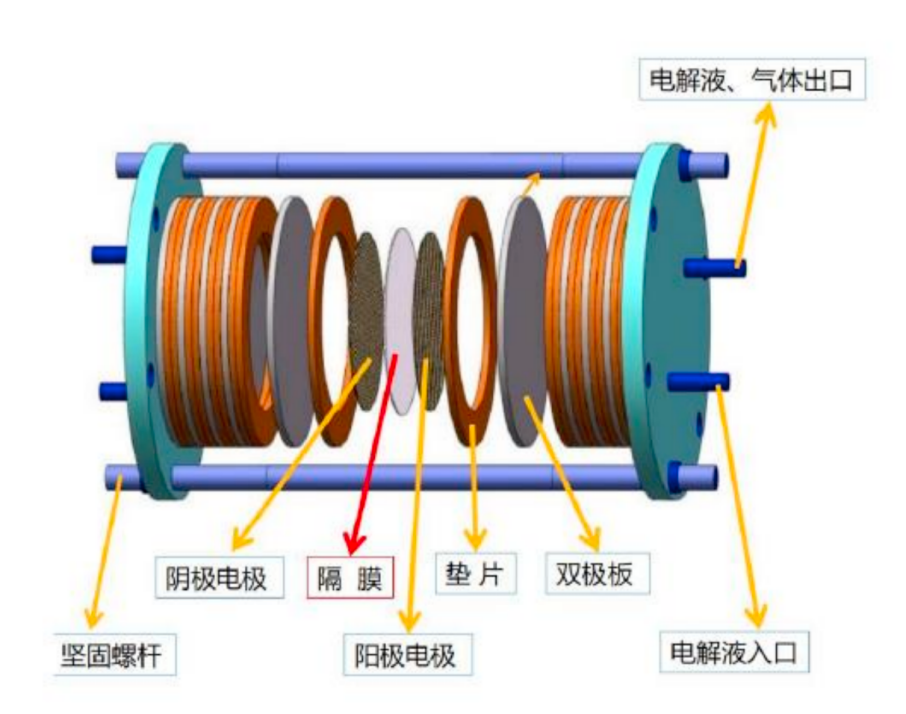
Alkaline Electrolyzer Structure Diagram
(Source: China Water Electrolysis Hydrogen Production Industry Blue Book 2022)
The reason hydrogen production separators have such high barriers is the extremely demanding requirements for membrane stability, uniformity, durability, and large-area manufacturing. Any flaw in the manufacturing process could introduce safety hazards in the equipment.
Going deeper, separators have always been a precision industry. In many sectors, China faces a relative shortage of high-end separators, primarily because basic materials research and engineering processes are rather siloed. In membrane mass production, beyond deep understanding of material properties, we must exercise strict control over processes and parameters.
Gaorong: What advantages do Zhongke Hydrogen Easy's composite separator products offer? What upgrades could they bring to domestic hydrogen production equipment?
Qingyi He: Compared to PPS membranes, microporous composite separators offer advantages including lower internal resistance, reduced energy consumption, and better gas isolation.
After nearly two years of R&D and exploration, Zhongke Hydrogen Easy has launched its third-generation composite separator product EHYDRO™ PCM500+, which demonstrates clear advantages not only in macroscopic performance indicators like hydrophilicity and gas barrier properties, but also achieves improved moisture retention and pressure resistance through refined control of the membrane's microstructure.
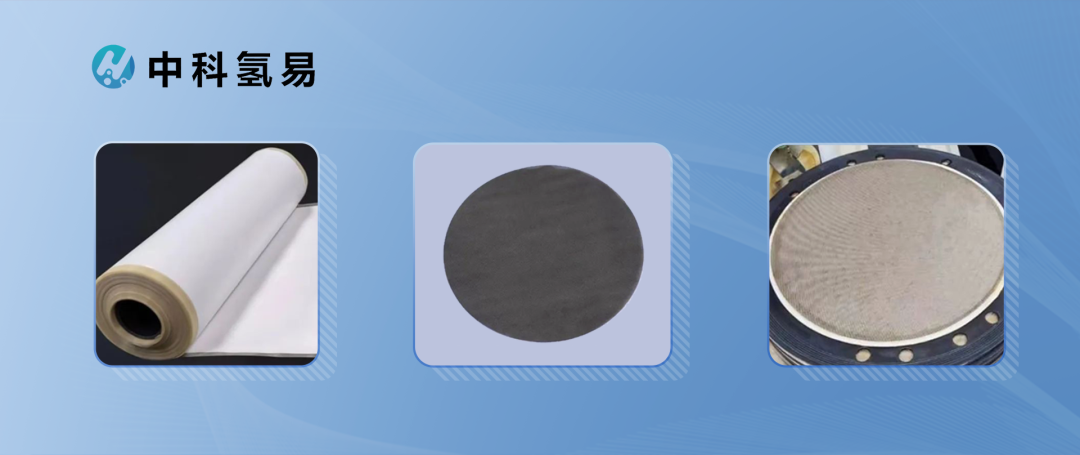
From a cost perspective, we believe composite separator prices could eventually fall to the level of imported PPS fabric. From a raw materials standpoint, both use bulk chemical raw materials with similar base costs; the critical difference is manufacturing yield. As yields improve and production efficiency increases, costs have room to fall further.
Gaorong: Separators are currently in an early stage of technology transition and import substitution. How long is the window for startups to establish themselves?
Qingyi He: We believe today is the best time to enter the hydrogen energy industry. Because downstream industries have fairly urgent needs and can provide core materials companies with sufficient resources for validation, allowing mutual advancement with customers.
Once industry standards are established, validation becomes much more expensive. Today, validating a composite separator in a 1,000-standard-cubic-meter electrolyzer for 3-6 months would require electricity costs alone exceeding RMB 10 million.
Moreover, as backend scenarios like off-grid hydrogen production and hydrogen-plus-storage evolve, customer demands for membranes will keep changing. Those who sense the changing waters first — and secure customer cooperation for validation — gain advantage.
Once you've established first-mover advantage, you possess certain entry barriers. For industry customers, electrolyzers are production tools with lifecycles of 5 years or even 10-plus years; the cost and risk of replacing core raw materials mid-cycle are considerable.
Gaorong: Beyond membrane products, Zhongke Hydrogen Easy also provides electrode products to customers. Why?
Qingyi He: Zhongke Hydrogen Easy's EHYDRO™ Coral series non-precious-metal nickel-based electrode products also demonstrate clear advantages in reducing energy consumption and in static/dynamic stability.
The reason we provide customers with a composite membrane + electrode materials technology solution is that fully realizing composite separator performance requires close coordination with electrodes. Validation has shown that our bundled solution can improve hydrogen purity, effectively reduce electrolyzer system energy consumption, and significantly improve tank compatibility with renewable energy sources.

Gaorong: This year is Zhongke Hydrogen Easy's first year of mass production and delivery. What does your production line layout currently look like?
Qingyi He: To date, Zhongke Hydrogen Easy has established a wide-format composite separator production line, plus three electrode production lines and one ion membrane quasi-mass-production line.
Over the past several months of continuous trial production, the team has optimized the coordination of various equipment components and parameters on the production lines. There's still room for improvement, of course, including production efficiency, rhythm, yield rates, and so on.
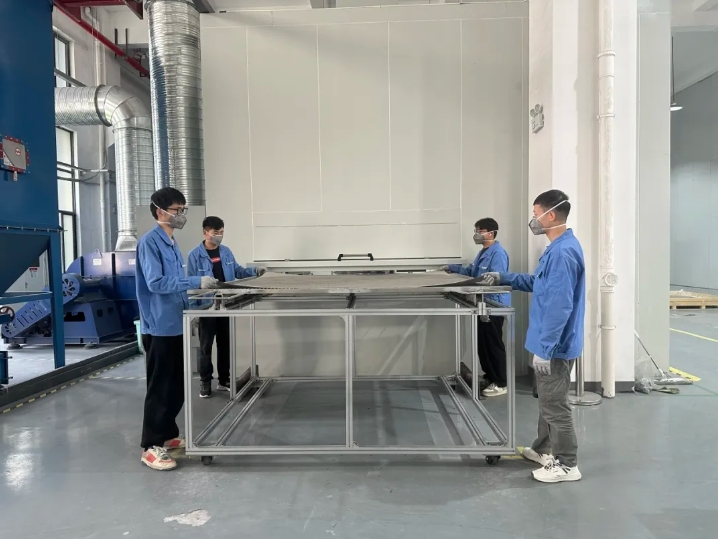
Gaorong: After sending samples, what has actual customer feedback and satisfaction been like? How do customers evaluate Zhongke Hydrogen Easy's products?
Qingyi He: Starting last year, Zhongke Hydrogen Easy began validating its composite separator products on small-standard-cubic-meter electrolyzers, and customers have been quite satisfied with membrane performance.
This year, validation moved to large-standard-cubic-meter electrolyzers, including square tanks and high/medium-pressure circular tanks. They have been operating stably for some time now, with positive customer feedback. Customers consider Zhongke Hydrogen Easy one of the few domestic membrane material suppliers with stable delivery capabilities. At this point, we can say we've broken the "curse" of composite separators moving from pilot production to mass production. What follows is a longer period of validating the lifetime, stability, and reliability of wide-format separator products.
Additionally, we're developing products tailored to customer needs — for example, membrane products for high-pressure tanks, and thinner, lower-resistance composite separators for overseas square tanks.
Gaorong: Mass production is a complex process requiring continuous improvement based on customer feedback and actual data. What experiences and lessons has Zhongke Hydrogen Easy accumulated?
Qingyi He: The devil is in the details. Only through continuous sample delivery, collecting customer feedback and data, building complete data chains, and truly immersing yourself in the factory can you precisely identify problems and make optimizations. Currently, we can basically provide same-day feedback when customers raise issues.
Beyond focusing on the materials themselves, Zhongke Hydrogen Easy also simulates downstream hydrogen production industry application scenarios, conducts our own推演 and testing, and continuously optimizes through customer communication. This kind of rigorous self-demand is what industrial partners most want to see.
Such simulation gives us more holistic thinking. For example, we initially didn't pay enough attention to small differences between different customers' electrolyzers, resulting in insufficient gas blocking in testing; we later discovered that each electrolyzer's edge sealing design differs somewhat, creating more specific requirements for composite membranes.

Gaorong: Zhongke Hydrogen Easy is also making forward-looking investments in fourth-generation solid electrolyte membrane products / anion exchange membranes. What is their medium-to-long-term significance?
Qingyi He: We believe the evolution of electrolyzers from liquid electrolytes to solid electrolytes is an inevitable trend. From its founding, Zhongke Hydrogen Easy established a development path from microporous composite separators to ion-solvent membranes and anion exchange membranes — solid electrolyte separators — achieving medium-to-long-term balance in technology reserves.
Researcher Nanwen Li is a leading domestic scholar in anion exchange membranes. Based on his technology, we achieved basic product definition for anion exchange membranes (AEM) in 2023.
Bear in mind that anion exchange membranes must be evaluated not only for alkali stability but also oxidation stability. Because wherever oxygen is generated, it accelerates fatigue in polymer materials.
So how to improve oxidation stability in anion exchange membranes? We increase membrane molecular weight, making molecules more tightly packed with lower swelling and better oxidation resistance, thereby extending membrane and device lifespans. As market demand for AEM increases this year, we will advance our layout ahead of schedule.
Gaorong: What milestone goals has the company set for the coming year?
Qingyi He: First, we hope to complete scaled delivery of composite separators in 2025. Second, we aim to expand overseas markets with breakthroughs in the US and EU. Third, we want to achieve breakthroughs in anion exchange membranes, with production lines actually operational.
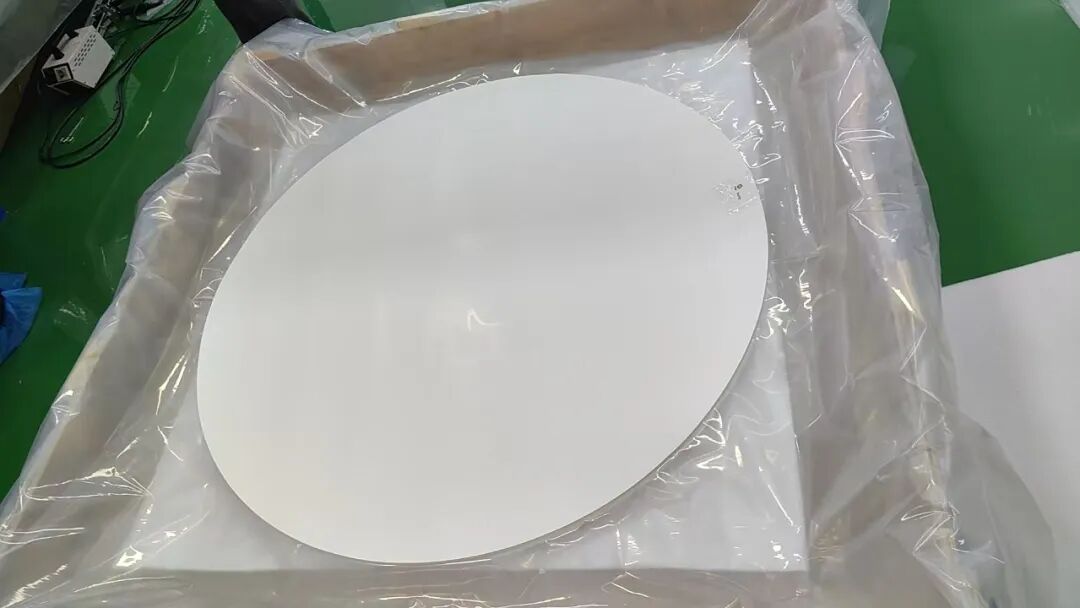
Zhongke Hydrogen Easy composite separator products being crated for shipment
"Choose, Focus, Penetrate" — Qingyi He uses this phrase as his WeChat signature. "It's an essential working method for PMP project managers. Choose the right track, focus resources, and spare no effort even in the face of skepticism."
As an upstream materials supplier, Zhongke Hydrogen Easy's resilience, reliability, and persistence have earned recognition from industry leaders, jointly unlocking the journey toward large-scale green hydrogen development.