How to Make Decisions, Rally People, and See the Future Amid a Pandemic? | Rongwen

We invited ten CEOs to answer.

2020, a year that began with the battle against COVID-19, is certain to earn its place in the annals of Chinese business history.
There is no doubt this is a year of challenges — survival has become both the minimum and maximum strategic objective. It is also a pivotal year that will define the coming decade: only those who truly learn to embrace uncertainty can hope to establish order and seize control.
Over the next ten years, the China market will remain full of opportunity, but only the brave who act decisively will forge ahead against the headwinds.
In the face of the pandemic, how have CEOs made critical decisions? How do they predict the business model transformations it will bring? How are they building organizational antifragility? And how are they reading the next decade?
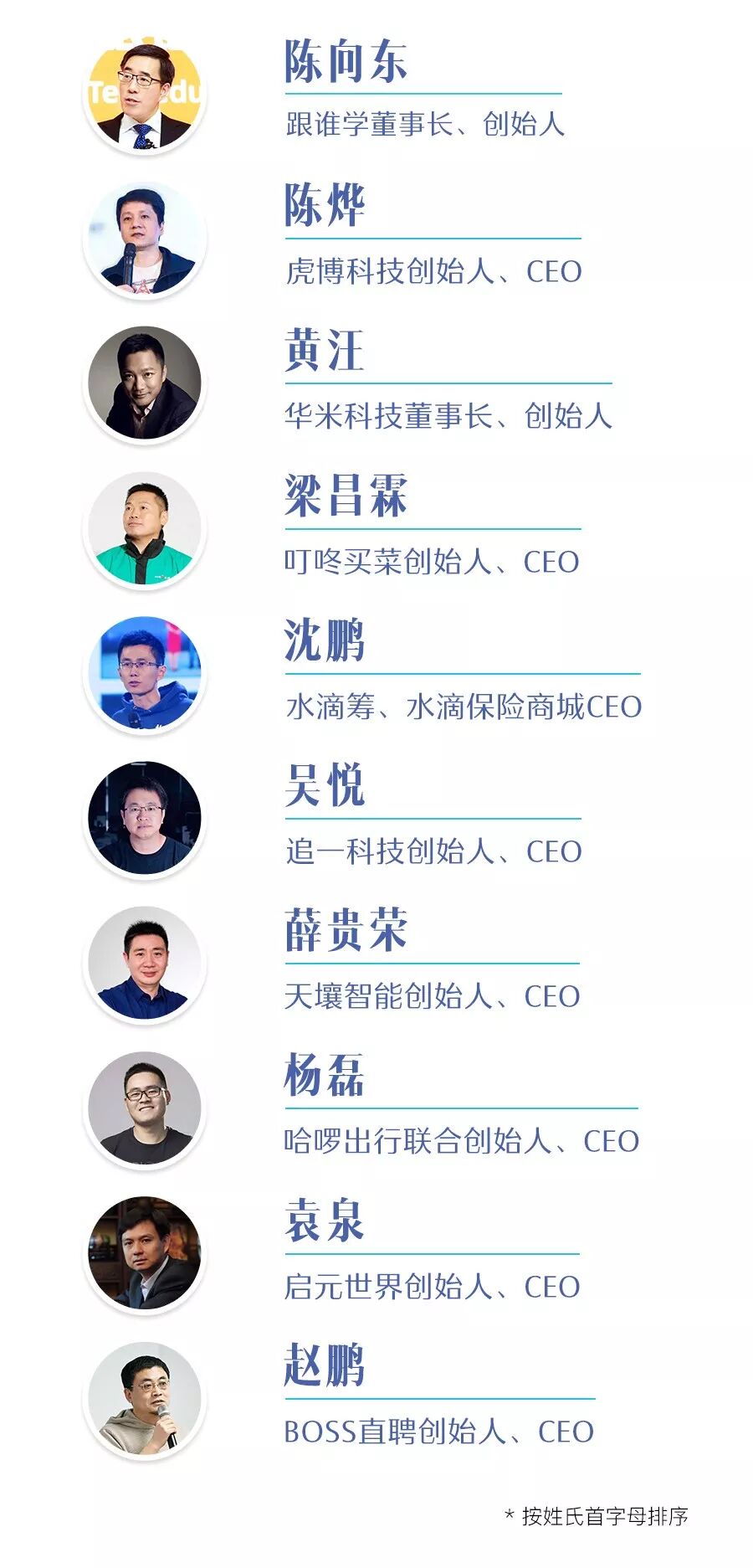
At this extraordinary moment, we prepared six questions and are grateful to ten Gaorong Ventures CEOs for their candid responses. We hope their reflections will inspire more entrepreneurs.



Wang Huang, NYSE: ZEPP: The sudden outbreak meant that our entire core leadership team, myself included, and many employees didn't get a single day off during the holiday. Beyond taking necessary measures to ensure staff safety, we canceled our annual company meeting originally scheduled for February 6. We took the money earmarked for the event and red envelopes, added more to it, and put together 10 million RMB to purchase urgently needed medical supplies for the epidemic-stricken areas.
NYSE: ZEPP officially resumed work on February 10. We currently sell products in over 70 countries and regions worldwide, so we're closely tracking the pandemic's progression and taking necessary measures to overcome difficulties — this itself is our greatest contribution to the country and society. For instance, we had planned to attend MWC Barcelona in late February; though the conference was canceled due to the outbreak, the work that needed doing still had to move forward.
More importantly, we're using this as an opportunity to comprehensively evaluate whether our company's mission, vision, and core values — and our team's capabilities — can withstand tests like this black swan event. It was only at the end of 2019, after more than a year of deliberation among core leadership, that we settled on "Technology Connects Health" as our corporate mission. This pandemic has only strengthened our conviction that over the next decade, we must walk this path with unwavering determination. Achieving our health mission through technological innovation holds tremendous value not just for our company, but for the entire country and the world.
Liang Changlin, Dingdong Maicai: This was the third year Dingdong Maicai operated its "Spring Festival Without Closing" initiative. Based on big data projections before the holiday, we had kept 75% of frontline staff on duty, but the outbreak caused order volumes to surge. Our top priority became ensuring supply and holding prices steady.
On January 23, we held an emergency meeting and established three "battle teams" — supply assurance, delivery assurance, and safety assurance.
The supply assurance team dispatched over 100 procurement staff to source fresh ingredients across the country. On New Year's Eve, many of our buyers were in the fields of Shandong, Jiangsu, Yunnan, and Ningxia.
Facing delivery pressure, we called on employees who hadn't left Shanghai to return to work, including former employees. We also encouraged staff to invite friends and family to join, offering 1,200–2,000 RMB for each successful referral. We partnered with restaurants, hotels, and other service businesses for "shared employees" — as new and established forces in the lifestyle services sector, we would overcome hardships together and win this battle.
Shen Peng, Shuidi: My understanding is that the fundamental shift in market conditions had already occurred over the past year; COVID-19 merely intensified the challenges. At its core, you need a solid foundation to work with metal — whether we can weather this test depends on the operational fundamentals we had built before.
Given the current downward macroeconomic environment, I made a basic assessment of the outbreak's duration and its impact on business, then deployed a company-wide remote work rhythm. The entire organization has been in this remote work state since. Unlike previous remote arrangements, as the company's number one, I'm personally on the front lines — because the market environment is undergoing major discontinuous change, and only by being at the front can I better understand the challenges and needs our people there face, and provide more timely support.
To aid the epidemic-stricken areas, beyond donating 1 million RMB to establish a Shuidi special fund, each of our business lines leveraged its strengths to contribute from different angles. For example, Shuidi Public Welfare partnered with multiple domestic charitable organizations to launch fundraising campaigns for epidemic prevention materials in severely affected regions, raising over 60 million RMB in just over 20 days.
Xue Guirong, Tianrang Intelligent: On one hand, we're tracking the health status of all staff and thinking through protective measures for returning to work. On the other, I'm considering how the team needs to adapt to a new way of working — online. Can we communicate effectively as a team through online channels? Can we build products online? Can we engage with and serve customers online? Tianrang has always been committed to empowering industries and users through AI. After this extraordinary February, I hope we can build an online AI core architecture that enables better AI empowerment, AI automation, and serves more users — letting more machines do the work!
Zhao Peng, BOSS Zhipin: For a CEO, the most important task during the outbreak is to mobilize corporate resources to protect employees and their families. All actions revolve around this goal: procuring and delivering protective materials, organizing staggered returns to work cities, and deploying remote work systems.


Chen Ye, Tigerobo: Under the outbreak, I see six AI-driven industries that will face new commercial opportunities, and I'm thinking about whether Tigerobo can do more:
1) Information services. The old model of "people seeking information" or "information finding people" will be disrupted. AI-powered intelligent information delivery will explode, helping people rapidly access genuine, accurate, and trustworthy information. To support epidemic response, Tigerobo has developed a one-stop intelligent passenger itinerary system deployed on the front lines, enabling relevant departments to timely and comprehensively track cross-regional travel nationwide. As AI technology matures further, the way people access information will fundamentally change.
2) Pan-entertainment. Going forward, whether long-form video, short video, or live streaming — product, content, distribution, and marketing will all undergo a series of transformations.
3) Intelligent healthcare and internet healthcare. During the outbreak, online consultations and telemedicine can effectively relieve pressure on offline hospitals. AI technologies, particularly NLP and computer vision, can accelerate testing efficiency, meeting demand for intelligent testing and intelligent analysis reports, enabling rapid intelligent diagnosis.
4) Cloud-based office and online enterprise services. Objectively speaking, remote work remains in its early stages. It will evolve toward greater refinement and integration across automated workflows, conferencing systems, shared cloud infrastructure, and more — there's still a long road ahead.
5) Online education. This outbreak has accelerated online education's penetration into lower-tier cities.
6) Logistics. The 2003 SARS outbreak gave rise to e-commerce and logistics. After this pandemic, contactless delivery powered by drones, autonomous vehicles, and robots may well see a surge in adoption.
Shen Peng, Waterdrop: The unexpected outbreak has accelerated the digitization of healthcare, insurance, public welfare, and many other sectors. I've noticed many insurance agents in my social network have paused their usual work, yet I'm seeing more people sharing links to online policy purchases. In fact, our Waterdrop Insurance Mall has hit record highs for daily online premium signings. I believe many of our users are buying insurance online for the very first time in their lives. As people shift more of their purchase behaviors that could go either way — online or offline — toward the online channel, they're gradually forming new habits.
Wu Yue, Zhuiyi Technology: In the enterprise software space where we operate, there are two service models. One is public cloud deployment with remote service — lower maintenance costs, higher service efficiency. The other is private deployment with on-site service — higher maintenance costs, lower service efficiency. While an increasing number of companies had come to accept public cloud deployment, medium and large enterprises still overwhelmingly opted for private deployment and local service.
After this outbreak, constrained by delayed returns to work and restrictions on personnel movement, our clients began shifting, providing us with remote office environments for remote deployment and service. From physical limitations to physical freedom, from distributed to centralized service — this represents a tremendous boost to service efficiency. Once software deployment and after-sales service go remote, it extends further: the sales process will gradually move online as well. If the entire chain from sales to deployment to ongoing service can be handled remotely, it would be a transformative change for the enterprise software sector.
Yang Lei, Hellobike: The pandemic has deepened people's reliance on digital channels, and user habits for online operations will become further ingrained — spanning work, daily consumption, and leisure. The recent surge in demand for remote work systems, online shopping, and online gaming speaks to this. Telemedicine may also accelerate as a result. Meanwhile, data analytics and intelligent decision-making based on digitalization will become increasingly critical, helping enterprises better understand the full picture and make more accurate judgments. Driven by technology, a wave of companies will push further toward digitalization, big data, and intelligent transformation. Additionally, business models that reduce dependence on human labor will develop rapidly, minimizing close interpersonal contact and dense crowds — such as unmanned intelligent manufacturing, unmanned logistics and delivery, and autonomous driving.
Yuan Quan, Qiyuan World: In recent years, the world has seen roughly 200 epidemic events annually. These have caused varying degrees of damage to human health, economies, and societies. Recent economic research suggests that large-scale epidemics cost the world an average of 0.7% of global GDP, or $570 billion, per year. Prediction and scenario planning for large-scale epidemics, simulation training for prevention and control personnel at all levels, and intelligent assistance at critical decision points can all help minimize disaster losses. Johns Hopkins University hosted a large-scale epidemic tabletop exercise in New York last October. Going forward, decision intelligence technology may support emergency scenario planning and simulation training, intelligent assistance at critical decision junctures, and help management agencies at all levels improve their response capabilities and make more effective decisions.
Zhao Peng, BOSS Zhipin: From an operational standpoint, we expect more companies to adopt flexible work arrangements. Large enterprises will become more efficient at cross-regional, cross-departmental remote collaboration. At the same time, we'll see more freelancers with specialized skills.
Larry Chen, Gaotu Techedu: When we build an organization, we must first ask whether the smallest unit works. Whoever can figure out the unit economics clearly has a higher probability of success — that's also the foundation of antifragility. If you can construct a sound model, test it with the fewest people possible, and then scale after you've validated it, you'll likely win. Organizations that scale blindly before finding their smallest working unit usually end in tragedy. An organization's smallest unit is like a human cell. A healthy cell, through continuous replication, can become a living organism. But if the cell itself is unhealthy, the more it replicates, the greater the disaster. As the organization grows, we also need to lead the team to confront entropy increase directly, to practice entropy reduction, to dare to critique and correct the organization, to dare self-examination — only then can organizational wisdom grow with the organization's age. Gaotu Techedu went through difficult times, but we always emphasized effective growth: serving every customer to the extreme to truly deliver customer value. Training our people in the mindset of effective growth, cultivating effective growth behaviors — it's like a healthy cell unit that can replicate, scale, and standardize. Like practicing leg presses for years — eventually you're not training the movement itself, but your belief in the practice. Then when facing competition and uncertainty, we have nothing to fear.
Liang Changlin, Dingdong Maicai: Fresh grocery e-commerce is an industry dependent on supply chain capabilities, so it constantly faces various uncertainties. Our job is to turn those uncertainties into certainty, honestly creating value for users and meeting their needs. To ensure this certainty, our supply chain, our team, our IT systems — all need continuous internal capacity-building during normal times. On the supply chain side, we emphasize "borrowing the false to cultivate the real." The front warehouse, for instance, is a form; what we "cultivate" is supply chain capability. On the team side, Dingdong Maicai has 20,000 people, with just over 700 at headquarters and the rest frontline staff. We have a saying: "The front line is like an army, headquarters is like an orchestra" — two different management approaches. Headquarters focuses more on collaboration, coordination, and employees' internal drive for growth; the front line focuses on following orders. Overall, everyone feels this work has real value, united from top to bottom — that's our organizational management method, and it's also the foundation of our antifragility.
Moreover, harsh environments and explosive demand growth have actually forced us to discover and improve many weaknesses. For example, the automation of our large warehouses and the slot management at front warehouses weren't intelligent enough, relying heavily on manual labor. During special periods, we needed new dispatch algorithms. These inadequacies were rapidly identified and improved under high pressure. Growing stronger through adversity — that's our "antifragile system."
Yang Lei, Hellobike: Uncertainty has become the norm in business, and its magnitude is increasing while the pace of change accelerates. These uncertainties bring ever-present risks on one hand, but development opportunities on the other. Hellobike has been building an antifragile system across both business and team dimensions. From a business perspective, we started with Hellobike shared bikes and have expanded to a two-wheel ecosystem encompassing shared bikes, e-bikes, bike services, and battery swapping, while also developing synergies with our four-wheel businesses like ride-hailing and taxi services. Our philosophy of placing no limits on business scope has kept us sensitive to external changes, able to quickly respond and capture innovation and growth opportunities, while also avoiding or minimizing risks that any single business might pose to the company overall. From a team perspective, Hellobike has continuously refined its entire organizational system, including promotion, performance,淘汰, compensation, and grading systems. The organizational system fundamentally determines how far a team can go. At the same time, we keep building professional execution capabilities, which determine how strong a company can become. The core of any enterprise is always "people." Get the people right, and risk resilience increases dramatically.
Zhao Peng, BOSS Zhipin: The basic unit of any organization is the individual. Only when people are antifragile can the organization itself become antifragile. So finding and cultivating antifragile people is something we must keep doing, especially in the face of uncertainty.


Huang Wang, NYSE: ZEPP: At the GeekPark 10th Anniversary Innovation Conference late last year, I introduced the idea that the next decade will usher in a human-centered era of technology. Over the past 50 years, rapid technological advancement has driven tremendous progress across society. But these same technologies have also, inevitably, had negative impacts on our health. We're addicted to scrolling through Weibo, WeChat, and mobile games; we can't go anywhere without our phones. It's wreaking havoc on our sleep and our eyesight. Fortunately, in recent years, whether it's giants like Apple, Google, and Amazon, or emerging companies like NYSE: ZEPP, we've all recognized the importance of health and begun making strategic moves. The future is an IoT era of ubiquitous connectivity, where everyone will own numerous smart devices — including the smartwatches, fitness bands, and earbuds that NYSE: ZEPP produces. We hope these devices can help everyone live healthier lives. We're optimistic about this shift, and we believe it's an irreversible trend. As the product category closest to the human body, smart wearables have the potential to become the gateway to the Internet of Everything and a core variable driving transformation in the health industry.
Xue Guirong, Tianrang Intelligence: We are moving from the "age of electricity" to the "age of computing power." The most important invention of the electricity age was the lightbulb — it lit up the night, and gradually electricity became infrastructure that powered industry and modern life. Look at today: AI represents the first stage of computing power, but for us it's still a luxury good. The challenge right now is that AI is locked inside a box. Building AI is easy; actually applying it is hard. A single AI system is easy; connecting multiple AIs together is hard. AI development today is at the stage of the diesel generator in the electricity age. In the near future, AI capabilities will improve dramatically, the "power grid" for AI will be built, and artificial intelligence will become social infrastructure as fundamental as water, electricity, and gas. Along the way, there will be many challenges that academia and industry will need to tackle together. But we believe AI will become a must-have product for everyone — it will be completely normal for each person to have 100 AIs. Human time will be massively liberated for more creative pursuits.

Chen Ye, TigerBot: Technology is the fundamental productive force driving social development and one of the cornerstones of a better life. As AI technology has evolved from concept to application to real-world deployment, we've seen the many changes it can bring. It may well trigger a fourth industrial revolution and drive transformation across the global economy. Going forward, AI will likely follow four major trends. First, AI technology will enter large-scale commercialization, breaking through the current pattern of government and enterprise-dominated applications to reach consumer markets comprehensively. Second, deep learning-based AI cognitive capabilities may reach human expert-consultant levels, enabling more natural human-machine dialogue. Third, more practical AI may become a purchasable intelligence service. Fourth, AI technology will severely impact labor-intensive industries and reshape the global economic ecosystem. At the same time, AI has significant spillover effects, driving continuous progress in other related technologies, boosting transformation and upgrading of traditional industries, and enabling breakthroughs across strategic emerging industries. AI will undoubtedly become the core driving force of the future era.
Wu Yue, Zhuiyi Technology: I deeply believe that technological development can make human life better. Our mission is "A Better AI World" — we believe AI technology can be one of the key elements that changes the world and makes it better. During this pandemic, we provided epidemic response chatbots as a public service based on our AI technology, connecting with nearly a hundred enterprises and public service institutions to provide epidemic consultation services to hundreds of thousands of people. Our vision is "AI digital employees serving every organization and individual." The epidemic chatbot, as one type of AI digital employee, has already shown its potential. In the next 10 years, more and more AI digital employees will serve as labor productivity resources, influencing and transforming social production relations.
Yuan Quan, Qiyuan World: Technology is unquestionably accelerating, especially general AI-related technologies — since AlphaGo, it feels like exponential growth. Technology itself is neutral. Whether it makes human life better depends on who uses it and how it's applied. For the next decade, based on our experience and perspective, the technology we believe in most is continued breakthroughs in general AI, combined with the maturation of infrastructure like cloud computing, 5G, and VR. This will enable various robots with perception, cognition, and decision-making capabilities to be deeply deployed both online and offline, creating deeper value for users and industrial internet.

Larry Chen, Gaotu Techedu: At Gaotu Techedu's 5th anniversary, I said that I always believe there are five eternal truths about education: First, the best education reduces students' learning time. Second, the best education lowers students' learning costs. Third, the best education improves students' learning efficiency. Fourth, the best education enhances students' learning outcomes. Fifth, the best education creates a better learning experience. Today, when I see that online education prices are one-third to one-half of offline; when I see one excellent online teacher can teach a class of two or three thousand students, so that even children in remote and impoverished areas can access the same quality educational resources as kids in Beijing, Shanghai, and Guangzhou; when I see technology empowering education, with technological support dramatically improving efficiency and amplifying excellent teachers' reach; when I see us bringing together the best content R&D and technology R&D talent to create the best content, the best courseware, the best interactivity, the best outcomes, the best emotional connection... I feel this is something truly worth being proud of and cherishing. "A group of partners who aspire to beauty, coming together to create beauty and become beauty" — and through that, to influence people, warm people, and bring beauty to people — this is what I will continue doing for the next 10 years.
Huang Wang, NYSE: ZEPP: NYSE: ZEPP is approaching its seventh anniversary. From my personal entrepreneurial journey, it's been over 20 years. Previously, we had many definitions of success — going public in the US, strong company profits, becoming number one in China or globally in market share. But facing the next 10 years, guided by our company's mission and vision, we're focusing more on how to empower every user, every partner, and society as a whole. We believe that as long as we persist in innovation, truly connect everyone's health through technology, build a global health ecosystem, and become the most trusted partner, all other goals will follow naturally.
**
Shen Peng, Waterdrop: In the next 10 years, I hope Waterdrop will be seen as one of the pioneers using technology to drive social innovation. Most of what remains to be done in China's future are tough problems — the hard bones to chew — but they're also real challenges and genuine needs that masses of people face. To truly overcome these problems and build a sustainable company, we'll need to be even more courageous and work even harder. Along the way, there will always be people who misunderstand you, criticize you — but I believe we'll make it through to that day.
**
Yuan Quan, Qi Yuan World: Qi Yuan's original aspiration and vision has always been "Build Intelligence, Inspire People." Over the past three years, we've continuously refined our core technology, serving relevant industry clients with decision-support capabilities. In the next decade, we hope to go deeper in developing new AI technologies, and to write Chinese names into the history of achieving artificial general intelligence. At the same time, we want to serve our users and customers more thoroughly and comprehensively, truly realizing the vision of intelligent agents that inspire people — and in turn, creative people who can nurture even better technologies and products, creating a positive cycle.

As we often say, entrepreneurs are like helmsmen steering a boat across a vast ocean, knights riding through the wilderness. In crisis, we see some charging to the front lines, keeping themselves close enough to hear the gunfire, directing troops and commanding operations. Some treat the pandemic as a test of their company's mission, vision, and values — an opportunity to temper the organization. Others see crisis as opportunity, combining offense and defense, keenly capturing the possibilities that may explode forth once the crisis passes. Once again, our salute to the striving entrepreneurs, and our wish that all entrepreneurs and founders can weather the crisis and embrace greater opportunities.


Racing to Support Wuhan, Praying for Peace, We Are Together! | Gaorong Ventures News