Industrial Incubation Newcomer "Taiqingchen": How to Unlock the Code for Large-Scale Green Hydrogen Development | Gaorong Ventures

Hydrogen Powers the Future.
"Over the past two to three years, players in China's hydrogen energy sector have been racing ahead at full speed. Why is this industry attracting so much attention?"
Hydrogen energy combines the advantages of being clean and pollution-free, having high energy density, and drawing from abundant resources. It is widely regarded as the "ultimate energy of the 21st century" and a critical direction for the global energy technology revolution. In 2022, China's National Development and Reform Commission and National Energy Administration jointly issued the Medium- and Long-Term Plan for the Development of the Hydrogen Energy Industry (2021–2035), laying the policy foundation for high-quality growth in the sector.
Green hydrogen is the "crown jewel" of the hydrogen energy industry, representing its ultimate goal: achieving zero-emission clean energy. As China makes major breakthroughs in key technologies such as electrolyzers and fuel cells, reducing the cost of green hydrogen production — with green electricity costs at the core — has become an essential step toward scaling the green hydrogen industry.
A "new industry player" standing on the shoulders of renewable energy giants has emerged.
Founded in March 2022, Taiqingchen (泰氢晨) is sprinting down the path of integrated "green electricity + green hydrogen" industrial development. The company was established by Chint Group, a globally renowned smart energy system solutions provider, with REFIRE Group, a world-leading hydrogen energy technology company, as a founding shareholder.
Gaorong Ventures led Taiqingchen's Pre-A funding round in early 2024. Recently, at Gaorong Ventures' "Capital Acceleration Closed-Door Meeting & Pan-Tech Demo Day," Wan'gen Liu, Deputy General Manager of Taiqingchen and former General Manager of Chint Electrics' Asia-Pacific sales, shared his insights on the bottlenecks constraining green hydrogen's large-scale development and the keys to breaking through them. He also detailed how Taiqingchen leverages its industrial backing to achieve a closed-loop "green electricity + green hydrogen" model and accelerate application deployment.
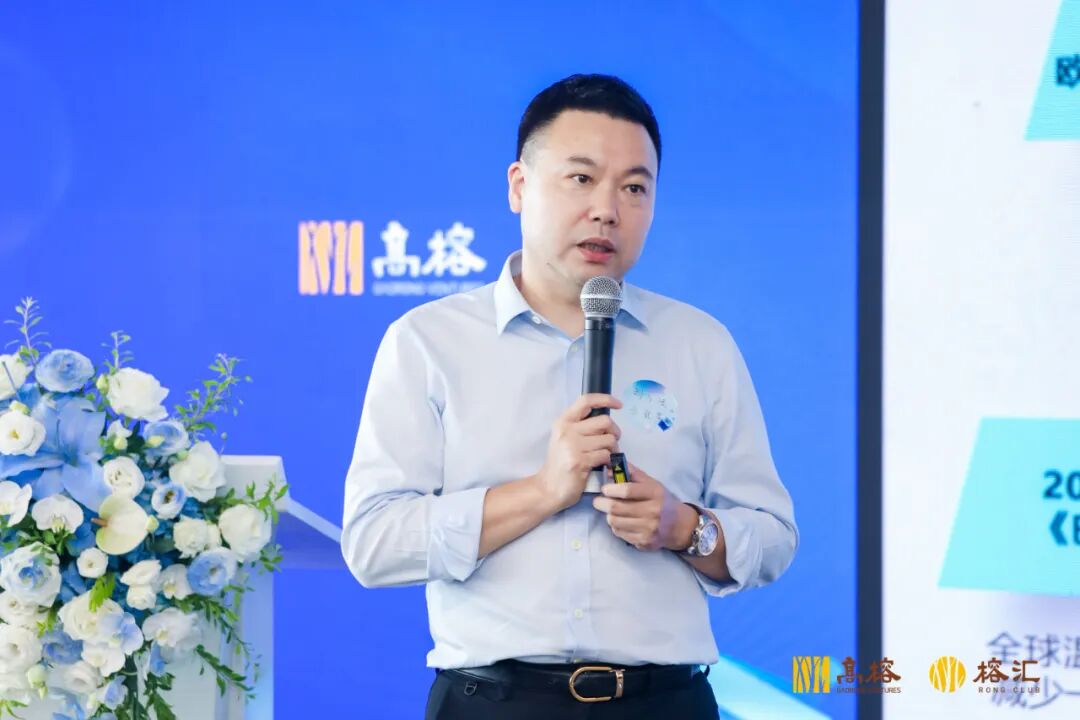
The following is Wan'gen Liu's presentation (edited):
To address global climate change and the increasing frequency of extreme weather events, the Paris Agreement was formally signed in 2015, setting a target of reaching net-zero emissions around 2050. Since then, global carbon neutrality efforts have continued, with over 130 countries and regions now committed to carbon neutrality goals.
Against this backdrop, a growing consensus has emerged — large-scale hydrogen development is the inevitable path to achieving green transformation and decarbonization.

We're all familiar with hydrogen. It sits at the top of the periodic table, and its combustion product is water — zero carbon emissions. As a clean energy source, hydrogen has several distinct advantages. First, its energy density reaches 39.4 kWh/kg, roughly 3 times that of gasoline and 4.5 times that of coke. Second, it's abundant: hydrogen constitutes over 75% of the universe's mass. Third, it can be extracted from water, one of Earth's more plentiful resources.
Moreover, hydrogen enables the conversion of energy across various forms and can be transported and stored optimally to meet large-scale, cross-seasonal energy demands. For industries where carbon reduction is particularly challenging — such as transportation, chemicals, and steel — hydrogen is a critical decarbonization solution. Simply put, without hydrogen, climate emission reduction targets cannot be met.
Global demand for hydrogen is growing rapidly, with current worldwide demand approaching 100 million tons. However, the vast majority of hydrogen in use today is gray hydrogen, blue hydrogen, or industrial byproduct hydrogen. Green hydrogen accounts for only about 1%. Gray hydrogen refers to hydrogen produced from fossil fuels such as coal and natural gas, with carbon emissions during production. Blue hydrogen is derived from fossil energy with carbon capture measures applied. Green hydrogen is produced by splitting water using renewable energy.
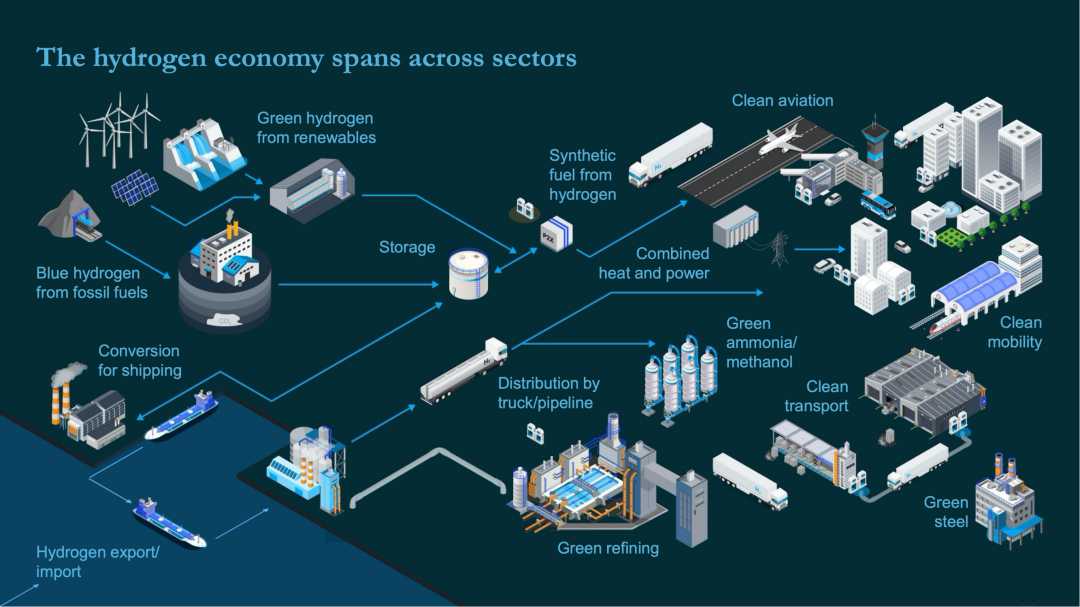
According to International Energy Agency projections, global hydrogen demand is expected to reach 210 million tons by 2030, with green hydrogen penetration potentially reaching 34% by then.
The biggest factor constraining green hydrogen development at present is cost. Current green hydrogen costs are approximately 35 RMB/kg, far above blue hydrogen at 15 RMB/kg and gray hydrogen at 9–10 RMB/kg. Green hydrogen costs consist of four components: 1) green electricity costs; 2) electrolyzer system equipment costs; 3) operations and maintenance costs; and 4) hydrogen production efficiency costs, i.e., DC power consumption. The most critical factor is electricity costs, accounting for over 70%.

Our team embarked on the exploration of green hydrogen production and integrated hydrogen applications because we saw these constraints gradually being broken down.
First, green electricity costs continue to decline. In recent years, intensive new energy projects in wind and solar power have driven costs down by 60% and 80% respectively. Taking photovoltaic power as an example, sharp declines in module prices in 2023 reduced overall system costs. By our calculations, typical distributed systems in eastern China now have an LCOE (levelized cost of energy) as low as 0.17 RMB/kWh. We believe that green hydrogen will ultimately achieve cost parity with blue and even gray hydrogen.

Second, industrial policy support and national strategy. China aims to build a comprehensive energy strategy with multiple complementary energy sources, and hydrogen is abundantly available as a resource. The Medium- and Long-Term Plan for the Development of the Hydrogen Energy Industry (2021–2035) clarified that hydrogen is an important component of the national energy system. Previously, hydrogen was regulated as a chemical product, which has created substantial opportunities.
Third, green hydrogen technology is maturing. In 2022, domestic electrolyzer total shipments were approximately 800 MW; in 2023, demand surged dramatically, with cumulative hydrogen equipment tenders exceeding 2 GW. Scale effects are also driving equipment costs down. Particularly in international markets, Chinese electrolyzer prices are one-fifth to one-half of overseas products, giving them significant cost advantages. Thus, Chinese green hydrogen equipment companies, while aggressively building out their domestic market, also have opportunities to gradually expand overseas.

What advantages does Taiqingchen have in the green hydrogen race? Drawing on the industry experience and technical accumulation of Chint and REFIRE, we have established a solid foundation.
Chint Group is a company with 40 years of history. It entered the photovoltaic new energy industry in 2006 and has built competitive strength across the entire industrial chain — from polysilicon, ingot pulling, wafer slicing, and cell manufacturing to module production, as well as centralized and distributed power station development. Last year's revenue reached 155 billion RMB. The group has currently built over 30 GW of photovoltaic power plants globally, with over 45 GW under O&M management. By the end of 2023, module and cell production capacity reached 50 GW, serving over 1.3 million residential users. Beyond photovoltaics, Chint has comprehensively laid out the integrated energy field, with hydrogen energy as one of its important strategic directions.
By coupling with renewable energy sources such as photovoltaics and wind power, Taiqingchen's self-developed green hydrogen production equipment can efficiently convert green electricity into green hydrogen.
There are currently four main water electrolysis technology routes for green hydrogen production: alkaline water electrolysis (ALK), proton exchange membrane water electrolysis (PEM), solid oxide electrolysis (SOEC), and anion exchange membrane water electrolysis (AEM).
SOEC and AEM are still generally at the laboratory stage domestically. The most mature technology route is alkaline water electrolysis (ALK), which has achieved large-scale industrial application. It has relatively low costs, energy efficiency of 60%–75%, relatively fast response speed, and comparatively long electrolyzer lifespan. Its relative weaknesses are low current density and the need for small amounts of corrosive liquid in system O&M, resulting in higher later-stage maintenance costs.
The PEM route offers higher load range and energy efficiency. Its main current problem is that the catalyst uses scarce precious metals with no substitutes, making it expensive and limiting commercialization domestically.
Taiqingchen has currently chosen the alkaline water electrolysis route. In September 2023, the company's first 1,000 Nm³/h alkaline electrolyzer rolled off the production line and completed testing. Taiqingchen's advanced alkaline water electrolysis hydrogen production equipment and system has passed certification by DEKRA, achieving 99.999% hydrogen purity, cold start time of less than 20 minutes, response range of 25%–110%, and DC power consumption of 4.2–4.4 kWh/Nm³ — placing it at the leading level in the industry.
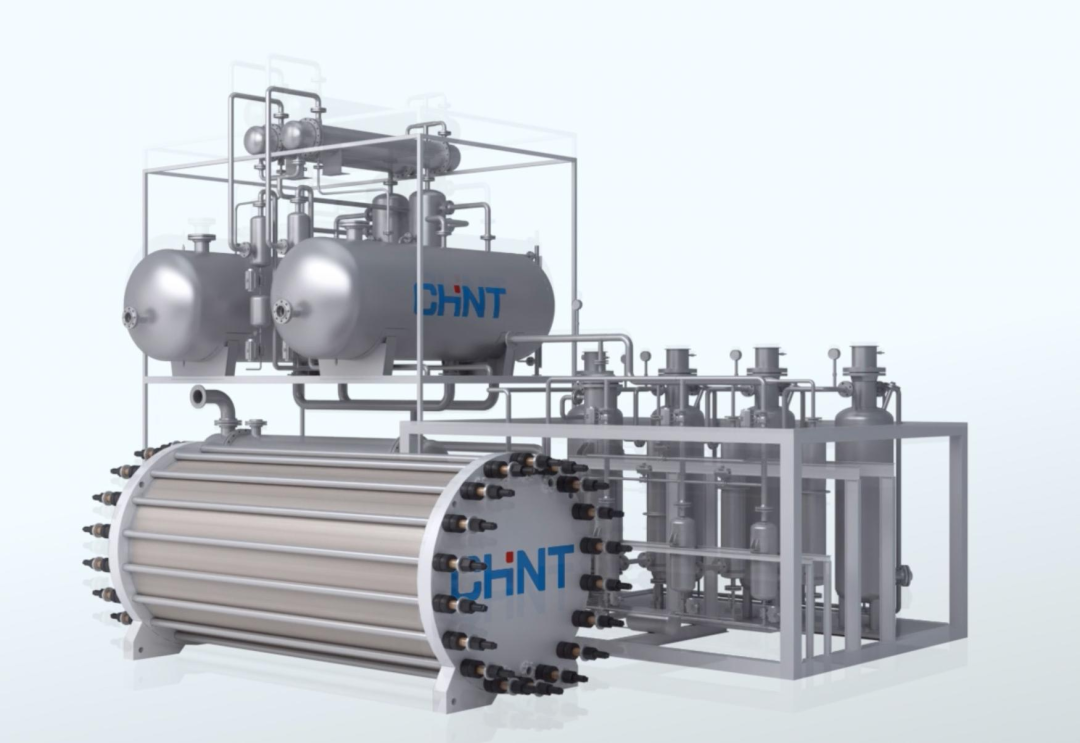
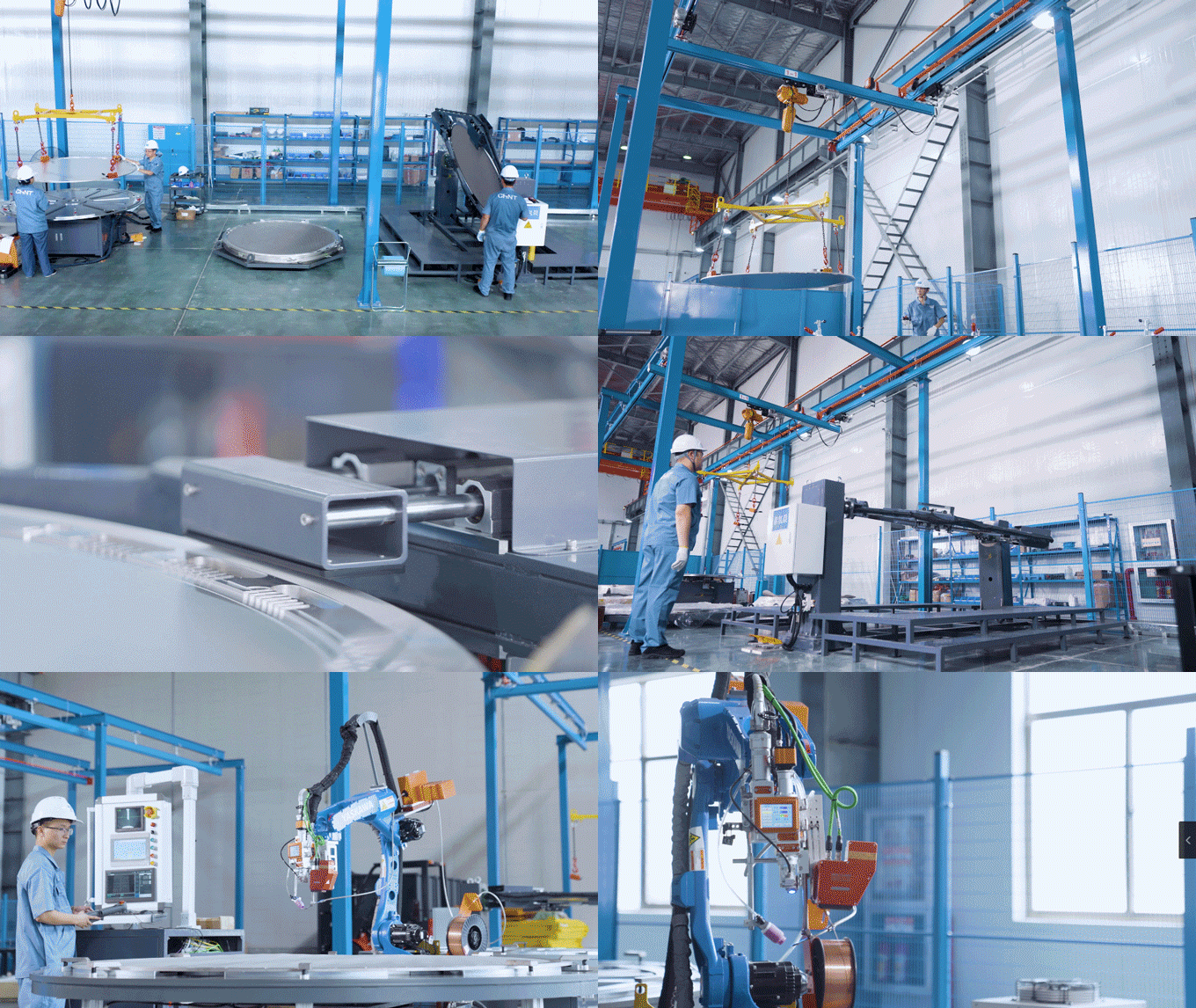
We plan to expand large-scale hydrogen production equipment annual capacity to 0.5–1 GW and hydrogen power generation equipment to 100 MW in 2024–2025.
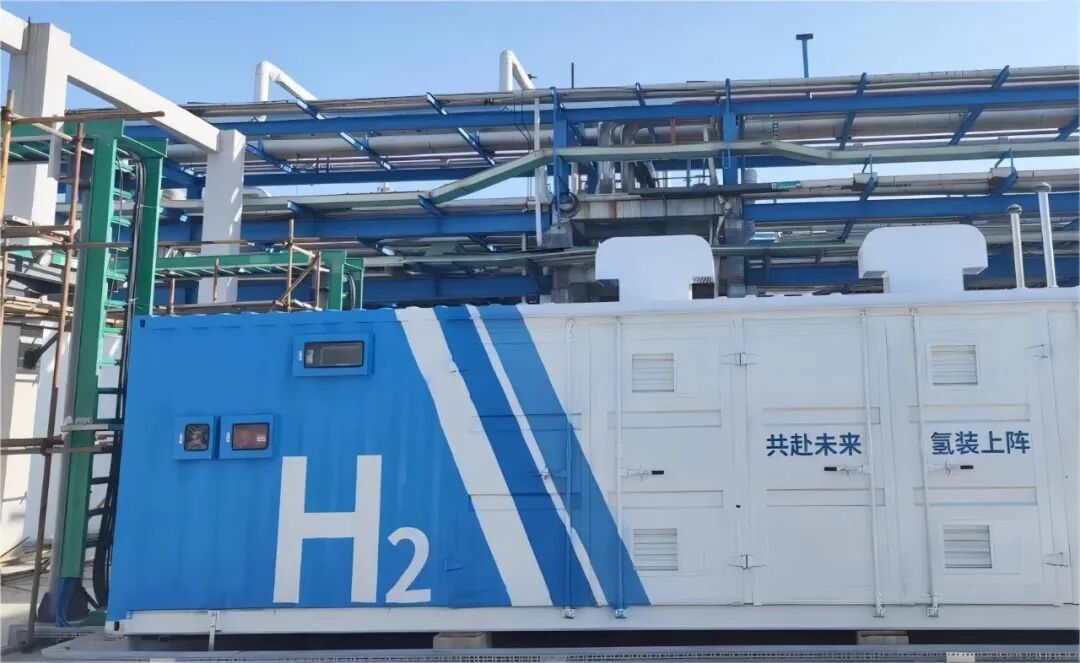
Beyond green electricity-to-green hydrogen, Taiqingchen has also developed megawatt-level hydrogen power station products for distributed generation applications. These hydrogen power stations, shaped like shipping containers, are primarily deployed in chemical industrial parks and similar scenarios. Previously, chemical factories' byproduct hydrogen was simply vented. Using Taiqingchen's power generation equipment, this on-site byproduct hydrogen can be purified to high-purity hydrogen to supply fuel cells, which then generate electricity for factory equipment. Taiqingchen's hydrogen power station equipment achieves comprehensive energy efficiency of over 90% and can generate over 19 kWh/kg of hydrogen — a level that is also world-leading.

We know that hydrogen energy applications encompass hydrogen production, storage, transport, refueling, and end-use. Going forward, Taiqingchen will also expand into full-process integrated solutions. For example, at Taiqingchen's comprehensive energy utilization demonstration project in East China, after hydrogen production, solid-state hydrogen storage is used to both supply fuel cell power generation for off-grid fast charging and to refuel downstream hydrogen vehicles.
Taking transportation as another hydrogen application scenario, we have partnered with strategic allies to create integrated hydrogen production and refueling stations, hydrogen logistics, and hydrogen sharing models to achieve deep decarbonization in the transportation sector.
Beyond power generation, green hydrogen has many industrial applications. For instance, combining it with nitrogen produces liquid ammonia; with carbon dioxide, methanol; and with biomass oils, aviation fuel. In North China, Chint has already begun laying out green methanol and sustainable aviation fuel production, helping the global maritime and air transport industries decarbonize first.
To ensure production capacity, Taiqingchen has established its headquarters, R&D center, and East China production base in Shanghai, with additional production bases in North China. On the business front, we are developing large-scale wind-solar-to-hydrogen and hydrogen-to-alcohol demonstration projects in Northeast China; continuously expanding integrated hydrogen energy business in northern and eastern coastal regions, including building offshore hydrogen islands; and actively deploying and expanding overseas markets leveraging Chint's global platform resources.
In summary, Taiqingchen has already achieved full validation of overall efficiency and megawatt-scale capacity in water electrolysis hydrogen production and hydrogen power generation. More importantly, the industrial ecosystem behind Taiqingchen allows us to form a closed loop at the application stage. Previously, green electricity was difficult to store at large scale over long periods; efficient hydrogen storage enables long-term, large-scale energy storage, which can then be consumed across multiple scenarios including distributed generation, transportation, and industry.
The coupling of hydrogen and electricity gives us the opportunity to take an important step forward toward promoting renewable energy consumption and utilization and driving green energy transformation — truly "riding the hydrogen wave."
To discuss cooperation with Taiqingchen, please contact: lwgen@chint.com