Inside BYD: How "Yangwang" Is Redefining Disruptive Tech, and Decoding the "Xuanji" Intelligence System | Ronghui

Unwavering investment in disruptive new technologies.
On March 25, 2024, BYD announced the rollout of its 7 millionth new energy vehicle, becoming the first automaker in the world to reach that milestone. In 2023, BYD sold 3.02 million vehicles for the year, once again claiming the global new energy vehicle sales crown. The past year also marked significant progress in BYD's multi-brand strategy, with its Dynasty and Ocean series, Denza, Yangwang, and Fangchengbao each carving out a position in their respective segments.
Behind this sales and market success lies deep R&D reserves and unwavering investment in disruptive new technologies. In recent years, BYD has rolled out DM hybrid technology, Blade Battery, the e-Platform 3.0 architecture, CTB cell-to-body integration, and more recently the Yi Sifang (Easy Four-Wheel), Yun Nian (Cloud Chassis), and Xuanji architecture — all of which have translated into real sales momentum.
At this new inflection point for new energy vehicles, we wanted to understand: How does BYD use breakthrough technology to build premium brands and achieve "upward upgrade, outward breakthrough"? As the "second half" of intelligentization shifts into higher gear, how is BYD positioning itself? Facing new industrial upgrade demands, how can startups build hard capabilities and find the right entry points?
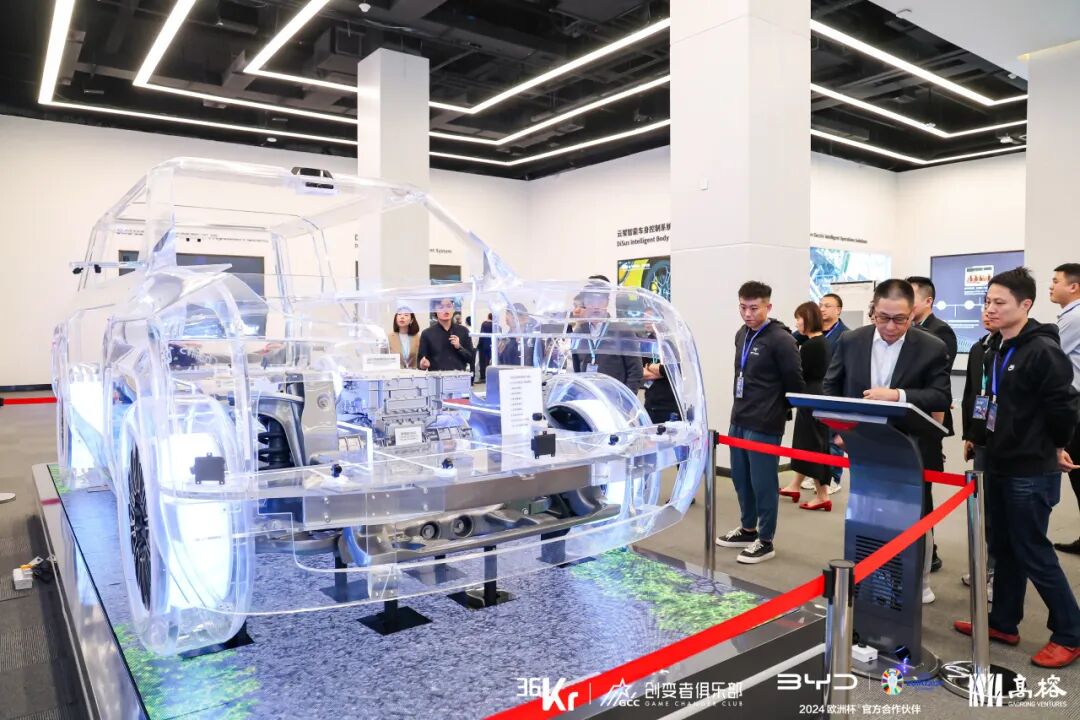
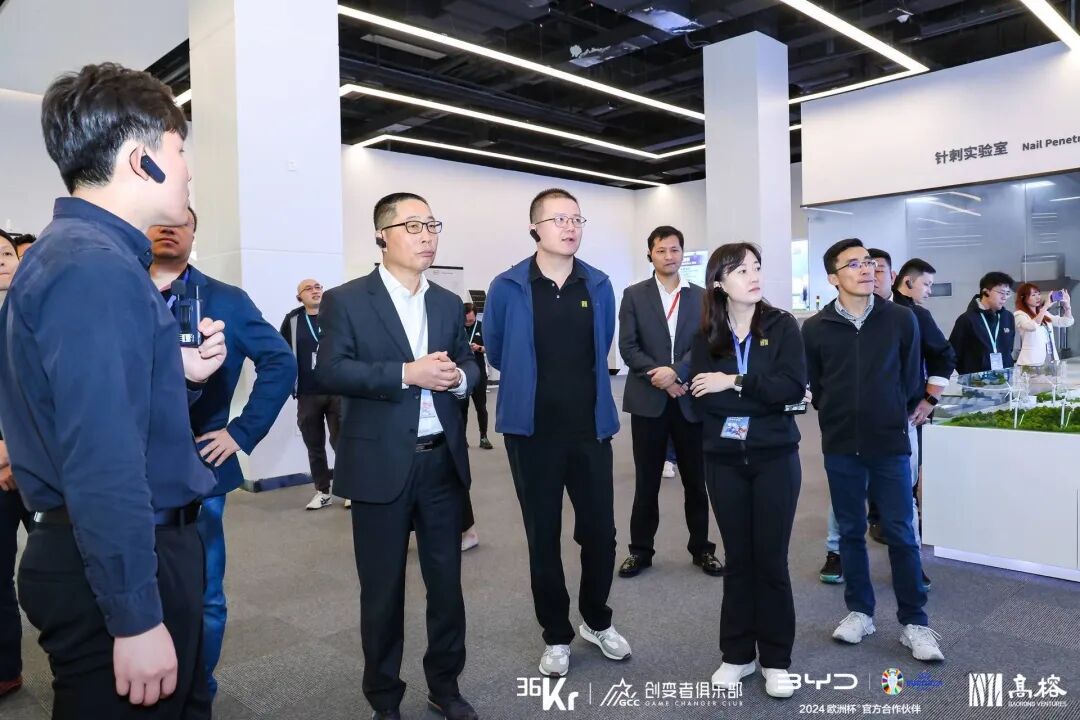
With these questions in mind, 36Kr and Gaorong Ventures, in spring 2024, joined forces with frontier technology companies and scholars from The University of Hong Kong to visit BYD's global headquarters for an immersive tour, closed-door sharing sessions, and face-to-face co-creation meetings.
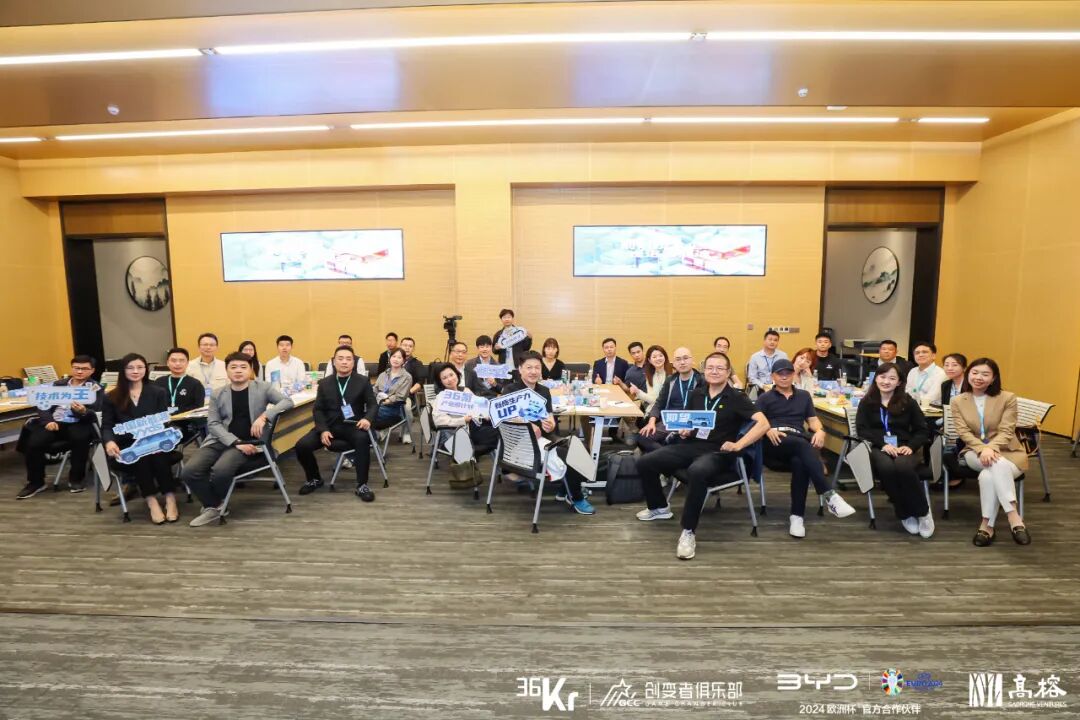

"The achievements of recent years rest on two decades of preparation by BYD — in technology, talent, supply chain, and market. It truly has been twenty years of sharpening one sword," said Xiaomei Xiao, PR Director at BYD's Brand and Public Relations Department, noting that deep technical accumulation and R&D investment are the fundamental drivers of BYD's success. In 2023, BYD's R&D expenses reached 39.57 billion yuan, up 112.15% year-over-year; its R&D staff totaled 102,800, representing 15% of the workforce.
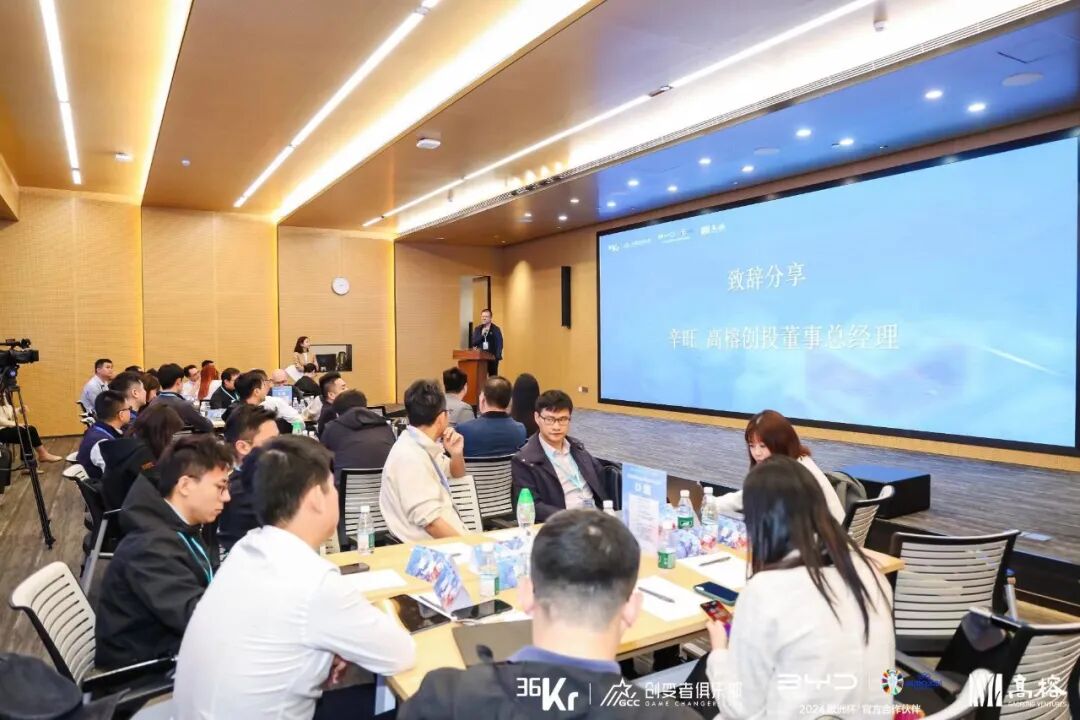
Xin Wang, Managing Director at Gaorong Ventures, identified three lessons from BYD's success that entrepreneurs should study. First, the BYD team has steadfastly believed in new energy for decades. "More than ten years ago, there were all kinds of doubts about new energy. Without long-term commitment and sufficient resolve, it would have been hard to achieve today's success."
Second, BYD is obsessive about technology investment; its deep reservoir of "technology fish" is a critical pillar supporting its industry-leading position.
Third, BYD's simple, get-things-done culture commands respect — particularly the team's work passion, professionalism, and fighting spirit, which have significantly contributed to breakthroughs in products and core technologies.

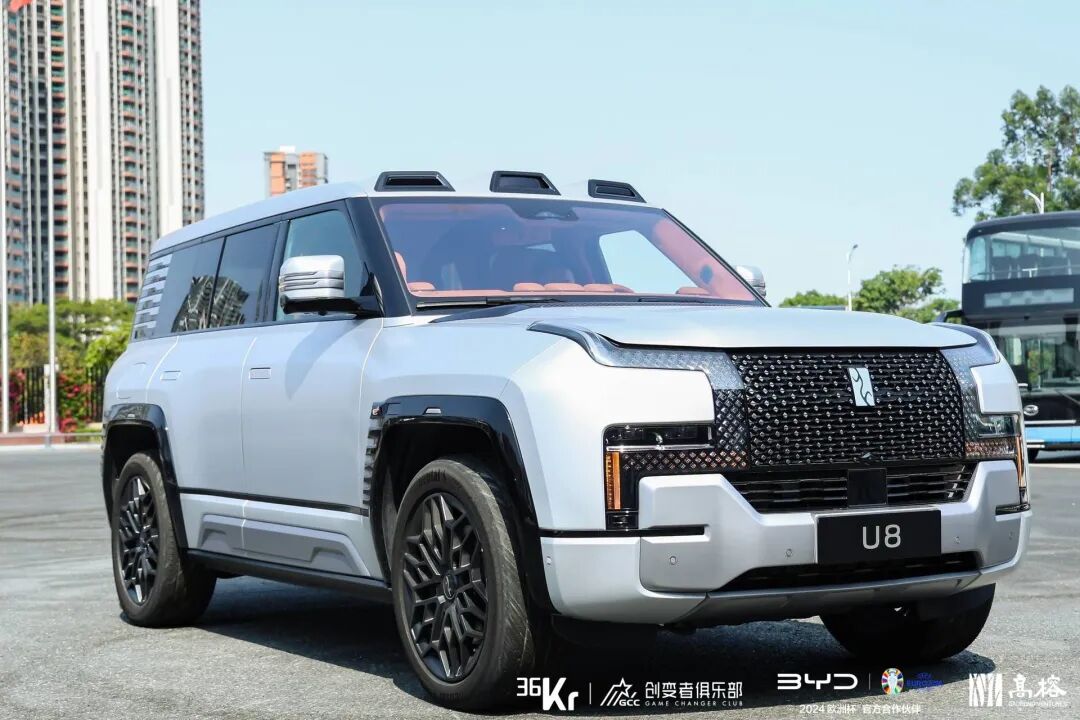
During the visit, attendees test-drove the Yangwang U8 and were stunned by the performance and experience of this million-yuan new energy hardcore off-road vehicle.

Yangwang is BYD's premium new energy vehicle brand launched in early 2023. With the debut of its first model, the Yangwang U8, followed by the million-yuan all-electric performance supercar Yangwang U9, a Chinese brand has for the first time stood shoulder-to-shoulder with international luxury marques, joining the top tier of premium brands. On March 24, 2024, Yangwang announced that the U8 had reached 5,000 units sold in just 132 days since launch, setting a record for the fastest sales milestone in the million-yuan SUV segment in China.
"The Yangwang U8 isn't just a big toy that can spin in place — there's logic and technical theory behind it," said Zhiyu Che, PR Director at Yangwang Auto, explaining that Yangwang is committed to building brands and products through disruptive technology, aiming to forge a path where breakthrough technology shapes premium brands. "This isn't just meaningful for BYD — it's meaningful for Chinese auto brands." The reason, he said, is that "from its inception, Yangwang was designed as the culmination of BYD's powerful technology. Only by putting the most advanced technology on Yangwang can we live up to our users and justify the million-yuan price tag."
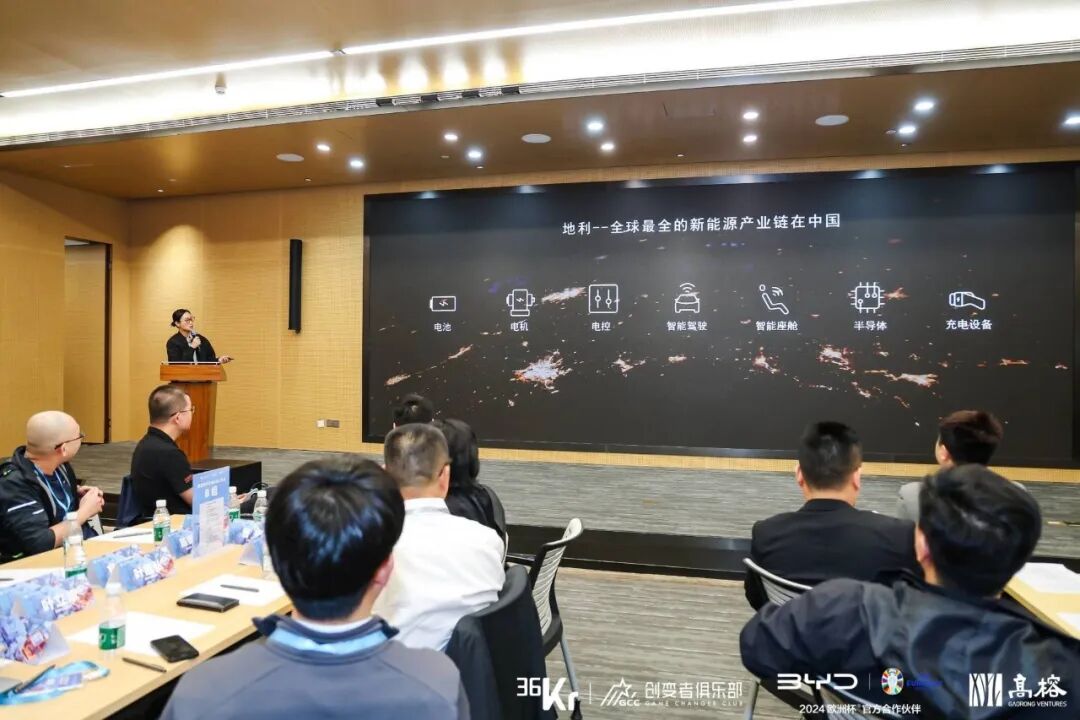
Among these, BYD's full-stack self-developed Yi Sifang and Yun Nian systems are the "golden keys" for Yangwang's push into the premium market. Yi Sifang technology enables functions like tank turns and Yi Sifang parking through independent, precise torque control of all four wheels, while also improving active safety and performance. Yun Nian is an intelligent body control system. Through the effective combination of Yi Sifang and Yun Nian, plus intelligent driving, intelligent cockpit, and advanced body architecture, the vehicle surpasses traditional internal combustion vehicles in perception, decision-making, and execution.
Going forward, Yangwang will unwaveringly advance on the path of empowering super brands with super technology, continuously launching new models and delivering richer driving experiences.

The first half of electrification has already hit the fast lane; the second half of intelligentization is shifting into higher gear. At BYD's Dream Day earlier this year, the company announced a 100 billion yuan investment in intelligentization, focusing on whole-vehicle intelligence.
Chenshen Chen, Product and Technology Promotion Lead at BYD's Planning Institute, shared BYD's achievements and roadmap in intelligentization across three dimensions: the Xuanji architecture, intelligent cockpit, and intelligent driving.
BYD's whole-vehicle intelligent technology route and intelligent-electric fusion approach stem from the belief that this represents the ultimate solution for intelligentization. "Electrification is the core foundation; intelligentization builds on electrification to further elevate the whole-vehicle experience."
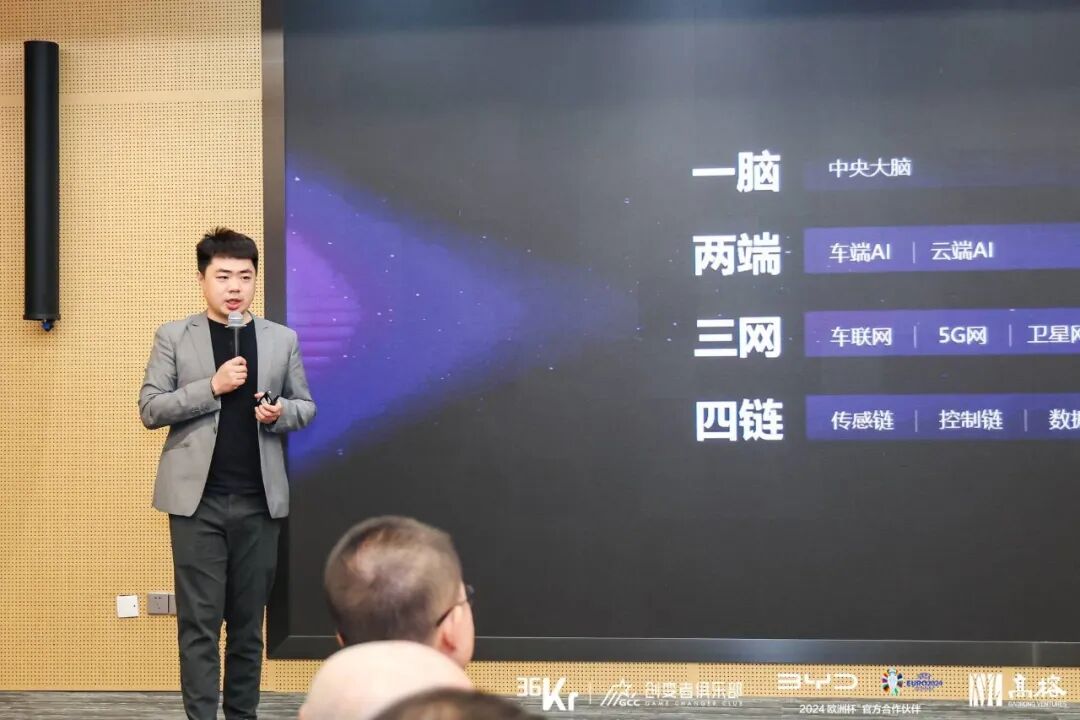
The Xuanji architecture is BYD's latest achievement in intelligentization and the industry's first intelligent-electric fused architecture. Chen summarized it as "one brain, two ends, three networks, four chains." One brain: the vehicle's core control through a central brain. Two ends: vehicle-side AI and cloud-side AI — BYD currently operates the world's largest vertical automotive industry cloud database, with model training data and applications focused on driving scenarios. Three networks: not limited to vehicle networking, but also encompassing 5G and satellite networks. Four chains: sensing chain, control chain, data chain, and mechanical chain.
The Xuanji architecture "makes the whole vehicle like an advanced intelligent lifeform," enabling intelligent, controllable perception, decision-making, and execution, with the ability to self-learn and evolve.
For intelligent cockpit, BYD pioneered the industry-first concept of "benchmark scores define the cockpit," providing an intuitive measure of chip performance. Notably, BYD has deployed intelligent cockpit products at the group level, with its DiLink system adaptable from the million-yuan Yangwang down to the 50,000-yuan Seagull.
In intelligent driving, BYD maintains its characteristically pragmatic approach. In January this year, the company announced that all models priced above 300,000 yuan will come standard with advanced intelligent driving, delivering the safest products to users. It has also defined differentiated intelligent parking functions, including short-range valet parking, dead-end parking, and narrow-spot parking. All of these are enabled by the Xuanji architecture's support, achieving intelligent environmental perception and precise vehicle control.

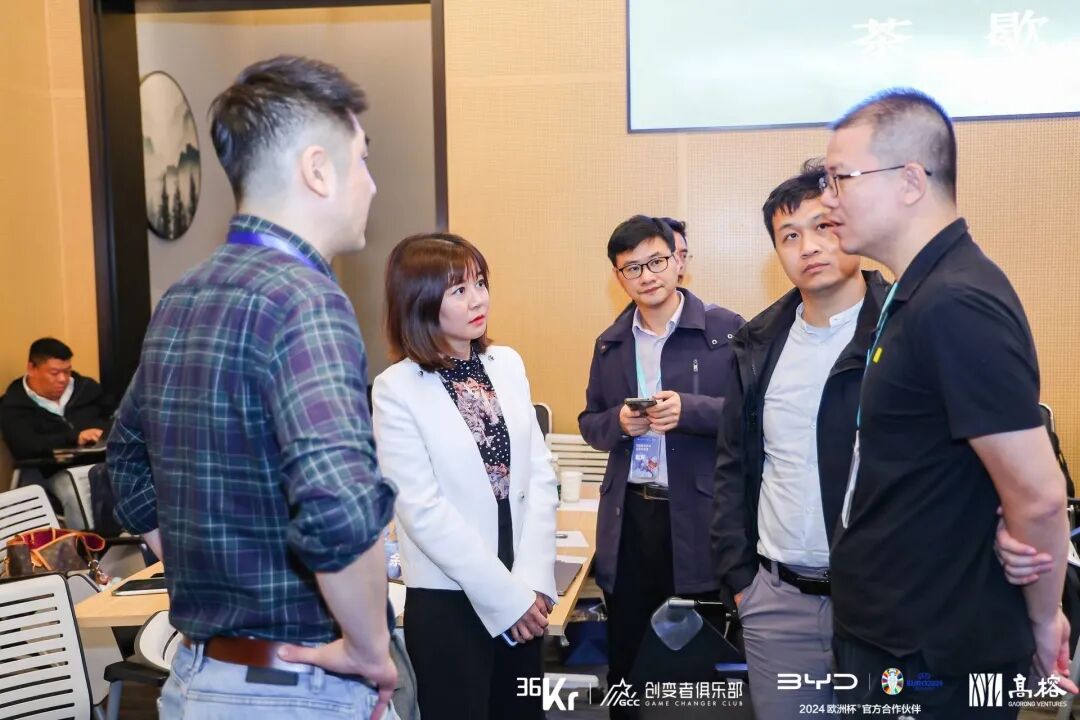
In carbon neutrality and new energy vehicles, new technologies and materials emerge endlessly, fueling the wellspring of innovation. During the research-industry dialogue session, representatives from frontier technology companies and BYD exchanged predictions about innovations that could disrupt the industry.
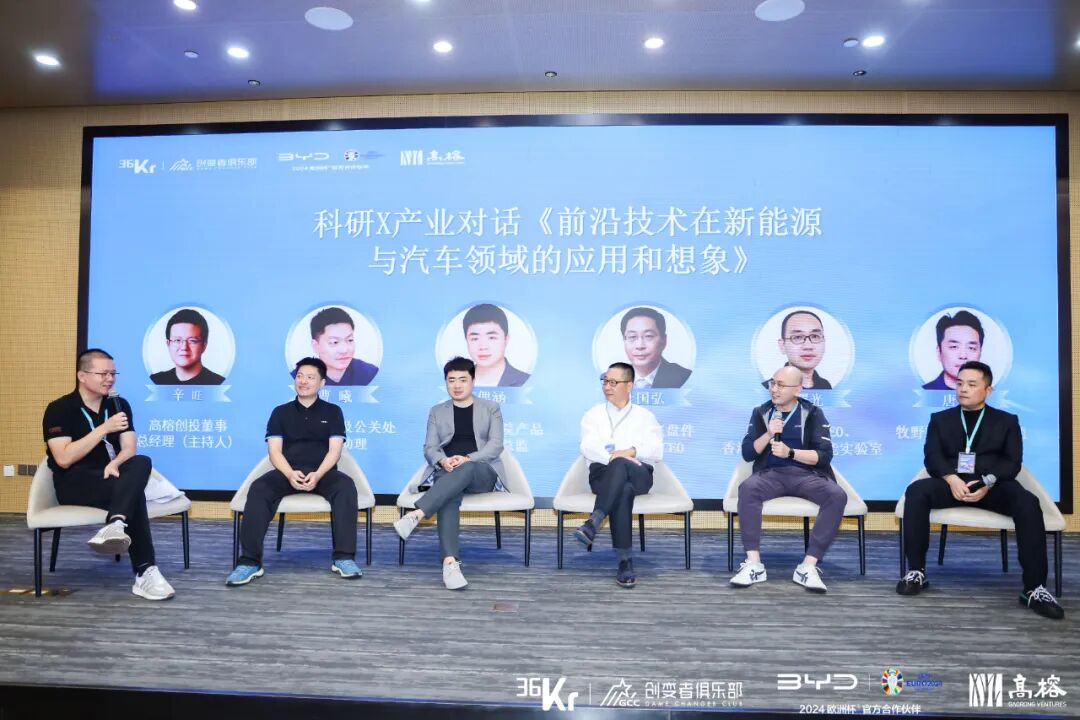
Young Users Highly Receptive to New Technology
"Though fierce winds rise from the earth, I will ride them to break ten thousand miles," said Xi Cao, Assistant General Manager at BYD's Brand and Public Relations Department, sharing the driving force of frontier technology from the user perspective. "A large portion of BYD's users today are post-90s young users who recognize the real strength of technology and products." BYD also looks forward to accelerating the industry's progression from technology democratization to technology universal benefit, allowing more consumers to experience the joys of electrification and intelligentization.
Electrification, Intelligentization, Whole-Vehicle Intelligence
Chen further emphasized that intelligent-electric fused whole-vehicle intelligence represents the overarching trend — specifically, how to create new chemical reactions between electrification and intelligentization, and how to use safe, efficient intelligent interaction experiences to break down the traditional silos of vehicle control, intelligent cockpit, and intelligent driving.
Smart Chassis Upgrade Is the Inevitable Trend
Dr. Guohong Ye, a veteran of the automotive industry, founded Linton Automotive Chassis Components in 2023, dedicated to developing electronically controlled shock absorbers to accelerate the arrival of the smart chassis era for electric vehicles. Ye analyzed the explosive growth potential in the automotive electronically controlled shock absorber market: on one hand, electric vehicles have driven smart chassis upgrades. "To put it simply, people used to say you drive a BMW and ride in a Mercedes-Benz. With a smart chassis, you can experience the feeling of switching between BMW and Mercedes anytime you want." On the other hand, the ultimate goal of vehicles is autonomous driving, where human eyes won't be looking forward, making people highly sensitive to vehicle vibration and braking — the rising demand for comfort also calls for smart chassis adoption.
Linton is currently developing and producing CDC shock absorbers and electronically controlled solenoid valves. "In China, a market that leads global technology and brims with innovation vitality, we see this as a new battlefield. We have the capability and hope to develop our own products to catch up with and surpass international brands."
Evolution of 4D Millimeter-Wave Radar
Autonomous driving sensors primarily follow two routes: radar and vision. Radar includes LiDAR and millimeter-wave radar. Lin Tang, Marketing Director at MuYe Microelectronics, a 4D millimeter-wave radar developer, explained that traditional millimeter-wave radar has clear advantages over vision and LiDAR in severe weather and low-light conditions. "LiDAR extends vision's strengths; millimeter-wave radar compensates for vision's weaknesses." For L2+ autonomous driving, millimeter-wave radar is indispensable.
At the same time, millimeter-wave radar is evolving, with 4D imaging millimeter-wave radar emerging. Beyond measuring XYZ axes and velocity, it can output point cloud information to outline object shapes. Thus, 4D millimeter-wave radar can not only compensate for weaknesses but also demonstrate capabilities where vision excels, while maintaining cost advantages.
Tang noted that new energy vehicle manufacturers demonstrate greater openness to new technology and more forward-looking vision. He looks forward to enhanced deep fusion between millimeter-wave radar and vision sensors as AI computing power grows.
Leveraging AI and Quantum Computing to Support the New Energy Industry
Shuguang Chen, CEO of MattVerse and COO of the Hong Kong Quantum AI Lab, shared how frontier technologies in AI and quantum computing can accelerate the development of the new energy industry.
Chen introduced that MattVerse brings EDA experience from semiconductor R&D into the new energy industry, using AI and multi-scale simulation to build a BDA (Battery Design Automation) platform, creating integrated solutions spanning materials development, cell design, and BMS applications. For materials development, solving material performance essentially means solving quantum mechanical equations; deep learning can dramatically improve the speed and accuracy of existing computational methods for predicting material properties. At the cell design level, AI also enhances equation-solving effectiveness to accelerate design processes. At the application level, it enables specific applications like battery health and lifespan prediction.
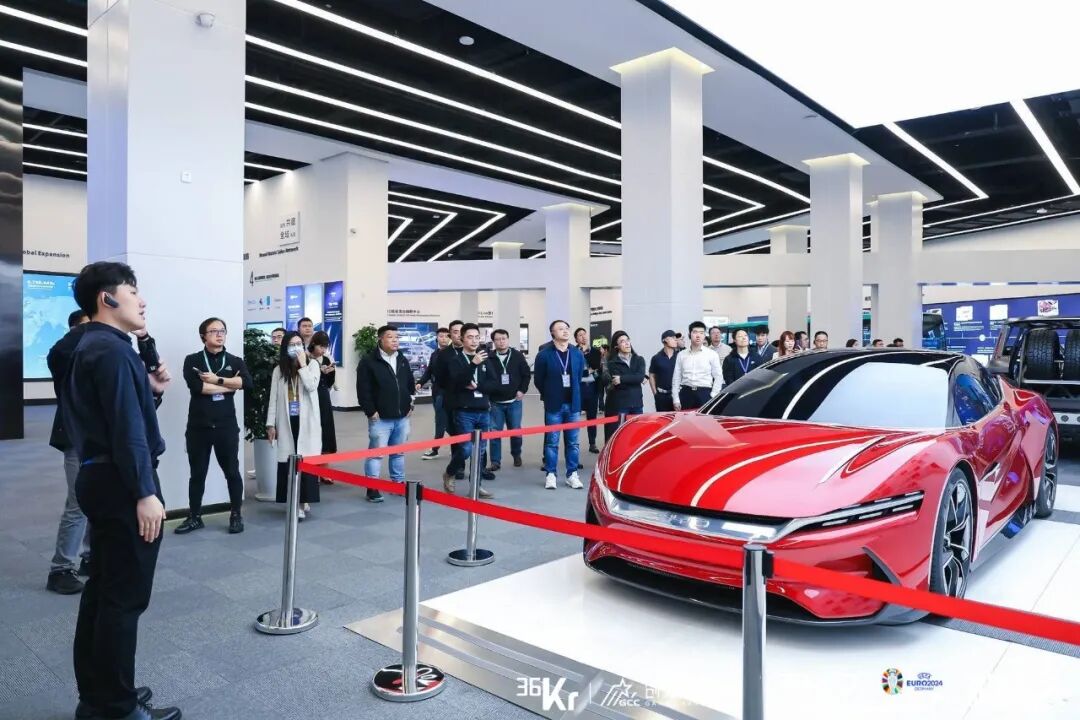
The visit also included discussions on BYD's energy storage business layout and overseas expansion plans, how BYD builds differentiated brands in global markets, and opportunities for frontier technology collaboration.
This marked the second time 36Kr has joined Gaorong Ventures and frontier technology companies in visiting BYD. We witnessed BYD's continuous self-transcendence and boundary-pushing in new technology and new brands. At the same time, what remains unchanged is its DNA and culture of getting things done, and its original aspiration of using technological innovation to fulfill people's aspirations for a better life.
Swipe left or right to see more