Into Inovance: Two Decades of Grinding Tech Entrepreneurship, Forging "Forever Striving for First" Into the Company's DNA | Ronghui

Don't just be a climber — be a long-distance traveler.
Inovance stands as a leader in China's industrial automation control sector, nicknamed the "Little Huawei of Industrial Control" and "China's No. 1 in Industrial Control." In 2023, Inovance posted revenue of 30.42 billion yuan, up 32% year-over-year, with operating profit reaching 4.742 billion yuan.
Founded in 2003, Inovance started with a single product — the frequency converter — then steadily expanded its product portfolio and industry verticals. Today it has roots in automation, new energy vehicles, industrial robots, and more, with multiple core products ranking first in market share, "igniting a prairie fire for China's industrial control industry."
Inovance is a company that often says "number one," "because that's Inovance's character." Over 20 years of technology entrepreneurship, what growth curve has Inovance traced, and what key inflection points and strategic choices has it faced? What are the root causes of Inovance's rapid development, and how did "forever striving to be first" become woven into the company's character?
In July 2024, Gaorong Ventures and 36Kr's Innovators Club joined more than 40 founders and executives from frontier technology companies at Inovance's East China headquarters in Suzhou to explore the company's breakthrough strategies and strategic soul, and to discuss opportunities for industrial collaboration.
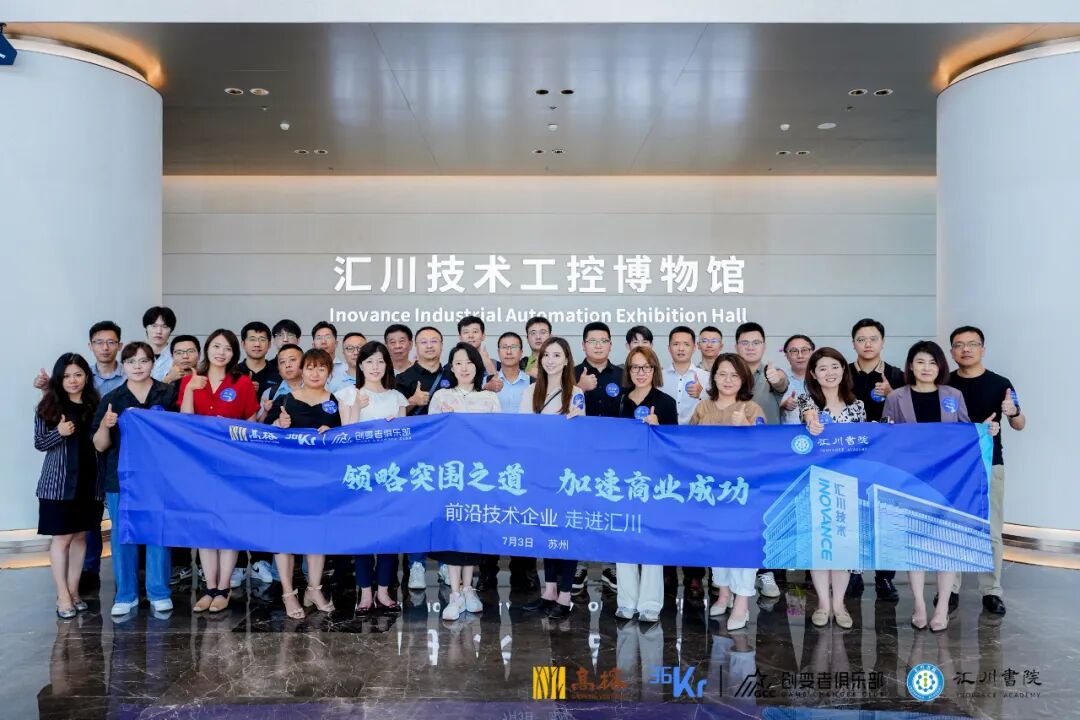

"Over the past 20 years, Inovance has broken through in the Chinese market; in the next 20 years, we look forward to witnessing Inovance challenge the global market," said Hu Shuo, Managing Director at Gaorong Ventures, noting that Inovance's industry-rooted wisdom is extraordinarily valuable — including how to judge trends,洞察技术, and build systems spanning organization, R&D, marketing, and supply chain. "I believe there will be many more moments of walking side by side on China's smart manufacturing upgrade journey."
Sun Zhibin, Director of Strategic Development at 36Kr, stated that as a leading enterprise in China's industrial control industry, Inovance is driving industrial upgrading in smart manufacturing through its innovation capabilities and technological advantages, guiding China's manufacturing sector toward new quality productive forces.

Liu Dongxu, an Inovance "cadre" who joined right after graduation, has remained active on the front lines of the market, with postings in Zhejiang, Shandong, Beijing-Tianjin-Hebei, and other regions, and currently serves as President of the North China Theater.
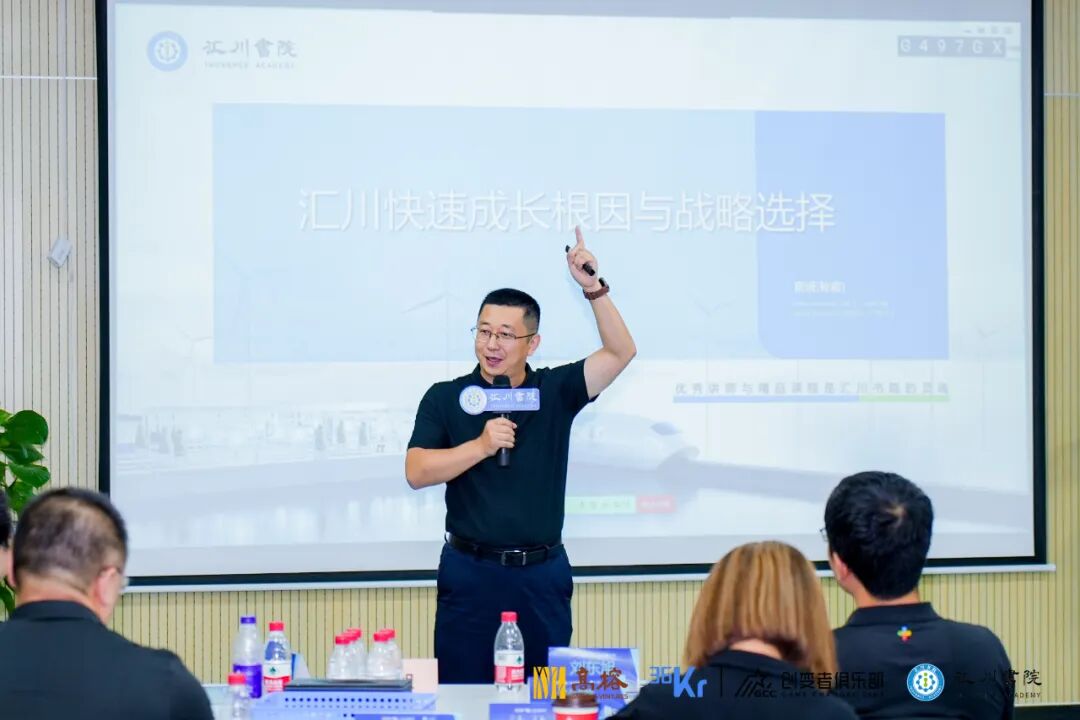
Liu Dongxu reviewed Inovance's development journey and growth curve, unpacking each strategic choice along the way.
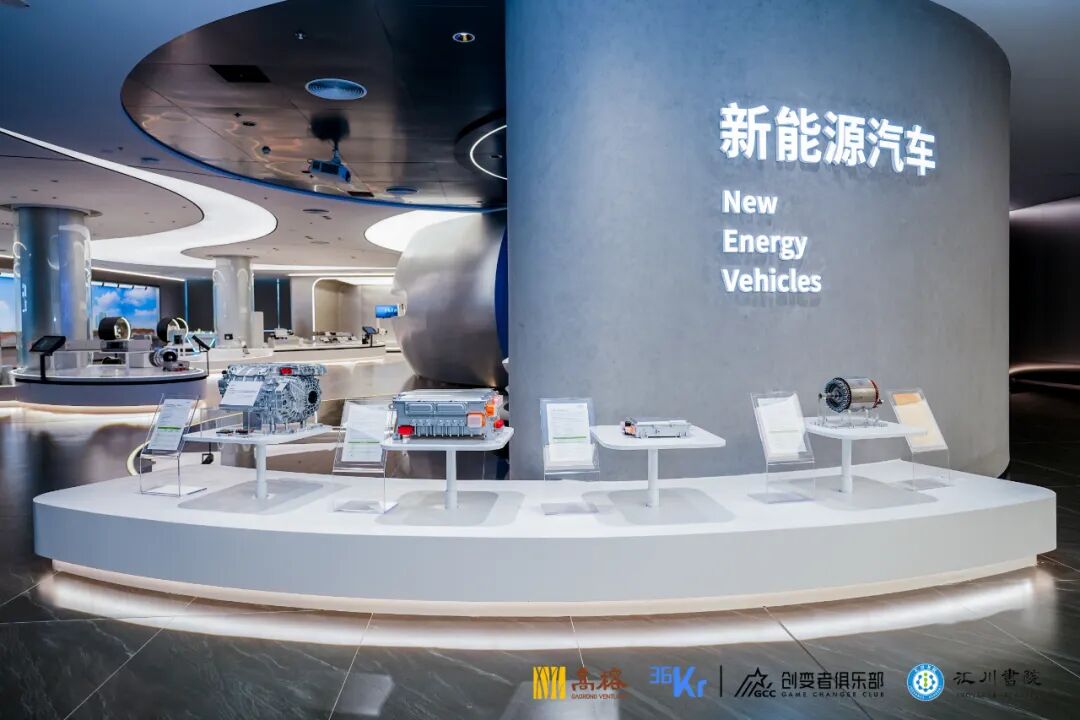
When Inovance embarked on its entrepreneurial path in 2003, it had only one product — the frequency converter — followed by the elevator integrated controller. In 2007, Inovance decided to extend toward becoming an industrial control solutions provider, launching PLCs and servo systems, moving from the drive layer to the control layer of automation. After its 2010 IPO, Inovance continued expanding its product lines. In 2016, it made a bold move into new energy vehicles, completing the layout of its four pillar businesses — general automation, elevators, new energy vehicles, and rail transit. In 2019, Inovance fully laid out industrial software, building an integrated cloud-edge-device IoT solutions platform.
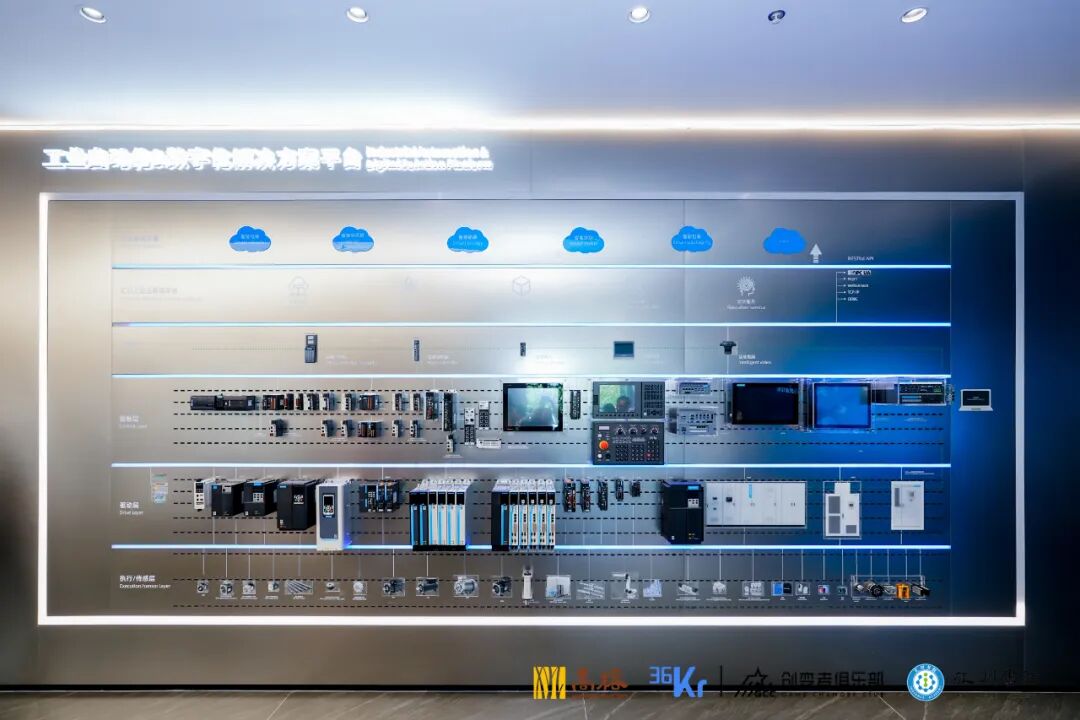
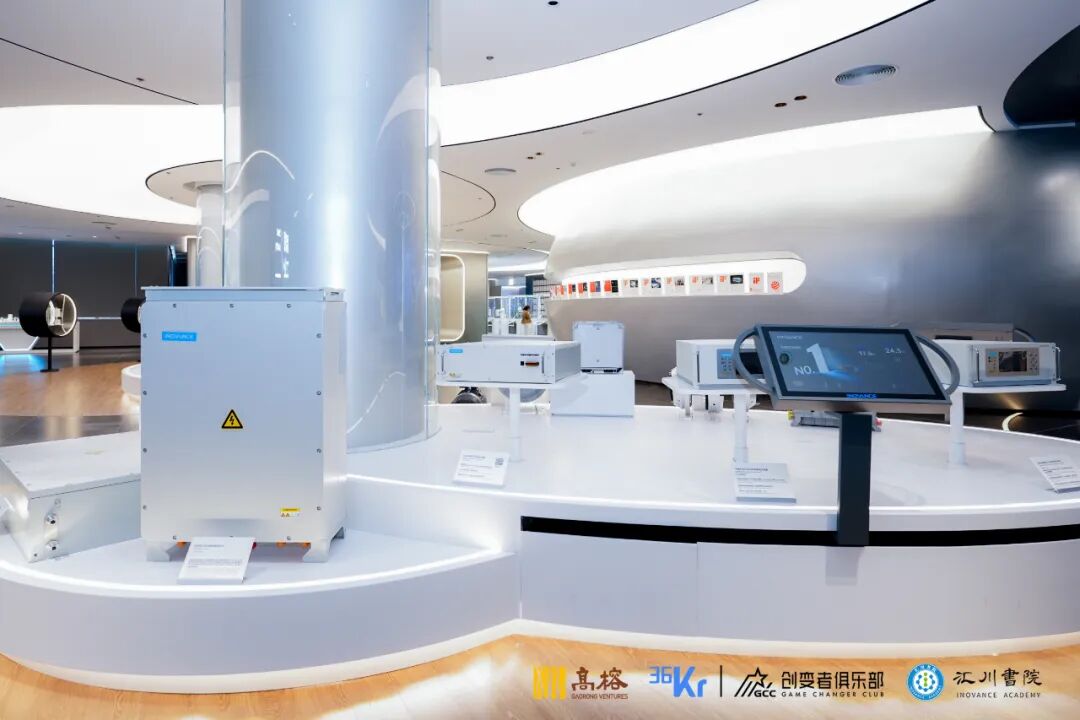
Today, Inovance's elevator integrated control systems and elevator human-machine interface products hold the world's largest market share, while its general servo systems, low-voltage frequency converters, new energy commercial vehicle electric control systems, and high-voltage frequency converters rank first in China. Industrial motors, small PLCs, and other products also sit firmly in China's top tier.
On its growth path, Inovance passed through several major phases: single product (2003–2007), product line (2008–2014), industry vertical (2015–2018), and theater-based operations (2019–present). "Strategy is about making choices among opportunities with limited resources." At each inflection point, Inovance faced profound challenges and resolutely made decisions and organizational changes.
During the single-product period, Inovance had three keywords — positioning, focus, and innovation. That meant clearly positioning itself as an "import replacement," focusing by industry vertical, innovating through distribution while staying close to customers, and deploying technical marketing. But Inovance soon found its growth space constrained, and began adding product categories, expanding from frequency converters to servo systems, PLCs, and more, entering the product line period.
Liu Dongxu emphasized that when making strategic choices, companies must ask "whether our capabilities can reach, whether our resources can stretch." Therefore, product expansion must follow two logics: first, technical feasibility; second, existing customers have related needs.
As product lines enriched, Inovance found that per-capita profit and output value began declining during business operations. "Maybe for the same customer, the servo team would send one group, the PLC team would send another group, adding a lot of cost, creating a poor customer experience, and lacking the systematic thinking and capability for overall solutions."
So Inovance made another transformation, launching industry vertical operations. Inovance's definition of "industry" also evolved over time; today it is divided into three SBUs (Strategic Business Units) — advanced manufacturing, high-end equipment, and energy industry.
During the industry vertical period, Inovance continuously summarized processes and methodologies, including the Five Treasures of Industry Vertical Operations — industry connections, competitive solutions, benchmark industry customers, deep penetration of end-users, and industry experts, plus major account expansion IPD.
Drawing on frontline market battle experience, Liu Dongxu systematically shared Inovance's "7531" major account expansion method. "7" means mastering seven basic pieces of customer information — such as upstream and downstream relationships, industry status, etc.; "5" refers to deducing the customer's decision chain, business strategy, pain points, customer value, and customer attributes; "3" is analyzing opportunity points, action plans, and resources; ultimately achieving "1" result.
As industry vertical operations deepened, Inovance hit another inflection point — the need to improve management efficiency, and the realization that industry verticals caused teams to focus more on major accounts while small and medium customers lacked effective attention. Thus Inovance launched theater-based operations, currently dividing the country into six theaters — East China, South China, North China, Central China, Southeast, and West — with a channel business management department.

Amid constant transformation and breakthroughs, Inovance also distilled the root causes and systems behind its rapid development.
On the team front, Inovance has assembled a group of like-minded, professional, mutually appreciative, complementarily complete, and stable outstanding talent — the prerequisite for building something great.
From the earliest core founding team's "Seven Swords Descending Mount Tian" going to the front lines to run the market, to today a powerful, independent marketing system composed of nearly 2,000 sales personnel, serving as the spearhead of Inovance's business development.
A distinctive R&D team has been the guarantee of Inovance's competitiveness all along. Inovance requires R&D to stay tightly close to the market, solve problems on the front lines, and maintains consistently high investment in R&D at the company level.
An advanced supply chain management model, ensuring correctness, timeliness, and reliability of delivery, is also one of Inovance's core competitive advantages today. In addition, Inovance places extreme emphasis on quality system construction.
On the human resources management dimension, Inovance believes that talent depth is the tension for a company to grow large. "It's like having martial arts forms, but without the inner technique, without the depth of talent, it's hard to become a supreme master." Therefore Inovance emphasizes motivation,牵引 sustainable development, and requires HR to land in business units.
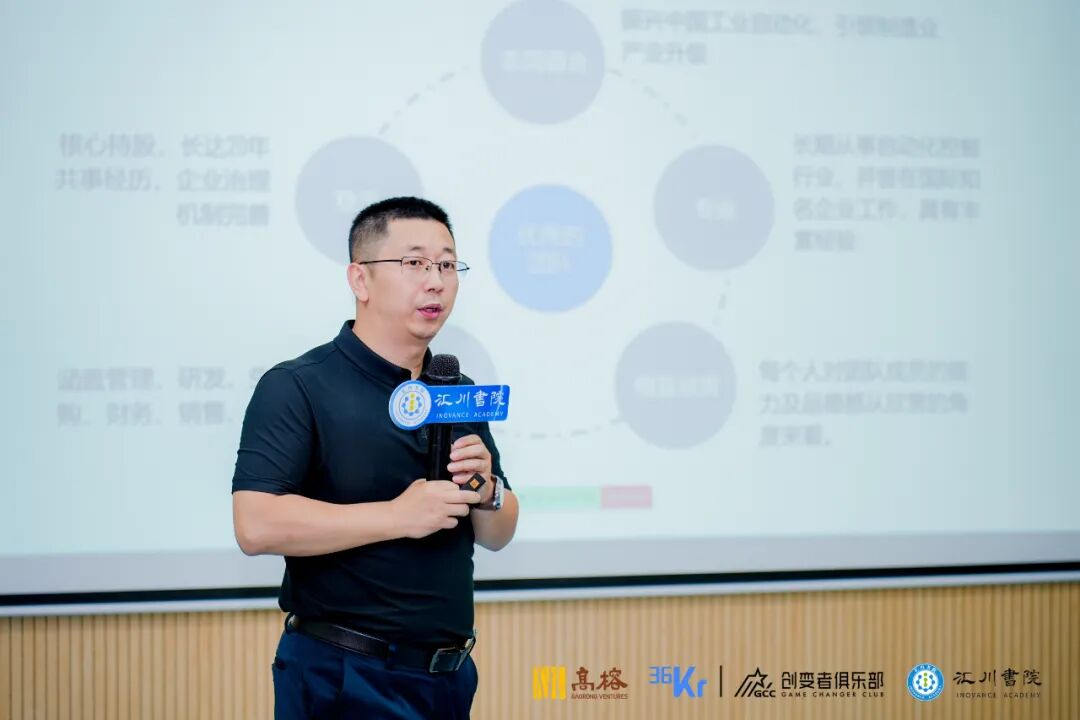
Liu Dongxu also shared Inovance's沉淀ed corporate culture for entrepreneurial companies, including innovation culture, sharing culture, challenge culture, pressure culture, and "cultural middle class" construction. Inovance advocates a "contributor-first" philosophy, insists on value-contribution-based sharing principles, and continuously optimizes value distribution mechanisms. The so-called cultural middle class means, after achieving material middle class, building a sense of mission among middle and senior employees. "On Inovance's journey toward the world, we don't just want to be mountain climbers, but long-distance travelers."
In his sharing, Liu Dongxu also drew from Inovance's journey from small to large to share competitive strategies for small companies — the core is "fast fish eats slow fish." On the market side, quickly uncovering and understanding customer needs; on the R&D side, quickly productizing customer needs; on the supply chain side, quickly delivering high-quality products.

In the industry dialogue session, Geekplus Co-founder and R&D VP Chen Xi, Shexu Technology Founder and CEO Wu Yongrong, Flexiv Business Partner Wang Jingfan, and Huichuan Production Investment / Huichuang Investment Director An Pufeng, under the moderation of Gaorong Ventures Executive Director Wang Hui, discussed AI-era smart manufacturing and industrial upgrading, technology / B2B entrepreneurship thinking, and future industrial collaboration opportunities.
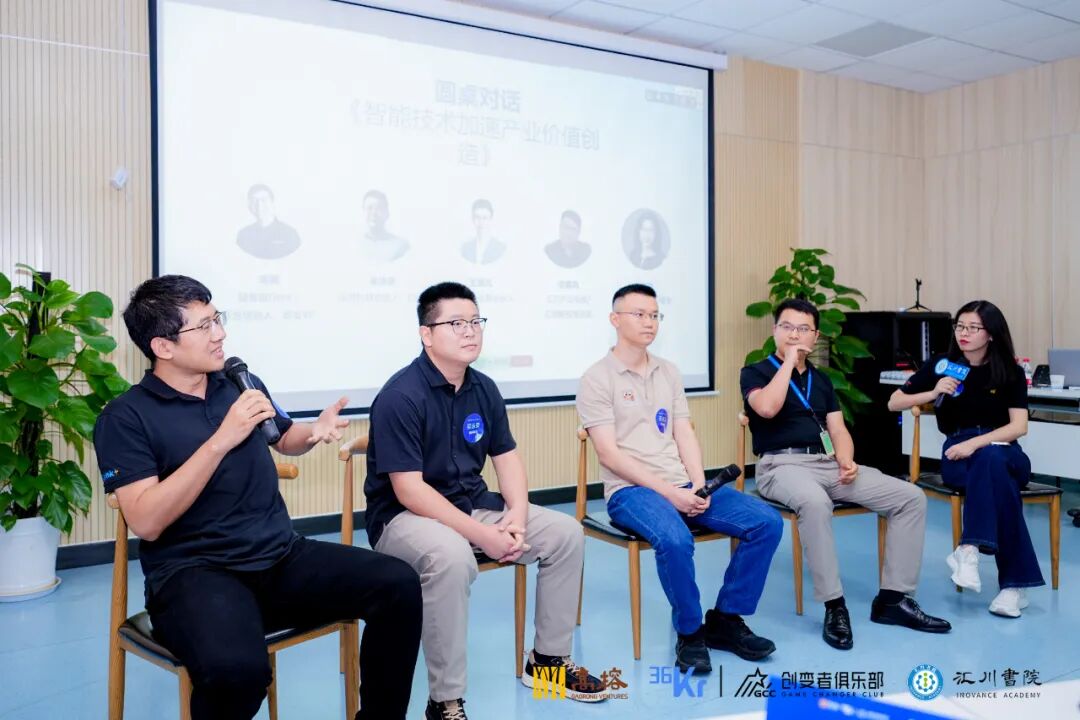
Over the past year-plus, AI and large models have been in full swing, and the guest speakers also shared around AI's acceleration of industry and practical落地applications.
Shexu Technology's industrial generative AI software products currently incorporate two types of large models — generation models for industrial modalities and natural language large models. Based on large models, it helps industrial customers极致提升效率 in the design phase, while also helping improve industrial design quality and enabling digital asset inheritance. Wu Yongrong emphasized that because the industrial domain has accuracy requirements for generated content, Shexu explores Knowledge-based AI, combining reinforcement learning based on industrial standards and industrial mechanisms to give large models a set of "constraints," ultimately generating design solutions that meet practical needs.
General-purpose intelligent robotics company Flexiv focuses on R&D and production of adaptive robot products integrating high-precision force control, computer vision, and AI technology. Speaking on robot large models, Wang Jingfan believes two capabilities deserve attention — deep understanding of the physical world, namely the World Model that the industry closely watches, and robustness.
Geekplus is a global leading warehousing and logistics robotics company. Chen Xi pointed out that in actual deployment, it's not one robot operating but a cluster of robots. Geekplus adopts a combination of large and small models — large models run in the cloud, helping the system learn real-time conditions of the robot cluster and perform multi-agent scheduling; small models are deployed on the robot side, ensuring safe and controllable operation.
Speaking on B2B and technology entrepreneurship, staying close to customers became the highest-frequency keyword.
An Pufeng of Huichuan Production Investment noted that in today's intensely competitive market, companies need their own unique打法 and breakthrough methods; moreover, companies that can approach customer needs, solve customer pain points, and define products from customer pain points while pushing R&D from the market backward will gain lasting competitiveness.
Geekplus has served over 1,000 global customers, accumulating strong global service capabilities. Chen Xi emphasized that overseas business tests not just local commercial capability — sales, service, product, and technology R&D all need to align with customers. The end-to-end capability of converting technology to product, product to business, and business to customers together supports Geekplus's global business development.
"Our team itself comes from industry, so we know you absolutely cannot build products behind closed doors." Shexu Technology traced its process of finding product-market fit: "In 2022 we took the first demo straight to customers," and it was customer needs that drove R&D and standard product refinement. Starting from automotive industry customers, Shexu Technology is today expanding into aviation manufacturing, energy, and other fields.
Wang Jingfan noted that Flexiv's robots lead in being "general-purpose," and as they integrate embodied intelligence brains, they can provide overall solutions and services to customers across industrial, commercial, and civil domains. In actual service delivery, they do small amounts of customization based on customer needs on top of general-purpose products, gradually accumulating and refining these into standardized service capabilities for industries.
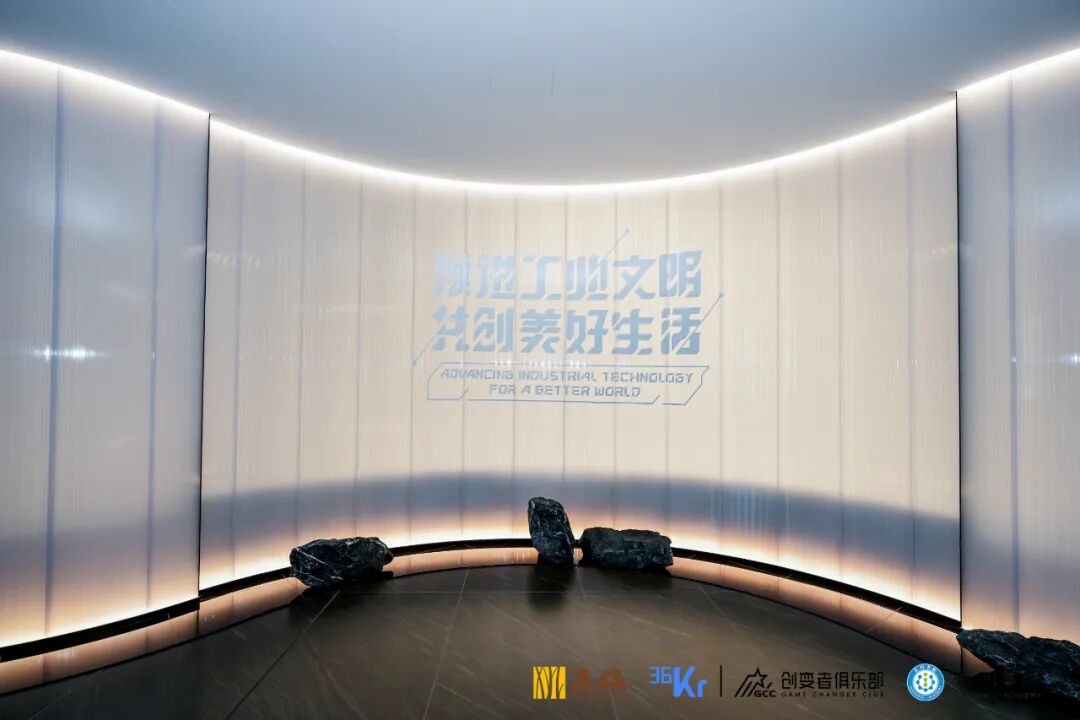
At Inovance's 20th anniversary this year, Chairman Zhu Xingming traced back to three original hypotheses for starting the business — China has the soil, China has the need, resources are guaranteed. Today China has already traversed the path from imitation to independent manufacturing. On the future journey of smart manufacturing and energy upgrading, industry chain leaders and frontier technology companies will continue moving forward, "advancing industrial civilization, co-creating a better life."