Inside JD.com: Accelerating Commerce, Empowering Technology, and Building Industry Partnerships to Speed Robots into Millions of Homes | Ronghui

"Help 100 robotics brands achieve one-billion-yuan sales within three years."
As the intelligent robotics industry enters a period of rapid growth, expectations are running high for its real-world commercial applications and large-scale deployment.
Looking back at the trajectories of autonomous driving, large language models, and other frontier technologies, once they scale to reach consumers, a virtuous cycle kicks in — expanding user bases, accumulating data, and incorporating user feedback — that drives exponential improvements in the technology itself.
At this August's World Robot Conference, JD.com unveiled its "Intelligent Robotics Industry Acceleration Plan," using commercial acceleration, technology enablement, and industry collaboration to help robotics brands connect with both consumer and enterprise users and accelerate their entry into end-use scenarios. The move also signaled JD.com's commitment to building an open, mutually beneficial robotics ecosystem.
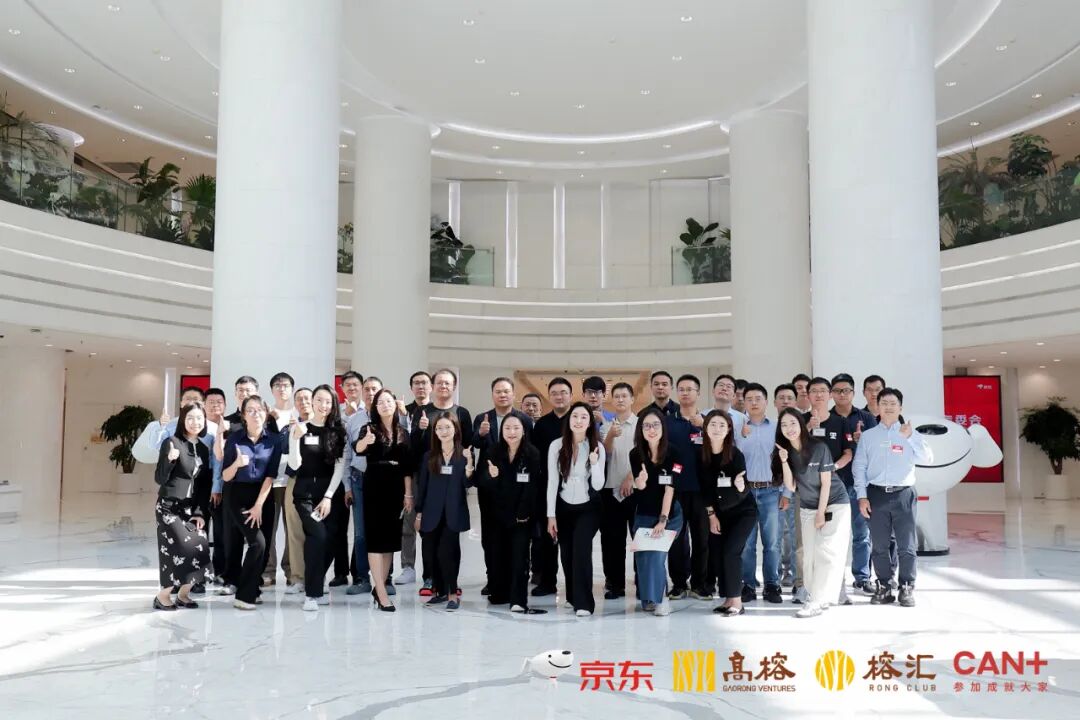
Recently, Gaorong Ventures joined forces with Shoucheng Capital's CANPLUS to host an exclusive "Inside JD.com · Robotics Industry Ecosystem" closed-door session, bringing over 40 entrepreneurs and investors from the embodied intelligence space to JD.com's global headquarters to experience the company's ecosystem potential and explore how robotics technology can integrate with industry.

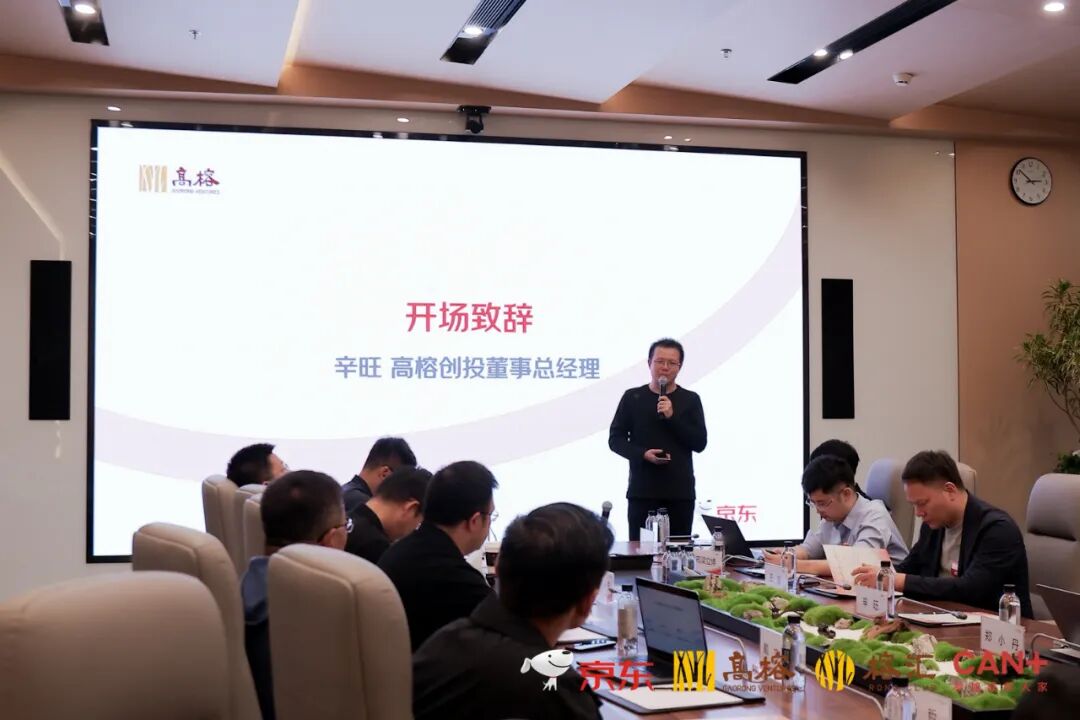
In opening remarks, a senior executive from JD.com's 3C Digital Business Group's Intelligent Robotics Division noted that the AI plus embodied intelligence industry has seen unprecedented opportunities in the past two years. As a supply chain-based integrated services company, JD.com — whether through its massive logistics automation operations or its retail-side supply chain capabilities — has strong incentives to invest heavily in robotics.

JD.com's "Intelligent Robotics Industry Acceleration Plan" commits over 10 billion RMB in resources, with goals of helping 100 robotics brands reach 1 billion RMB in sales within three years and putting intelligent robots into over one million end-use scenarios. JD.com's intelligent robotics business will deepen collaboration with industry partners, drawing on its supply chain infrastructure, omnichannel user reach, and frontier technology capabilities.
Xin Wang, Managing Director at Gaorong Ventures, expressed enthusiasm about the latest wave of changes and opportunities in robotics, from models to physical hardware. He sees JD.com as a close partner for innovative robotics companies going forward, citing several core strengths: first, its B2C and B2B sales channels can directly drive growth for robotics firms amid the robotics wave; second, JD.com has extensive end-to-end logistics automation scenarios; and third, JD.com itself is exploring how to empower robotics through technology and R&D.
Wang added, "We look forward to more collaboration and cross-pollination between Gaorong, the robotics companies in our investment ecosystem, and JD.com — together creating greater value in real-world scenarios."

As robots increasingly enter people's lives — "whether in the form of bipedal humanoids, quadrupedal robot dogs, desktop robots, companion toys, or others" — ubiquitous robots will engage in extensive intelligent interactions with humans. How can large model-driven human-robot interaction capabilities be embedded into physical robot hardware?
A senior executive from JD.com's Exploration Research Institute's JoyInside team pointed out that unlike human-computer interfaces, embodied intelligence must solve numerous real-world spatial problems. And human-robot interaction is particularly complex because you can't preset what scenarios and environments a robot will encounter — "scenarios change, people change, emotions change too."
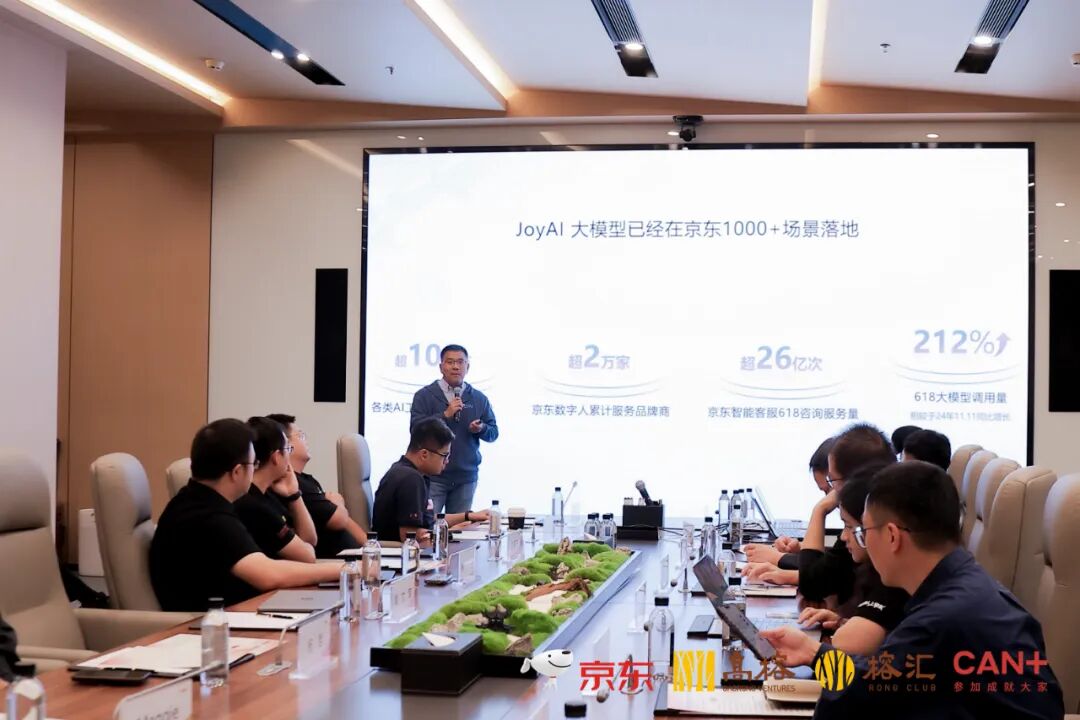
To address this, JD.com's Exploration Research Institute established an Embodied Intelligence Lab and recently launched a new brand — JoyInside, which embeds character large model-driven conversational agents into intelligent hardware such as robots, robot dogs, AI toys, and smart glasses. Through more human-like dialogue with users, it delivers "coordinated speech and action" for better product experiences, enhancing competitiveness and user stickiness.
"To make warm, personable endpoints ubiquitous everywhere," JoyInside builds on four strengths: leading industry large models, rich character agents, hyper-realistic human-robot interaction experiences, and highly coordinated consistency between words and actions.
Data shows that intelligent hardware with JoyInside sees users initiating conversations more proactively, with average dialogue frequency up over 120%. Currently, JoyInside 2.0 has been integrated into products from over 30 leading brands, with partnerships with more than 10 top robotics brands including EngineAI and Unitree. JD.com has also opened a limited-time free access program to help more robotics companies capture growth opportunities.

A senior executive from JD.com's 3C Digital Business Group Intelligent Robotics Division's Business Development team, drawing on JD.com's development history and business scenarios, shared how JD.com's intelligent robotics initiatives help robotics companies build critical bridges to vast markets.
On one hand, JD.com helps robotics companies achieve real sales growth through end-to-end online and offline supply chain services. Leveraging over 600 million annual active users, 8 million enterprise customers, and the gradually established brand perception of "buy robots on JD.com," the platform helps robotics brands break through sales scaling bottlenecks. "In the process, JD.com will help robotics brands achieve zero-barrier self-operated store onboarding, providing coverage across pre-sale, sale, and after-sale services including sales, customer service, operations, marketing, and even warehousing and logistics fulfillment."
Data shows that during this year's "618" shopping festival, JD.com's self-operated intelligent robotics sales grew 3x year-over-year, while embodied intelligent robotics sales surged 17x.
Meanwhile, in terms of industrial scenario enablement, JD.com's own warehousing, logistics, retail, and healthcare operations generate substantial robotics demand, which it opens to partners for collaborative development.
Additionally, JD.com helps rising robotics brands become true industry stars through investment linkages, major marketing resource commitments, global integrated supply chain fulfillment capabilities, and AI and cloud technology enablement across multiple dimensions.

In a roundtable discussion, four robotics industry entrepreneurs shared their outlook on the "GPT moment" for robotics and opportunities for scenario deployment.
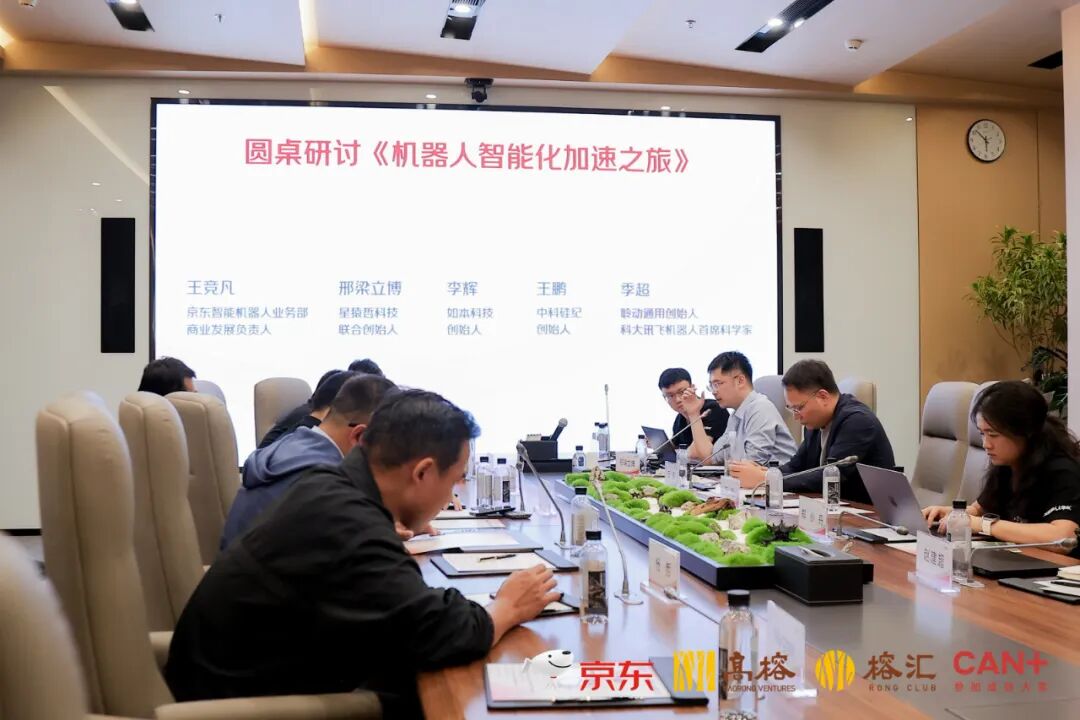
When will robotics see its "GPT moment"? Ji Chao, founder of Lingdong General Intelligence and Chief Scientist at iFlytek Robotics (a CANPLUS participant), pointed out that since last year, the release of open-source embodied intelligence models like π₀ and π₀.₅ has accelerated development in the field, with models shifting from discrete to continuous output — dramatically improving the smoothness and compliance of robot motion. From first principles, embodied intelligence will eventually reach a solvable state by integrating vision, language, and action modalities along the Transformer architecture.
Of course, today's embodied intelligence resembles autonomous driving's progression from L2 to L4 a decade ago. Given current data volumes and model architectures, a more pragmatic path may be to decouple perception, decision-making, and motion execution into layered end-to-end solutions.
Wang Peng, founder of CASIC Silicon Era (a CANPLUS participant), proposed a gradual progression from specialized to general-purpose systems, mapping out deployment timelines for education and research, industrial, inspection, and home service scenarios. He emphasized that deep hardware-software synergy is the core barrier determining the upper limit of robotic system capabilities in embodied intelligence engineering.
Li Hui, founder of Ruvantage Technology, took a practical deployment perspective, noting that robots today face numerous "fragmented" application scenarios in the real world, with each scenario involving different sensing, actuation, and processes. Under the broad trend of intelligent upgrading across industries, robotics companies may increasingly evolve along two directions: horizontal — continuously deepening a general capability, "going a hundred meters deep through a one-centimeter opening"; and vertical — going all the way into specific niche process scenarios to continuously provide complete process solutions for end customers.
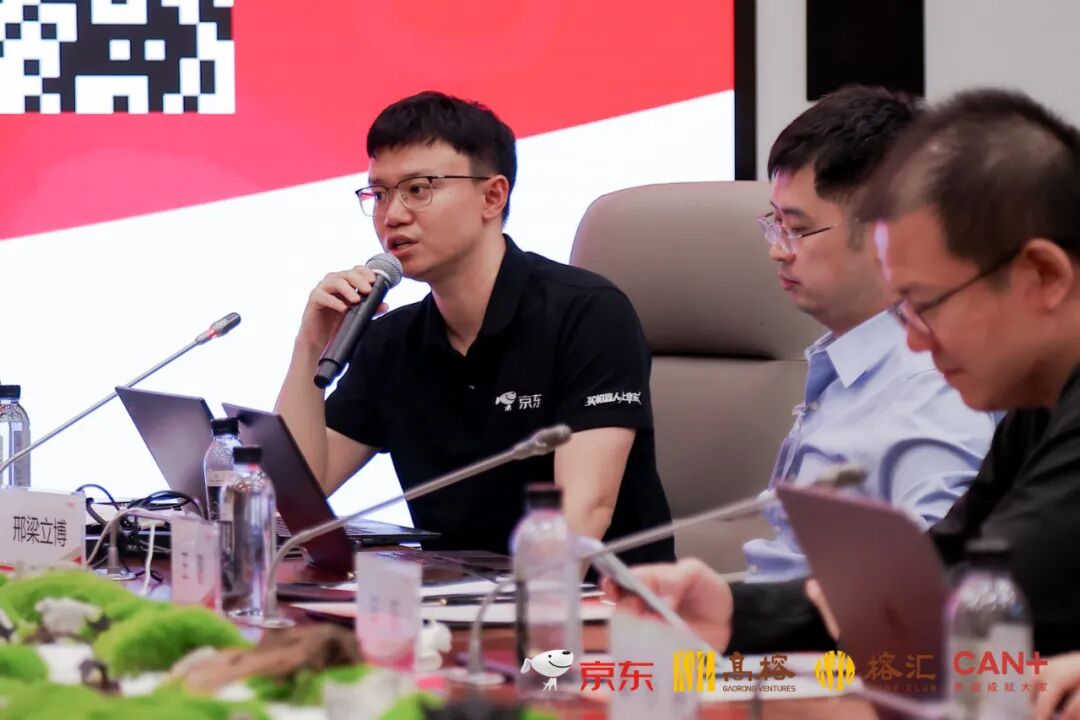
Xing Lianglibo, co-founder of XYZ Robotics, noted that XYZ Robotics targets relatively standardized logistics scenarios in the B2B space, sharing his thinking on commercial deployment. First, product-market fit for robots is crucial — for embodied intelligent robot form factors, the key is whether they can meet scenario needs, perform better, and deliver higher ROI; second, B2B robotics companies must embrace globalization and target overseas markets, as only global market scale can sustain long-term enterprise development; third, significant product capability improvements largely happen during customer scenario deployment, so robotics companies need to continuously collect corner cases from real customer environments and iteratively refine algorithms and product delivery.
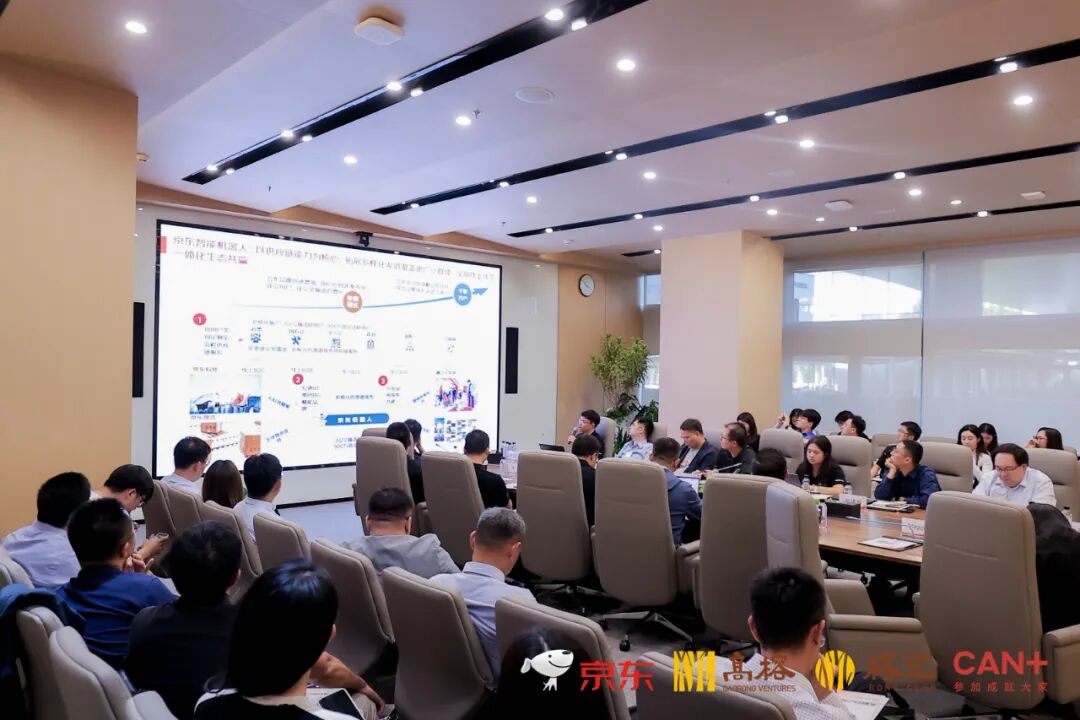
Going forward, intelligent robots will be not just friends to humanity, but "new infrastructure for a new world." On the journey toward that future, a major leap from technology innovation to large-scale commercial deployment is essential. This will require not only forward-looking courage, but also greater collaborative effort from ecosystem platforms, innovative enterprises, and capital across the industry.