Smart Glasses Take Off: How Leiyu Pushes Full-Color Micro-LED Micro-Displays to the Limit to Light Up AR's Infinite Possibilities | Gaorong Future

The world's smallest full-color Micro-LED optical engine lights the spark for a "visual revolution" in smart glasses.
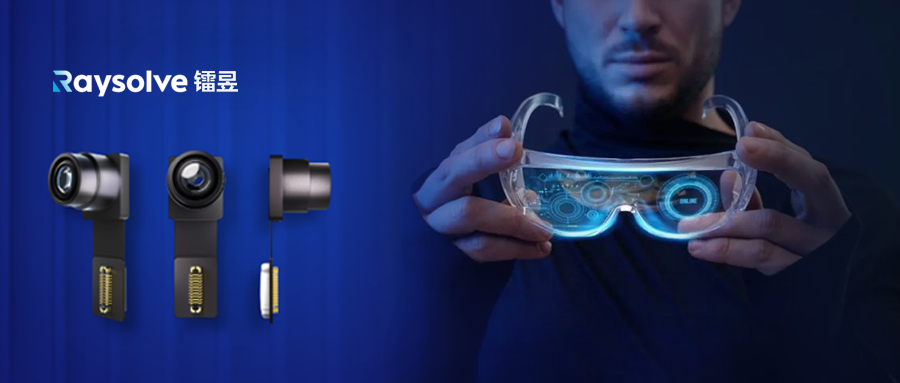
Imagine slipping on a pair of lightweight, comfortable AR glasses that overlay navigation directions seamlessly onto the road while you cycle; that discreetly feed you speaker notes during a presentation; that display real-time translations when you travel abroad. With more manufacturers entering the market, large language models driving innovation, and the AR supply chain maturing, AR glasses could soon become intelligent assistants and a new platform for human-computer interaction.
At the heart of the AR glasses experience is the micro-display. Compared with legacy solutions like LCOS and Micro-OLED, Micro-LED micro-display technology paired with optical waveguides offers clear advantages: high brightness, low power consumption, high resolution, and low latency. The miniaturization of these components is fundamentally reshaping the form factor of AR displays, breaking free from the bulky designs of the past and establishing itself as the ideal choice for AR.
Raysolve is the industry's first company to achieve AR-grade monolithic full-color Micro-LED micro-displays. Its core team hails from the Department of Electronic and Computer Engineering at The Hong Kong University of Science and Technology, bringing deep expertise in cutting-edge optical chip design and manufacturing. Since its founding, Raysolve has iterated relentlessly around the goals of miniaturization, high luminous efficiency, high resolution, full-color capability, and mass producibility — repeatedly setting new industry benchmarks.
In 2019, Raysolve released its first monolithic full-color product, pioneering the use of lithography-based quantum dot technology to achieve monolithic full-color Micro-LED micro-displays;
In September 2024, it launched the first mass-production-ready micro-display product, the PowerMatch® 1 full-color Micro-LED micro-display;
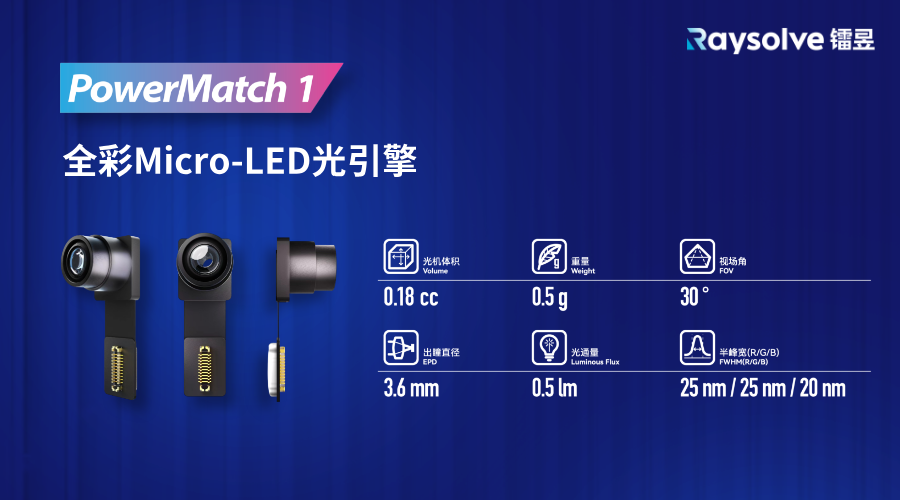
More recently, it introduced the PowerMatch® 1 full-color Micro-LED optical engine with a volume of just 0.18 cc — slightly larger than a mung bean — setting a new record for the smallest full-color optical engine.
Amid the explosion of smart glasses, Raysolve founder and CEO Yongzhan Zhuang believes that 2025 will see AI-first smart glasses drive sales growth; the next step is adding displays to smart glasses, enabling a leap from audio-based to visual interaction.
This Hong Kong-born, Suzhou-based technical entrepreneur said, "I'm personally very optimistic. AR glasses have reached an excellent inflection point. Next year we'll see more AR glasses hit the market, and it will also be the breakout moment for full-color Micro-LED micro-display volume shipments."
So as consumer-grade AR glasses stand on the verge of takeoff, how is Raysolve preparing for mass production? We spoke with Dr. Yongzhan Zhuang to find out. Gaorong Ventures led Raysolve's Pre-A round in 2021 and has continued to invest in two subsequent rounds.


2024 was a pivotal year for AI glasses. Ray-Ban Meta shipped over 2 million units, demonstrating the market potential of consumer-grade smart glasses. In a recent Meta earnings call, Mark Zuckerberg called 2025 "the year of smart glasses," with large models enabling more hit products.
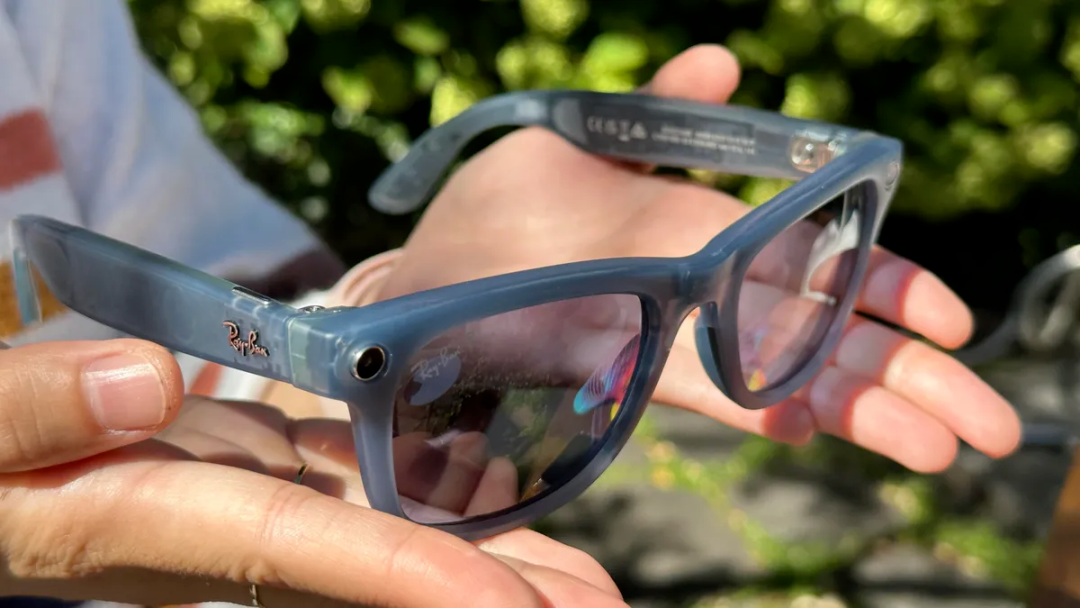
Image source: Ray-Ban Meta
But Zhuang points out that current mainstream AI glasses products sidestep the technical challenges of micro-displays and optical waveguides — essentially a subtractive approach; AR represents the core direction for smart glasses optimization. While no breakout AR glasses product exists yet and the industry is still exploring user needs and habits, AR enables more natural and efficient interaction with the physical world. Without AR and display capabilities, smart glasses are limited to voice interaction with its inherent latency issues; with AR and display, users can access real-world information quickly and interact more directly and efficiently. "After all, the human eye is the most powerful information-gathering tool we have."
Unlike VR, AR glasses don't completely overlay virtual information onto reality — the real world still comprises 80-90% of what users see, with virtual information playing a supporting role. As the saying goes, "AI gives devices the ability to think; AR display technology determines their ability to express." The fusion of the two will create a new generation of multimodal devices.
This trend is already playing out across the industry. "This year we're seeing domestic and international manufacturers evolving toward AI+AR, including Meta, Rokid, Xingji MEIZU, INMO, Thunderbird Innovation, and XREAL. Companies like Meta and Apple also hope that entirely new form factors like AR glasses can unlock greater imagination for their platform ecosystems."
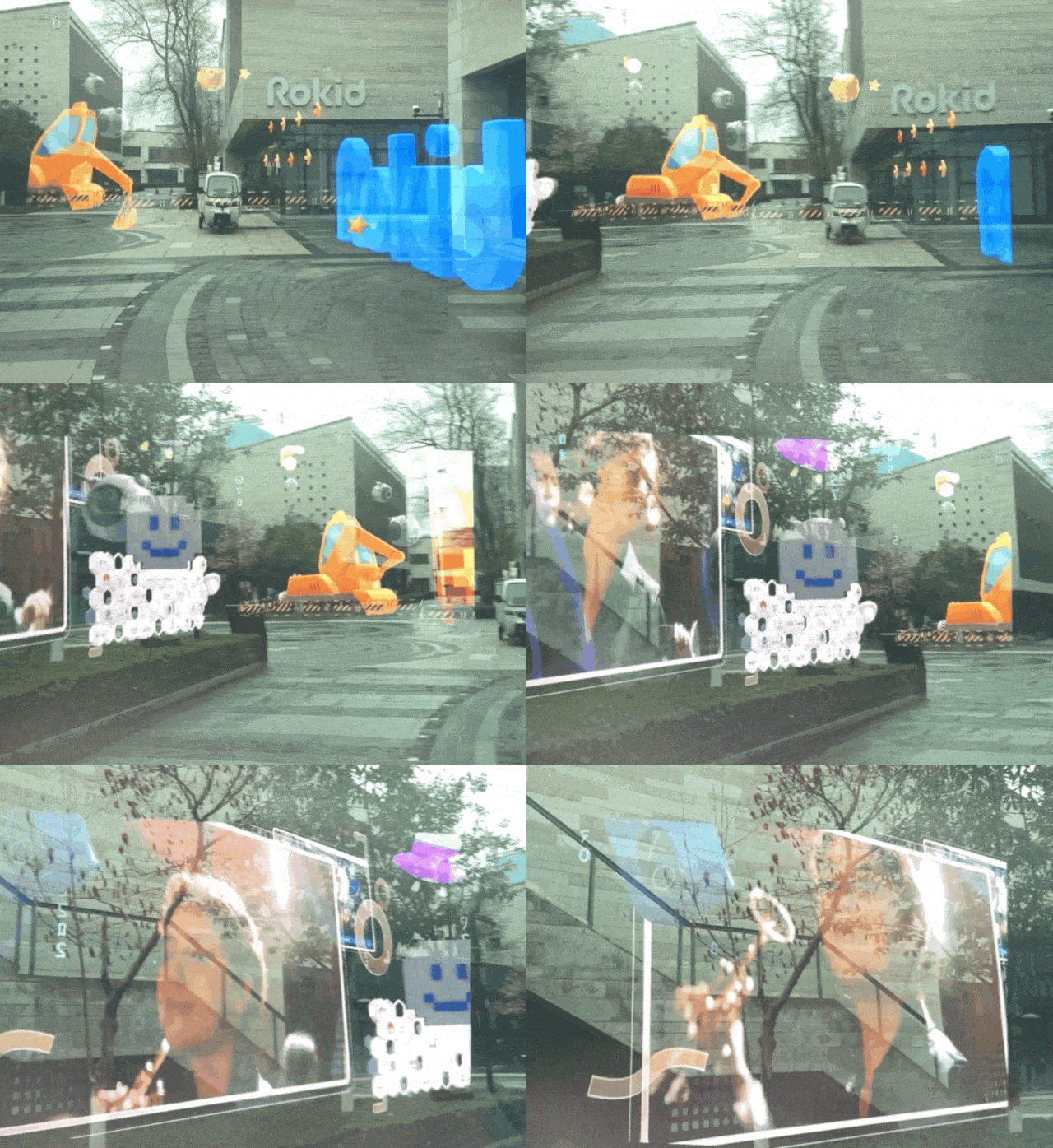
Image source: Rokid
On the question of AR glasses adoption, Zhuang believes social interaction could be a key driver — perhaps exploring how different AR glasses can connect to enable richer interactions. "Previous AR applications have focused mostly on individual scenarios. If we can achieve hardware-to-hardware interaction, it could unlock many interesting possibilities. For example, a group of friends cycling together could not only share navigation routes through their AR glasses but also see each other's real-time positions, rankings, and speeds, creating a more engaging social cycling platform."

The AR glasses industry is currently undergoing rapid technological evolution, with optical waveguide technology, Micro-LED micro-display technology, and multimodal interaction serving as key forces driving the industry forward.
Raysolve's core founding team has been working in the Micro-LED field since 2004, placing them in the first tier of Micro-LED R&D globally. The team has completed the full cycle from fundamental research to industrial commercialization, developing deep insight into both technology evolution and market demands. Raysolve also benefits from top-tier academic counsel — founding member Professor Kei May Lau, a member of the US National Academy of Engineering and a senior professor in the Department of Electronic and Computer Engineering at The Hong Kong University of Science and Technology, is an international authority in Micro-LED and represents a technical benchmark for the industry.
Zhuang notes that while Micro-LED technology isn't fully mature, it has reached a critical juncture where technical capabilities match industrial needs. "Many innovative technologies aren't perfect when they enter the market. The key is establishing a virtuous cycle of continuous iteration."
"We consistently adhere to a market-oriented approach to technology development. Take Micro-LED as an example: its future evolution requires not only a clear focus on full-color capability but also balanced consideration of multiple dimensions including resolution and brightness enhancement — and ultimately, all of these criteria must be judged against market demands."

Micro-LED is a new display technology based on miniaturized LEDs, composed of micrometer-scale light-emitting diode arrays that provide high brightness and high contrast for AR glasses. In operation, virtual image light emitted by Micro-LEDs is transmitted through optical waveguides and superimposed with ambient light from the real environment that reaches the human eye, achieving seamless fusion of virtual information with real-world scenes.
Raysolve employs monolithic integration technology, using semiconductor integration to bond Micro-LED pixel arrays onto silicon-based CMOS chip surfaces. With photolithography precisely defining critical dimensions, pixel size and pitch are reduced to create high-resolution, high-pixel-density Micro-LED micro-displays.
In September 2024, Raysolve launched the PowerMatch® 1 full-color Micro-LED micro-display, achieving multiple breakthroughs.
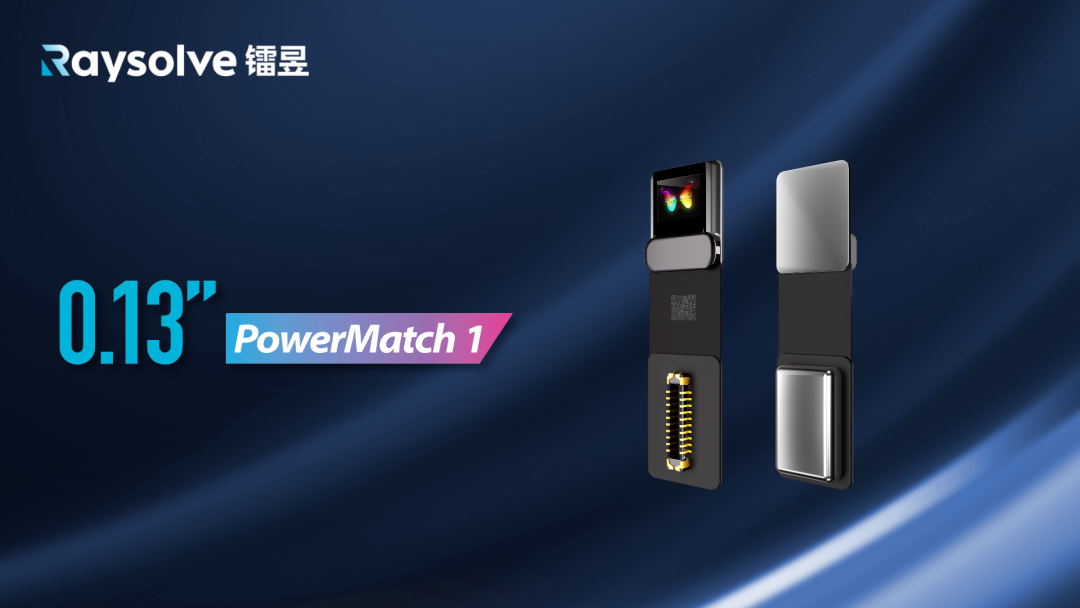
Brightness: AR glasses must adapt to both indoor and outdoor environments. The PowerMatch® 1 series dramatically increases brightness at low power consumption, achieving 500,000 nits under white balance conditions — far exceeding traditional displays (smartphone displays typically offer around 1,000 nits). It is expected to surpass 800,000 nits by the end of 2025, at which point the integrated optical engine system's luminous flux output will reach 1 lumen.
Color performance: It achieves 108.5% DCI-P3 wide color gamut and high color purity, delivering rich, lifelike images (displays exceeding 90% DCI-P3 are considered wide-gamut devices).
Video: PowerMatch® 1 full-color micro-display in action
Size: To meet AR glasses' requirements for light weight, comfort, and personalized design, the full-color optical engine equipped with the 0.13-inch PowerMatch® 1 micro-display measures just 0.18 cc — the world's first full-color optical engine under 0.2 cc, at 45% the size of X-Cube three-color optical engine solutions, and weighing only 0.5 g. It can easily fit into a glasses temple.
CMOS display backplane design: The display module simultaneously supports SPI, QSPI, and MIPI interfaces, compatible with most MCUs (microcontroller units) or SoCs (system-on-chips) on the market. This solves the hardware adaptation problems of traditional Micro-LED micro-display chips, giving downstream customers more flexibility in product design.

Alongside technical and product innovation, Raysolve emphasizes mass producibility and cost control, striving to balance technology with practical value. "When we evaluate any technical solution, we always assess whether it can ultimately be mass-produced and widely adopted by downstream companies."
Full-color capability is a critical challenge in Micro-LED micro-displays. Current X-Cube three-color combining solutions on the market, while achieving full-color display by combining light from three separate R, G, and B monochrome screens, are ultimately transitional due to limitations in cost, form factor, and the luminous efficiency and thermal stability of native red light.
Quantum dots, as semiconductor nanocrystal materials, offer a new pathway for Micro-LED full-color realization through their photoluminescent properties. By integrating a quantum dot color conversion layer onto blue Micro-LEDs, blue light can be converted to red and green, thereby achieving full-color display.
"Some have previously questioned quantum dot lifetime or whether quantum dot color performance could meet display requirements. Through continuous technical innovation, Raysolve has achieved significant breakthroughs in quantum dot pixel size control, color accuracy, and material stability."
Raysolve's self-developed quantum dot lithography technology combines the high luminous efficiency of quantum dots with the high resolution of photolithography, using standard semiconductor processes to define fine sub-pixel patterns and providing a high-yield mass production solution for full-color Micro-LED micro-displays. This technology dissolves and protects quantum dots in photoresist, forming quantum dot color conversion layers matched to GaN blue Micro-LEDs through standard photolithography processes. Blue light excites red and green quantum dots to achieve chip-level full color. Raysolve has already controlled pixel sizes below 4 μm. Additionally, this technology effectively addresses native red light efficiency and brightness issues, producing a qualitative leap in overall full-color chip brightness.
To enable mass production, Raysolve has also refined its wafer bonding technology, employing large-format wafer-level bonding to bond 8-inch GaN epitaxial wafers with 8-inch CMOS driver wafers without requiring alignment. Zhuang notes that if future capacity demands increase, the company will upgrade to 12-inch wafers, enabling more chips per wafer and further reducing per-chip costs.

Having overcome multiple technical hurdles, Raysolve has achieved the critical transition from R&D to industrialization. It is now focused on ramping capacity to ensure tight alignment between technology and market demands, delivering quality products to downstream customers. Raysolve has already shipped samples to multiple downstream customers and initiated prototype collaborations, with large-scale shipments expected by the end of 2025. The company currently works primarily with optical waveguide lens manufacturers, with plans to expand further to end customers.
Video: PowerMatch® 1 full-color optical engine in action
Zhuang believes China's AR glasses industry will develop significant competitive advantages at the supply chain level. The country leads globally in optical waveguides, Micro-LED, and silicon-based GaN semiconductor processes. "From an industrial development perspective, China possesses full-chain advantages for the AR industry: a complete supply chain, core technology reserves, a massive consumer market, and rich application scenarios. We believe China is highly likely to be the first to incubate breakout AR glasses products and form a scaled consumer market."
Raysolve's technical solution is based on standard semiconductor processes, perfectly compatible with domestic semiconductor industry equipment. Processes such as photolithography, thin-film deposition, and etching can all use domestic equipment, yielding significant cost advantages at scale. "As production volumes ramp and yields improve, we believe Micro-LED micro-display solutions still have substantial room for cost reduction."

On the company's development goals, Zhuang stated that in 2025, in addition to focusing on mass production and product performance iteration, Raysolve will invest in new product development. "The priority is improving performance and efficiency around our existing 0.13-inch micro-display chip — increasing brightness while reducing power consumption, enhancing AR glasses' portability and battery life."
Going forward, Micro-LED micro-displays can also be applied in automotive head-up displays (HUDs), intelligent headlights, 3D printing, and other fields. "We believe Raysolve's technology platform can support applications across multiple domains."
Raysolve has previously received strategic investments from industry players including Inno-Chip, AAC Technologies, 37 Interactive Entertainment, and miHoYo. "They not only strongly endorse Raysolve's monolithic full-color micro-display technical solution and roadmap but have also provided comprehensive support throughout the R&D and industrialization process."
The AR industry chain is long and still developing. As an emerging force in the industry, Raysolve will continue exploring the possibilities of Micro-LED micro-display technology. Beyond manufacturing display chips, it is also exploring the "translator" from virtual to real. Zhuang concluded, "Providing the AR field with high-performance micro-display solutions that can be widely adopted by the industry has been Raysolve's goal from the very beginning, and we have been going all out to achieve it."
To discuss product collaboration or investment opportunities with the company, contact: