From Nobel Discovery to Clinical Application: Mirxes Is Transforming Cancer Early Screening with miRNA Technology | Gaorong Ventures

Focused on miRNA technology development, pioneering early cancer screening worldwide.
On October 7, 2024, the Nobel Prize in Physiology or Medicine was awarded to Professor Victor Ambros of the University of Massachusetts Medical School and Professor Gary Ruvkun of Harvard Medical School for their discovery of "miRNA (microRNA) and its role in post-transcriptional gene regulation."
The Nobel citation stated that "their groundbreaking discovery revealed a completely new principle of gene regulation that is crucial for multicellular organisms, including humans."

miRNAs are pocket-sized members of the RNA family, roughly 18–25 nucleotides long. They are widely found in biological fluids such as saliva, urine, and blood, and play a key role in gene regulation.
Scientists' discovery of miRNA dates back more than 30 years. In 1993, the two Nobel laureates first identified a gene called lin-4 in roundworms, lifting the veil on the world of miRNAs.
In recent years, as research into miRNAs has deepened, scientists have gradually found that miRNAs play important regulatory roles in cell proliferation, differentiation, apoptosis, and other processes, and are closely related to the occurrence and development of diseases such as cancer.
So how can this scientific discovery help us better understand and intervene in disease progression, and improve human health?
"Mirxes's core team entered this highly specialized field of miRNA research in 2003. At that time, the Human Genome Project had just been completed, and everyone was studying DNA. We saw the potential of miRNA, chose to go deep in this direction, and explored the new possibilities this technology could bring for early diagnosis of cancer and other diseases."
Recently, Dr. Lihan Zhou, co-founder and CEO of Mirxes, shared at a Gaorong Ventures healthcare demo day how the company built a globally leading technology platform around miRNA, and based on this, developed cancer early screening products, embarking on a journey of commercialization and globalization.
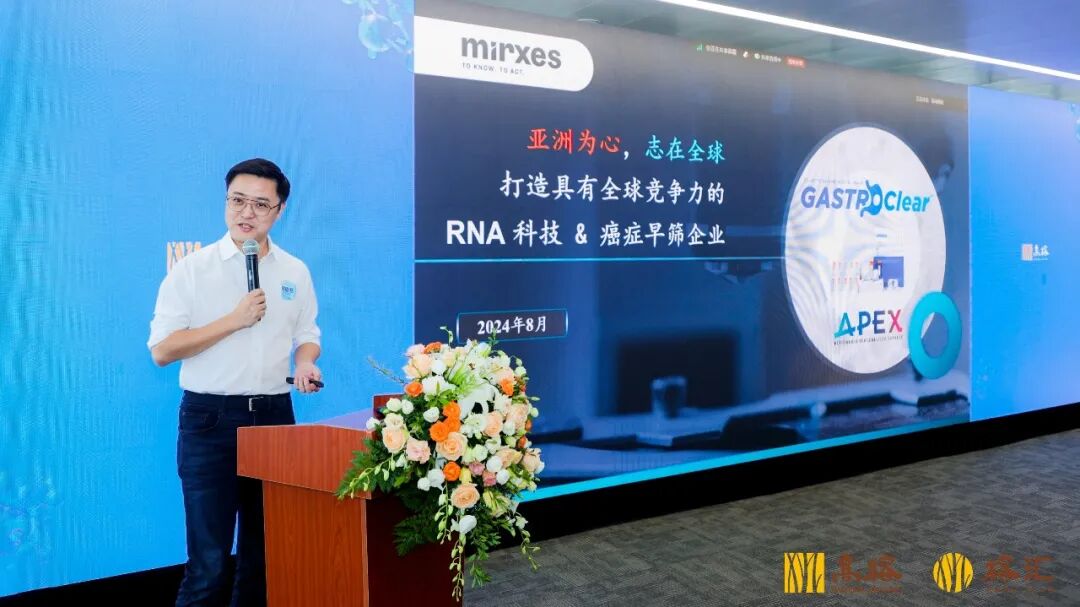
The following is Dr. Lihan Zhou's presentation (edited):

Mirxes's core team comes from the Yong Loo Lin School of Medicine at the National University of Singapore, and has accumulated 20 years of scientific expertise in the miRNA field. In 2003, while developing RNA detection technology for dengue virus, Professor Shoba Ranganathan, Mirxes's chief scientist, invented stem-loop primer design, which greatly improved the sensitivity of RNA detection in blood. This discovery advanced RNA detection technology and made us one of the top five teams globally to enter the field of small nucleic acid research.
In 2014, Mirxes was formally established in Singapore, dedicated to becoming a globally competitive leader in miRNA technology and exploring the clinical application of cancer molecular early screening through miRNA target detection.
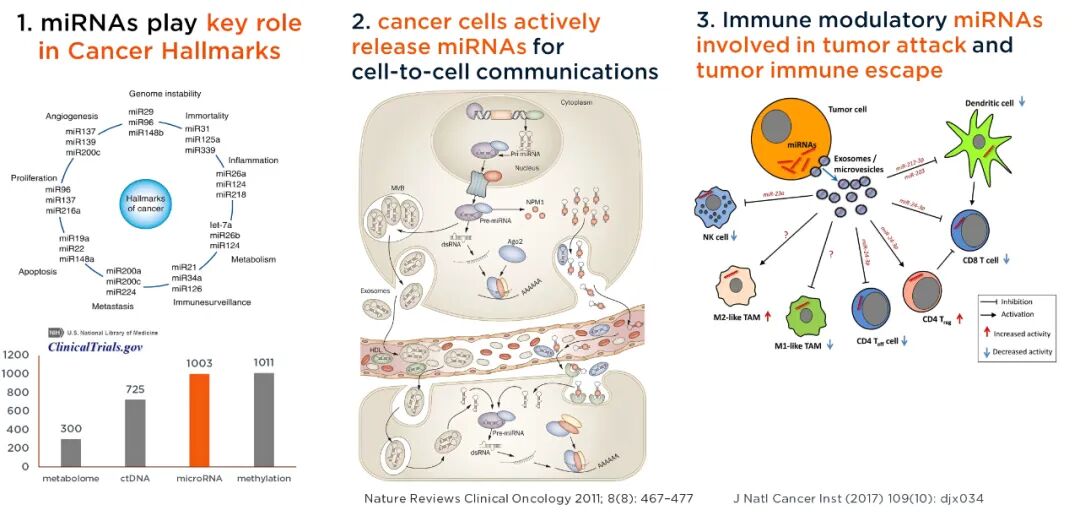
In theory, miRNA is an ideal technical path for cancer early screening. However, translating miRNA detection from the laboratory to industrialization is no easy feat. miRNAs are extremely short and resistant to nuclease degradation, allowing them to exist stably in various biological fluids and thus be discovered and detected. But precisely because they are so short, the differences between different miRNAs are very small — sometimes only 1–2 nucleotides apart. How to identify and detect such subtle differences is a challenge widely faced in the industry.
Mirxes developed an industry-leading qPCR (a high-precision, quantitative nucleic acid detection technology) miRNA detection platform, capable of efficiently and sensitively detecting miRNAs in blood — with performance more than 100 times better than other platforms — while accurately capturing the subtle differences between different miRNAs. This laid a solid foundation for our next steps in cancer early screening product translation and commercialization.

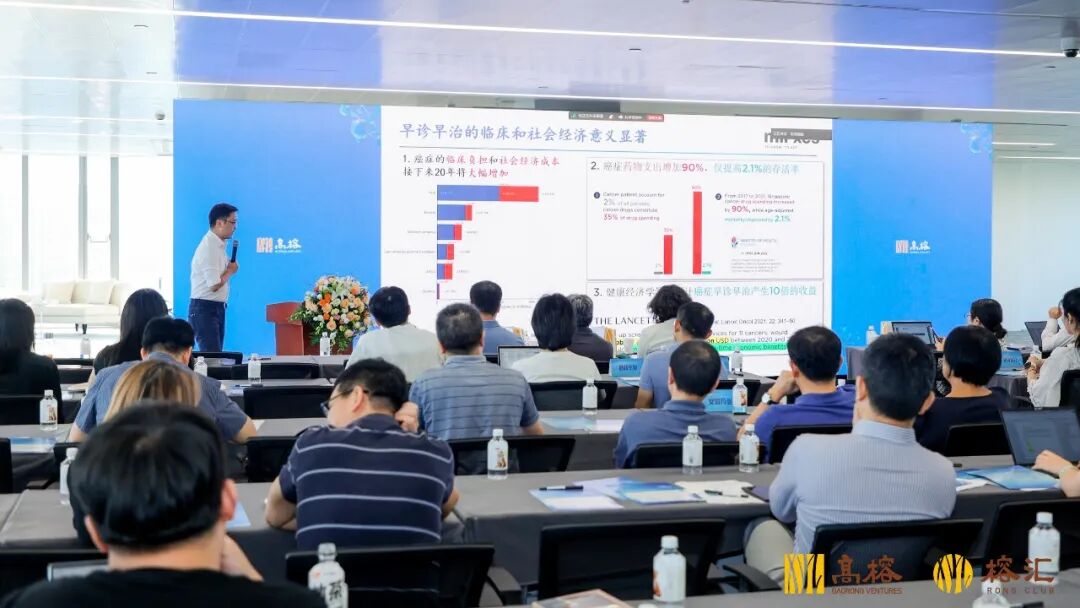
Globally, early cancer diagnosis and treatment have significant clinical and socioeconomic implications. According to health economics calculations, the global clinical burden of cancer will increase substantially over the next 20 years. The World Health Organization predicts that in Asia alone, annual new cancer cases exceeded 9.8 million in 2022 and are expected to soar to over 16 million by 2045 — a treatment cost that current healthcare systems cannot bear.
More importantly, despite substantial increases in cancer drug spending in recent years, this has not significantly improved cancer patient survival rates. According to data released by Singapore's Ministry of Health in 2022, cancer patients accounted for 2% of Singapore's public healthcare system, yet cancer drug spending represented 35% of total drug expenditure; from 2017 to 2021, Singapore's cancer drug spending increased by 90%, yet only improved survival rates by 2.1%.
Therefore, early cancer detection and screening are particularly important. Looking at the Asia-Pacific region alone, the clinical need for cancer early screening is enormous. For example, the screening-eligible populations for gastric cancer and colorectal cancer exceed 400 million and 600 million respectively, with market sizes exceeding $10 billion each.
Mirxes's vision is simple: to detect microRNAs in blood for early cancer diagnosis and treatment, changing the trajectory of lives and reducing the burden on society.
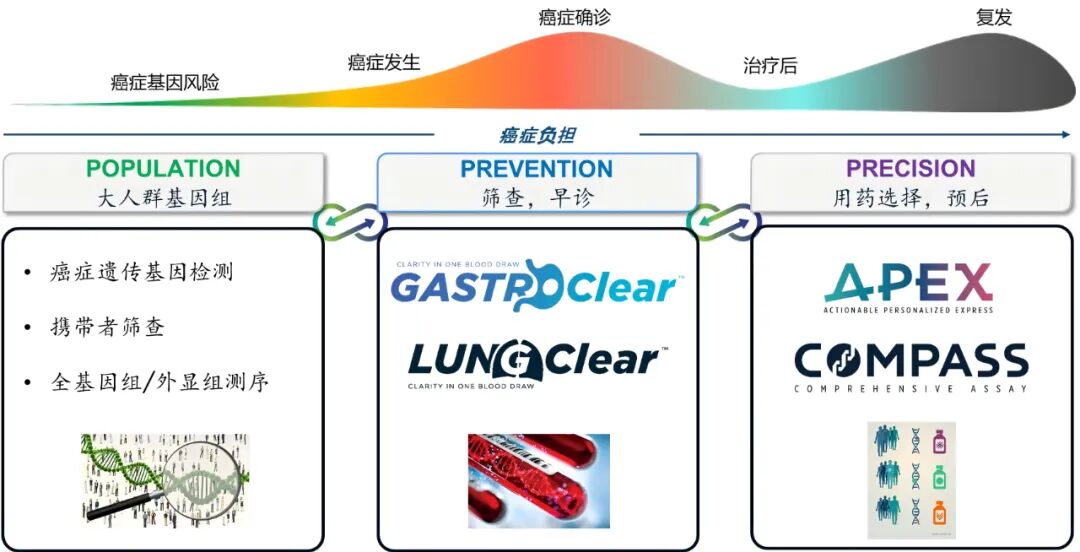

To realize this vision, Mirxes has continuously strengthened its research in miRNA, multi-omics, data science, and machine learning, accumulating nearly 100 patented technologies around miRNA, and begun developing cancer early screening kit products.
Since 2014, we have completed R&D cohorts of over 60,000 people and prospective clinical trials across multiple countries and ethnic groups. Since 2019, we have completed registration or applications for over 10 clinical diagnostic products in multiple countries.
Among these, the launch of a flagship product marked the formal entry of this scientific discovery of miRNA into clinical application — we introduced GASTROClear™, currently the only globally approved blood-based molecular early screening product for gastric cancer.
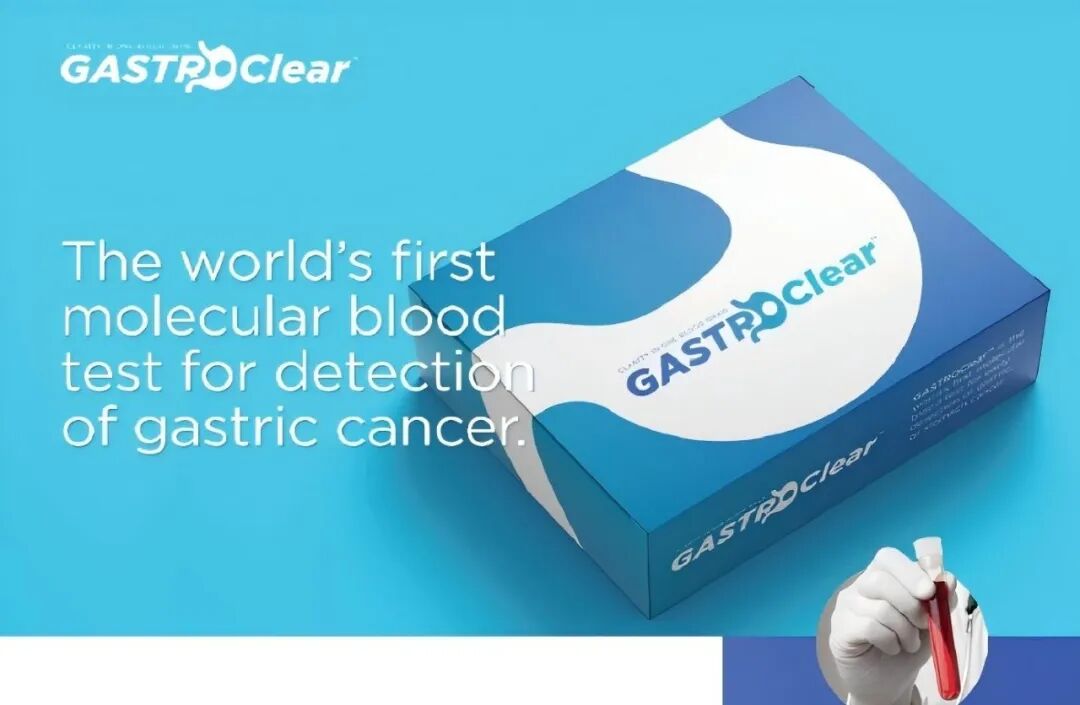
This kit product screens for gastric cancer through qPCR detection of 12 microRNA targets. Product development began in 2012, with a three-year prospective clinical registration completed in Singapore involving 5,282 people. In 2019, GASTROClear™ received approval from Singapore's Health Sciences Authority (HSA), becoming the world's first miRNA-based gastric cancer early screening kit validated by large-scale clinical cohort studies.
In 2023, the product received FDA "Breakthrough Device Designation" in the United States, and in 2024, it was approved by Thailand's FDA for clinical application in gastric cancer screening.
Currently, the product has also completed registration clinical trials in China, with cumulative enrollment exceeding 9,400 cases. This is the largest blood-based early screening clinical trial in China to date, and the product is expected to be approved for launch in China in 2025. We are also engaged in consensus discussions with Chinese experts regarding gastric cancer screening guidelines, looking forward to introducing these 12 microRNA targets alongside existing blood marker testing in future gastric cancer screening protocols.
In actual clinical application, GASTROClear™ has significant advantages and competitive strengths — compared to gastroscopy screening, the detection kit offers greater accessibility, with a testing process of no more than four hours and requiring only 5 mL of blood as a sample; compared to testing for Helicobacter pylori, gastrin, tumor markers CEA, CA, and others, it offers better efficacy.
Clinical trials found that GASTROClear™ achieved an astonishing 87.5% sensitivity for Stage I gastric cancer detection, 75% sensitivity for early lesions with tumor tissue smaller than 1 cm, and 85–87% sensitivity for single detection in asymptomatic gastric cancer cases.

Beyond our core gastric cancer product, the company is also steadily advancing globally competitive colorectal cancer and multi-cancer blood-based molecular detection product development. The colorectal cancer detection product has entered late-stage clinical trials; multi-cancer multi-omics early screening marker development has completed cohort analysis of over 1,000 people; additionally, the lung cancer detection product has been commercialized in Southeast Asia, while liver cancer and breast cancer detection products have also entered late-stage clinical trials.
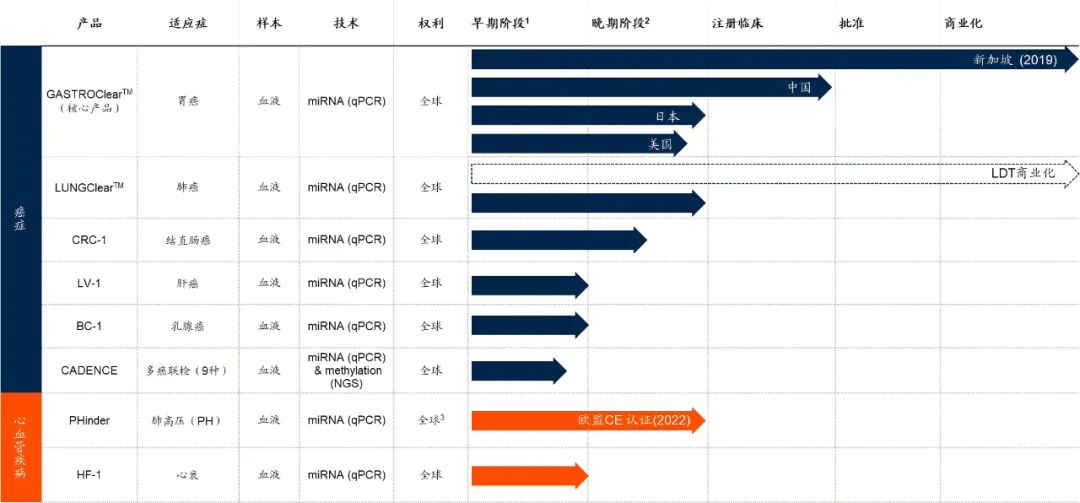
The continuous advancement of product pipelines into clinical stages stems from the ongoing upgrading of Mirxes's team and platform capabilities. Mirxes operates with Singapore and China as dual engines, with R&D, production, and clinical centers in Singapore and Hangzhou, China, and has built two business platforms: early diagnosis and precision multi-omics. In addition to providing cancer early detection kit products and laboratory testing services to hospitals, health examination centers, and governments, the company also supports multi-omics biomarker discovery and clinical genomic diagnostic services overseas.
For example, the company's miRNA technology platform is open to leading multinational pharmaceutical companies for clinical research, including collaborations with Johnson & Johnson in pulmonary arterial hypertension and with Merck in heart failure.

Beyond multi-country clinical trials and regulatory approvals, Mirxes has also embarked on a globalization process in market expansion, with current presence in major Southeast Asian countries, China, Japan, the United States, and other markets.
In fact, Mirxes has become the largest cancer diagnostics company in Southeast Asia, with a complete layout across cancer detection, government-partnered population genomics, and cancer early screening, capturing approximately one-third of Singapore's precision medicine market.
From our observation, for biomedical enterprises, beyond targeting the two massive markets of China and the US, Southeast Asia is also a market opportunity worth attention. Especially during the COVID-19 pandemic, Southeast Asia rapidly completed infrastructure related to PCR testing, and from government and healthcare institutions to insurance companies and the general public, there is now much deeper understanding of PCR testing and RNA. Mirxes uses Singapore as a hub, radiating to Southeast Asia's core economic zones, targeting the population with the strongest payment capacity to provide precision medical testing platforms.
From Victor Ambros and Gary Ruvkun lifting the veil on miRNA more than 30 years ago, to today, with Mirxes's GASTROClear™ kit gaining global recognition, research and application of miRNA have made remarkable progress.
We believe that miRNA will play an even more important role in future healthcare, and that more miRNA-based innovative products and services will enter millions of households.
As one of the global leaders in miRNA technology innovation and industrialization, Mirxes will continue to upgrade its RNA+DNA multi-omics detection technology platform, while accelerating the development of world-leading cancer detection products, with the potential to "intercept cancer at its early stages" and "use technology to sustain life."