Millions of Dollars per Unit: How Shuimu Biosciences Plans to Slash Cryo-EM Costs with "AI plus Domestic Manufacturing" | Gaorong Future

Scaling the Summit of Domestic Cryo-EM Manufacturing.

In the arduous journey of drug discovery, breakthrough discoveries in the fundamental structures of life and advances in basic research tools serve as the North Star guiding pharmaceutical scientists and companies forward. Cryo-electron microscopy and structural biology are among them.
Cryo-electron microscopy (cryo-EM) is the "Hubble Telescope" of the life sciences. By "photographing" and resolving rapidly frozen biomolecular samples, it allows scientists to directly "see" molecular structures in near-native states and understand their functional mechanisms. Over the past decade, it has fundamentally transformed structural biology and, in turn, powerfully advanced new drug development and disease prevention.
However, the technical barriers and R&D costs for high-end cryo-EM are extraordinarily high. It's like twisting multiple cutting-edge systems into a single machine, encompassing precision electron optics, computational imaging, cryogenic sample stages, and detector systems. Currently, a single 300kV high-end cryo-EM unit sells for 50–80 million RMB on the international market — affordable only by top universities, research institutes, and a handful of multinational pharmaceutical companies. To date, the global installed base of 300/200kV high-end cryo-EM instruments barely exceeds 800 units.
In 2017, cryo-EM technology won the Nobel Prize. That same year, with support from the Beijing Municipal Science & Technology Commission and Tsinghua University's Institute for Industrial Research, Shuimu Biosciences was officially founded, launching the industrialization of domestically produced high-end cryo-EM.
Shuimu's co-founder and Chair of its Scientific Advisory Board, Professor Hongwei Wang of Tsinghua University's School of Life Sciences, is one of China's leading figures in cryo-EM. For years, he has dedicated himself to developing cryo-EM methodologies and to the domestic production and intelligentization of EM systems.
Beyond this, Shuimu has assembled experts across life sciences, precision instrumentation, particle physics, and artificial intelligence. Starting from building a commercial cryo-EM service platform to support scientific research and drug discovery, the company has progressed to tackling the independent R&D of next-generation domestic high-end cryo-EM, gradually constructing an innovation platform for domestic high-end instruments.
This year, Shuimu successfully launched its next-generation AI-powered cryo-EM, the TOTEM 300. As a domestic product benchmarked against top-tier international equipment, it achieves globally leading performance while dramatically reducing costs. Through deep integration of AI technology, it also redefines the next generation of intelligent high-end instruments.
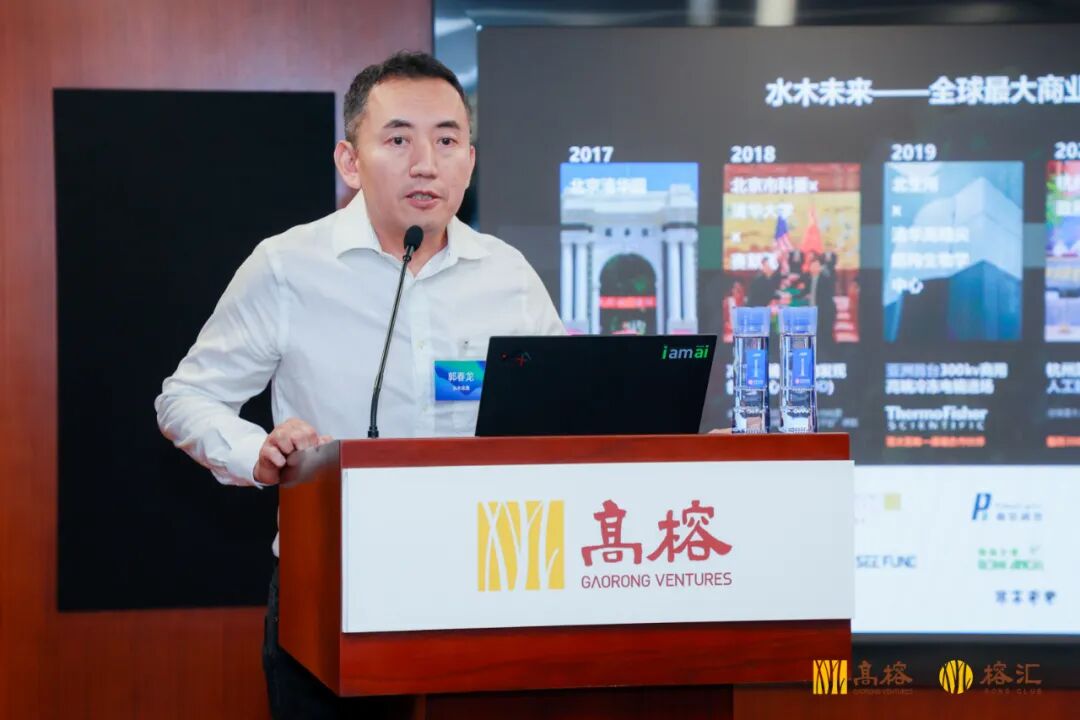
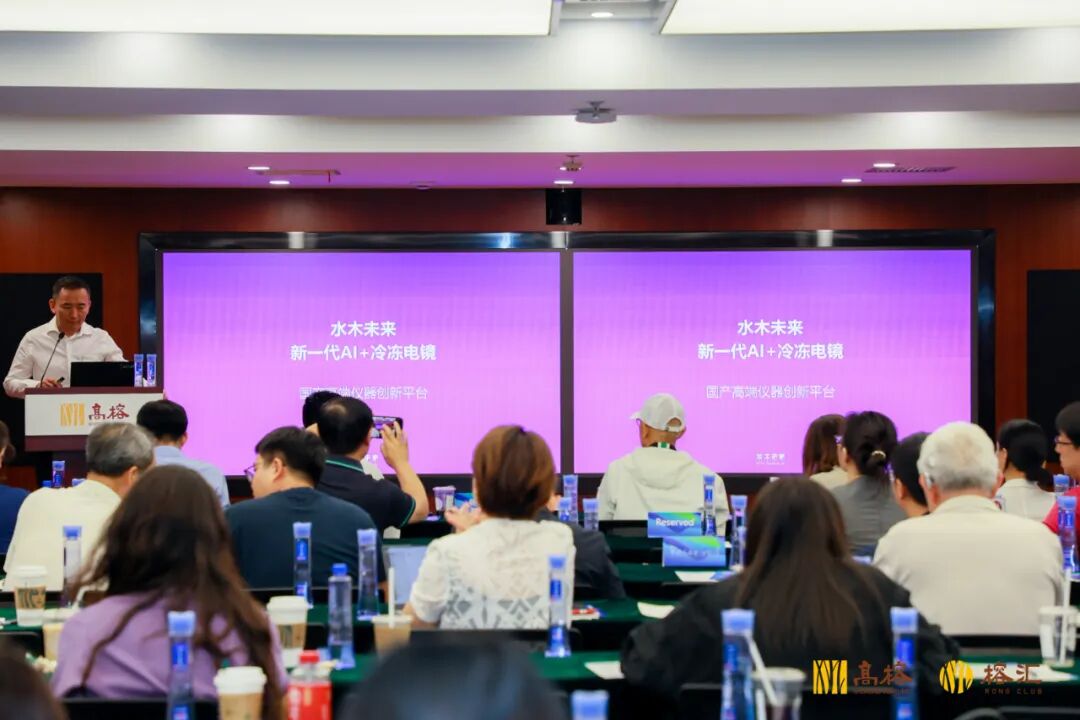
Recently, Shuimu co-founder and CEO Chunlong Guo shared at Gaorong Ventures' Healthcare Demo Day how Shuimu became the first to successfully commercialize a path for domestic high-end cryo-EM. Gaorong Ventures participated in Shuimu's angel round in 2020.

As early as the 1970s, scientists proposed the principles and methods behind cryo-EM technology.
Simply put, the principle works as follows: protein samples are first flash-frozen to liquid nitrogen temperatures to preserve their natural conformations. Then, in a vacuum environment, an electron beam penetrates the sample, and detectors capture 2D "shadow images" from different angles. Finally, algorithms analyze and overlay these massive image datasets to reconstruct the molecule's 3D structure. Compared to X-ray crystallography, cryo-EM requires no crystallization of samples and can directly observe molecules in their native states — particularly membrane proteins, viruses, and other molecules that resist crystallization.
"2013 was a watershed for cryo-EM, ushering in the resolution revolution." On December 5, 2013, Yifan Cheng at UC San Francisco and colleagues from David Julius's laboratory collaborated to determine the structure of TRPV1, a membrane protein central to pain and thermosensation, at near-atomic resolution (3.4Å; 1Å = 0.1nm) using a direct electron-counting detector.
Guo notes that this exhilarating achievement ignited explosive growth in cryo-EM applications, with direct applicability to new drug development.
In recent years, cryo-EM has been widely deployed. For example, drug scientists have used it to resolve and study G protein-coupled receptors (GPCRs), fundamentally transforming GPCR drug discovery. GPCRs constitute a large and diverse family of transmembrane proteins that play critical roles in multiple physiological processes, including endocrine and metabolic pathways; they have become important targets for metabolic diseases, including obesity, type 2 diabetes, and non-alcoholic fatty liver disease.

In recent years, driven by Tsinghua University and other institutions, China's cryo-EM growth rate has far exceeded the global average. Tsinghua introduced China's first high-end cryo-EM in 2009; by 2024, that number had reached 150. Yet due to the prohibitive costs of equipment and supporting infrastructure, cryo-EM remains at the very pinnacle of the scientific pyramid. In comparative terms, the US hosts over half of the world's cryo-EM installations, while China's share stands at merely 14%.
At its founding, Shuimu began by importing high-end cryo-EM equipment, providing biomolecular structure determination services and integrated structure-based molecular discovery and drug R&D.
"In 2019, Shuimu partnered with the National Institute of Biological Sciences and Tsinghua's Center for Advanced Structural Biology to introduce Asia's first 300kV commercial high-end cryo-EM. Today, the company operates eight 300kV high-end cryo-EM units, making it the world's largest commercial cryo-EM platform, serving over 1,000 top-tier laboratories, multinational pharmaceutical companies, and innovative drug firms."
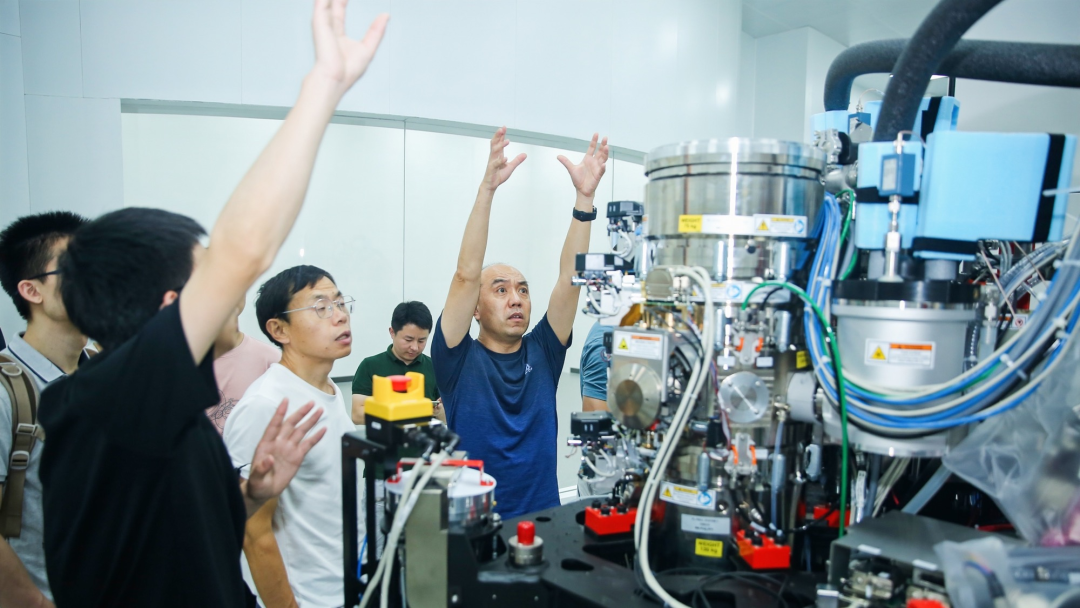
Guo explains that Shuimu's cryo-EM platform currently achieves best-in-class resolution of 1.2Å, sufficient to meet the vast majority of biomedical applications. "At 1.8Å resolution, you can clearly see the precise position of every hydrogen atom in a biomolecule."
Leveraging its cryo-EM cluster, drug development platform, and AI technology, Shuimu has gradually unlocked potential in drug discovery. For example, Shuimu achieved the world's first high-resolution cryo-EM structure of GPR75, a next-generation obesity target, substantially accelerating small-molecule drug discovery and optimization — with the potential to develop a next-generation small-molecule weight-loss drug surpassing semaglutide.
Beyond providing research services, Shuimu emphasizes building foundational structural biology databases at the microscopic level through its platform. "In the AI era, a key competitive advantage for companies lies in accumulating the highest-quality raw data in a given domain."

In his presentation, Guo emphasized that "for high-end scientific instruments in the AI era, domestic production, intelligentization, and cloudification are the major trends. Reducing costs enables scale, while dramatically improving single-unit EM efficiency to further accumulate large-scale structural biology databases for training next-generation life science AI models."
Currently, China's cryo-EM manufacturing industry faces chokepoint risks, making domestic capability development urgent. Guo identified several dimensions of this urgency and necessity: 1) all cryo-EM hardware and software are monopolized by foreign brands; 2) China has no upstream manufacturing capability for cryo-transmission electron microscopes; 3) downstream key research institutions depend on imported cryo-EM to drive critical life science and materials science research; 4) foreign cryo-EM procurement barriers are high, creating chokepoint risks.
Starting in 2019, Shuimu began tackling core components, consumables, software, and complete hardware systems one by one. This year, it completed development of its first domestically produced 300kV high-end cryo-transmission electron microscope prototype, naming it the "TOTEM 300" — taking a critical step toward genuine innovation in China's high-end instruments.
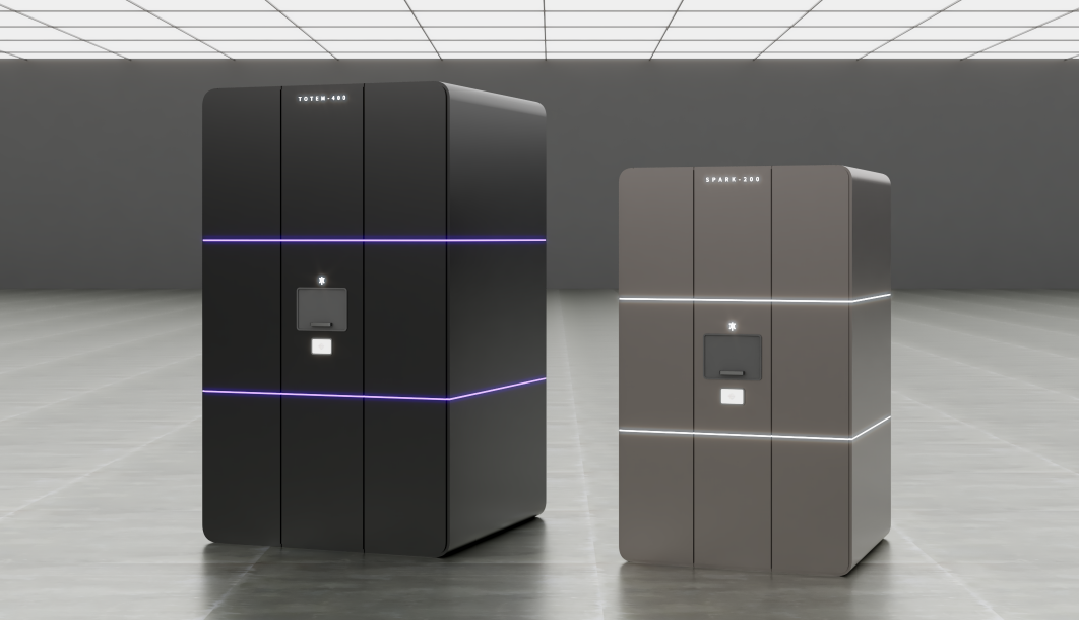
After more than a year of open testing, the TOTEM 300 has achieved 1.4Å resolution, with performance and stability matching top-tier imported products, earning recognition from experts at Tsinghua University, Westlake University, and other institutions.
Going forward, "Shuimu's goal is not merely to replace imported equipment, but to redefine the next generation of intelligent high-end instruments." Through deep AI integration, the TOTEM 300 has elevated cryo-EM intelligentization to an entirely new level, and will continue empowering frontier fields including atomic-scale manufacturing and precision medicine.

Guo emphasized that the longer-term significance lies in how the TOTEM 300's development has enabled Shuimu to build full-chain R&D and production capabilities for cryo-EM — spanning software, consumables, and hardware.
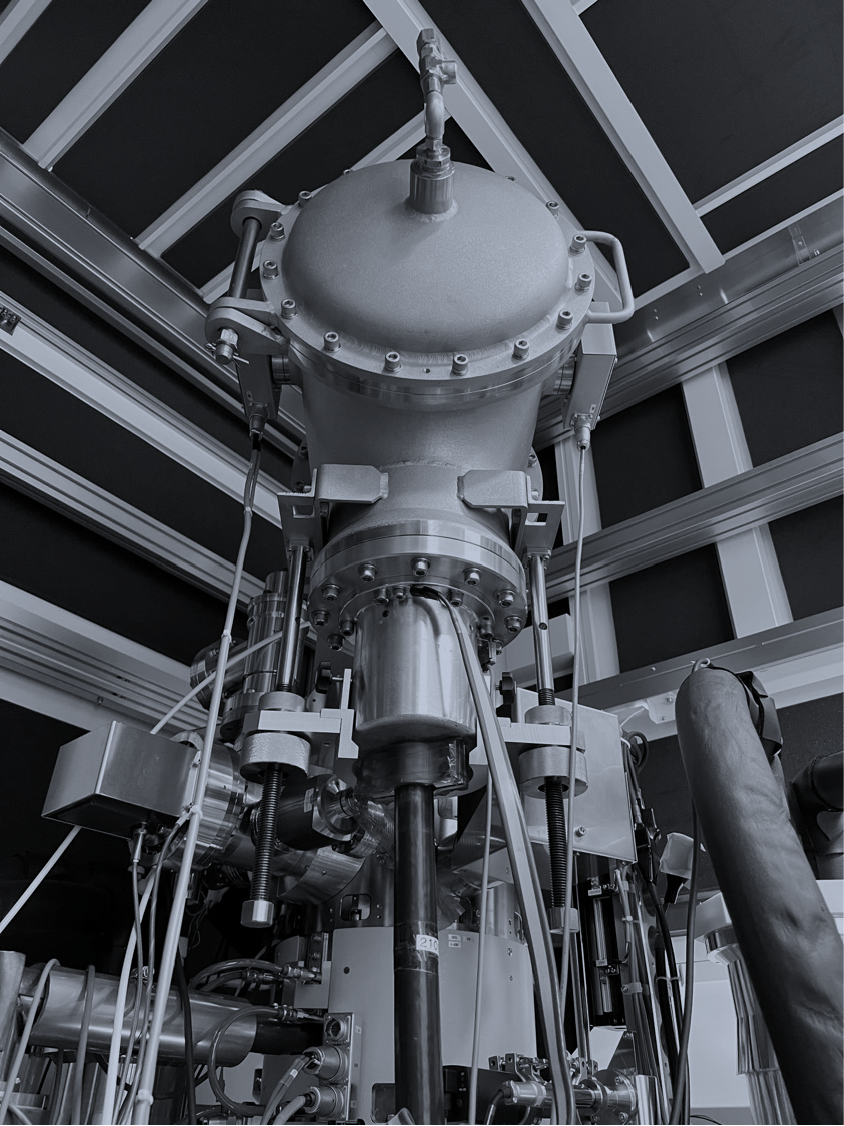
- Software: AI-driven end-to-end full-workflow solution
Shuimu's self-developed SMART software and computing platform is the world's first complete end-to-end AI-driven cryo-EM structure determination workflow platform, substantially improving structure resolution efficiency. From initial data collection through final 3D modeling, Shuimu is the first to commercially package the complete workflow, eliminating dependence on overseas software and ensuring data security.
Leveraging numerous AI deep learning algorithms, the SMART platform significantly enhances efficiency throughout the cryo-EM data analysis process, generating higher-resolution models with less time and data.
- Core component: next-generation electron detector camera
One of cryo-EM's core components, the electron detector camera, has evolved over more than 20 years from early indirect electron detectors and monolithic integrated pixel detectors toward hybrid technology. Hybrid pixel detectors offer two main advantages: first, greater dynamic range; second, faster imaging speeds, generating tens of thousands to over 100,000 frames per second.
Shuimu partnered with Tsinghua University to develop a new-generation ultrafast 4D STEM camera, achieving fully independent R&D from detector simulation, readout chip design, wafer flip-chip bonding through detector assembly.
- Consumables and cryo-sample preparation: surpassing overseas competitors
In consumables, Professor Hongwei Wang's team introduced the innovative GraFuture™ product line, based on next-generation graphene oxide grids to overcome sample preparation challenges. Technical specifications surpass overseas competitors, with specialty EM consumables and structure determination services sold to over 300 top global laboratories.
Cryo-EM sample preparation equipment has been dominated by overseas products for the past two decades. Shuimu partnered with Tsinghua University's School of Life Sciences and Department of Precision Instrumentation to develop the ESI Cryostar, a next-generation cryo-preparation instrument based on electrospray technology, expected to launch in the second half of this year with significant advantages in sample preparation success rate and cost compared to current market leaders.
- Hardware innovation: ultrahigh-voltage ptychographic cryo-transmission electron microscope
For domestic cryo-EM to leapfrog competitors, new architectural breakthroughs are needed. One opportunity currently at hand is leveraging next-generation ultrahigh-voltage ptychographic algorithms combined with the latest ultrafast 4D STEM cameras — trading computational power for hardware complexity, with the potential to dramatically reduce electron optical complexity in transmission and cryo-EM while further improving resolution.
- Challenging 400kV
Today's cryo-EM remains largely focused on single-particle analysis of recombinant protein structures; the truly transformative potential lies in using cryo-EM to resolve molecular structures in situ, allowing scientists to see molecular interactions in "living cells." Many scenarios require higher electron voltages to penetrate thicker samples, so the industry eagerly anticipates the arrival of 400kV and even higher accelerating voltage cryo-EM.
Shuimu is partnering with multiple institutions and companies to jointly advance the world's first 400kV ultrahigh-voltage cryo-EM for in situ analysis, targeting thicker section samples to enhance human understanding of life's microscopic structures.
Cryo-EM gives us the power to "see" — and this "seeing" is the key to unlocking the mysteries of life and conquering disease. Shuimu and its team are also "seeing" the power of innovation and intelligentization, continuously driving scientific innovation and industrial upgrading.