Leading nanopore gene sequencing company **Qitan Technology** has raised over RMB 100 million in funding, led by Gaorong Ventures.

Focused on the independent R&D of nanopore gene sequencers, dedicated to making gene sequencing technology accessible to every household.
On May 13, Qitan Technology, a leading domestic nanopore gene sequencing company, announced the completion of a Series A funding round exceeding RMB 100 million, led by Gaorong Ventures with participation from Yinxingu Capital and follow-on investment from existing shareholders including Yahui Investment. The proceeds will primarily fund increased R&D investment to improve the accuracy and stability of core products, while accelerating production line construction and commercial development to advance the research and application of domestic nanopore gene sequencing technology.
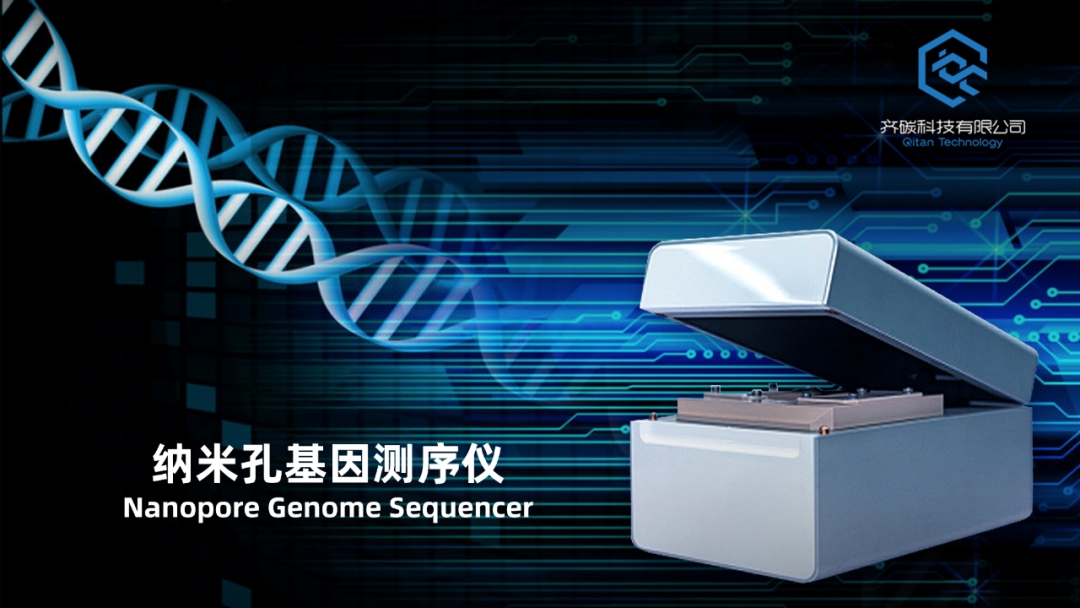
Founded in 2016, Qitan Technology focuses on the independent R&D, manufacturing, and application of nanopore gene sequencers and配套试剂 to meet growing demand for gene sequencing in life sciences and healthcare. The founding team stated that as a China-based, fully self-developed nanopore gene sequencing company, Qitan Technology's vision is to bring gene sequencing technology into every household, providing cost-effective sequencing solutions for the nation.

Deep expertise in cutting-edge nanopore single-molecule gene sequencing technology
Gene sequencing is the core technology of precision medicine. In recent years, the gene sequencing market has been growing rapidly. According to industry reports, the global gene sequencing market is expected to exceed $20 billion by 2022, with China's market reaching RMB 18.3 billion.
The nanopore gene sequencing technology that Qitan Technology is developing represents the most advanced single-molecule sequencing approach available, and the company has directly entered the upstream instrument development segment — the highest technical barrier and most challenging R&D link in the entire industry chain.
Compared to SBS-based sequencing equipment, nanopore gene sequencers offer ultra-long read lengths with single-molecule sequencing capability, real-time output of results, and significant advantages including portability and low per-run costs. These devices can be widely applied in rapid pathogen detection, genomic structural variation detection, methylation detection, direct RNA sequencing, and metagenomic sequencing, while providing end-to-end "sample-to-conclusion" solutions. Future applications may extend to POCT and even consumer-grade gene sequencing.
Industry analysis suggests that in the near future, the nanopore single-molecule sequencing industry could capture market space comparable to next-generation sequencing, with broader adoption as the technology continues to mature and stabilize.
Building a cross-disciplinary R&D team to overcome technical challenges
Developing nanopore gene sequencers requires expertise spanning protein engineering, biochips, electronic circuits, artificial intelligence, and other frontier interdisciplinary fields. Qitan Technology has assembled a cross-disciplinary R&D team with deep accumulated expertise across these domains. Among the co-founders, Dr. Bai Jingwei is a gene sequencing technology expert with a PhD from UCLA and postdoctoral experience at IBM Watson Laboratory; Dr. Hu Geng is an electronic circuits expert with a PhD from Tsinghua University; and Dr. Xie Dan is a bioinformatics expert with a PhD from the University of Illinois at Urbana-Champaign and postdoctoral experience at Stanford University.
With its top-tier team and R&D capabilities, Qitan Technology has overcome numerous technical challenges to achieve parity with international leading standards. These include proprietary nanopore and motor proteins that enhance sequencing speed and stability; optimized nucleic acid library preparation protocols ensuring long-read capability and efficiency; an innovative nanopore channel array structure paired with custom-designed ASICs supporting parallel sequencing across hundreds of channels; and novel base-calling algorithms based on deep learning that improve sequencing accuracy.
Dr. Bai Jingwei stated: "Over the past few years, Qitan Technology has continuously deepened its work in nanopore gene sequencing, from initial proof-of-concept prototypes to engineering prototypes, and now to the minimum viable product planned for launch this year. We have continuously validated the effectiveness and practicality of this innovative technology. Going forward, we believe that advances in biochemistry, hardware, and algorithms will further improve the accuracy and stability of nanopore gene sequencers."
Dr. Hu Geng noted: "From several founders with complementary backgrounds when Qitan Technology was founded, to today's team of more than 50 people, cross-disciplinary exchange has been a defining characteristic and one of our competitive moats — because getting people from different disciplines to understand each other, collaborate, and innovate together is no easy task. Additionally, the Qitan Technology team possesses abundant curiosity and imagination. Throughout our R&D process, we constantly encounter novel problems with no global benchmarks or references to draw upon, requiring us to continually draw inspiration from frontier technologies such as 3D printing and artificial intelligence to achieve R&D breakthroughs."
Further improving prototype accuracy and stability to help comprehensively perceive life
According to reports, Qitan Technology's nanopore gene sequencer has undergone multiple iterations and is now in the final push of the product prototype stage. The prototype's throughput, accuracy, and stability continue to improve, with the first product expected to be finalized and enter small-batch production in 2020 before reaching users' hands.
A project leader at Gaorong Ventures stated that Qitan Technology's development of nanopore gene sequencing equipment represents a cross-disciplinary technical breakthrough that has already achieved remarkable progress, with significant results in protein engineering, fluidic chips, electronic instrumentation, and base-calling algorithms, demonstrating the company's R&D strength. "We are fully optimistic about single-molecule sequencing technology's unique advantages — long reads, low cost, and portability — in clinical applications involving microbiomes, infectious diseases, and complex structural variations, expanding our understanding of disease. We also look forward to the extensibility of nanopore as a platform technology, from the genome level to transcriptomics and potentially proteomics, helping to more comprehensively perceive life."
The recent spread of COVID-19 has further highlighted the importance of rapid pathogen detection and diagnosis for healthcare. To contribute to pandemic response efforts, Qitan Technology participated as a Tsinghua University collaborative partner in technical攻关 for COVID-19 diagnostic reagents, a project included in Beijing's science and technology plan. The company is also accelerating its own R&D to support scientific research against the epidemic.
Currently, Qitan Technology has established offices and laboratories in Beijing and Chengdu, with a complete R&D pipeline in place. The R&D team includes senior talent from renowned domestic and international institutions including Tsinghua University, Peking University, the Chinese Academy of Sciences, and Oxford University. The company has conducted comprehensive intellectual property布局 across all technical domains involved in nanopore gene sequencing, and has received certification as both a national high-tech enterprise and a Zhongguancun high-tech enterprise.