Practical + Case Studies: How Healthcare, Hard Tech, and Enterprise Software Companies Should Craft Their IPO Strategy Under Full Registration Reform | Ronghui

The full registration-based IPO system is reshaping China's capital markets.
In February 2023, China's A-share market fully adopted the registration-based IPO system, while new filing management rules for overseas listings also took effect. How can tech innovation companies seize opportunities amid these changes and better formulate capital market and long-term development strategies? What are the latest trends in domestic and overseas capital markets? How should high-growth-potential companies in healthcare, hard tech, and enterprise services plan their listing paths and prepare for the practical work involved?
Recently, Ronghui — Gaorong Ventures' platform — invited experts including senior leaders from CICC's investment banking division and lawyers to share their insights on these key questions with innovative companies, drawing on market dynamics and real-world cases.

Latest Capital Market Dynamics and Strategic Choices for Companies
"Chinese tech innovation companies are riding the wind and breaking the waves at exactly the right moment — whether in semiconductors solving chokepoint issues, new energy supply chains where China has built strong advantages, or disruptive foundational technologies like large AI models, quantum computing, and medical technology — all have bright prospects ahead," said Yuan Feng, Managing Director at Gaorong Ventures, in his opening remarks. He noted that under the full registration-based reform, companies need to pay attention to and seize opportunities arising from capital market changes based on their long-term development strategies.
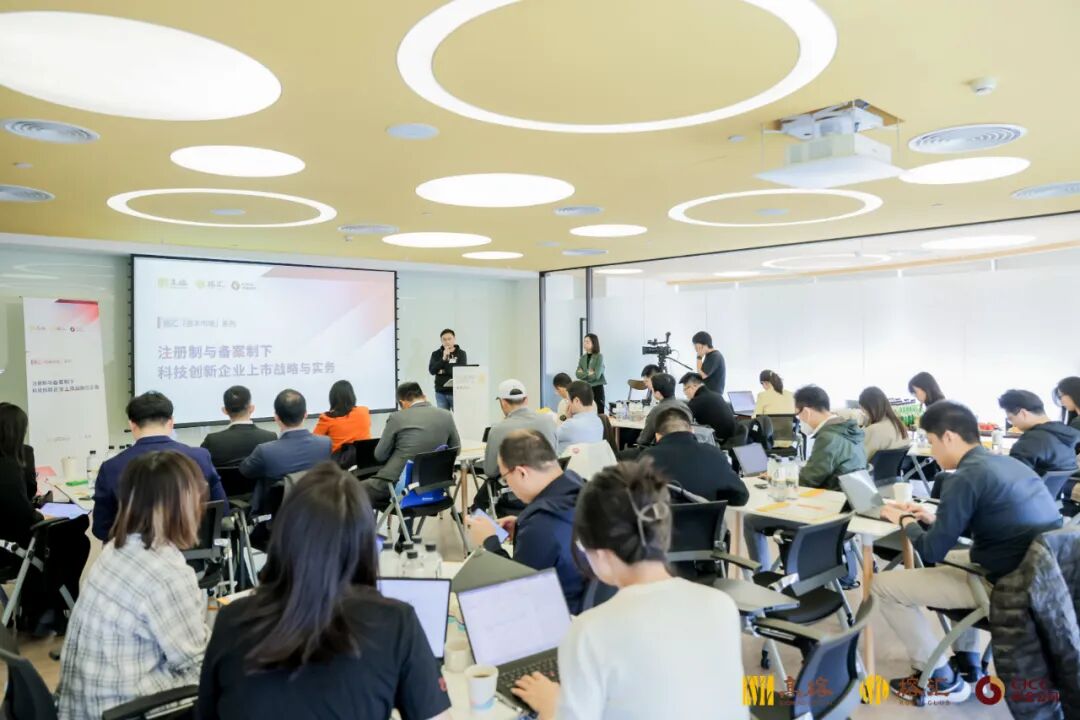
Full Registration-Based System Builds New Capital Market Ecosystem
Multi-Tier Capital Market System Becomes Clearer
Chen Jie, a member of CICC's Investment Banking Business Management Committee and Managing Director, reviewed the latest dynamics in domestic and overseas markets and offered strategic, big-picture thinking on companies' listing choices.
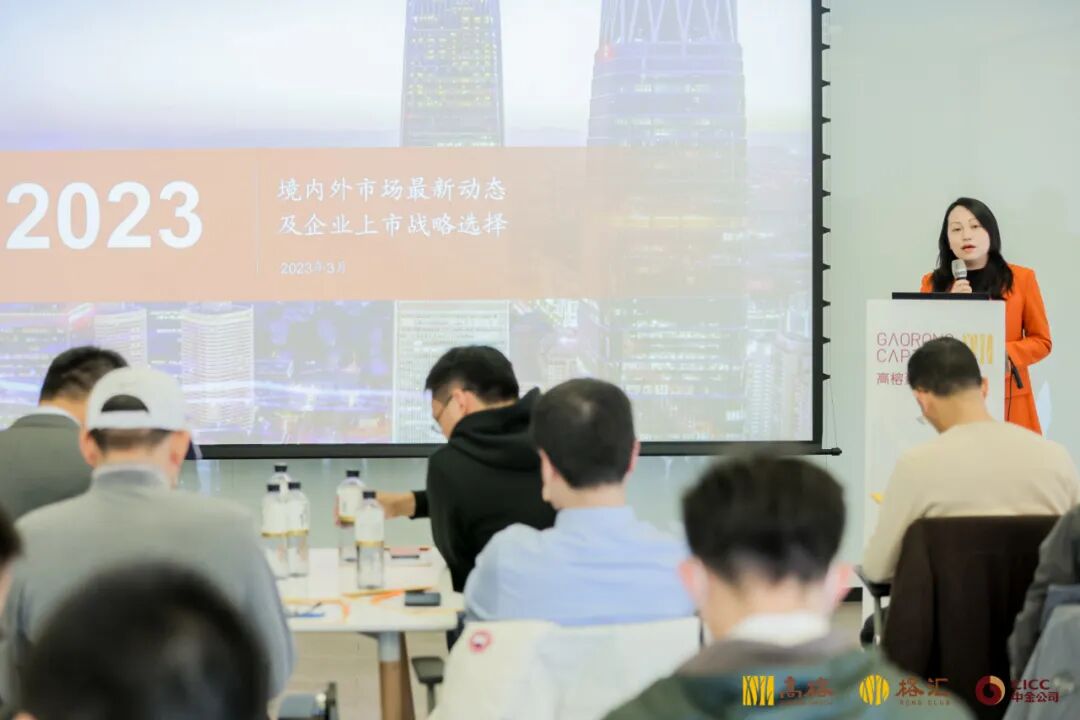
On February 17, the rules for the full registration-based system were released and implemented. Chen Jie noted that "this is an important reform deployment in the more than 30-year history of China's capital market, and will have far-reaching effects on the ecosystem of China's capital market, the long-term development of China's economy, and the future development of various industries."
Reviewing A-share IPO data, "since the pilot registration-based system in 2019, the scale of IPO financing and the number of listed companies on the A-share market have significantly increased compared to the previous approval-based system. The STAR Market and ChiNext have become the main drivers of issuance, with the registration system showing notable catalytic effects."
Centered on the goal of "building a standardized, transparent, open, vibrant, and resilient capital market," Chen Jie explained that the centerpiece of the full registration-based reform is the main boards of the Shanghai and Shenzhen exchanges. After the reform, the main board highlights the "large-cap blue chip" positioning, focusing on supporting high-quality enterprises with mature business models, stable operating performance, large scale, and industry representativeness. The STAR Market is "hard tech first," mainly serving technology innovation enterprises that align with national strategy, break through core technologies, and enjoy high market recognition. ChiNext mainly serves growth-oriented innovative enterprises fitting the "three innovations, four new industries" criteria. The Beijing Stock Exchange serves "specialized, refined, distinctive, and innovative" small and medium enterprises.
"As we can see, these various boards are developing with differentiated positioning, with improving market scale, liquidity, and P/E ratios, gradually forming a multi-tier capital market system. For companies seeking A-share listings, this presents a historic opportunity."
Chen Jie further explained the main contents of the full registration-based reform, including optimized listing conditions — "converting approval-based issuance conditions into information disclosure requirements as much as possible, with diversified and inclusive listing conditions for each board"; improved review and registration procedures, focusing on review points such as "two compliances" and "four material issues"; and optimized issuance and underwriting systems, with "no administrative restrictions on new share issuance prices or scale."
Regarding overseas capital markets, recent filing management rules for overseas listings have been fully implemented, generally supporting enterprises' lawful and compliant use of overseas capital markets for financing, with "more transparent and predictable systems." Under the filing system, in addition to "direct overseas listing by domestic enterprises" (such as H-share listings), "indirect overseas listing" (such as red-chip listings) is also brought under regulation. VIE-structured companies that meet compliance requirements can go public overseas after filing, provided they comply with domestic laws and regulations.
Against this new regulatory backdrop, Chen Jie introduced the IPO filing processes and specific requirements for Hong Kong and U.S. listings, including pre-filing approvals required (where applicable).
Analysis of Rules for Overseas Listings
Zhang Xinyang, Managing Partner at Commerce & Finance Law Offices, systematically explained the relevant rules for overseas listings in light of the new filing regulations, and how these new rules open a new chapter for future overseas listings by Chinese companies.

Zhang Xinyang noted that the determination of indirect overseas listings follows the principle of substance over form. The new filing rules comprehensively apply to all types of overseas issuance and listing activities, including IPOs, multi-market listings, spin-off listings, introduction listings, and listings achieved through reverse mergers, SPACs, etc. (treated as IPOs), as well as post-listing activities such as refinancing, share issuance for asset purchases, equity incentives, and H-share full circulation; issuance of stocks, depositary receipts, convertible bonds, and other equity-type securities are all covered.
Zhang Xinyang pointed out that the new rules represent filing rather than review — that is, establishing certain overall baseline conditions and a negative list, without substantive examination of whether a company meets the listing conditions of the overseas market. Under the new rules, overseas listings "shall comply with laws, administrative regulations, and relevant national provisions on foreign investment, state-owned asset management, industry regulation, and overseas investment; shall not disrupt domestic market order; and shall not harm national interests, public interests, or the lawful rights and interests of domestic investors." At the same time, overseas listings must not involve prohibited conduct, including situations explicitly prohibited by laws and regulations for listing and financing, and must not harm national security.
In his presentation, Zhang Xinyang also highlighted key points regarding VIE structures, pre-filing reviews, special voting rights shares or similar arrangements, controlling shareholders and actual controllers, shareholder information disclosure, and employee incentive plans.
Zhang Xinyang concluded that under the new filing rules, overseas listing regulation will "focus on compliance supervision as the main thread, comprehensive filing as the抓手, and coordinated regulation as the safeguard" — companies need to comprehensively evaluate and meet compliance requirements.
IPO Practice for Healthcare, Hard Tech, and Enterprise Service Companies
Healthcare Companies: Technology Innovation Is the Core Theme
"The listing paths for healthcare and pharmaceutical companies, both domestically and overseas, are very open," noted Guo Rongrong, Head of CICC's Investment Banking Healthcare and Pharmaceuticals Group and Managing Director. "From the 2018 Hong Kong 18A policy that brought a wave of innovative drug and innovative device companies to market, to the establishment of the STAR Market, and the 2022 expansion of STAR Market's fifth set of listing standards to medical device companies, the overall listing conditions for healthcare and pharmaceutical companies are diversified and inclusive."
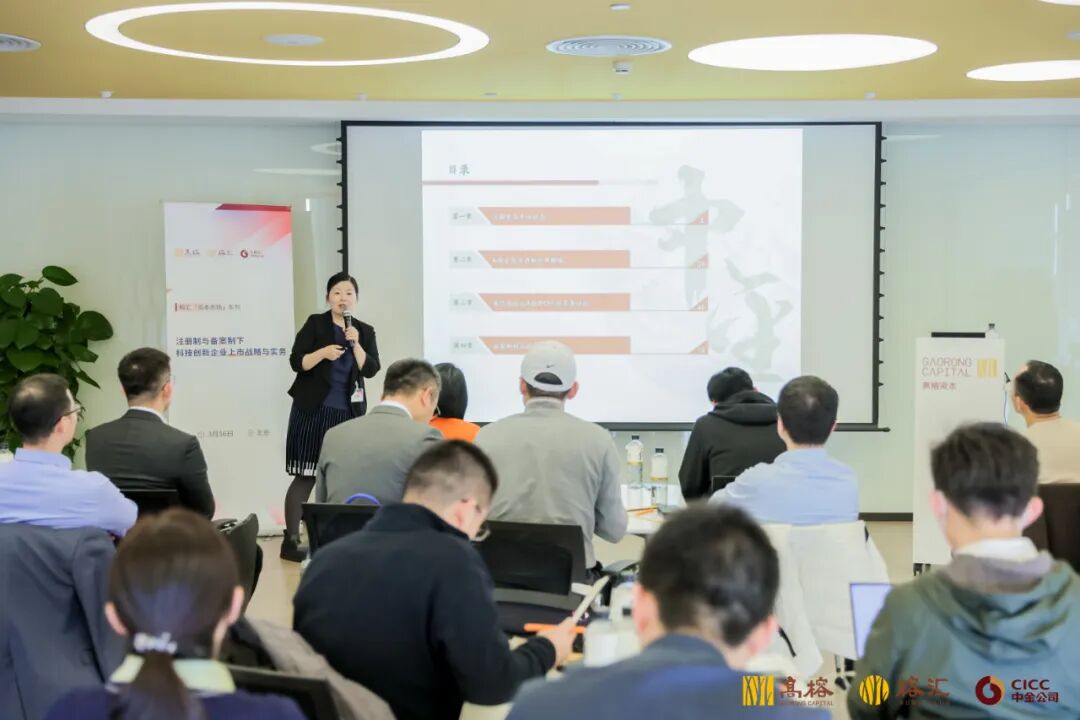
For future trends in the healthcare market, Guo Rongrong believes that the two core themes for the pharmaceutical sector in 2022 were sector valuation digestion and stabilizing healthcare insurance policies. As drug review and healthcare insurance policies gradually mature, China's pharmaceutical ecosystem is moving toward a positive cycle, and this positive industry momentum will give rise to a series of excellent companies. Throughout this process, technology innovation remains the core theme of pharmaceuticals.
Reviewing recent market issuance trends in the healthcare sector, data shows that the A-share market maintained steady issuance pace in 2022 and into 2023; the Hong Kong IPO market experienced adjustment in 2022, but financing activity has recently shown signs of recovery.
Ren Mengqi, Executive Director at CICC's Investment Banking Healthcare and Pharmaceuticals Group and A-share sponsor representative, then addressed practical listing matters for healthcare companies under the registration-based system and new filing rules. "With the full implementation of the registration-based system, the coming years will be a favorable window for healthcare companies."
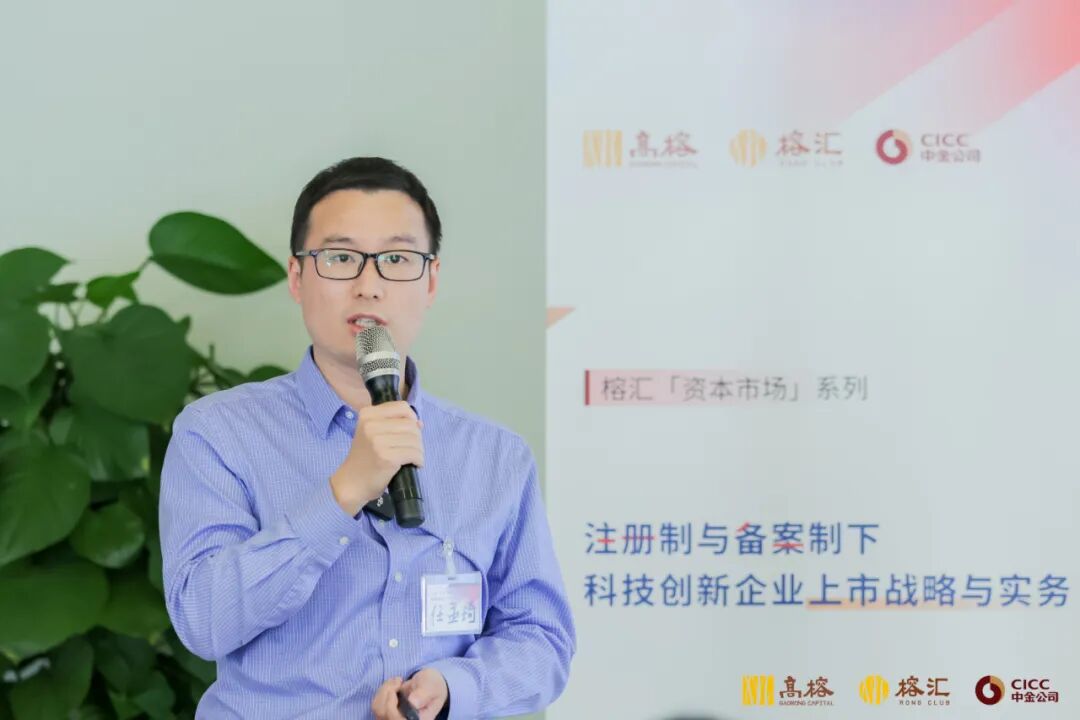
Ren Mengqi also introduced the Hong Kong Stock Exchange's new listing regime for specialist technology companies. In October 2022, the exchange consulted on listing rules for specialist technology companies, which were finalized by end of March with the addition of Chapter 18C to the Main Board Listing Rules taking formal effect. The new rules apply to companies in five specialist technology industries: next-generation information technology; advanced hardware; advanced materials; new energy and environmental protection; and new food and agricultural technology. The rules relax requirements on revenue and profitability, substituting market capitalization, R&D investment, and historical financing as alternative listing requirements. "For Hong Kong 18C, going forward the main healthcare-related companies that would qualify are those with strong technology attributes, such as AI-driven drug discovery companies — this could be considered as a new strategic option."
Full Registration-Based System Accelerates Hard Tech Company Development
"The full registration-based reform has further enhanced the inclusiveness of listing standards, guiding capital to better serve hard tech companies," said Chen Xi, Head of CICC's Investment Banking Semiconductor and Integrated Circuit Group and Managing Director, analyzing the impact of the reform on hard tech companies.
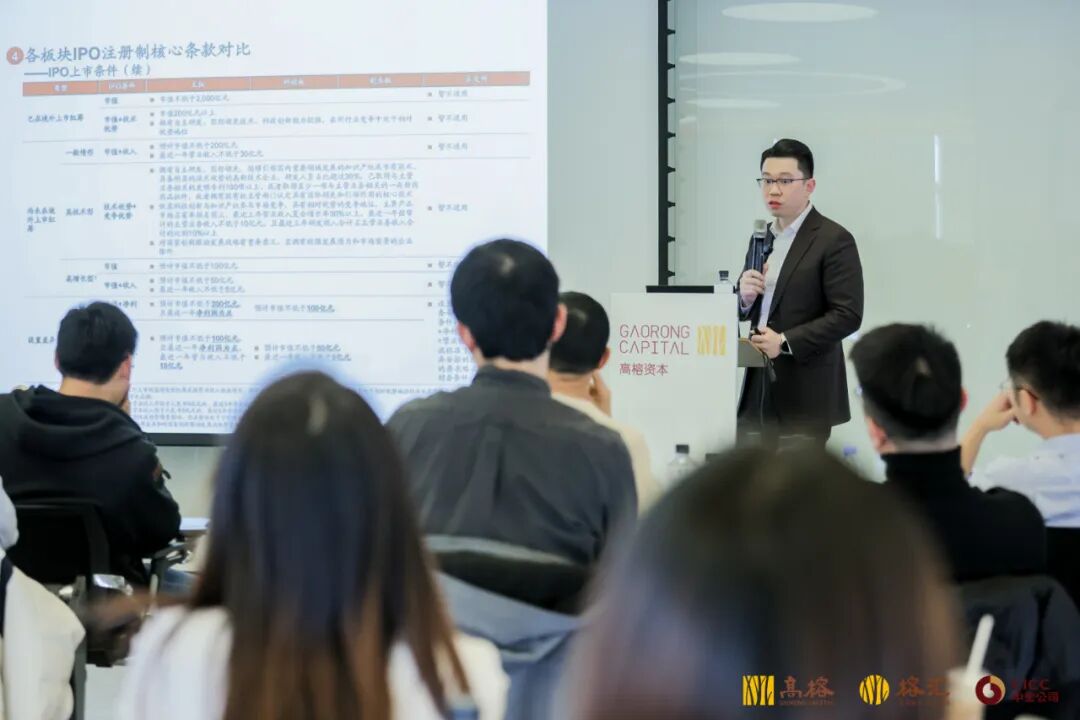
First, the full registration-based system eliminated requirements on the proportion of intangible assets, reflecting the capital market's support for technology innovation. Second, it improved predictability in the listing process. Third, it enhanced the inclusiveness of profitability standards on the main board, better accommodating the characteristics of hard tech companies that have high R&D investment ratios and capital needs but may not be profitable in the early stages. Fourth, it strengthened issuers' primary responsibility for information disclosure, which in turn drives hard tech companies to improve internal controls.
Regarding issues that hard tech companies focus on when going public, Chen Xi recommended that companies conduct comprehensive due diligence with intermediaries before listing to help achieve standardization, covering business, financial, legal, and risk dimensions. Using semiconductor companies as an example, Chen Xi explained several areas requiring focused attention, including core technology, intangible assets, revenue and gross margin, R&D expenses, and outsourced manufacturing. Taking revenue and gross margin as examples, Chen Xi cautioned that company growth and industry competition levels affect market valuation — revenue scale, growth rate, and gross margin are important indicators; additionally, companies need to pay attention to details such as revenue recognition timing and gross margin trends for major products.
Chen Xi also analyzed latest trends in the hard tech industry. Using the semiconductor industry as an example: "The semiconductor cycle inflection point is approaching, and it's time to position for the new cycle. Although inventory levels at most chip manufacturers are still building up, the pace has slowed, and they are expected to return to reasonable levels in Q2 2023."
For future strategic opportunities in the semiconductor industry, Chen Xi noted that localization rates across China's semiconductor supply chain remain relatively low — for example, the EDA industry's localization rate is about 12%, and the integrated circuit design industry's self-sufficiency rate is about 37%. "So there is much to be done, and much that can be done." Additionally, as China's technology industry develops, it provides sustained growth momentum for the semiconductor industry, such as automotive electrification and intelligentization supply chains, AR/VR, and AIoT, with key emerging tracks in the industry including RF chips, analog chips, MCUs, FPGAs, and power devices.
Enterprise Service Companies' A-Share Listings: Grasping Technology Innovation Attributes
Chen Bo, Executive Director and software industry listing services expert at CICC's investment banking division, used a foundational software company as a case study to explain key considerations for innovative enterprise service companies seeking A-share listings.

"How to determine whether a company has technology innovation attributes?" Chen Bo noted that companies should examine whether their products fall within the scope of nationally encouraged key software areas, including foundational software, emerging technology software, industrial software, embedded software, and information security software — software supported by national strategy. A key point is whether they have solved chokepoint issues.
Furthermore, a company's technology innovation attributes should form a closed-loop logic: what are the R&D capabilities of the founding team and core technical team; whether key core technologies have been developed based on the R&D investment of these personnel; whether products and services have been built through core self-developed technologies; and ultimately whether these have been objectively validated through scaled market implementation.
Chen Bo also noted that invention patents, authoritative evaluations, major scientific research projects, prestigious honors, and industry-recognized certifications are all evidence of a company's technological advancement.
"Many enterprise service companies also focus on profitability issues: Is profitability required for listing? When should they become profitable?" Chen Bo pointed out that for loss-making enterprise service companies, the focus is on whether they have the foundational conditions and operating environment to turn profitable, and whether profitability is objectively feasible. He analyzed the internal logic of profitability achievability from both qualitative and quantitative dimensions.
Additionally, Chen Bo provided practical guidance on issues that enterprise service companies commonly focus on, including sales expenses, channel models, R&D expenses, and data security.
With the implementation of the full registration-based system and new filing rules, capital markets will guide more capital toward high-tech companies undergoing transformation and upgrading, boosting industrial transformation and supporting the innovation-driven development strategy. This presents both opportunities and challenges for technology innovation companies — while using capital markets to obtain resources for corporate development and achieve strategic goals, companies also need to continuously improve their governance structures and persist in creating core value.